
Satoko Fujii and Natsuki Tamura: Listening for What the Music Requires
Satoko Fujii and Natsuki Tamura have worked together for decades, across duo recordings, small ensembles, and larger orchestral projects.
In April and early May 2026, they toured Europe in several settings: the Satoko Fujii Quartet, Kaze, and the Satoko Fujii Orchestra Berlin. The tour brought together different parts of Fujii’s work, from quartet performance to collective improvisation and large-ensemble composition.
Fujii is a pianist and composer with more than 100 albums as a leader. Her work draws on jazz, free improvisation, contemporary classical music, rock, and Japanese musical traditions. Rather than treating these as separate areas, she has developed a personal approach to form, sound, and ensemble writing. In the interview, she speaks about composition as a process of listening, especially to silence. Notes and sounds, she says, are easier to create; pauses are what allow the music to function.
Tamura’s trumpet playing has a similarly broad range. He moves between clear melodic playing, extended technique, and more abstract sound. His answers suggest a practical view of improvisation: he follows what the situation requires, while remaining attentive to his own response in the moment.
The interview also points to the long musical relationship between Fujii and Tamura. Fujii describes their duo playing as a daily conversation, while Tamura says that, even after many years, he still experiences fresh surprises. Their work together is presented here as an ongoing practice built on listening, trust, and change.
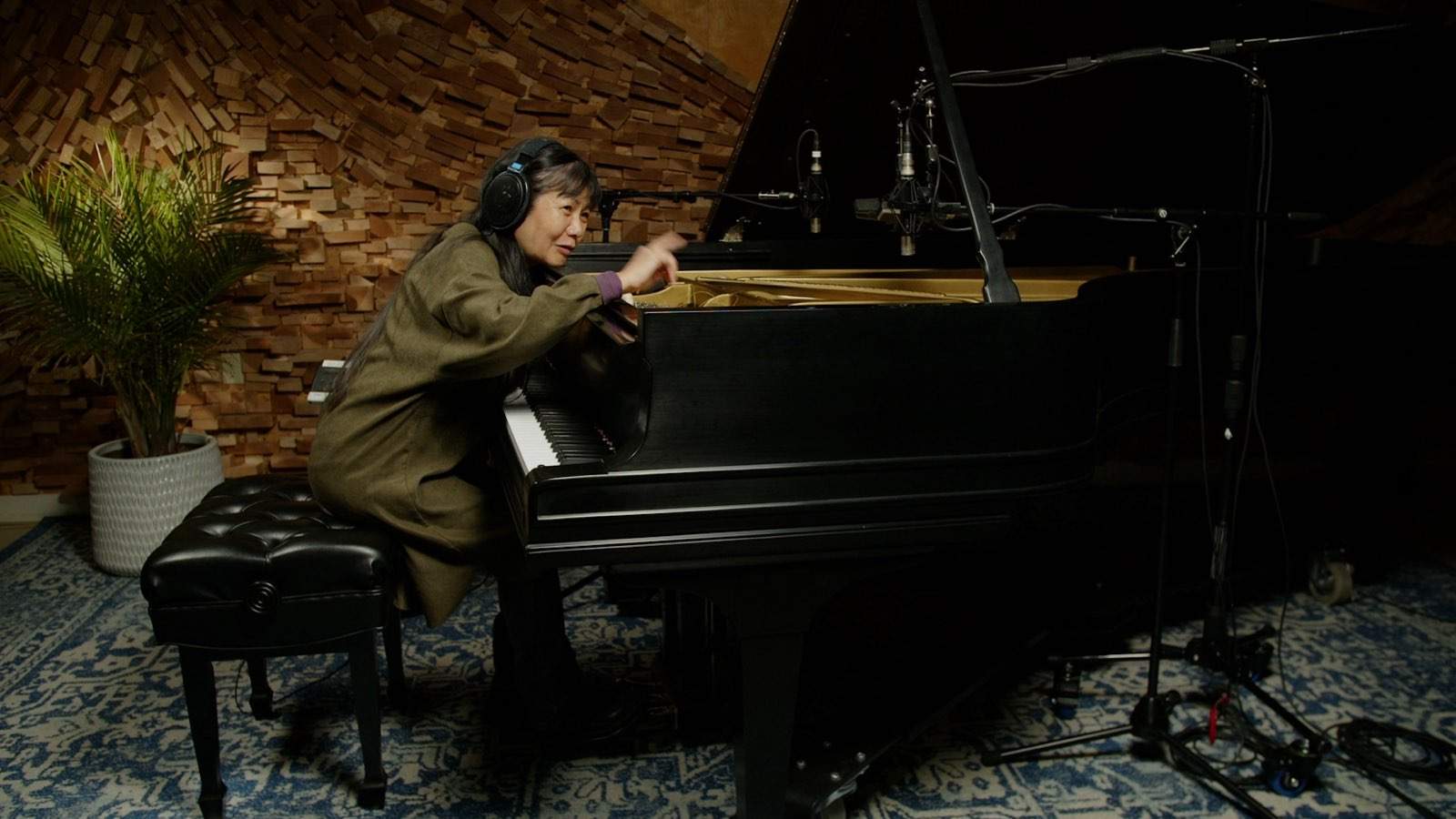
Satoko Fujii
I read that you can spend a long time searching for a single note until it feels right. When that moment comes, how do you recognize it?
Satoko: I cannot explain how I recognize that the note is right because I just feel it. Sometimes it takes a long time to find the right one. It can be a rest or a note or noise or… Once I find it, I know whether it is right or wrong immediately.
Your music often holds very different energies at the same time. When you’re composing, are you aware of those layers, or do they only really come alive once the musicians start playing?
Satoko: Many times, when I bring the compositions to ensembles, I hear some amazing things happening once the musicians start playing. I always try to leave some space for musicians so they can bring their own voice. I like to hear how they take my compositions and play them.
“I compose what I hear.”
There are sudden turns in your pieces that somehow feel completely natural. I’m curious, how do you work with contrast without it becoming arbitrary?
Satoko: Basically, I compose what I hear. Even some sudden, unexpected changes, I hear them naturally, so I write them.
You studied with Paul Bley, who really encouraged personal voice. Looking back, what stayed with you from that time in a deeper sense?
Satoko: All of his words still resonate within me. He had a very unique perspective, and everything he said made perfect sense to me. I made many discoveries because of it.
You’ve written for so many different settings, from solo piano to large orchestras. When you sit down to write for a big ensemble like the Berlin orchestra, what shifts first for you?
Satoko: I compose almost every day when I am at home. The first thing I do in front of the piano each day is compose. Usually, I just compose without thinking of which ensemble. Many times, I look back at these compositions to find good ones for some projects. Of course, I sometimes start composing for a certain ensemble. When I start composing for certain ensembles, I hear the music we already made and then try to find the things we never did.
You’ve now released over 100 albums as a leader, which is extraordinary. Does that kind of output feel freeing, or does it make you more aware of every choice you make?
Satoko: I feel both. I learned that I would like the music if I follow my voice. Meanwhile, I don’t want to make something the same, which is actually very difficult because I have made a lot already.
There’s something very physical about your music, almost like it starts from sound itself rather than notes. When you compose, do you think in terms of pitch, or more in terms of texture and movement?
Satoko: When composing music, I pay the most attention to creating pauses. Notes and sounds are easy to create, but silence makes everything work in the right way.
When you play with Natsuki Tamura, it often feels like you’re catching each other’s ideas mid-air. Does it feel that way from the inside too?
Satoko: When we play together, it is like a conversation that we have every day. We have been playing together for a long time, and we kind of know how we play. But even though I know how he plays, I am still amazed by how free he can be. He is a special musician who was born with a free spirit.
In your duo work, the line between composition and improvisation can feel very fluid. At what point does a piece stop being something you wrote and become something that just happens?
Satoko: We get an idea to improvise while we play written things. Written material gives us inspiration. Written sections and improvised sections are like brothers and sisters. They have the same father and mother.
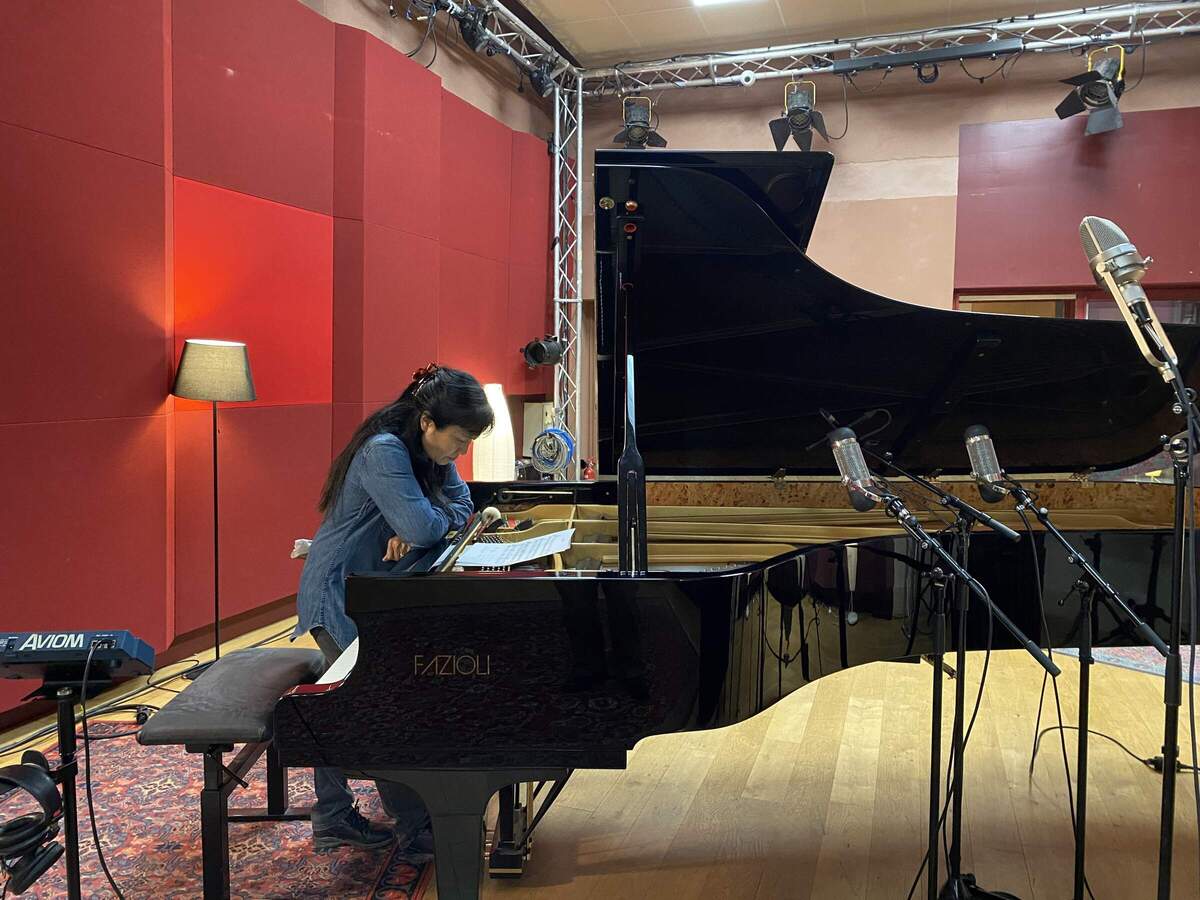
On this European tour, you’re moving between the quartet, Kaze, and the orchestra. Do you have to reset your ears each time, or is there something that stays constant across all three?
Satoko: I do this all the time, even in Tokyo. I have to switch my feeling somehow. But I might be bored if I do the same thing only for more than one week.
The current quartet with Hayakawa Takeharu and Tatsuya Yoshida has a really strong physical energy. What were you hoping this group could do that earlier versions couldn’t?
Satoko: My bandmates now know my compositions more than before. They can feel what I write between the notes. They know the meaning of silence. We are more mature and patient. With these abilities, we can make a bigger picture from the compositions.
In Kaze, with two trumpets, there’s this unstable, almost mirrored quality. Do you write with that in mind, or do you prefer to let it emerge naturally?
Satoko: We all write music for Kaze. We know this unique instrumentation works perfectly. We all respect each other, and with that, nothing bad will happen. I sometimes write two trumpet parts, but usually I let them do their job.
When you’re writing for the Satoko Fujii Orchestra Berlin, with musicians coming from different backgrounds, do you think of them individually, or more as a single sound?
Satoko: I think of individual sounds while I hear a single band sound.
You’ve said you want to make music nobody has heard before. After so many years of creating, what does “new” mean to you now?
Satoko: I think there is nothing new. It is always already there, but I couldn’t notice it. There must be something we have never heard before, but it has been there already.
When everything is really working on stage, what disappears first for you? Time, control, or even the sense of yourself?
Satoko: When everything is working on stage, the sense of myself disappears. I can feel music itself making music, not me.
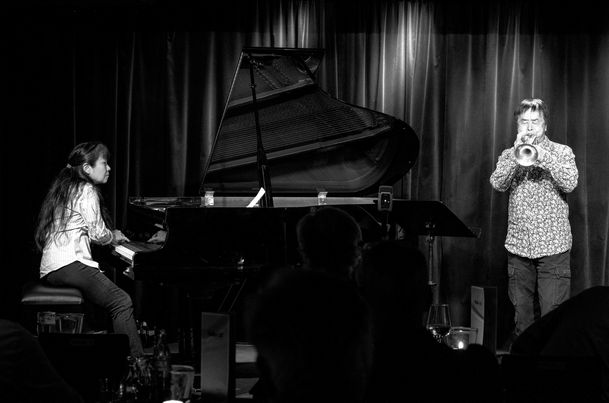
Natsuki Tamura
Your trumpet sound can move far away from what people usually expect from the instrument. Do you think of the trumpet as something you play, or something you speak through?
Natsuki: I think both.
You clearly have the ability to play very beautifully in a traditional sense, but you often choose a different path. What draws you toward those rougher or more unexpected sounds?
Natsuki: It’s like how you don’t always want to eat steak; sometimes you crave fish or vegetables.
Sometimes your playing feels like a kind of resistance, like you’re pushing against what the music might want to become. Do you feel that in the moment?
Natsuki: I’m not sure if I’m resisting it or not, but when I’m performing, I always want to be true to myself and play in a way that excites and thrills me.
You’ve explored extended techniques for many years now. Do you still come across new sounds, or is it more about finding new meaning in sounds you already know?
Natsuki: I think it’s a combination of both. Sometimes new sounds suddenly emerge during a performance. Those moments are incredibly rewarding.
When you improvise, do you think in shapes, textures, or something closer to language?
Natsuki: I think I do all of that unconsciously.
With Satoko Fujii, there’s such a deep connection. Do you still find ways to surprise each other after all this time?
Natsuki: Yes, I still experience fresh surprises.
In your duo playing, there’s often tension, but also humor. How important is that balance for you?
Natsuki: Sometimes, like my latest duo CD ‘Ki’, the music maintains a sense of tension throughout. Often, it’s a natural flow, and when I want a different atmosphere, I might play in a more humorous style.
On this tour, you move between small and large groups quite quickly. Does your role change depending on the setting, or do you carry the same approach into each one?
Natsuki: I think I take the same approach in every group.
In Kaze, with two trumpeters, how do you keep the dialogue alive without simply reflecting each other?
Natsuki: If we both play true to ourselves, I think the dialogue will naturally remain vibrant.
Playing with someone like Tatsuya Yoshida, whose rhythms can be very intense and unpredictable, does that push your playing into new directions?
Natsuki: Of course, I’m influenced by him, but I try not to become completely immersed in the same world. I think it becomes more exciting when I project my own world onto him.
“I try to start each performance with a fresh feeling.”
When you’re traveling and playing night after night, do you carry ideas from one performance into the next, or do you try to start fresh each time?
Natsuki: I try to start each performance with a fresh feeling.
In a large group like the Satoko Fujii Orchestra Berlin, how do you find your space without forcing it?
Natsuki: My own presence isn’t important; I simply play in accordance with what I want to express and how I want to express it in that moment.
Some of the tour includes very intimate settings, like house concerts. Does that closeness with the audience change the way you approach sound?
Natsuki: Before I start playing, I think, “It’s probably going to be noisy, I’m sorry,” but once I start playing, I forget about it and play as usual.
When something unexpected happens on the trumpet, a sound doesn’t come out the way you intended, do you treat it as a mistake or as part of the music?
Natsuki: It depends on the situation. If it’s a written melody, it’s clearly a mistake, so I give up and try to forget it quickly. Even during improvisation, there are times when I think it’s a mistake, and times when I think, “This sound is interesting, so I’ll develop it into music.”
When an improvisation feels complete to you, what tells you that it’s reached that point?
Natsuki: The atmosphere of the place tells me. That’s the same whether it’s a large hall or a small jazz club.
Klemen Breznikar
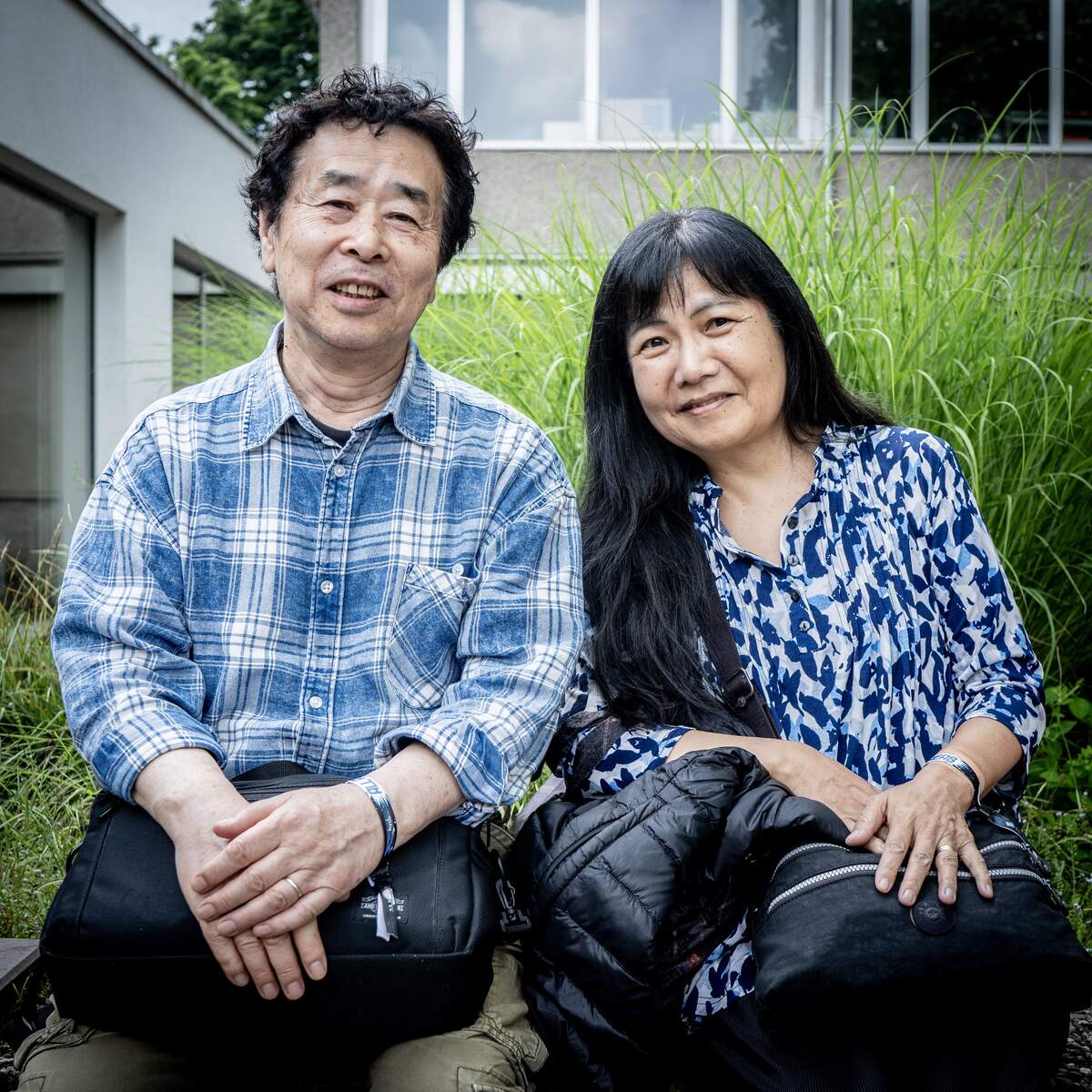
Headline photo: Natsuki Tamura and Sakoto Fujii (Photo: Frank Schindelbeck)
Sakoto Fujii Bandcamp
Natsuki Tamura Website / Bancamp