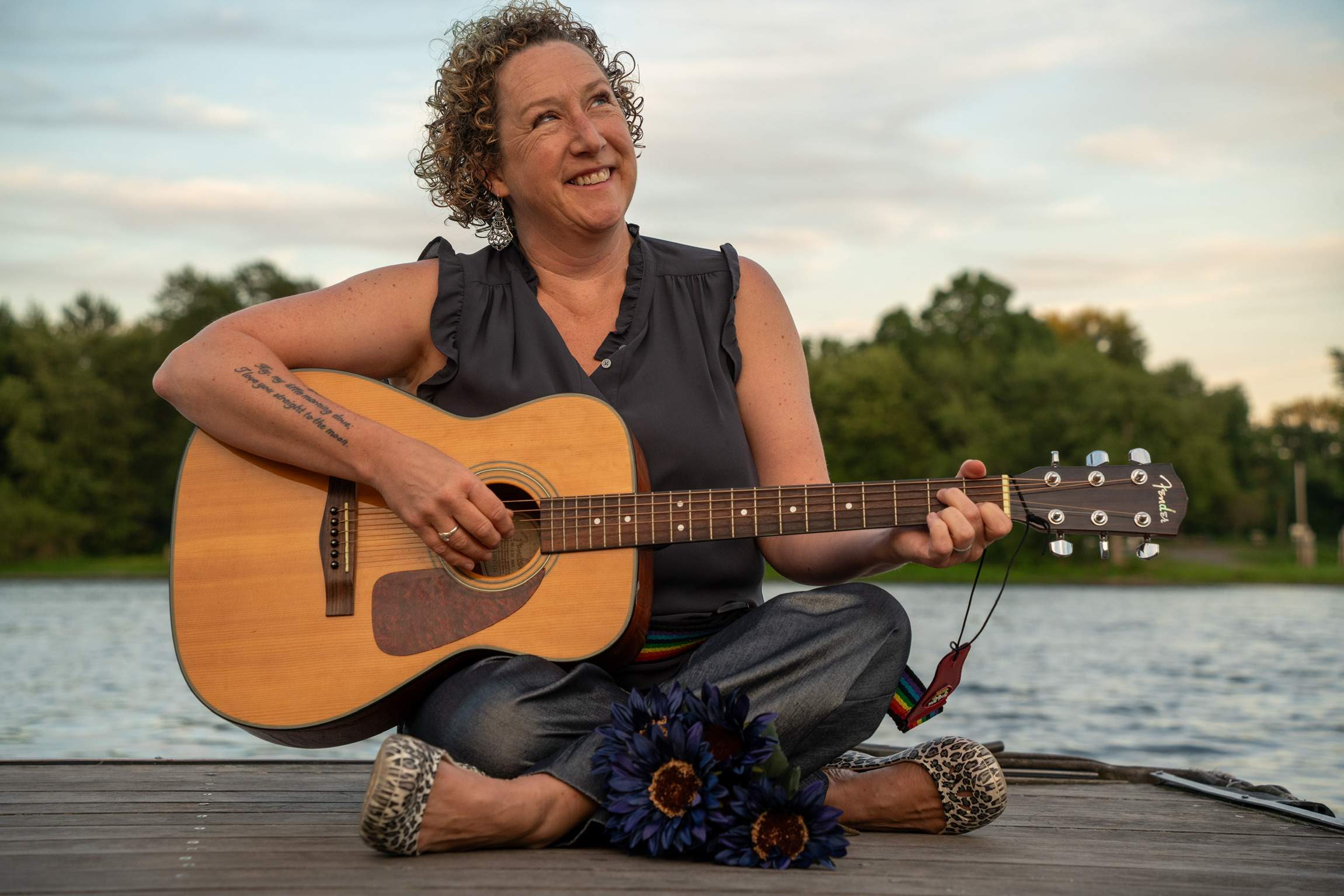

Liz Reed Finds the Heart Behind ‘The Human Side’
Artist Liz Reed is best known for her thoughtful acoustic songs, which emerge through a kaleidoscopic lens of folk-pop. She has six self-released albums and counting, enrapturing listeners with a timeless vibrato (reminiscent of Joni Mitchell) and lyrical quality likened to Jim Croce.
Her most recent single, ‘The Human Side,’ is melodic, pithy, and earthen. Full of compassion and vigor, the opening notes unfurl into delicate fingerpicking, which segues into her tawny-oaked vocals.
“Everyone belongs on the human side
Dirty or clean, lovin’ or mean
Outcast or in
Whatever our sin”
As the stanzas deepen, the vigor of Reed’s voice strengthens. It gains a rich Americana sting at the ends of her consonants. The tendrils of sound combine with an overlaying nurturing mist that makes us think of one word… home.
Her imagery is stark in the following sonic moments, detailing a man’s face (covered in yesterday’s grime), sleeping in hedges at night. A second, lower harmony enters, underscoring the next melancholic wave.
“He poses no danger, has papers to say,
And it took a lot to get to this place”
There’s a particular kind of beauty in saying less, so that listeners can feel more. Reed is like a photojournalist, panning to the key moments of a scene. And (without reading the whole newspaper) her curt snapshots tell all. As the first chorus rises, we’re immediately reminded of the full-bodied vocal texture of Emmylou’s ‘Wheels of Love.’
Liz Reed’s compassion builds throughout the track, propelled by the gradual addition of instruments. Like a step pyramid, the pepperings of crescendoing guitar, organ, and percussion stack atop one another. In the final chorus, the harmonies have built into a monumental bed of sound that has reached the zenith: “There’s no side to be on except the human side; everyone belongs on the human side.”
You mentioned being a music teacher. Why is the three- to four-year-old range your favorite to teach?
Liz Reed: Three- and four-year-olds are incredibly sweet and easy to win over. They each have their own personality and way of being in the world, even at that age. They love things that are new to them, and EVERYTHING is new, EVERYTHING is exciting and fun, which makes teaching them exciting and fun. Their energy is often exactly what I need to keep my spirits up.
Do you ever perform at the annual music festival that you host?
Every year! Our festival began as a party for my husband’s birthday, and as music lovers, what could be better than inviting our musician friends over to jam? The party then developed into a yearly fundraiser for our local food bank. We have at least 10 area artists, duos, and groups perform each year, and my band is always on the list.
What was the first song you wrote at age 10 about?
Ha! The text I remember was “I hurt you, and you hurt me; I was so afraid of losing you…” Definitely a product of listening to late-seventies/early-eighties pop ballads! Hopefully the broken heart songs I write now are a little better…
You’ve been playing for decades now. How has your songwriting changed since childhood, and how has it remained the same?
Definitely still full of big feelings, and I still use songwriting as an outlet to express them. As I’ve expanded my vocabulary and my range of experiences, I can more accurately describe how this world affects me, both verbally and musically.
What kind of Fender do you play on, and what’s your relationship to the guitar as an instrument?
I play a Martin D-18. I bought it secondhand right outside of Philadelphia in 1998, and it has been my go-to instrument ever since. I’ve tried to find an instrument that sings better than it does, but I haven’t found anything that I love as much. The deep, dreadnought voice of my guitar is special.
How do you tackle vocal practice? Rather, what is your favorite warm-up to do before you get on stage?
I tend to err on the side of operatic. I studied voice at UConn and participated in choirs through my young adulthood, so many of the warm-ups I use have a big range. They sound a little ridiculous but are quite effective!
You wrote the lyrics to this last year, in 2025. What were you thinking then, and do you feel the same when you play the song now as you did last year, or has your relationship to the tune changed?
‘The Human Side’ is a gentle protest song. It asks the listener to reject “us vs. them” and remember each other’s humanity. Even in the face of immigration and homelessness “crises,” we are all connected, no matter how little we feel like we have in common. This is a message as relevant today as it was last year.
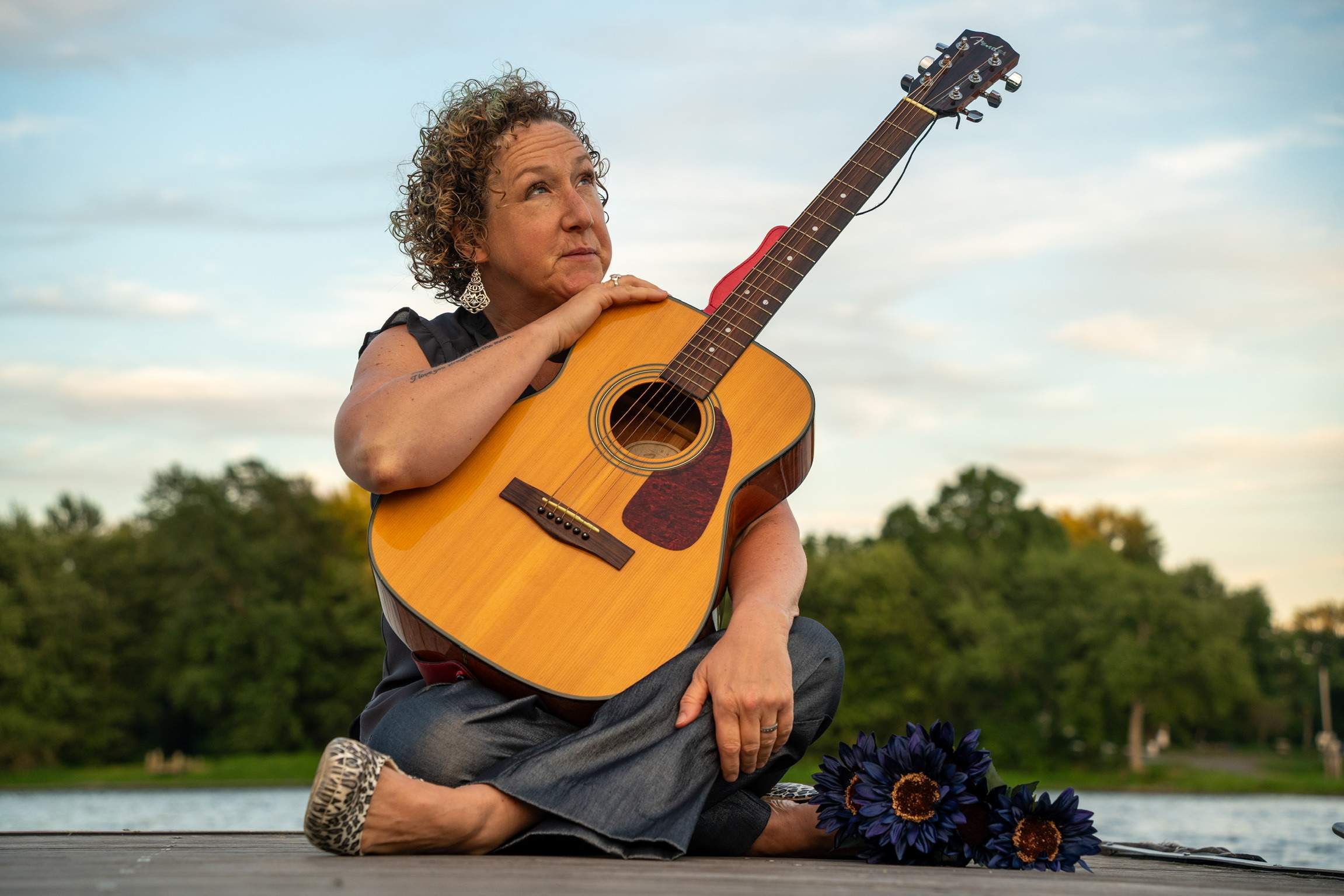
Lastly, your artwork for this single shows half a man’s face, with the other half being obscured by the flag. How was the art conceptualized and made, and what does it mean?
The artwork for ‘The Human Side’ and the song as a whole is a call for us to reflect on what it means to be part of this country. They are a lyrical and visual challenge for us to all live up to those founding words of “We the people” and “All men are created equal.” If we are to truly be a part of this nation, we are not just pledging allegiance to the flag, but pledging to look out for each other, even those who are different from us or difficult to care for.
Liz Reed Website / Facebook / YouTube