
Jonathan Sindelman: The Keyboardist Connecting Glass, Penderecki, Beefheart And Beyond
Jonathan Sindelman is a Los Angeles-born keyboardist, composer, and sound designer whose work moves across contemporary composition, progressive rock, jazz, film-oriented production, and large-scale touring.
Self-taught on piano from the age of five, he later studied composition at the University of Oregon, where encounters with Philip Glass, Krzysztof Penderecki, and George Crumb gave formal shape to an already active musical imagination. Those figures remain important throughout this interview, not as names attached to a résumé, but as sources of method: Penderecki’s treatment of sound as mass and architecture, Glass’s relation between music and image, and Crumb’s attention to resonance, amplification, and the physical limits of acoustic instruments.
The interview follows Sindelman through a career shaped by demanding music. With Parallels and Alan White, he entered the world of Yes, where melody and the many sounds of the keyboard play a central role. The Keith Emerson tribute brought him into another area of rock keyboard work, with its focus on accuracy, energy, and control. His later work with Frank Zappa’s music, including projects with Mike Keneally, Joe Travers, One Shot Deal, and The Furious Bongos, brings a different kind of challenge: knowing the written parts in detail, while keeping the music open to movement and improvisation.
Other parts of the conversation widen the frame. Sindelman’s tenure with The Magic Band required him to enter the fractured rhythmic world of Captain Beefheart, while his touring work with Googoosh placed him in a repertoire shaped by Persian popular song, orchestration, modal phrasing, and the demands of international performance. His current work with Al Nesbitt & The Alchemy brings these experiences into a cinematic setting, where melody, texture, and sound design function as parts of the same compositional field.
What comes through is a musician who knows how to move between the written page and the feel of the instrument, between acoustic sound and electronics, and between careful preparation and the instinct of the moment.
“The music announces itself, a door opens, and then it becomes my duty to build a bridge.”
You had the rare experience of studying under three titans of contemporary classical music: Philip Glass, Krzysztof Penderecki, and George Crumb. That is a staggering trifecta of influences. How did their vastly different approaches to notation and “theatrical” sound influence your own philosophy as a sound designer?
Jonathan Sindelman: The opportunity to study composition at the University of Oregon proved to be a rich experience. It wasn’t until after I considered attending schools such as Berklee, New England Conservatory and Oberlin that I became aware of the program’s presence and reach throughout the classical community. It was a tight-knit circle that enabled me to explore mediums traditional and modern, and with invitations to have my works premiered at symposiums and concerts, as well as further studies in electronic music and ethnomusicology.
Penderecki’s influence found its way into my psyche as a teen, around the same time my interest and awareness began to expand around film. Utrenja, Polymorphia, and De Natura Sonoris all left their footprint, and later a culmination with Dimensions of Time and Silence – a work for 40 mixed voice choir. Though not widely discussed, this piece became a gateway for me, as it further applied Penderecki’s use of the orchestra as a “sound generator”. Sculpting phrases with articulations that ricocheted between percussion and voice coalesced as a kind of singular organism, an engine to funnel instructions purely by acoustic means. One could compare the results to observing movements of a flock of starlings. Discoveries like these frequently occurred while working part-time at the university music library, and the door was wide open to explore a body of work which drew upon the fabric of contemporary composers, including High Modernism/Avant-Garde.
Penderecki’s patented graphic notation system and time-space mapping technique left crystalline impressions. The opportunity to visit and attend lectures during his residency was a great privilege, as was having his eyes and ears on my work. He emphasized that the fundamentals of sound and silence were in fact justified in my own shorthand. His encouragement set me free in many ways, shining newfound clarity and confidence in the direction of seeing more of my works read. Penderecki spilled into my work, in particular electronic music which also borrowed from Musique Concrète. It was a fertile time.
Philip Glass came and gave a masterclass. Later the same week he premiered his opera La Belle et la Bête, which was synchronized to Jean Cocteau’s original film. The score was replaced with new music as a form of hybrid live-action cinema. While the production contained “Glassian” elements as one would expect, his use of electronics, looping and synthesizers superimposed upon the ensemble and chorale were particularly striking. Sonically the atmosphere mirrored the surrealism and poetic style of Cocteau, and the structural aspects of scenes found liberation from the confines of conventional accompaniment, remaining faithful to the narrative with sensibilities that nodded to earlier periods of musical theater. While my decision to pursue studies in composition sprang from a passion for the language of film, it wasn’t until working on my inaugural film project many years later that lightning struck – a breakthrough occurred while composing to images in real time, and its physicality underlined by the impact of Glass. Needless to say it was a thrill to meet, and I enjoyed our interactions.
I can identify George Crumb as finding home in this same conversation, as he probed further to examine the physical capabilities of acoustic instruments and distilled perfectly their primordial aspect. A way was made to implement amplification and in that process thrust into the foreground treatments yielding unusual timbres, most notably with his works for mixed ensemble, and of course on the famed Black Angels string quartet. His son David Crumb became a faculty member at Oregon in 1997, initiating workshops and presentations to survey works from each. A memorable highlight was the Festival of the Millennium 1999, which included a panel discussion with George just ahead of his 70th birthday.
George Crumb was famous for his “macrocosmic” use of the piano—treating the entire instrument as a resonant chamber. When you are building patches or soundscapes for a modern project like Al Nesbitt & The Alchemy, do you find yourself applying those avant-garde classical “extended techniques” to your digital synthesis?
When referring to extended technique and with consideration given to the body and range of the piano, I resonate on the same frequency with Crumb’s Makrokosmos as I do with Rzewski’s The People United Will Never Be Defeated. I can easily imagine these two gentlemen making an evening of seeing Cecil Taylor at the Montreux Jazz Festival 1974 (the performance that birthed Silent Tongues) and walking away equally inspired, even if their findings were not entirely aligned. Not to diminish in the slightest the advent of digital synthesis, I feel most at home when at the piano, which surfaces periodically in The Furious Bongos, often in bursts of improvisation, at times like free-verse poetry. Given the nature of Frank Zappa’s music and this band’s capabilities in executing the music at a high level, having had the opportunity to grow my role over time allows for some indulgence in this respect. It’s been a total delight.
You’ve described yourself as self-taught from age five before entering formal academia. Looking back, do you feel that early, unencumbered period of “writing by ear” gave you a structural advantage when tackling the dense, often non-linear compositions of Frank Zappa later in life?
Absolutely. Having been self-taught explains the memorization techniques I’ve adopted over the years. When approaching Frank’s work I prefer to get off-book as soon as possible to enjoy a flow state that fuels interaction with the band. This also provides a natural feedback loop when going back to the well, evaluating new ways to play and perform the material. Always inspired, aspiring and hopefully always improving!
Stepping into the Keith Emerson Tribute concert meant filling one of the largest pairs of shoes in rock. You tackled “Karn Evil 9 (1st Impression, Pt. 2)”…a track defined by its Hammond-heavy momentum. What was the most difficult “Emerson-ism” to replicate, and how did you balance technical accuracy with your own voice while Keith was in attendance (or in spirit)?
No matter the piece, playing Keith’s music always brings with it a challenge and a deepening perspective. His brand of rock keyboards was more a singular dialect, a hybrid in approaches anchored by pinpoint accurate phrasing with marked attack and fluidity, all supported by a seemingly limitless stamina. Tank was originally written and recorded as a four-part overdub on the Hohner Clavinet ‘L’. It was something I took on and adapted for the Keith Emerson Tribute concert – a tremendous task to prepare and perform live. After seeing the official film Fanfare For The Uncommon Man, I’m proud of what we did on that piece, with Joe Travers taking the reins on the drum solo and then having Brian Auger join for the organ solo for the climactic finish.
Your relationship with Alan White was a major turning point. Beyond the “Yes” catalog, you joined his solo band as a full-time member.
Alan’s artistic voice, wisdom and presence were an integral part of the DNA of Yes, and within seconds of first playing together I immediately understood why. Siberian Khatru was the song. As we lifted off into a mid-tempo groove it felt as if the stage levitated. Suddenly the band sounded massive, and for ten minutes everything was noticeably relaxed yet still laser-beam focused. He drove us to this beautiful place. I couldn’t process in full being on stage with someone I considered my musical hero from the age of 12, but things manifested much like a vivid dream unfolds, signaling the beginning of many wonderful and fulfilling years to come as friends and collaborators. The way Alan felt time had a profound impact on my playing. Rock can sometimes feel rigid, even in the company of some of its greatest drummers. With Alan behind the kit it was as if the barlines disappeared. Living in this reality brought a more soulful, elastic, funky, even vocal quality to my phrasing not nearly as accessible before. I’m grateful for all the years we shared together, especially our level of communication, the genuine love, and the absence of ego. I still feel him whenever I’m locked in, playing live and flying at high altitude. He was and continues to be a mentor.
When you co-founded Parallels, it wasn’t just a regular tribute, maybe more like a gateway? What is it about the specific “Yes” vocabulary that mixes church organ majesty and Moog agility that still feels relevant to you in a modern session environment?
Yes offered another proposition with rock music that could originate from melody, working its way from top to bottom rather than via the exercise of stacking riffs and rhythms. The band was a virtual orchestra in a suitcase, especially when unpacking songs like Awaken and Ritual. The collective five had developed a keen sense of the “inner conductor”, really listening and looking after the music together. And so rehearsing with Parallels was a rite of passage driven by that same principle of listening. In one moment we could sound enormous, even touch euphoria, but if one’s attention wavered for even just one second the bubble would burst and all might come down like a house of cards. When approaching pieces like Close To The Edge, the rehearsal room became a test kitchen. We threw everything into the mix from multiple arrangements until what came out on the other side authentically conveyed the essence of Yes. I loved touching on all the different periods, from the bristling organ of Tony Kaye to Rick Wakeman’s signature Moog sound, baroque-tinged pianism, and emulating the St Martin’s church organ heard in Going For The One. And behold the technicolor dream that is Geoff Downes, whose contributions are still underexplained when taking into account the dawn of the 80s with Trevor Horn and The Buggles, on full display in albums like Adventures In Modern Recording, then repurposed for an entirely new vehicle with Yes. Patrick Moraz’s tenure in the band, his illustrious solo career and artistic leanings held equal weight in my own thinking (in high school I considered the Relayer album to be the pinnacle). Above all, Yes was my boot camp for developing an ability to choreograph individual scenes within a piece of music, and a skill set that serves me to this day.
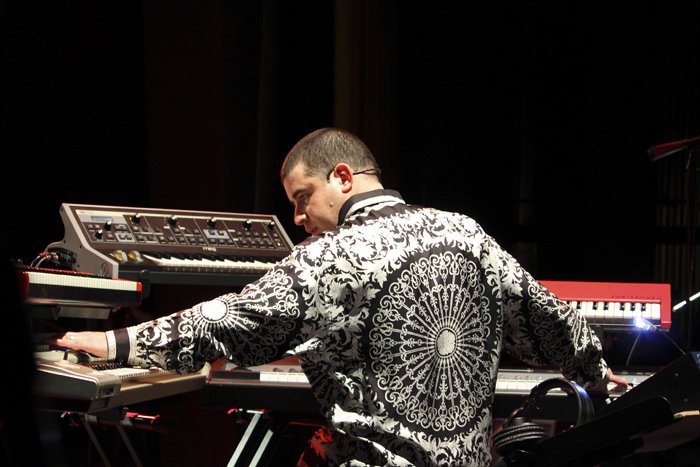
The Magic Band’s 50th-anniversary tour of Captain Beefheart’s music is legendary for its difficulty. Don Van Vliet’s music often famously disregarded “standard” keyboard roles. As the keyboardist in that 2017 lineup, how did you find your “pocket” in a landscape defined by polyrhythmic anarchy and delta-blues-on-Mars?
Stepping into the role was surreal, as the entire process was practically effortless. Everything came together quickly and worked so well sonically. Once we were on stage it was like a switch flipped on, shapeshifting by the light of John French who channeled Don brilliantly – singing, reciting prose, playing harmonica, soprano saxophone, and then taking up his rightful place on the drum throne during the second half of the show. We mixed paints to rouse the muse and cast our collective spell to convert the recipe for each song, which translated to a kind of pop-up art exhibition at every show we did. The centerpiece was Safe As Milk, celebrating its 50th anniversary and carrying with it the fragrance of an era that birthed psychedelic rock. Add to this forays into Trout Mask Replica, Clear Spot, The Spotlight Kid, and Bat Chain Puller. This was time travel at its finest, serving up Delta blues superimposed on contemporary improvisation, polyrhythms, experimental noise and of course, theremin! Whether standing up in the maelstrom of Hair Pie, or leaning in with the guys on Suction Prints, my cutlery remained sharp going between Mark Boston’s bass parts, piano, organ, marimba and synthesizer. The rapport with audiences and support around the band were nothing less than magnificent. It was a privilege sharing the stage with John, Max, Eric, and Andy, all of whom remain dear friends.
Working with the Mike Keneally Band and the Zappa “Vaultmeister” Joe Travers puts you at the center of the Zappa universe. When performing pieces like The Furious Bongos, how much room is there for improvisational “statistical density,” and how much is strictly “playing the ink”?
The first time I performed with Mike we did The Dolphin Suite, which proved revelatory for how the band operated and to where reporting on the music seemed secondary (however every bit as satiating and exceptionally fun to play). The range of vocabulary across three sections was hermetically sealed into themes redolent of Thelonious Monk (if not the resurrection of!), further enhanced by melodic statements which turned on a dime in cinematic fashion and affectionately incorporated polyrhythms suggestive of Frank Zappa. The shared history between the guys acted as an invisible net while surfing supernaturally tall waves, insisting upon an element of risk that precipitated a most infectious joy. I went on to play with Joe Travers in situations involving a generous slice of Frank’s more ambitious work. My role was chameleonic, as I could be found adapting to the keyboard orchestral reductions from the Petit Wazoo, or reproducing Ruth Underwood’s signature mallet percussion parts, then suddenly leaping into the frame of George Duke’s Rhodes and Arp Odyssey. The performances were electric, and having Ruth, Ralph Humphrey, and Zappa family attend was a tremendous honor. Fast forward a few years with One Shot Deal and the tradition of jumping timelines continued, curating a program to satisfy the most discerning palate while still allowing plenty of room for improvisational freedom at a wingspan. The sum of these experiences became the ultimate primer for syncing up with The Furious Bongos. There’s a distinct culture around the arrangements, a singular ecosystem which exists apart from the nostalgia yet inclusive of those signature flavors and inescapable humor so coveted in the music. Musical director and bassist Conrad St. Clair devotes considerable time and attention in his research and consequently offers something that’s highly original, having met with hard-earned success and reaching multiple generations of Zappa enthusiasts from around the world. I’m in wonderful company and having a blast with all of it.
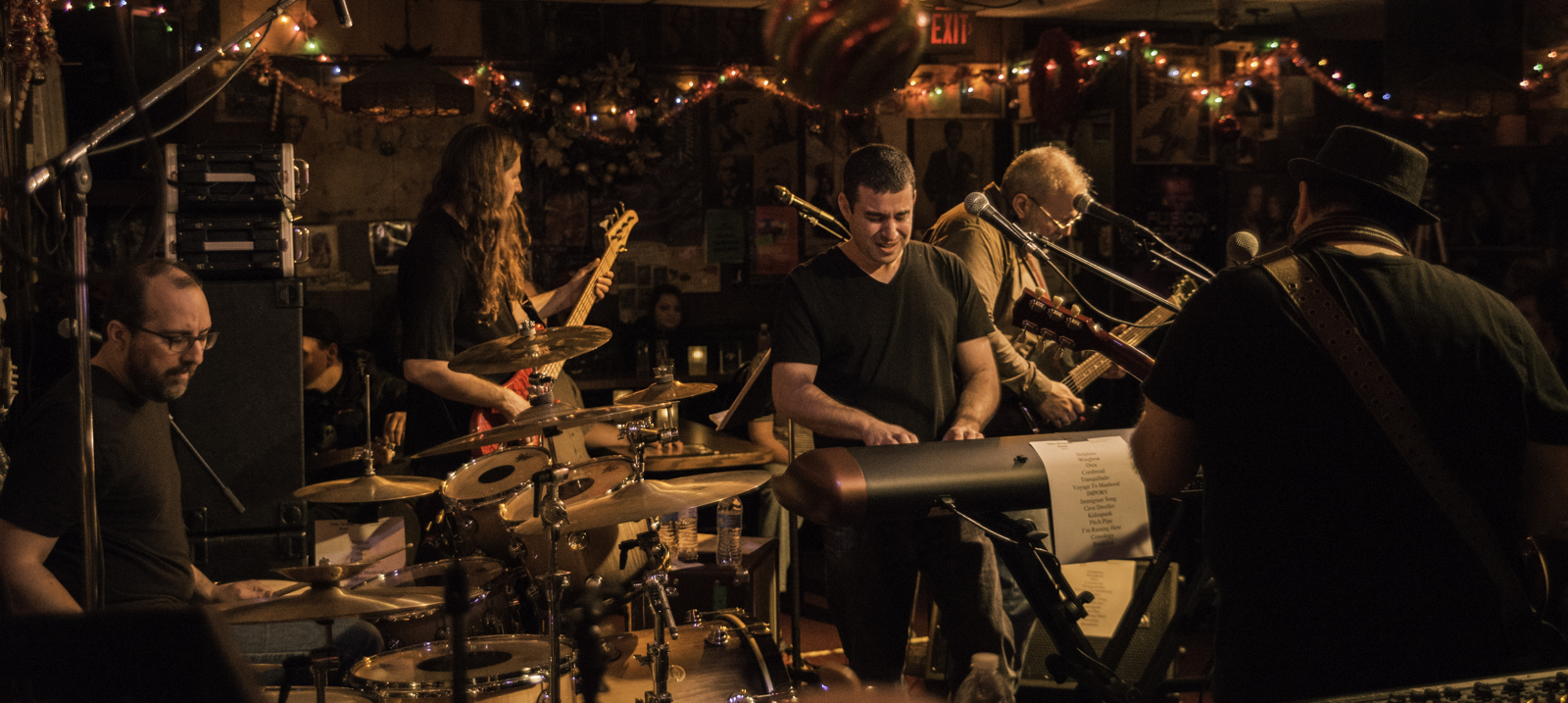
Touring with Googoosh is a fascinating pivot from the world of Prog and Fusion. Persian pop involves intricate quarter-tones and specific cultural modes. Did you have to re-map your internal musical scale to accommodate those Middle Eastern melodic structures?
There was a tour with Googoosh and Martik, celebrating their association and friendship going back to before the revolution. The set alternated between hits from each as well as a handful of duets they recorded back in the 70s. Given the band lineup at that time there was much to absorb and adapt for the stage, as each artist occupied a unique post in the musical landscape, not to mention styles of working. Googoosh was connected with film composers, arrangers and directors during the golden era of Persian pop. The songs displayed a fragrant romanticism with lush orchestrations, mirroring the upbeat energy of the West and nodded in the direction of French chanson-style ballads. Martik’s classic songs transmitted a distinct quality of melodic phrasing, modes and distinctive 6/8 rhythm commonly identified with the East. That said, Googoosh certainly had her calling card songs like Pishkesh, infused with those same elements and were always a delight to play. Martik embraced more contemporary sounds as the years went on, demonstrative of his love for soul music, rock and R&B (a love shared with Googoosh, as they were totally tuned into the greats in their respective heyday – Elvis Presley, Aretha Franklin, Tina Turner and Elton John). I was tasked with bringing a high level of production value to the role, reproducing orchestrations, doubling the majority of lead lines while remaining fused to the rhythm section with organ, electric pianos and synthesizer. The fluidity in the phrasing of melody felt closer to the human voice, especially when offset by rhythms which otherwise would seem susceptible to a strictness or rigidity. The most rewarding aspect of playing with Googoosh was that we were a band of seven nationalities, celebrating unity and diversity, and essentially medicine for audiences wherever we played. We were in a sense an army of peace, and for a few hours each night the boundaries dissolved, epitomized in moments such as performing at the World Expo in Dubai, which saw over a hundred countries represented. It was a great honor to be with Googoosh over the years and maintain a heartfelt connection through some turbulent times. She remains an inspiration to this day and a symbol of hope that’s inextinguishable.
Al Nesbitt & The Alchemy feels like a culmination of your session experience…mixing Tony Franklin’s fretless growl with Curt Bisquera’s groove. You’ve mentioned this project feels at home in film production. When you’re composing for a “massive sonic canvas” like this, do you think in terms of melody first, or do you start with the “texture” of the sound design?
While the textural aspect receives its share of attention, our core sound is woven from threads of imagery and characterization, realized through the lens of melody. Al is a brilliant musician and a visionary artist. His sensibilities lean toward the cinematic and in each subject infuses the composition with a sense of place, charting our course as a band. My personal connection with Al is one of a kinship that began in Seattle, playing and touring the music of Ronnie James Dio (a story within a story!). The seeds of the Alchemy band came from collaborations going back to the pandemic, and later with cameos by Tony Franklin and Michael Levine on Al’s album A Million Shiny Things. The live element came together over a protracted period and in multiple configurations. During this gestation phase we discussed the prospect of bringing the songs to life by integrating existing elements of the orchestration and production with the role of keyboards. A short time later, Al proposed the idea of a quartet with Tony and Curt. Those first sparks from playing together proved combustible, and after our first show it was clear we had something incredibly rare and special. The Live In Seattle release is taken from that performance. The transition from playing to a mode of writing and recording has been a wonderful process of discovery for us, tapping a reservoir of creativity that really has no limits. The experience has been purely collaborative and remains a clear channel for Al’s vision. The new songs are as ideally suited to the arena of film as they beckon to be played live, yet in a manner that thrusts into the foreground that cinematic element on stage, ultimately the foundation for producing a show we feel will be exciting and immersive.
You’ve moved between the Northwest jazz scene, the Berklee academic world, and the Los Angeles session circuit. Is there a specific “LA Sound” that you’ve reclaimed since moving back in 2014, or do you feel your style remains rooted in that more experimental Northwest spirit?
It’s the individuals I’ve intersected with along the way who have shaped my sound, and stylistically that continues to show up with enough time and distance. My mentors always manage to find a way into my composing and playing, and perhaps more so when accepting a bit more responsibility as a producer or musical director. Like a garden, there’s good fruit to be had by simply watering at the root, and all of this points to the eventual conclusion and release of my debut album. The songs don’t fit squarely into any one particular genre, but I hope people will find them enjoyable, or at least somewhat accessible to their own experience of what music can be.
As a sound designer, we are currently seeing a massive “analog vs. digital” renaissance. Are you still a “purist” when it comes to the tactile response of a physical B3 or a Minimoog, or has the world of high-end software finally caught up to your needs for live performance?
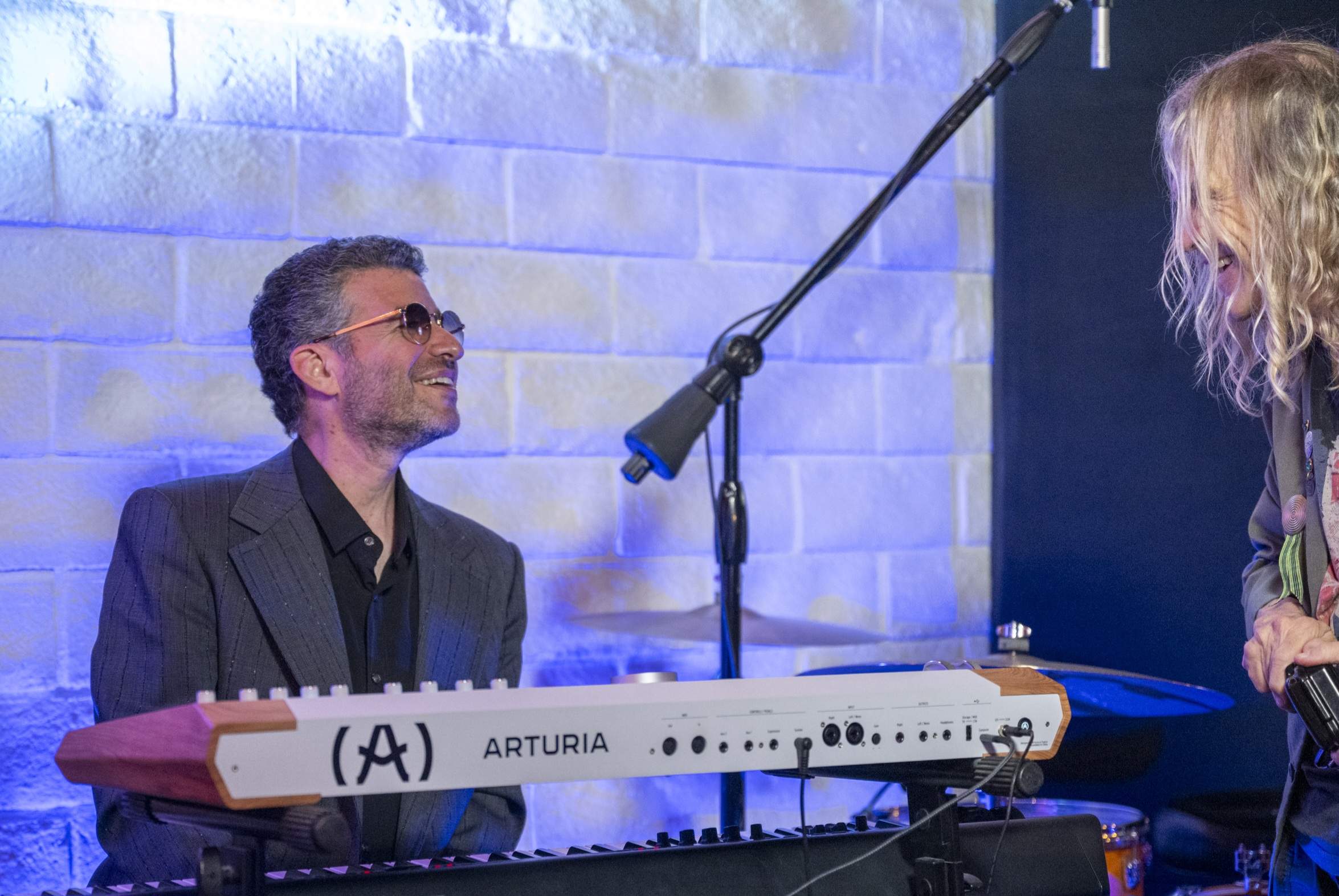
A crossroads came at around 2003, blending spheres of analog and digital while developing a new rig for Parallels The Music of Yes. I was enthralled by how those worlds interacted and became the architecture for a comprehensive palette reporting from one place. A pivotal ingredient was the Nord Lead 2X, and after about two years of sculpting I carried with me a handful of signature sounds that expressed a distinctly human element. It was surprising to feel that raw, personal connection coming from the realm of virtual analog. In these times it’s wonderful how much more we can do while traveling with less. Presently I’m enjoying the flexibility of utilizing hardware and software from Arturia at home and on the road. There’s of course a myriad of sound libraries and plugins to bring in, but first and last I still prefer to develop sounds that represent themselves as tactile and organic.
If you could go back to that five-year-old in Los Angeles who was just starting to write songs, which of your future collaborations do you think would surprise him the most—and why?
By the time I was a teenager I was listening to Yes, ELP, Frank Zappa, among others whose album covers adorned my bedroom walls. I could never have imagined the possibility of working with my early musical heroes and/or their constituents. If I were speaking to that five-year-old now, he would be gobsmacked by the reality of being able to communicate musical thought with relative ease, closing the gap between what we hear internally with all that’s being expressed in the physical.
Penderecki is famous for his “Sonorism” period, where he used graphic notation to create massive blocks of sound, clusters, and unconventional textures. As a keyboardist, your instrument is inherently tied to specific, fixed pitches. When you were studying his compositions at the University of Oregon, how did he challenge you to move beyond the “grid” of the keys? Do you find yourself applying his theories of “textural mass” when you are designing complex synth layers for film or fusion projects today?
I think Penderecki’s application of “textural mass” speaks through my sound design work, often with the employ of dozens of tracks all acting like a colony of bees to animate the subject. I’m drawn to the nature of tones which find themselves embedded in textures that demonstrate “a way of doing things”, and that can speak beyond their aesthetic value. When thinking on those terms, it’s as if I’m abandoning the keyboard as an instrument altogether. The music announces itself, a door opens, and then it becomes my duty to build a bridge from the source and deliver something the listener can readily receive.
Penderecki’s later work like the Credo, which has such deep ties to the Oregon Bach Festival marked a shift toward a “New Romanticism” that was deeply emotional and often sacred. Having studied with him, how do you approach the “weight” of a composition? In your work with projects like Al Nesbitt & The Alchemy, do you find that Penderecki’s preference for a “massive sonic canvas” has influenced how you structure the dynamics and “monumentality” of your own performances?
I think composers like Penderecki, Adams, Stravinsky, Korngold and Ravel all have their footprint in my work, personified as Auteurism in film which is the quality I identify with most. It’s heartening to see we’re once again living in an age of the director, operating at a level of autonomy not witnessed since the 70s, and with the infrastructure formed around the basis of talent, genuine teamwork, and with the tenacity that actually gets a film made and finished. I always look forward to a good screenplay that takes hold and doesn’t let go until the credits roll, but without that I’ll likely have little to say in the way of music.
Klemen Breznikar
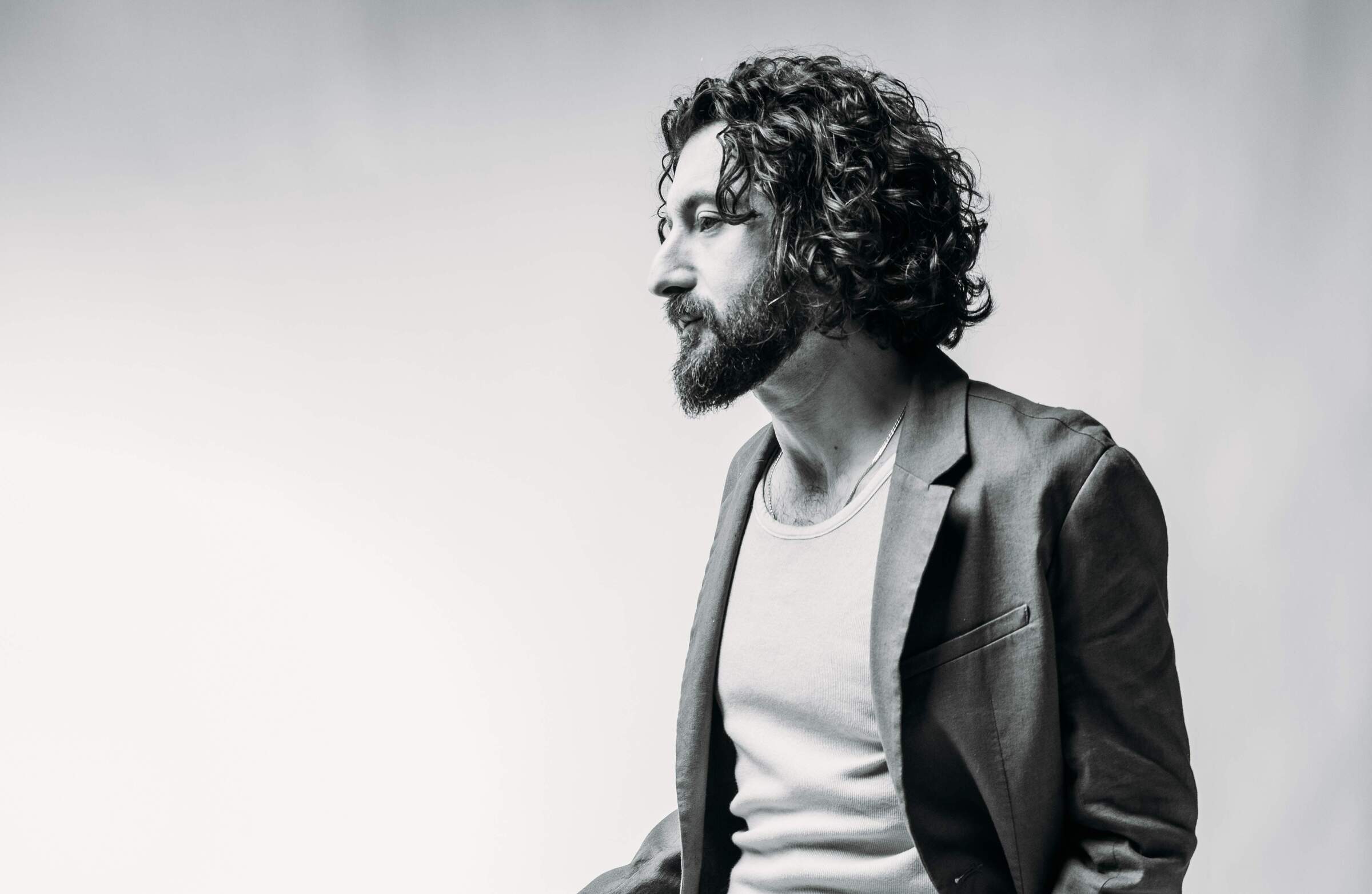
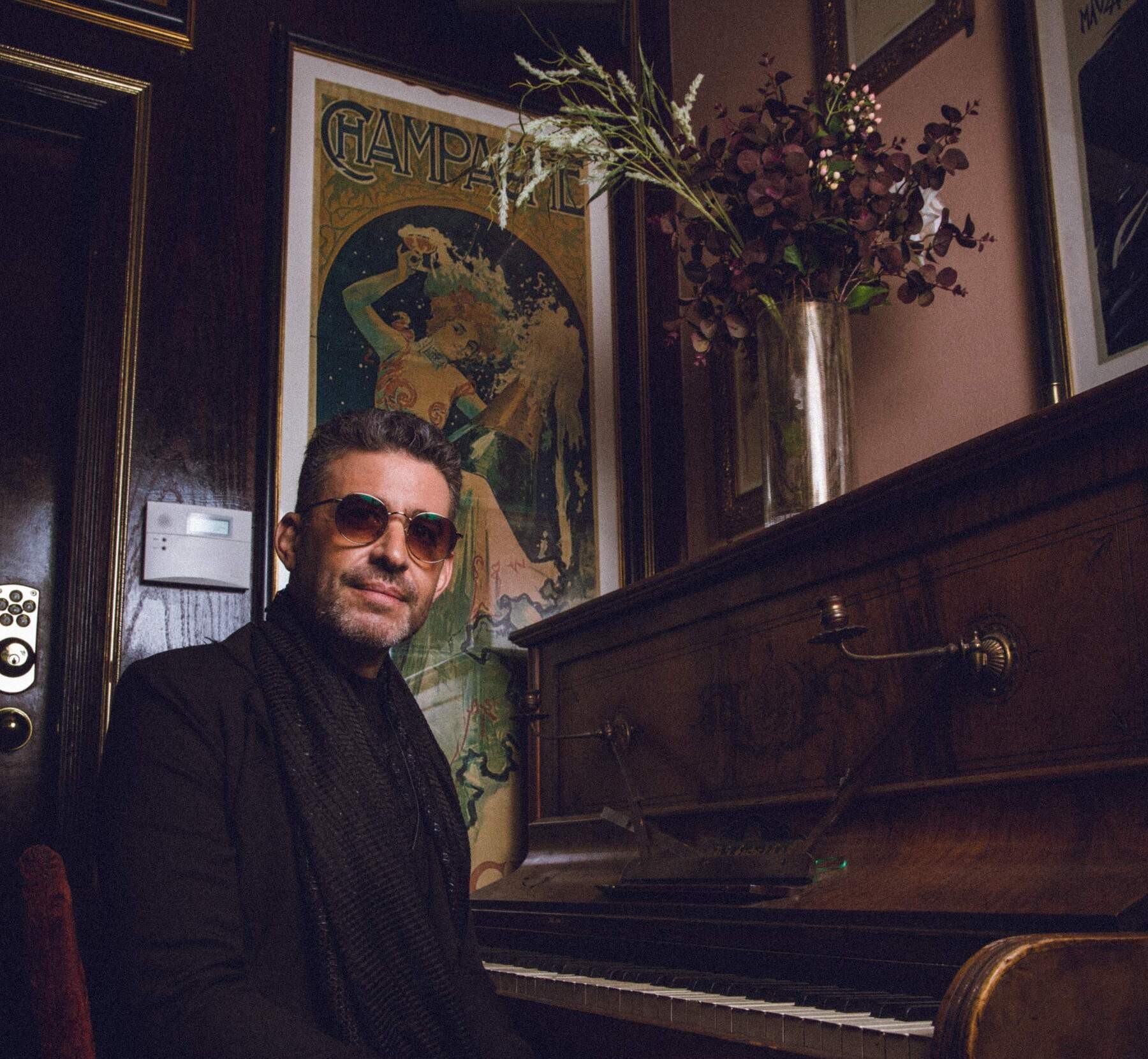
Headline photo: Jonathan Sindelman (Photo by Kevin Baldes)
Jonathan Sindelman Website / Facebook / Instagram / YouTube