
James Warren on The Korgis, Stackridge and ‘Everybody’s Got to Learn Sometime’
The Korgis and Stackridge occupy opposite ends of the same James Warren and Andy Davis continuum: one a compact pop mechanism built for radio, the other a West Country laboratory where prog, music hall, folk melody and English absurdism were allowed to collide.
Before The Korgis reached the charts, Stackridge had already become one of the stranger propositions in British rock. Formed around the Bristol and Bath orbit, they opened the first Glastonbury Festival in 1970, playing to a Worthy Farm crowd closer to a village gathering than the modern corporate city state. Their 1971 debut contained ‘Slark,’ a side long creature of narrative whim and instrumental drift, while the live shows made room for dustbin lids, theatrical business and what Warren calls the band’s inability to resist “injecting a comedic element.” Yet the joke never cancelled the craft. Stackridge wrote with a melodic instinct too stubborn to be swallowed by virtuosity.
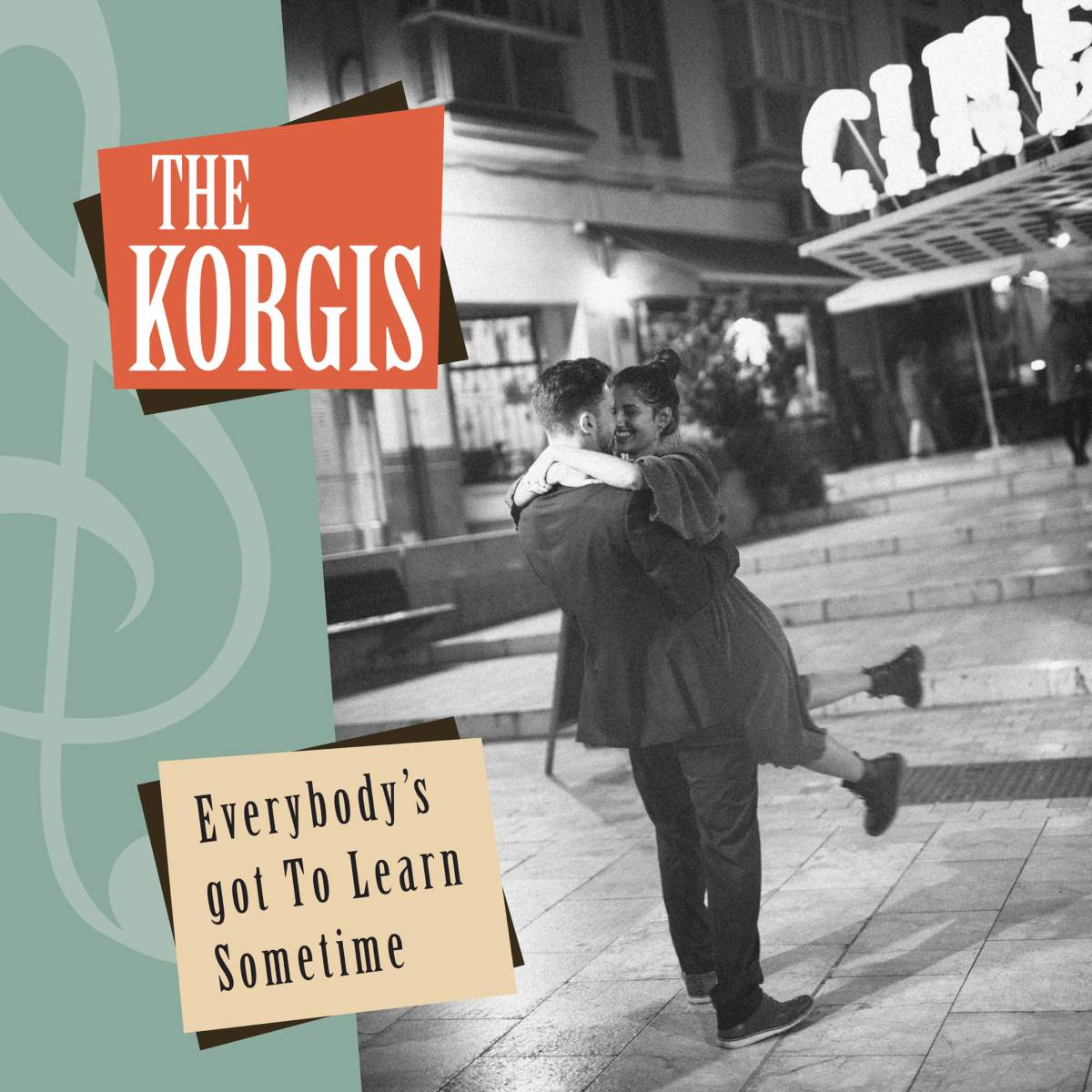
That instinct found its most compressed form with The Korgis. By 1978, Warren and Davis had turned away from the permissions of progressive rock and toward what Warren calls the “perfect pop” of The Beatles, The Kinks and The Beach Boys. ‘If I Had You’ proved the method; ‘Everybody’s Got to Learn Sometime’ distilled it. Released from ‘Dumb Waiters’ in 1980, the song had the grammar of a ballad but the architecture of a small secular hymn: a descending minor sequence, that suspended keyboard figure, cavernous drums, and a chorus asked for change rather than promised romance.
The new acoustic version with Matt Owens restores a second verse once rejected as “not necessary, it’s perfect as it is.” Stripped of the original’s synth glass and studio weather, the song returns to Warren’s stated source: “a philosophical pop song,” shaped by Buddhism, inner change and the line “Change your heart, look around you.” Its endurance, from Beck’s spectral reading for Eternal Sunshine of the Spotless Mind to Baby D’s rave mutation, lies in that spare frame. There is enough room inside it for sorrow, release, devotion, and the unresolved work of learning.
“We just loved a good tune!”
On its 40th anniversary, you and collaborator Matt Owens of Noah and the Whale have delivered an affecting acoustic version of ‘Everybody’s Got to Learn Sometime,’ incorporating a restored second verse that was edited out of the original 1979 Korgis track. Why was that verse, beginning “Everyday, so confused inside,” originally excised? Was it a commercial decision to tighten the radio edit, or more of a production choice? And how does reintegrating those lines now alter the song’s narrative arc for you personally?
James Warren: I think I’d always intended to write more words to the song, but our record label had grown so used to the demo version, which had just the one “Change your heart…” verse, that when we presented version 2 with the extra lyrics, their response was “not necessary, it’s perfect as it is.”
Matt comes from a distinct indie-folk world, while the original Korgis recording was defined by its synth minimalism and sense of space. In revisiting the song acoustically, how did his instincts as a songwriter and player interact with your melodic structure to create that “beautifully chilled” atmosphere? And did working with a musician from a different generation change the way you hear the song’s underlying bones?
Matt had recently moved to Bath, where I live. This was 2019, and I invited him round to my house one day. At some point, he casually passed me an acoustic guitar, saying, “Come on James, play EGTLSometime!” and after I’d done so he said, “Have you ever thought of recording a stripped-down version of it? Why don’t we do it?” It seemed like an interesting project and, unlike my 1980 self, I was very happy to allow him complete arranging and production control.
I love the end result.
The original ‘Everybody’s Got to Learn Sometime’ has such a distinctive sound… those stark synth lines, the recurring keyboard figure, and the cavernous drum sound. In the stripped-back 2020 version, all of that atmosphere is replaced by something much more exposed. Did that make the song feel more fragile to sing?
Yes, it does make it more vulnerable, doesn’t it? But isn’t that refreshing! I’m very pleased with Matt’s airy, acoustic approach. I think it suits the song very well. Also, I happen to prefer the way I sing now. I don’t much like to listen to my 1980 vocal performance.
You have often mentioned that, despite the romantic interpretation many listeners project onto it, the lyrics were originally inspired by your interest in Buddhism and the concept of inner change rather than romantic heartbreak. With the line “Change your heart, look around you,” were you consciously trying to smuggle a philosophical mantra into a pop format? Does performing it in this acoustic style bring it closer to that original spiritual intent?
I was indeed trying to create a philosophical pop song. Although I would position myself as a secular humanist these days, I still think the interconnectedness of everyone and everything that’s so fundamental in Buddhist thought is such an important insight. And the acoustic style really does allow the lyrics to come through without too much distraction.
The Korgis came after Stackridge, a band known for theatrical, progressive arrangements. Was The Korgis’ cleaner pop sound a deliberate move away from that complexity, or did it grow naturally out of your songwriting partnership with Andy Davis? And how hard was it to shift from those more elaborate arrangements to the spare, disciplined structure that ‘Everybody’s Got to Learn Sometime’ needed?
Both Andy and myself had always loved the “perfect pop” of The Beatles, The Kinks and The Beach Boys, even while we were creating our full-on prog stuff, so with The Korgis we thought maybe now’s the time to see if we could come up with a bunch of three-minute, radio-friendly tunes for a change. Andy was right on it from the start, think of ‘If I Had You,’ but with my lyrics at any rate, it took a little longer to divest myself of our Stackridgian eccentricity.
This song has proved unusually adaptable, from Beck’s version for Eternal Sunshine of the Spotless Mind to Baby D’s dance take. Is there something in the chords or structure that lets it carry such different weight?
It’s a very compact tune with plenty of space, so I reckon that must help a lot.
Plus, the descending minor chord sequence and the bluesy “I need your lovin’…” bit seem to be really appealing. I notice that quite a few of the dancey, sampled versions have even retitled the song ‘I Need Your Lovin’.’
With this new single, you’re returning to the song 45 years after it first found its audience. When you sing “Everybody’s got to learn sometime” now, does that line carry a different set of feelings for you than it did when you were singing it as a young man in 1980?
No, I reckon I’m still there with the original feeling and intent. Only a fundamental, spiritual transformation in the way we interact with ourselves and nature as a whole will make a better world. As Sting once put it: “there is no political solution.”
Did you simplify the chord voicings for the guitar, or did you try to retain that specific “Korgis” tension in the acoustic format?
The song was composed on the piano, but Matt Owens was keen to preserve the original chord shapes and progressions, except that in the new version we decided to have it on acoustic guitar. We felt the bass had to keep to its original 1980 pattern. Anything else would have sounded rather strange. It needs to just be there unobtrusively.
I think a lot of our readers would love to discuss Stackridge. I hope you don’t mind answering a few questions about them. Fans and critics often labelled Stackridge the “West Country Beatles,” a title that became a reality when you worked with George Martin on The Man in the Bowler Hat in 1974. Did working under the microscope of the “Fifth Beatle” validate your melodic instincts, or did his strict discipline force you to strip away the eccentric improvisation that defined your earlier live shows? In hindsight, was that album the moment where the polished pop sensibility of The Korgis was actually born?
I think that when George Martin’s participation was confirmed, it did subconsciously inspire us to be more succinct, melodically speaking. And yes, without any discussion, we naturally seemed to give our “eccentric improvisation” tendency a rest. Happily though, George was quite open to any more “grandiose” tendencies we might have had at the time. ‘God Speed The Plough’ was a perfect vehicle for George’s effortless orchestration, for example. Also, arrangement-wise, ‘The Galloping Gaucho’ was an ideal ‘Being For The Benefit Of Mister Kite’ opportunity that brought out the best in George.
I take your point: this album may well have been the inadvertent birth of The Korgis.
Your career arc is incredibly rare because it moves from the sprawling, 14-minute narrative structures of songs like ‘Slark’ from your 1971 debut Stackridge to the absolute minimalism of The Korgis. Was it difficult to train yourself out of that “progressive” mindset where a song could wander for ten minutes, or did you always view those early long-form pieces as just collections of short pop songs stitched together?
No, I wouldn’t say we thought of the long-form tendencies of Stackridge as stitching together a bunch of short songs. We were just revelling in the self-indulgence opportunities of the “progressive pop” era, which allowed for the occasional fun musical and lyrical elongation. But as I alluded to earlier, by 1978 Andy and I were ready for a new, decidedly pop-oriented chapter.
In the early days, there was a fascinating tension between your serious musical chops, influences like Stravinsky and Zappa, and the “Music Hall” theatricality of the stage show, complete with dustbin lids and “rhubarb thrashing.” Do you feel that the comedy element ever overshadowed the complex composition work you were doing? If you could debut Stackridge today, would you keep that eccentric visual identity or let the music stand entirely on its own?
Good question.
I tend to think we wouldn’t be able to resist injecting a comedic element into the live shows!
Going back to the very start, when you opened the first-ever Glastonbury Festival in 1970: at that time, Stackridge seemed to be a reaction against the heavy blues-rock dominating the UK scene. Was the original concept of the band to be an intentional “antidote” to the Led Zeppelins of the world by offering something lighter, pastoral, and more melodic?
No, it wasn’t an intentional “anti-metal” approach; it was simply the case that our melodic sensibility was too strong: we just loved a good tune!

Thank you very much for your time. What else currently occupies your life? What are some of the albums you have been enjoying lately and would like to share with our readers?
I don’t tend to sit and listen to albums these days. Like many of us, I’ve been seduced into the Spotify tendency to sample 12 different tracks by 12 different artists in between reading blogs and watching various YouTube clips.
I think Taylor Swift is really talented and I love the recent pop-country-crossover albums of Kacey Musgraves. What a beautiful voice!
Lana Del Rey is very good too. Also Rosaria.
I’ll always have soft spots for Pat Metheny, Bill Evans, Peter Gabriel and Sting, but overall I’m happier dipping into cinematic soundtracks these days.
I didn’t need to mention The Beatles, by the way. They’re obviously going to be there!
Klemen Breznikar
The Korgis Website
Singsong Music Website