
Imaad Wasif on ‘Superconsciousness’: “I’m on My Own Trip and Always Have Been”
Imaad Wasif’s new album ‘Superconsciousness’ came out on March 18, 2026, through his own label, Voidist Records.
It’s his seventh solo album, but it also feels like a new start in some ways. He made it after a rough stretch, including years of touring with Yeah Yeah Yeahs, writing whenever and wherever he could, and being displaced from his home in Altadena after the Eaton Canyon fire.
He’s careful about that part. His house didn’t burn down, but it was badly damaged by smoke and VOCs and became unlivable for months. Around him, thousands of structures were destroyed. He was also going through a lot personally. So yes, there’s real weight behind the record. But he didn’t want to make something that just sat in all that heaviness. As he puts it, he didn’t want to make “an indulgently heavy record.”
That’s probably why ‘Superconsciousness’ feels open instead of closed off. The songs are dealing with pain, doubt, fear, and exhaustion, but they’re also trying to move beyond them. ‘Believe’ is the clearest example of that. It’s simple in the best way, almost like something to hold onto. ‘Echoing’ is more bare and exposed. Wasif calls it one of his most “punk” songs, not because it sounds punk, but because it’s so vulnerable.
The album was produced and recorded by Lewis Pesacov, with contributions from Heather McIntosh, Nick Zinner, Dylan Fujioka, Garrett Ray, Rocco DeLuca, and others. Wasif says he wanted to understand the shape of the songs before asking anyone else to play on them.
What comes through most is that he’s not claiming to have figured anything out. He says, “The questions keep me going. The answers make me static.” That feels like the heart of the record. ‘Superconsciousness’ is about the search.
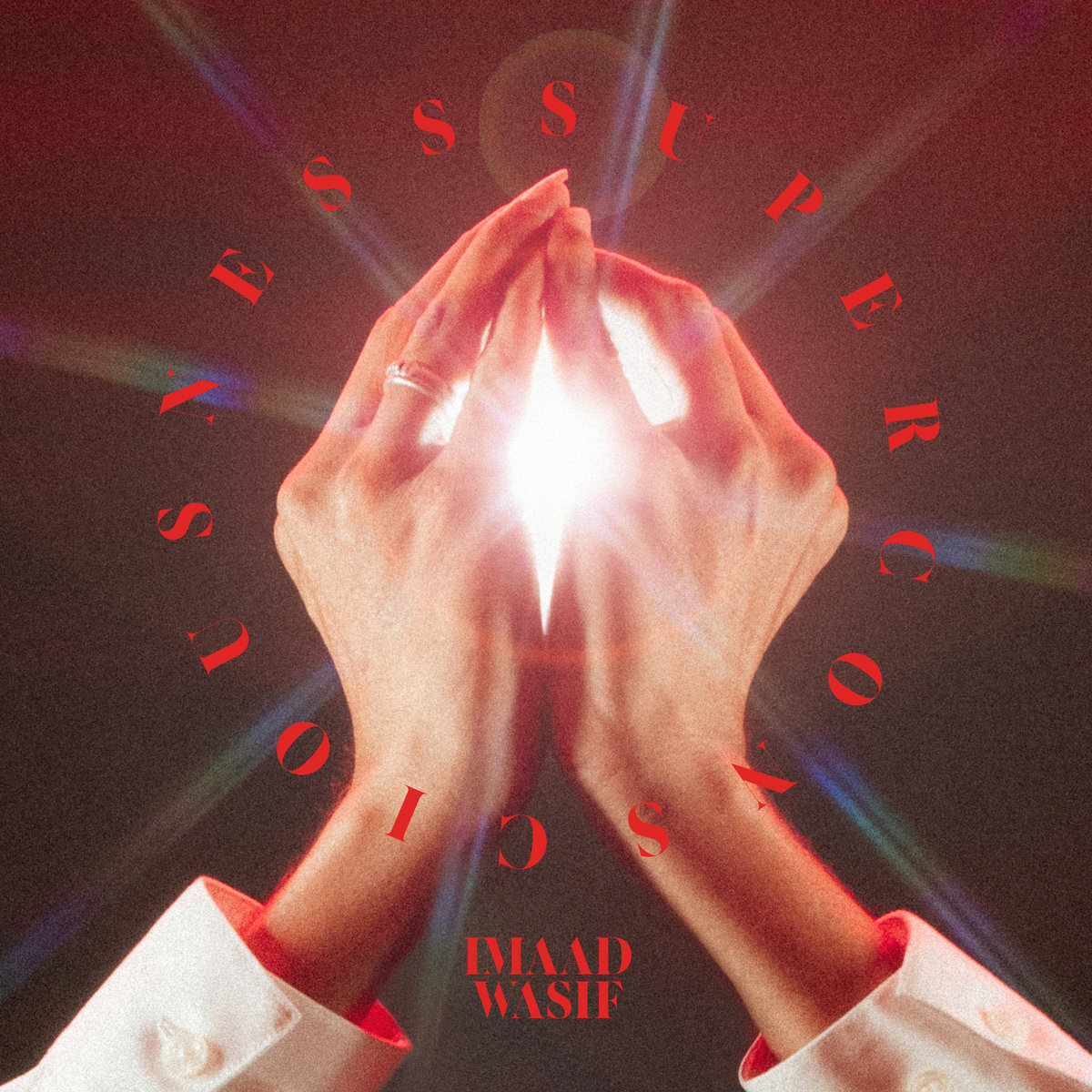
“The questions keep me going. The answers make me static.”
When you hear ‘Superconsciousness’ now, does it still feel connected to where it began, or has it become its own thing?
Imaad Wasif: I can hear it all still; the origin points in my memory are what keep the source intact. The spark became a current that then spread like wildfire. But the album is meant to not resolve; it exists without closure, understanding that once you get to the end, that’s just the beginning of the next level. There’s really never an end. If I’ve learned anything about being alive, it’s this.
After everything that happened with the fires and being displaced, did you know you wanted the record to move toward something lighter, or did the songs lead you there?
To clarify, my house didn’t burn; it was smoke and VOC damaged and uninhabitable for a long time. I was displaced for 8 months and am no longer living there. There were 9,000 structures around it that burned in less than 24 hours, and that was perhaps the most traumatizing thing I’ve ever experienced in my life. The residual effects and, honestly, the survivor’s guilt were real. I was also going through a lot of personal upheaval at the time. I didn’t want to make an indulgently heavy record. We are already experiencing the darkest times of our lives in the world, so all that was a catalyst for this album. The feelings of futility and doubt, the pain, so much of our worst fears, whether personal or universal, are something that can be risen above. There’s a catharsis in creating from this place. It takes an ungodly amount of belief. I think with this album I wanted to accept the role of being a transmitter of that awareness and the search for it. Hence the title, ‘Superconsciousness’.
When you’re in the middle of making it, does that transformation feel intentional, or are you just following the song and seeing where it goes?
There is something to the idea of staying open. I hesitate to use the word “muse,” but I am always living in a state of reverence toward it. Usually, in the process of creating or completing a vision, we become fixed. I did my best to work outside of that mode until the song became undeniable in its approach and the direction overtook me.
You said you were writing everywhere, hotel rooms, your place, different studios, catching ideas half-asleep. Do you remember one of those moments where something came in and you weren’t totally sure where it came from?
I was in Paris when the song ‘Dark Lord’ came to me. I was struggling with the idea that the reality I was experiencing wasn’t mine. Then, somehow, I manifested the creation of this character. Strangely, it became a nickname for me after the first time I played it live. ‘We Are Hunters’ came in a flash while I was at Cabo da Roca, in Portugal, the westernmost point of Europe. I was on the cliffs in a wind swell and a torrential downpour, and I heard, “Nowhere I’ve been, wild as the wind, open up into my arms…” I had already been writing within C# drones earlier that day, so there was another synchronicity.
Even with all the people involved, the record still feels pretty solitary at its core.
I recorded the album in a mostly solitary way with the producer Lewis Pesacov. All the fantastic musicians who played on it worked within the structure that I already had laid down. I wanted to know the shape for myself before I asked anyone to contribute. I wanted the song to tell me what it needed. Therein lies the secret language of music.
You’ve spent years around Karen O and the Yeah Yeah Yeahs world, which is pretty outward-facing. When you come back to your own records, does it feel like stepping into a more private space again?
Yes. It’s a completely other dimension. Playing in YYYs is a surreal experience. Their world is not my reality, and I’m always passing through, experiencing it, but also viewing it from the outside. I think we both respect each other as individuated artists so as not to absorb personas. However, I do write a lot while I’m on the road with them: many solitary nights in hotels in the hours after midnight, flowing in a stream of consciousness that allows me to receive messages in the waking dream state.
That thing you mentioned about sleeplessness, that in-between state where things blur a bit. Is that where you like to work from, or is it more something you pass through on the way to something clearer?
It’s a gateway. Usually, that’s the unguarded space where ideas come through. It is lucid and clear, but if I don’t write the idea down or record it, then it could be forgotten. Sometimes the refinement of those ideas can happen in the moment, but usually it’s just a starting place. If the idea returns and continues to haunt me, then I know there’s truth to it, and I’ll follow it anywhere to completion.

Having thirty-something songs at one point is kind of wild. How do you even start cutting that down?
I’m constantly writing, sometimes spinning my wheels, fixated. It’s not necessarily a good thing. It’s part of the process. All good songs rise to the top, but sometimes we can sever the head off too soon. I’m sure I’ve lost many that way. I’ll find recordings much later and wonder why I didn’t continue with them. It’s really about committing to the vision in the moment. That’s the only way I can complete an album. It’s a document of a time. All my records are that. But I’m part of a dying breed in that I’m still into the concept of an album, parts of a greater whole, a message beyond that which one song can offer. On this album, I was very conscious of exploring different opposing dimensions in songs. My own dualities. Songs like ‘We Are Hunters’, ‘Weightless’, and ‘Over New Land’, you can hear this idea in an extreme way.
Working again with Lewis Pesacov, someone who already knows how you work, what does that change?
Working with Lewis again after he mixed my last album, ‘So Long, Mr Fear’, was a natural evolution. I trusted that he knew the inner voice of my songs and would help me either push the new ones as far as they needed to go or, in the case of a song like ‘Echoing’, pull it back to its most potent, vulnerable, and intimate state.
You mentioned holding onto that “god-spark” from the demos. When you’re building a track out, adding layers, shifting things around, how do you tell when you’ve gone too far and lost that first feeling?
Back to ‘Echoing’… I recorded a few versions of that one. A demo I recorded with Bobb Bruno, now released on my Bandcamp, shows an early band version of it. I was working within that Poppy Family idea of taking a song with a darkness and sadness to it but shrouding it in layers of sunlight so that it was cloaked. In the end, to me, that didn’t work in conveying what that song was about. It didn’t need to be a sugar-coated pill. It needed to be raw, just me at the piano, cutting through straight to the core. So that’s how we ended up recording the final version, as a live take, up at the Altadena house before the fires.
With people like Heather McIntosh or Nick Zinner, do you usually have a part in mind for them, or do you leave it open and see what they bring?
I had some ideas of a direction but left the interpretation of that up to them. For instance, telling Heather to do something “T. Rex-y, like ‘Buick Mackane,'” on the song ‘The Rainbow’, I knew she would interpret that through her Elephant 6 lens. She’s played on Neutral Milk Hotel records, so what the fuck am I going to tell her that she doesn’t already inherently understand? Lewis and I mutated some of these parts afterward with effects and processed them heavily, so the strings sounded different. With Zinner, he had told me how much he liked ‘Echoing’ when he saw me play it live, so I asked him if he’d just put something Lynch-like down, which to the musician means Angelo Badalamenti. The idea was that of a solitary singer in a roadside bar, encountered after midnight on the outskirts of a town that seems like a distant memory.
Where did ‘Believe’ come from for you? Do you remember the moment it first appeared?
Yes. Altadena. On this black Yamaha piano that I always felt had been owned by John Lennon, the song came out in one burst. It evolved on the road when I was playing it live in front of audiences. People started clapping along to the song like it was some kind of mantra for them. It really blew me away to have a song that people responded to like that. Since then, I’ve experienced an equal amount of revulsion toward it, as if some people are so wholly lacking in faith that the song feels disingenuous to them. But every instance of joy is revolutionary, and I feel that I should experience this.
You’ve called ‘Echoing’ one of your most “punk” songs, even though it’s so open and exposed. What makes it feel punk to you?
Open up and bleed. Be vulnerable with nothing to hide. Show your true self.
Do you feel like people have sometimes missed your own work?
Actually, I’ve always been out front in a loud way. I’ve always represented myself and my songs at the forefront. The world just hasn’t caught up yet. The shadow of certain things I’ve been involved with has loomed large and obscured my music getting through sometimes. I can’t tell you how many times I’ve read a review of my work and had it criticized for not sounding like YYYs. I’m on my own trip and always have been. There’s so much white noise, and it’s just getting louder, so I’m not sure when the dial will turn and my frequency will resonate in a louder way. I can’t control it, so I just have to keep working. It’s true I have a lot of music that I’ve created, a restlessness with sound. But through any of my bands or collaborative projects, it’s just a different version of me. I believe that we can be multifaceted creatures and still relay our through-line of intent.
What made you want to release ‘Superconsciousness’ through Voidist Records yourself?
It was time to take control of my future and my past masters. I was tired of waiting for a label to tell me my music is good enough to put out. I don’t need that anymore. Now I just have to deal with the fucking Spotifys and Instagrams of the world, gatekeeping the way into the algorithm and controlling how the music is heard and seen, the optics and metrics and all of that nebulous haze. We have to realize that all these systems are destroying the independent artist, and if we strive to fight against it and go back to the personal connection, then maybe we will be able to make a change.
That Octavia E. Butler line you mentioned about “positive obsession,” that feels pretty close to how this record sounds. When you’re deep in it, does it feel like you’re choosing to stay there, or like you don’t really have a choice?
She was from Altadena/Pasadena and is buried at the graveyard and mausoleum where the ‘Echoing’ video was shot. If you’ve read ‘Parable of the Sower’, the synchronicities between the current world, the presidency, and, for me personally, the specific situation with the fires in Altadena/Los Angeles in 2025 are too glaring to ignore. Again, ‘Superconsciousness’ comes back to remind me: it’s the highest state of awareness, transcending ordinary ego-driven thinking, the subconscious, and the conscious mind to access intuition, creativity, and spiritual reality. I’m trying to find the pathway there.
And now that it’s done, or as done as these things ever are, does it feel like you got something out of your system, or does it leave you with a different set of questions than when you started?
It’s a little of both, and it’s always a little bittersweet to finish an album. I’ve got a document of this phase of my life, but the question for me was never there to be answered. The questions keep me going. The answers make me static. The album is not a claim of having achieved anything near ‘Superconsciousness’; it’s just proof to me that I am in search of it, a collection of songs that transmutes darkness. Now it’s out there for the taking for others who are feeling the same way. In the end, we won’t remember the future is now.
Klemen Breznikar
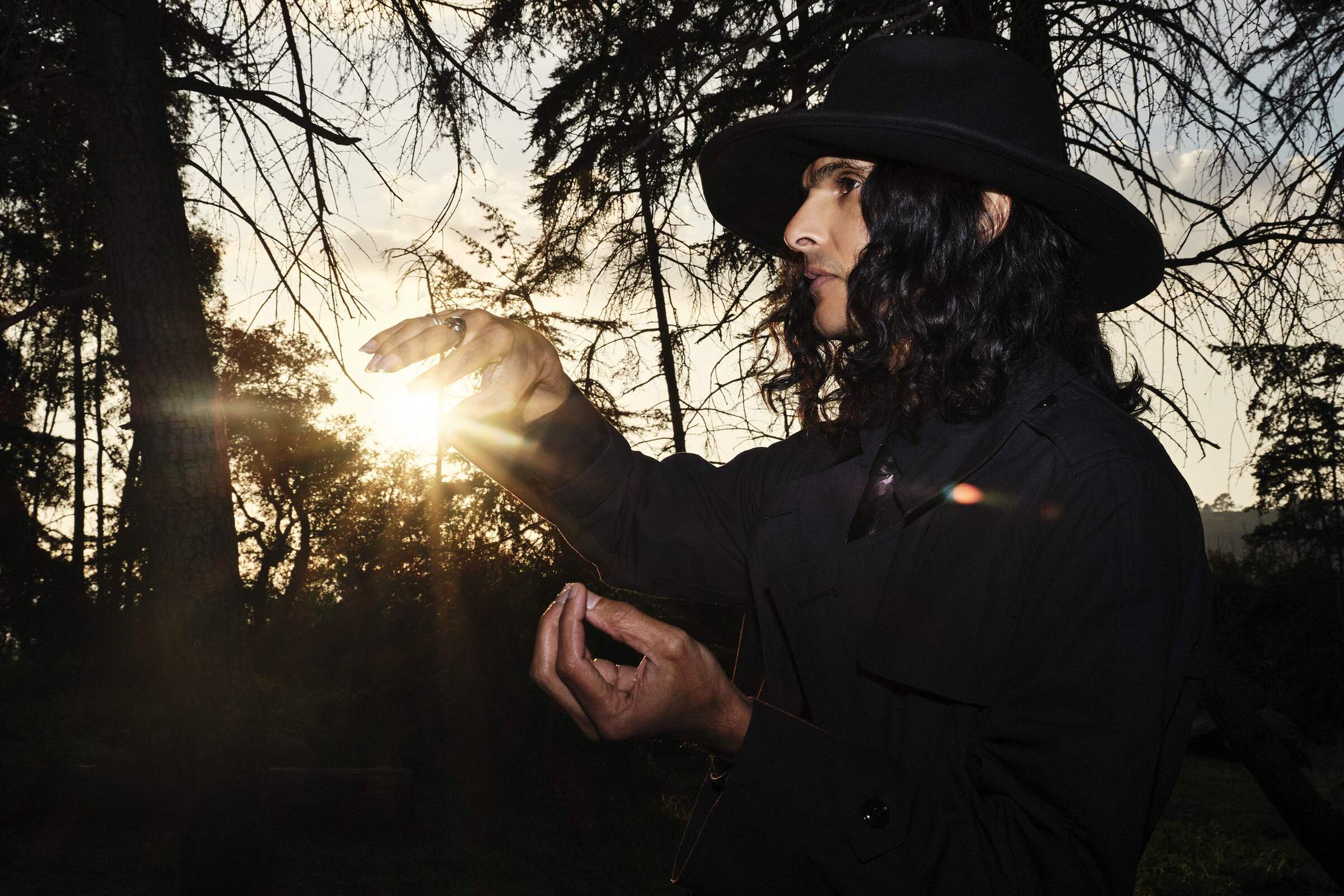
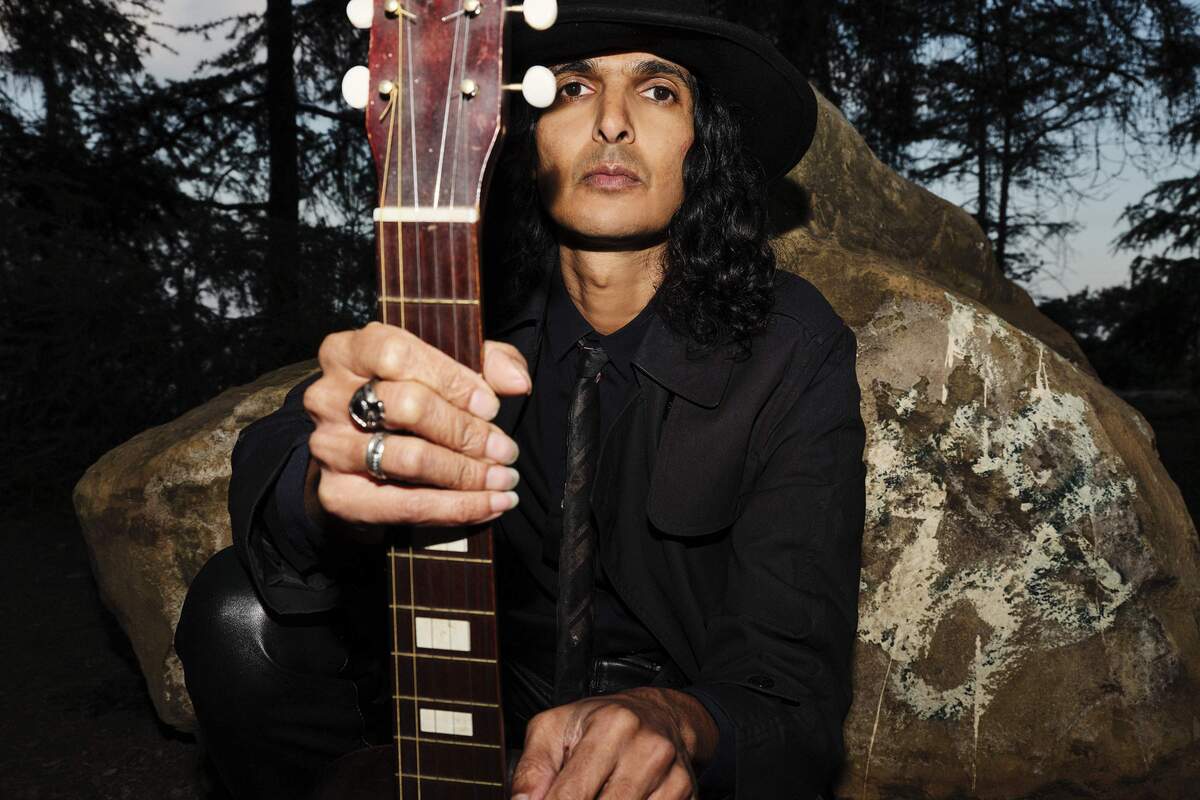
Headline photo: Imaad Wasif (Photo: Robin Laananen)
Imaad Wasif Website / Facebook / Instagram / YouTube / Bandcamp