
Inside ‘Describe This Present Moment’: A Conversation with Che Arthur
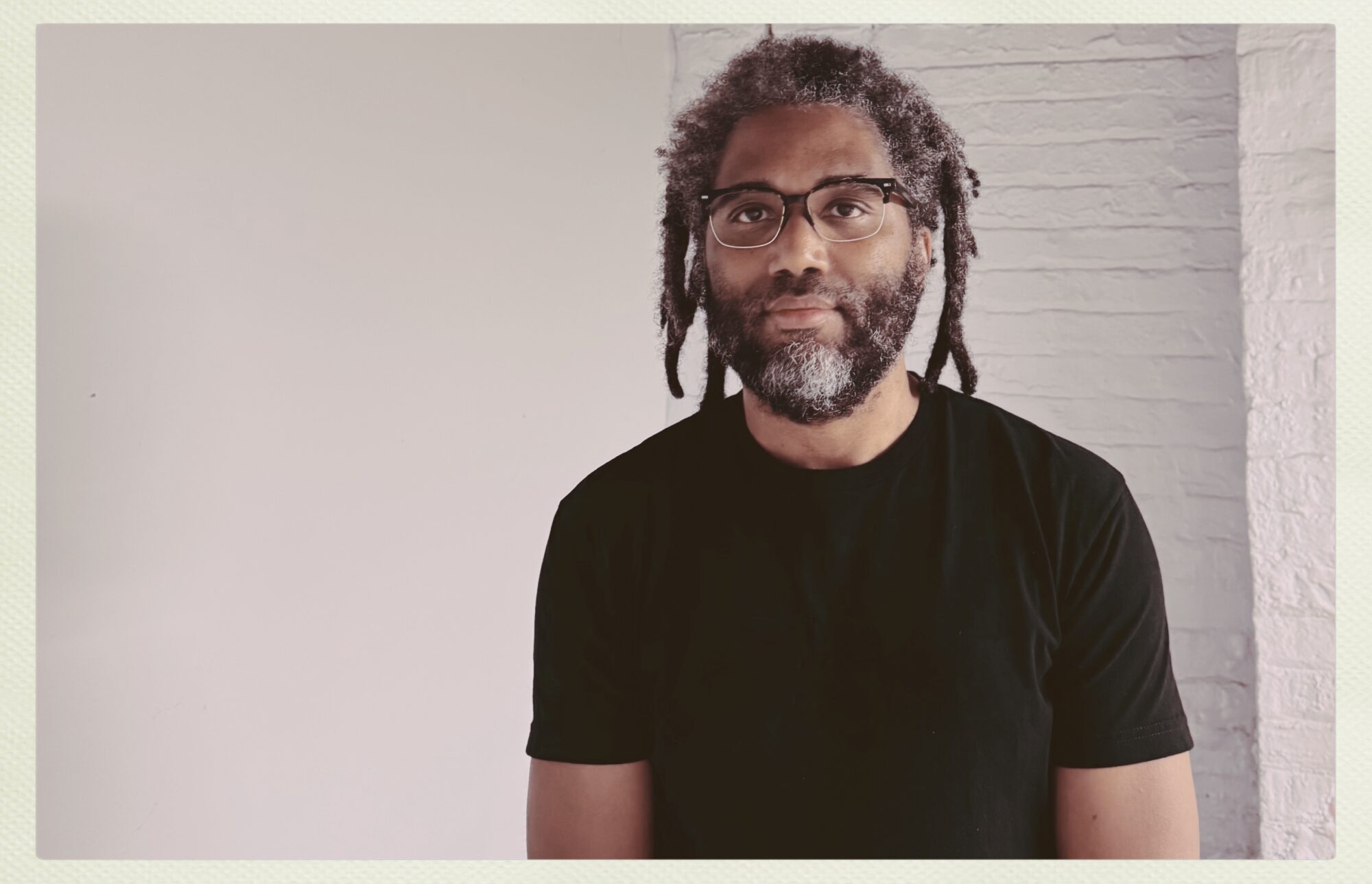
Che Arthur has never been interested in softening the blow. On his fifth solo album, ‘Describe This Present Moment,’ the Chicago-based songwriter, engineer, and touring sound professional stares directly into the unease of the now and refuses to blink.
What began as a throwaway title suddenly became prophetic: “When I came up with the title in early ’24, I didn’t realize the moment I’d be describing a year later would be such a bummer… damn. No light in the tunnel.” That sense of dread dances through the record’s ten taut songs, a 32-minute document that pits his concise punk influences against the heavier sound that once defined Pink Avalanche.
Yet Arthur is also translating pressure into motion. As he puts it in this interview, “I felt I had to channel the dark feelings into something, because keeping them inside would eventually not be very good for me,” even admitting that “it’s one hundred percent terrifying” to realize how bleak the record sounds when heard as a whole. That candor has long been his calling card, from the meticulous self-examination of 2024’s ‘For That Which Now Lies Fallow’ to earlier years with Atombombpocketknife and his decade steering Pink Avalanche’s bruised catharsis.
Tracked across Electrical Audio, hotel-side studios, and his own Chicago home, ‘Moment’ captures an artist balancing discipline and surrender. In the following conversation, Arthur unpacks the anger, resignation, and flickers that shape the album… and why, even in the darkest present tense, making the work still matters.
“I felt I had to channel the dark feelings into something, because keeping them inside would eventually not be very good for me.”
The title, ‘Describe This Present Moment,’ originated as an off-the-cuff response to a fictional playlist prompt, yet it clearly became the defining statement for your fifth LP. You mentioned you didn’t realize the moment you’d be describing a year later would be “such a bummer”… So, the core question is: Does fixing that heavy, downer feeling into a solid, finished track actually change your relationship with the hopelessness? Is the album your way of getting a little bit of control over the vibe?
Che Arthur: Yeah, I don’t know what I thought I was going to be writing about, but I don’t think I was expecting to be writing from such a place of anger. But as the lyrics started to come out, I saw there’s not only that but also a sense of resignation. There’s a feeling that things in my country are ruined for at least the next few decades, there’s an anger toward those who ruined them and a defeated feeling that there is nothing that I can do about it. There are also things in my own life that feel permanently ruined or taken away. Some are due to health issues and actually are permanent. I’m not sure if writing about that was an attempt to regain control — I think it was more that I felt I had to channel the dark feelings into something, because keeping them inside would eventually not be very good for me.
Why, specifically, did you decide ‘Spiraling’ had to be the first thing people hear?
The lyrics for ‘Spiraling’ were the first ones I wrote for the album. I originally wrote that song specifically to use as the closing song in my live set, because I wanted something intense and cathartic — and hopefully thought-provoking — to finish the set every night. Lyrically it speaks to the anger I was talking about before, that things in my country are ruined for probably the rest of my life and the sense of betrayal that half of the voters in this country chose this intentionally. At first I thought it was going to be maybe the third song on side one. I liked the idea of the song ‘Obsidian’ as the first track on the album, because it has such a different feel from really anything else I’ve ever released. But I played with different sequences of the songs, and one day I realized the lyrics and musical forcefulness of ‘Spiraling’ set the tone for the album in the same way ‘This Lost Champion’ sets the tone for my previous album ‘For That Which Now Lies Fallow,’ so I made it the first song on the album.
You tracked the drums at Electrical Audio, yet you tracked the rest of the album in transient spaces like Rapid City, St. Louis, and your own home. Would love to hear some more details about the process behind it…
I ended up working in some cities other than Chicago because recording ended up taking a lot longer than expected. We did the drums at Electrical and I also did a lot of bass parts there, but I ended up re-recording most of the bass parts at home. I redid a lot of the guitar and vocal tracks several times too, and at a certain point I ran out of time at home because I had to go out on tour doing sound. But the album wasn’t finished, so I booked studio time in some of the cities on the tour when there was a day here or there that I could dedicate to it. It was interesting recording in several different environments — at that point I was mostly doing vocals, and I wrote and rewrote a lot of the lyrics in those studios. I was mostly by myself on those days, which created a strange vibe in the middle of remote South Dakota. I ended up redoing some of those vocals again when I got home, though, and changed some lyrics again. I don’t really remember how much of the stuff that I did out there ended up on the finished album, but I’d guess maybe a fourth of it did.
As a professional sound engineer who mixes for artists like Silversun Pickups and Manchester Orchestra, etc., when you are mixing yourself at home, how do you switch off the critical engineer who seeks clarity and allow the artist to retain the “darkness” and “heavier moments” that this music requires?
I don’t switch off that “critical engineer” part of myself at all — I wouldn’t be mixing the records myself if I didn’t trust myself to make appropriate choices! As far as my personal tastes go, I do often favor “darker” sounding elements in mixes — for example, a lot of engineers routinely add high end to cymbals, and I rarely do that because I like darker sounding cymbals. At the same time, when I mix something for someone else, I like to think that I have a decent ability to be reasonably objective, see the big picture, and make mix choices that are called for by the song.
You’re a touring engineer by trade, constantly dealing with other people’s volume, other people’s drama, other people’s sound. Then you go home and make this dense, dark record because you have to. So, where is the line? Is this album a necessary catharsis to keep you from totally losing it out on the road, or is it just the pure sound of a guy who’s completely burned out, and you’re just honest enough to admit it?
I think it’s very much the former. If I was completely burned out, I’m not sure that I would be putting in the large amount of effort and money it takes to make albums. But I absolutely do it because it is a necessary catharsis for me on many levels. I’ve been a musician for longer than I’ve been a sound engineer, but as you point out I’ve spent a lot of my time focused on helping to make other people’s music sound good. So it’s important to me to keep being an active musician while also doing the work that actually pays the bills, which is engineering.
“It’s one hundred percent terrifying.”
You set out to describe this “present moment,” and you ended up saying, “Damn, no light in the tunnel.” Is it terrifying to realize that the most authentic thing you have to say right now is just a 32-minute affirmation that everything sucks?
Yes, it’s one hundred percent terrifying.
You contrasted this record with 2024’s ‘For That Which Now Lies Fallow,’ describing the latter as “meticulous” and “intentional,” whereas here you tried “not to over-analyze” and just “let the words come through.” Does surrendering that control make the performance of these songs more honest?
In the sense that there are times when capturing something spontaneous can result in a more pure or more honest expression, maybe so? I tend to deeply analyze lyrics that I write (along with everything else I do in life), and because with the lyrics on ‘Fallow’ I set out to very specifically deal with a handful of situations in my life, it is densely packed with references to real things. Nearly every line on that album refers to something real that happened between 2020 and 2023, or was said to me during that time, or that I’d felt during that time. A lot of it is woven into layers of metaphor, but all of the metaphors are very intentionally chosen. That’s what I mean when I say that it’s lyrically meticulous and intentional. I worked very hard to get the lyrics to say exactly what I wanted to say, but at the same time I was kind of “in the zone” for the two weeks or so that I spent writing them and a lot of it came to me somewhat easily. It was not quite the same on this new album. I was in a different headspace and I had to fight to get some of these words on the page and to my satisfaction. But there were also some instances when I let myself just write down the first thing that came to my mind. I re-wrote a lot when I recorded vocals in South Dakota and St. Louis, if a phrase sounded awkward or felt a bit too revealing, or if it felt like I was beginning to linger too much on some of the same topics I dealt with on ‘Fallow.’ What I didn’t fully realize while recording, but that struck me later, was that taken as a whole these lyrics revealed that my mental state was worse than it had been while I was writing ‘Fallow.’ Taking a step back and listening to the album as a whole, I realized that the darkness in it is unrelenting. It’s pretty fucked up. When I saw that, I became a little nervous about releasing it. I worried that it goes too far. I don’t put forth this dark persona on purpose, but at the same time the feelings are real and it’s important to me to capture an authentic feeling when I make music.
You tracked parts of this album in South Dakota and Missouri. Did the specific isolation of the American Midwest color the “vacant” or “eroded” feeling hinted at in your track titles?
Location can be an important influence for sure. I did think about that at some point while I was in South Dakota specifically — the fact that it’s such a sparsely populated place that’s beautiful but also a bit bleak and frightening in some ways. I wondered if recording some of the album there might bring a bit of that vibe to it. Considering that a lot of the lyrics are expressions of anger toward the current US regime, it’s interesting that Rapid City and St. Louis are both in right-wing states. I had those song titles already when I got to South Dakota, but I did write some of the lyrics there, so maybe that influence did work its way in there.
If the album is a description of a static, dark present, do these final tracks offer a resolution or simply a dissolution? When the record stops spinning, where are we left standing?
I was originally going to put the song ‘The Fates’ at the end of the album, which would have ended it on a really dark note. That song is about severe depression, about being a deeply depressed person for one’s entire life and the loneliness that comes with that, and feeling forever chained to it or maybe cursed by it. The chorus repeats the phrase “It can’t be changed” over and over again and ends on those words. It’s kind of brutal, to be honest, and I was hesitant to use those lyrics. But I decided to switch its place and have the song ‘Erode’ end the album with the words “Erode” and “You’re wrong.” It felt like, after describing the struggle for half an hour, ending on a defiant note instead of one of resignation — not necessarily a hopeful note, but a defiant one.
Looking back at your time as a guitarist in the early 2000s Chicago quartet Atombombpocketknife, you were part of a very specific era of the city’s music scene. Do you feel you are still pulling from that same creative well, or has your philosophy on song structure completely shifted since those days?
I think both. I think some of the early influences that I brought to Atombombpocketknife still influence certain things I do now, and also there are aspects of my style that evolved as a result of having been in that band. Listening to the albums now, I can hear how the two guitar players — Justin and I — influenced each others’ playing over the years we played together. On the later stuff, our styles had become more alike than they were when I joined the band. I think that’s kind of a cool thing that we were listening to each other and having a musical conversation in that way. But the band did break up 20 years ago, and I have continued working in venues around Chicago when I’m not on tour, so I’m constantly exposed to new music. So, of course that can generate different ideas. I’m a musically curious person by nature and I’m always looking for music I haven’t heard before — be that some obscure 1970s prog-rock or R&B record, or a noise rock record from the early 90s, or an ambient record from this year. Any of those things can seep into one’s musical vocabulary and foster new ideas. I made an EP under the name Ha Subliminal a couple of years ago that I really like. It was an experiment in writing in a way I’d never tried before — the songs started with drum loops, and I wrote the bass lines first and then wrote guitar parts to them. It turned out to be something that sounds completely different from anything I’d ever done before. So I’m always having new ideas and trying new things, but I also still love a lot of the music that has inspired me over my life as a musician.
You’ve mentioned that the heavier moments on this record call back to Pink Avalanche, the band you helmed from 2010 to 2020, which is currently on hiatus. Is revisiting those heavier textures on a solo record a way of officially closing that chapter, or is it a signal that the door to Pink Avalanche isn’t entirely shut yet?
It’s definitely more that the door isn’t shut — Pink Avalanche never actually broke up, we just haven’t done anything in several years. We’re all still good friends. We still have a group text thread with all four of us in it, and we chat there all the time. Adam Reach (Pink Avalanche drummer) and I have been playing music together for most of our lives. He and I have been in several bands together, started Pink Avalanche together, and he’s played on four of my five solo albums. So between Adam and me, there’s a collaboration that is certainly going to continue. I think new Pink Avalanche music will happen at some point, but there’s so much going on right now that it’s hard to say when. In 2026 I have this solo album and touring for that (solo acoustic), a lot of sound engineer touring work in my calendar already, another Atombombpocketknife reissue to remix (I remixed 2000’s ‘Alpha Sounds’ album, which is coming out on Solid Brass Records in February 2026). Also, I have partially finished Ha Subliminal and Professor Downfall albums that I want to finish in 2026. Other members of Pink Avalanche are now in other bands that are busy too, Adam now lives in North Carolina instead of Chicago so we have to schedule everything we do farther in advance… There are a lot of moving parts but I have a feeling we’ll do it eventually.
‘Describe This Present Moment’ marks your fifth album under your own name. When you compare this to your earliest solo recordings, or even your work mixing for bands like Silversun Pickups and Minus the Bear, has your definition of a “finished record” changed? Are you chasing the same sounds you were fifteen years ago, or has your time behind the mixing desk altered what you want to hear from yourself?
I’m always trying new things, both in live mixing and in studio mixing. I’m always trying to make things I’m working on sound better, but I think that one thing I’ve learned in recording and mixing quite a few albums is that “finished” is almost not even a real thing. Especially when working alone, you can keep tinkering with things forever and still keep finding things to “fix,” but there comes a time when you have to zoom out and make a decision. At a certain point, “fixing” more things might make the record worse instead of better. Or, on the other side of the coin, sometimes there’s a moment when you’re working on something and it suddenly gives you a feeling you didn’t have a few minutes earlier — and that’s when you know it’s at the right place. I try out new plugins or gear so much, and I continually listen to such an array of different music that I’m always finding different sonic things to enjoy or pursue — I think that’s the only way to keep the whole thing interesting for me. If I was still trying to make things sound exactly like I wanted them to sound 15 years ago, I think I would be pretty bored by now.
Okay, last one. If we were hanging out at my place and had time to listen to any record, what do you think we would put on? Don’t be afraid to pick something weird.
If we went weird, it would definitely be a Fred Lane record. He’s an artist from Tuscaloosa, Alabama, and in the 70s he made two albums of this completely insane psychedelic multi-genre music with lyrics that swing from comical to disturbing, sometimes several times per song. They were released together on one CD in the 80s and then were out of print until someone reissued them on vinyl a few years ago. The CD with both albums on it is one of my favorite releases I’ve ever heard.
Klemen Breznikar
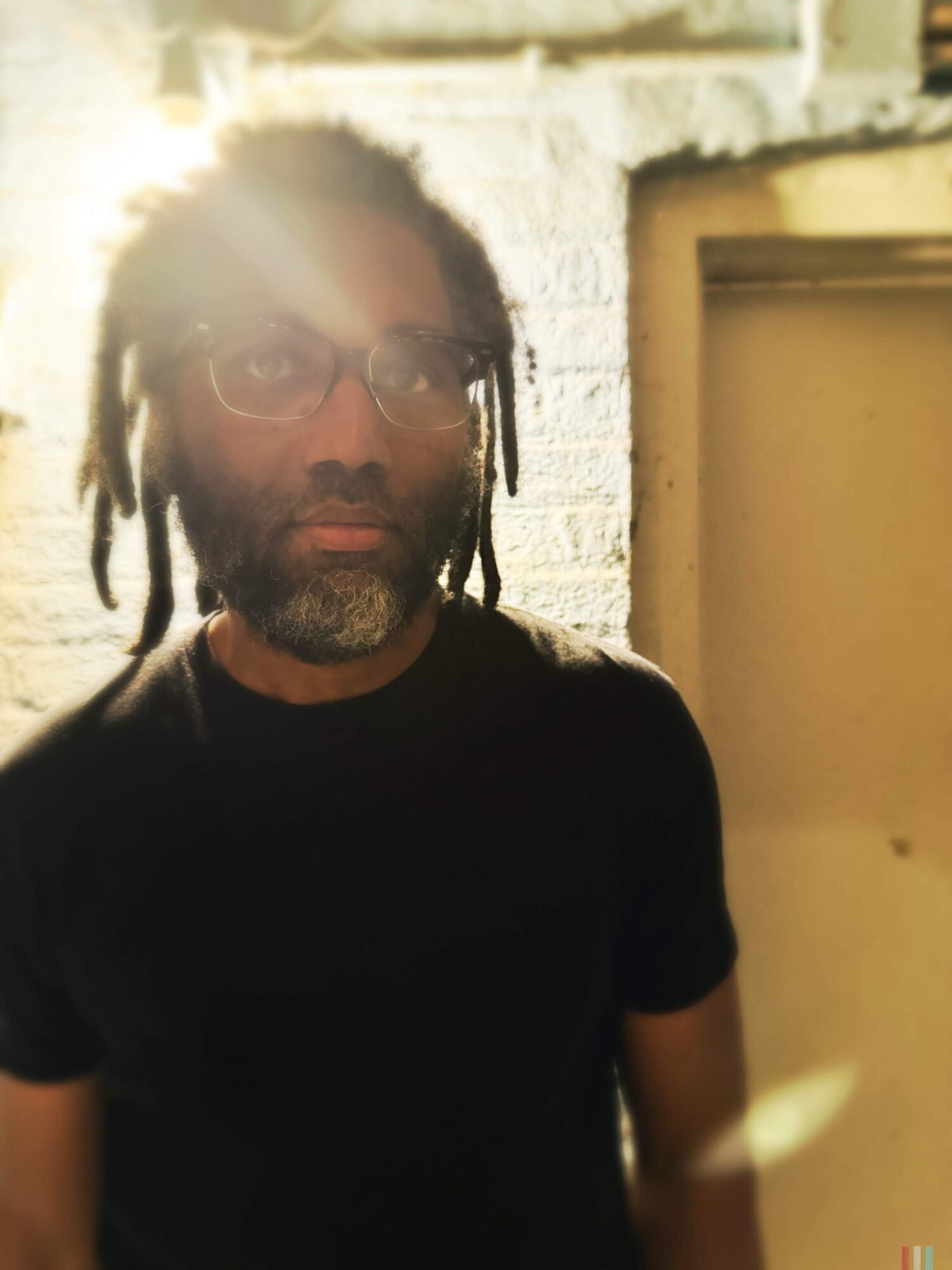
Headline photo credit: Che Arthur
Che Arthur Website / Facebook / Instagram / Bandcamp / YouTube