
Dan Fone of Bronco: An Interview on Keys, Strings, and Life on the Road
Dan Fone, multi-instrumentalist and frontman, was part of the rock band Bronco and contributed piano, guitar, harmonica, and vocals on their ‘Smoking Mixture’ album.
Fone’s musical journey began at a very young age, with harmonicas gifted by his parents and early experiments on piano, guitar, and banjo. By his teens, he was already immersing himself in the blues, learning from icons like Chuck Berry, Otis Spann, and Blind Blake. His path eventually led him to the West Midlands’ local music scene, where he played in bands such as The Persuaders and The Cult before connecting with Bronco.
Fone joined Bronco through an invitation from Kevin Gammond and Johnny Pasternak, initially overdubbing piano, acoustic guitar, banjo, and harmonica on tracks they had recorded. In the band, he became the de facto frontman, often introducing songs and singing lead, while also contributing harmonies and multi-instrumental performances. He recalled, “Paul Lockey was a great singer and lead guitarist… but he didn’t know how to talk to an audience… so I became the front man and introduced the songs.”
On tour, Fone vividly recounted the adventure of life on the road, from near-misses at sea to smoking dope between gigs in Berlin and Amsterdam. He played electric piano, lap steel, harmonica, and guitar, and remained a creative force in Bronco’s recording of ‘Smoking Mixture.’
“Bronco failed to achieve their potential partly due to bad management and partly to bad luck.”
Can you tell us about the moment you first picked up an instrument? Was there a specific artist, a song, or an experience that ignited your passion for music?
Dan Fone: Both my parents played the harmonica and, from the age of two, I received one as a Christmas gift. Then, at the age of eight, I finally managed to play a tune: ‘Frere Jacques’.
When I was thirteen, my father bought a piano for £5 from a man in a pub and installed it in our front room. I’d hear Jerry Lee Lewis playing ‘Whole Lotta Shakin’ Goin’ On’ on the radio and, finding three notes that sounded good together, then a similar three further down the keyboard, I tried to play like him. In the skiffle era, I made myself a tea chest bass.
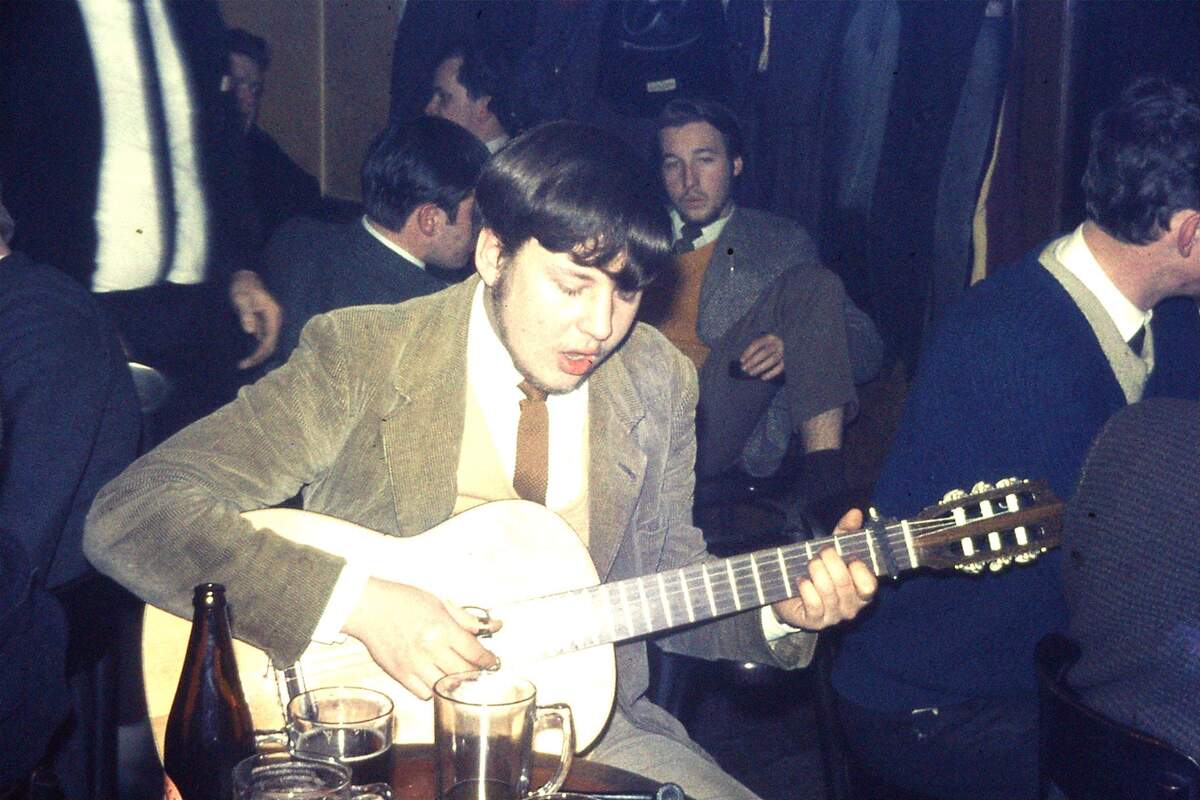
I next bought a ukulele-banjo for ten shillings and two eel hooks, then a friend showed me three chords on his Spanish guitar: G, C, and D7th. I offered him two cigarettes if he would lend me his guitar for the weekend, and by the time he hammered on my door three months later asking for it back, I had become quite proficient, and so I bought an Antoria acoustic guitar for £8.
What were you listening to in the 60s? Were there any bands or musicians that were particularly influential on your playing style, whether on guitar or keyboards?
I listened to Chuck Berry and Jimi Hendrix, John Mayall’s Bluesbreakers with Eric Clapton and later with Peter Green. Peter broke a B string at a blues club I played at in Wolverhampton, and I replaced it while he played my guitar. At the same club, the band who were backing Chicago blues piano player Eddie Boyd were late, and so I played an acoustic set with my friend, Sleepy John Wakeman, on harmonica. Eddie said, “Man, that was really the blues!” I later met Eddie at The Blue Horizon Club in London. “We couldn’t do this back in Chicago,” said Eddie, “a white guy and a black guy having a drink together.” “Eddie,” I said, “over here nobody gives a shit.”
When the band who were supposed to be backing New Orleans blues piano player Champion Jack Dupree failed to show up, Sleepy John and I accompanied him on bass and electric guitar. The Reverend Gary Davies tried to sell me his Bozo 12-string; I had a drunken conversation with American one-man band Jesse “Lone Cat” Fuller. When I broke a B string at a gig in Cornwall, singer-songwriter Ralph McTell gave me another one. He also turned me onto the music of Blind Blake and ragtime guitar. I borrowed a Sonny Terry and Brownie McGhee album from my hometown library and then a Doc Watson album too. English guitarist Davey Graham’s album Folk, Blues and Beyond was a record I listened to a lot. Years later, I met Davey, and we played guitar together.
Blues singer Muddy Waters’ half-brother, Otis Spann, was a major influence on my piano playing. Django Reinhardt and B.B. King were two guitarists whose records I played on my crude mono system—a Garrard deck plugged into a Vox AC30 amplifier. I also liked singer/songwriters Neil Young, James Taylor, Leonard Cohen, Bob Dylan, Guy Clarke, John Prine, Townes Van Zandt, Jackson Browne, J.J. Cale, Norman Blake, and Kelly Joe Phelps.
What was the music scene like where you grew up? Were you in any bands before Bronco? What were those early gigs like?
There was a healthy music scene around the West Midlands. Ma Regan’s Plaza circuit—comprising Old Hill Plaza, Handsworth Plaza, The Adelphi Ballroom, and The Brum Cavern—were the major venues. My first band, The Persuaders, in which I played rhythm guitar, mostly played in pubs and workingmen’s clubs, but my next band, The Cult, regularly opened for big-name acts on the Plaza circuit—Manfred Mann, The Moody Blues, and American girl group The Dixie Cups, for example. I asked one of The Dixie Cups for her autograph, and she wrote on my sheet music to ‘The Girl from Ipanema’: “Dan, so good to know someone as sweet as you.”

When a big name didn’t turn up, The Cult went on instead. The Kinks, The Spencer Davis Group, and The Seekers are three no-shows that spring to mind. Midland Beat magazine held a competition which The Cult entered, as did Robert Plant’s band, Black Snake Moan. After Black Snake Moan heard me singing the Howlin’ Wolf song Spoonful at a rehearsal, they withdrew from the competition.
How did the opportunity to join Bronco come about? Do you remember the first time you met the other members—Jess Roden, Kevin Savigar, John Perry, Robbie Blunt? What were your first impressions?
I first met Jess Roden, Kevin Gammond, and John Pasternak in 1963 when The Cult and their band, The Shakedown Sound, were playing at The Brum Cavern. After The Shakedown Sound broke up, Kevin and Johnny formed The Band of Joy with Robert Plant, John Bonham, and Paul Lockey. After The Cult, I briefly joined Wolverhampton band The Shades of Night as vocalist, and then I played lead guitar in The Big Og Blues Band along with Sleepy John Wakeman, the bass player from The Cult. I later spent some time in Cornwall, where I met Ralph McTell, and then hitchhiked to Istanbul, where I stayed for the next two months, smoking a lot of hash, was variously known as Guitarro, Crazy Dan, and The English Gentleman, and earned my living as a busker.
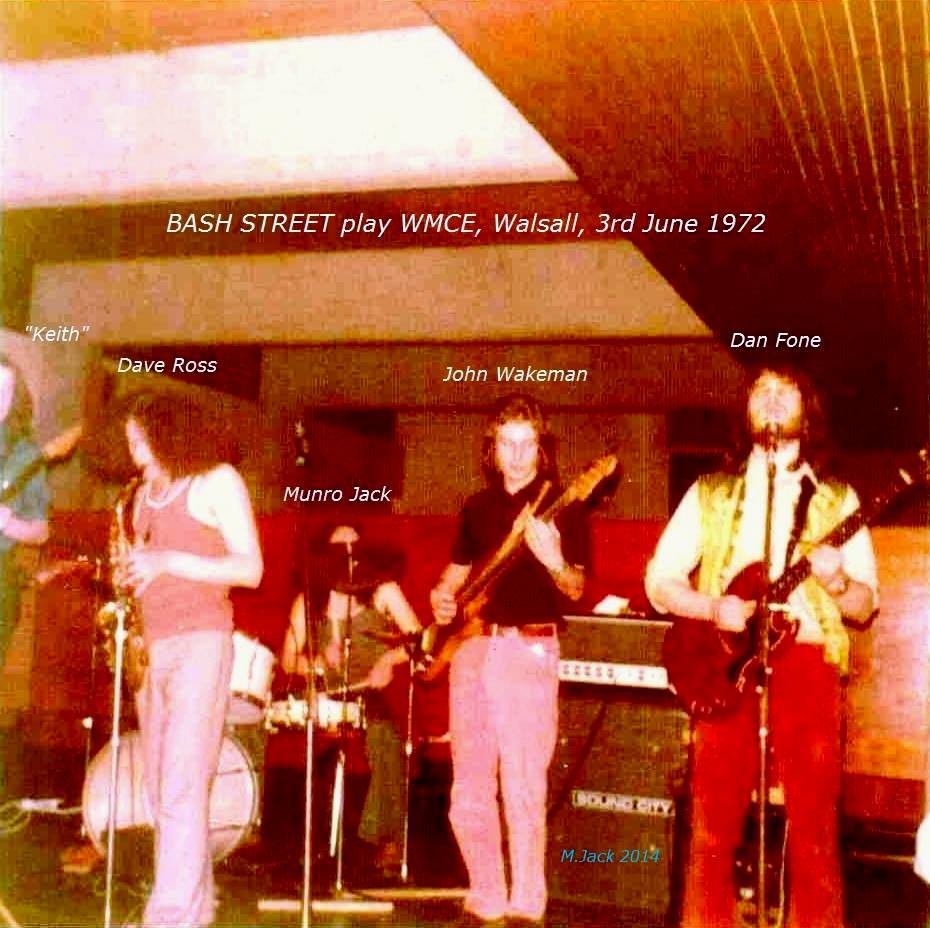
Upon returning to England, I managed a music shop owned by jazz guitarist Jack McKechnie for three years and played lead guitar in Bash Street, then Tricky Dickey and the Wildcats, whom I left to join Bronco.
One day, Kevin and Johnny walked into Modern Music and asked me to come to Polydor Records in London with them and overdub piano, acoustic guitar, banjo, and harmonica on some tracks they had already recorded.
Kevin and Johnny then invited me to join Bronco along with existing members, vocalist and guitarist Paul Lockey, and drummer Pete Robinson. I only met Robbie Blunt once, and that was when a friend and I beat him and Robert Plant at darts.
Obviously, I felt some pressure, having never traveled with a rock ’n’ roll band before, but I’d sit in the back of the hire car, pop a couple of pills, close my eyes, and wake up when we got to the gig. Once there, Johnny, the bass player, and I would score some dope from the sound engineer, Hutch, roll a joint, tune up, and go on stage. There already being two guitarists in the band, I mostly played electric piano, plus harmonica, lap steel, and percussion. My roadie, Allen, would hand me joints, which I smoked while playing the piano one-handed. Paul Lockey was a great singer and lead guitarist, much better than Kevin, but he didn’t know how to talk to an audience, and neither did the rest of the band, so I became the front man and introduced the songs.
I sang harmonies with Paul on some numbers and sang lead and played guitar on the Robert Johnson song ‘Crossroads’. Kevin and singer/songwriter Clifford T. Ward wrote most of the material; Johnny Pasternak wrote ‘Zonker,’ to which I contributed just three words: “bombed out obliterated.”
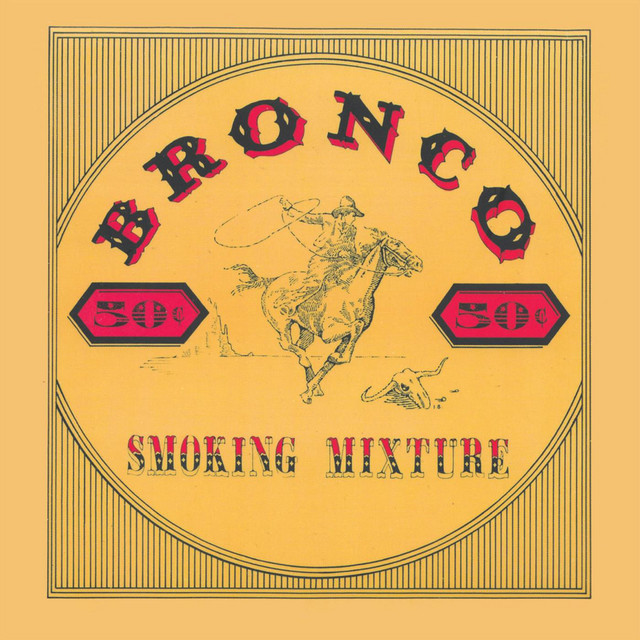
I wasn’t on ‘Ace of Hearts, ‘just ‘Smoking Mixture,’ the cover of which Johnny Pasternak designed. As for gear, Kevin and Johnny would borrow amps from Wasp Music Shop in Birmingham and hang onto them until they felt like a change. I played a Wurlitzer piano, a Hofner lap steel, and a 1964 Fender Stratocaster, which I still have. I also owned a Gibson Les Paul Junior and a Guild Bluesbird. Paul had a newish Strat and an Epiphone hollow body; Kevin played a three-pickup white Gibson; Johnny owned a nice old Fender Telecaster bass; and Pete, the drummer, played a Premier kit.
Jamming with Robert Plant at his home one day, him playing a Strat, me playing my Guild Bluesbird, Bob said, “Dan, I like that Guild, I’m sick of the sound of Les Pauls.”
Johnny Pasternak and I became close friends; he introduced me to the music of Ry Cooder, The Allman Brothers Band, Little Feat, and The Grateful Dead. Johnny was a real Deadhead!
At an outdoor lunchtime gig in a small town in Holland, the crowd was so unresponsive that I jumped from the stage into a tree. Johnny played bass with one hand while, with the other, he helped me back.
In Denmark, Paul, Pete, and I hired a rowboat and were nearly swept out to sea. Playing a lunchtime session on Radio Hilversum, the presenter asked Paul, “What do you like most about The Netherlands?” “They’re next door to Germany,” Paul replied.
Johnny and I smoked a lot of dope in Amsterdam and, while driving to Berlin, he inadvertently drove through East Germany, and we arrived there on the wrong side of Checkpoint Charlie. I made fun of the stony-faced East German border guards for the next two hours until they got pissed off and finally let us go. The hired Avis van containing all our gear failed to arrive at The Berlin club, so the organizers went home and got their own guitars for us. In Copenhagen, a Swedish guy stole the equipment truck that contained all our amplifiers and Electro-Voice P.A. and then crashed it into a car.
At The Bremen Jazz and Blues Festival, Bronco went on stage at 9:30 in the morning. Stoned out of my skull, I told the 50,000-strong crowd: “We just drove all night from Berlin without any sleep, but we’re going to do our best!” and a huge cheer went up. Jerry Lee Lewis and Chuck Berry had an argument over which one of them was going to close the show; however, the following week, a German music magazine reported that the best band that day was Bronco.
How did the band’s sound evolve between ‘Ace of Hearts’ and ‘Smoking Mixture’? Did you feel a growing sense of confidence or a shift in musical direction?
‘Smoking Mixture’ had a poor review in Melody Maker. “Rock steady banjo on Turkey in the Straw,” was all it said. Robert Plant quite liked it. I played the album once and then didn’t listen to it again for 50 years. Kevin stopped coming to gigs, I played his guitar parts, and in his absence, we really rocked, but Polydor said he had to rejoin the band. Then Paul quit, and I followed suit. I saw Johnny again four years later when he came into Friends of the Earth in Birmingham, where I was working as a volunteer.
I’m surprised at the interest people are now showing in Bronco. I sometimes listen to ‘Smoking Mixture,’ and the album has a nice vibe. I joined Clifford T. Ward’s band, did three TV shows with him, including The Old Grey Whistle Test, and played six-string and 12-string guitars on his album Escalator. I played bass with a banjo player and a guitarist in a trio called Two’s Company, got a summer gig singing in a hotel bar in Malta, and then spent a year touring Germany and Scandinavia with Scottish folk singer Alex Campbell, and we recorded an album called Live and Studio.
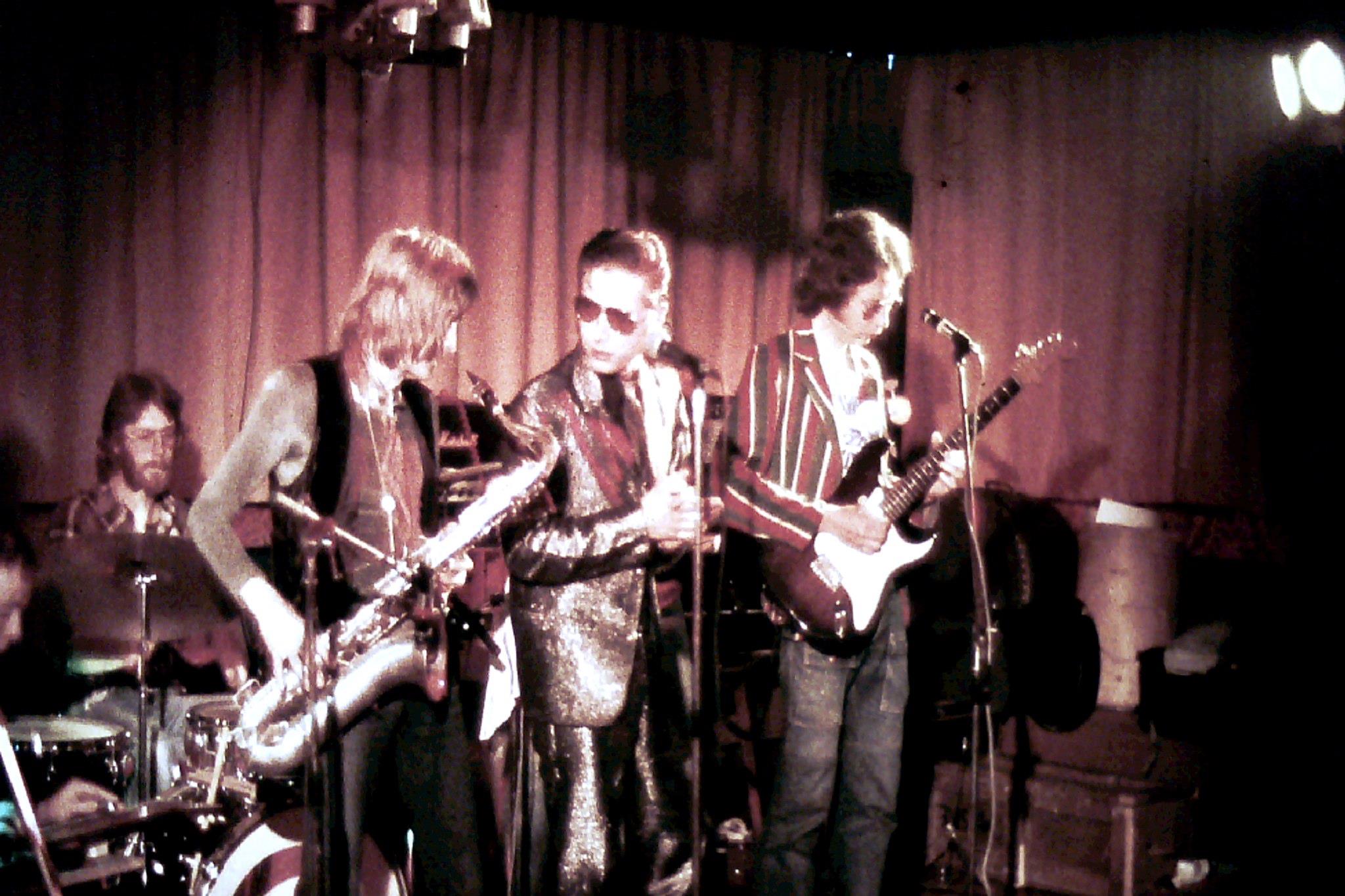
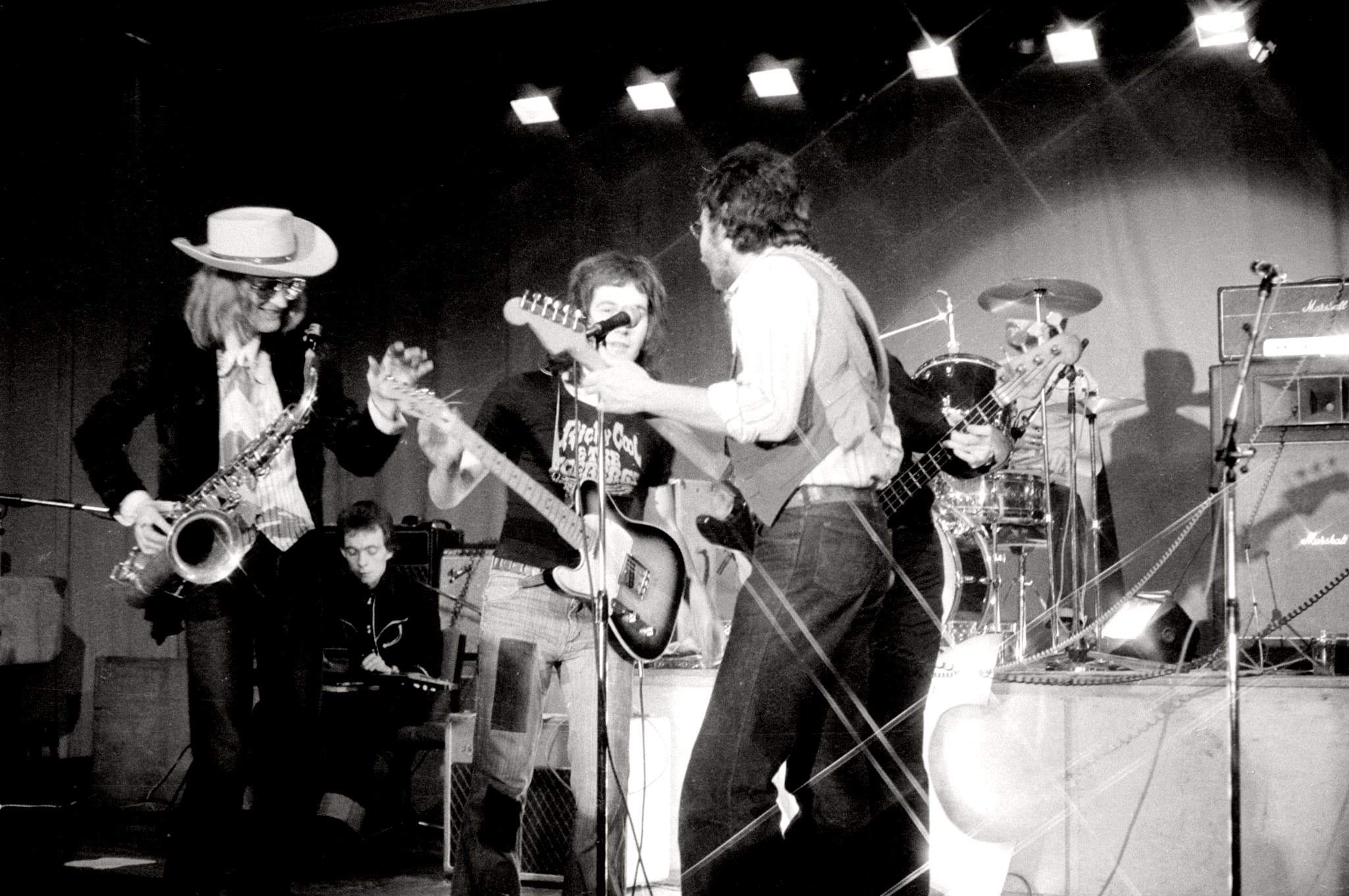
Some of the guys from Tricky Dickey and The Wildcats formed a band called Ricky Cool and The Icebergs. We played a lot of gigs around Birmingham and did a live show on BBC TV. I then moved to Wales and worked at The Centre For Alternative Technology for two years and, together with organist Patrick Borer, formed The Quarry Band, which comprised Pat and me and anyone who happened to be there on the night.
Would love to hear what you did after Bronco and what currently occupies your life?
After that, I went to live in Wolverhampton and played lead guitar in three bands: Emil and the Detectives, The Beezer Brothers, and Weekend Greyhounds with folk singer Bill Caddick. Weekend Greyhounds recorded four songs for BBC Radio’s Folk on Two. I also played bass in a folk group called Hairy Melon. We recorded one CD, and I married the girl singer. Gayle and I then continued as a duo: I played guitar, she played an Irish drum called the bodhrán, and we both sang.
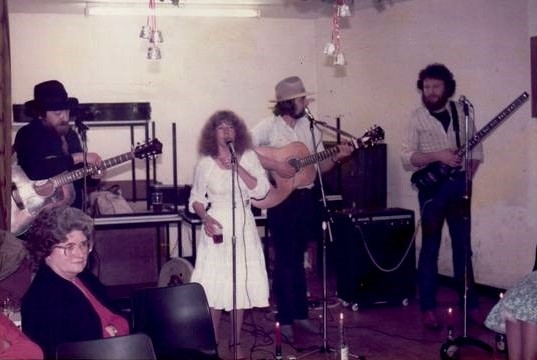
I also played acoustic guitar on local folk artists Harvey Andrews, Jean Ward, and Geoff Bodenham’s albums: ‘Old Mother Earth,’ ‘Stay Not Late,’ and ‘Two Sides of Geoff Bodenham,’ and then bass on an unreleased Jon Raven album with Hawkwind’s Martin Griffin on drums. Next, I travelled to my old friend Nigel Mazlyn Jones’ Isle of Light studio in Cornwall, where I played guitar, keyboards, piano, and bass on American hammer dulcimer player Jim Couza’s CD Friends and Neighbours, along with Van der Graaf Generator’s Guy Evans on drums.
In 1997, Gayle and I bought an old farmhouse in the Irish hills where we live to this day. I worked with a banjo player and an accordionist for a while, playing Irish traditional music in pubs, at weddings, and, once, at a funeral. My old yoga teacher Martyn Neal, who now lives in the South of France, as do my daughter, grandchildren, and great-granddaughter, then asked me to play guitar and lap steel on his CD, which includes two of my songs.
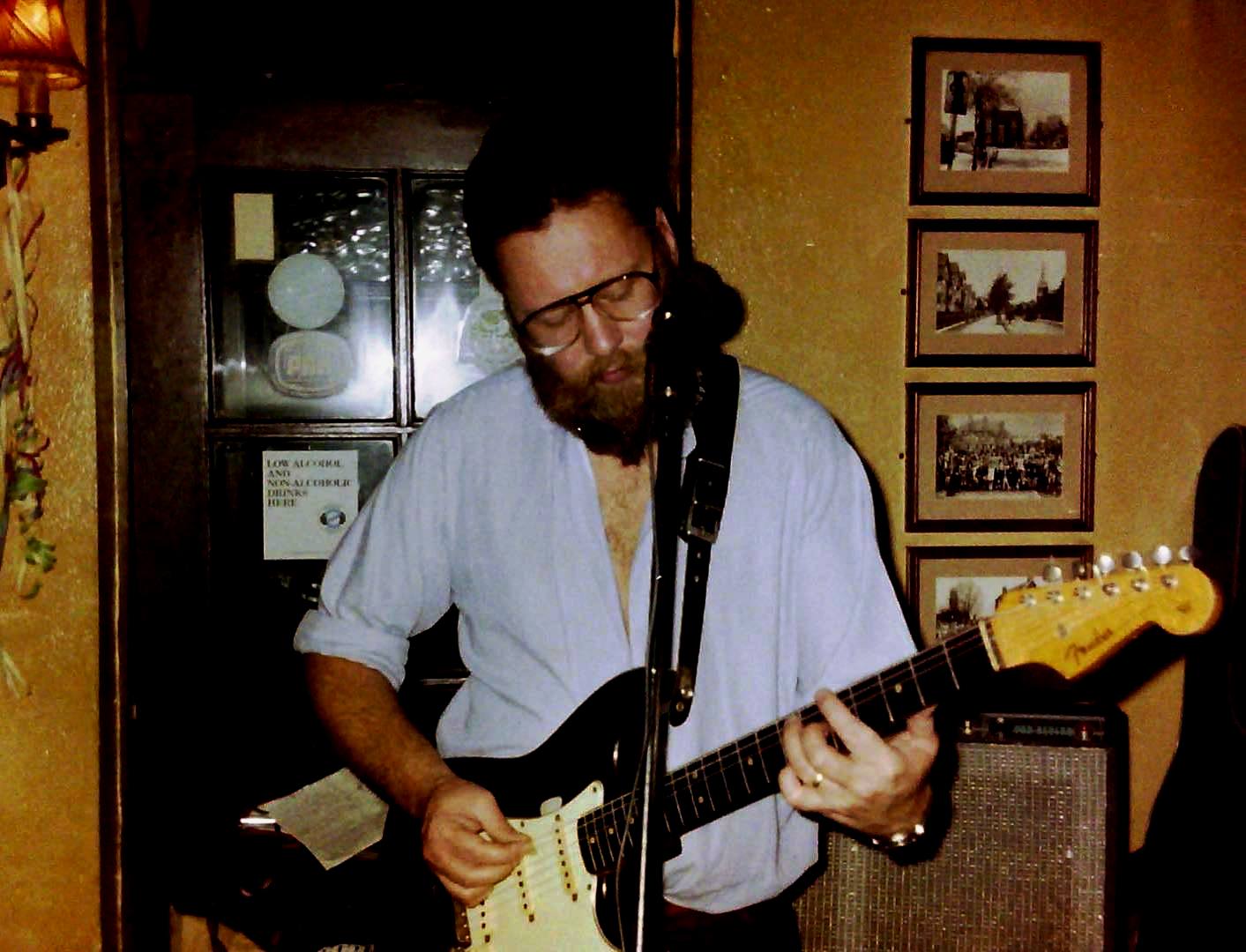
After that, I flew to Cornwall and recorded my second CD of original compositions at Nigel’s studio. The CD is called ‘Rare ‘n’ Ramblin” and can be found on Bandcamp along with my first CD, ‘Time I’m Giving You’. I then sang harmonies on a couple of songs on a CD by Irish band Comharsana, along with ex-Pogues member Shane MacGowan.
Five years ago, half of my right foot was amputated following an infection, so I don’t get out much anymore, just stay at home listening to music, reading novels, writing—I’ve written a yet-to-be published novel called The Life and Times of Tadmo’ Stuff: The Real King of Rock and Roll—and am presently writing my memoirs and watching old movies. Now, almost eighty, fingers stiff with arthritis, I can no longer play my guitar; however, I have all those records that I played on to listen to, lots of good memories, and no regrets.

Bronco failed to achieve their potential partly due to bad management and partly to bad luck. Anyway, it was all a long time ago. I occasionally hear from Paul Lockey and Pete Robinson on Facebook. John Pasternak died in 1986 of a heart attack, and I haven’t seen Kevin since I left the band. Bronco’s final gig was at Birmingham Town Hall, opening for Hawkwind. As I walked off the stage, Stacia, who was standing in the wings, said, “Nice one, Man!”
Klemen Breznikar
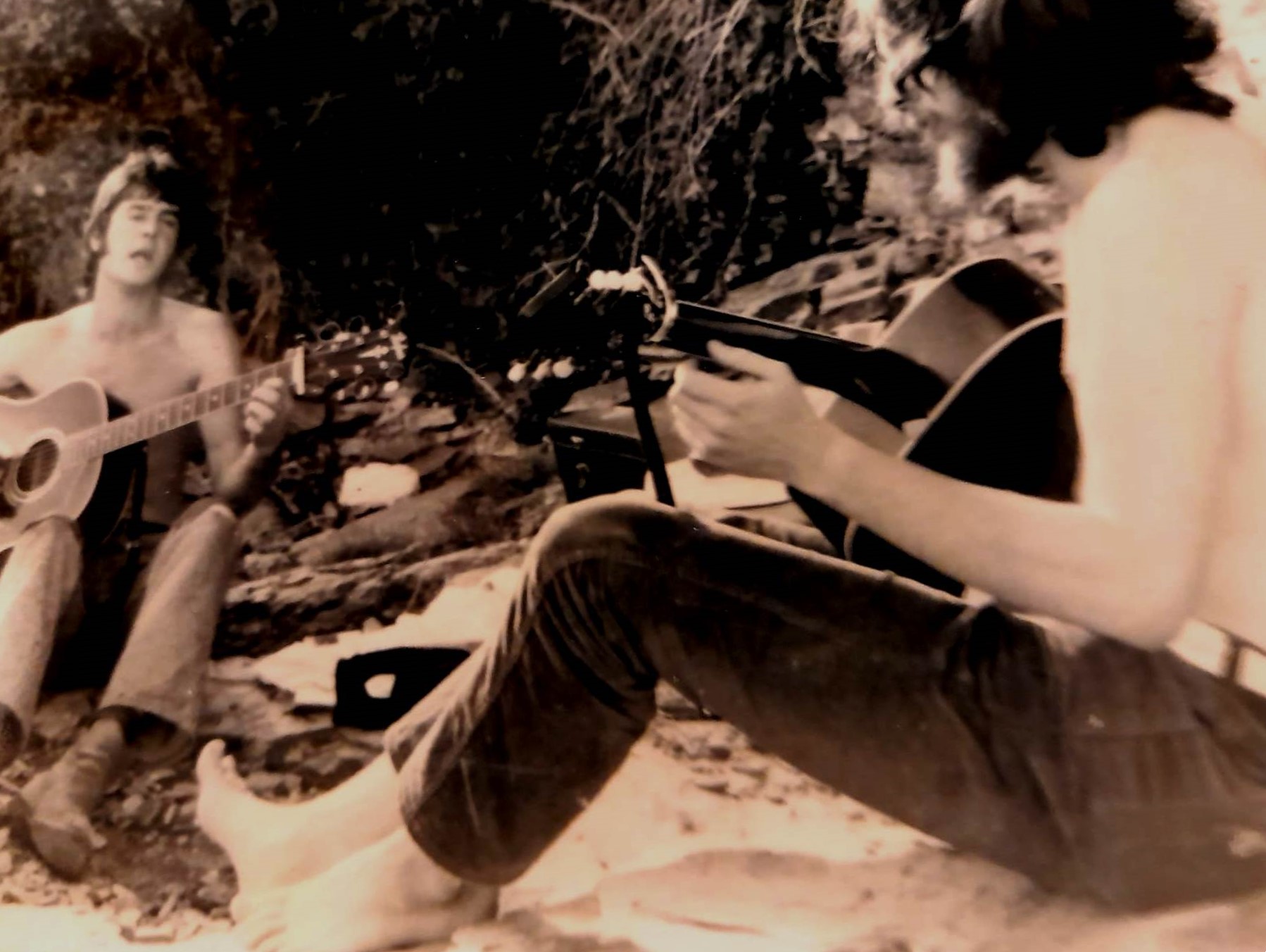
Headline photo: Dan Fone with his old friend, Pete Lane, at Padstow, Cornwall in 1969.