
Hermetic Science | Edward Macan on the First Album, the Vibraphone and the Lost Jazz Tapes
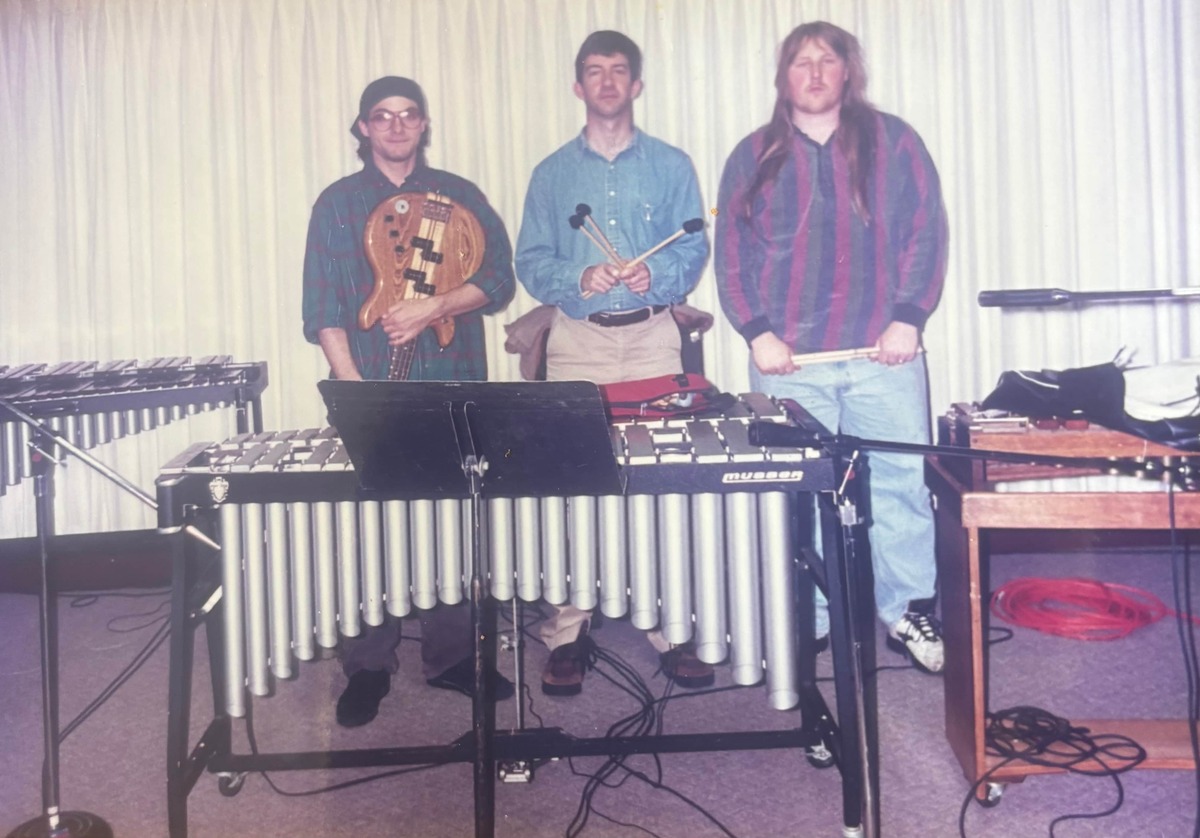
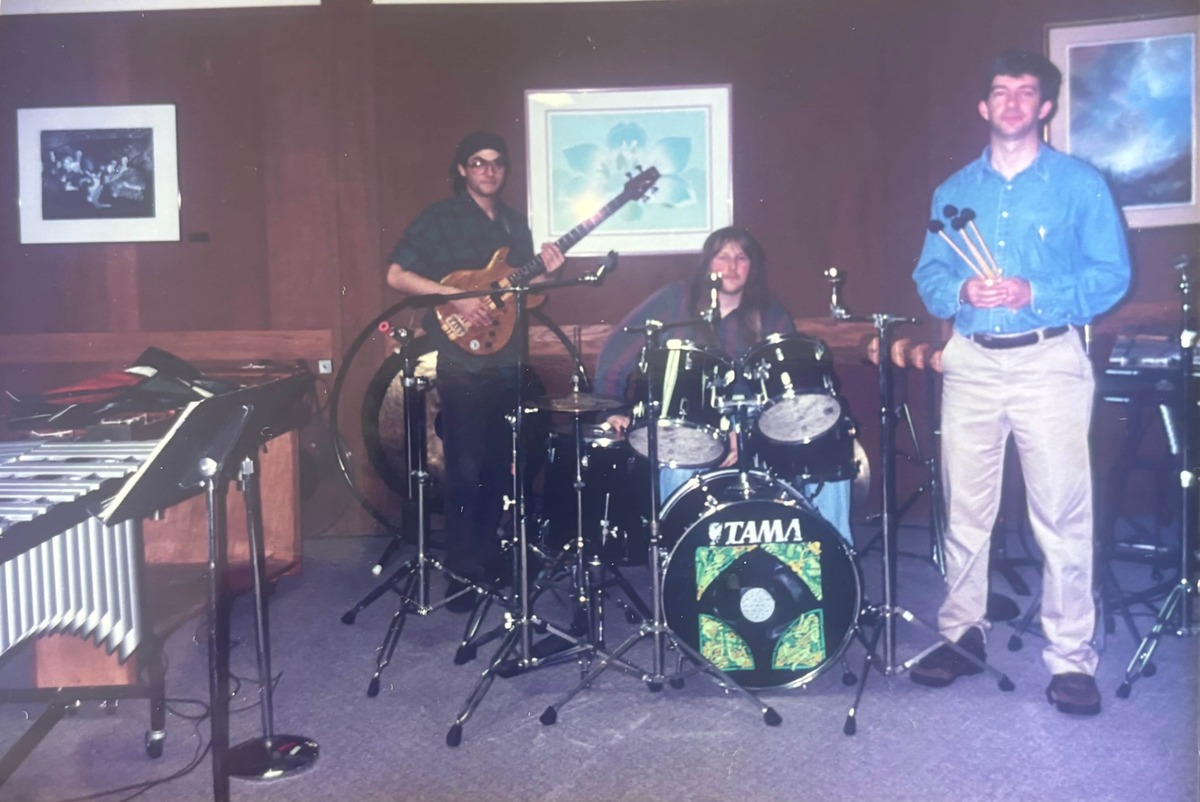
In the following interview, Edward Macan looks back at the beginnings of Hermetic Science, the decision to build a rock trio around vibraphone and marimba, and what he discovered when he returned to the band’s original recordings nearly thirty years later.
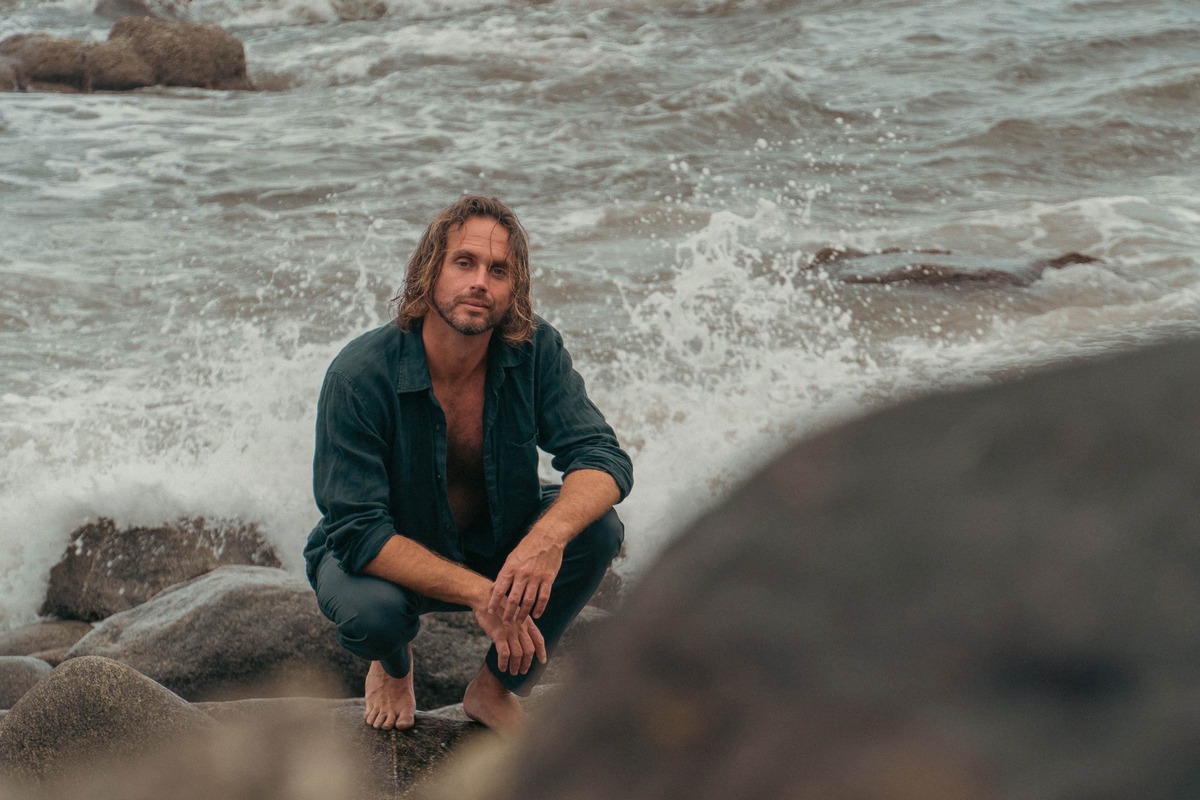
Edward Macan is known both for Hermetic Science and for his writing on progressive rock, particularly his 1997 book ‘Rocking the Classics’. He formed the band in northern California in 1996, choosing an unusual lineup of vibraphone, marimba, bass and drums, with no guitarist or singer. The music drew on progressive rock, jazz, psychedelia and classical composition.
The debut album, ‘Ed Macan’s Hermetic Science’, appeared in 1997 on Magnetic Oblivion, followed by ‘Prophesies’ in 1999 and ‘En Route’ in 2001. After the label closed, the original compositions from those records were collected on ‘Crash Course: A Hermetic Science Primer’ in 2006. It kept the music available, but Macan eventually came to feel that something had been lost by taking the individual albums out of circulation.
For the band’s 30th anniversary, he returned to the original tapes and began preparing new editions of those early records. The debut was reissued in May 2026, remixed and remastered from the original ADAT recordings. During the work, Macan also discovered four jazz performances recorded in 1996 that he had completely forgotten about. They were subsequently released as ‘The Lost Jazz Tapes EP’.
“There’s nothing out there remotely like ‘Ed Macan’s Hermetic Science’.”
Now that the debut is available again as a complete album, how does it sound to you? Do you hear it as the beginning of Hermetic Science, or as something quite separate from what came later?
I hear each of the five Hermetic Science studio albums as its own separate chapter. And the first one especially was its own thing. That said, pretty much all of the stylistic sources that have guided Hermetic Science’s development all the way through—classic prog, late 60s psych, jazz-rock fusion, Indian classical and Middle Eastern music, and of course, European classical music—were already in play on the first album. Also, much of the musical vocabulary people associate with Hermetic Science—odd and shifting meters, polyrhythms, church modes, whole-tone, octatonic, and bitonal scales—was present on the debut album as well.
You were already writing about progressive rock when Hermetic Science began, particularly in ‘Rocking the Classics’. Did making your own music change the way you understood the bands you had been studying?
Not really. I knew we were very much doing our own thing, it may have shaped how I thought about some of the innovations of the late sixties and early seventies, but I don’t think it influenced my overall historiography.
Why did you think vibraphone and marimba could lead a rock trio? And were you surprised by how listeners responded to that sound?
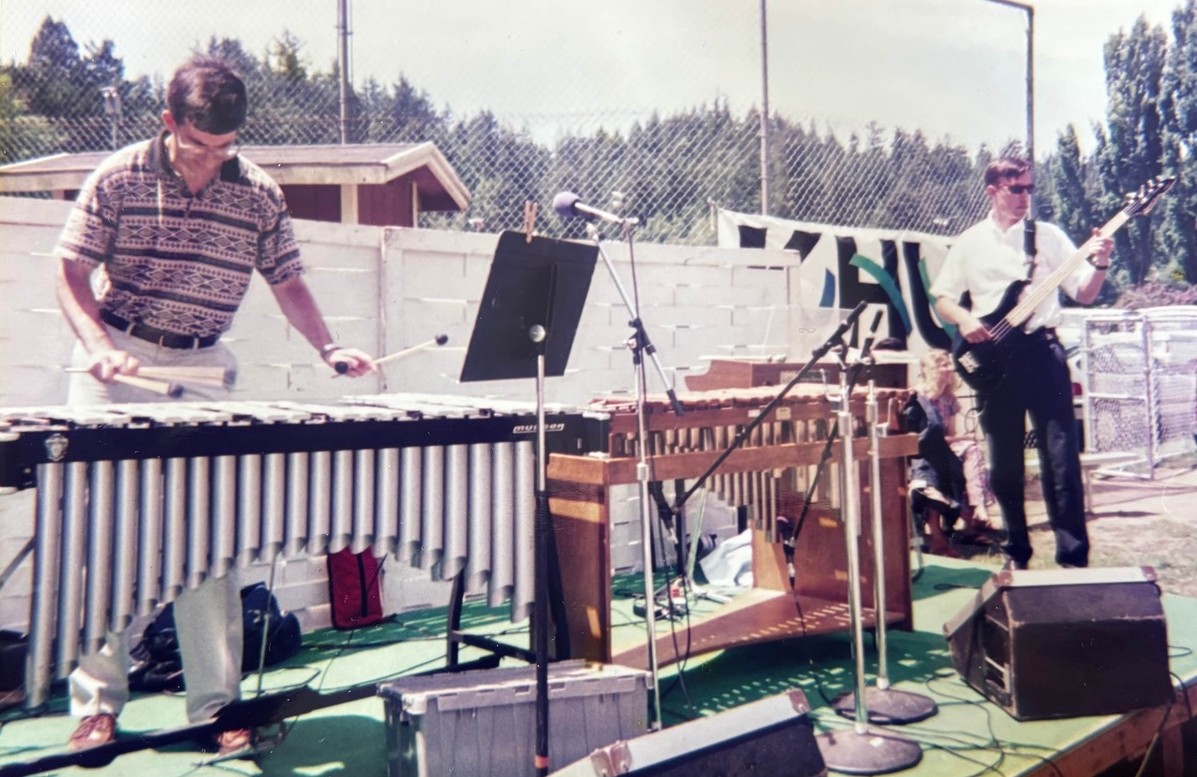
I often listened to solo classical piano music and to jazz quartet music, and perhaps didn’t fully anticipate how many rock fans considered such music monochrome. So it didn’t occur to me how uncomfortable some listeners would be with the vibes-bass-drums arrangements. Also, I believed—somewhat naively, it turned out—that people would listen to the vibes with the same sense of nuance that they listen for subtle distinctions in guitar and Hammond organ tones, and I was surprised when a lot of listeners thought the vibes always sounded the same. The thing is, when we were doing the remixing and remastering of the debut album in late 2025 and early 2026, we sampled some of the vibes parts, and I realized that you would really need at least nine or ten different samples to capture the first album’s full range of vibes colors—soft, medium, and hard mallets with slow, medium, and fast motor speeds, plus at least one sample with the motor off.
I always thought the vibes had great potential in a rock music setting, and was surprised that into the 1990s that potential still hadn’t really been fully explored, especially in regard to harmonic color, texture, and timbre. More specifically, I always thought the vibes had a great potential for producing psychedelic music. I think psychedelic rock has three essential components: heavy reverberation, a certain amount (often a lot) of rhythmic stasis, and harmonies that alternate between slow drift and sudden shifts. What instrument has more natural reverberation than a vibraphone with its motor on? Something I experimented with in the vibes parts of several of the tracks of the debut album is presenting two separate textural strands, both reverberating pretty heavily, tying them together with the damper pedal, and letting them melt into each other. At its best, I think that approach was entirely successful: for instance, I still think 5:10-6:48 of ‘Fire Over Thule’ is one of the more psychedelic musical passages you’ll ever hear.
When you wrote pieces like ‘Esau’s Burden’, ‘Fire Over Thule’ and ‘The Sungazer’, were you thinking in terms of musical styles, or simply following the sounds you were finding on the instrument?
At the time, just following the sounds in my head and developing the sounds I was coaxing out of the instrument. Only much later did I realize that there were really two distinct subgenres of vibes composition on the debut album. ‘Fire Over Thule’, ‘The Sungazer’, and ‘Trisagion’ are epic, sectional tracks that synthesize psych, prog, worldbeat, and jazz-rock fusion, with the psychedelic element—the exploration of reverberation and mixture of harmonic colors—being particularly dominant. ‘Esau’s Burden’, ‘Fanfare for the House of Panorama’, and ‘Intrigue in the House of Panorama’ are more streamlined and linear, de-emphasize the psych element in favor of a clearer jazz-rock fusion sensibility, and explore rapid-fire vibes figuration and the kind of virtuoso bass lines that were all the rage in the music of mid-nineties funk-rock alternative bands like Primus.
How much of the music was settled on paper, and how much changed once you started rehearsing and playing the pieces live?
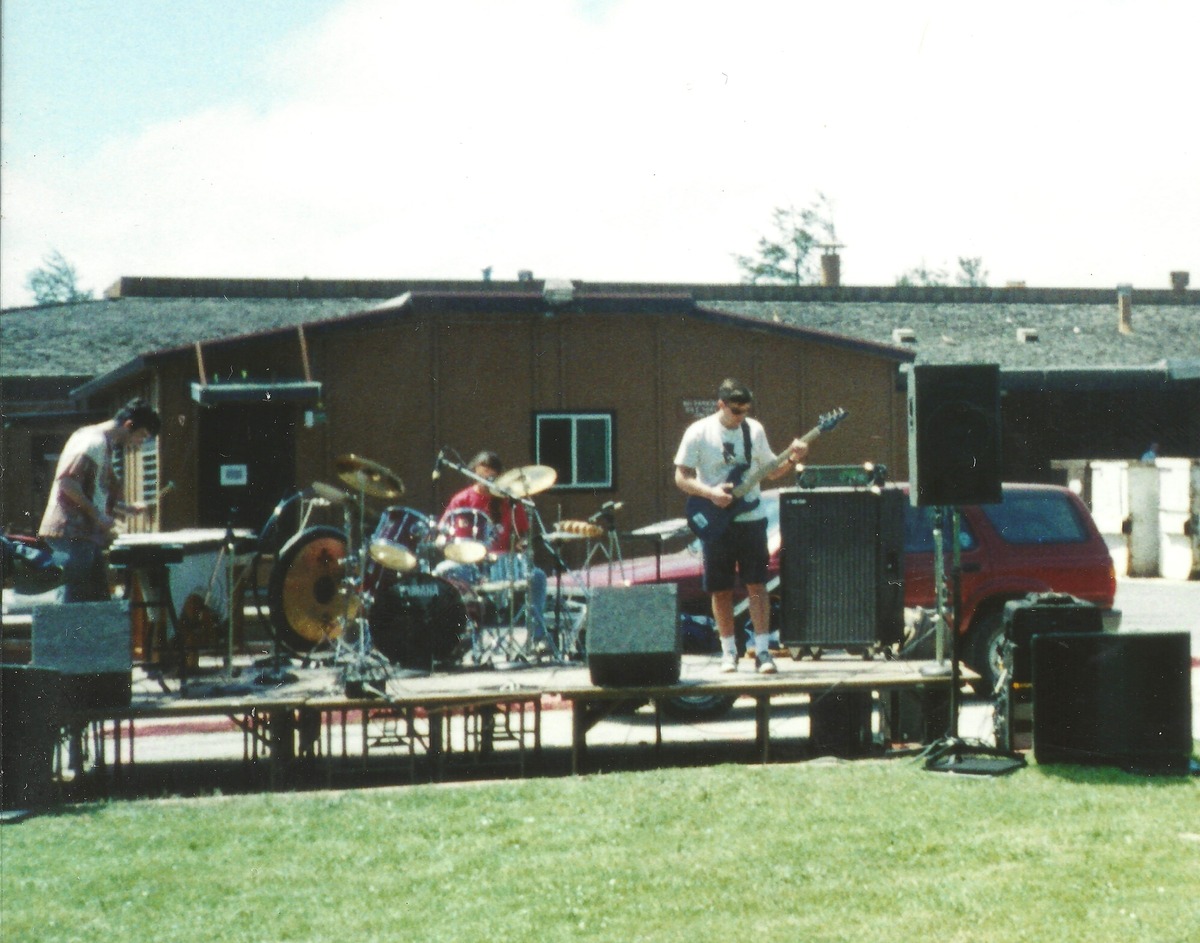
Not only in the practice room, but in live situations. Between 1996 and 2000, the various Hermetic Science lineups played probably about 40 live gigs across the North Coast of California. A lot of that was in clubs, but some outdoors festivals as well. Playing live, you find out really quickly what works and what doesn’t in various spaces. So the music began with a score, then was developed in the practice room with the musicians transforming the score into something a bit different as they contributed their own ideas. Going into the studio and recording it capped the first stage of its development, but then as it was performed live its development continued, especially as a given composition was passed on from one Hermetic Science lineup to the next.
You worked with some quite young musicians in those early lineups. How much freedom did they have to develop their own parts?
People have assumed over the years that I charted out everything and the band members simply played off the score as if they were playing a 19th century symphony or something. Not at all. It is true that I did score the bass parts, but always made it clear that if someone could come up with a better bass line than what I wrote, they could use that instead. Also, it was understood that repetitive bass lines were to be varied and developed, just as a jazz bassist would. In regards to the drummers, sometimes I would chart short groove figures and tell them to use that as a starting point; more often, I would describe what I wanted in the different sections of a track in general terms and tell them to work from there. It really was more of a normal band situation where the composer is telling the rest of the band in general terms how to approach the music than it was a prescriptive type of experience where they had to play a score just so. One thing I would say is that the music education system was so good back in the nineties that by the time these guys got to me, even though they were only in their early twenties, they were already experienced and gifted musicians playing at a professional level.
After Magnetic Oblivion closed, the first three albums gradually became harder to find. Did putting their original compositions together on ‘Crash Course’ make it harder to hear how the band had changed from one album to the next?
Definitely. Compilations tend to flatten out and homogenize a band’s output, and make it harder to notice the change and development from one album to the next.
What do you think was lost when ‘Ed Macan’s Hermetic Science’ stopped being heard as an album in its own right?
Do I think ‘Ed Macan’s Hermetic Science’ was our best album? No. I think that in their different ways, ‘These Fragments I Have Shored Against My Ruins’ and ‘Deliria: a Chronicle of 2020’ were better—bigger in scope, better integrated, more technically assured, more sophisticated production. On the other hand, I think ‘Ed Macan’s Hermetic Science’ was by far our most original album. In my view, the album did not receive the recognition it should have for fully integrating vibes and even marimba into a rock context, both in how the instruments were played and how the parts were arranged. Beyond that, I continue to believe the album’s prog/psych/worldbeat/jazz-rock fusion synthesis was really unique, and neatly captured the zeitgeist of early to mid-nineties culture. While ‘These Fragments’ and ‘Deliria’ may be technically superior albums, there are dozens of excellent-to-great prog rock keyboard albums. There’s nothing out there remotely like ‘Ed Macan’s Hermetic Science’. That said, once those tracks were combined with tracks from the second and third albums on ‘Crash Course’ and the cover tracks were dropped, the unique nature of the debut album was submerged.
When you returned to the original ADAT recordings for the anniversary edition, what did you want to improve, and what did you feel should be left alone?
Well, after listening to an album over a period of 29 years, you develop a pretty good sense of what you’re happy with and what you wish you could fix! As your question implies, I was very concerned that fixes be subtle and that the final product sound as if it plausibly could have been a product of 1997, also that none of the musicians felt I changed the sound of their instruments in any way. The studio we recorded the debut album in was so bare-bones that we didn’t even have automation; in many ways, recording that album was like the experiences I remember at the dawn of my recording career in the late 1970s and early 1980s. So when we did the remix/remaster, mainly what we did is use software that was available at that time, just not to us, in order to make the mixes and levels more consistent across the board, and in certain cases bring out details that aren’t fully apparent in the original mix. I think ‘The Sungazer’ especially benefited in this regard.
Did anything catch you by surprise when you listened back to the tapes? Were there parts of the playing or arrangements you had forgotten?
I was immediately struck by the intensity of the drums and bass, which reminded me how powerful early Hermetic Science sounded live, and I resolved that the reissue would fully embrace the music as rock music, which is maybe something that the original mix didn’t always achieve.
There’s also the issue of the four ‘lost’ jazz tracks. In our very early days, in 1996 and 1997, California’s North Coast supported four musical scenes—jazz, country, punk, and reggae. Since our original music was more congruent with jazz than any of the others, we learned a certain amount of ‘real’ jazz, favoring fifties Cool and sixties Bossa Nova, to gain access to the regional jazz clubs and festivals, and at such venues played sets that alternated ‘real’ jazz with our original compositions that later featured on the first album. We recorded four jazz standards in 1996 for the purpose of using them to secure gigs. However, as the recording of the original material continued from 1996 into 1997, the jazz recordings were completely forgotten, until I rediscovered them while listening to the transfer of the ADATs in October 2025. They were, in the best jazz fashion, one-take-and-done, and I resolved to release them just that way. On July 8, 2026, some thirty years after they were recorded, they were released as Hermetic Science—‘The Lost Jazz Tapes EP’.
How did Curved Air’s ‘Cheetah’ and Emerson, Lake & Palmer’s ‘Infinite Space’ come to form a medley? And what made you choose Rush’s ‘Jacob’s Ladder’ for the album?
In the case of Curved Air’s ‘Cheetah’ and ELP’s ‘Infinite Space’, I had wanted to do something that featured marimba rather than vibes, and I was looking for two relatively short but memorable prog tunes that would work on marimba and could be linked into a medley. ‘Cheetah’ is a showpiece for Curved Air’s violinist Darryl Way, and is clearly Bach-inspired, but with modern touches like the octatonic scale. In the late eighties and early nineties there was a brief fad of marimbists releasing recordings of Bach keyboard and violin classics transcribed for solo marimba, so I had a feeling ‘Cheetah’ would adapt nicely to a marimba trio format, and it did. In the case of ‘Infinite Space’, I always felt that represented a musical avenue ELP should have explored further—music that was severe, meditative, and ritualistic instead of virtuosic, flamboyant and bombastic—and I believed the marimba would bring out the ritualistic undertones of the music very nicely, which again, it did. The ‘Cheetah’/‘Infinite Space’ medley played a major role in our early live shows.
In the case of Rush, I wanted to do a tribute to a band that, along with ELP, had greatly shaped my thinking about how rock trios work, and ‘Jacob’s Ladder’, which is a lot more atmospheric and instrumental-centric than a lot of their music, seemed like a logical choice.
When you were arranging the music for the original trio, were you drawing more on keyboard-led groups like ELP, or on rock guitar trios?
This is a great question. I felt that we were in dialogue with both rock’s keyboard trio and guitar trio traditions. On the big neo-psych epics like ‘Trisagion’, ‘Fire Over Thule’, and ‘The Sungazer’, in some passages I thought of the vibes as a kind of Hammond organ substitute, and even approximated the early ELP arrangement tic of doubling the bass line with the vibes’ left hand part. On the other hand, in the shorter, punchier tracks like ‘Esau’ and the Panorama tracks, I often thought of the vibes parts in terms of, say, an approximation of Jimmy Page’s or Alex Lifeson’s rapid-fire electric 12-string guitar arpeggios. I think it’s worth saying here that while I was classically trained on both piano and marimba, I was completely self-taught on vibes and didn’t ever take lessons specifically because I didn’t want to have to unlearn the institutionally ‘correct’ way of playing the instrument. My vibes approach was much more influenced by keyboard players and guitarists than by vibists, but at the end of the day I always tried to create vibes parts that fit the instrument and were idiomatic to it.
There are some interesting titles on the first album, like ‘Esau’s Burden’, ‘Fire Over Thule’ and ‘Trisagion’. You also recorded Rush’s ‘Jacob’s Ladder’. Were you particularly interested in those religious and historical references at the time? And did the titles usually come while you were writing the music, or afterwards?
Well, of course ‘Jacob’s Ladder’ wasn’t my baby (I wish it had been) but the others were, and I think I can say in each case the work started to gestate, and at some point, when it had reached critical mass, as it were, the title came to me. So the title came after the track was conceived, but well before it was finished. Once I named a track, I don’t think I ever changed a title, so the title absolutely was part of the track’s identity.
You are correct that on that first album, in particular, there is a lot of religious and mystical symbolism. I was interested in early Christian music at that time, the use of music in ancient ritual, and ancient music more generally—around that time I had listened a lot to Gregorio Paniagua’s reconstruction of ancient Greek music on ‘Music of Ancient Greece’, and while I know the jury remains out on how historically accurate his reconstruction was, for me the musical quality of what he achieved was never in doubt. I think something of that sense of ancient ritual is evident especially in the tracks ‘Fire Over Thule’ and ‘Trisagion’. I don’t know that is something Hermetic Science ever touched on again, certainly not to the same degree.
Where did virtuosity fit into all this? Did you ever feel you had to hold back technically?
I have always seen instrumental virtuosity as a means to an expressive end, not as an end in itself. Playing fast for the sake of playing fast never interested me that much, although I was probably guilty of a little bit of that on the first two or three HS albums. On the other hand, if we’re including big chords and dense textures in the virtuosity category, I plead guilty; for me, that has a more obvious expressive component.
Looking back across the anniversary reissues and ‘The Lost Jazz Tapes’, what would you most like people to understand about how Hermetic Science changed after that first album?
Another great question but, alas, one I really don’t have a definitive answer for. I deeply appreciate the opportunity to make one final argument for the originality and utter uniqueness of the first Hermetic Science album; I made this argument 30 years ago, did not think I’d have a chance to make it one more time 30 years later, and feel pretty certain I won’t get another chance 30 years from now! As is well known, after the first album, we gradually evolved in the direction of a more conventional prog keyboard trio, and also from a genre-bending band to a more obviously prog-based band, both journeys being easy to track across the second album, ‘Prophesies’, and the third, ‘En Route’, which will be re-released later this year if all goes well. Whether this was a good thing or not, the best possible way forward or not, I really can’t answer. I can say my own impression was the first album had a small but fiercely loyal following, while the next two albums generated a larger but less engaged one. I’m hoping maybe this interview will prompt a few hardy souls to check out the trajectory for themselves and reach their own conclusions.
Klemen Breznikar
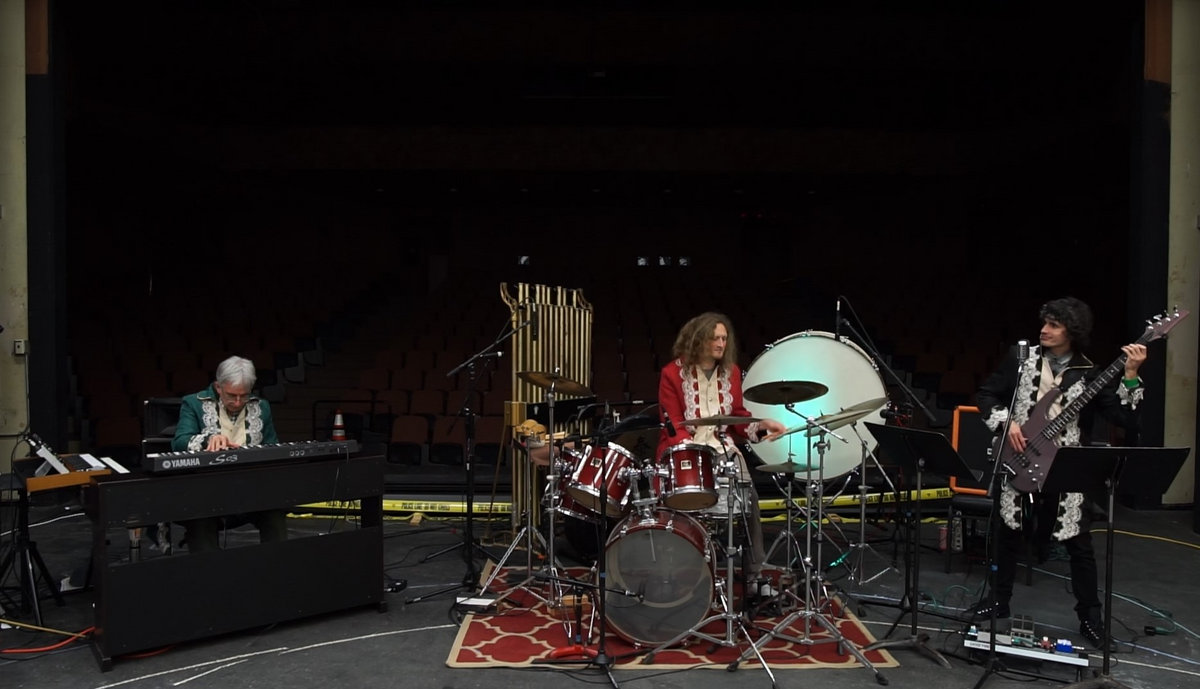
Archival photographs courtesy of Edward Macan.
Hermetic Science Official Website / Bandcamp