
The Routes | Interview | Chris Jack on Reimagining Kraftwerk, Buzzcocks, Joy Division and the Velvet Underground
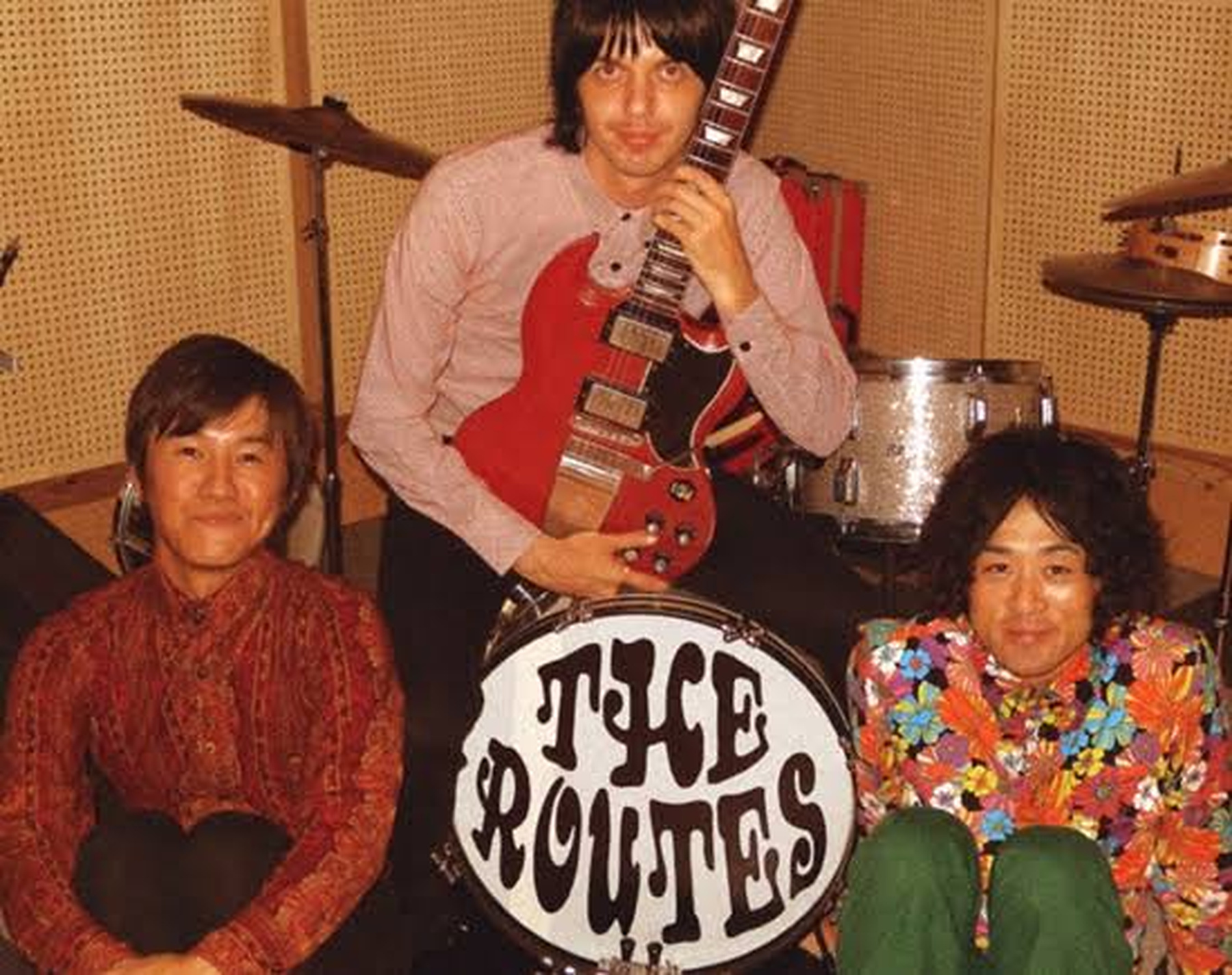
Lenny Helsing catches up with Chris Jack of The Routes to discuss the band’s unusual instrumental interpretations of Kraftwerk, Buzzcocks, Joy Division and the Velvet Underground, the involvement of legendary designer Malcolm Garrett, and what might be coming next.
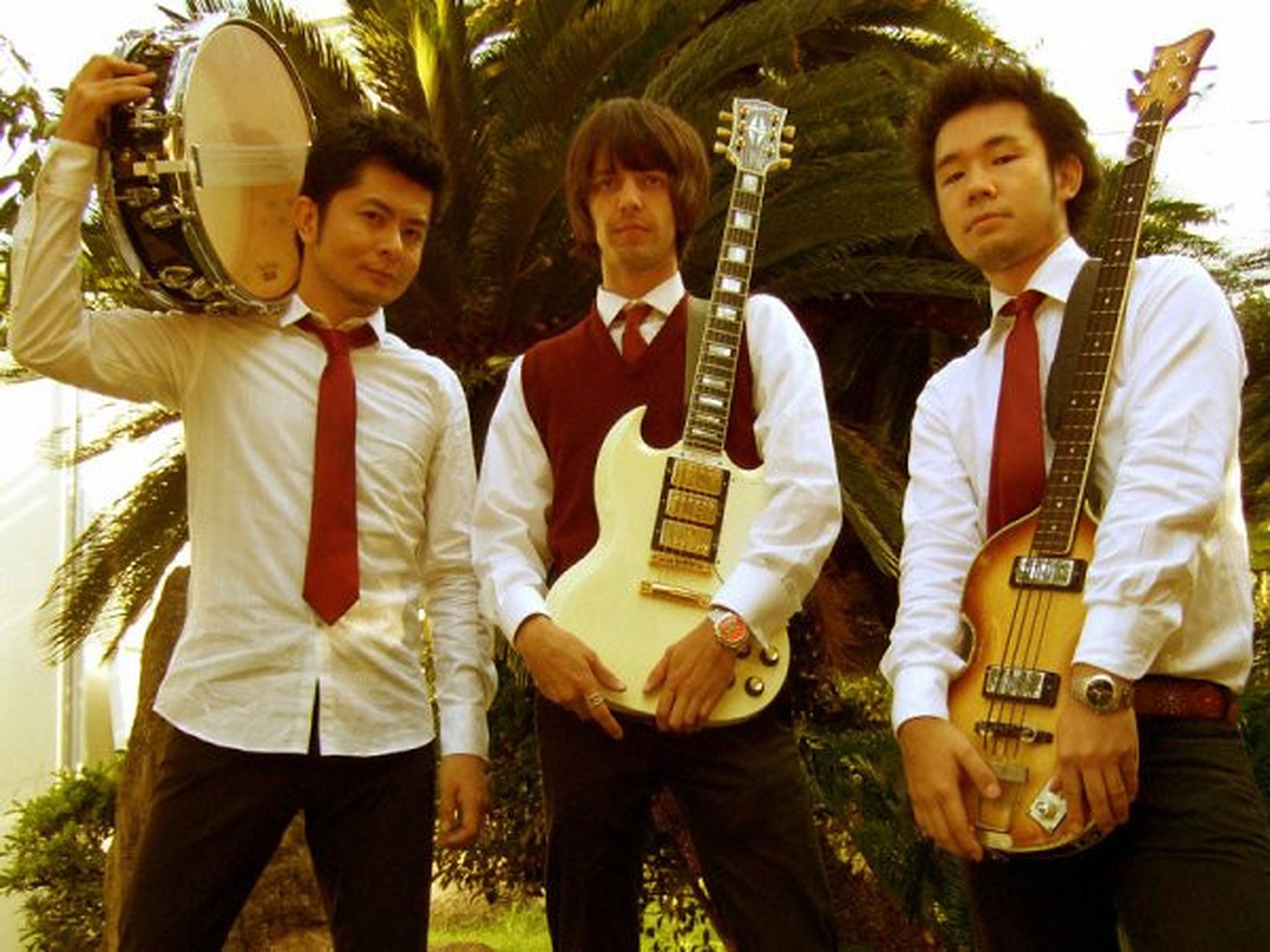
So who exactly are the Routes? Well, in essence they are a rock’n’roll combo founded by Scottish-born guitarist, vocalist, songwriter and producer Christopher Jack, after he moved to Japan where he’s been living for the past 20 years or more. Most of the records the group has released have been influenced in one way or another by the sounds of sixties garage punk, beat and surf, as well as a smattering of flavours sprinkled throughout whose origins lie more within the sound and stance of the late 70s punk movement and beyond. However, across the last few years, especially, the Routes have also been conjuring up more highly stylised instrumental-based projects which, deservedly so, have begun to pique the interest of various media outlets outside their regular record buying and gig-going public, now to be spread across a wider genre spectrum. In a way you could say Chris Jack and his group’s fascination for such new and interesting recording ventures had already begun before the Routes cut their Instrumentals album for Portugal’s Groovie label in 2012, and again a decade or so later with Instrumentals II, this featuring a heartfelt homage to one of Japan’s legendary guitar players Terauchi “Terry” Takeshi (the Blue Jeans, the Bunnys) for its cool cover design.
Things jumped to a much higher conceptual level with the post-lockdown release of The Twang Machine on Topsy Turvy, an imprint of the already well-established German label SoundFlat. Here, Kraftwerk were re-imagined in a crazy cool, wide-screen, surf-beat infused landscape. As if that wasn’t enough, they struck out next with a quite remarkable, not to mention clever, cheeky, charming and immensely fun-packed proposal, that being the eye and ear-popping Reverberation Addict album, where the group tackles fifteen choice titles from the impeccable catalogue of the Buzzcocks, including “Something’s Gone Wrong Again”, “Whatever Happened To?”, “Fiction Romance” and “Oh Shit!” alongside many of the group’s other tried-and-tested classics, wrapping them up in a new, more Routes-i-fied version of a highly provocative central image. Whatever next, we could only wonder and wait. Would it be possible for them to surprise us all over again? How long would we have to wait in order to find out? Well, yes came the answer, and actually not too long at all to wait, and what’s more they absolutely could, and did, as the attractively appealing and totally surreal follow up Surfin’ Pleasures can easily testify.
This one was to capture something entirely different, something thoroughly fresh and like a portal into a hitherto hidden perspective as the Routes set about deconstructing and reconstructing the material of Joy Division, another of Manchester’s most celebrated groups from the era now known as post-punk – but which I prefer to call the afterbirth of punk. Also, with those last three tribute-style (but not as we know it) adventures: The Twang Machine, Reverberation Addict and Surfin’ Pleasures, they would each arrive resplendent in newly created artworks where the attention to detail is immensely impressive; both are further imbued with all the hallmarks of the original artists’ presentations. All the way from the outer covers and inner sleeves, right down to the label designs and choice of lettering. In addition to this, the covers for the Buzzcocks and Joy Division releases were created for them by none other than Malcolm Garrett who, within his Arbitrary Images (Assorted Images) graphics unit had already created many exquisite, strikingly original record sleeve designs during the late 1970s and 80s including, of course, the alluded to unforgettable Linder Sterling provocation for the controversial 1977 Buzzcocks single “Orgasm Addict”. For the 2024 Routes album Surfin’ Pleasures, Garrett was also given the go ahead to re-imagine Joy Division’s now world famous, seen everywhere Unknown Pleasures cover image by none other than its original designer Peter Saville.
Now, just freshly on release as we communicate here in September 2026, there is the very latest in the Routes’ canon, the rather seductive The Routes Play The Velvet Underground, on 10-inch 45 rpm and which, of course, recreates that iconic first Velvets “banana” album cover image by Andy Warhol. I know, I know, you might be thinking by now woah, hang on a minute guys, is nothing at all sacred anymore? Well, no, certainly not in the world of art and pop music, but when I tell you that the way in which the Routes reinterpret a lot of these song creations – which, for some more than others, may indeed be very dear to us – is with love and passion; a certain degree of cleverness too, plus a high fun and quirkiness aspect. So from “The Model”, “Autobahn”, “Radioactivity” and “Trans Europe Express” to “Noise Annoys”, “Ever Fallen In Love (With Someone You Shouldn’t’ve)?”, “Lipstick” and “Fast Cars” through to “Love Will Tear Us Apart”, “Atmosphere” and “Isolation” and now also the truly deathless “I’m Waiting For The Man” and “All Tomorrow’s Parties”, may this serve as a reminder of their brilliance in the first instance, but also of the compositional merit and other individual components that make up such songs, and how under some of that futuristic cold war starkness they might have, and punk pop drama, and contrived (or otherwise) bleakness as well as the austere, post-Beatles, different planet sounding pop-ness of it all, there’s a heart beating rhythm at the core and, oftentimes, strange melody lines which can appear, in surprising contrast, to actually be quite light and breezy where perhaps they weren’t perceived in such a way before. If this is all unfamiliar territory to any of you reading this, suck it and see. Let the Routes take you somewhere else, it’s an altogether pleasant journey for sure!
Without sounding trite or wishing to undermine any of the starkness, power, despair or raw poignancy which we can associate with some of these songs, the Routes somehow manage to breathe new life into them, another signal that points toward the genius of the songcraft that enabled the creation of these tunes first time around. As ever, in the vast cauldron of influences and musical fancies that Chris Jack and his crack team love to pick up and run with, we can but only wonder where on earth the Routes might be taking us next.
I recently caught up with guitarist and master-minder of the Routes Chris Jack to ask a few pertinent questions to determine what lay behind some of these recent projects.
I suppose what I should first ask you is, although the Routes have been established as a force within the garage punk and instrumental beat scene going back almost twenty years now, what was the initial inspiration that would lead you down this particular path that you’ve chosen to take over the last few years, notwithstanding the Routes’ other surf-inspired instrumentals album?
Chris: When we’d finished the later instrumental albums Instrumentals II and Shake Five, we were in a creative lull with the instrumental material. Bryan and I are both big Kraftwerk fans, so we started talking about the idea of covering a few Kraftwerk songs for fun, just to keep active while we waited for new original song ideas. We got so into it that I think we wrote and recorded the whole thing in two or three weeks.
We originally did it just for our own entertainment, and as happy as we were with it, we never expected or intended to release it. We thought it was a terrible idea and that we’d be publicly flogged. We enjoyed making it so much, and the finished record was so well received, that we decided to keep exploring music we loved through covers.
During Covid, we had a run of several albums in a short space of time. At the end of that run, we were talking about Kraftwerk one day, and decided to try arranging their music as surf guitar instrumentals, just for our own amusement. We were really just playing around and having a bit of fun.
That’s all the more amazing then seeing as not only did it get released but as you say it was also very well received. Can you tell us a little bit about the reception it gained and from what quarters that came, especially if it was from places that perhaps the Routes were not so familiar with? Also were there any pieces from The Twang Machine that were more frustrating to reinterpret in a surf guitar instro vein than others and which song or songs from the album would you say turned out much better than you might’ve first anticipated they would?
Chris: We seem to generate a lot of interest from outside the regular instrumental and surf music crowd, with a lot of that coming from Kraftwerk fans. Of course, for many people it’s something of a novelty album, but that doesn’t really bother me. My favourite tracks are “The Model” and “Autobahn”, especially “Autobahn” with its “I Fought the Law”-inspired intro.
When choosing the songs, I generally went with the ones I could already hear in my head before attempting to record them. It was quite challenging because the vocal melodies are so deliberately monotone, so I had to pull melodies from little things happening elsewhere in the arrangements. I think that’s why some of the tracks aren’t immediately recognisable as Kraftwerk, and in the end we made the songs our own.
Yes, you certainly did that. Thanks for that Chris that’s quite illuminating. So how soon after the buzz had died down from your Kraftwerk album release did you start work on your Buzzcocks Reverberation Addict project and did you already know that this would be the next group you would take on, or were there any other names that were in contention for getting the Routes surf-instro beat treatment? Was it / is it you who calls the shots on those types of decisions?
Chris: The Buzzcocks project came about soon after Kraftwerk. Marco from Ghost Highway Recordings asked us to make an instrumental EP and suggested we include a Buzzcocks song. I couldn’t decide which song to do, and before we knew it we’d recorded four Buzzcocks songs. Then it became fifteen, so instead of just an EP, we ended up releasing both an EP and an LP.
As for choosing what we do, every decision is made by Bryan and me.
That’s great. I actually hadn’t realised you also made an EP. (Sonidos ZZumbantes Del Surf Instrumental on Ghost Highway Recordings, Spain, 2023). In hindsight is there any Buzzcocks song that you wished you’d also done? And what made you guys decide you’d like to do a tribute to Joy Division next and, again, what were some, or any of the challenges that this threw up for you? Was there also any qualms that this might’ve brought forth in your own minds given the level of reverence in which some folks hold Joy Division? Also what was the most fun song or songs that you re-interpreted here and what, if any, turned out to be quite a surprise to play the Routes way?
Chris: Buzzcocks have so many great songs and melodies. There’s so much to choose from, but we had to stop somewhere. On the subject of qualms, Bryan isn’t much of a Buzzcocks fan, so getting that many songs done in the first place was a miracle in itself.
Joy Division was something we’d been pondering for quite a while. Bryan’s initial feeling was that it would amount to sacrilege. I started working things out anyway, and once he heard where it was going, he came around to the idea.
On that album, I was particularly happy with “A Means To An End”, “Transmission” and “Isolation”. In general, though, I had to wrestle with those songs much more than I did with the Buzzcocks material. We ended up throwing in key changes here and there because a lot of the originals don’t really have them, and as instrumentals they needed something to help keep the momentum going.
The nicest ending to the whole story was that, through Mark Reeder, we got to meet Bernard Sumner. He told us he loved the album, which was incredibly reassuring. When someone from the band whose music you’ve reinterpreted tells you they enjoyed what you did with it, that’s about as happy an ending as you could hope for.
Oh man, that’s pretty incredible you got the seal of approval from Bernard Sumner, how cool is that! The design that Jim Grimwade came up with for The Twang Machine is perfect itself, but tell me how you came to involve Malcolm Garrett in doing the Buzzcocks and Joy Division LPs especially. And what input did you have here?
Chris: We’d just finished and released the Buzzcocks four-song EP when a friend of mine in the UK sent me a message saying Malcolm Garrett had shared our Twang Machine album on Instagram. I sent him a message to thank him, and we got chatting. In a weird twist of fate, it turned out an acquaintance of his had spotted our record in a shop in Germany and brought it back for him as a souvenir. It turned out Malcolm is a huge surf music fan and a huge Kraftwerk fan, so we’d somehow managed to tick all his boxes in one go.
I told him we had a Buzzcocks album on the way, and he immediately said, “You have to let me do the artwork.” That was the beginning of our relationship with Malcolm. He’s been a huge source of encouragement and support ever since, and we’re incredibly grateful. Malcolm actually came up with the title Reverberation Addict for us, and he also chose the title “Play” for our Velvet Underground 10-inch. It’s the same title he gave to the live album by Magazine, which he designed, after borrowing it from an album by The Surfaris.
Well that’s quite astonishing, and too that a mix of friendship and serendipity brought you to the great Malcolm Garrett and how this has now turned into a really strong relationship which you’ve built up. I have to say that the attention to detail that he has imbued across the total presentation of both the Routes’ Buzzcocks and Joy Division albums are, as I’ve alluded to before within the opening paragraphs, absolutely stunning artworks on their own, from the outer sleeve to the label designs, the chosen colours, textures and everything else in between! Can you believe just how incredible these have turned out? You must be so pleased with these! And can you also share how your Buzzcocks and, of course, Joy Division LPs have been received in general and perhaps also within your more regular audience?
Chris: Bit of trivia: the VU banana is a stress-relief toy that Malcolm picked up on his travels specifically for the record cover.
I think, generally, the records have been well received. I didn’t get the public crucifixion I was expecting, at least (especially with Joy Division). It doesn’t really bother me either way anymore. I just like playing guitar and making music. If people like it, that’s an added bonus.
I’m not really sure who our regular audience is, to be honest. I think we probably lost a bunch of garage purists along the way, but I’d like to think our appeal has broadened somewhat from what it was in our previous ventures (no pun intended).
Ha ha, that’s cool and funny, and to all the garage purists who might’ve fallen away well that’s a pity as you are missing out on some great and groovy tunes here! What was your reasoning / rationale for The Routes Play The Velvet Underground project? For instance why are there none of the more extreme titles from that first VU album, and were there perhaps other of the poppier / folkier songs you tried, ‘I’ll Be Your Mirror’ for instance? Was it always the Routes’ intention that this was just gonna be a 10-inch 45 rpm EP? By the way, that’s a great shot of you on the back Chris how was that done, was it a completely studious effort or was it somewhat more serendipitous?
Chris: Velvet Underground was actually pretty difficult to arrange. It’s pretty hard to do something that resembles the vocal melody from “I’m Waiting For The Man” on guitar. “All Tomorrow’s Parties” obviously came from the acoustic demo versions that the Velvet Underground recorded.
There were other songs I’d have liked to do, like “European Son”, but there are no real vocal melodies to work with and not much in the way of key changes. I don’t mean that as a criticism at all — it’s just hard to turn those songs into instrumentals.
I was very much aiming for a Link Wray feel on a lot of the songs, rather than a more overtly surf-sounding approach.
We originally intended to do a four-song EP, but, as usual, we got carried away.
The photographs on the back were taken by Kanako Aiki. I think she deliberately used a slow shutter speed to create the psychedelic blur. The photos were taken at the UFO Club in Tokyo.
I’m almost done but thought I could close by asking you what the immediate future holds for the Routes, and if you have another “tribute” project on the way can you reveal what it is, or maybe even give us a little clue?
Chris: We have a new tribute album coming out on Topsy-Turvy Records at the end of this year, possibly next year. I’m not going to say what it is yet, but it’s very much in keeping with the things we’ve done before.
We’re actually convinced it’s our best one yet, but I’m sure all those 60s bands that made really terrible albums in the 80s were telling themselves exactly the same thing at the time, so there’s every chance we’re completely delusional.
We don’t really have any big plans for the future. We just tend to do what we want to do, when we feel like it, at our own leisure and for our own pleasure (that wasn’t intentional fancy rhyming).
Finally, I’d like to say a huge thank you to Trax at Topsy-Turvy Records for taking a chance on our projects.
Thanks to Chris for all the time and effort taken in answering all the questions and to the Routes for all the cool music they’ve been making.
Lenny Helsing
The Routes Bandcamp / Instagram / Facebook