
Noah C. Lekas Interview | ‘Flowers of Perennial Dissent’
Noah C. Lekas discusses the illness, recovery and six supervised ketamine therapy sessions behind his new poetry album and chapbook, ‘Flowers of Perennial Dissent’.
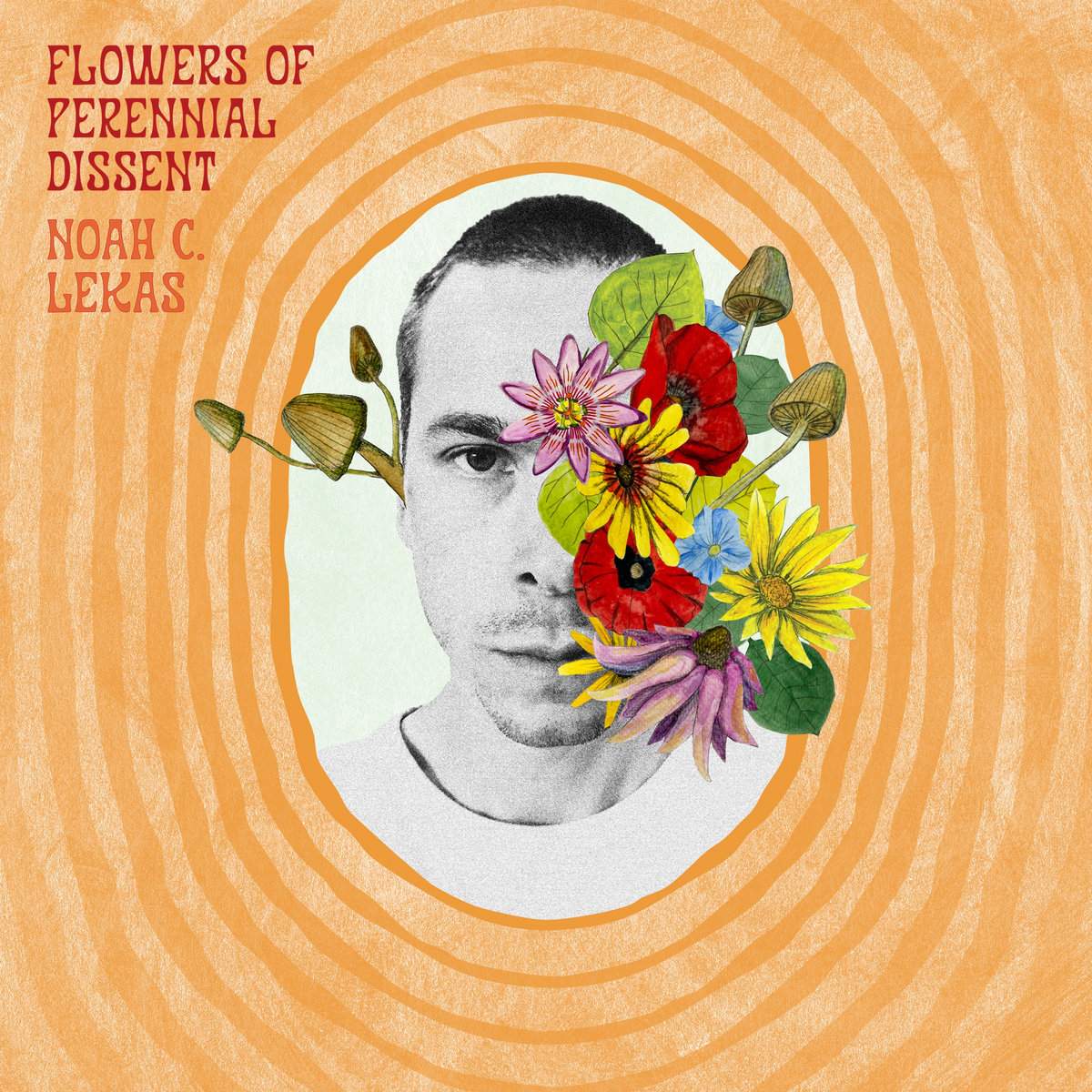
When we first spoke with Noah C. Lekas in 2021, he told us he tried to “write poetry without an agenda and edit with discipline.” ‘Flowers of Perennial Dissent’ began very differently. The starting point was around thirty pages of notes from six supervised ketamine therapy sessions Lekas underwent while recovering from a serious illness. Each session eventually became a poem. There was another record in between. In 2023 we premiered ‘Rust Belt Rock N Roll’ by American Restless, a band Lekas had first started putting together back in 2008. After finally getting the album out and beginning to tour, his illness brought those plans to an abrupt end. For the new record, he changed the way he worked with the musicians. Anthony Pirog, Ethan Miller, Charlie Parr, Luther Dickinson and James Toth were each given little more than a title and a short description. They recorded their parts before the poems were finished, and Lekas then went back to his writing after hearing what they had sent him. Ian Grant and Chad Lee also appear on the closing piece, ‘Standing on a Grain of Sand’, while longtime collaborator Jeremiah Zimmerman produced the record. ‘Flowers of Perennial Dissent’ arrives October 23 through Blind Owl Records as an album and companion chapbook.
“We are constantly becoming, yet constantly reminded of who we’ve been.”
Noah, it’s good to speak with you again. When we spoke in 2021, you told me you tried to write poetry without an agenda and edit with discipline. ‘Flowers of Perennial Dissent’ started from a very different place, with notes you felt you had to do something with. Did that change the way you wrote?
Yes, it did. For ‘Saturday Night Sage’, the majority of the poems started with an idea or an image that began, almost on their own, to take root. With ‘Flowers of Perennial Dissent’, I began writing from experience and from extensive, often very unpoetic, notes. Though I will say that my goal was documenting the purest form of my experience, so in that sense I still wrote for myself first. However, I definitely had an agenda with this project from the jump.
American Restless had finally released ‘Rust Belt Rock N Roll’ in June 2023, after a story that went back to 2008, and then your illness stopped the band almost immediately. What do you remember about that sudden change, from finally getting the record out and touring to having all those plans stop almost overnight?
It was painful. We sunk a solid year into getting that record rolling and it all ended in a single day. I’ve known the bassist, Ian Grant, pretty much my entire life. Plus, my dad was playing organ with us, so it was truly a family band. I wanted to make that record for the better part of twenty years—and we got pretty damn close to the sound I’d always had in my head.
Blind Owl Records released it, and we were starting to tour. We did a run of shows in California, and then a run of shows in Wisconsin, Illinois and Michigan, and things were starting to pick up. My illness stopped all of our plans. We had to cancel multiple tours and by the time I got through everything, that moment in time had passed.
Ian, my dad and I will always play music together every chance we get, that’s a given. In fact, Ian is on this new record. But I don’t know if American Restless will ever be revived again. I’m grateful we have the record to show for it, which I still dig, and some live videos floating around to document our effort, but for me, the way it ended generally overshadows the joy of creating it.
You’ve said your physical health, career and mental well-being all collapsed in roughly the same period. How much of that time are you comfortable taking us through? And at what point did you realise that recovery might not mean simply returning to the life you had before?
Like so many families, we found Covid-19 difficult to navigate. We had very small children when it started and there were a whole host of obstacles that came along with that. Coming out of the pandemic, AI was starting to infiltrate the writing industry. For the last 10+ years, I’d made a living as a writer and editor. However, by the end of the pandemic I was experiencing the sea change, and by 2024 clients were sending me feedback that ChatGPT gave them on my work—which quickly led to them just using AI instead of me and ultimately the end of my writing career.
Meanwhile, in the fall of 2023, I got sick with a stomach bacterium that caused me to lose upwards of 50 pounds in three months, and resulted in a life-saving medical procedure in January of 2024.
Over the course of one year, I experienced physical, professional and mental collapse. Oddly, the physical piece was arguably the easiest to rebuild, which took about one year to get back to a healthy weight and feel more functional. Professionally, I’m still dealing with the ramifications of being deemed redundant by AI, and mentally, I sought treatment and therapy to cope and rebuild.
Like many of us who have endured difficult seasons, that is an ongoing process. I’ve struggled with anxiety my entire life, but six or so straight years of increasing resistance in life only made that anxiety more potent, and ultimately more deadly. Suffice to say, it’s a work in progress.
You came away from six supervised sessions in spring 2024 with around thirty pages of notes. What did those notes actually look like before they became poems? Did each session stay fairly separate, or did they start to overlap once you began writing?
Yes, I did six supervised sessions of ketamine therapy. Which, I want to clarify, I am not a drug person and I’ve never done psychedelics recreationally. Ketamine therapy isn’t fun. But it did prove useful.
I did the six sessions; each session became its own poem. The notes were just lists of things I said while having the experience. And for the most part, they were separate experiences. However, there was some overlap, and I did organize the poems to try and make them more cohesive. I stayed true to the narrative arc as I experienced it. A few lines and scenes were moved around to make things make more sense, but the project is linear.
The record raises questions about how reliable consciousness really is, but you also chose to trust the notes you had from those sessions. How did you decide what to trust when some of them came from a dissociative state?
I decided to trust the notes empirically. Time is the adversary of any mystical experience. With time and distance, rationality sneaks in and begins to unwind the experience in an attempt to make sense of it.
Dissociative mystical experiences are very uncomfortable, so our brain tries to find a box for it. I could feel that starting to happen, which is why I decided to trust the notes. Where there were gaps, I used memory. Fortunately, I really didn’t have any conflict with that. What I remembered was generally represented in the session notes, and there were a lot of things in those notes that I didn’t remember, but reading them brought those experiences back to mind.
You’ve been careful to say that the record isn’t an argument for ketamine therapy. Did you worry at all that turning the experience into art might romanticise either the treatment or what you had been through?
Yes and no. In reality, worrying about influencing people takes a level of hubris and self-importance that I just can’t muster at this stage in my life. I am not a theologian. I am not a therapist. I’m a writer and folk musician who almost got killed by a microscopic bacterium, lost his career to technology, and is trying to figure out how to keep moving forward without sacrificing the wrong parts of himself.
I don’t find the record particularly romantic. There is certainly a beauty to it, but it’s hard for me to imagine someone reading or listening to this and thinking, “I want to do that.”
But to be clear, I recommend not going through any of this.
You grew up where Catholicism, Buddhism, Krishna Consciousness and American Christianity all met, and as a child you received Harinama initiation and a new spiritual name. If you’re comfortable sharing it, do you remember that name and the ceremony? What stayed with you after your family left the practice?
My parents joined the Krishna movement in the late ’70s and I was born in the early ’80s before they left the movement. Even after they left, many of the concepts and ideas stayed with us, things like vegetarianism—my sister has never had meat in her whole life—or making Prasad.
As a child, the naming process isn’t as much of a ceremony as it is just being named by your guru. The name I was given was Nanda-Das. Nanda was Krishna’s father, who raised him, and Das essentially means devotee, so it’s an interesting name. You are, in essence, the devotee of the one you fathered. Which in the poetry comes up in the lines, “We raise our children to be the parents we need.”
In our earlier interview, you talked about a DIY approach to spirituality as a kind of ultimate freedom. During your illness and treatment, there were obviously things you could not control. Did that experience change what spiritual freedom means to you?
It only reinforced it. As a teenager, DIY punk gave me the blueprint for life: it meant I could make the life I wanted if I was willing to do the work. As idealistic as that is, it still informs me.
Obviously, life has its own rhythm and so much is just not a matter of will. But spiritually, I’ve always resonated with that. I was never looking for a guru. I was always content to read the books myself.
I think the spiritual pursuit is freedom. God-consciousness, by its very nature, cannot be restrictive. The Bible says, “Where the spirit of the Lord is, there is freedom.” In Krishna-consciousness, moksha or true freedom is surrender to Krishna. I think the spiritual journey is one you have to walk yourself, and it is a path of freedom, so nothing in this physical life changes that for me, no matter how difficult.
You distinguish ego death from resurrection, saying it can feel more like collapse. After what you lived through, do words such as healing and transcendence still feel honest, or can they make recovery sound cleaner than it really is?
I wouldn’t describe my experience as “healing” or “transcendence.” I am still here, still on the path and still moving forward. There is no B.C./A.D. moment; it is just life.
Life rotates through itself like switchbacks up a mountain; we are never where we were, nor are we where we are going, and that is the beauty of it. There is no completion. We are walking towards reconciliation, infinitely.
The record begins with ‘If Only a Pilgrim at Your Lotus Feet’ and ends with ‘Standing on a Grain of Sand’. Where did the title ‘Flowers of Perennial Dissent’ come from, and what does dissent mean in the context of these six pieces?
The title came out of the idea that continuing to exist in the face of tragedy, trauma, climate crisis, political turmoil, economic strife, war, famine, genocide, and all the rest of it, is an act of dissent.
That human existence is valuable in and of itself. That we are not defined by our income nor our productivity. That by continuing to be we continue to have implicit value. That even though we move through dormant life seasons and winters of discontent, as it were, we continue to experience organic revolution.
With ‘Saturday Night Sage’, the poems were finished before the music. This time you gave each musician a title and a short description, then went back to the poems after hearing what they sent you. Which piece changed the most because of the music?
The concept started with a conversation between Anthony Pirog and me. We were talking about my experience making ‘Sounds from the Shadow Factory’ and his recording ‘The Nepenthe Series Vol. 1’. Somewhere in the conversation I mentioned how I wondered what it would be like to do what he did with ‘Nepenthe’, which was essentially sending a prompt and just responding to whatever the collaborators sent back. Anthony encouraged the idea, and here we are.
I also knew that this would be a tough thing for me to complete, so having the audio files helped me put a frame on each piece. It gave me a finish line and a sense of obligation to complete the work.
The piece that probably changed the most is the last one, ‘Standing on a Grain of Sand’. Ian plays bass on that one. I had a riff that I sent him, but he took it and turned it into three distinct parts, and between him and Jeremiah Zimmerman, who produced the record, it just became something completely different than I had envisioned.
I ended up writing a much longer piece than I had planned to, and it really became one of my favorite things I’ve ever recorded.
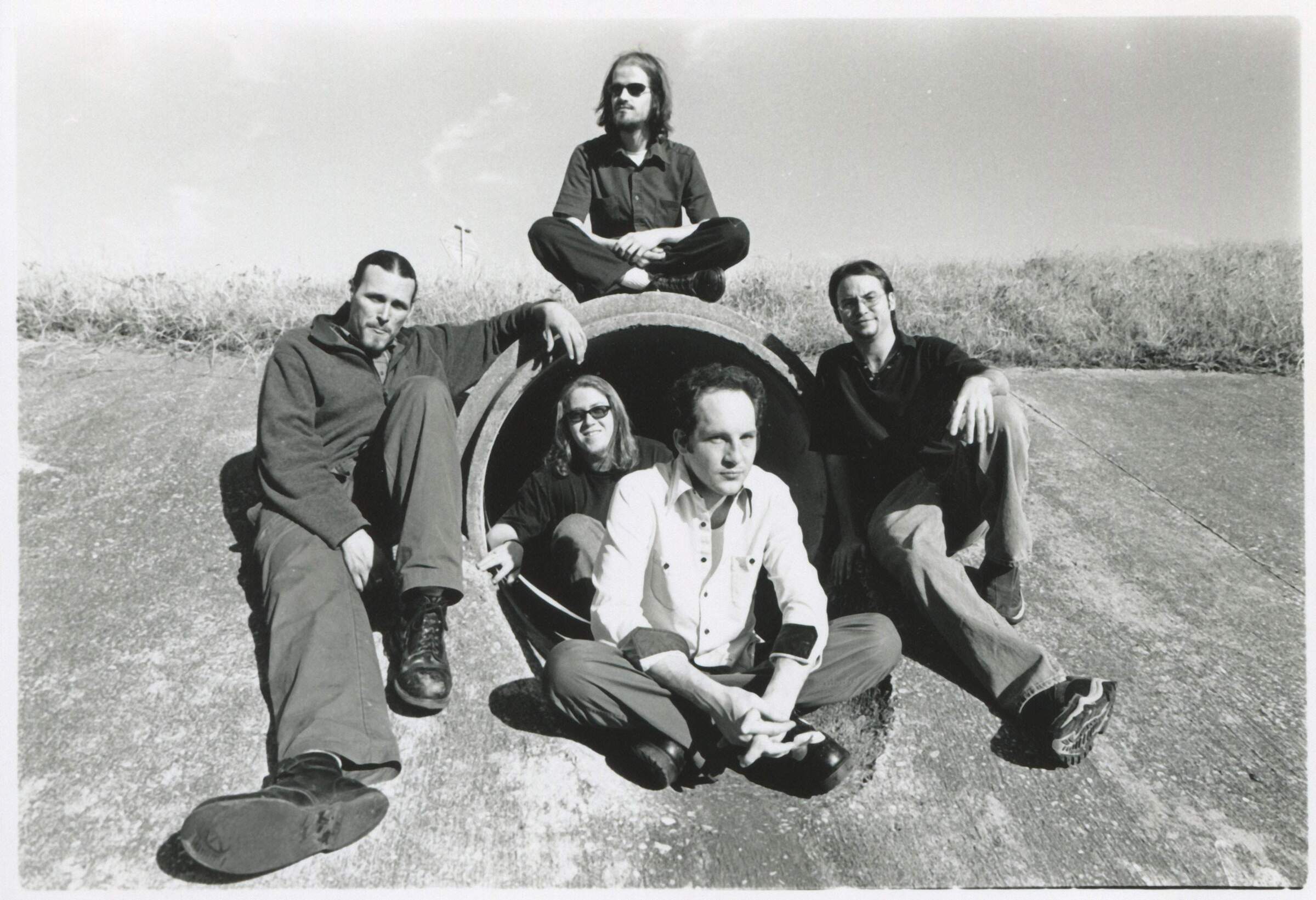
Jeremiah Zimmerman had already worked with you through The Silent Comedy, the earlier poetry films and American Restless. How important was that history here? What did he understand about the work that somebody new to it probably wouldn’t have?
Jer and I have logged some serious miles together, so having him involved means everything. I wouldn’t have made this record if he hadn’t gotten involved. His input is inseparable from the work itself.
‘If Only a Pilgrim at Your Lotus Feet’ opens the album and is also its longest piece. What made Anthony Pirog the right person to begin the record with you?
The album started as a conversation with Anthony, and the record begins with his playing. He is one of my favorite guitarists and I thought the inter-theological nature of the first piece would connect well to his multi-genre approach to guitar.
He is a very cinematic musician. Whether you listen to The Messthetics or the Janel and Anthony albums, there is something in his work that always feels a bit like a film score to me, even at its most avant. I thought it was a natural fit. I was just humbled and grateful that he was interested in being part of it.
Ethan Miller is the only musician from ‘Saturday Night Sage’ who returns here. Back then your voice was placed over an existing Howlin’ Rain jam; this time he wrote from a brief before the poem was finished. What changed when you reversed the process? And what does ‘Divine Frequency’ mean to you?
Ethan is one of my creative big brothers—whether he realizes it or not. I was a fan of his before we became friends, and I continue to be a fan of his. Having him on both records in different capacities is only fitting.
‘Divine Frequency’ is about non-dualism and the idea that harmony is singular but not binary. However, dissonance is infinite, which he expressed perfectly through his performance.
With ‘Saturday Night Sage’, it was so much about fitting the poem to the music that this reversal was really freeing. I had to make choices on stanzas and meter based on his playing, and I think that dance of harmony and dissonance in the creative process only further expresses the philosophy of the piece itself.
You’ve called Charlie Parr one of your real-life folk heroes. The title ‘A Revolution in Just Existing’ also ended up echoing Coalesce’s ‘0:12 Revolution in Just Listening’, although you only noticed that later. Charlie Parr and Coalesce come from very different parts of your musical life. What did you make of that accidental connection?
I think it served as a beautiful reminder that we can’t lose ourselves any more than we can remain who we were. We are constantly becoming, yet constantly reminded of who we’ve been. There is no way to lose anything, only to grow forward, whether we acknowledge it or not. There is nowhere to arrive, nor is there anywhere to leave; just this place where we are. And to me, that is comforting.
Charlie is one of my musical heroes. He is one of my favorite guitarists, a fellow Midwesterner, and just a wonderfully kind and gracious person. I am humbled that he is part of this record and, given our shared geographical history and some specific mental health things that I won’t get into, I knew he’d understand this piece. But I didn’t have any idea how perfect his playing would be.
Plus, I listened to a lot of Charlie’s music while I was sick. I found it very therapeutic, and to have him be part of this record and that particular piece, it literally means the world to me.
You’re also a union organizer, so the idea of dissent isn’t only personal. ‘A Revolution in Just Existing’ treats survival itself as resistance. How do you connect that private kind of endurance with collective action?
I think they are inseparable. In a literal sense, we can’t enact collective action without continuing to endure privately. We are the collective, so without some focus on self, there is no collective.
We must be both an individual and a part of the movement. We must make room for our individual experiences but see these individual experiences as a path towards solidarity, as a thing that unifies us all in the working class. We must ultimately choose to identify as a member of our class rather than an outlier, while holding space for those unique experiences.
It isn’t easy, but humanity isn’t a monolith, nor is any people group within it. For example, if I were wealthy, my health issues would’ve been a two-year vacation instead of a fight to keep a roof over my head and my family fed. And in that, there is an individual experience that deeply connects me to a collective reality.
I think that intersection is where organizing and direct action most effectively take place. Trauma doesn’t have to be the thing that differentiates our identity; it can be the thing that unifies us as one people with the shared goal of dignity and equity for all workers.
Your father has been a professional musician, while Luther Dickinson’s understanding of musical tradition was profoundly shaped by his father, Jim. Did ‘In the Fields of Our Fathers’ become a conversation about what fathers hand down, or is the ‘our’ in that title meant to reach further than family?
I thought of Luther immediately for this piece and I wasn’t exactly sure why. But yes, we are both the sons of organ players, brothers of a drummer, and we are both fathers ourselves, so there are plenty of correlations to be drawn.
Luther is another of my guitar heroes, but to answer your question, it is meant to be both the literal and the providential father. It is about what fathers hand down, and what we hand down as fathers.
But fathers are only part of the story. Most of the poem deals with the women in my life, women who’ve played an outsized role in who I am and who I’m becoming.
One version of the story claims Eve tempted Adam and caused his fall. Another perspective is that it wasn’t until Adam gained the knowledge of evil that he learned he could use his trauma to elevate himself and subjugate Eve.
There is an inescapability to the piece, a realization of being thrust into a narrative arc that extends far beyond ourselves, beyond our families, and beyond humanity itself. It wrestles with our duty to confront the shared past that we were born into. We will dance in the fields of our fathers, but how we dance has a moral implication.
An aspen grove can look like many separate trees while living through one shared root system. Was that idea of connection already there in ‘On the Leaves of Aspen Trees’? And did hearing James Toth’s playing change the way you understood or finished the piece?
I think James really captured the peace of the realization. It is about interconnectivity, and the peace that connectivity brings. Even when an aspen dies, only that tree does, not the root system.
There is a row of aspens in my backyard and I spent a lot of time walking and contemplating throughout this journey. But the line was something I literally said in a session.
To me, it addresses the ideas of faith. During this experience I started looking at faith differently, as something that you can’t have more or less of; instead, learning to seek more understanding of the faith we already have.
I don’t believe that is merely semantic. I think it is crucial. Do we lack faith? Or do we lack understanding of the faith by which we are already operating? For me, it’s the latter.
Exploring understanding—which is to say depth instead of quantity—really shifted my perspective, bringing with it a new sense of peace. James’ performance pulled that to the front immediately for me, which really shaped how I expressed those ideas.
Early materials listed the closing piece as ‘At the Edge of Time’, while the final track list gives ‘Standing on a Grain of Sand’. Was it simply retitled, or did the piece change as well? And where do Chad Lee and Ian Grant enter the finished recording?
I just liked the title better, so we swapped it before it went to print. It felt more accurate, although both lines appear in the poem.
As I mentioned, Ian played bass on the track and came up with the variations of the parts. Jeremiah put that track together, and Chad Lee, who actually plays drums on ‘The Word’ from ‘Sounds from the Shadow Factory’, played percussion on the track.
So the piece was the most collaborative in the sense that we constructed it collectively. That’s why it’s attributed the way it is; no single person created the audio.
You mentioned to me earlier that you’re a father. Did coming so close to death change what you hope your children inherit from you? And is that different from what you hope a listener or reader carries away from this record?
It absolutely changed it. My children watched me go through all of these things—it is personal to them in a way that it never could be for somebody outside of my family. My wife and children were in the house with me; it is their story just as it is mine.
I hope my children inherit reverence for the divine and an appreciation for endurance.
The inscription of the book says, “This is for everyone who was there for the worst of it, and anybody who gets a little solidarity from the retelling of it.”
And that’s what I hope. If anybody listens to this album or reads the book, I hope they leave feeling more connected to humanity.
I hope they feel solidarity.
Noah C. Lekas Bandcamp / Substack / Instagram
Blind Owl Records Website / Bandcamp / Facebook / Instagram