
The Wheel Workers Interview | Finishing ‘One More Thing To Say’ Twenty Years Later
The Wheel Workers’ new album is one they started making around twenty years ago.
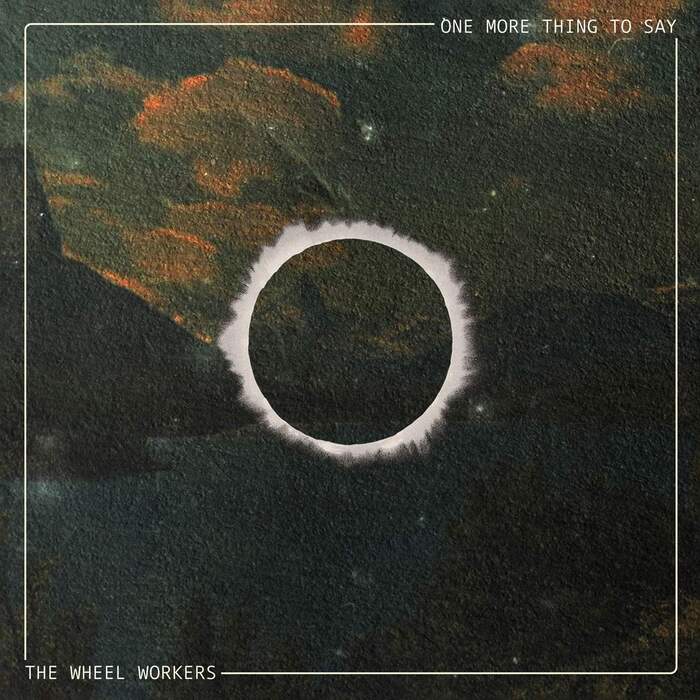
Much of ‘One More Thing To Say’ goes back to the original lineup of Steven Higginbotham, Nathan Maness, Giuseppe Ponti, Chris Maness and Chad Fontenot, when the five were living together in Austin, working day jobs and spending most of the rest of their time making music. They had already released ‘Debut’ and the completely improvised ‘How to Fly a Washing Machine’. The next batch of songs never made it to a finished album before that lineup came apart. Luckily Higginbotham kept the recordings. During the pandemic, he started going through hundreds of old CD backups and reconnecting with the other members. Some of what survived could be used almost exactly as it was. Other songs needed considerably more work. Nathan Maness recorded new drums, Giuseppe Ponti returned for bass parts, and musicians from later versions of The Wheel Workers added harmonies and synthesizers. On several songs, Higginbotham even found himself singing alongside vocals he had recorded in his twenties. The finished ‘One More Thing To Say’ runs to sixteen tracks and arrives October 16. We’re streaming the album in full today. There is also a new video for ‘One Must Speak’, a song Chris Maness originally brought to the group as an acoustic piece.
We spoke with Steven Higginbotham about the house in Austin, what survived in his archive, finally finishing these songs twenty years later, and what else is still sitting there waiting to be heard.
“Creative work doesn’t have an expiration date.”
Steven, let’s go right back to those early years. The original five of you ended up living together in Austin and playing music almost every day. What was life in that house actually like? How would a song develop once somebody brought an idea in, and what were you listening to at the time?
Those were some pretty magical years, honestly. The five members of the original lineup—Steven Higginbotham (me: lead vocals, guitar, keys, and violin), Nathan Maness (drums), Giuseppe Ponti (bass), Chris Maness (guitar, harmonies), Chad Fontenot (guitar)—were all in our early twenties, living together in Austin, working lousy jobs, and spending most of our free time playing music. When you live in the same house as the people you’re making music with, the distinction between your everyday life and your creative life starts to disappear. We’d hang out, listen to records, discuss music and politics, throw parties and then wander into the practice space and play for hours. There was a tremendous amount of experimentation, and we had the luxury of time in a way that becomes much harder to come by as you get older.
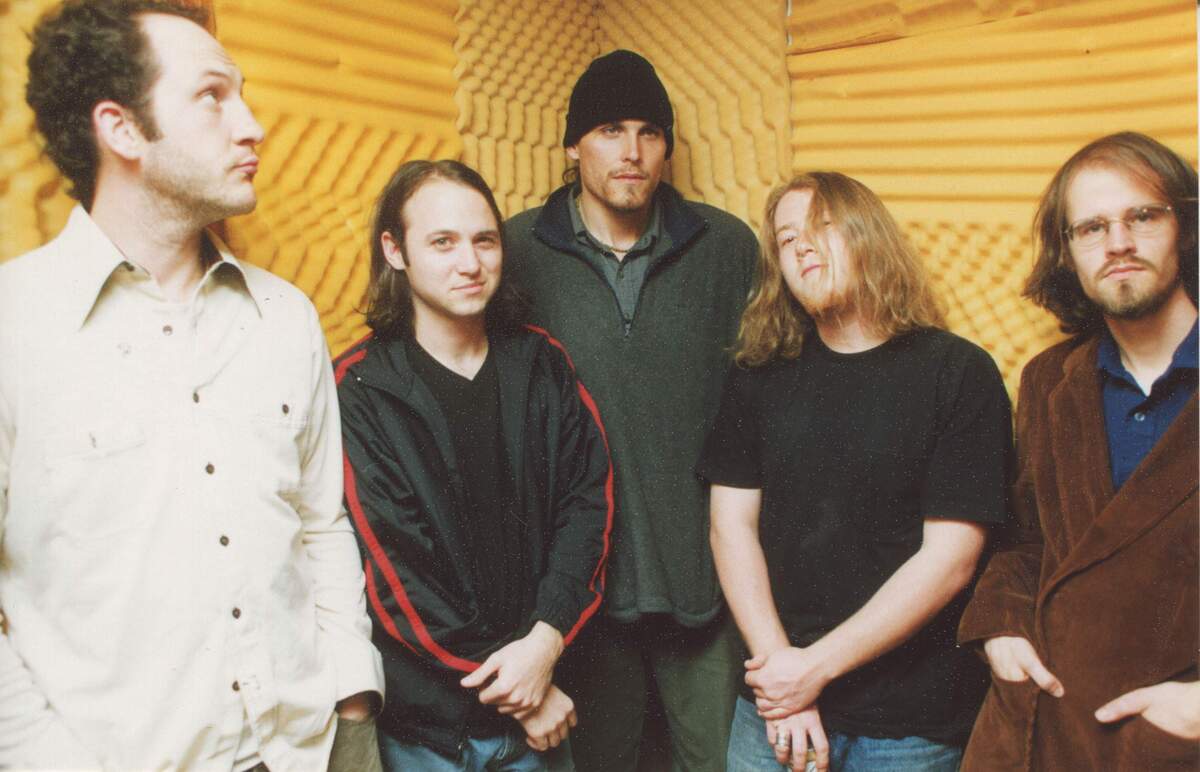
I was recording everything we did back in those days. My bedroom served as the studio and our living room was our jam area, padded with cheap yellow egg-crate foam and some other makeshift soundproofing that was covered in concert posters and art.
One of the great things about that lineup was that there were several strong creative personalities and songwriters. While I sometimes brought in pretty well-developed songs on guitar, such as “Distractions” and “Half-Asleep,” and Chris brought in “One Must Speak,” most of the songs started from jams, and all of the songs went through a collective refinement where everyone added their ideas. Once the five of us started playing the song together, it often took on a life of its own. We were also constantly improvising, sometimes for hours, and that really developed our chemistry as a band. We could follow each other into some pretty strange musical territory without necessarily knowing where we were going.
Our influences were all over the place, but there was definitely a shared love of adventurous alternative rock—bands like Sonic Youth, Pixies, Jane’s Addiction, Pearl Jam, Mogwai, Trail of Dead, Stereolab, Tool, and Fugazi, along with plenty of psychedelic bands such as The Doors, early Pink Floyd, 13th Floor Elevators, and The Flaming Lips. We liked music that could be beautiful and abrasive, sometimes within the same song. I think that combination became a pretty defining characteristic of The Wheel Workers.
You released ‘Debut’ in 2003 and ‘How to Fly a Washing Machine’ in 2004, but the record that eventually became ‘One More Thing To Say’ was never finished. What do you remember about that period? What brought the original lineup to an end, and did you ever imagine the recordings would still be sitting there twenty years later?
What I remember most is how much music we were making and how ambitious we were becoming. We’d already released two records, and I think we were developing a much stronger sense of what we could do together. The material for ‘One More Thing To Say’ was, in a lot of ways, a step forward. The songwriting was more developed, the arrangements were more adventurous, and we were beginning to figure out how to combine our different musical personalities into something that felt cohesive.
In particular, songs like “One More Thing To Say” and “O’er the Sands” really reflect the direction we were heading, with weird time signatures and less traditional song structures. Both originated in jams where those musical qualities just spontaneously emerged from our interactions. Often Giuseppe would get us started with a strange but super catchy bass line and then everyone would join in on top. If I was lucky enough to record the moment when a new idea was born (and I always tried to keep the tape rolling), we would all listen to the recordings and hammer it out into a song.
But we were also young, and living and working together that intensely can be complicated. There were the ordinary pressures of trying to figure out our lives, relationships, jobs, and what the future was supposed to look like. Eventually, the original lineup came apart before we could finish the album.
I certainly never imagined those recordings would sit unfinished for twenty years. For a long time, I thought I’d eventually get around to completing them, but life kept moving forward. The Wheel Workers started making new music with new members, and there was always another project demanding attention. Still, those songs never completely left my mind. I always felt there was an important missing chapter in the band’s history, and it bothered me that some of the best music the original lineup made together had never really been heard. For whatever reason, the time was finally right to finish them properly. One big factor is that I’m now a much better recording engineer and producer in my forties than I had been in my twenties. I finally felt like I had the skills and experience to do these songs justice.
You’ve always been the person keeping the band’s recordings. When you went back through everything during the pandemic, what did you actually find? Were there things you had completely forgotten? And after twenty years, what sort of condition was everything in?
I’ve always been something of the band’s unofficial archivist, mostly because I recorded everything and I have a pretty obsessive personality. Over the years I’d accumulated an enormous collection of demos, rehearsal recordings, unfinished songs, alternate versions, and tons of recordings of us just jamming together.
During the pandemic, I started revisiting that material much more seriously. What struck me was how much genuinely good music was sitting there. Some of it I remembered very clearly, but other pieces were things I had completely forgotten existed. There were spontaneous performances and little musical ideas that captured a kind of chemistry that was truly special and led to some of the best musical moments of my life.
The condition of the old material varied a lot. To resurrect the songs that would become this new album, I went through literally hundreds of burned CDs I used to back up everything in those days (yes, we’re that old). Most CD backups survived intact, but some were not salvageable.
Of the material I retrieved, some performances were worth preserving almost exactly as they were in demo form, while others needed substantial additional recording or production. So, for example, the original bassline, Rhodes keys, and lead guitar parts on the song “One More Thing To Say” are all original. For most of the songs, the demos served as “scratch” tracks that we recorded to, which gave us the option of using some of the original performances along with newly recorded material. The main part we re-recorded on every song was the drums. My recording setup back in the day was pretty good for recording guitars, bass, vocals, and keys, but recording a drum set is a different beast altogether. So we went into Wire Road in 2023 with Josh Applebee, who is a great engineer and an absolute master at recording drums. Even after 20 years, Nathan killed it and the record was instantly 20 times better with drums recorded at such a high level. Since we were at Wire Road, we went ahead and recorded bass and some guitars along with the drums, which gave us more options in mixing.
I re-recorded a lot of guitars and vocals at my home studio and added a ton of harmonies—usually the brilliant work of newer Wheel Workers Erin Rodgers or Alli Villines—and synths courtesy of Craig Wilkins.
Ultimately, we ended up with far more material than we could fit on the album itself. In addition to the 16-song record, we’re opening up the vault with demos, alternate recordings, B-sides, and extended improvisations—nearly 40 tracks altogether. That material is still in the works but will be released at some point. In the meantime, we’ll be mixing an album of all-new material with the current band lineup in December, with Steve Christensen.
The finished record mixes performances from the old sessions with things recorded much more recently. On some songs you’re even singing alongside your younger self. How did you decide what to leave alone and what to record again? And how strange was it to hear those two versions of your voice together?
The guiding principle was to preserve as much of the original spirit of the recordings as possible while making the finished songs sound the way we’d always imagined they could. I didn’t want to simply recreate everything from scratch, because that would have defeated much of the purpose. The original performances have an energy and chemistry that came from five guys living together and playing music constantly.
One key decision on the songs was whether my original vocal from my 20s or a newly recorded vocal would become the lead vocal for the track. Mostly I preferred my new vocals, which I could record at higher quality today, but some of those original vocals were just so perfect for the song (such as in “Foundation,” “See All The World,” and “In The Breeze”) that I kept them as the lead. But even when the old vocals weren’t used as the lead, they inevitably ended up mixed into the choruses, meaning that I’m often harmonizing with my 25-year-old self throughout the record.
That last part was a pretty surreal experience. There’s something strange about hearing your own voice from twenty years ago and then singing along with it. You’re simultaneously the same person and someone quite different. My voice has changed, my musical instincts have evolved, and I have a more experienced perspective on life. But there are moments when those two versions of me fit together surprisingly naturally. And the core of what moves me musically is still very much intact from those days. In a way, that’s what the whole album is about—bringing those two points in time into conversation with each other.
‘In the Breeze’ first appeared on ‘How to Fly a Washing Machine’, which you recorded entirely through improvisation in 2003 and 2004, without overdubs. It now closes ‘One More Thing To Say’. How much of the original performance survives in this version? And do you remember how the piece first came out of one of those jams?
‘How to Fly a Washing Machine’ was an unusual record because it came entirely out of improvisational jams that were recorded at the moment of creation. The audacity of youth to put that out as our second record! But we were spending so much time playing together that we’d developed an almost instinctive sense of where the others were going musically. We could start with zero plan and end up somewhere pretty interesting. There was a freedom to that approach that I still really appreciate. But it’s not exactly the kind of material that has mass appeal.
“In the Breeze” is a good example of that side of the band. It has a kind of atmosphere and organic quality that’s difficult to achieve when you’re consciously trying to construct every element of a song. Comparing the two versions gives you a sense of our process from when a song is birthed to how it sounds when it is finished. They each have their strengths—one a pure, raw, spontaneous, joyful creation, and the other taking that as a starting point and refining it from there. It’s like a pre-bonsai tree in its natural beauty versus a well-trimmed final tree. Both are beautiful and share the same core, but they reveal different kinds of beauty—one discovered in the moment, the other shaped with intention.
I also like having it close ‘One More Thing To Say’, not only because it has a nice closing lullaby vibe, but also because it connects the album back to that very spontaneous, experimental period in the band’s history. There was a lot of ambition in the more structured songs we were recording, but underneath all of that was a group of friends who simply loved getting together and seeing what kinds of sounds we could make.
‘One Must Speak’ has its own long history. Chris Maness wrote it as an acoustic song, and an early live version later appeared on the 2020 reissue of ‘Debut’. What happened to the song once the whole band got hold of it? ‘Spreading the Fire’ was almost the opposite: you had an old instrumental but had to write the words twenty years later. Was it difficult getting back into the headspace of that period?
One of the really interesting things about that lineup was how much a song could change once all five of us started working on it. Chris is a terrific songwriter and recorded a complete acoustic-focused version of the song we loved. But once we got our hands on it as a band, we Wheel Workerized it into a psychedelic rock song. We all have our own musical instincts, and part of the fun of those days was seeing how those different personalities interacted. “One Must Speak” is a good example of how the band’s collective approach could transform an original idea into something that reflected all of us.
“Spreading the Fire” is a really unique song on the record, but one that also reflects the full journey of the whole album. While digging through the archives, I stumbled across an instrumental recording from twenty years ago that we had all totally forgotten about but immediately fell in love with. The original guitar riff and chord progression were from Chris, but it never really had a final vocal melody or lyrics. So when I returned to it, I had to write an entirely new vocal part to accompany music we’d recorded in our twenties.
So the song acts as a bridge between the band we were then and the songwriter I am now, with all the additional experiences and perspectives I’ve accumulated since then. The lyrics ended up being an ode of sorts to that early period of the band, and to maintaining your passion for art and creativity as you get older, even as careers, responsibilities, and the ordinary pressures of life compete for your attention.
The song itself is literally a collaboration between my younger and older selves, and the subject matter is about keeping that creative connection alive across the years. I couldn’t have planned that twenty years ago, but it’s become one of my favorite things about the record.
‘O’er the Sands’ and ‘One More Thing To Say’ were written during the Iraq War and the Bush administration. Politics kept coming back into your writing on later records such as ‘CITIZENS’ and ‘post-truth’. When you returned to lyrics you had written in your twenties, was there anything you now saw differently? Did you want to leave the words as they were, or did some of them need changing?
One of the strangest things about revisiting these songs was realizing how little some of the underlying political concerns had changed. We were writing during the Bush administration and the Iraq War, and there was a tremendous amount of frustration with political leadership, militarism, inequality, and the ways people could be manipulated or divided. Twenty years later, unfortunately, those themes may be even more relevant. I couldn’t believe America reelected Bush in 2004 after he started a war based on lies about WMD, but I’m even more stunned that we reelected Trump after his attempted coup following the 2020 election—an unprecedented assault on the peaceful transfer of power that is essential to democracy. And, of course, Trump has now gotten us into another war in the Middle East, with preventing Iran from acquiring nuclear weapons among the many shifting justifications. This is the same nuclear program he previously claimed to have “completely and totally obliterated” in 2025. So yeah, the lyrics to those songs still ring all too true.
I did make a few lyrical changes, although I generally tried to preserve the original spirit of the songs. For example, in “So Wrong,” the original lyric was “What did you see on that fucking TV?” and I changed it to “What did you see on all those screens?” It’s a small revision, but obviously the world has changed quite a bit in terms of how we consume information and how much of our lives are dominated by screens. But the underlying concern about people becoming distracted, isolated, and disconnected from one another was already there.
I think the biggest difference is probably in how I approach those subjects now. When you’re young, it’s easy to see things in fairly stark terms, and there’s a lot of righteous anger in some of those songs. I still think anger at injustice is appropriate, but I also place a greater emphasis now on empathy, solidarity, and the need to find common ground. That’s something that has increasingly informed my songwriting over the years.
What I find encouraging is that even the older songs often contain that sense of hope. “So Wrong,” for example, is ultimately about people recognizing that things need to change and coming together to make that happen. That message feels just as important today as it did when I first wrote it.
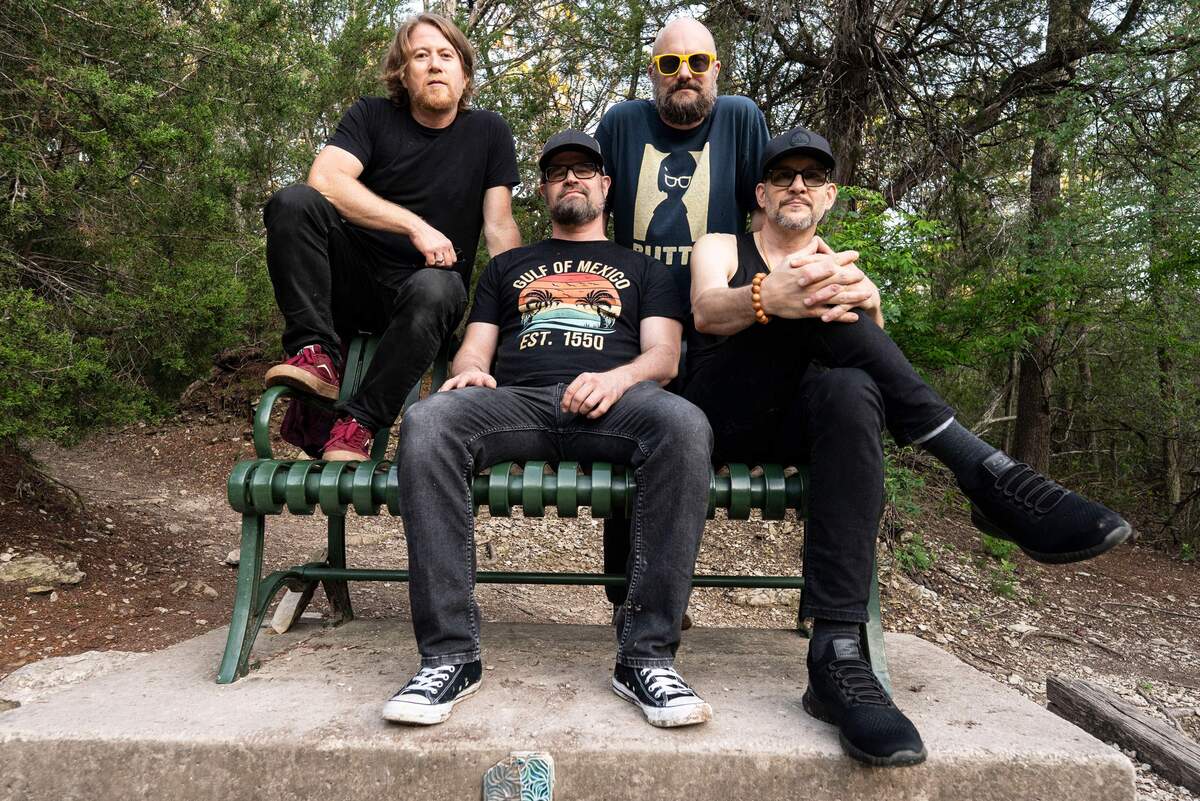
Finally, what has it meant to actually finish this record after carrying it around for so long? You’ve also ended up working again with people from different periods of The Wheel Workers. And after going through all those old CDs, how much is still sitting there waiting to be heard?
It’s been an incredibly meaningful experience, and honestly a little difficult to put into words. This album was always something of an unfinished chapter in my life. Those years in Austin were enormously important to all of us, not just musically but personally. We were young, figuring out who we were, and making music together was at the center of our lives. When the band broke up, I think there was a sense that something important had been left unresolved. Now, it feels like a crucial missing piece of The Wheel Workers has finally been put in its right place.
One of the most rewarding parts of this project has been reconnecting with the original members and working together again. There were some old tensions to work through, but twenty years gives you a lot of perspective. Things that once seemed terribly important don’t necessarily carry the same weight anymore. Being able to put some of that behind us and collaborate again has been every bit as meaningful as finishing the record itself.
It’s also been wonderful bringing together musicians from different eras of The Wheel Workers. The band never really stopped making music after the original lineup ended, and we’ve been fortunate to work with some extraordinarily talented people over the years. This album connects those different chapters of the band’s history in a way that adds yet another layer of meaning and depth to the record.
As for the archives, there’s a tremendous amount of material that deserves to be heard. We seriously considered releasing a 40-track album at one point! But ultimately, we decided to keep it to the 16 songs that we re-recorded drums for and mixed with Steve Christensen, as they felt the most cohesive as a unit. But there’s still tons of unreleased demos, B-sides, and extended improvisations from those early years that we’ll definitely remix, remaster and release at some point. There’s stuff in there I truly love. Some of the improvisations are particularly fascinating to me because they capture the five of us making music completely spontaneously, without knowing where it would lead. That uncertainty, where the music could fall apart at any moment, gives it a special youthful fire and magic that always takes me back to what I love the most about those early years.
More broadly, finishing this album has reinforced something I’ve come to believe more strongly as I’ve gotten older: creative work doesn’t have an expiration date. Just because something wasn’t finished when you were twenty-five doesn’t mean it isn’t worth finishing when you’re forty-five. Sometimes you need the additional experience, perspective, or simply the passage of time to appreciate what you were trying to create in the first place.
And I certainly don’t think we’ve run out of things to say.
Klemen Breznikar
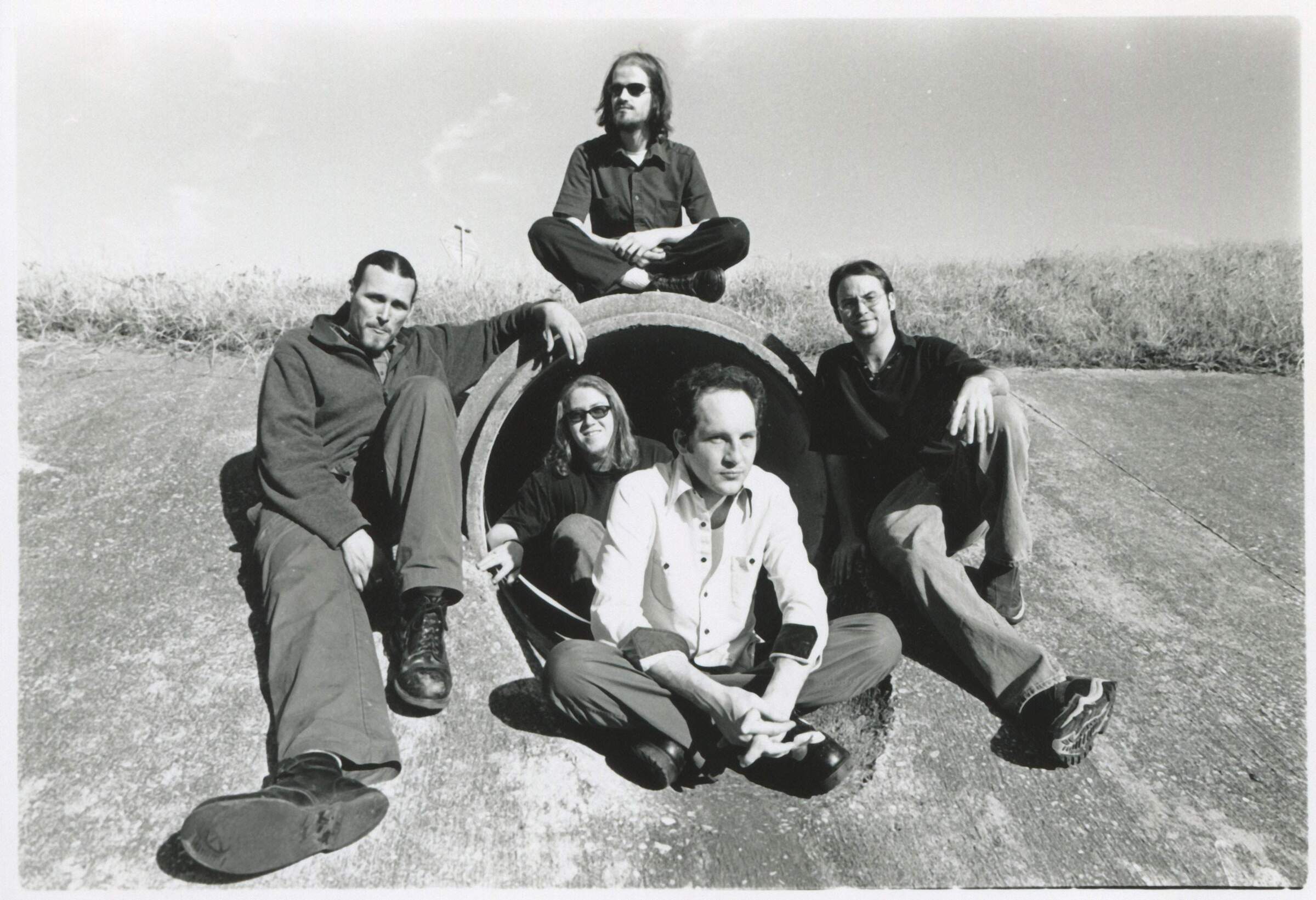
Headline credit: The Wheel Workers in 2003. Photograph: Evan Kolvoord.
The Wheel Workers Website / Bandcamp / Instagram / Facebook / YouTube