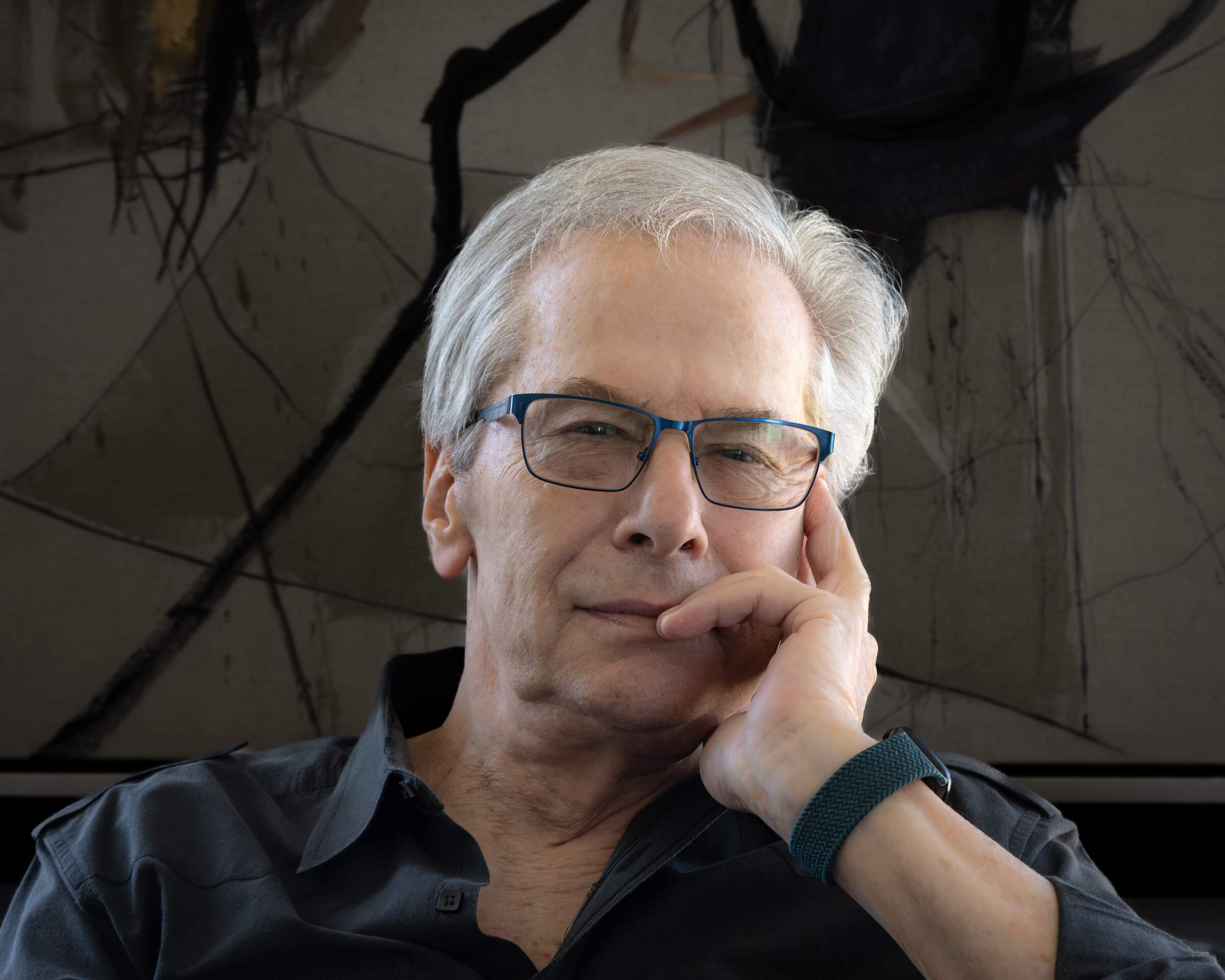

Allen Wyler on Neurosurgery, AI and the ‘Deadly Odds’ Series
Allen Wyler came to fiction after a long career in neurosurgery. He treated epilepsy, worked directly with the electrical activity of the brain, helped develop the neuroscience programme at Swedish Medical Center in Seattle and later joined a medical technology startup. Much of that experience eventually found its way into his novels.
His first published thriller, ‘Deadly Errors’, appeared in 2005. It was followed by books including ‘Dead Head’, ‘Dead Ringer’, ‘Dead End Deal’, ‘Dead Wrong’, ‘Cutter’s Trial’ and ‘Changes’, before Wyler introduced computer expert Arnold Gold in the ‘Deadly Odds’ series. Now nine books in, the series has increasingly turned to hacking and artificial intelligence.
Wyler has also found a long-term home at Stairway Press, which published ‘Changes’ and later became the publisher of the ‘Deadly Odds’ books.
In this interview, Wyler talks about moving from neurosurgery into fiction, the real experiences behind several of his books, Arnold Gold and SAM, medical ethics, AI, Seattle and ‘Deadly Odds 10.0’.
“My first book went straight from keyboard to cremation.”
You’ve said that Marathon Man hooked you on thrillers. Before that, what books mattered to the boy growing up in Madison Park, and when did you first imagine writing one yourself?
I started out reading the usual fare for boys of that era: The Hardy Boys Mystery Series, etc. When those became boring, I moved to more contemporary adult authors like Norman Mailer and Arthur Hailey and then to mystery writers like Lawrence Sanders. (Yeah, I know… this really dates me.) Fact was that I really loved reading because it played so effectively with my imagination. I guess that down some deep recess of my mind, I secretly toyed with the idea of trying creative writing but never had the time to act on it.
You once came home after Saturday hospital rounds and told Lily you were going to write a novel, and she laughed. What had happened that day? And what became of that first book?
Hate to admit it, but her reaction only steeled my resolve to go for it. By then I’d published numerous articles in neurophysiology and neurosurgery, but technical writing is obviously light years different from creative writing. In other words, I had a massive amount of work to do to reach the point of producing a commercial product good enough to secure a literary agent.
My first book went straight from keyboard to cremation. But the protagonist, Radical Dood, a black-hat hacker, arose from the ashes to make several cameo appearances in my Deadly Odds series. That first book was about hacking and cybercrime, but my agent said I didn’t have the credentials to sell it and that since I was a surgeon, I should write a medical thriller. So I did: Deadly Errors.
Surgery allows no second draft, while fiction allows dozens. Did neurosurgery make you a disciplined writer, or did you have to learn a completely different way of working?
You’re so right! Neurosurgery doesn’t really foster technical creativity. It’s precise and demanding and far from creative. The discipline of the operating room, however, does manifest itself in my work ethic: I write every day. I don’t have a set word count or expected production quota; I just write until it’s time to take my Shiba Inu on her daily walk.
“Although advanced AI may be approaching the scientific criteria of possessing consciousness, I think it has a long way to go to become self-aware.”
After spending years treating epilepsy and recording activity directly from the brain, did you begin to think differently about memory, personality or consciousness?
Great question.
Short answer: Absolutely.
Long answer: These brain processes have totally fascinated me since first reading about how Wilder Penfield “mapped the human brain.” Penfield’s work was very superficial but in his later years he became very philosophical about these very questions.
The questions of personality and consciousness are becoming even more germane and pressing as society faces the rapid advances in Artificial Intelligence. A fascinating article recently appeared in The New York Times that touched on the gnarly issue of whether advanced AI systems have consciousness. Study A.I. Consciousness? The Bots Would Like a Word With You. – The New York Times. This thought-provoking piece is well worth reading.
Because I live in Seattle, I’m also aware of some of the ongoing research in the Allen Institute. Not only do they tackle such herculean tasks as mapping the brain’s synapses, but they also devote a great deal of work to the questions you raise. Recently, Dr. Christof Koch has put forth some very interesting thoughts on the subject of what consciousness is. Here’s an example:
https://www.youtube.com/watch?v=gsa4X9YKOTU
Check him out.
Although advanced AI may be approaching the scientific criteria of possessing consciousness, I think it has a long way to go to become self-aware, which in my mind is an essential element in being able to emulate being human.
What did it actually mean to help build a neuroscience institute at Swedish Medical Center? Was the institutional side of medicine useful to you later as a novelist?
At Swedish, we built an academic hospital-based program that spans most subspecialties of Neurology and Neurosurgery. A headache clinic, the epilepsy center, pediatric neurology, an inpatient psychiatric liaison service, etc. It’s still a major program in the now expanded Providence-Swedish health care system.
And yes, I used those experiences as background for my earlier standalone medical thrillers, like Dead End Deal and Dead Ringer.
At Northstar, promising early results did not hold up in the pivotal stroke trial. What did that experience teach you about the distance between medical hope and proof? Did it change how you write about breakthroughs?
Not really. Here’s what happened. Northstar was a startup medical device company funded by a venture capital firm, so we were totally dependent on that funding. This meant we had to design our clinical trials without benefit from much clinical data. The endpoint for the pivotal trial was therefore a guess, and we missed hitting it by only one point. Consequently, the FDA couldn’t approve the device. But the technique was amazingly effective in helping stroke patients recover function and is being applied by other companies today.
Leaving practice to work for a startup was one of my most exhilarating experiences of my medical career. The biggest lesson it taught me was how stressful working for a startup can be. In particular because the company’s very existence is extraordinarily fragile.
As a postscript, I’ve used excerpts of this experience in two of the books I’ve written.
You also chaired an institutional review board. How did that change the way you think about consent, risk and the difference between what medicine can do and what it should do?
I wouldn’t say that it changed my thinking about those issues because as a surgeon I was always keenly aware of the need to fully inform patients about the risks of surgery. I think that often patients’ view of what medicine should do is more optimistic than what medicine can do. I always tried to bring my patients’ expectations into line with what was realistic.
Serving on the IRB did change the way I view the difficulties in designing clinical trials so that they are capable of generating meaningful results. It’s interesting that working for the startup dovetailed with my tenure on that board. It was as if I transitioned from one side of the equation to the other.
Deadly Errors appeared in 2005 and built its nightmare around a computerized medical record system. Looking at hospitals now, what did you get right, and what did you fail to imagine?
I laugh because I wrote that story in the early years of computerized medical records, when paranoia over hackers messing with the records was much higher than it is now. Which made it the perfect substrate for a medical thriller. Since then that technology has completely taken over medical record systems. So I got that part right. What I failed to imagine is how much technology would evolve to its present state of melding voice recognition with AI to allow records to be generated in real time rather than have a physician generate them after patient encounters. It’s a trend that actually worries me.
An early reviewer called your characters “cardboard,” and you later admitted they had a point. How did you learn to deepen character without slowing down the story?
I think my earliest work suffered from placing too much emphasis on producing a high-intensity plot-driven story at the expense of character development. It’s also undoubtedly a byproduct of not having any formal creative writing instruction. I have to admit that when I first read that criticism, it stung. But since then I’ve really worked to improve that facet of my storytelling. So although that point did sting, it helped me develop that aspect of writing.
Dead Head asks a wonderfully disturbing question: if a detached head can think and communicate, where does the person actually reside? Was that question at the heart of the book from the start?
That’s another great question. But the truth is that the plot line was developed because my editor at Tor/Forge specifically asked me to do it, given my background. How can you tell your editor no?
But your question does generate a lot of interesting philosophical questions. Like, what is a person? Only the brain? Or the brain operating within the body? Personally, I believe that in Dead Head, the artificially maintained living head was still a person despite not having a body.
The closest real-life example of this would be Stephen Hawking, the world-famous theoretical physicist who lived with amyotrophic lateral sclerosis and was paralyzed from the neck down. The difference, of course, is that his head was maintained by a living body rather than a heart-lung machine.
“When I pulled the surgical towel off the disembodied head and looked at it, my mind flooded with questions.”
In Dead Ringer, Dead End Deal and Dead Wrong, medical advances are repeatedly twisted into something dangerous. Are you suspicious of technology itself, or of the people who gain control of it?
I’m not suspicious of technology per se. Alfred Nobel serves as an excellent example of someone who used the technology of their day to build something useful for society and then had it used for harmful purposes.
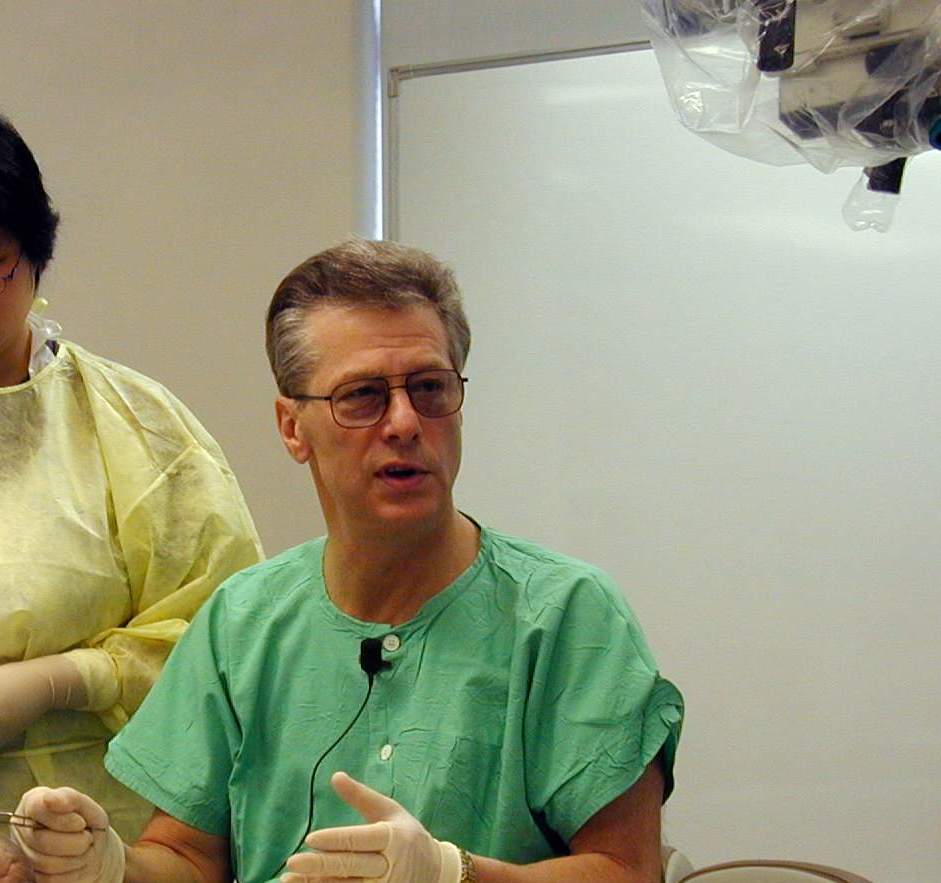
BTW, the idea for Dead Ringer came to me when I was invited to the Hong Kong Neurosurgical Society annual meeting to demonstrate a complex surgery on a cadaver head, and then do the actual surgery on a real patient. On the first day I was to demonstrate the surgery on a cadaver head in a classroom. When I pulled the surgical towel off the disembodied head and looked at it, my mind flooded with questions: Who was he? What is his story? How was his head procured for this demonstration? And then, how would I react if he was someone I knew? I immediately thought, now here’s a monster plot.
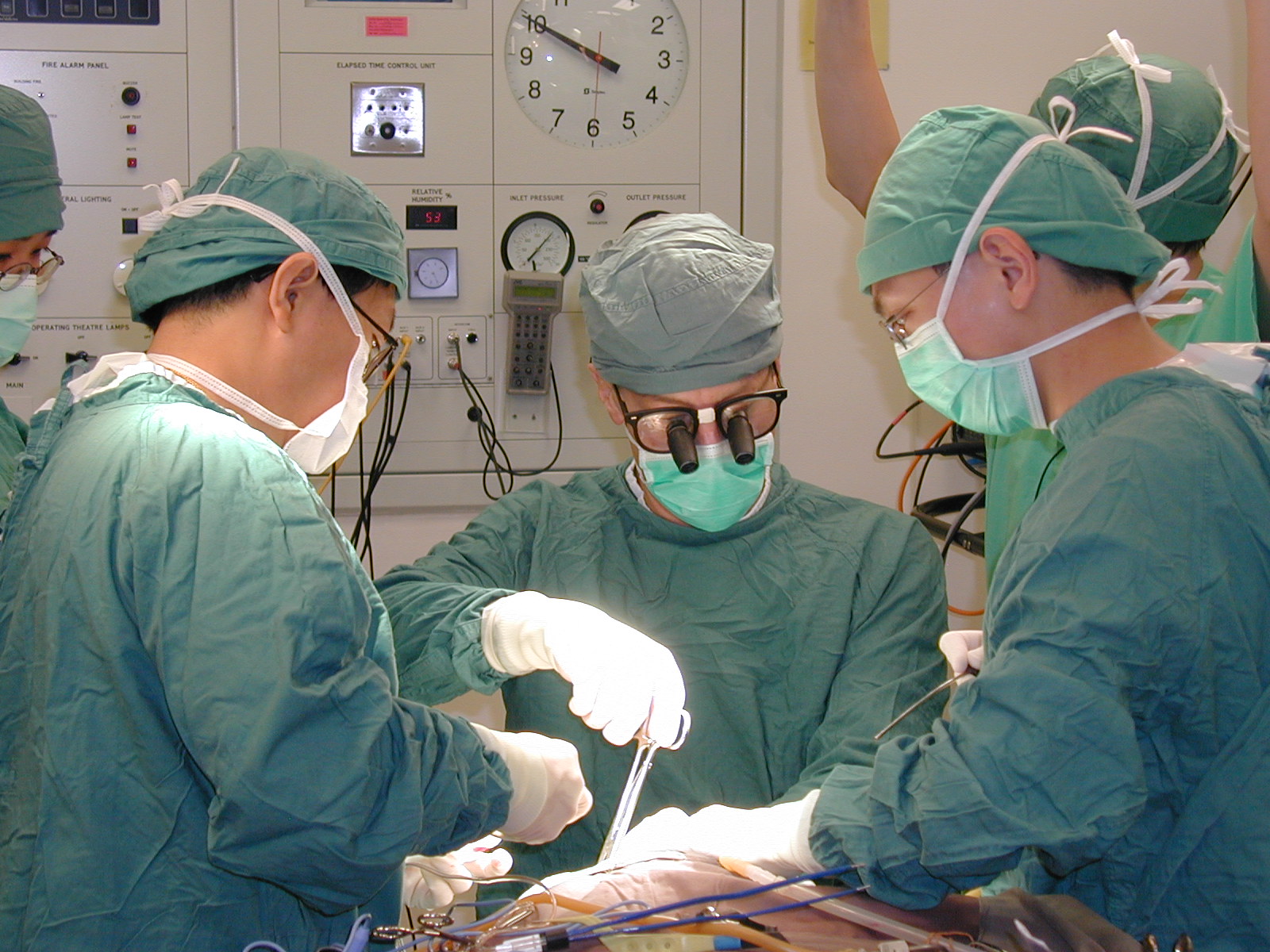
Changes is quieter and more personal than the thrillers. How much of your own thinking about grief, regret and second chances went into it?
I loved putting that story together. Who hasn’t flirted with the fantasy, “If I could only live life over knowing what I know now… I’d do things so differently.”
But would you really?
Or would you be held hostage to your personality? And would your personality cause you to ultimately make similar types of mistakes?
Obviously, there’s no clear answer, but for me, pondering this question is mind-bending. I could easily go back and write another story based around this fantasy.
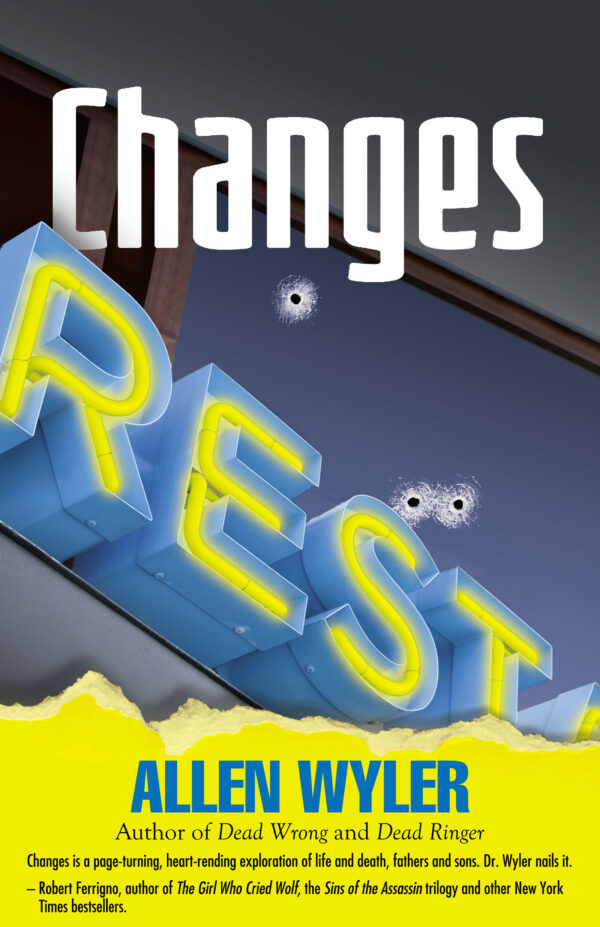
When you wrote Cutter’s Trial, did you already know what you believed about physician-assisted death, or did the book unsettle your own position?
I’ve always believed that a physician’s role is to alleviate suffering. If that means helping a person terminate their life when dealing with a terminal disease, then so be it. So no, my position on this subject was already solidified. But the question really hit home when five years ago my wife was diagnosed with a rapidly growing incurable cancer. She opted to end her life using the Washington Death with Dignity Act.
As difficult as it was for both of us to go through, I know in my heart that it was the right thing to help her conduct that act. I published my experience in Pharos:
https://www.alphaomegaalpha.org/pharos/summer-2022
Arnold Gold began as a brilliant young man who understood computers far better than people. Nine books later, what has surprised you most about the man he became? What part of him has never changed?
Arnold has Autism Spectrum Disorder. Probably what used to be called Asperger’s Disorder. His strong, sometimes obsessive interest is his focus on computers. More specifically, being able to predict the future. Not in a crystal ball soothsayer sort of way, but in a cold statistical analysis way, like his idol, Nate Silver. Hence, his early adoption of AI and the creation of SAM, his neural network. Throughout the series this obsession never changes. On the other hand, he does slowly change as the series progresses in that he begins to make strong connections with people. Most notably, Prisha Patel, the first person he brings into his burgeoning company. I love the development of their relationship over the course of the series.
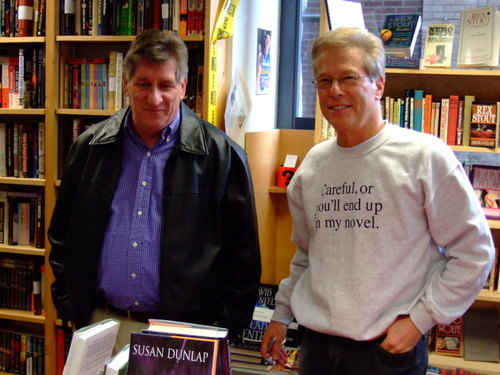
You check technical details with hackers, FBI contacts and other specialists. Has anyone ever ruined a plot by telling you it could not work? Or given you a reality much stranger than the idea you brought them?
I’m very careful about vetting ideas and claims before incorporating them. So I rely very heavily on my sources and build my plot around their information. So far, no one has told me I got a technical detail wrong. (Knock on wood!)
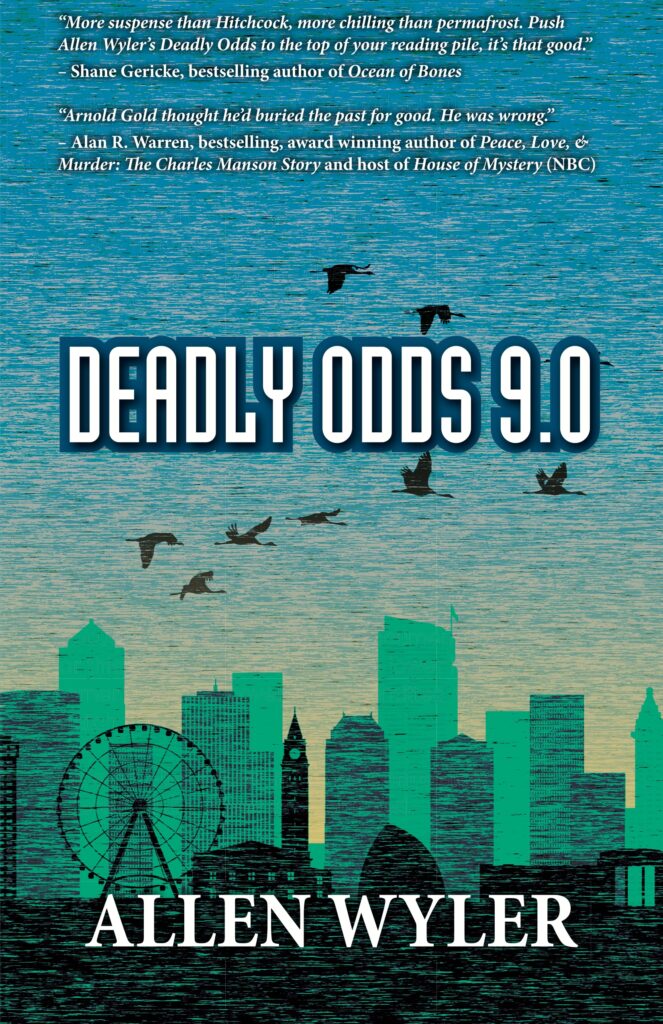
In Deadly Odds 8.0, technology turns a pacemaker into a weapon. In 9.0, Arnold depends on his own AI, SAM, to stay alive. Where do you draw the line between a machine that serves us and one that begins to endanger us?
You mean like HAL in 2001: A Space Odyssey?
Whether a machine is helping or endangering us depends on which side of the equation you’re on. If you’re a Ukrainian using a smart drone to wipe out a Russian oil refinery, it’s serving you well. If you’re the Russian running the refinery, you probably see it very differently.
The use of AI to produce deepfakes is a good example of how that technology is presently being used to endanger us. Unfortunately, if we look around, there are plenty of examples of AI being used against us.
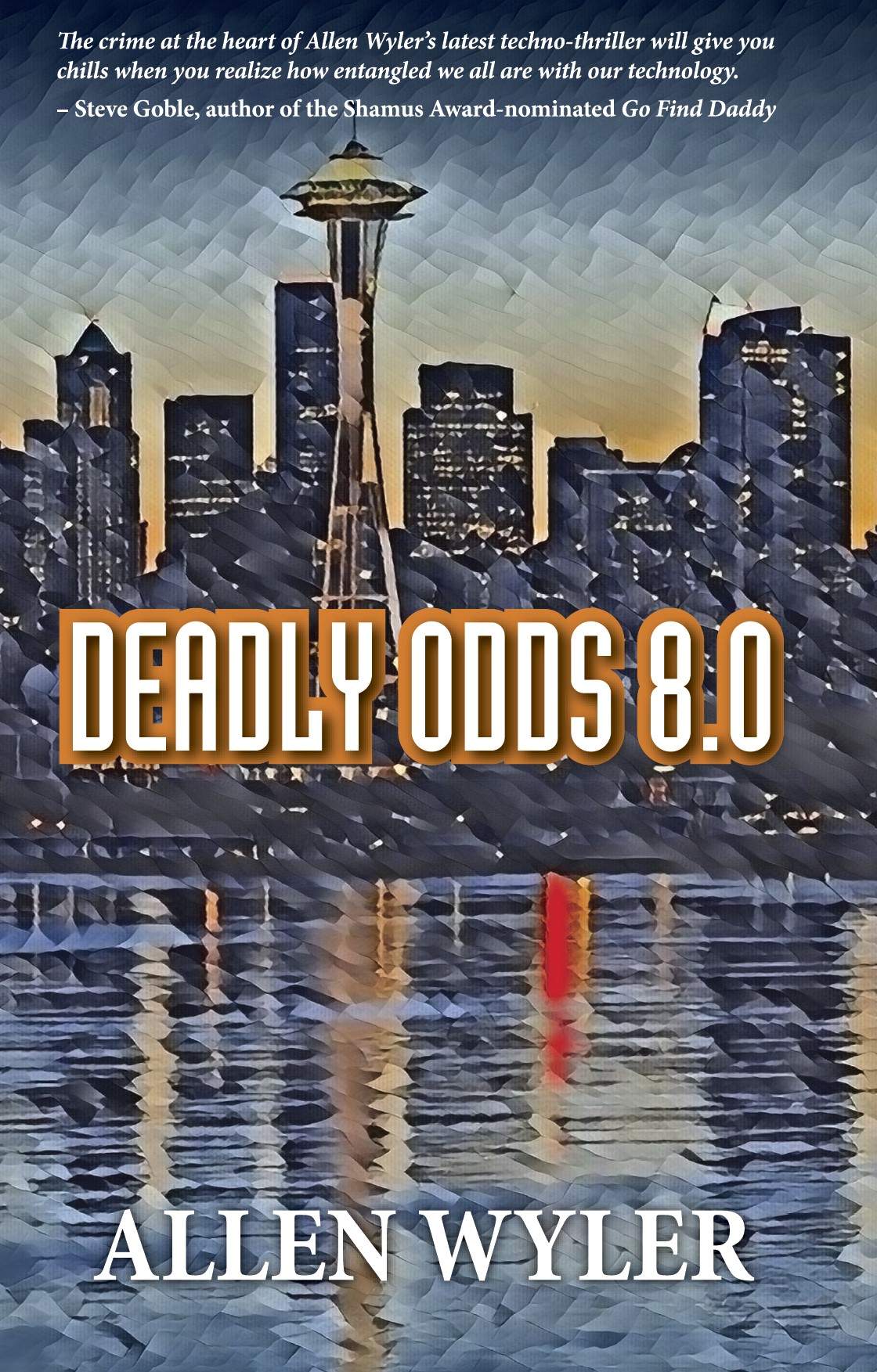
Why did you bring back the terrorist cell in Deadly Odds 9.0? What unfinished business did Arnold still have with that part of his past?
Throughout the series the terrorist cell has had a debt they wanted to settle with Arnold. This Hatfield and McCoy feud began in Deadly Odds when Arnold went to Las Vegas to get laid and the escort he hired was actually one of the terrorists. In the process, they found out about SAM and immediately wanted it to further their jihad. Arnold outwitted them and ended up killing one of their cell members in order to save his own life. Because of this, they come after him again in 2.0. Once again, they suffered losses. So by the time 9.0 rolls around, they make another attempt to exact retribution. Fed up with having to fight this war, Arnold finally decides that the only way to end it is to kill the leader of the cell. Arnold’s showdown with them is the nidus for 10.0, which will be published in July of next year.
Seattle has followed you from childhood and medicine into the novels. What does the city give you as a writer? Is there a part of Seattle that belongs especially to Arnold?
You’re right. Other than London and Memphis, this is where I’ve lived most of my life. So to me it’s home. But I’ve also seen the city grow into more than “that town where Boeing jets are built.” (Which was basically what it was known for when we lived in Memphis.) Like San Francisco, Seattle has developed a cool culture, so it provides me a nice canvas to paint on. As for Arnold, his hood is the area surrounding Green Lake. He loves it there. But like many Seattleites, he also enjoys other parts of the city, especially the Pike Place Market with a little French restaurant tucked away in the back.
You began with Tor/Forge and later found a home with Stairway Press. What has working with an independent publisher allowed you to do differently, both with the older books and the Deadly Odds series?
I moved from Tor/Forge to Astor+Blue but after they refused to publish Changes because the title didn’t have “Dead” in it, I reached out to Stairway Press. They published it. I loved working with them, so after a London publisher bought Astor+Blue I refused to sign a contract with them and moved to Stairway instead. They’re a terrific publisher to work with.
When you look back, do the surgeon and novelist feel like two separate lives, or were you always studying people under pressure? Now that Deadly Odds 9.0 is out, is Arnold already pulling you towards 10.0?
They are amazingly different lives, and I feel extraordinarily fortunate to have experienced both. And as far as 10.0 goes, the first draft is already a wrap. It’s going to be a doozy, too.
Thanks so much for giving me this opportunity to think about and answer such great questions!
Klemen Breznikar
Allen Wyler Website
Stairway Press Website