
Peter Max, Tibet, Satchidananda and the Road to Woodstock
Sujit Sinha explores Peter Max’s lesser-known connection with India, yoga and Swami Satchidananda, tracing a path from childhood memories of Tibet and India to New York, Integral Yoga and Woodstock.
Before the posters and the psychedelia, Peter Max was already travelling a road through Tibet, India and Satchidananda.
Peter Max is remembered for the rainbows, cosmic colours and free spirit of the Sixties. But behind that familiar image ran another story, spanning from childhood memories of Tibet and India to his life-changing meeting with Swami Satchidananda and finally, Woodstock.
Peter Max recalled it started over breakfast in Paris in 1966. Filmmaker Conrad Rooks looked across the room and saw a tall man in orange robes, with long hair and a beard. Max asked who he was and Rooks told him this was Swami Satchidananda, the Indian teacher who had been helping him with Yoga. Within minutes, Max later said he felt completely at ease. Before long Max was asking the Swami to teach him Yoga.
This is perhaps a better doorway into Peter Max’s Indian story than the usual rainbows and cosmic imagery. His connection was personal: in 1966 he invited Swami Satchidananda to New York, introduced him to friends, and initiated the circle that became the Integral Yoga Institute.
Max died at a Manhattan hospital on September 14, 2026, aged eighty-eight, after years of advanced dementia.
Peter Max Finkelstein was born in Berlin in 1937. A year later, his Jewish family fled Nazi Germany for Shanghai, where his Chinese nanny was his first drawing teacher. Shanghai was more than a colourful introduction to Max’s art. It started when in exile, with a child learning early what it meant to be uprooted by history.
Shanghai also provided Max a visual world he never forgot. He recalled watching calligraphy being painted with huge brushes at a Buddhist temple opposite his home, while American comics, Jazz Radio and Hollywood films fed his imagination. His mother, Salla, encouraged and nurtured his early interest with crayons and paper.
One Indian link is worth a closer look. On Larry King’s CNN programme in 2005, Max recalled the family’s route after Shanghai as going through India before Italy, Israel and Paris. By his own account, the connection began in childhood. That makes India part of the biography before Satchidananda entered it.
In Haifa, Max discovered astronomy and learnt colour from Professor Hunick. After Louvre sketching classes and his 1953 move to New York, he studied under Frank J. Reilly at the Art Students League from 1956, then attended the School of Visual Arts. His partnership with Tom Daly, a Meade Lux Lewis record cover and the 1963 Bettmann Panopticon exhibition all preceded his meeting with Satchidananda. Craft and galaxies were already there. The apparently spontaneous line had years of preparation behind it.
Satchidananda brought his own history. Born C. K. Ramaswamy near Coimbatore in 1914, he studied the Ramakrishna tradition and stayed at Ramana Maharshi’s ashram in Tiruvannamalai. Sivananda initiated him in Rishikesh in 1949; years of teaching in Ceylon followed. His Integral Yoga combined physical practice, meditation, devotion, service, self-inquiry and mantra chanting, while respecting different faiths.
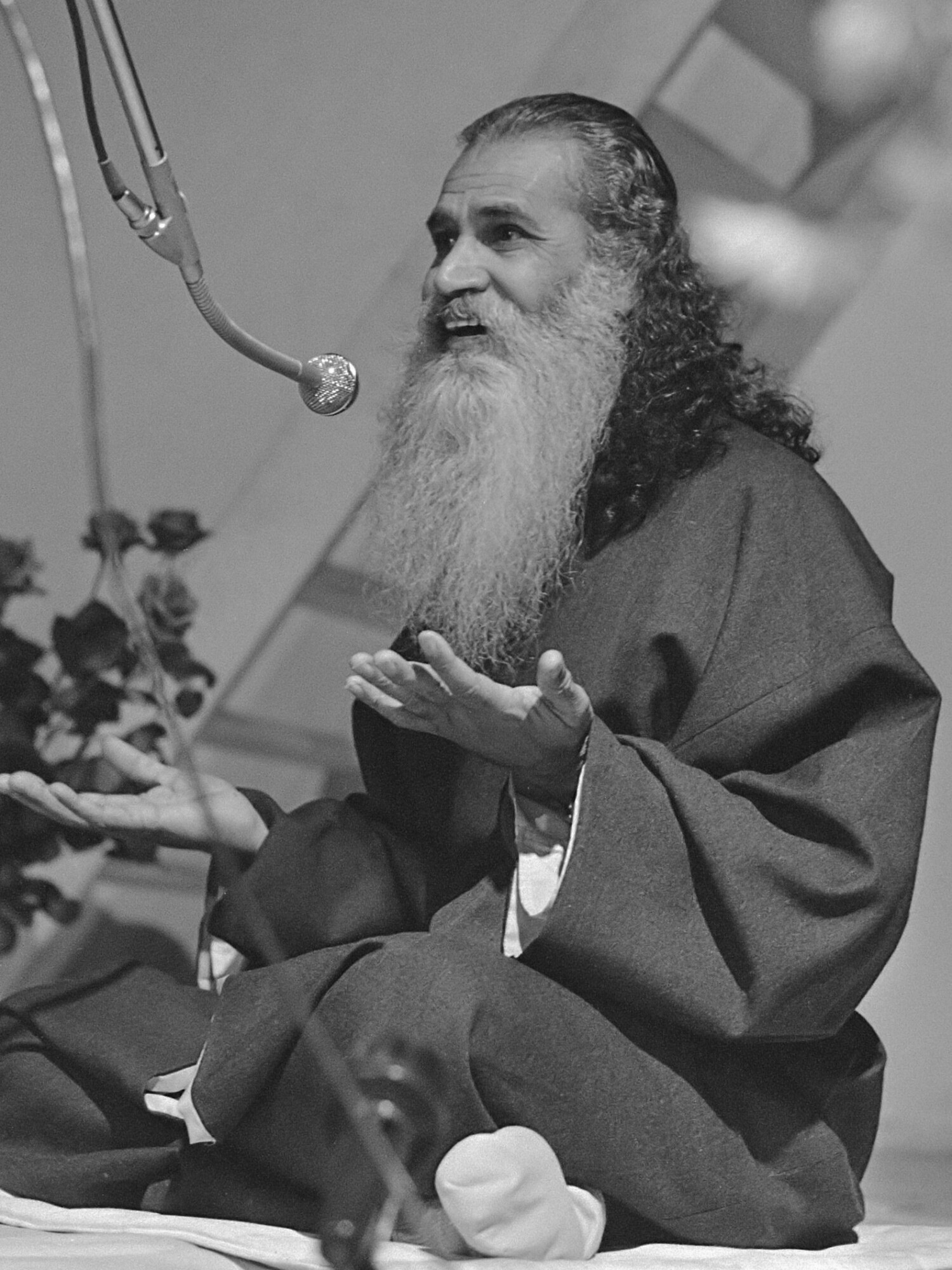
Conrad Rooks, whom Satchidananda recalled meeting through Kandy’s mayor, provided the link. His film Chappaqua drew on his experience of addiction and recovery, with contributors from Allen Ginsberg and William Burroughs. Pt. Ravi Shankar provided the final soundtrack; Ornette Coleman’s commissioned score, released separately as Chappaqua Suite, went unused in the film. For Max, the lasting connection was personal: invited to Paris in 1966 to consult on the film’s visual work, he met Satchidananda there. None of these accounts put him at the soundtrack sessions.
At Max’s invitation, Satchidananda arrived in New York on July 31, 1966. What was to be a brief visit turned into a stay of months. Max remembered friends pooling money in his kitchen, followed by gatherings at the Oliver Cromwell Hotel and then 500 West End Avenue. The Integral Yoga Institute was founded on October 7, 1966. Karuna Kreps, who joined the next year, remembered collecting $1 donations, Bhagavad Gita classes and crowded Kirtans with Guitars and Drums. Her account brings the volunteers into view: welcoming students, collecting contributions and keeping quiet while a class meditated.
The Swami named Max Atman. Later, Max described Yoga as helping him become receptive, allowing drawings to emerge without forcing them. His 1972 drawing Sat Guru Om makes the yogic connection explicit. Other memories persisted: his studio traces Two Sages Looking at Sunrise to childhood memories with monks and sages in Shanghai. In the 1960s, Max added colour to line drawings through printing or silkscreen, reaching a mass audience through posters. He credited yoga and meditation with freeing his approach.
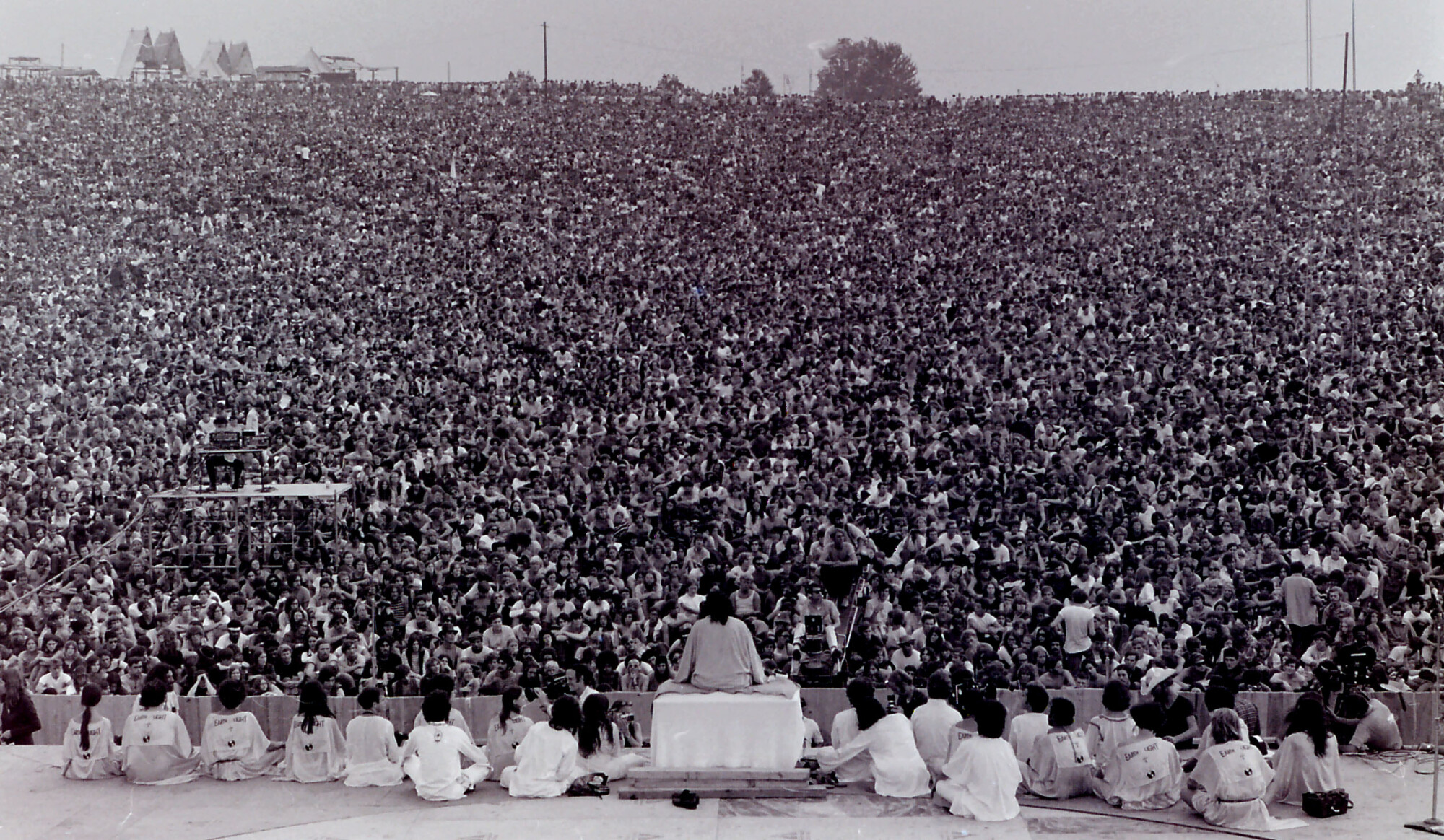
Then there was Woodstock. Max remembered that the organiser Michael Lang asked him to invite someone to set a peaceful tone for the growing crowd. Max suggested Satchidananda, who arrived by helicopter on August 15, 1969, and spoke after Richie Havens had performed. “Through the music, we can work wonders,” the Swami told listeners, urging them to take responsibility for the gathering and inviting them to chant together. Max had helped arrange the encounter. Satchidananda turned it into an invitation to participate, bringing communal devotional chanting into the rock festival.
Drummer Steve Booker (later heard on Weather Report’s Sweetnighter) met Satchidananda at Woodstock, when playing with Tim Hardin. His artist biography says that the Swami later named him Muruga, and the Integral Yoga circle brought him into contact with Peter Max, who did the artwork for Rama Rama / Endless Path. For an avid record collector, it is an appealing connection: the wider story of art, music and Yoga captured on an obscure 1971 Psych-Jazz/Spiritual single. It’s worth mentioning that Satchidananda was admired by others besides Max and Booker, as reflected in Alice Coltrane’s 1971 release Journey in Satchidananda.
The Beatles’ Yellow Submarine is often miscredited to Max; its art director was Heinz Edelmann. Park West Gallery recounts Max’s claim that he declined for family reasons and recommended Edelmann, whose cards reportedly read “The German Peter Max.” Neither establishes a production credit for Max.
Max also had a connection with another Indian Swami, Vishnudevananda, whose twin-engine “Plane of Hope” he painted in his distinctive colours. The psychedelic peace plane carried flowers and peace messages to troubled regions in 1971, including Northern Ireland, where Peter Sellers joined the Swami, and later the Suez region. Max’s rainbow had left the wall, ferrying a Swami across dangerous borders and turning his art into a public act of peace.
The domestic counterpart was The Peter Max New Age Organic Vegetarian Cook Book, published by Pyramid in 1971, with Ronwen Vathsala Proust as co-author and Max’s illustrations throughout. Yoga, vegetarianism, and organic living shaped what he ate as well as what he painted. Max became vegetarian after meeting Satchidananda, who introduced him to yoga and meditation, and later turned vegan. His cookbook reflected interests that influenced his everyday life.
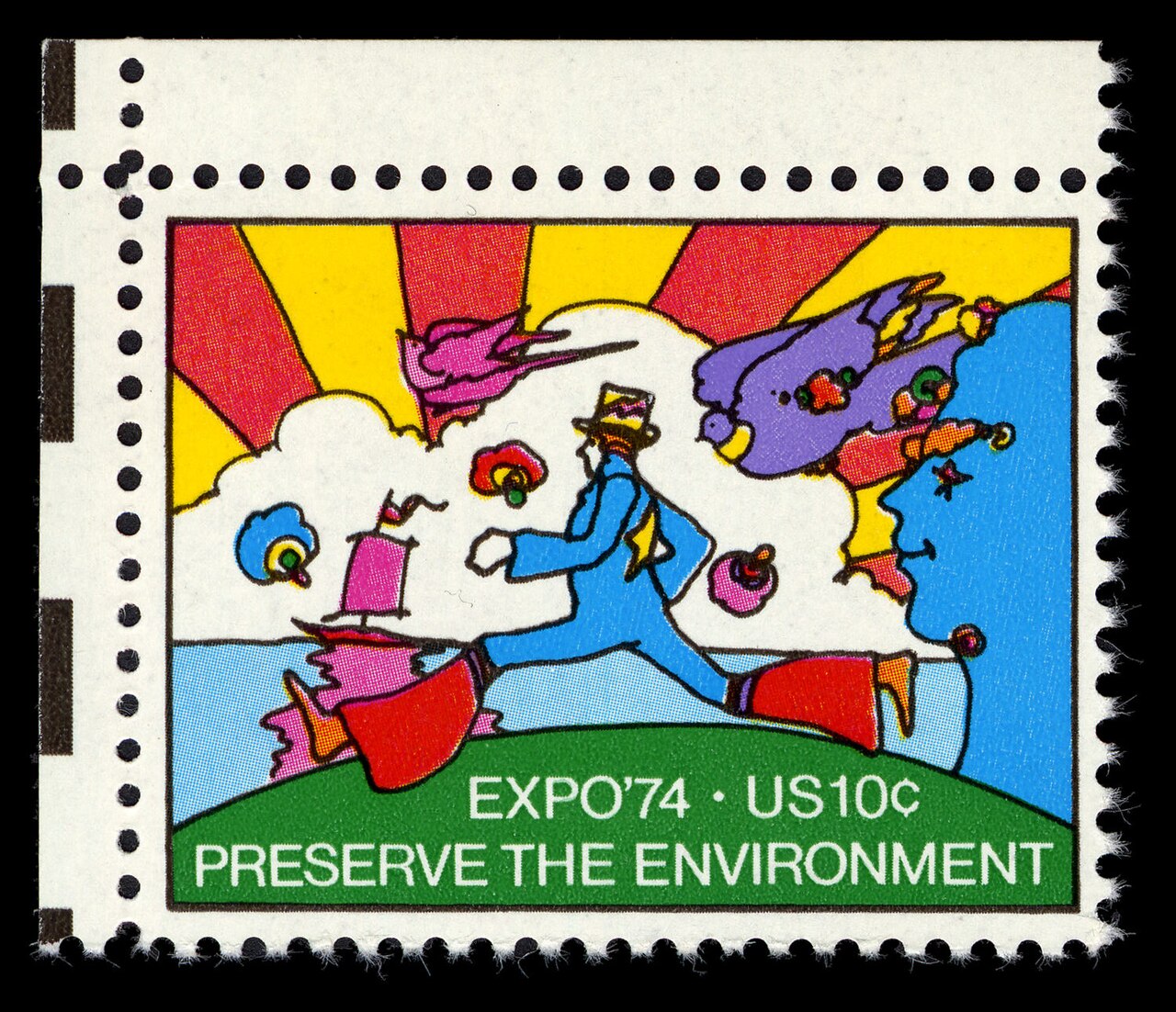
Other spiritual and public interests converged. His 1969 From the Moon poster carried words attributed to Meher Baba about humanity’s unity. He prints on his ‘Apollo II Moon Landing’ poster:
“We see the Earth in its true light, as a whole and realize that ‘We Are All One.’” – Meher Baba.
Max’s Tibetan connection resurfaced in 108 portraits of the Dalai Lama. A Namgyal Monastery notice in Snow Lion describes them as silkscreened and painted, with one donated to the monastery and others offered for fundraising.
Max’s spiritual life was only part of his story. His art reached audiences through posters, record sleeves and T-shirts. His later years brought dementia and bitter disputes over his care, finances and artwork. These, too, belong in the biography.
In 2019, the book The Woodstock Guru carried Max’s artwork, renewing a connection fifty years after the festival. He helped one teacher find rooms, listeners and friends. India became part of what he practised, ate and painted. A meeting over breakfast in Paris had reached far beyond the table.
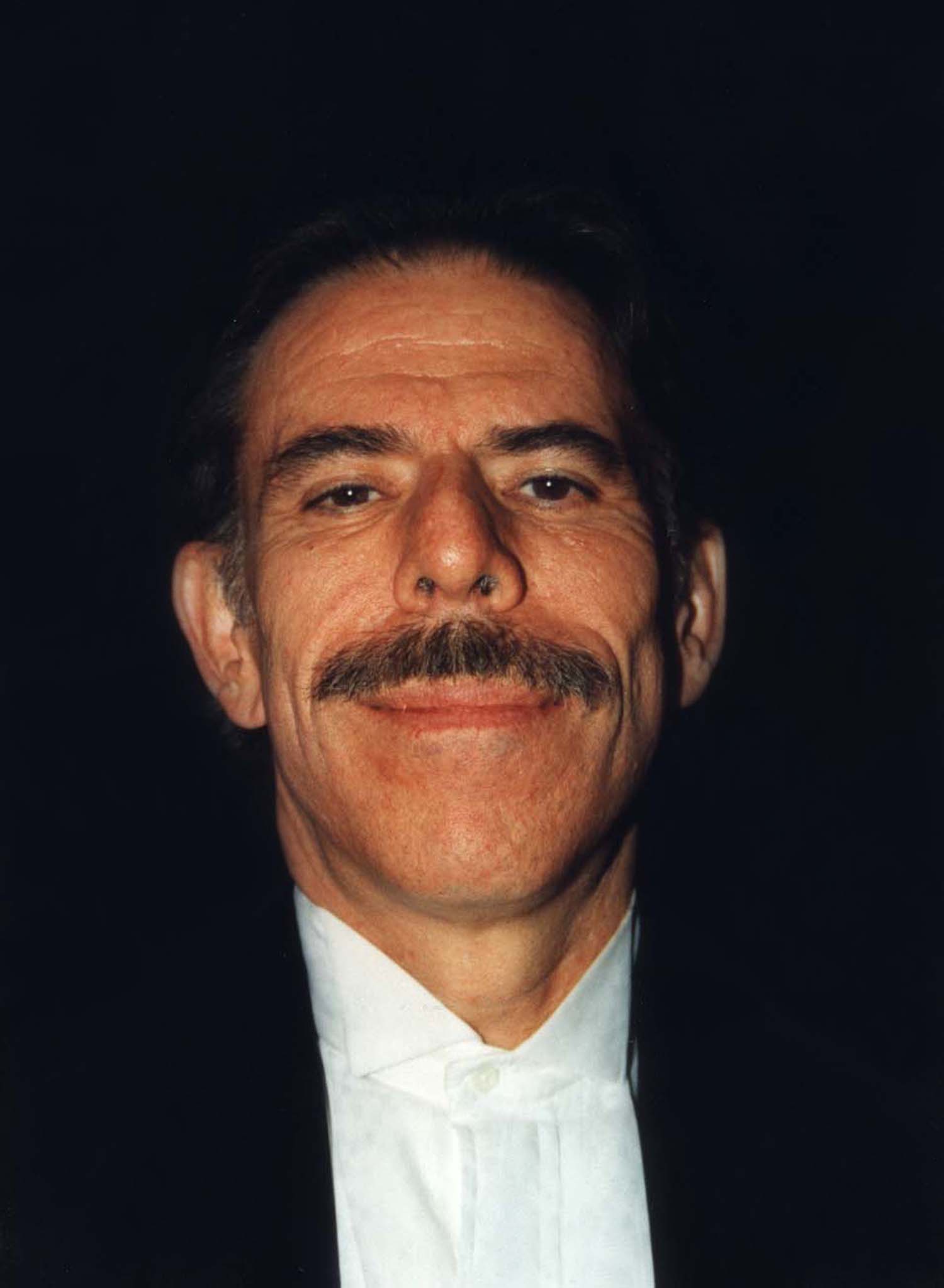
Headline credit: Peter Max, 1998. Photo: Kingkongphoto & www.celebrity-photos.com, CC BY-SA 2.0, via Wikimedia Commons.