
“We Were Comedians, but We Were Serious”: The Fugs and Chuck Smith’s ‘Fugs Film!’
Ken Weaver remembers the Fugs’ early shows, Chuck Smith explains how he pieced together ‘Fugs Film!’, and Ed Sanders takes us back to the Lower East Side of 1962.
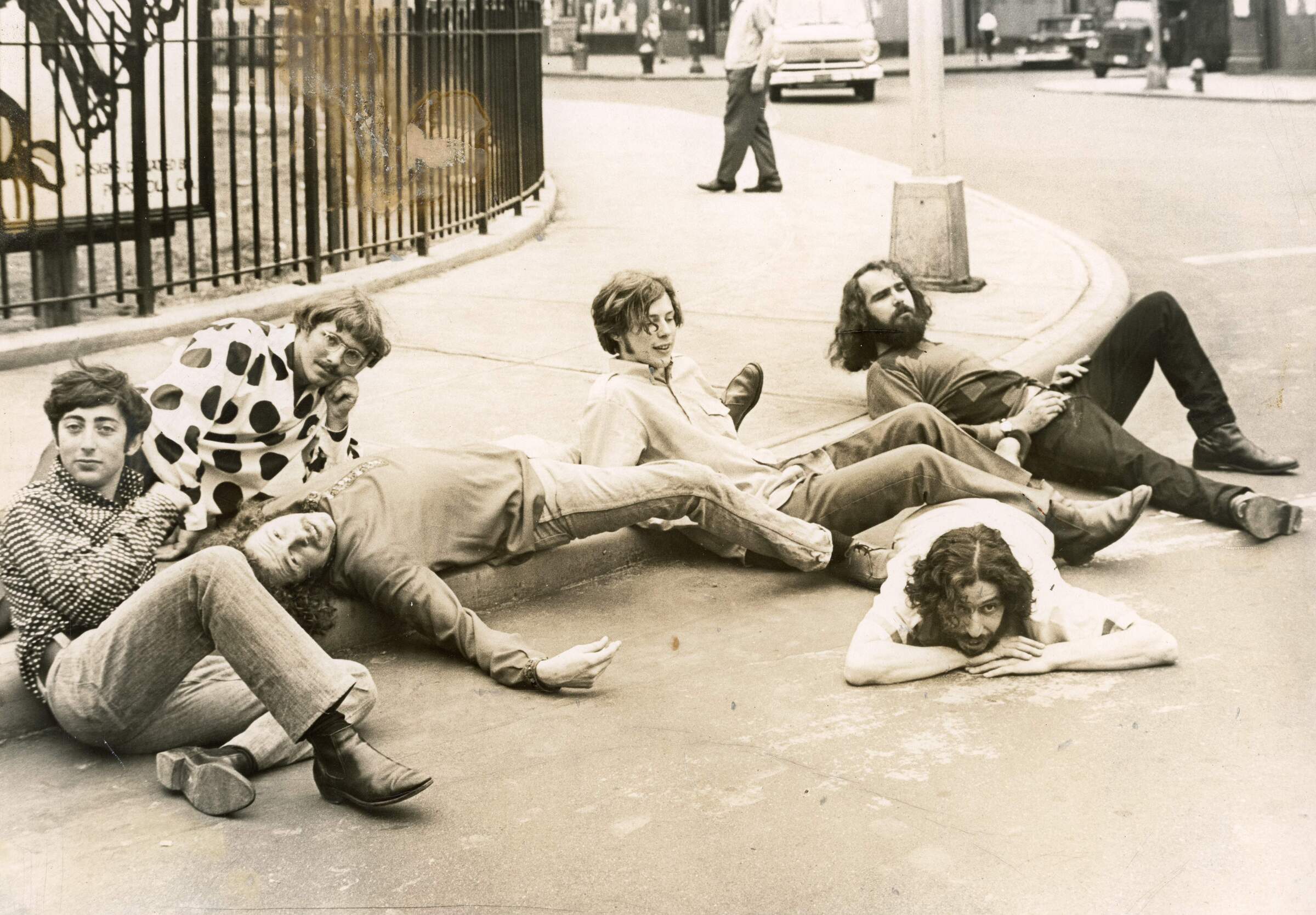
After a poetry reading in late 1964, Ed Sanders and Tuli Kupferberg went to the Dom on St Mark’s Place. Robert Creeley and Amiri Baraka were dancing to the jukebox. At another bar that night, Sanders proposed a group that would set poetry to music. He liked the name ‘The Yodeling Socialists’; Kupferberg preferred the Fugs, a word Norman Mailer had used in ‘The Naked and the Dead’ in place of “fuck”. “And Fugs it was,” Sanders later wrote.
Ken Weaver joined them on drums. The Fugs played the opening of Sanders’ Peace Eye Bookstore in February 1965, with Andy Warhol’s flower banners on the walls and William Burroughs in the crowd. Harry Smith brought their music to Moe Asch’s attention at Folkways, which released their first record that year. At the 1967 march on the Pentagon, they joined in an attempt to exorcise the building. Weaver remembers people walking out of their shows, and others coming up afterward to thank them.
For ‘Fugs Film!’, Chuck Smith uncovered amazing archival footage of The Fugs performing in 1966 and 1968, but never the large cache of lost performances he had hoped to find. Nevertheless, the film is an astonishing collection of sights and sounds from the legendary 1960s. The documentary premiered at DOC NYC in 2025, with Sanders and Weaver credited as co-producers. For this article, I spoke with Smith and the famously elusive Ken Weaver, in what is one of his first substantial interviews in more than twenty years. Sanders’ three replies came in a separate exchange in June 2021 and appear here in full, including his account of founding ‘Fuck You: A Magazine of the Arts’.
Tuli Kupferberg would have turned 103 yesterday. His humour, poetry and wonderfully unruly spirit still run through the story of the Fugs.
“I never knew what I was going to do before I got on stage.”
Ken Weaver
You once called the Fugs “what the ’50s deserved.” What had the ’50s done to you?
Ken Weaver: Well, just personally, it was a response to the tyranny of 1950s parents. Parents and teachers. Everyone in authority.
And the racism. Where I grew up, Blacks were considered a lesser species. I think the Fugs responded to that by diverting attention. The people in authority (parents, teachers, cops), they were focused on Blacks, Mexicans, anybody they saw as one of their subgroups. And then here came this new, wild species of young person, and we forced them to look at us instead.
A lot of it was things that drove them up the wall, like long hair on boys.
You studied Russian in the Air Force and listened to Soviet communications. Did that change how you saw authority back home?
Ken Weaver: Being in the military, it’s a forked stick. There are a lot of reasons to fall in and obey what your superior officers and non-commissioned officers (sergeants) tell you to do.
But a lot of us got to the point where the people in authority were turning themselves into some sort of fascist overlords. If your bed wasn’t made perfectly, they’d come in and tear it up, turn the mattress over, and you’d have to start all over again. Your shoes had to be shined. They went too deep.
Operationally, we had to be like well-trained machines, flying in the air, listening to Russian military ground stations, Russian air force communications, anything in Russian. It didn’t make us pro-Russian, but it gave us clarity about the people who were supposed to be in charge of our eavesdropping on the Russians.
They gave us no respect, so we just did our jobs among ourselves. We laughed at them. We laughed at the sergeants and those people. They were like mannequins controlled by strings, like marionettes, and they treated us like cattle.
On one hand they would say, “You guys are the top of the group. You’re the smartest ones in the service.” And on the other hand, they treated us like rowdy kindergarteners.
That did change the way I saw America. There were the beginnings of the civil rights movement, and there was this whole system directed at controlling the Black population. But Black people were gaining confidence by leaps and bounds. It was no longer “Yassuh, boss.” They were saying, “Hey, we’re all human beings. Quit treating us like dogs. Let’s have mutual respect instead of tyranny over people you outrank.”
So yes, the Air Force made that clearer to me.
I never joined any organization. I was never interested in joining the Boy Scouts because I found out that they would abuse new guys who came into the Boy Scouts, and I couldn’t be a part of that.
When you, Ed and Tuli started playing together, did you think you were forming a band, a kind of theatre, or something no one had a name for yet?
Ken Weaver: The last one you said: something no one had a name for yet.
Rock and roll started the ball rolling. It was music that white adults had no grasp on. They perceived it as something Black people were doing to brainwash young white people. All that dirty dancing, the dirty bop. That was the beginning to me. That was the beginning of a young protest movement.
We’d dance, and the boys would be rubbing their crotches against the girls’ crotches. No one could stop us.
We had heard all the time what our parents had gone through: the Depression, World War I, World War II. And our perception was: okay, they did that, and now they give themselves permission to tyrannize young people who were not militarized. Rock and roll was our key to that lock.
The Fugs followed from that. Rock and roll was rebel music, and we took it farther than anybody else was doing at the time.
We were up against this concrete, immobile idea that grown-ups were the bosses and we were the slaves, and we had to do whatever they wanted. You got it in school, too. That’s where my rebellion started, in high school, because the teachers were like SS stormtroopers. Whatever they said was the law.
We were young men and women, and they were treating us like galley slaves. No resistance was allowed, so we resisted like the resistance did during World War II.
I once dropped a cherry bomb into a toilet on my way out of school, and it blew the toilet bowl into a thousand porcelain splinters. I came out of that toilet and looked down the hall, and here came my Spanish teacher with a class of students. I thought, well, they’re going straight to the principal to rat us out. But the wonderful thing was, he didn’t do that.
The principal had some other students come into his office and told them, “You know who did this, and if you don’t tell me, you’re going to take the blame. You’re going to be expelled, and you might even go to jail for destruction of public property.”
And nobody spoke up.
I think that was a very early seedling of what was going to happen with young people in the ’60s. We were young people. We were not little third graders who could be terrified into obedience.
The Fugs took that public, on stage, and I think it worked. That was like the first seed of the ’60s for me.
I graduated high school in 1958, went into the Air Force, and being in the military gave me that hands-on, direct eye-contact perception of what people in authority were really like.
Those were also the early days of people using drugs, which they had heard about from hipsters, hip music, and entertainment. We learned that the Black musicians we loved smoked dope, and even Elvis Presley: people would say, “Yeah, he smokes that dope.” And he was the white guy singing Black music.
I think it frightened the elders. They thought, oh God, it’s the end of the world for us. If we can’t exert our authority over these kids, what’s going to happen to the world? What’s going to happen to America? What if it spreads to Europe and onward?
They couldn’t understand it, and they didn’t know how to deal with it. And we went on from there, doing our thing.
What was possible at Ed’s Peace Eye Bookstore that you couldn’t have done in a conventional club?
Ken Weaver: The people who hung out at Ed Sanders’ Peace Eye Bookstore were the leaders of the movement against adult supervision and tyranny.
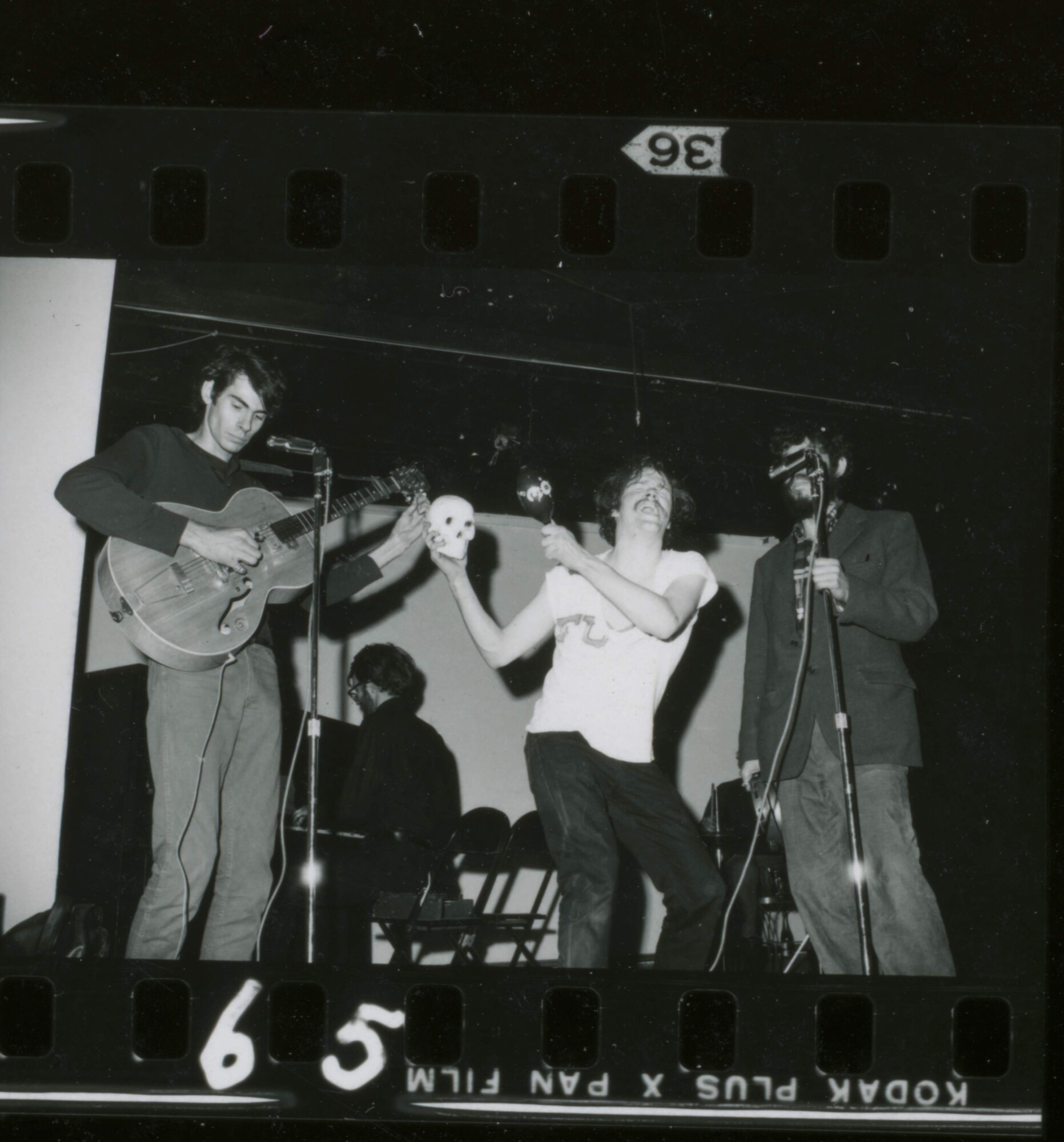
You could go there and read poetry, and the Fugs got together and said, okay, we’ll take the poetry and put music to it. We did our first performances in that bookstore.
Tuli, who was one of the great minds, an authentic Beat Generation figure, was so nervous about it that he hid under a table with a tablecloth in front of him. Then he saw how well it went, immediately dropped that disguise, and came out. And then we were all out in public.
We sang, we did little shows in Ed’s bookstore, and we went to Tompkins Square Park and performed there. People liked it.
Even the name of the group was daring. It wasn’t “the four nice white boys.” It was almost “the Fucks.”
What made it possible there was that Ed was publishing a poetry magazine, and the name of the press publishing it was Fuck You Press. That’s where I heard about it. I was living on 87th Street, and I said, I’ve got to get down there where that’s going on and involve myself with them, because I feel the same way. I agree. Let’s all get together.
So it became a long-haired army all across the United States. The kids were saying, wait a minute: you want to send me into the Army, but if you catch me smoking a cigarette, I have to stay after school in study hall as punishment? You can’t have it both ways.
We were either young grown-ups or we were know-nothing passive slaves. And we did not accept the latter as a valid description of who we were and what we were doing.
Our national anthem was rock and roll and blues.
“I brought, personally, an abolition of politesse.”
Ed and Tuli each had a distinct way of working. What did you bring to the three of you?
Ken Weaver: I brought, personally, an abolition of politesse.
When I was on stage, I would say anything. I would pull my dick out and crank it around. It was wonderful. I made it look like it was a foot and a half long.
And people loved it. Even the Hell’s Angels would come to our shows and say, “Jesus Christ, you guys really get it loose up there.” That was a wonderful sign of approval from a group of men who were absolutely dedicated to breaking all the rules and running their own society the way they wanted to.
When we played in Cleveland, I would sleep at the Hell’s Angels clubhouse instead of a motel. I liked it because I could drink all I wanted to and smoke dope. I got along very, very well with them.
I also got along well with the hippies and the anarchists, although I thought the hippies were a little naive, thinking that if we’re gentle, then the world will become gentle. It was a noble idea, but I’m not sure to this day how deep that went, or how well it worked.
If you observe politicians, you can see that they’re still locked into almost the ’30s and ’40s in their thinking. They don’t want to cut young people any slack. As a result, the music gets wilder and wilder, and more destructive of what we considered very silly rules.
What did the three of you understand about one another without having to talk it through?
Ken Weaver: The way I look at it is, we were sort of like a machine with invisible gears.
Tuli was one set of gears. Ed was another one. He was the engine. And I was just the wild camshaft.
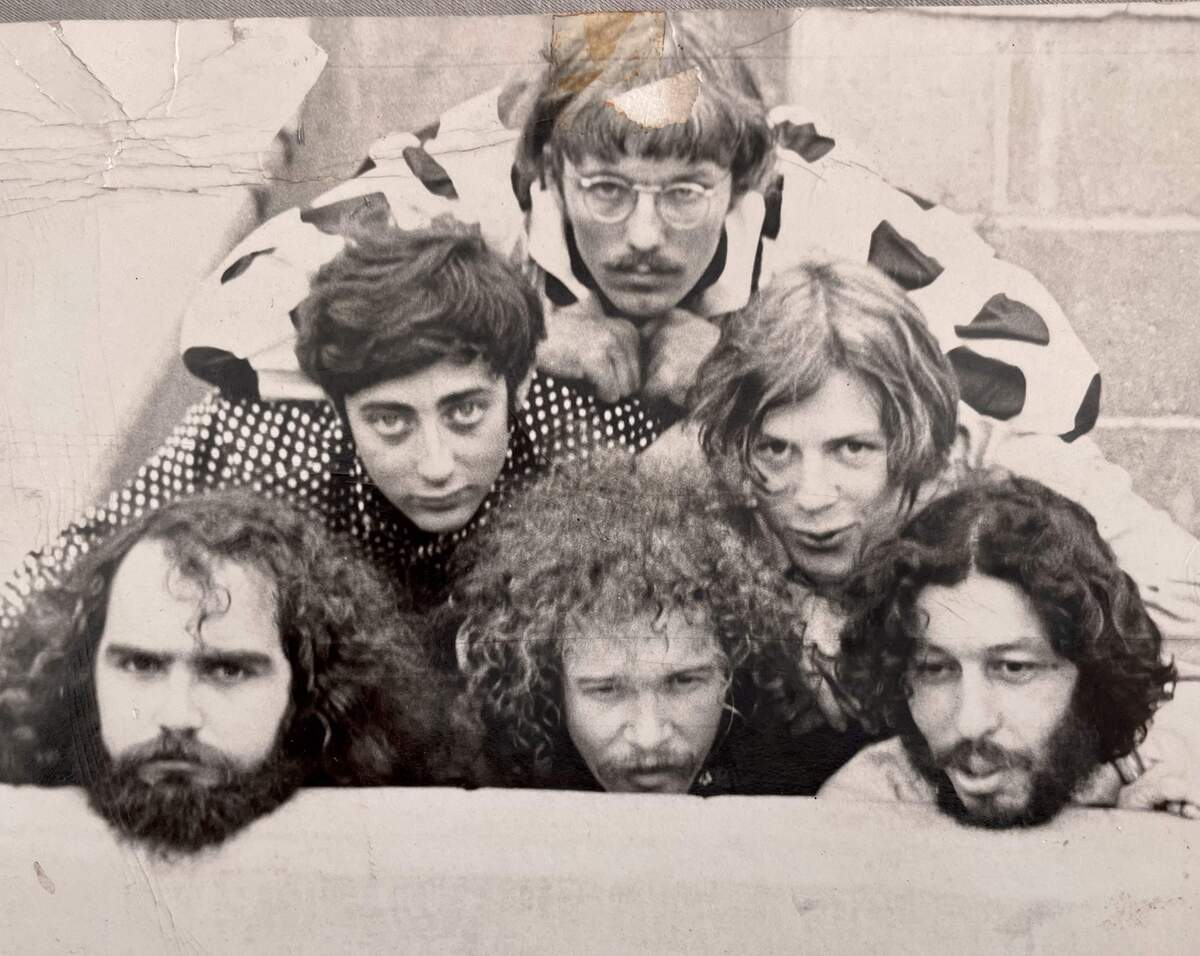
I never knew what I was going to do before I got on stage. I just got up there and did whatever I felt like doing.
We had narcs, narcotics cops. I remember one concert where there were two of them sitting in the very front row, and I was doing one of my insane monologues. These guys were about to fall off their chairs laughing.
To me, that meant we had one lobe of their hearts.
We were comedians, but we were serious about what we sang and what we did on stage: our physical performances.
Those early shows could get pretty rough. Did that happen naturally, or was it part of the point?
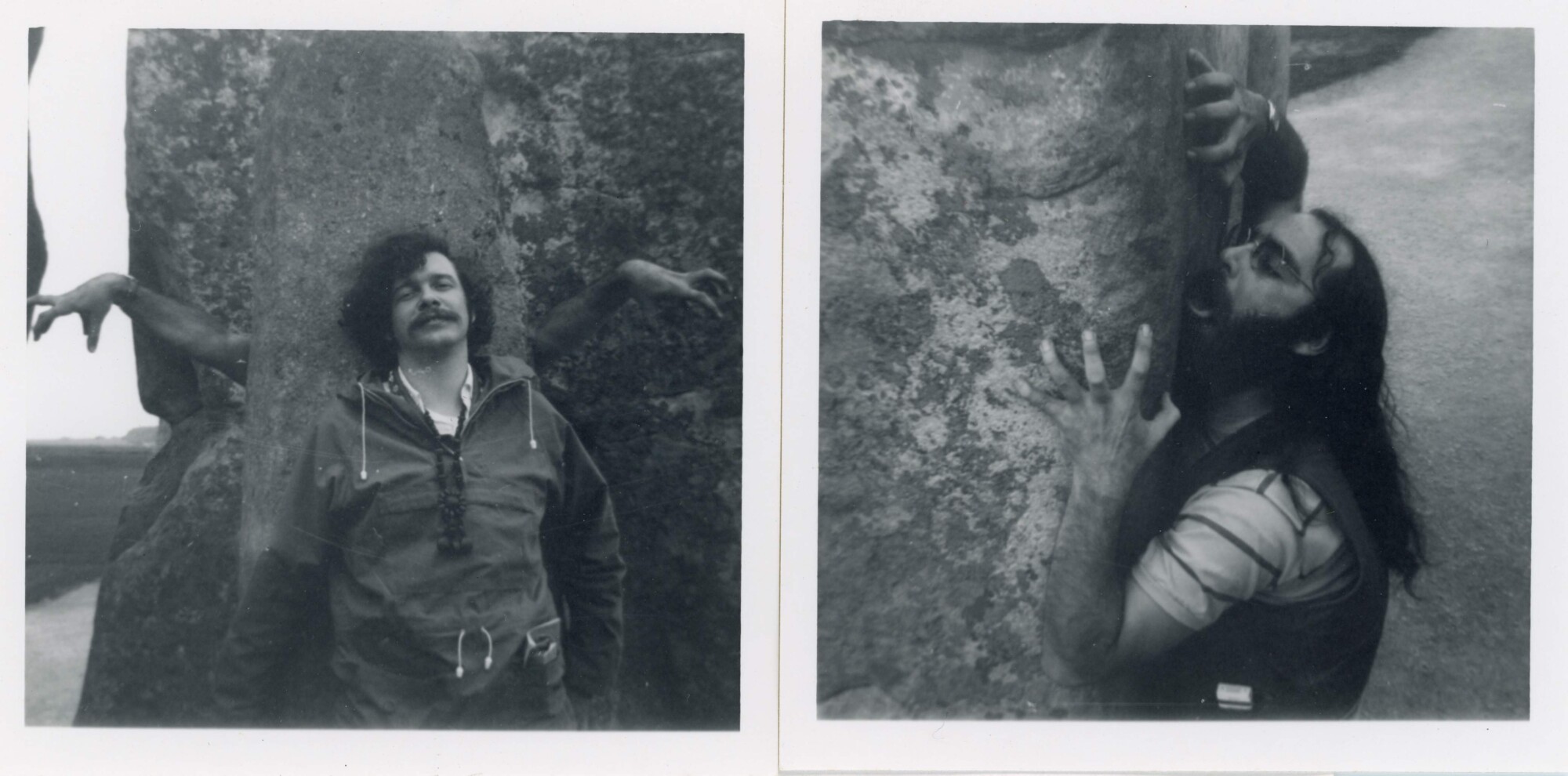
Ken Weaver: Well, I think the thrust, or the aim, of what we were doing was to just fuck with people’s heads. There is a great French expression: épater la bourgeoisie. Shock the straight people. Shock them. Get their attention about things like the Vietnam War. That was one of our main topics of performance.
Tuli wrote a great song called ‘Kill for Peace’, and that says it all. The roughness was automatic, but it was also part of the presentation. There were a lot of groups that were just four cute guys, like, for instance, the Beatles. And I love the Beatles, but we were not cute.
We were like a brick wall when you’re in a car coming ninety miles an hour down a dead-end street. And we had to be that way to get people’s attention, not by being sweet or cute or pretty. God knows, we might have been the ugliest rock and roll band in history, physically. We didn’t give a shit. We got out there and said, “This is us. Take it or leave it. We hope we’re entertaining you.”
And it seemed like it worked.
When you think back to recording the first Fugs album, what do you remember of the sound and the session?
Ken Weaver: That first album, I think we recorded it in about three hours. It was like wading through a swamp you’d never been in before. We didn’t know anything about the studio, or the way you had to be in a recording studio. So we just got up there in front of the microphones and cut loose.
And if it shocked people, good. And if it didn’t shock people, it meant they were probably thinking along parallel lines with us.
It’s been so many years since I actually listened to a Fugs record. I don’t know. I’m glad we did what we did when we did it. We got up and cut loose. We said things that too many entertainers were not saying. Instead of singing ‘The Star-Spangled Banner’, we were saying ‘Kill for Peace’. We saw the actions of the United States government as those of an international bully taking on a country like Vietnam.
Were the early albums planned as records, or were they snapshots of whatever the band was doing at the time?
Ken Weaver: I think that’s the case. They were more like snapshots of whatever the Fugs were becoming at that moment. We were not trying to fit into the same mold as any other rock and roll group. If we were close to any group, it might have been the Stones, who had a song about getting shit on their shoes, ‘Sweet Virginia’.
We didn’t put polite limits on our performances, in the studio or onstage.
With songs like ‘Slum Goddess’, ‘I Couldn’t Get High’, ‘Dust Devil’ and ‘Four Minutes to Twelve’, were you writing for the Fugs, or bringing your own songs to them?
Ken Weaver: I think that was the case. They were Ken Weaver songs that the Fugs were wild enough to hold.
We didn’t have a blueprint that said, “We’re going to do this, this, and this, and we’re going to be nice,” and so on and so forth. We got up there and each of us expressed his views about the issues of the day, including the Vietnam War and corruption in politics.
We got up and just said, “Here we are. Take it or leave it.” A lot of people walked out of our performances because they were offended, but we never would have appealed to them anyway. The ones who stayed, that was our fan base. They were people who were like we were, people who were offended by the actions of our government.
What could you get across with a funny song that a solemn protest song might miss?
Ken Weaver: I’m not sure I’m the right person to answer that question, because I just got up there (all of us, Ed and Tuli and I) and said, “Here’s who I am, and here’s who we are, and this is the way we feel about this issue or that issue.”
It was a gamble. Any performance is a gamble. They’re going to like you or they’re not. Somehow, we appealed to a broad enough swath of the population to keep making records and keep being invited to perform in person.
With ‘Slum Goddess’ and ‘I Couldn’t Get High’, were you after a laugh, or trying to catch the feel of the city?
Ken Weaver: I think both of those things. Humor was a very strong vein of what we were doing. Humor is a unique way to be serious about an issue and have people agree with your point of view enough to keep coming back, buying records, and keeping you in business.
By ‘Tenderness Junction’ and ‘It Crawled Into My Hand, Honest’, the records were more arranged. Did you ever worry that the Fugs might become too polished?
Ken Weaver: That was my point of view. Maybe I represented the rougher edges of the group. I’m not sure, but I put no limits on what I would say. If it was obscene, okay. There’s a lot of obscenity out there, particularly in the way the government works.
The government so often, in my opinion, behaves like it’s an insult to the population of the country. A lot of pop music doesn’t seem to realize that American listeners are not dumb. They read the papers and keep up on issues. The ones who don’t, well, they’re going to vote right-wing Republican, go to church, blah, blah, blah.
I grew up around people who would go to church but who were not averse to lynching Blacks. We addressed what we saw as phony do-gooders and phony religion, and let the chips fall where they may.
Yes, I did feel that the Fugs risked becoming too slick, or too organized to be themselves.
What do people miss when they hear those records only as artefacts of the ’60s?
Ken Weaver: I don’t know. I’m not connected with the general public and hardly ever have been in my life. But I think there are a lot of people who are invested in putting on this face of primarily Protestant goody-goodness, when really they’re publicly religious, they go to church every Sunday, and they’re not averse to expressing opinions that are almost fascist and racist.
When I was growing up, I listened to blues radio stations, and my adopted father would get furious. He’d say, “Why do you listen to all that goddamn stuff?” — the N-word music. My opinion was: well, they’ve been on the receiving end of a lot of very nasty behavior on the part of white Protestant and white religious portions of the population.
I don’t know how people receive the Fugs now. I have no idea.
Did attacking the idea of respectability matter as much as protesting the war itself?
Ken Weaver: Yes, it did. There were a lot of people who were very much in favor of the war. To me, the idea of attacking a little Oriental country on one hand and trying to pass yourself off as the second coming of Jesus, or a representative of him, was just phony.
You can put on a respectability mask and be racist, anti-Black, anti-homosexual, and still try to pass yourself off as someone whose feet don’t touch the ground when you walk. You’re elevated.
I grew up with that. I was shuffled around to a lot of foster homes, and a lot of those foster homes were Pentecostal fucking religious freaks. But there was such a strain of cruelty in their respectability that I just saw through it. And a lot of young people at the same time did too.
The Fugs went from Folkways and ESP-Disk to Reprise. Did the labels ever understand what you were doing?
Ken Weaver: I’m not sure. I think they got the fact that we were shocking, but I don’t know if they really saw through the curtain of their own blurred vision and really got what we were saying and doing.
We put ourselves out there. We went to Washington, D.C. We put our bodies on the line, and it offended a lot of people who wanted us to think of the United States as a flag-worshipping, Puritan entity.
People call the Fugs proto-punk, folk-rock, performance art and political theatre. Which description comes closest?
Ken Weaver: I think political theater is pretty much what we were doing. And we tried to make it entertaining. It was entertaining to many people, and to other people it was just outrageous and offensive.
Each of those labels ricochets off a part of what we were doing, but none of them has the full truth.
“So we connected with a lot of people whose voices had been stomped on.”
Did you know at the time how much your shows meant to younger people?
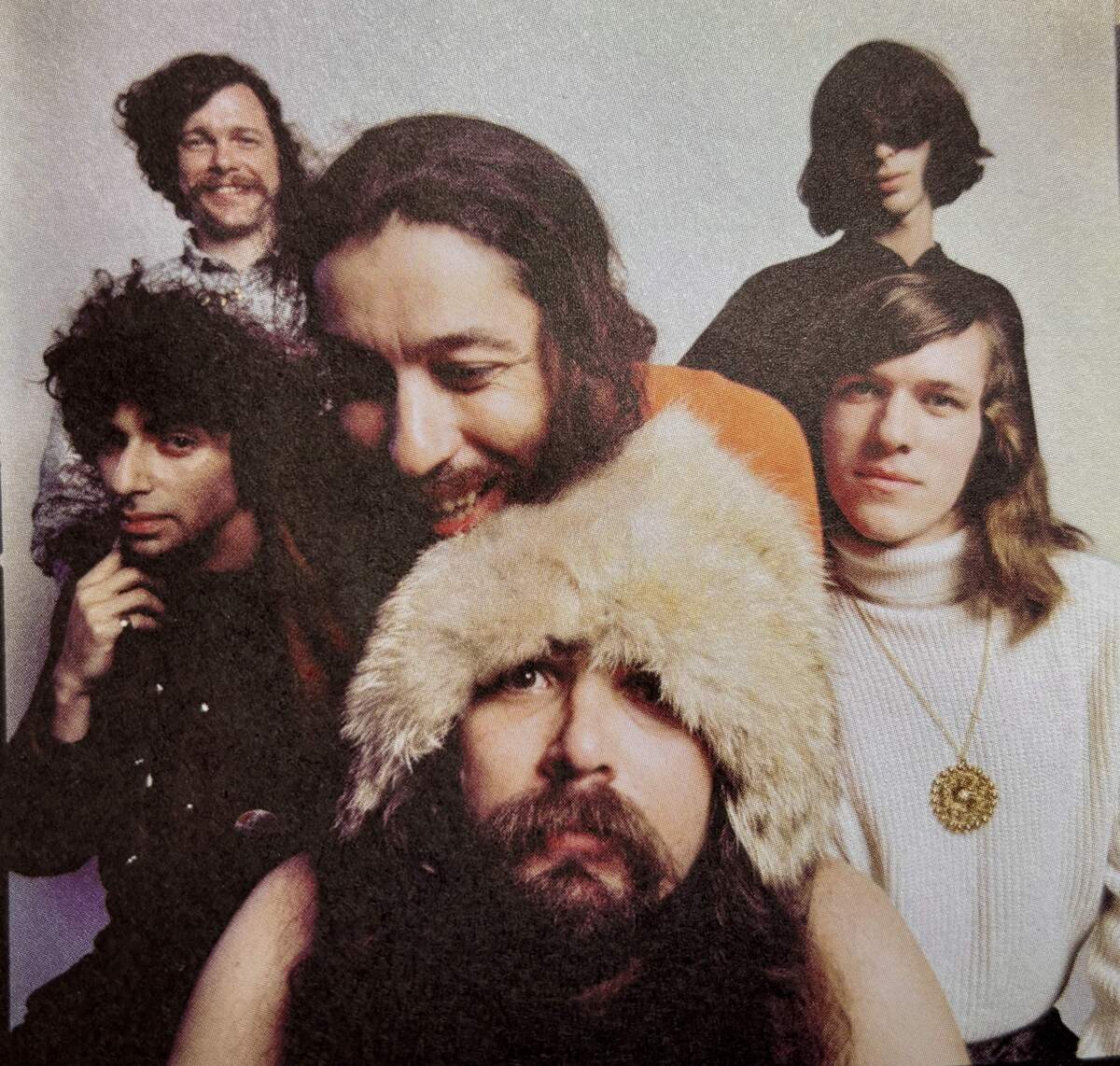
Ken Weaver: I think we did know, because that was the feedback we got from a lot of young people who would be in the theater, or wherever we were performing. They’d come up and say, “Thank you so much. It’s about time somebody said what you’re saying.”
So we connected with a lot of people whose voices had been stomped on.
You’ve spoken about a conservative period when you even cut up some of your Fugs records. How do you look back on that now?
Ken Weaver: I was involved with the Fugs from day one, and I don’t know if I had a full cranium of accurate ideas about what we were doing. I have always enjoyed shocking straight people, even in high school. And I paid my dues. If I had gotten credit for all the time I spent in the principal’s office, I would have graduated high school in two years.
The conservative years were an attempt to try to be part of a society that I wasn’t really designed for. But I had to dip my toe into that pool. I’ve always been outrageous. That’s just part of my psyche, and I honor it.
Do you understand what the Fugs meant any differently now than you did while you were in the band?
Ken Weaver: I don’t know how to answer that question, because when we were performing, none of us ever suggested that we put proprietary limits on our work.
There were a lot of people using drugs, so that was part of the American population’s experience. People were getting into drug use and exploring parts of their minds that they’d left fallow. We were there. We were in the same boat.
When you saw your life in Chuck Smith’s ‘Fugs Film!’, what felt true to your own memory?
Ken Weaver: I don’t think I have an answer for that. All I know about the time and about what we did was what was in my own head and in my own soul.
We had people walk out of our shows, but we also had people like Tennessee Williams come to our shows, and Peter O’Toole came too. I was always chuffed about that, because if we could communicate with them, that would spread our net over a much wider area than just doing obscene things onstage for teenagers.
What would you like someone young to take from the film: the possibility of a freer life, a warning about its difficulties, or a dare to make trouble of their own?
Ken Weaver: All three of those things. You’re either active or you’re passive. If you’re passive, you keep your mouth shut and you go by rules that are set out by people you do not respect, first of all politicians. They’re in business to sell bullshit and start wars, and send young people off to those wars that they wouldn’t have gone to themselves.
It’s the old war of young people versus old people. And I loved it. I loved being offensive. I was that way in high school, and I liked the reactions that it produced, because we thought we were telling the truth to people about what our government was up to. We were telling them that there were other sources of information about the world than editorials in the newspaper.
We were trying to help young people, and older people too, widen the scope of their perceptions. I would hope that’s what people get now when they look back on the Fugs, and on other bands that dared to stand up to government-sponsored racism and violence, and to declaring war in countries where we have no business sending young people to fight.
Wave your freak flag high. Let your freak flag fly. That’s right, Mr. Jimi. I think that was the central core of what we were doing. We had to get away from Ozzie and Harriet and see parts of the world that the grown-ups who raised us did not want us to see and did not want us to understand. We had to fight to be allowed to grow up, and not just cave in to whatever “Mom and Dad know best” meant.
I respected the grown-ups who had gotten drafted during World War II and the Korean War, although I was against the Korean War because I didn’t see that we had any business being over there.
We did what we did. That’s where we channeled our energies. We wanted to be part of a wake-up call, just like the Beats were. They started that. If you take the time to read a poem like ‘Howl’, it’s a wonderful overview of a burgeoning sense of awareness about what was wrong with what we were told by the government and the media.
I think there’s always going to be a place for young people to do that. Otherwise, you just get swept up in ridiculous world views.
Ed Sanders
What were you working on when we wrote to each other in 2021?
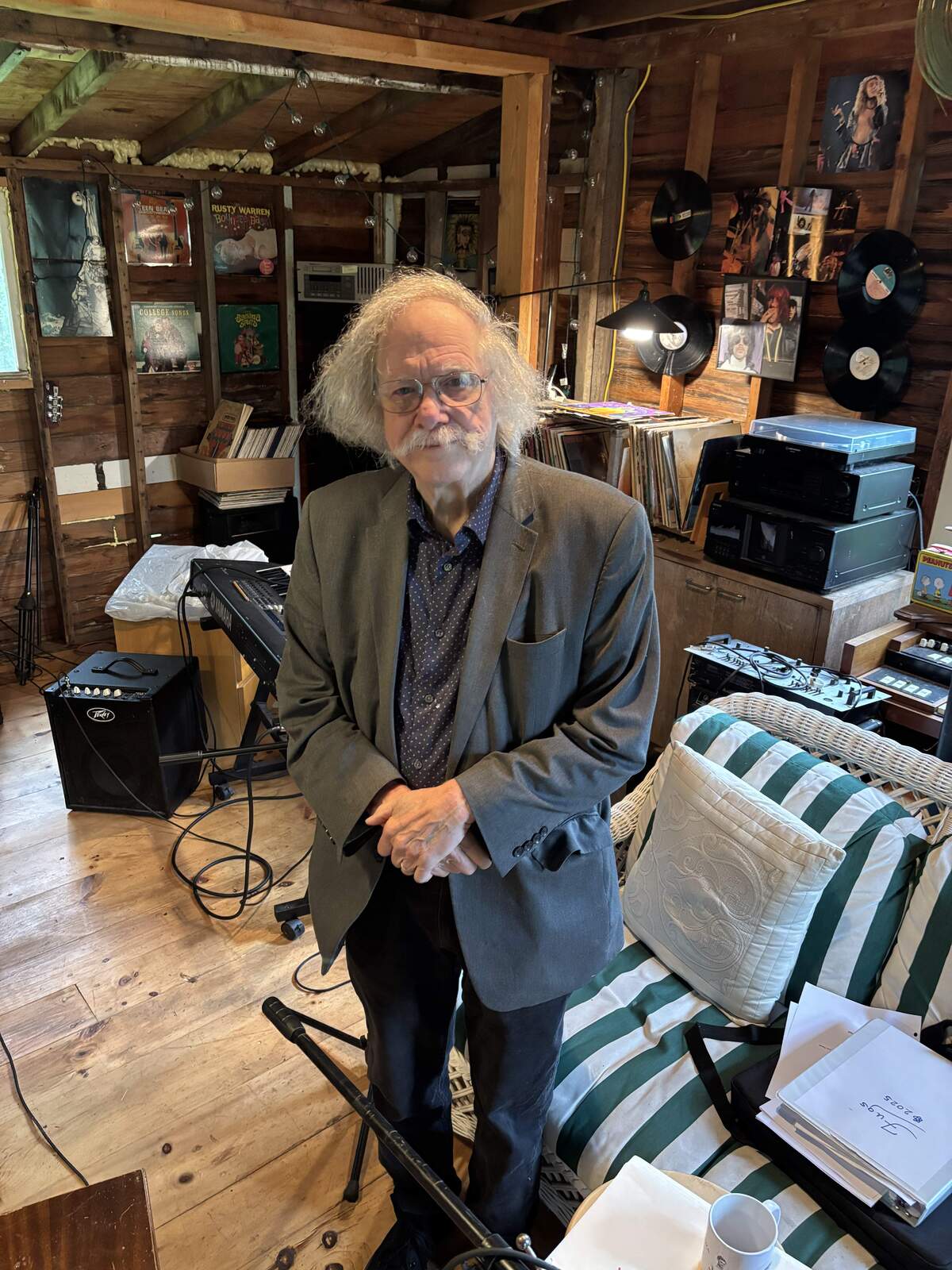
Ed Sanders: It’s a biography of the historian Alf Evers, for whom I served as researcher and typist during the final seven of his 99 years. He lived from 1905 to December of 2004. He was a brilliant historian and an influence. The biography, ‘Alf Evers: Life of an American Genius’, was published in June of 2021.
In writing a life of Evers, I have completed four biographies of writers who impacted my own life and work: 1. ‘Chekhov, a Biography in Verse’, 1995; 2. ‘The Poetry and Life of Allen Ginsberg’, 2000; 3. ‘A Life of Charles Olson in Text and Glyphs’, 2018; and now 4. ‘Alf Evers: Life of an American Genius’.
How do you think art shapes political and social movements?
Ed Sanders: Art is always shaping social movements. The poet Bob Kaufman titled one of his books ‘Does the Secret Mind Whisper?’ (City Lights Books, 1960).
The Impact of a Movement or Art-Trend
It’s almost impossible to gauge the impact of a movement or art-trend: thus the impact of Charlie Parker’s live 1948 albums, the Bebop Movement, Abstract Expressionism, the music and impact of John Cage in works such as ‘Silence’, the Happening Movement founded by Allan Kaprow, Pete Seeger and great songwriters such as Phil Ochs, the Beat Generation and the wonderful poem, ‘Howl’, which shook up my wild youthtime; the lingering influence of the Surrealists, and especially the Dadaists; but also the impact of the Civil Rights Movement, the Freedom Riders, and the place of singing in those movements (there was singing all the time in the Civil Rights Movement, and many partisans had guitars in their apartments ready to play ‘Down by the Riverside’, and ‘Ain’t Gonna Study War No More’). Then the impact of the avant-garde 8mm and 16mm filmmakers, such as Jonas Mekas and others who showed that “regular” people could jump into the film scene. And the Beat Generation and all its brilliance and contradictions; the Hippies of the Summer of Love (1967). The Teach-Ins Against the Evil War in Vietnam; the rise of the avant-garde of the World against that war; the rise of 2 to 4 to 8 to 16-track recording technology, and the invention of things such as the Wah Wah Pedal, which Hendrix used with such genius; the rise of Folk Rock, and Psychedelia; the Legalization of Marijuana Movement (which ensnared such artists as Ken Kesey, Tim Leary, poets d.a. levy and John Sinclair, and many others); the impact of the Digger Free Store; the impact of the Free Medical Tents and Free Food at the 1969 Woodstock Festival, and many many other Beacons to a Better World, which were part of the “Secret Mind Whispering” in those days.
“The Lower East Side in those years was a Do It Now zone, and you knew maybe only a snippet of someone’s history or scene, if anything at all.”
What led you to found ‘Fuck You: A Magazine of the Arts’ in 1962?
Ed Sanders: Here’s a description of my founding of the magazine, and subsequent developments:
The Founding of My Magazine
I founded ‘Fuck You: A Magazine of the Arts’ in February of 1962, after a bunch of us, mostly friends from the Catholic Worker, went to see Jonas Mekas’ ‘Guns of the Trees’ at the Charles Theater on Avenue B. I was there mainly because the ad in the Voice stated that my hero Allen Ginsberg was in the film. For years I had avidly read Jonas Mekas’s weekly Village Voice column, ‘Movie Journal’, which mainly focused on the struggles and delights of the world of underground films.
I sensed from reading Mekas’s weekly columns that he was a person of great generosity and communality of spirit. That is, it wasn’t all Me! Me! Me!, as in so much of the avant-garde, but that he had a genuine will to help other filmmakers thrive and survive. I later learned that Mekas had paid for the printing of Jack Smith’s film, ‘Flaming Creatures’.
Mekas had just founded the Filmmakers Co-operative, and lived nearby on 12th Street, although I didn’t know that at the moment I was so attentive to ‘Guns of the Trees’ at the Charles Theater. The Lower East Side in those years was a Do It Now zone, and you knew maybe only a snippet of someone’s history or scene, if anything at all. All I knew is that the first thing I read each week in the Voice was ‘Movie Journal’.
I was particularly fascinated by the appearance of my hero, Allen Ginsberg as a narrator in ‘Guns of the Trees’. I had not yet met Ginsberg, although I had literally memorized ‘Howl’ when I was still in Missouri in 1957, and I had seen him at Beat/New York School readings such in November of 1959 when he read at the Living Theater with Frank O’Hara. Wow. As I sat fascinated in the Charles Theater that February night with my pals from the Catholic Worker, I never would have dreamed that the author of ‘Howl’ and ‘Kaddish’ would become a close friend.
At one point in ‘Guns of the Trees’ Ginsberg chanted one of his poems with the sentence “I dreamt that J. Edgar Hoover groped me in a silent hall of the Capitol….”
It was a fragment that opened up such huge vistas of possibility in my mind! I transformed the fragment into the dedication for my soon-to-be-published magazine.
Jonas and Adolfas Mekas and the Film-Makers’ Cooperative
Just as Allen Ginsberg was born in New Jersey in 1926 (and not near the Dniester River in Russia) because of the pogroms in the Russian Pale, first in the 1880s, and later around the time of the Kishinev pogrom of 1904, which drove his mother and father’s separate families to the American Dream, so too Jonas Mekas and his brother Adolfas in effect were driven from Lithuania to the U.S.A. by the Nazis.
Jonas Mekas and his brother Adolfas in the 1940s put out a mimeographed anti-Nazi newspaper, cutting stencils on a typewriter in a woodshed behind their house in Semeniskiai in Lithuania. Later they escaped from a German slave labor camp.
In ’49 they arrived in the United States where both of them became filmmakers. In 1955 Jonas founded the magazine ‘Film Culture’. In the fall of 1958, he began his very influential weekly column, ‘Movie Journal’, in the Village Voice. In the summer of 1960, the Mekas brothers purchased some out-of-date film stock, and began their feature length film, ‘Guns of the Trees’. Jonas wrote the script.
Mekas formed the Film-Makers’ Cooperative in early 1962, after another film distribution operation refused to screen a film by Stan Brakhage, ‘Anticipation of the Night’. The Film-Makers’ Cooperative practiced no censorship at all, and 75% of the rental fees for showing a film went directly to the filmmaker.
And so, in early 1962, the Charles Theater on Avenue B, near 12th Street, began showing underground films, and some of us from nearby streets eagerly attended.
Across the street at Avenue B and 12th was Stanley’s, a packed bar frequented by poets, civil rights activists, filmmakers, painters and oodles of others from the nearby rent controlled buildings. After ‘Guns of the Trees’, my friends and I adjourned to Stanley’s for conversation and fun. Inspired by the film, I announced that evening that I was beginning a magazine, and solicited manuscripts. The name I tossed out among the revelers made them laugh. It had been in my mind a number of years.
Typing a Wild Magazine at the Catholic Worker
In those years I was active in the peace and Ban the Bomb movement. I volunteered at the Committee for Nonviolent Action located on Grand Street, and a number of my friends were on the staff of the Catholic Worker newspaper, or did other volunteer work for the Worker at their House of Hospitality on Chrystie Street, which is a southern extension of 2nd Avenue. They were anti-war Catholic pacifists who lived a life of voluntary poverty. Sometimes I watched them hold prayer circles on the second floor on Chrystie Street.
A few of them wrote for the Catholic Worker newspaper, and some of them at night worked the streets of the Village to get donations in exchange for issues. It was understood that because of their lives of voluntary poverty, they were allowed to use some of the donations for their personal needs, such as a few 25¢ quart bottles of Rheingold beer (my crowd’s drink of choice) which they might take back to their pads, or even use the quarter for a mug of dark beer at Stanley’s.
The Catholic Worker provided the best lunch imaginable: beautiful chunks of homemade bread and a healthy soup that worked wonders, especially for someone maybe having had too many vodkas at Stanley’s the night before. I sometimes had lunch there, and now and then picked up clothes or shoes from the free clothes bin on the second floor.
I was of course aware of Dorothy Day, her presence at the Worker, and her writing, which I could sense was sometimes stunningly good. Her hair was white, and her facial expression stood somewhere between fierce and loving. She seemed always on the road, but now and then I would spot her in the House of Hospitality at 175 Chrystie Street, where the offices and soup kitchen resided.
Staff members lived in buildings on nearby streets, and were expected to be celibate unless married. This was 1962, not that many months after the pill became extremely common, along with the diaphragm, among damozels of the left.
There were all kinds of legends about Dorothy Day on people’s lips: that she had had a wild youth. There was one rumor everyone had heard that Day had been the model for Marcel Duchamp’s 1912 painting, ‘Nude Descending a Staircase’, which turned out not to be true. She was born in 1897, and would have been around 14 or 15 at the time of the painting.
Many of us were undergoing wild youth-times ourselves, and the thought that someone who would soon be touted as material for Sainthood had had wildness during her salad was soothing and inspiring at the same time.
She had founded the Catholic Worker newspaper back in the spring of 1933, and somehow kept it going. I’d heard they printed like over a 100,000 copies of each issue. Dorothy Day also led the creation of a series of Catholic Worker Houses of Hospitality around the nation. I learned that she had written for ‘The Masses’, that great and ultracreative magazine that vigorously opposed America’s participation in World War 1, and which Woodrow Wilson crushed out of existence with indictments for sedition and raids.
By 1962, her 65th year, Day had taken part in demonstrations against mandatory Civil Defense/Nuclear War drills, when sirens once a year forced New York City residents to go into underground shelters, or at least to get off the streets. Her credentials were almost overwhelming.
The day after watching Ginsberg chant poetry in ‘Guns of the Trees’, I typed the first issue of ‘Fuck You: A Magazine of the Arts’ on the Catholic Worker typewriter, on the third floor, on mimeograph stencils which I borrowed. I also borrowed from the Worker a few reams of flecked, colored paper called Granitex. The first issue was a beautiful light green; subsequent issues were in various shades of red, some pages were flecky gray, and a few blue, and near-chrome yellow.
On February 19, a Monday, I went to a typewriter store on Second Avenue, and for $36 plus change I purchased a small Speed-o-Print mimeograph machine, and some printing ink, which you poured into the open top of the printing drum.
In the first issue I published two excellent poems by Jean Morton, then on the Catholic Worker staff. In the notes on contributors, I wrote: “Jean Morton— a mad stomper for the Catholic Worker. Jean is a word-machine and her many secret notebooks will cleave out about ten feet of leatherbound library space of the future.”
While I was typing the stencils for the first issue, sitting at the Catholic Worker typewriter on the third floor, my friend Nelson Barr quickly wrote a ‘Bouquet of Fuck Yous’, which I drew by hand on the stencil, using a stencil-cutting stylus I found in the Catholic Worker desk I was using. I noted in the typed notes on contributors, “(Barr’s) Bouquet of Fuck Yous was written as this went to press. Composition time: 43 seconds. Place: 3rd floor, Catholic Worker.”
Chuck Smith
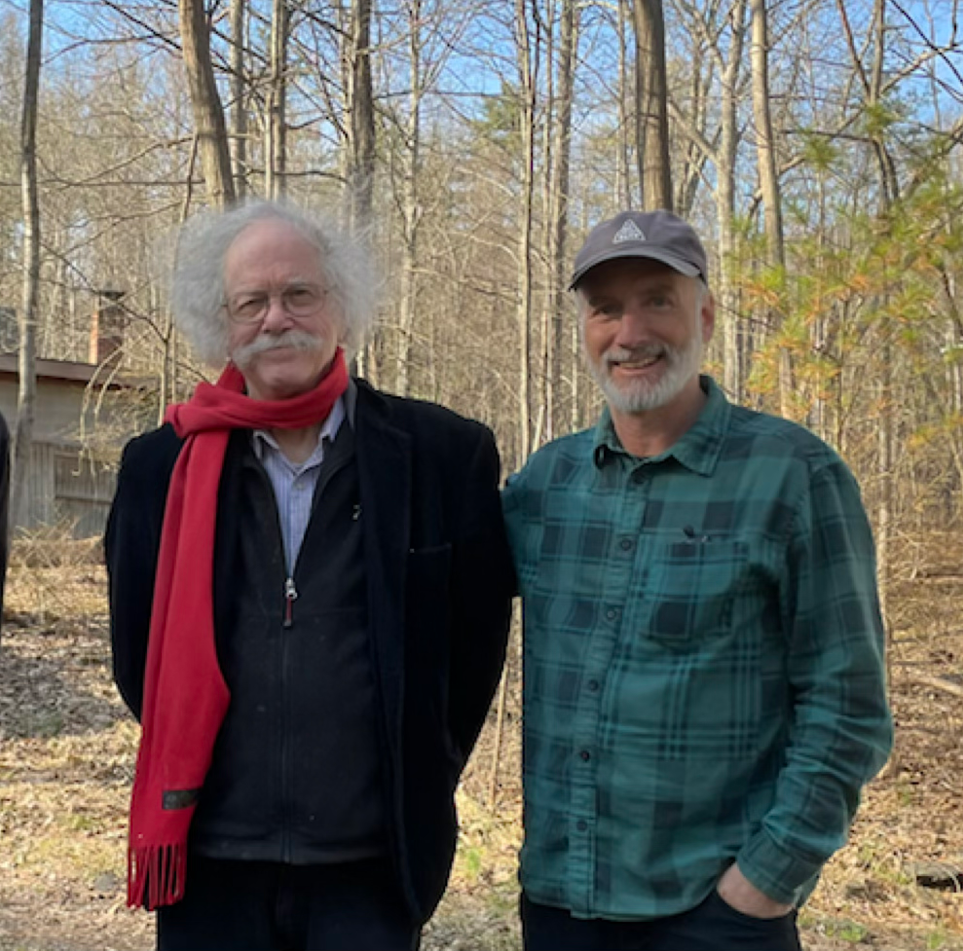
Your films have followed Forrest Bess, Barbara Rubin and now the Fugs. Where did your interest in people outside the usual cultural story begin?
Chuck Smith: That’s a question for my therapist! I’m kidding…I don’t have one anymore because I’m cured. 😉
Honestly, like a lot of artsy people, I’ve always felt a bit like an outsider myself (though my life has been pretty privileged, compared to Forrest Bess or Barbara Rubin.) So, when it came time to delve into personal film projects, I was drawn to people who were even MORE outside the norm than me.
What were music, art and film like in your childhood?
Chuck Smith: I grew up in NYC until I was 11, so I was exposed to a lot of great art and music at a young age. My mother had an artistic spirit and would take me to MOMA and the MET, and galleries, and I even remember seeing the Jefferson Airplane in Central Park when I was 6 years old (1969). Then, when we moved to a Connecticut suburb of NYC, she gave the architect Richard Meier his first full commission. So I grew up in an architecturally iconic house, Meier’s Smith House. That definitely gave me an artsy look at life. But that’s also when I began to rebel against the suburbia I found myself in. I preferred NYC, and went back as often as I could. Especially when I could go on my own to attend concerts there.
What were you listening to when you started making things yourself?
Chuck Smith: I’ve always had a very eclectic taste in music, art, and film, including a huge curiosity about who these artists and musicians were and how they do what they do. For music, in the beginning, it was typical 1960’s and ‘70’s fare: Led Zeppelin, CSNY, Janis Joplin, but if something sounded different or the album looked different it always caught my attention. Like the first Velvet Underground album. My step-brother had a copy and I remember peeling the banana off and seeing the pink. Wow! Very cool. (I wish I had saved it!) And the Rolling Stones Satanic Majesties album with the 3D cover fascinated me too. Not to mention the music on these discs. Ironically, I never came across a Fugs album during my High School or College days. Then, when I was around 17, I started actually doing creative things like writing poetry, taking photos, and shooting film (when I could borrow a camera). And my musical and film tastes expanded then too: Sun Ra, Cassavetes films, etc. Of course, experimenting with drugs and psychedelics, helped me imagine other worlds as well. But, it wasn’t until I was around 20 that I started to even think of doing a creative job as a living. I had been a pretty committed environmentalist until then, working with Greenpeace to save the whales, etc.
How did you find your way into filmmaking?
Chuck Smith: I never went to film school or studied film formally. As I always tell young people if you go to film school you may learn HOW to make films, but you might not discover WHAT to make them about. Better to get some real life experience first, and you can always pick up the craft of filmmaking while working on a film. My first job out of Graduate School for Public Policy was with The City of New York’s Department of Environmental Protection. But, luckily, I had friends in film school and I started moonlighting as a PA when I could, and that seemed like a lot more fun. I also realized that the media (TV, film, radio, etc.) had a huge influence on government and how people thought. If I really wanted to change the world, I should probably get into that. Since I had a Public Policy degree, I found a company called Public Policy Productions that was doing documentaries for PBS (Public TV), and I told them I know a lot about public policy and they surprisingly gave me a job as a PA. Once in the PBS world, I was hooked on the whole TV thing, especially after I started working with the legendary journalist Bill Moyers. He was my first TV hero, and the series I worked on with him, such as ‘World of Ideas’ and ‘The Power of the Word’ were amazing experiences. From there, I worked my way up doing other documentaries and soon got a job as a Producer at CBS News. Then, I spent years working as a Producer and Show Runner on various reality TV shows for National Geographic and Discovery etc. That’s where I learned how to find a good story and to keep things concise and exciting. It was mostly freelance work during those years, so I would spend my down time researching weird stories and thinking of doing my own films. And when I came across the art of Forrest Bess, I knew I had a great story for my first film.
Your Forrest Bess film centres on one artist; your Barbara Rubin film opens out into a whole scene. Did that change how you tell a story?
Chuck Smith: I think the choices you make for personal projects, are very connected to your psyche at that time. Working in TV, I was surrounded by lots of creative people, but I knew that the best art, music, etc, comes from solitary inspiration. So, I think I chose Forrest Bess as a first film, because I needed to tap into that “solitary genius” energy as I tried to extricate myself from the world of wham-bam TV.
“So, the fact that I’m able to sneak a lot of crazy poetry into an exciting music doc feels great.”
Did making the Barbara Rubin film bring you closer to the Lower East Side world of the Fugs?
Chuck Smith: Absolutely. I was living in the East Village at the time (on 2nd Street aka “Joey Ramone Place”) and had been there for over 20 years, so as I researched the Barbara Rubin film, I was uncovering the history of my own neighborhood. And, the fact that Jonas Mekas and his Anthology Film Archives was a block away helped a lot. In fact, Jonas was the key to the whole film. Without his love and support, I couldn’t have done it. Jonas was a living example of the energy and spirit of the NYC 1960’s underground and another one of my life heroes. And, to bring it back to my psyche at the time, the Barbara film reminded me of the importance of an artistic community. Our society tends to celebrate the myth of the individual “genius”, but it’s clear through Barbara’s story (and many other examples) that a “genius” like, say Bob Dylan or Andy Warhol, is only a divining rod or vessel through which the creativity and energy of many people flows. Shining a light on unseen and forgotten heroes like Barbara Rubin is something that’s very important to me.
How did the idea for ‘Fugs Film!’ reach you?
Chuck Smith: It arrived very suddenly via an email from Ed Sanders. I had gotten to know Ed while doing the Barbara film. He was a good friend of Barbara’s and they had even both worked on a screenplay together with Shirley Clarke. The never-made film was going to follow The Fugs as they go to Vietnam to try and stop the war! That would have been something…
Anyway, I had asked Ed to do an interview for the Barbara film, but he declined. Ed is very cautious about people, and I don’t think I’d earned his trust yet. But, once I finished the Barbara film I sent it to Ed and he loved it. He also loved Jonas Mekas, and he knew that Jonas liked me. So that was it. He sent me an email: “How about we do a Fugs film?” To be honest, I had already decided that I wanted to get away from the 1960’s with my next film, but this was too good of an opportunity, so I replied “Yes!”
When you began the film, did you think of the Fugs chiefly as a band?
Chuck Smith: I definitely thought of them as something much broader than just a band. That was the big attraction. The Fugs story is so unique and multi-faceted. And, honestly, I think their poetry is the key to their “success”, but nobody wants to see a film about poetry! So, the fact that I’m able to sneak a lot of crazy poetry into an exciting music doc feels great.
How did you make room for Ed and Tuli’s poetry and publishing without losing the music?
Chuck Smith: Great question! As I was saying, I’m equally fascinated by the small press and poetry of Tuli Kupferberg and Ed Sanders as I am by Fugs music. ‘Fuck You: A Magazine of the Arts’ and ‘Yeah’ were groundbreaking zines that helped fuel the underground scene in NYC. So, I knew I had to cover the importance of The Fugs literary background, but I also knew that I had to keep the story moving and exciting, so that’s where the Fugs crazy music helps. It’s a balance.
What survived of the band on film, and what did you have to hunt down?
Chuck Smith: Yes, good performance footage of The Fugs was very hard to come by. So that was the first thing I had to look for. Ed Sanders had a huge archive and kept track of everything that he remembered, so that was very helpful. Through Ed, I found the never-before-seen footage of The Fugs that WNET had filmed for Ed’s appearance on the ‘USA Poetry’ series from 1966. That was great. And, then seeing the raw master footage of things that were already known, like their Swedish TV appearance in 1968 was very cool. But I kept digging through archives and hoping that I was going to uncover a trove of great unknown Fugs footage, but it never happened.
I did find a few very cool scraps of footage shot by Shirley Clarke and Barbara Rubin from the Al Aronowitz Archive, and a few other scraps, but nothing major that wasn’t already known. The fact that the BBC lost the footage of the Fugs’ two appearances and interviews from London in ’68 is a shame. Basically, the film includes the best pieces of every single bit of Fugs footage that’s out there. I had just enough.
Once you had all that material, how did you decide what belonged in the film?
Chuck Smith: It’s very instinctual. As I’m editing the film, anything that catches my eye gets worked into the film if possible. I’ll create a sequence of “all the good bits” and then do my best to cram them in. But, alas, as every filmmaker knows, we must occasionally “kill our babies” in honor of story and logic.
Did you work with the stories that have grown around the Fugs, or push back against them?
Chuck Smith: I did both. The myth of The Fugs is based on their outrageousness: did Ken Weaver really expose himself on stage? Did Tuli spend an entire performance sitting in a lotus position without singing or saying anything? I’m pretty sure the answers to both those questions are “yes”, but I heard many other crazy stories that were proven to be false. I think the film does a good job of balancing myth and fact, and to be honest, in the Fugs’ case, the facts are truly stranger than fiction. I think the tragic story of Ken Weaver’s upbringing, and the fact that Tuli Kupferberg DID actually jump off the Manhattan Bridge (as mythologized in Ginsberg’s ‘Howl’) is proof of that. If ever there was a band that was born to be mythological it’s The Fugs.
Did the shape of the film change much as you went along?
Chuck Smith: When I’m working on a film, I never use a script or outline or any plan. I simply gather material (interviews, footage, audio clips) and then put the very best stuff into sequences. Then those sequences become Chapters, like I’m writing a book. I do start the process knowing that I want to cover certain things which will become “chapters”. Like, I knew I wanted to tell the story of how Harry Smith produced The Fugs first album. But, how I did that is directly driven by the material I get. In that case, I had great audio from those Harry Smith sessions, but absolutely no photos or footage. So, I realized early on that I was going to have to use a little animation in this film (for the first time ever.) I generally don’t like animation in documentaries, but if it’s done well by a sympathetic artist it can work really well. So, shout-out to Drew Christie and Lucy Munger who do some amazing work in the film.
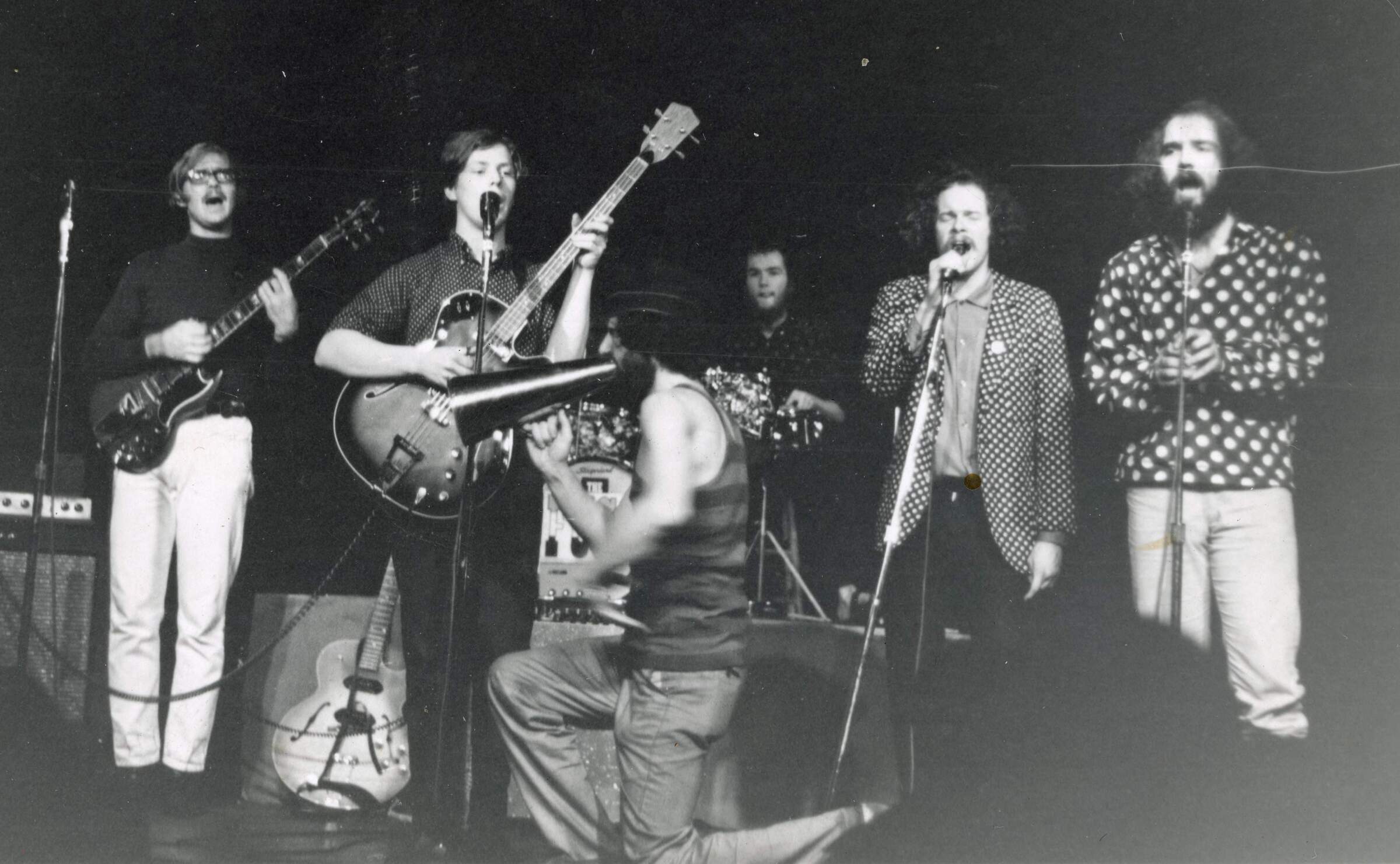
How do the Fugs’ antiwar songs strike you now?
Chuck Smith: It seems VERY active and present! We absolutely need the revolutionary spirit of the 1960’s and The Fugs right now. It’s shocking to me that we are still fighting the same battles we fought over 60 years ago: invading countries to support the military-industrial complex, and de-humanizing people in other countries because they’re not like us. It’s insane. The famous ‘60’s mantra of PEACE and LOVE are so easily dismissed as pipedreams, but they truly are ALL we need to make the world a better place.
Their protests could be very funny. Did you have to work to bring that humour into the film?
Chuck Smith: Any film on The Fugs was bound to be both funny and absurd. It’s only fitting. And it emerged in a completely spontaneous and natural way, as natural as Ed’s ode to the pleasures of having sex with an elm tree.
Do you see a connection between your films about Bess, Rubin and the Fugs?
Chuck Smith: They’re very connected. I am fascinated by any great artist who I think is overlooked. I’m proud to do anything I can to spread the Gospel of Forrest, Barbara, and The Fugs and any other creative soul who was ignored by conventional society.
Is there a part of American culture you keep finding yourself drawn to?
Chuck Smith: Yes. Absolutely. American culture is based on the myth of individual achievement and we celebrate freedom from tyranny. But, as we all know, our mainstream society and media is very conventional. So, the REAL iconoclastic people are ignored or laughed at. But, those are the people who are the true sources of inspiration for any creative person who picks up on it. And anyone who can open their heart and mind to “inspiration” is creative by default.
Was this film harder to make than the others, in terms of archives and music rights?
Chuck Smith: Hmm. I think the process of making films gets easier the more you do it. Plus, since ‘Fugs Film!’ is also based in the 1960’s, like the Barbara film, I already had a huge archive of great footage from legends like Jonas, Ken Jacobs, Shirley Clarke, and Rudy Burckhardt to work with. The estates of these filmmakers are all friends, so it was a pleasure to work with them again. And, in terms of music rights, I was fortunate that The Fugs catalog of music is mostly controlled by Ed Sanders. That was the deal: I get to use the music for free and he gets a film. In that sense, it was a lot easier than the Barbara Rubin film. (In fact, if I tried to make the Barbara film today now that Sony owns all of Dylan’s music and Universal owns all of the Velvet’s music, it would be cost prohibitive. Luckily, the artists themselves still had some say back in 2018.)
What did you learn about the band that you hadn’t expected?
Chuck Smith: I think it was the fact that each band member, Ed, Ken, and Tuli, had faced some kind of deep hardship as a kid. That’s the kind of thing that helps add emotion to any story. Of course, the intensity of Ken Weaver’s hardship was particularly hard to learn about, but these are the things that help shape who we are. And it helped change my understanding of Ken as a person and member of The Fugs.
How did you get past the stories Ed has told before? And what was it like talking with Ken and people close to the band?
Chuck Smith: Re-telling old stories the same way that they’ve been told before is of no interest to me. I need to find a new angle or fresh revelation to make it interesting to me. So, the hardest interview was with Ed Sanders himself. Ed has written extensively about his life and has some well-told stories that he’s always willing to share. But, in the process of interviewing him 4 or 5 times, I found ways of bringing up new things by trying to tap into his emotions. A good example is the tripping with poet Charles Olson scene. To get that I took Ed into the beautiful woods behind his house and we started talking about psychedelics. (At one point I even asked him if he wanted to hug a tree! He declined, of course.) But he knew I was fishing for some kind of profound revelation and he then shared a great story that I’m not sure he ever told before. As for Ken Weaver, I don’t think he’s ever shared his traumatic childhood publicly (though he’s in the process of getting a memoir he wrote about it published as we speak.) Of course, the real find is when you discover someone very private but intimately involved with the band like Ken’s girlfriend Betsy Klein and bassist Jackie Anderson who have NEVER talked about their time with The Fugs publicly. Those two interviews were critical to the story I wanted to tell.
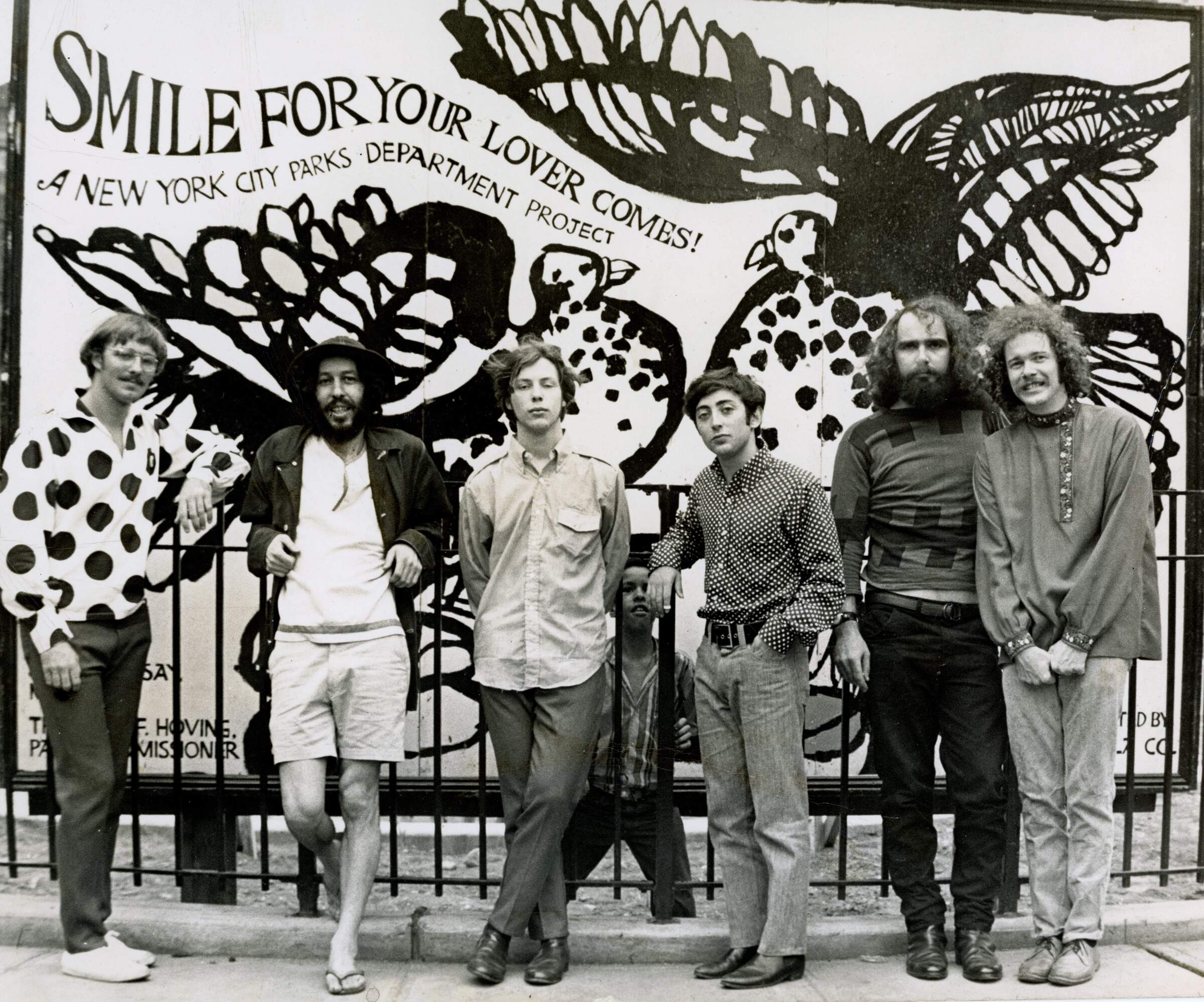
What stays with you most from making the film?
Chuck Smith: That’s easy. It’s the moment when I shared the finished film with Ed for the first time. I had said that he could change anything if he wanted to, so he basically had “final cut”. And I was extremely nervous that he’d object to certain things, like the ‘Elm Fuck Poem’ scene and the fact that he cries at times. I knew what a tough critic he was. But, thankfully, he said, “don’t change a thing.” That’s when I knew he believed in art, poetry, and personal vision above all else. My ‘Fugs Film!’ is not the definitive “Story of The Fugs,” but Ed saw that I’d been inspired by the material and that I’d put my heart into it. And he knew that it was the only Fugs film I could’ve made.
Do you expect to keep making films about this world, or try something very different next?
Chuck Smith: Both! My next project is a time travel theatrical musical (not a film) about David Cassidy and his time with The Partridge Family. Like Fugs music, I think the music of The Partridge Family is seriously underrated, and David Cassidy was a legend who doesn’t get the props he deserves as the uber-teen idol. So, yes, I believe that even wildly popular artists can sometimes be just as over-looked as loners like Forrest Bess or iconoclasts like The Fugs. And…if I can somehow connect Barbara Rubin and The Partridge Family in the AI unispheric cloud, then I’ll die happy.
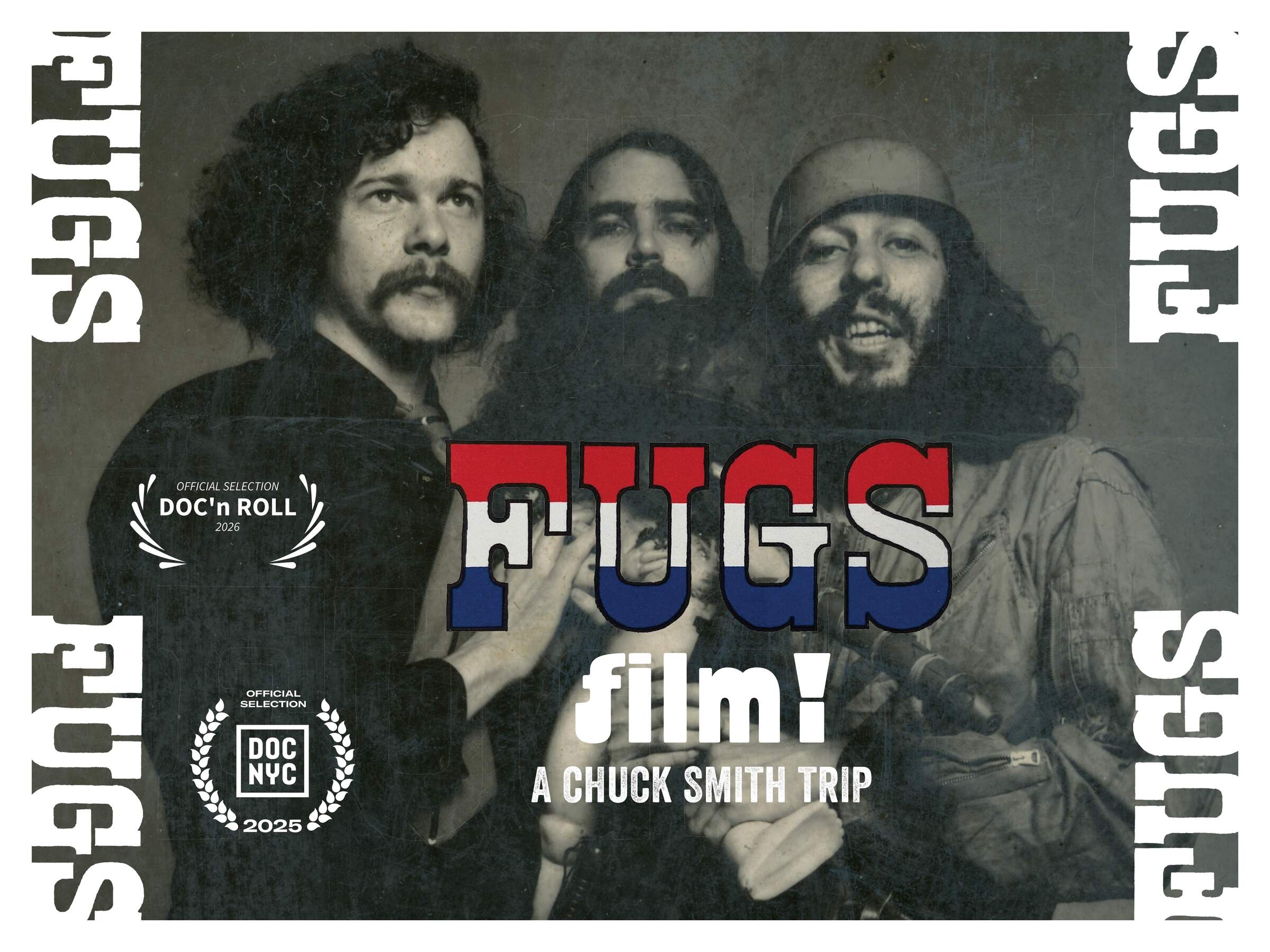
If you were putting on a record after this conversation, what would it be?
Chuck Smith: Love this question! It would be some great, completely unrelated song that just pops into my head. So, I’m feeling like some ‘80’s synth pop and The The’s ‘This is the Day’ is calling to me…
Klemen Breznikar
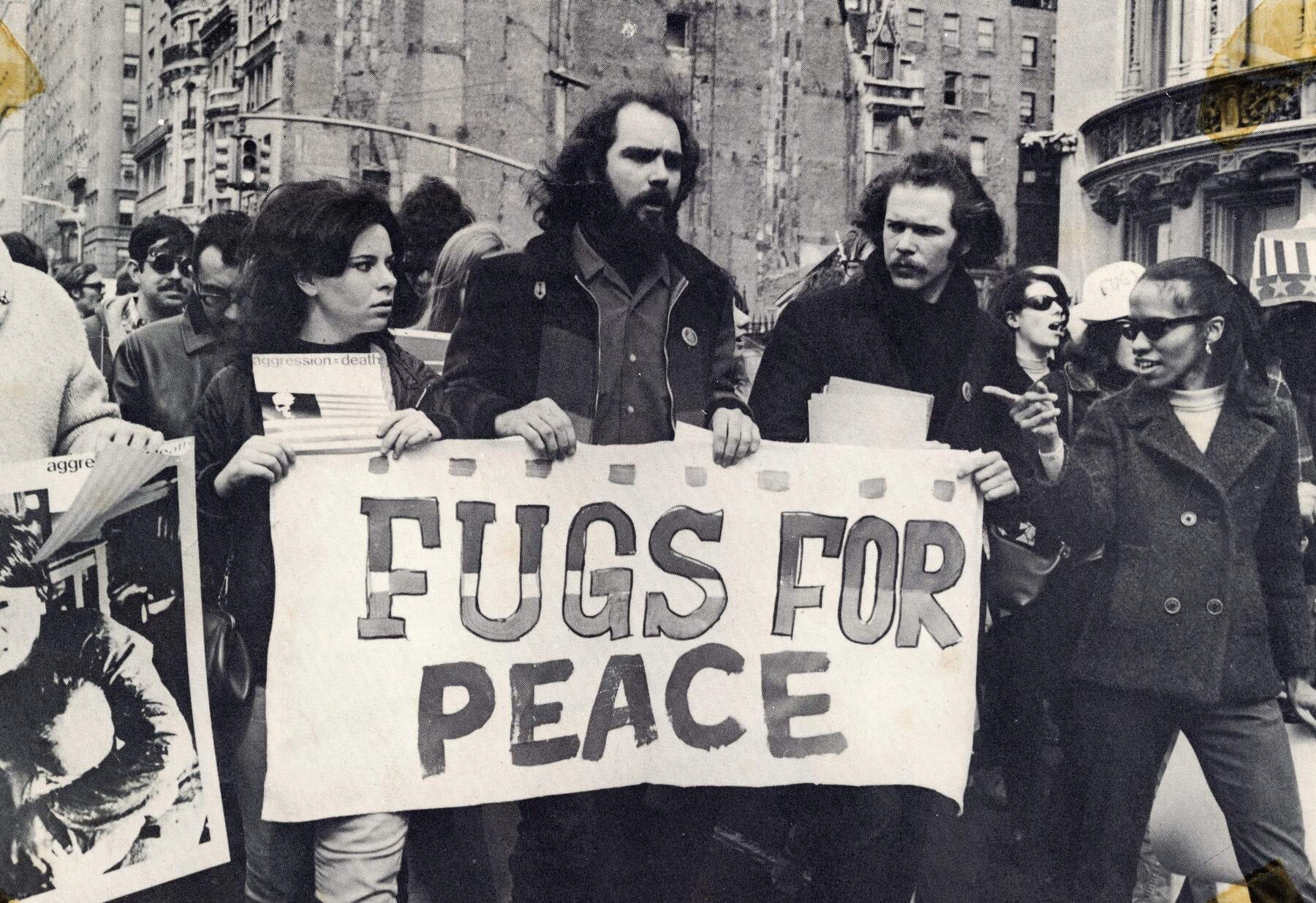
Headline credit: The Fugs protesting the Vietnam War in New York City, 1967. From left: unidentified woman, Ken Weaver and Ed Sanders. Photograph courtesy of the Ed Sanders Archive.
The Fugs Facebook / Instagram
The Fugs Film Instagram
Chuck Smith Instagram / YouTube