
Simo Lazarov and the Birth of Electronic Music in Bulgaria
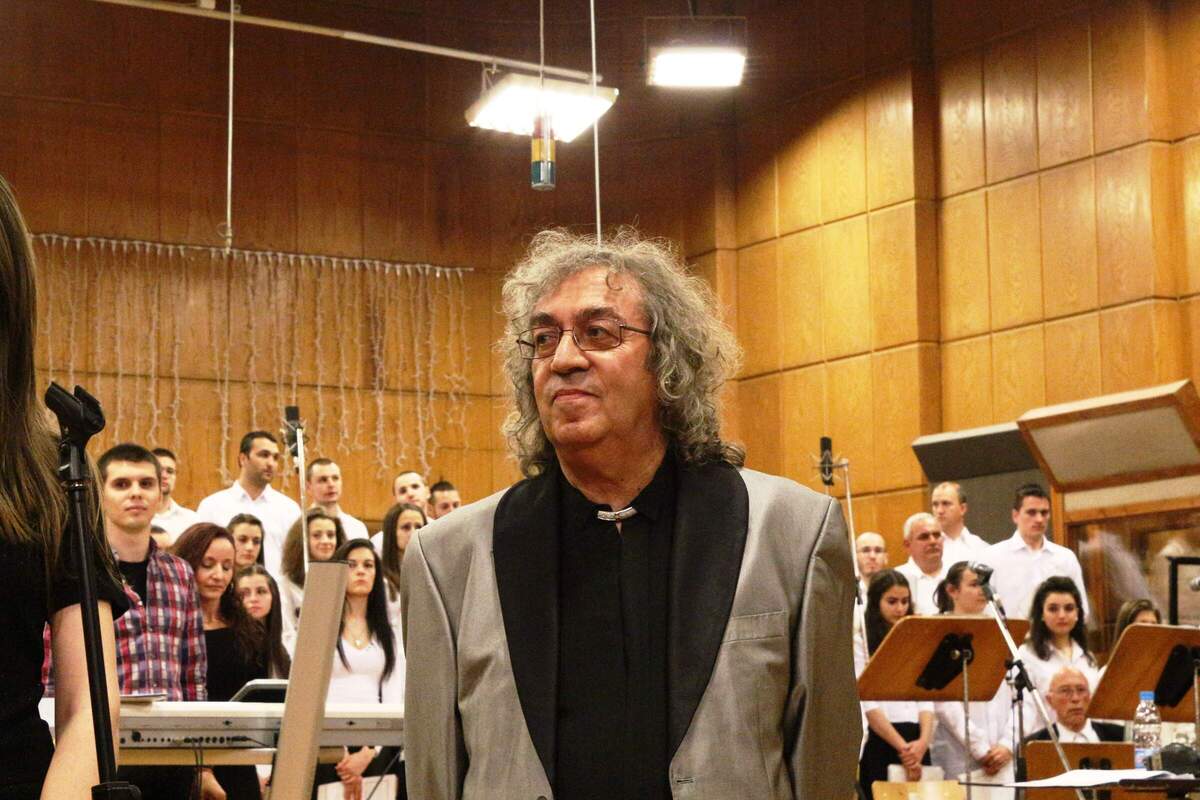
Simo Lazarov has spent more than half a century working where music and technology meet. Born in Sofia in 1948, he grew up at a time when electronic music in Bulgaria was still largely something heard on records arriving from abroad, while the major studios elsewhere in Europe felt very far away.
He studied music and engineering in Prague and Sofia, later spent time in Bratislava and at IRCAM in Paris, and became one of the key figures in the development of electronic and computer music in Bulgaria.
His interest in sound began long before he encountered a synthesizer. Lazarov remembers a home filled with radio, classical music, folk music and a small “family orchestra” with his father and brother. A record from the Columbia-Princeton Electronic Music Center made a particularly strong impression, with sounds created from generators, filters and manipulated tape unlike anything he had heard before. His years in Prague brought jazz clubs, avant-garde music and serious study of the organ, while his interest in engineering eventually led him to build the ELOR 275 electronic organ as his university diploma project.
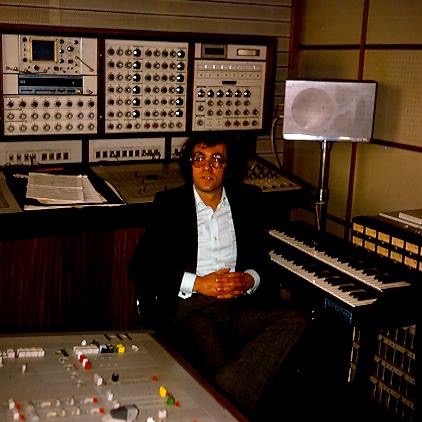
In December 1973, Lazarov joined Bulgarian National Radio as a sound engineer. The electronic music studio equipped with the EMS Synthi 100 became operational the following year, on 18 September 1974. Over the years, his work ranged from electronic composition and his performances with Vezni to film and theatre music, spatial concerts, ‘Nature’, large outdoor productions, computer music and teaching. The studio also became a place where other Bulgarian composers could work, with Lazarov acting not only as an engineer but sometimes as interpreter, programmer and co-composer.
There was never just one strand to his work. ‘Electronic Music 1300’ brought live performers and electronic sound into Bulgaria Hall; ‘The City’ introduced electronic music to a much wider audience; ‘Things of Life’ grew out of his work for cinema; and ‘A Requiem for the Fate of the Jews’ brought his own family history directly into the music. He later turned seriously towards computer composition and established a computer music programme at New Bulgarian University.
The technology kept changing, but Lazarov’s interest in finding new possibilities in sound remained. That same concern runs through his thoughts on artificial intelligence. Technology can help the creative process, he argues, but it should not replace the person behind it. Near the end of our conversation, he puts it simply: “Electronic music is a way of perceiving the world, born of the dynamic age in which we live.”
“Computers are helpful, but live performance can never be replaced, because it embodies emotion and adrenaline.”
Your father, Leon, was a violinist and conductor, and music seems to have been everywhere when you were growing up. What do you remember most clearly about the sound of your childhood home?
The sonic environment of my childhood was shaped by the sounds around me and by the radio, which broadcast symphonic, operatic, choral and folk music. Music was part of our family life, we sang and played instruments. My grandmother sang. My father, my brother and I formed a sort of “family orchestra”, playing all the popular tunes we heard.
A little later, we began listening to Elvis, the Beatles and all the other bands emerging at the time. This shaped a comprehensive picture of my musical upbringing. I had at my disposal the sounds around me, as well as those we heard at the symphony concerts we attended and on the radio.
This provided a solid foundation for my musical education across all styles and genres, which subsequently played a major role in shaping me as a musician with a rich musical background, someone who truly understands the essence of music. It also defined the path of my sonic development.
Around 1961 or 1962, you heard a record of electronic music from America that made a huge impression on you. What do you remember most clearly about hearing those sounds for the first time?
This record made a tremendous impression on me. It was released by the Columbia-Princeton Electronic Music Center. As I listened to the album, which showcased various American electronic music composers, I was captivated by the sounds. Contemplating their timbre led me to reflect on the sonic spectrum created using the signal generators and filters available at the time. Through techniques such as slowing down playback and reversing the magnetic tape, the sounds revealed an entirely different sonic world.
That is how the question of how they were created arose in my mind. These sounds did not unsettle me, quite the opposite. They expressed something new, something I had never heard before, and that made a deep impression on me. This rich sonic spectrum influenced the shaping of my musical sensibility. Hearing sounds I had never encountered before was both a pleasure and a challenge for me.
During your years in Prague, you moved between music and engineering and studied organ with Jiří Ropek. What did Prague give you that you couldn’t find in Sofia at the time? And did the atmosphere around the Prague Spring change the way you thought about artistic freedom?
In Prague, I found myself in a different musical world. Alongside the music I was discovering and my musical training, I was gaining new insights into the nature of sound. The musical environment played a part in this.
The Prague Spring had opened its arms to embrace all the new musical styles and activities as its own. It is in this way that one shapes one’s worldview and begins to see the world differently. Prague gave me precisely that.
Moreover, it introduced me to the sound of the organ, which impressed me with its rich variety of timbres. The organ was certainly one of the reasons I delved deeper into the study of timbres. Thus, the combination of this new sound, which I had never heard before, along with new styles, genres and the sound of the classical organ, drove me to explore and master new musical realms.
During my studies in Prague, there were musical activities that simply did not exist in Sofia. For instance, there were jazz clubs and other venues featuring different, more avant-garde music. Prague gave me precisely that musical freedom which was lacking in Bulgaria at the time.
You founded Vezni in 1967, and the band had quite an unusual sound for Bulgaria at the time. What were you trying to do with the group, and what did all those years of playing live teach you?
The style we played with Vezni was unique for Bulgaria because it was soul, a genre no one else in the country was playing at the time. It was the brass section that gave the music its distinctive soul flavour. Given the diversity of our repertoire, that blend would sometimes evolve into rock music as well. My musical background played a crucial role in shaping the band’s style and steering the group in a professional direction.
Performing live is always a challenge for musicians and, of course, for the audience. The connection between the audience and the musicians significantly shapes a musician’s future development, including my own. I started out performing live, and I have continued to do so for many years. Computers are helpful, but live performance can never be replaced, because it embodies emotion and adrenaline.
You were already building things as a teenager, including your own electric guitar, and later designed the ELOR 275 electronic organ for your university diploma project. How closely connected were the engineering and musical sides of it? And what survives of the instrument today?
As a teenager, I built a wide variety of devices that served as my introduction to technology. I even constructed an electric guitar. Professionally, I was able to channel my efforts into my graduation project, an electronic organ called the ELOR 275, which offered extensive capabilities. Its tones rivalled those of a commercial electronic organ.
With this thesis project, I succeeded in combining my technical skills to create a fully functional electronic musical organ. What was particularly important was that it was not merely a prototype or theoretical project, but a real, playable instrument that I presented to the jury during my degree defence. The high grade awarded by the jury was significant recognition of what I had managed to create.
Parts of the original organ have survived, while the design and documentation are kept at the National Polytechnic Museum. That is the appropriate place for such material, given its historical value, particularly as it shows the instrument’s construction, circuitry and operating principles.
This is quite valuable, bearing witness both to its creation and to the work I put into it. The fact that the complete instrument itself no longer exists and survives largely through the archive adds a certain nostalgia to the story. My path began with those early experiments with technology as a teenager and eventually led to the creation of a functioning electronic organ whose documentation is now preserved in a museum archive.
There are several slightly different dates in circulation for your arrival at Bulgarian National Radio and the beginning of Studio 17. Could you set the record straight about when you joined the Radio and when the electronic music studio actually began operating? How did the Synthi 100 become part of it?
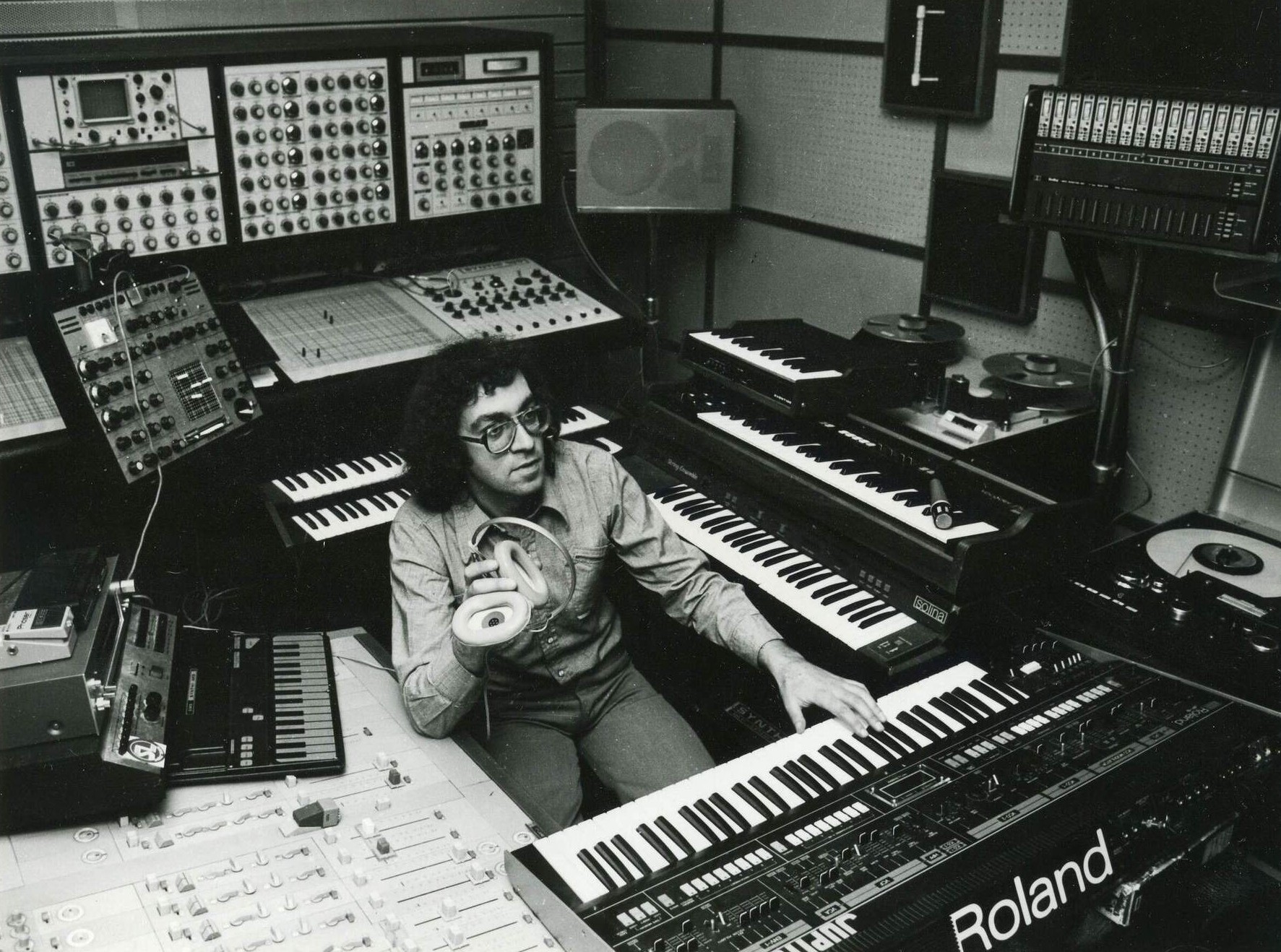
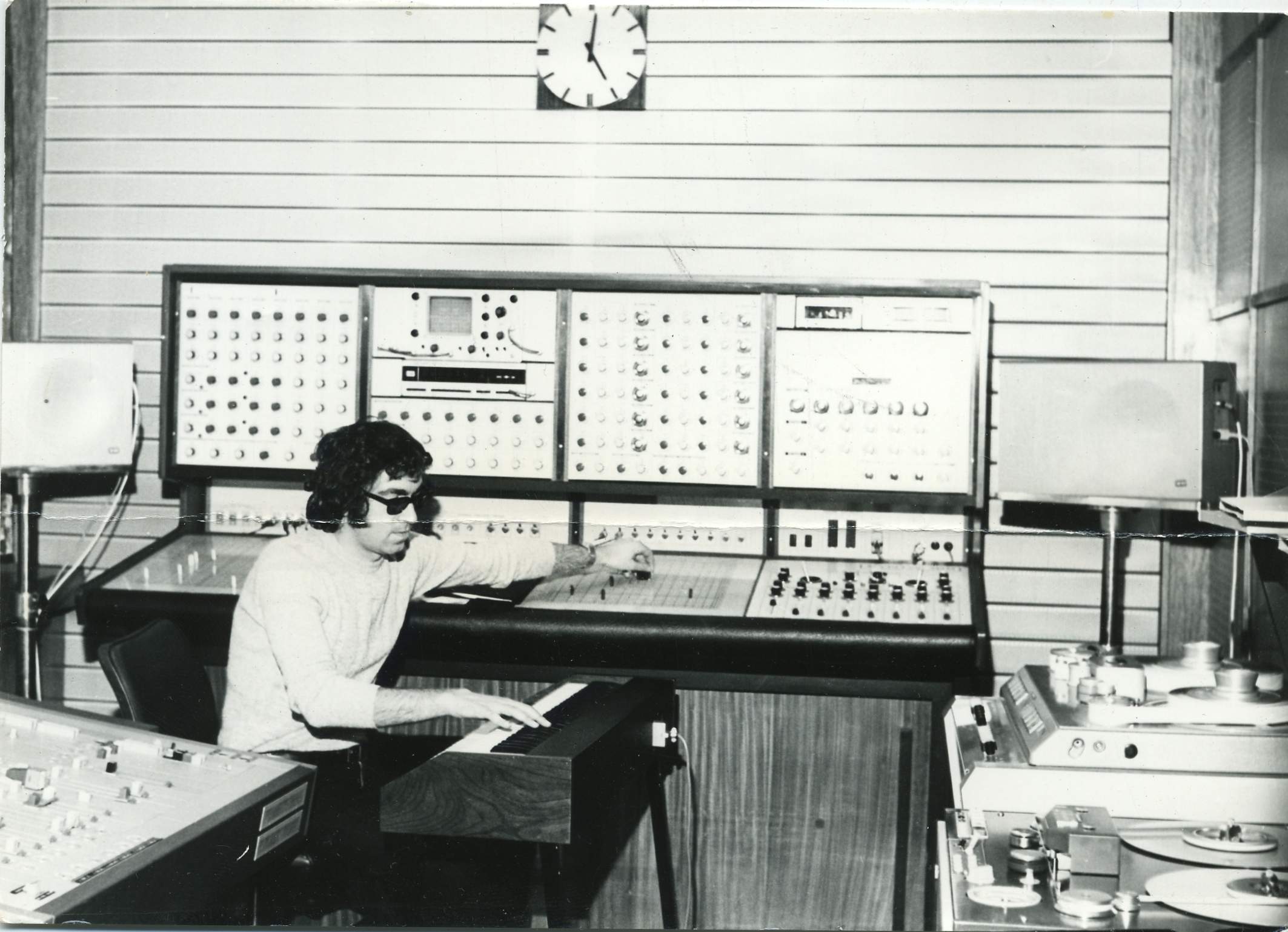
I began working at Bulgarian National Radio as a sound engineer on 13 December 1973. After assessing the situation, I started working on the possibility of establishing an electronic music studio. The studio, equipped with the newly purchased EMS Synthi 100 synthesizer, was set up in 1974 and became operational on 18 September 1974. It was created with the immense support of Bulgarian National Radio’s management.
The chronology is this: on 13 December 1973, I began working at Bulgarian National Radio as a sound engineer. After familiarising myself with the technical and creative environment, I began working, in collaboration with the heads of the Music and Technical departments, on the concept of establishing an electronic music studio.
In 1974, the EMS Synthi 100 was purchased and became the primary instrument in the new studio. On 18 September 1974, the studio became fully operational.
I then began developing the infrastructure for electronic music at Bulgarian National Radio. There was a natural progression from my earlier work with electronic sound, spanning my personal experiments and graduation project, to the creation of a professional electronic music studio.
Before Studio 17 was fully established, you were already working with the EMS Synthi AKS. How were you actually recording with it in those early days, and did the limitations of the equipment ever affect the way you worked?
The EMS Synthi AKS is a synthesizer I worked with in various studios before the creation of Studio 17, the electronic music studio. The synthesizer was connected via cables to a mixing console, and from there tape recorders captured its sound.
This was the method I used for recordings until the Electronic Music Studio was established as a dedicated facility in September. It illustrates the transition from experimental work using the available equipment to the creation of a fully fledged, specialised electronic music studio.
The limitations of the recording equipment, the mixing console and the studio environment were not significant enough to constrain my musical language.
Your early pieces grew out of learning what the synthesizer itself could do. At what point did experimenting with sound become a compositional method of your own? And where do ‘Synthesis’ and ‘The Seasons’ fit into that development?
My early compositions were largely experimental in nature, as I was trying to master the synthesizer and its various functions for sound synthesis, creating diverse tonal nuances and soundscapes. This illustrative approach guided my exploration of sound and my expression of emotion, specifically “sonic emotion”. I conveyed this through the timbres I created, using them to compose music based on tone colour.
It was an interesting period, where experimentation and those initial compositions yielded excellent results. It was here that my own compositional approach clearly began to take shape. I did not use the synthesizer as an electronic substitute for a traditional instrument. Instead, I explored its very nature as a sound source.
What I describe as “timbral composition” is particularly interesting. The synthesizer’s various functions generate distinct timbres, nuances and soundscapes, and I used this sonic material to construct the music. In other words, what started as an experiment with sound gradually evolved into a compositional method.
There is also an important idea in the concept of “sonic emotion”. Emotion is not necessarily conveyed through traditional melody or harmony, but through timbre, its variations, density, movement and interaction with other sounds.
This was a period in which I was simultaneously exploring the capabilities of the synthesizer and developing my own electronic music language. That is precisely why the early compositions have an experimental character, yet the experimentation is not an end in itself. It leads to concrete musical results.
The piece ‘Sinteza’ (‘Synthesis’) is a composition of mine and was the first piece recorded using a synthesizer, although it featured Vezni, with guitar, bass guitar and drums. My first solo composition recorded in the Electronic Music Studio entirely in the electronic music style was ‘Godishni Vremena’ (‘The Seasons’).
Studio 17 was also used by other Bulgarian composers, sometimes arriving with little more than an idea. How much did you become involved creatively in those pieces rather than simply handling the technical side? Were there cases where you eventually became a co-composer?
There were many instances where I helped shape the final work of an author who had arrived with nothing more than an idea. In these cases, my work as a sound engineer, interpreter and programmer went hand in hand with my role as a composer.
My contribution was acknowledged with the support and consent of the original author, and the work was credited to both of us as co-composers. This collaborative expansion of the composition always had the original composer’s backing. In some projects, my role extended well beyond purely technical work.
This is significant because, in my practice, the boundary between technical execution and creative authorship was often very fine. My contribution was not limited to merely realising someone else’s idea. At times, I also participated in its musical development and its transformation into a finished work.
It is striking that electronic music could be dismissed as “dehumanised” while Bulgarian National Radio was investing in a Synthi 100. How did those two attitudes exist side by side? And what do you remember about the atmosphere at your Plovdiv concert on 9 November 1989?
Here we encounter a very interesting situation. While classical musicians and composers were dismissing electronic music as a dehumanising art form, Bulgarian National Radio purchased a synthesizer and began broadcasting electronic sounds, although infrequently at first.
Bulgarian electronic music was in its nascent stage at the time, and this development helped shape its stylistic and genre characteristics. There was a striking contrast between the initial rejection of electronic music by part of the classical music community and the fact that Bulgarian National Radio effectively created the conditions for it to develop in the country.
On 9 November, we did indeed hold a concert at the Plovdiv Fair, and the mood was quite peculiar. Usually, the venues for my concerts were always full, even packed. On this occasion there were not many people, which puzzled me. I was surprised because there had been good publicity, and the mood and atmosphere were right.
Clearly, something was happening that we had not even suspected. Later that evening, after the concert, we began hearing rumours. We sensed that something unusual was going on, but it was only later that we understood the reason.
When you brought ‘Electronic Music 1300’ to Bulgaria Hall in 1980, how was it written and rehearsed, and how much freedom did the performers have? What did the eight-channel sound system add to the experience in the hall?
My work ‘Electronic Music 1300’ was the first piece in Bulgaria of this kind to be performed live in the iconic Bulgaria Hall, which has a seating capacity of around 1,200. It was composed with a written score distributed to the musicians, and some sections of that score can be seen in my book on electronic music in Bulgaria.
The performers had considerable freedom to add sounds and ideas that could bring the work to full fruition. A vast array of sonic nuances had been envisioned, and the enthusiasm during rehearsals was immense. The fact that it was the first work of its kind made it all the more impressive for the audience.
It featured an octophonic sound setup using eight PA systems and a spatial arrangement of sound layers. For the audience, the sonic space, the many timbral nuances, the spatial positioning of the sound sources and the immersive soundscape were something quite unusual for the time.
Not all the reviews from music critics were positive, which is also significant. The piece genuinely provoked discussion. New art is rarely accepted without resistance, particularly when it challenges traditional ideas about what constitutes music, an instrument and a performance. ‘Electronic Music 1300’ took electronic music out of the studio and turned it into a large-scale live work.
Your time in Bratislava, at IRCAM and in Iannis Xenakis’s studio exposed you to very different ways of making electronic music. What stayed with you most from those experiences, and what were you able to bring back to your work in Sofia?
My visits to the Radio Bratislava studios, IRCAM and Iannis Xenakis’s studio gave me a broader perspective on electronic music production during that period.
At IRCAM, I saw the enormous PDP-11 computer for the first time. It took electronic music to another level and marked a significant departure from the analogue studio at Radio Sofia with its EMS Synthi 100. This opened up new horizons for me, insights I was able to draw upon later as computers gradually began to be used for creating this kind of music in Bulgaria as well.
My encounters with Juraj Ďuriš at Radio Bratislava, Jean-Claude Risset and Pierre Boulez at IRCAM, and Iannis Xenakis’s team in Paris were pivotal moments for me. Through them, I gained insight into different philosophies and methods of creating electronic music, and I saw the direction in which electronic music was developing outside Bulgaria.
I shared these very important experiences with my colleagues and like-minded people in Sofia. So the international experience did not remain merely a personal impression. It gradually began to influence the development of Bulgarian electronic music, particularly when computers later started to come into use in Bulgaria.
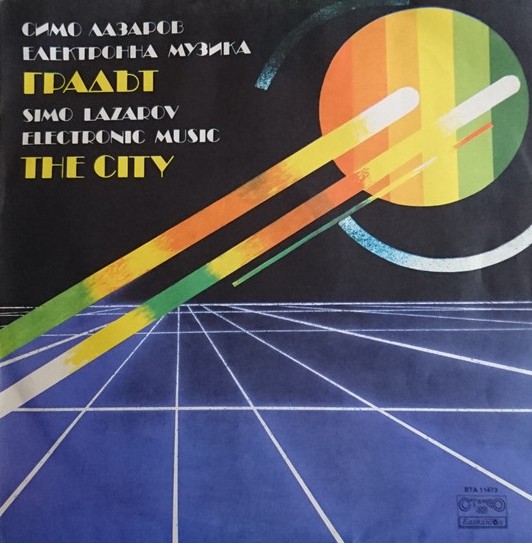
‘The Day’, ‘The City’ and ‘Nature’ gradually became a trilogy. Did you have that larger idea from the beginning, or did it grow as you went along? And how did you turn things like the passing of a day or the pressure of city life into sound without making it too literal?
I had an idea to create something based on the cycle of the day, and once ‘The Day’ was finished, I thought about expanding the concept to include the presence of the city. Everything related to the day, the city and nature has always fascinated me, and I decided to reflect that through music.
An illustrative quality is inevitably present in sound design. However, I wanted to avoid a literal rendering of it. Instead, I managed to evoke the right atmosphere through a melodic line corresponding to the changing moods through the phases of the day.
At the same time, the city’s intense, dynamic state had to be framed within the experience of the boy, a character who suddenly finds himself immersed in this environment, causing that external dynamism to become his own internal emotion.
The concept begins with the cycle of the day, but gradually expands. The city and nature are not merely a backdrop, they become living elements. The individual stands between them, while the soundscape traces the changes in his internal state.
It was particularly important to avoid obvious illustrative effects, such as making the morning sound “morning-like” or the evening “evening-like” through direct melodic or atmospheric analogies. Instead, I let dynamics, density, rhythm, pauses and the transformation of urban sounds convey the sense of time and emotion.
In this way, tense urban noise can gradually shift from an external environment into an internal experience for the character. At first it is fragmented and overwhelming. Later, as the protagonist immerses himself in his work, that same dynamic begins to organise itself differently. The noise does not necessarily disappear, rather, the attitude towards it changes. This allows the final sense of liberation to emerge not through “beautiful” music, but through a change in how the sound world is perceived.
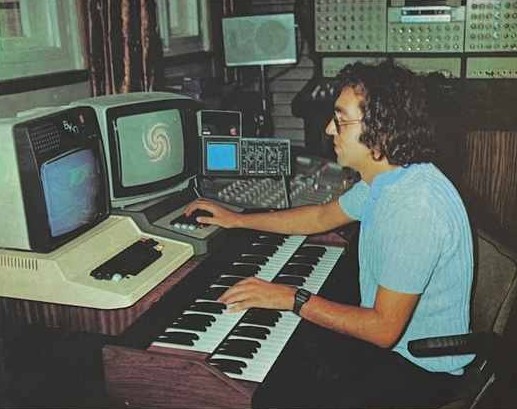
‘The City’ became a major success and helped electronic music reach a much wider Bulgarian audience. You have also said that including arrangements of established Bulgarian composers helped the record through the approval system. Did that feel like a compromise at the time? And what did the record’s success tell you about the audience for electronic music in Bulgaria?
Yes, indeed, the LP ‘The City’ was a major success for that time and for this type of new music, which had to find its way and gain a foothold in Bulgaria. It was a great achievement for me, for Bulgarian synth-pop and for Bulgarian sound production.
As for the arrangements of songs by well-known Bulgarian composers, I consider that a compromise, a gesture of deference towards the very people upon whom the release of the record depended.
On the other hand, this was the accepted approach in Bulgaria, although tacitly, to ensure that the project could pass through all the juries and actually be realised. An album had to include songs by composers who held leadership positions, figures heading institutions involved in concert organisation, record production and the promotion of Bulgarian pop music.
The album enjoyed immense popularity with the audience, a success I consider truly significant. That success continues to this day, particularly with the pieces connected with ‘The City’. They have received many views and likes on YouTube, Spotify and other platforms. ‘The City’ also remains part of my live performances.
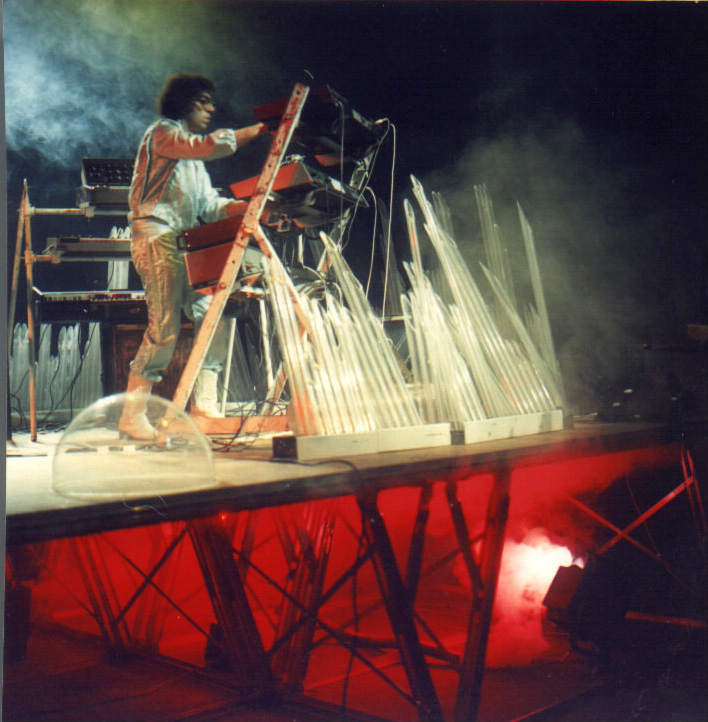
‘Nature’ was already finished before you managed to get it released, and you faced a long struggle with various institutions. Why was it so difficult to bring the record out? And was ‘Nature’ mainly an ecological warning for you?
The LP ‘Nature’ was conceived as an environmental warning, an attempt to make people realise, while living amid nature and the increasing urbanisation of the natural world, that we must care for nature and do everything possible to preserve it in its best state.
Negotiations regarding its release were held with the Ministry of the Environment, but there were many obstacles. These hurdles stemmed from the Union of Composers, as I was not a member at the time. Internal regulations dictated that the release of LPs had to comply with specific conditions and with the policies of the Union’s leadership.
Ultimately, after two years of overcoming obstacles of every kind, my producer and I succeeded in asserting our view that this LP was necessary, that it could have an impact on people and contribute to environmental conservation.
It was a very difficult struggle, involving institutions that created all kinds of obstacles, but in the end we overcame everything and the record was released in a very large pressing.
Following the album’s premiere, I gave a concert in the largest hall of the National Palace of Culture. The performance lived up to the audience’s expectations regarding the meaning of the album. The hall was packed with around 4,000 people who came to enjoy the music and share the message behind it.
‘The Things of Life’ grew out of your work on two films by Nikola Korabov. What drew you to those films musically, and did working for cinema bring out a more lyrical side of your writing?
The LP ‘Things of Life’ features music from two films by the great Bulgarian director Nikola Korabov. While this did not mark the beginning of my career in film scoring, working in cinema, and on these films in particular, gave me a fresh perspective on the art form.
The films depict reality across different periods of Bulgaria’s development, offering a picture of life both in the past and in more recent history.
They are not linked to my personal experiences. Rather, the music reflects the films’ dramaturgy and the emotions it carries: joy, disappointment, inspiration, anguish and sorrow. When all this is expressed through music, specifically electronic sounds and electronic sound production, it creates a more imaginative impression of the dramatic world of these lyrical films.
The director really liked the way I approached the music for both films, and that gave me the idea of releasing the scores on LP. The music has a lyrical and emotional character. It is melodic and harmonic, conveying the feelings and emotional experiences of the different characters.
Alongside your concert work, you wrote a great deal of music for radio, theatre, television and film. The ‘Early Morning Rooster’ signal is only about 25 seconds long, yet generations of listeners know it. What did writing something so short teach you about making music memorable?
It is crucial for a composer to be able to channel their energy into different genres and forms. I did this without consciously seeking a particular sequence or pursuing it as an end in itself. The ideas provided by directors, whether for theatre, cinema or other forms of applied art, were vivid enough to inspire me to create music that worked in close connection with the dramaturgy, whether textual, theatrical or cinematic.
The ‘Ranobudno Petlentse’ (‘Little Early-Rising Rooster’) jingle is an example of how an extremely short musical piece can have a profound impact. It is a 25-second signal created in November 1975, composed specifically to be easily understood by young children.
Its creation was guided by the need for a tune that children could immediately recognise early in the morning, one that would encourage them to wake up, put them in a cheerful mood for the day ahead and get them ready for school.
For 51 years now, this signal has been broadcast on Bulgarian National Radio without any changes to its melody, harmony or arrangement, which is very important.
This very short form proved that a striking melodic and harmonic line could capture the attention of a great many listeners. Thousands of people recognise it, and it can still be heard today on Bulgarian National Radio. To me, that is serious grounds for considering it a candidate for the Guinness Book of World Records, after being on air every week from Monday to Friday for so many years.
It proved to me that a brief and seemingly simple form can sometimes be extraordinarily powerful.
Space, astronomy and technology return again and again in your work. What was it about the cosmos that caught your imagination so strongly? And when you brought electronic sound together with a symphony orchestra in ‘Cyborg Invasion’, how did you hear those two sound worlds working together?
Space, and all the experiments I witnessed during my school years, instilled in me an enduring interest in that unknown realm. This later influenced my creative work.
I began composing “space music” because, just as the cosmos is an unexplored and unknown frontier, electronic music in its early stages was also uncharted territory. In a way, it offered an appropriate sonic representation of the cosmic world.
This subject continues to fascinate me to this day, as science and technology continue to develop, enabling us to venture ever deeper into space and towards the distant planets of our solar system.
As for whether the two sonic worlds of electronic music and the symphony orchestra can coexist, the answer is of course yes. Philosophically speaking, it is an intertwining of the two worlds in the interest of a positive future and the virtues to which humanity should aspire.
They do not struggle against one another. On the contrary, they complement each other. A symphony orchestra combined with electronic sound creates an amalgam of rich tones and nuances, new sonic worlds that I believe will continue to coexist. The texts in some of the space-themed works are also conceptually powerful and carry a clearly expressed philosophical idea.
Your open-air spectacles became enormous productions, with hundreds of performers and audiences in the tens of thousands. What held something like ‘Christmas in the Sky’ or ‘Sea and Music’ together musically? And how important was the actual location to the way you conceived these events?
Open-air megaspectacles have their own distinct nature and operate within a so-called “site-specific” context. This means that the setting where the performance takes place must be intrinsically linked to the dramaturgy, atmosphere and underlying concept of the production.
This is what fundamentally distinguishes my megaspectacles. In every instance, the dramaturgy takes the lead. A large-scale musical composition requires musical dramaturgy that keeps the audience engaged and eager to see how it develops.
‘Christmas in the Sky’, performed before an audience of around 10,000, and the even larger ‘Sea and Music’ spectacle near Burgas are serious examples. The latter featured around 500 participants, six stages, a symphony orchestra, two choirs, a folk ensemble, two ships, yachts and a helicopter, along with lasers and numerous other elements.
Christmas is a wonderful holiday and a good setting for an event in which the interaction between audience and performers can be fully realised. ‘Christmas in the Sky’ involved around 250 artists from different fields, beginning with Synthi Audio Visual Band and continuing through a children’s choir, a brass section, Kukeri, the specific Bulgarian ritual of masked figures who drive away evil, motorcyclists representing the dynamic movement of the contemporary world, pyrotechnics cascading from the National Palace like a waterfall of light, and laser technology.
All of this contributed to the full experience. I am always guided by the musical dramaturgy, the musical idea, which I try to preserve until the very end so that it can have a complete impact on an audience numbering in the thousands. All of this exists in the context of a synthesis of the arts.
The sub-zero temperatures on that occasion did not significantly affect either the musicians or the audience, because both were carried along by the scale of the spectacle and by the desire to share the experience.
‘Sea and Music’, near Burgas, drew an audience of around 100,000 and was an unforgettable experience for both the audience and the performers. But the central idea remains the same: the site-specific environment, the leading role of musical dramaturgy and the combination of a very large number of participants and theatrical elements into a single experience.
“Music is a very powerful weapon”
‘A Requiem for the Fate of the Jews’ brought your family history directly into your music. How did you approach something so personal and painful, and what did you feel music could express about that history?
Any event can be expressed through sound, provided the composer’s association is strong and their creative imagination can grasp the event itself.
This was the case with ‘A Requiem for the Fate of the Jews’, a piece reflecting a chapter in the history of the Jewish people, a history that must never be repeated. I was deeply affected by this from a young age, hearing my parents speak of those events and those years when human lives were being ruthlessly destroyed. All Jews lived in the constant dread of being taken away to concentration camps. That is what I sought to express through music.
The 1993 premiere in the Grand Hall of the National Palace of Culture was met with great interest, which gave me the impetus to continue creating new parts. Finally, in 2010, the fourth part of ‘The Divine Beginning’ tetralogy was presented, once again at the National Palace of Culture. Since then, the CD has been distributed internationally, including at Yad Vashem in Israel and museums concerned with the Holocaust and those events.
I wanted to express my feelings about these events through music. That is how I can portray an event and reach people, who need to know about this and must stand against the desire to destroy humanity.
Music is a very powerful weapon, and I believe that with this music, with this album, I have done what was necessary to send a signal to people that such events must never happen again.
The strongest thread in the concept of ‘The Divine Beginning’ is this concluding thought: music as a means of preserving memory and as a warning that such tragedies must not be repeated.
You began exploring computer composition seriously in the 1980s. What did computers genuinely add to the compositional process for you, and where did you feel the human musician still had to remain in control?
I began analysing computer technology in 1986 because computer-based composition offered new possibilities for the development of the compositional process. Mathematical methods represent only a small part of the model for creating computer compositions. There was an experimental aspect to the way one could compose and to the results that computer-based compositional methods might produce.
This was also the subject of my PhD dissertation, which marked the first time computer music was discussed in Bulgaria.
Human emotion is invariably crucial to the process of composition. A computer cannot create what a human being creates because it has no soul. Although artificial intelligence can now imitate this process to a considerable extent, the human relationship to the work is missing.
During the years in which I conducted experiments in computer-aided composition, I used the computer for routine tasks rather than for creating original compositions.
You make a clear distinction between electronic music as an artistic form and electronic sound production as a technology. Do you still see that distinction as strongly today? And now that AI can enter the compositional process itself, where do you think the line should be drawn?
“Electronic music” is a style, a genre, defined by Karlheinz Stockhausen in 1951. Electronic sound generation, meanwhile, is a technological process in which generators, filters and other devices create electronic sound.
That distinction still exists and is becoming increasingly pronounced, because the electronic music of the 1960s, both as a style and a genre, is now heard less often outside specialised competitions and festivals.
Electronic sound generation, on the other hand, has become widespread, particularly in DJ production. Technology has contributed significantly to the development of DJ production in a positive sense, enabling a DJ to create electronic sound in real time. This can sometimes result in an original sound, even though rhythm tends to predominate in DJing.
When discussing these more complex issues with my students, we reach the conclusion that electronic sound generation will remain a fundamental element in creating DJ music.
With AI, the situation rests on a different technological foundation because AI enters directly into the compositional process. There should be limits, because creativity is the prerogative of the human being.
AI should help human beings create work that contains emotion and inspiration. I draw a clear distinction between electronic music as an artistic style or genre and electronic sound generation as a technological tool. Electronic sound generation has a broader and more lasting application, particularly in DJ production, while electronic music as an independent genre has become increasingly concentrated within specialised festivals and competitions.
The connection with AI is especially interesting because it is no longer merely a question of creating or processing sound. It enters directly into composition. We therefore need to draw a clear line: technology can support the creative act, but it should not displace the human being as its source.
AI can serve as a tool for creativity, but it must not become its bearer. Emotion, inspiration and artistic impact remain the human domain.
When you established the computer music programme at New Bulgarian University, what was the main thing you wanted students to understand before they started relying on technology? Has working with younger musicians also changed any of your own ideas about composition?
What I want students to understand during our training is that technology is merely an aid to composition. There is excellent software available to assist with the process, yet the principles of composition remain constant.
While it is true that innovative new methods of composing are emerging, creating a composition requires a musical foundation that every student must possess, specifically a theoretical foundation in which musical principles take priority within the creative process.
Working with students allows one to encounter new ideas and new approaches to creating works, approaches in which an idea can be realised through different compositional possibilities.
My own concepts of composition are deeply rooted in my theoretical framework, but they remain open to modification when something genuinely new can enrich the compositional process. It is a complex process involving many human qualities. When these qualities come together in the act of creation, they provide a path for the artist’s development.
The festivals you initiated brought together people working in electronic and computer music at a time when many of them were working more or less on their own. Did those gatherings help create a real community around electronic music in Bulgaria? And do you think Bulgarian electronic music developed a character of its own?
The festivals I initiated began with a gathering of artists working in electronic and computer music in the town of Gotse Delchev in 1989, and later developed through ‘Computer Space’, ‘Computer Music Space’ and ‘Electroacoustic Autumn’.
Their purpose was to bring the creators together. This succeeded and had a considerable effect, because each participant could present their own work and innovative ideas. It created a strong exchange whose impact has continued to the present day, although now on a different level.
Bulgarian electronic music has developed in its own way and perhaps differs from European and American electronic music in the way its musical thematic material is presented.
I would not say that there is a special school or direction in the strict sense, but one characteristic that can distinguish it is the use of folk motifs incorporated into an electronic musical structure. The intonational patterns of Bulgarian folk song are rich melodically and harmonically, and this can distinguish Bulgarian electronic music from music elsewhere.

During the 2020 lockdown, you began seriously organising and digitising your archive, and that work eventually fed into your books. How many volumes are planned in the series, what does the archive contain today, and what are you working on now?
Yes, indeed. There is a strong documentary and biographical dimension here. What is particularly valuable is that the seven-volume series does not merely present my own work, but can serve as a kind of chronicle of the development of electronic music in Bulgaria. The complete series will consist of seven books covering a long period in the development of Bulgarian electronic music and my active participation in it.
The fifth volume is primarily documentary in character. It gathers publications, press cuttings and other materials that reconstruct the public and professional context of this development. It includes material from newspapers and magazines, as well as publications by colleagues who worked in this field and wrote about electronics and electronic sound recording.
In total, the series will indeed comprise seven volumes.
At present, all the archival recordings and documents, whether printed, audio or video, are kept in my personal archive, and anyone interested can have access to it. These include fellow musicians, theorists, music critics, journalists and engineers. The archive is open to everyone.
I believe it contains around a thousand archival items, perhaps more, connected with the creation and development of electronic music in Bulgaria.
As for my current and future plans, I am working very actively on new sound compositions in which established compositional processes are combined with new technological possibilities in order to produce new results. I have not stopped working for a single day, because this is my vocation. It is my life.
My body of work contains around 400 audio recordings and approximately 500 video recordings, all properly catalogued in my discography. Some of them can be seen and heard on YouTube, Spotify and other platforms.
Technology changes, and compositional tools change, but the creative impulse continues. Electronic music is not a closed historical period. It is a process that continues to develop through new technologies without losing its connection with contemporary life.
I will finish with a thought I often express:
“Electronic music is a way of perceiving the world, born of the dynamic age in which we live.”
Klemen Breznikar
Headline credit: Simo Lazarov at the BNR Electronic Music Studio, 1983. Courtesy of Simo Lazarov.