
Lewis Shiner Interview: The Author of ‘Glimpses’ on Music, Fiction and a Life in Writing
From Austin punk clubs and the first stirrings of cyberpunk to ‘Glimpses’, Brian Wilson and the lost music of the 1960s, Lewis Shiner looks back on more than fifty years spent writing about art, failure and the things people ask music to save, and talks about returning to fiction after years of doubt.
Lewis Shiner has spent much of his career being filed under names that never quite held him. Science fiction. Cyberpunk. Rock and roll novelist. Each catches something, but none catches enough. ‘Frontera’ placed him close to the beginnings of cyberpunk, and his association with the writers around ‘Mirrorshades’ fixed that image for many readers, but the books kept moving.
Music is the steadier thread. Before the novels, Shiner was a drummer in Dallas and Austin, playing in bands, hauling equipment and watching talent collide with bad luck, bad timing and the peculiar ways musicians can undo themselves. That experience gave his fiction an unusually physical understanding of music, not only of what records mean to the people who love them, but of what it takes to make them.
‘Glimpses’, published in 1993 and winner of the World Fantasy Award for Best Novel the following year, is where those worlds meet most completely. Its premise is irresistible: stereo repairman Ray Shackleford begins to hear recordings that history never quite gave us, including Brian Wilson’s ‘SMiLE’ and lost music by The Beatles, The Doors and Jimi Hendrix. Yet the records are only part of the story. Beneath them is a novel about grief, fathers, marriage and the seductive idea that, if we could only get back to the right moment, something broken might still be repaired.
Music can save you, but not always. Idealism matters, even after disappointment. Success and failure are rarely as simple as they look from the outside. And the past, however beautifully preserved in a song or a book, does not stay still simply because we want it to.
Our conversation moves from childhood and his years behind a drum kit through ‘Frontera’, cyberpunk, ‘Glimpses’, Brian Wilson, the music business, publishing and the realities of sustaining a writing life across more than five decades. Shiner is funny, candid and notably free of self-mythology, particularly when talking about ambition, commercial failure and the distance between the work a person makes and the life the world gives back in return.
There is also something new. After years of wondering whether fiction was still part of his life, Shiner is writing again.
He has never been especially comfortable with easy categories, and perhaps that is why the books have lasted so well outside them. What follows is a conversation about music and fiction, but also about something harder to name: what remains worth making, believing in and caring about after experience has removed most of the easy answers.
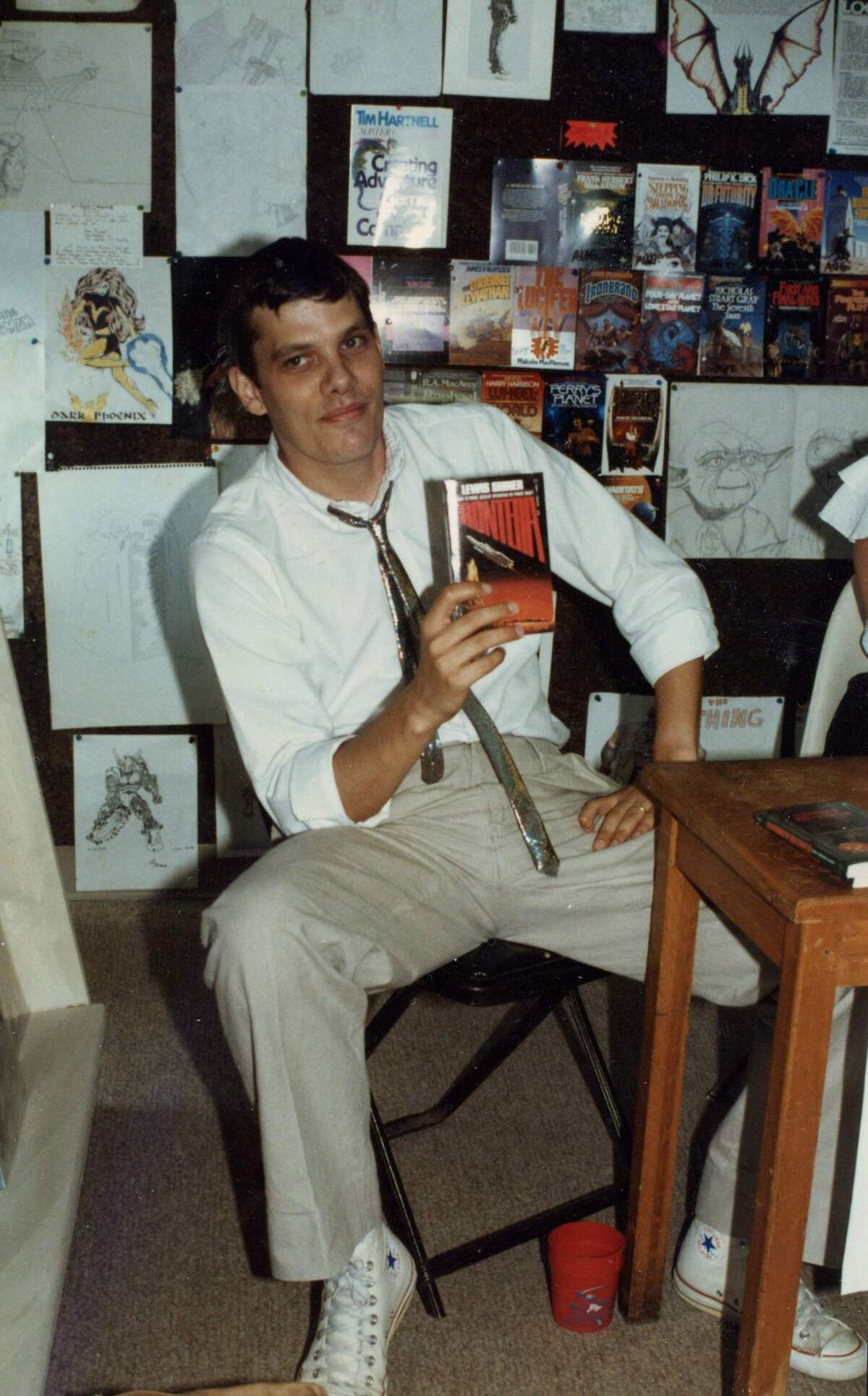
“I always start with a wounded character, that being myself.”
You moved around a great deal as a child, and you were reading and writing very young. Looking back, do you think books became a kind of home when home itself kept changing?
Lewis Shiner: My father was a reader, and as far back as I can remember he would go to bed with a book and read himself to sleep every night. Acceptable reasons for bothering him during this period included nuclear war and… well, I’m sure there were others. Even so, he didn’t seem to have much feeling for books as objects. He would buy a stack at the used book store, and then trade them in, two for one, until they were gone.
We went through a ritual purging of possessions every time we moved. My mother and I would go through my meager belongings and she would say things like, “Surely you’re too old to play with this,” or, “This shirt doesn’t fit you anymore.” But I still have what I believe to be my original (ex-library) copy of ‘The House at Pooh Corner’.
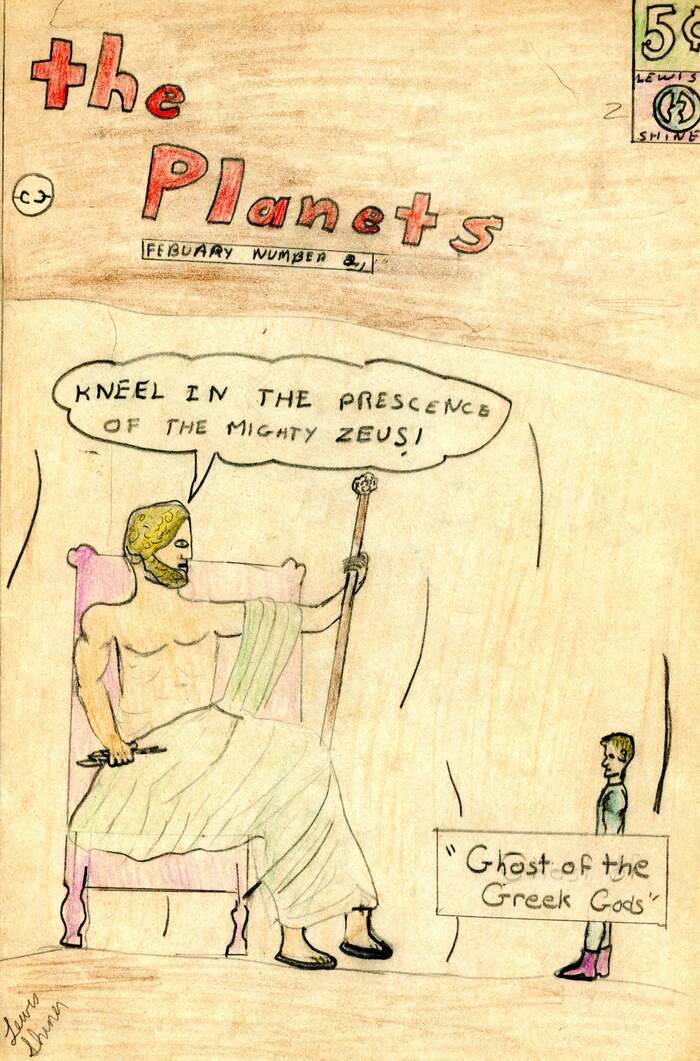
Which is to say, books were always an escape for me, a way to get away from another new town, another pack of strange kids, another new school. I was four and practicing writing by copying Little Golden Books when I started making changes to the stories. I suppose I was just bored.
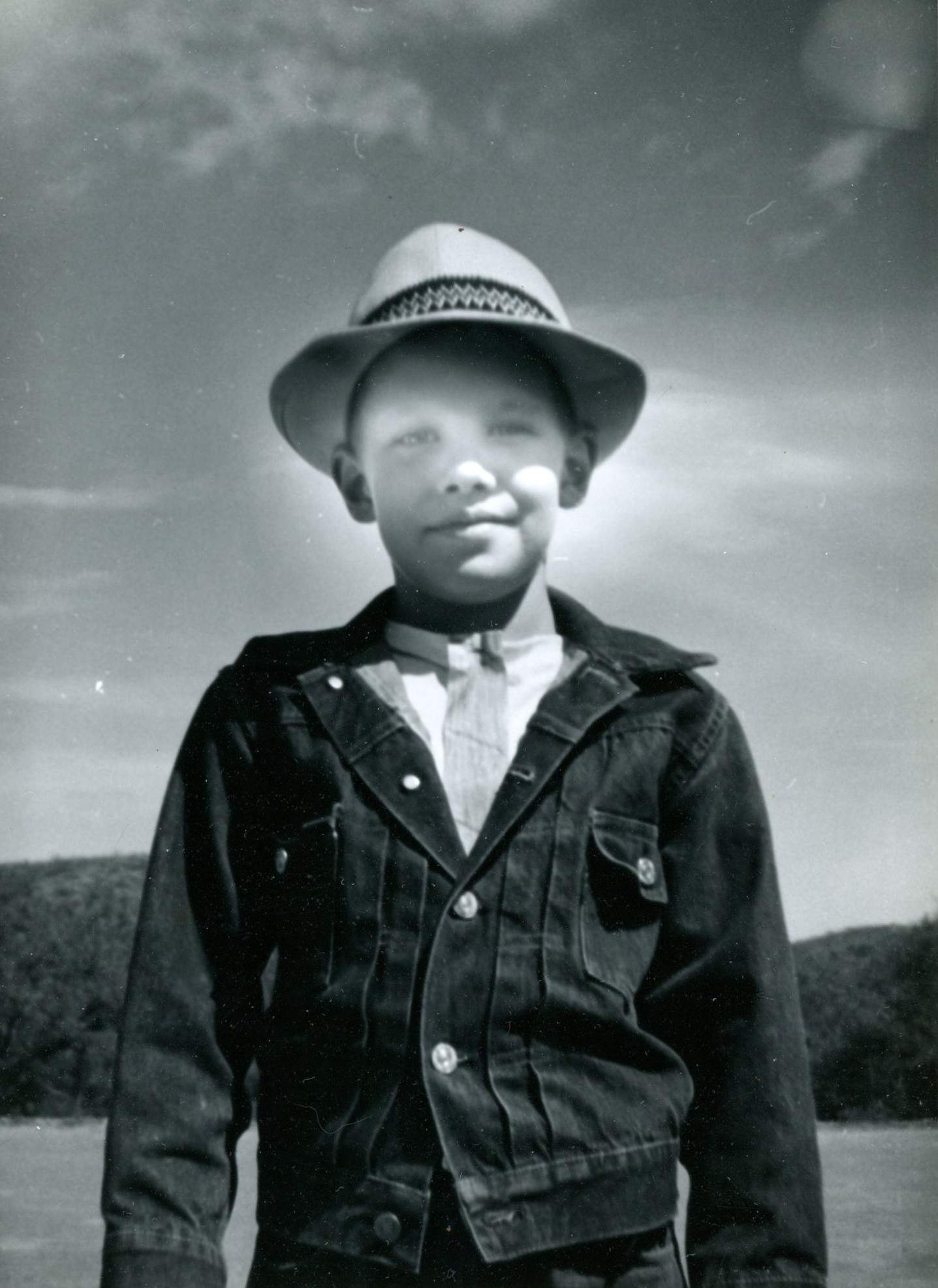
Music was there very early too. You played drums in rock bands for years, while music and writing kept taking turns as possible lives. What did being a musician give you as a writer? Did drumming affect the way you hear prose?
I have vivid memories of my parents’ big monophonic hi-fi cabinet. My favorite songs were ‘Cherry Pink and Apple Blossom White’, a cha-cha-cha by Perez Prado, and ‘Hot Canary’ by Maynard Ferguson. I would have been about 5 years old, not long after I started customizing my Little Golden Books. To this day I love Latin dance music, and my partner and I dance salsa, cumbia, bachata, and cha-cha-cha, even though I didn’t start social dancing until 2002.
John Barth, author of ‘Giles Goat-Boy’ and other experimental fiction from the 1960s on, played jazz drums in his younger days. He swears that playing drums was the kind of influence that you’re talking about. I don’t know if that’s exactly how I would describe it. For me it’s more like being a teenager in love, where you have this desperate need to control your love object. Always a bad idea in real life, but as far as music goes, you get control by learning to play it. In the case of Latin music, learning to count clave and play various cáscara rhythms, understanding the structure of the song, especially the call and response coro or montuno section at the end. For me that’s a whole different deal than getting the rhythm right in prose. In prose there’s a lot of contrast, short sentences vs. long, staccato vs. legato. Karen Joy Fowler is a master at this, and she is not particularly driven by music.
Some writers play music while they work. I absolutely cannot. I can have construction or other random noise in the background, but music tends to take the wheel and drives me into an overpass.
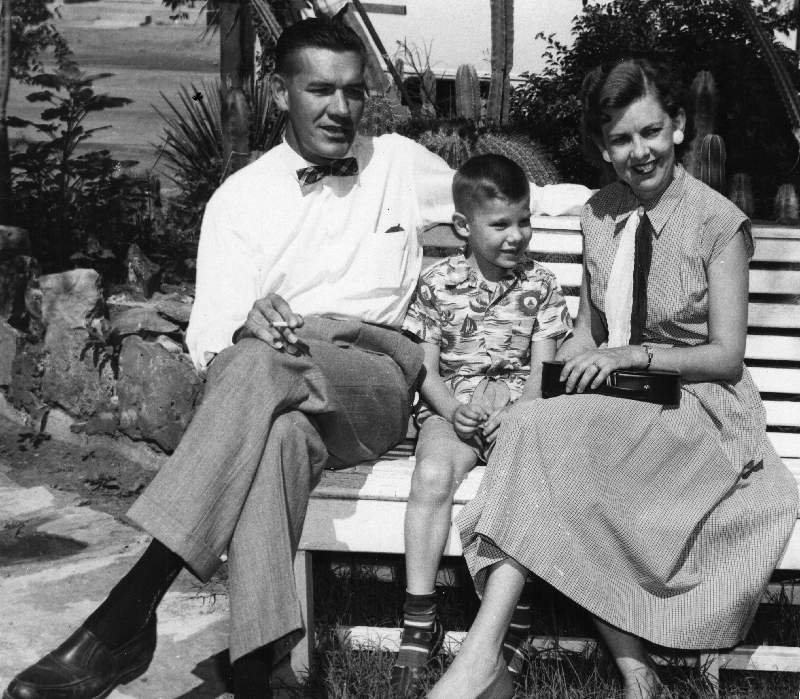
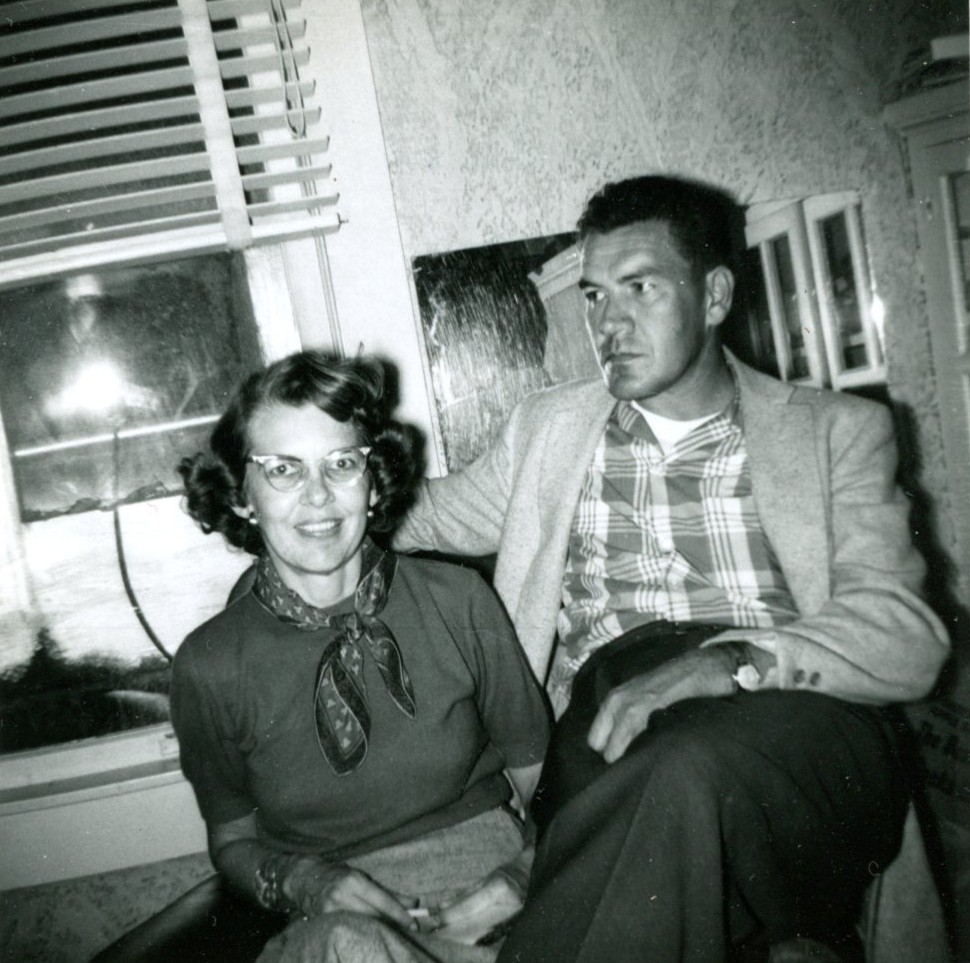
For music freaks like me, I have to ask more about the bands. What were they like? Did you ever record anything, and what sort of gigs were you playing?
It’s harder than people realize to break into the music business. Let’s say you’re a drummer in your late teens in an urban center like Dallas and your goal is to make hit records. Unless you’re a particularly gifted singer (few drummers are), you will need somebody else to be the main attraction in the band. This means a really good and really distinctive singer. Or two. Or three. And if you’re going to get out of Dallas and make records, you’re going to need original material. OK, let’s say you manage to get all those elements in place. Maybe you’ve got your own PA and somebody’s got a van. You’ve got a garage that you’ve painstakingly lined in egg cartons to keep the neighbors from calling the cops every time you practice. There’s one more thing that you have to have. You have to want it. Time and time again I’ve been in bands that were right on the edge of making it, but the singer couldn’t leave his day job to go on the road. Or they were in school. Or it was football season. In one case, I had a band in Austin and our bass player was living in Houston, and he was driving his ice-cream truck back to Austin and disappeared somewhere on Highway 290. No phone calls, no nothing. I think one of the other guys ran into him years later and he said something like, “Yeah, I just wasn’t into it.”
It’s hard to overestimate the average musician’s will to fail. And if you’re just the drummer, all you can do is sit there and watch them let it all slip through their fingers.
So no, I was never on any professional recordings. (Well, one guy hired me and my longtime bass player and dear friend Art and a couple other guys to play on a demo, I was able to use the experience of being in a pro studio years later in a story called ‘Sticks’.) None of the musicians I played with ever made the big time. (Well, I did jam one afternoon with a classmate and friend from high school named Dave Dennard. Dave hooked up with a Dallas guitarist named Gary Myrick (whom I did not know at the time) and moved to LA where they made some terrific records and got at least a taste of fame.)
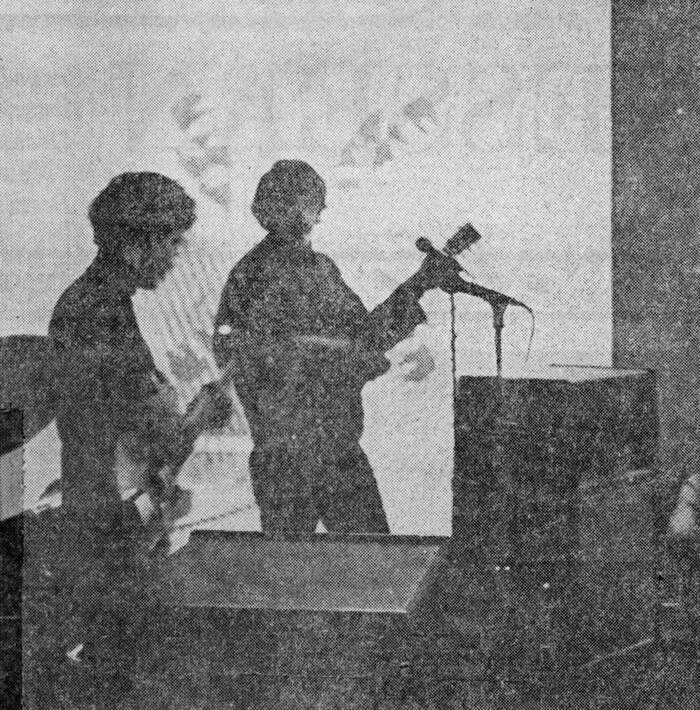
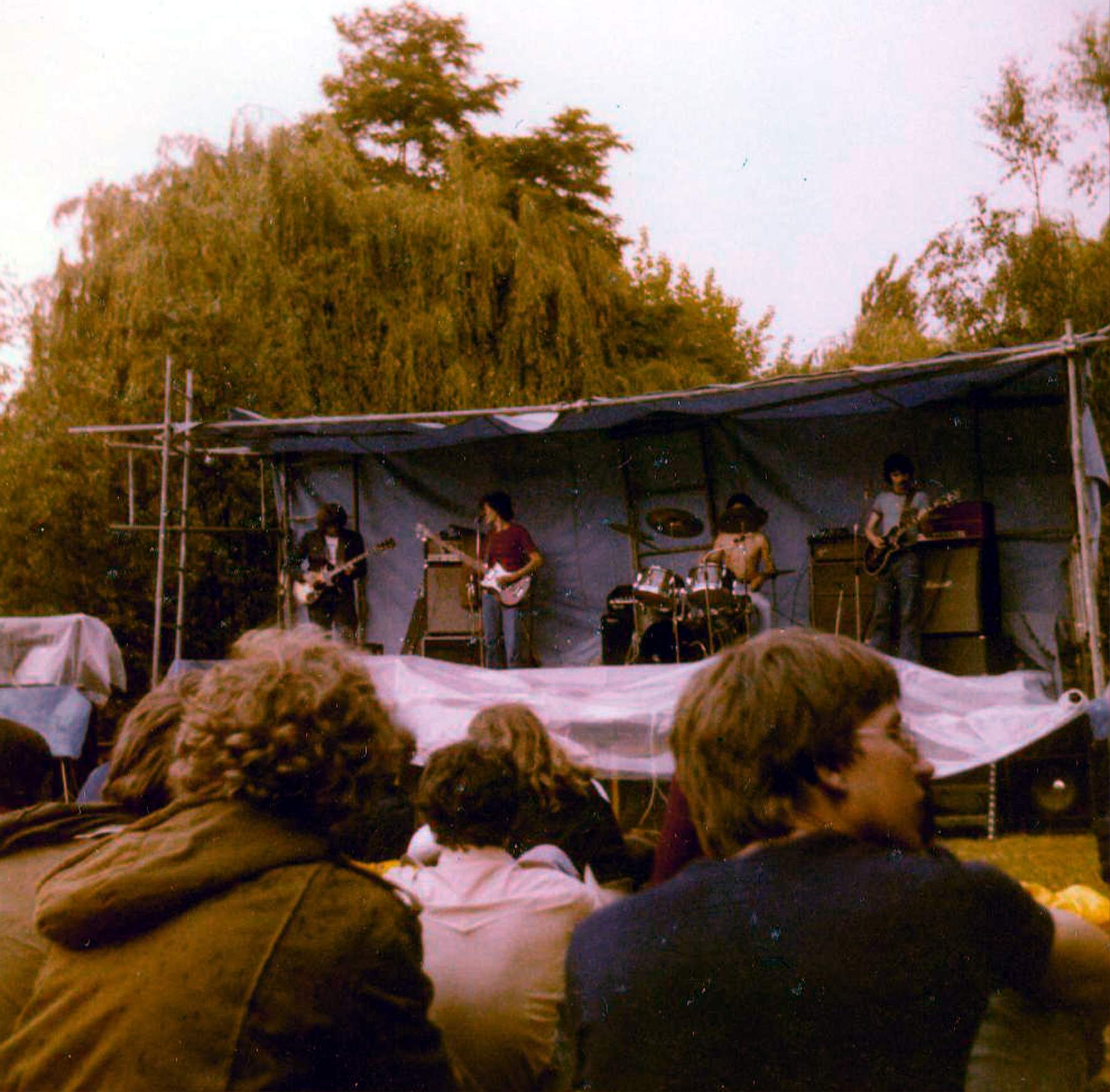
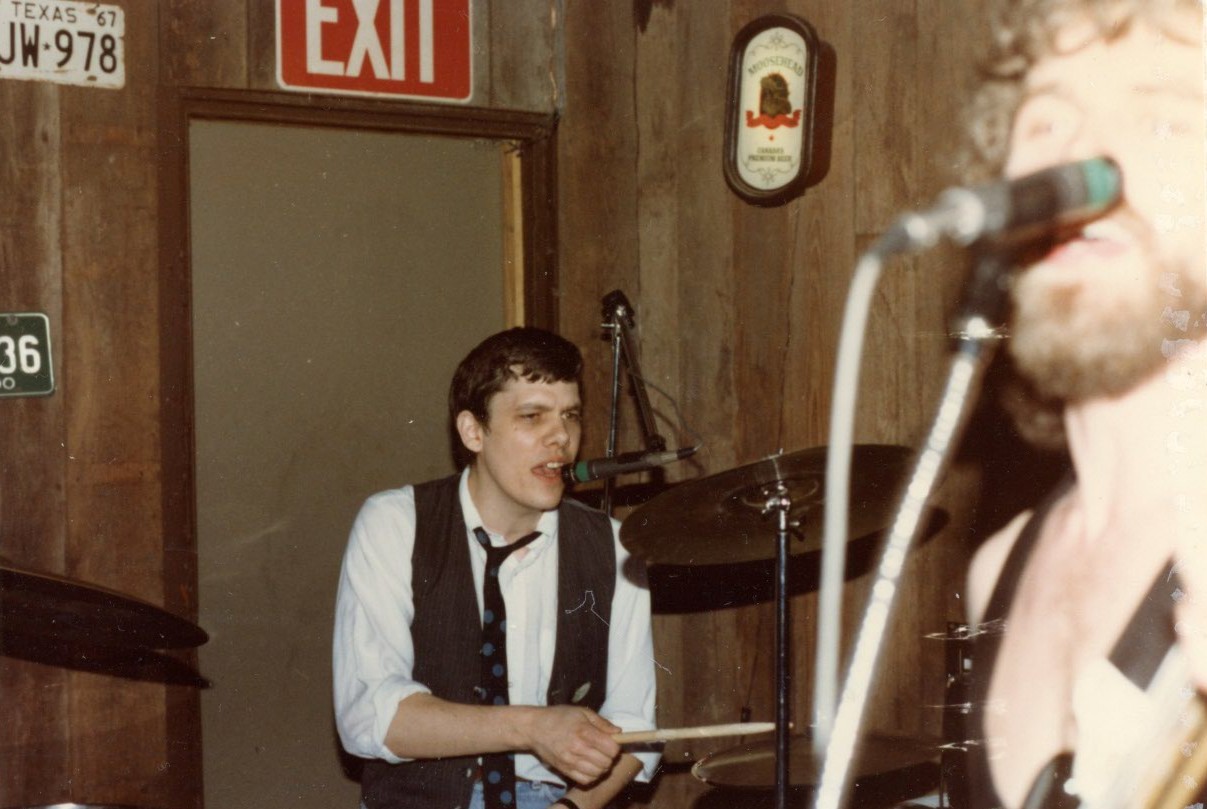
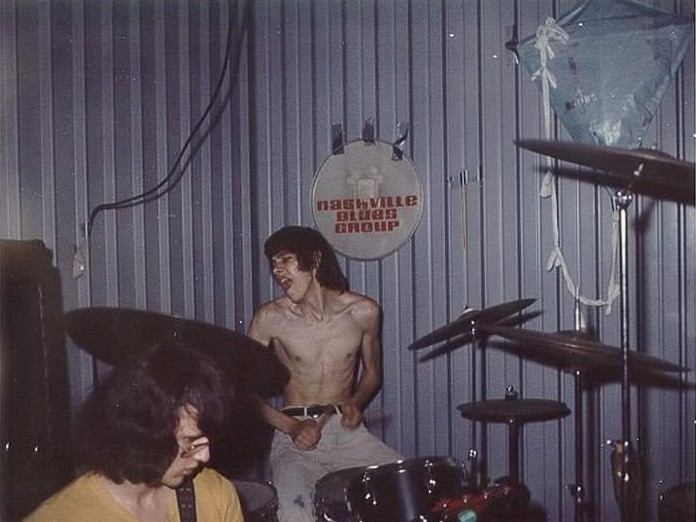
In 1979 I was in Austin, playing in a punk/new wave band called Reptilikus (sometimes with a “c” rather than a “k”–that’s how punk we were, we didn’t spell our name the same way from one week to the next). Everything was about novelty. The epicenter of Austin punk was Raul’s, across the street from the UT campus. There was a fierce competition among the headliners to find new bands to open for them. So we got to open for Joe “King” Carrasco at Raul’s one night, and the joint was mobbed, and everybody loved us. But we weren’t new after that, so we ended up at Duke’s Royal Coach Inn downtown, once the home of Vulcan Gas Company, the famous psychedelic club that featured Shiva’s Headband, The 13th Floor Elevators, and Conqueroo. And when Duke’s got old (very quickly), I joined a fellow Duke’s veteran to form the Dinosaurs (not to be confused with John Cipollina’s band), a great 60s cover band. We were so authentic that one club manager refused to hire us because he thought our audition tape was copied from the original records.
That brings us to the early 80s, when I had to face the fact that staying up to three a.m. in a reeking bar where bikers went to get in fights and the pay was in damp one-dollar bills was just not what it used to be. What, and leave show business? Yes, I did. Until 2003 when I made one more try and found that I just wasn’t that good anymore and that I wasn’t enjoying it at all.
Your early reputation became tied to science fiction and cyberpunk, especially ‘Frontera’ and the ‘Mirrorshades’ period. When you look back at ‘Frontera’ now, does it feel like a cyberpunk novel to you, or simply an early Shiner novel that happened to arrive in that moment?
A guy named Ed Bryant once suggested that we drop the idea of cyberpunk and talk about NOGS: Novels Of Gibsonian Sensibility. ‘Frontera’ certainly was that. However, I had been working with bits and pieces of the basic concept since 1970. I had even tried to sell a short-story version that was in thrall to the British New Wave, J. G. Ballard especially, before I’d ever heard of Gibson. To me the truly Shinerian elements in ‘Frontera’ are the bits lifted from Joseph Campbell and Ouspensky and even the aforementioned John Barth, whose ‘Chimera’ collection was quite self-consciously tied up with the Pattern of the Hero. I was taken with the notion that the Pattern itself was constantly growing and evolving, that it was a sort of tension in the universe that had to keep repeating itself until it got it right. Kane’s contribution was to take the Holy Grail away from the forces of materialism and to hand it off to the more spiritually inclined explorers. Maybe the next time the myth is acted out, the hero won’t have to resort to murder to get the job done. This idea of an evolving Pattern makes ‘Frontera’ a lot more optimistic than your average 1980s NOGS. And yes, these are ideas I’ve continued to pursue in my later work.
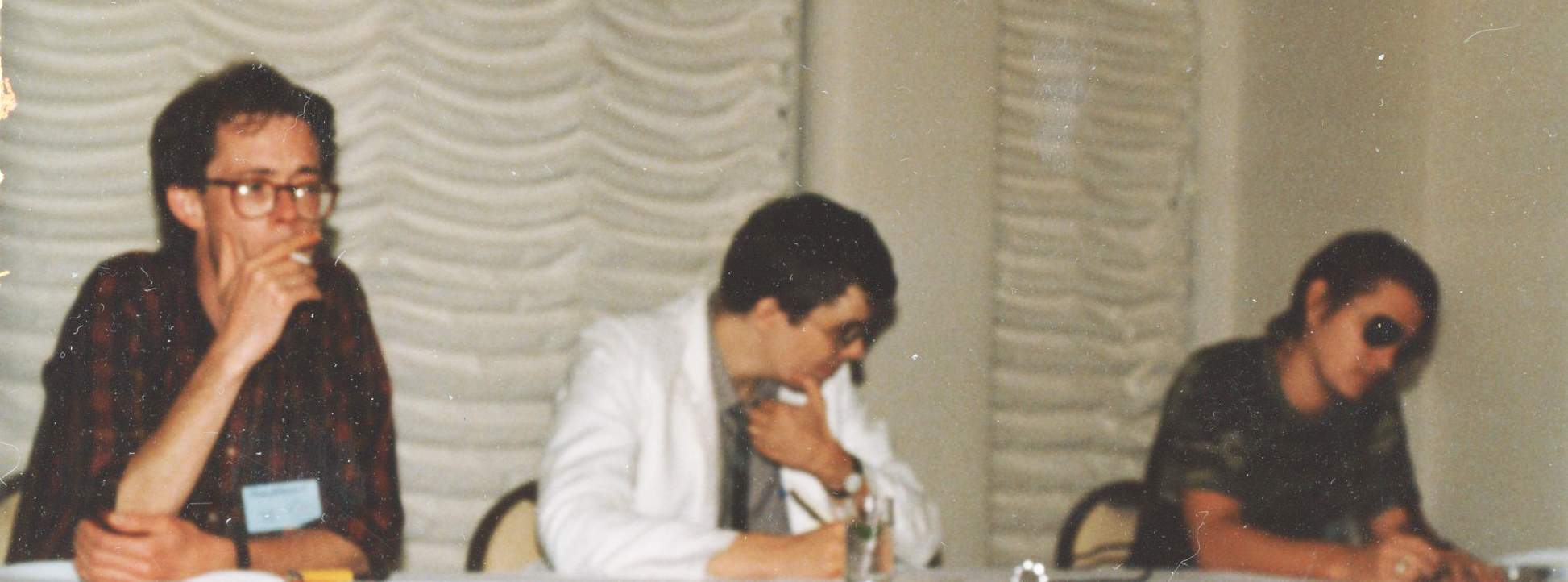
You wrote ‘Confessions of an Ex-Cyberpunk’ in 1991, and that phrase has followed you ever since. What were you actually trying to get away from at that point: cyberpunk itself, the market’s idea of it, or simply the need to put writers into boxes?
There’s a British joke where the comedian complains about not getting acknowledged for his church donations, for his volunteering at a hospital, for his delivering food to the needy. “But if you shag just ONE sheep…”
I’ve published eight novels, of which three were about music and musicians, two were full of dancing, two were mystery/suspense, and only one was science fiction by any hardcore definition of the word. I’ve fought this categorization for one good reason. People who consider themselves SF fans are typically smart enough to look at a book or read a review and have some idea of whether they might like to read it. Whereas your average mainstream literary fiction reader will not get past the words “science fiction.” “Sheep Shagger Shiner’s latest should appeal to all his many fans…” Oh dear. How about “his small cult audience…”?
So it’s not the particular label of “cyberpunk” that I’m trying to lose. I want to avoid any labels that might discourage a reader from trying one of my books.
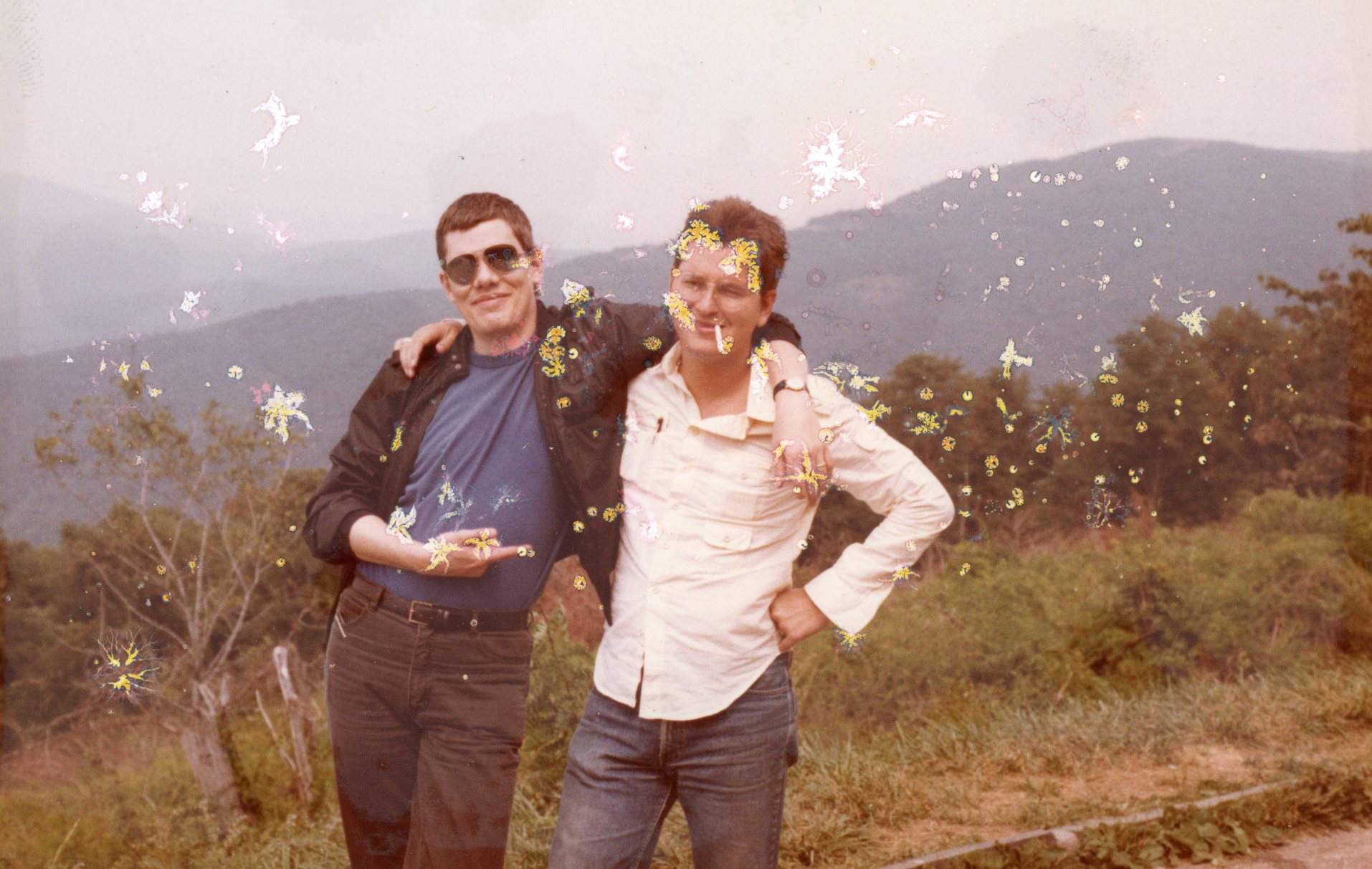
You’ve talked before about characters trying to deal with their past through some kind of belief system, whether that’s particle physics in ‘Frontera’, anarchy in ‘Slam’ or rock and roll in ‘Glimpses’. Do you usually begin with the idea, or with the wounded person who needs it?
Wow, whoever got that reaction from me must have caught me on a good day. Some of this goes back to what we were saying about ‘Frontera’ and belief systems there. And I think that the earlier you get in my work, the more schematic it’s likely to be. ‘Frontera’ (1984) started with reading about abstract concepts like the Pattern of the Hero. Whereas ‘Dark Tangos’ (2010) started with a photograph I saw in Buenos Aires, showing a child with her adopted parents, where the foster father had been complicit in the torture and murder of the child’s birth parents. I had thorough outlines for the first few books–in the case of ‘Deserted Cities of the Heart’, I based the structure on the Mayan vigesimal numbering system, and I color-coded the various viewpoint characters. By the time I started ‘Outside the Gates of Eden’, I had no plan at all, just a few key scenes in my head. I let the characters take me in any direction they wanted to go.
To come at this from another angle, certainly I tend to write about wounded characters. I’m reminded of an interview with Lucinda Williams where the interviewer asked why she wrote so many sad songs. Her response was, “Who the hell wants to listen to happy music?” So you could say that I always start with a wounded character, that being myself. The belief system is less central as you move through the books.
‘Glimpses’ begins with Ray Shackleford’s marriage breaking down and his father dead, and then he starts hearing music that should not exist. What came first for you, the lost-album idea or Ray’s grief?
My apologies for those who may have heard this story before. After I finished ‘Slam’, I was ready for something completely different. ‘Deserted Cities’, though essentially a mainstream novel, did have an element of the fantastic in it, a sort of subjective time travel that might or might not affect consensus reality. ‘Slam’ was ahead of its time in talking about computer networks and anarchy. Meanwhile, I myself was reading mainstream literary fiction like the Vintage Contemporaries and Jane Smiley. I had been nursing an idea for a novel called ‘In Transit’, where a guy in his late thirties goes to the site of his father’s death to try and understand their troubled relationship. “Hah!” I thought. “Let’s see them call me Sheep Shagger Shiner now!”
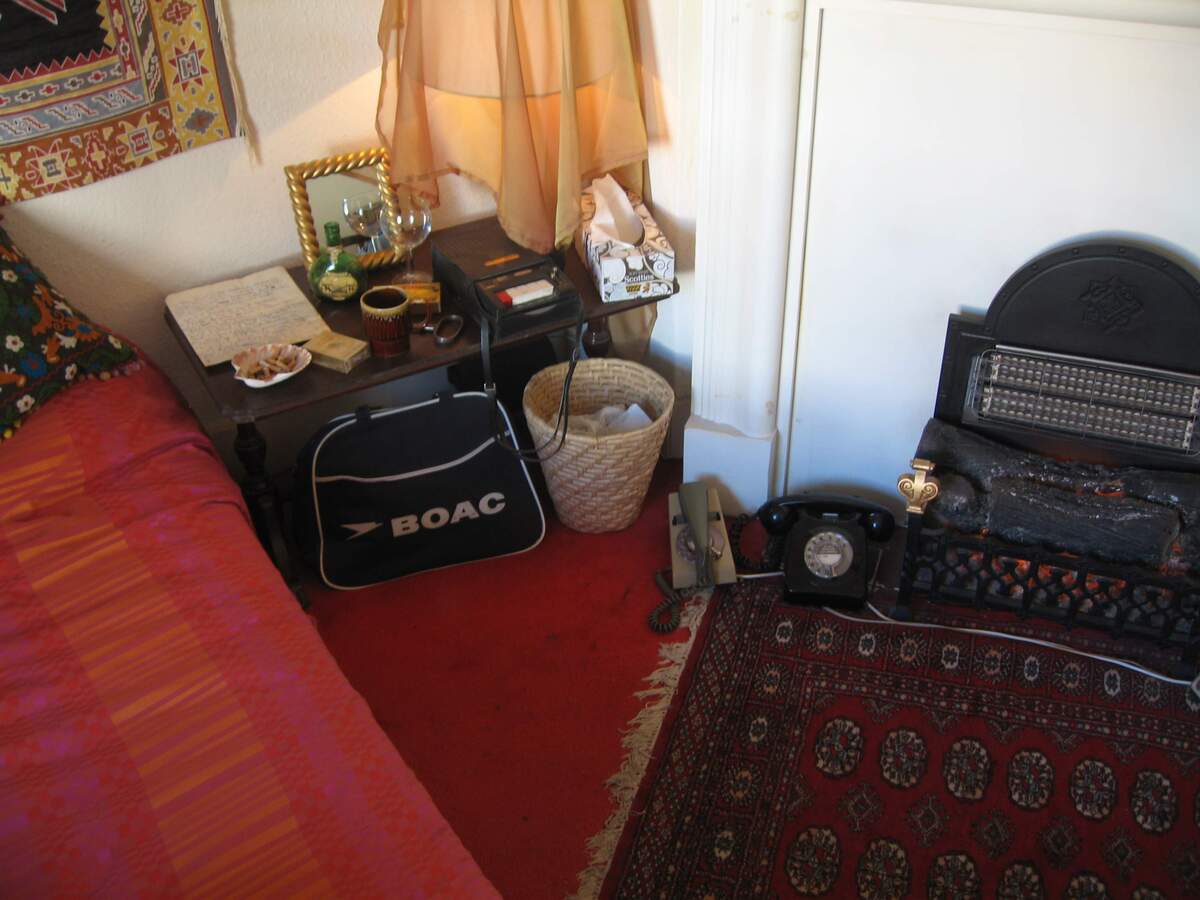
The writing was going very slowly. The plot elements and the characters were developing according to plan, but I was bored. I decided to take a break and write a short story tentatively titled ‘Glimpses’. This had been in my notebooks for a while and had originated with Howard Waldrop, one of many writers in Austin who hung out and workshopped together (Steve Utley, Lisa Tuttle, Chad Oliver, Leigh Kennedy, Bruce Sterling, and others). Howard was obsessed with “lost” rock albums, the Beach Boys’ ‘SMiLE’ in particular. Unlike ‘In Transit’, which was kind of mopey and sorry for itself, ‘Glimpses’ (at least by comparison) was fun. Picking the albums to rescue, researching the bands and the sixties setting. I just had one problem–the more I wrote, the more complicated the story got. I had to keep backfilling. And at some point I realized that Ray, my narrator, needed a motivation for his music search just as badly as the narrator of ‘In Transit’ needed a little magic. The short story swallowed the novel. Ray’s grief, though it came first, was soon inseparable from the music.
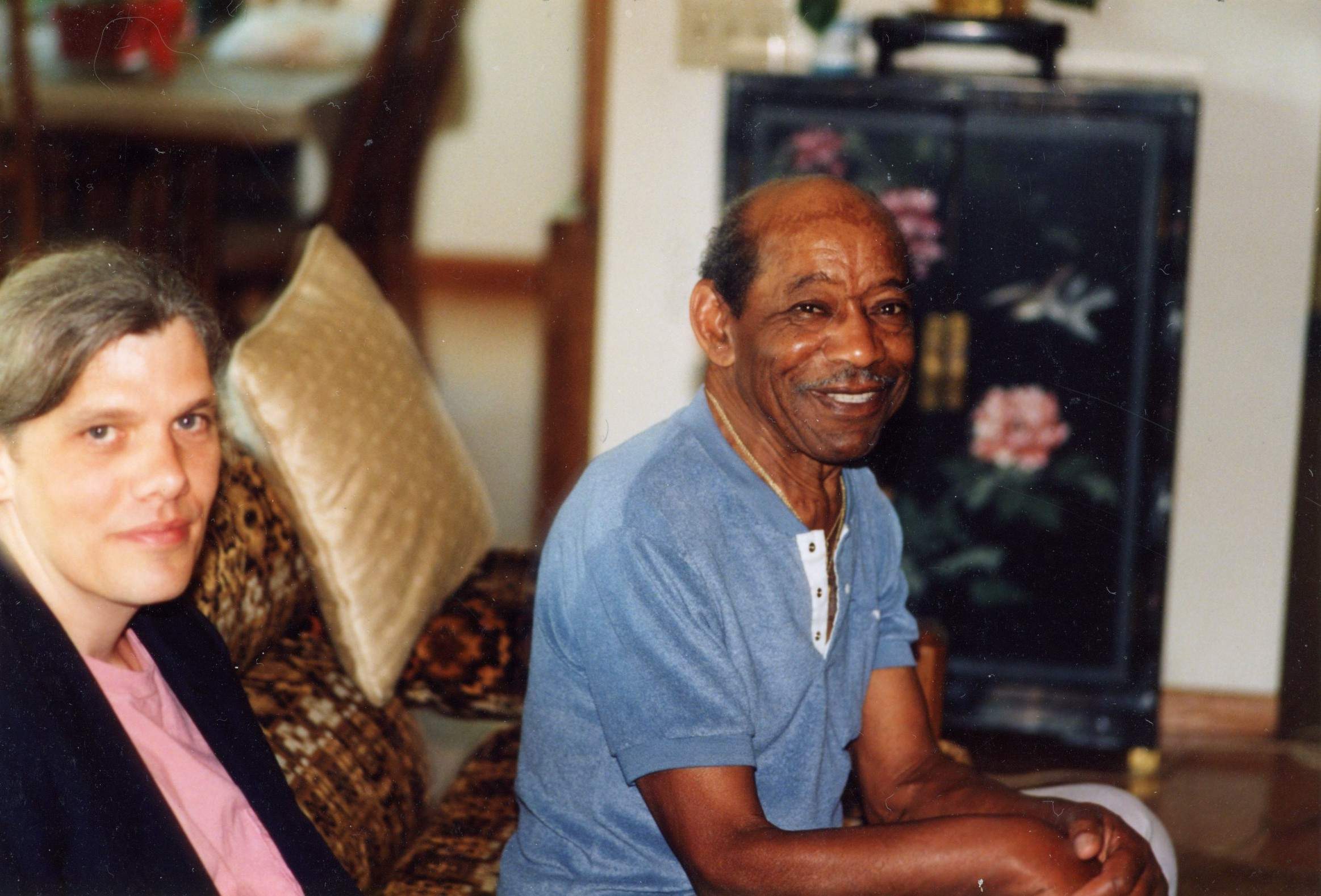
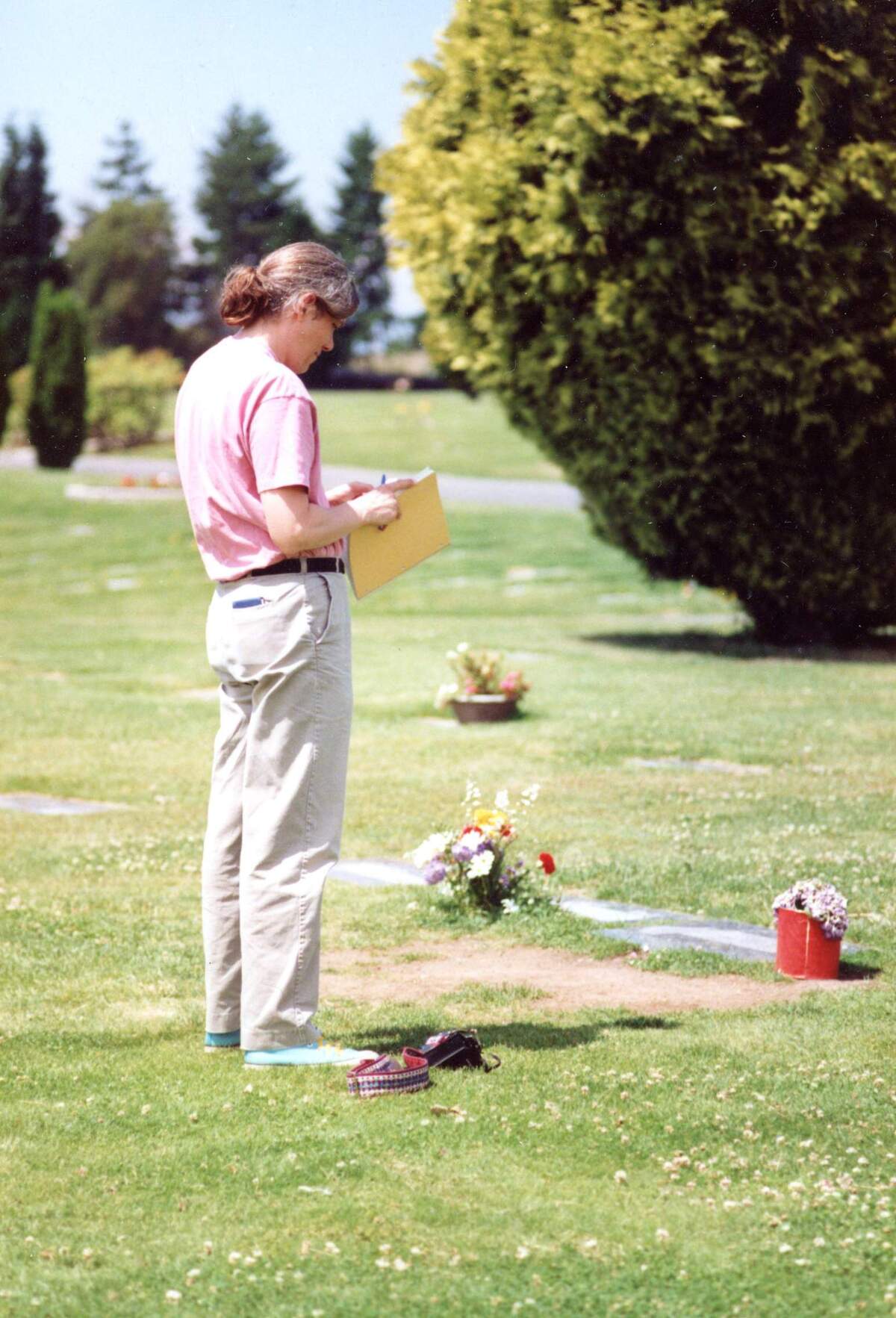
“Nostalgia can be deadly when you’re going through a breakup or any other life change.”
Ray repairs stereo equipment, but in a way he spends the whole novel trying to repair other things too: history, his father, his marriage, even the 1960s. Did you always see ‘Glimpses’ as a book about that impossible wish to go back and fix what broke?
I see ‘Glimpses’ as a book about the inability to move on. Ray is trapped in the past because it’s comfortable there. ‘Happy Together’ sounds the same now as it did in 1967. This is one place where I share common ground with the cyberpunks. Nostalgia can be deadly when you’re going through a breakup or any other life change. Ray is a rescuer, as Lori points out, and that’s going to be his first response to trauma.
How did you choose the lost records in ‘Glimpses’? Was it simply the music that interested you most, or did Brian Wilson, Jim Morrison, Hendrix and The Beatles each represent a different sort of unfinished possibility?
I picked the records somewhat by instinct. Howard Waldrop was the one who insisted that ‘SMiLE’ had to be on the list. At the time I wasn’t that big a Beach Boys fan, certainly not of ‘Pet Sounds’ or ‘SMiLE’. It was only after I was deep into the writing that I realized that I had unconsciously chosen those artists because of their father issues.
The Brian Wilson section is especially powerful because ‘SMiLE’ became much more than an unfinished record for a lot of listeners. What did Wilson mean to you while you were writing the book, and did finally hearing his completed ‘SMiLE’ change the way you thought about that part of ‘Glimpses’?
As I said previously, I was not that big a Brian Wilson fan before I started writing the book. But as Ray says at one point, ‘Pet Sounds’ just opens up on you and becomes a whole new record once you know some of the background.
In terms of comparing the reality of Brian Wilson’s ‘SMiLE’ (2004) to the album that Ray was working on, let me say this: First off, I think the 2004 album is wonderful, and the fact that it got made is as close to a miracle as anything I’ve experienced. Second, of course it’s different than I expected, for a million reasons, not least that Brian was not on antidepressants during the 1960s. The 2004 album is much more cerebral than I expected, but he was no longer at the mercy of his emotions by then. I speak as someone who takes anti-depressants and knows what a change they can make. Lastly, and this will probably shock you, I’ve never heard ‘The SMiLE Sessions’ (2011). I listened to all the ‘SMiLE’ stuff on the ‘Good Vibrations’ box (1993) many times, and that was enough for me. I’m just not that into alternate takes and unfinished mixes.
Writing about music the reader cannot actually hear is difficult enough, but in ‘Glimpses’ those imaginary recordings have to feel completely convincing. How did you build them on the page?
It was never about my experience or trying to use ‘SMiLE’ in some sort of personal agenda. All that any of us wanted was to get as close as possible to Brian’s intent. What Would Brian Do? Plus, you have to remember that I’m standing on the shoulders of giants here. Dave Prokopy’s ‘SMiLE’ cassette is deservedly legendary and provided a starting point for many of us. (Thanks to the friend who found me a copy long after it had vanished from the web.) And, as with the other “work tapes” that Ray makes during his preparations, it is crucial that you put your own tape together. There’s something powerful in going through that experience that makes you hear things you wouldn’t otherwise notice. (I don’t know if it would be the same to do it as an Apple Playlist or burn your own CD–I suspect not.)
There is also a moral problem inside ‘Glimpses’. You’re taking real people with real pain and creating fictional versions of them. How conscious were you of the line between love, imagination and trespass?
I tried to deal with that in the penultimate chapter. You, as a writer, have to be careful what you do to your fictional characters. Like in basic training for the military. When you first pick up a rifle with a bayonet on it (are there such things anymore?) you are going to be, by virtue of being human (I omit here the ever-increasing number of sociopaths in the world), reluctant to stab a human-shaped object with this deadly weapon. And that’s what basic training is for, to break down those inhibitions and sensitivities. You see it in right wing political campaigns that urge people to ignore the pain and suffering of their fellow humans and ignore their own feelings of shame.
In rock music, we demand brutal sacrifices from performers whether they’re at the bottom of the food chain and driving all night to get from one gig to the next, or at the top with Eagles and Led Zeppelin, chain sawing hotel rooms and beating women in an attempt to purge themselves of negative energy. ‘Glimpses’ contends that all our actions have consequences, even when they involve fictional characters. Obviously it’s not as bad to blow up a Nazi soldier in a video game as to kill a live human on the street, but listening to that made up soldier scream in pain as the flamethrower tears at his skin is going to desensitize you and make it that much easier to use you as an instrument of violence.
And what about me? I didn’t just create fictional characters in ‘Glimpses’, I created simulacra of real people and selfishly used those images to help sell my novel. What if something I put in the mouth of one of those characters convinced some nut case to go take revenge? John Hinckley Jr. became obsessed with Travis Bickle, a fictional character from the film ‘Taxi Driver’, an obsession that led to attempted murder.
Sure, there are questions of scale here, but I think we all need to be very careful about what we bring into the world.
You’ve called ‘Glimpses’ a fan’s book. Serious fandom can be scholarship, devotion, grief and identity all at once. What did you want to honour about the obsessive listener, and what did you want to question?
There are all kinds of fans, obviously, and I’m lucky in having the best fans in the world. For example, just a week ago I was feeling down about my lack of commercial success, and out of nowhere came an invitation for an interview from a guy I’d never heard of, who not only knew my work, but was thoughtful and articulate as well. And I had to admit that ‘Glimpses’ had in fact influenced a great number of people, and it turned my mood around. (Thanks, Klemen.)
At the other extreme are the sports fans that fill the stadium a couple of blocks from where we live. These are fans whose entire lives are lived vicariously through their sports teams. If the Mudhens (random example) win, it’s reason to pound a bunch of beers and drive the pickup in the ditch. But if the Mudhens lose, life is not worth living. It’s not unreasonable to scream obscenities at the guy who fumbled the ball with :30 left.
What I miss from my high school days is that after the Big Game we used to take an actual football outside and toss it around, or even have a game of touch. (I can’t believe I’m coming out with this “back in my day” crap, but there it is.) I will say that I think we’ve lost the connection between playing sports and watching sports. I refer you to Guy Debord’s ‘Society of the Spectacle’ and move along.
There’s something else ‘Glimpses’ understands very well, which is how a record can hold a particular time in your life. Is that part of why rock and roll works so well in fiction for you?
I think you’re right, but it gets very tricky because records mean so many different things to different people. For instance, suppose Ray was a Karen Carpenter fan. Nothing against Karen, and she was certainly a hell of a drummer, but she’s not going to speak to the same audience in the same way as Jimi or Brian. So the trick is to be able to convey your time capsule idea here, which I really like, but you don’t want to focus on things like the lyrics, which could easily backfire. You could talk about, say, the depth of the reverb defining a huge space in your head, and I think that would walk the line between technical and sentimental in the right sort of way.
You later wrote ‘Say Goodbye’, about a young musician trying to make her way through the 1990s music business. Do you see it as a darker twin of ‘Glimpses’, one about music as salvation and the other about what happens when commerce gets involved?
That doesn’t feel quite right to me. ‘Glimpses’ to me is about listening to music, and ‘Say Goodbye’ is about playing it. To bring back a previous metaphor, Ray is watching the game on TV and Laurie is out in the street throwing the ball around. I think both are saved by music, but it’s harder for Laurie because her livelihood depends on it, and because there is this layer of commerce constantly interfering with her pleasure.
Also, being picky here, Laurie doesn’t make the music on ‘Of the Same Name’ inside the music industry. She makes it in Jim Pearson’s garage, with no record company involved, the only goal being to make the record Laurie wants to make. It’s only when General Records gets involved that she’s asked to compromise at every turn. Just think how awful it would have been to have some hotshot producer of the moment looking over her shoulder and second guessing every decision she made?
When people asked me what I was working on at the time, I said it was an autobiographical novel about a 20-something female singer-songwriter in LA. I considered the differences between myself and Laurie to be insignificant. It was the career arc that mattered most. “There’s no success like failure,” Dylan said, “and failure’s no success at all.”
Does this mean I consider myself a failure? I try to make a distinction between commercial failure (which I certainly am), critical failure (mostly the reviews have been great), and personal failure. I wrote exactly the books I wanted to write, and nearly all of them are available on Amazon and other virtual bookstores, so I’ll give myself credit on that one.
‘Outside the Gates of Eden’ is much larger, following the idealism of the 1960s and what happened to it over the next half century. Why was it so important to take idealism seriously again? And what could fiction do with that period that history or rock journalism couldn’t?
A world without idealism is TrumpLand. It’s a world ruled by greed, violence, and stupidity. It’s every man for himself and every woman with her knees in the air.
What fiction can do is present examples without getting lost in the footnotes. I no longer believe in an absolute truth, but I do believe in a higher truth, one that transcends mere facts. Facts can be manipulated. Compassion is its own proof and raison d’etre. Memoir, history, and rock journalism can inform and convince readers, but fiction can take you into someone else’s heart.
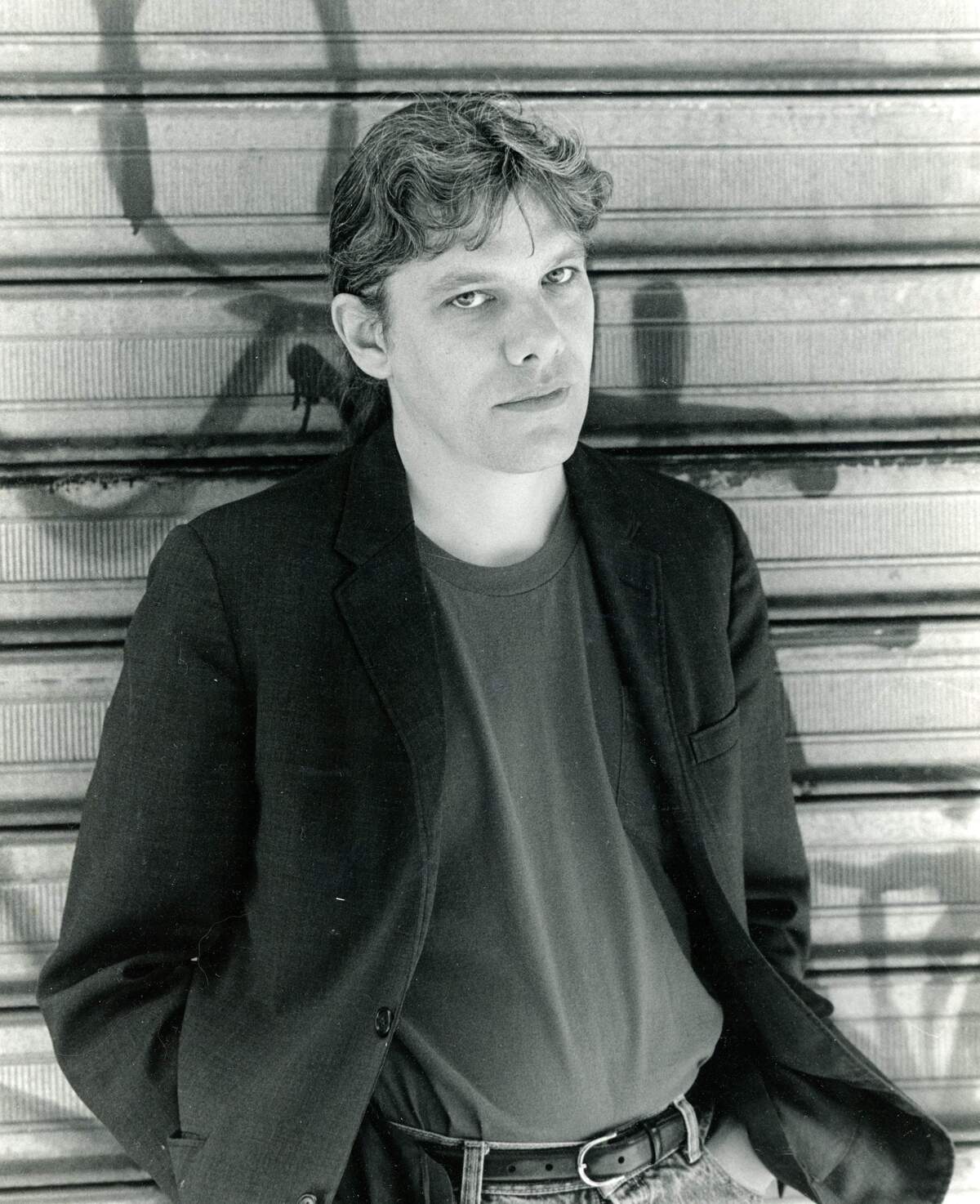
“The very act of writing is an act of hope.”
Politics keeps returning in your work, but so do tenderness, loyalty, friendship and ordinary decency. How do you keep anger and compassion together without letting one cancel out the other?
It’s pretty easy to find hate these days. Just try to get on a freeway. Compassion is harder, but we have to find it. The very act of writing is an act of hope, and I can’t believe anyone would put themselves through something this painful if they truly believed they were wasting their time.
I believe compassion is out there for us to find. The writer Jonathan Carroll quotes his brother, a Sufi, as saying: “There is a light. Walk in it.” There are many cases where telling right from wrong is just not that hard. Are you acting out of greed? Then you’re probably not walking in the light. Are you adding hate to the world, or are you adding kindness?
Your Fiction Liberation Front made much of your work freely available online. How do you look at that decision now, especially when writers still have to find some way to live? Has the internet liberated fiction, damaged it, or simply shown how fragile the economics already were?
Fiction Liberation Front was me accepting the inevitable. Do I believe art should be free? Absolutely, just as soon as food is free and houses are free and transportation is free. Here’s some stats for you: For the fiscal year 2025, all eight of my novels were in print in the US. Seven were available as e-books or as print-on-demand trade paperbacks. There was also a trickle of royalties from the US e-book version of ‘Outside the Gates of Eden’–the limited-edition hardcover was long sold out. So for eight books, over an entire year, my total gross US income was $223.88.
In a 50+ year career as a professional writer, there was a total of about 18 months when I was able to support myself writing comics. The rest of the time I had to have a day job that took 30 to 45 hours out of every week.
Almost no one I know reads books these days, not even the professional writers. They don’t have time.
My thought with Fiction Liberation Front was, I’m not making any money at this anyway. At least if I give my books away people will be able to find them. My publisher agreed that there was at least a chance that the publicity would be worth any loss in sales. We don’t have a definitive answer on that one either.
You’ve also written about musicians including Brian Wilson, Van Dyke Parks, John Sebastian and Erik Jacobsen. How different is interviewing musicians from inventing them? Does nonfiction satisfy something different in you?
I wrote a piece for a big national magazine about comics, and it was a disaster. By the time three different editors had worked it over, each with a completely different agenda, the story had doubled in size and lost any coherence. There was clearly no option but to kill it, quickly, before it escaped into the general population. That was the year I made more money from kill fees than I did from writing and realized I would never make it as a rock journalist.
As you would imagine, interviewing is completely different from invention. Though I will say that, back in the day when you had to do it yourself, transcribing interviews was a great way to learn how to write dialog and capture the rhythms of speech. Otherwise, it’s just another kind of research, though a particularly enjoyable one. And when you get to talk to somebody like John Sebastian, who is hysterically funny, it can be a delight.
A lot of fiction about music either romanticises the life or gets the details wrong. Your books understand rehearsal, equipment, money, bad rooms and bad luck. Why has getting that working side of music right mattered so much to you?
The thing I look for in fiction about music is vocabulary. How do musicians talk to each other when they’re rehearsing or writing? The same way mechanics talk to each other on the job–it’s usually a mixture of highly specialized technical terms and obscenities. Which makes sense, since we are all a mixture of who we are and what we do.
As for the fact that talent does not guarantee survival, seriously, that’s not for me to say, certainly in regard to my own work. And remember that ‘Glimpses’ did win the World Sheep Shagging Award.
You’ve written science fiction, crime, political fiction, music fiction and much else besides, yet the books still unmistakably belong to the same writer. What actually makes something a Lewis Shiner book?
A quibble, but a significant one: I haven’t moved through any of those forms/genres, not in the sense of saying, “Right, that’s private eye fiction done and dusted. What’s next?”
When I was at Bantam, Lou Aronica was kind of my A&R person. Shawna McCarthy was designated editor on ‘Deserted Cities’, and Pat LoBrutto edited ‘Slam’, but it was Lou who ran interference between those two guys and Bantam Doubleday Dell, the parent company. I was, for a while, part of the Bantam New Fiction program, along with my pal Lucius Shepard. This was supposed to be a line of mainstream trade paperbacks modeled on the Vintage Contemporaries. The editor, Deb Futter, was still in her twenties when she got the job. I’ll never know exactly what happened there, but I suspect Futter might have been feeling possessive. New Fiction was her line, and it was bad enough that they had foisted one sheep shagger on her in the person of Lucius. Two was just too many. I was not allowed to talk to Futter, so for a while Futter would talk to Lou who would talk to Shawna who would talk to me. Shawna finally dropped out of the conversations, so it was Lou who told me that Futter wanted me to do another line edit. I said I was fine with that, but asked for more direction as I thought the manuscript was in pretty good shape. Futter’s reply to Lou, if I understand it, was to the effect that I should know what a line edit was. So I went carefully once again through the manuscript and managed to find a few places where I could tighten up the prose or be more precise in my wording. Alas, this was not the sort of line edit she wanted. She wanted me to make the book more literary. I asked (via Lou) if by literary she meant bigger words and longer sentences. Lou said that would be an oversimplification, but basically, yes. I declined, and was dropped from the New Fiction list. Lou offered me a consolation prize: they were about to launch a new hardcover line, Bantam Foundation (which later got rolled up into their Spectra line). I would get to keep the beautiful Bob Hickson cover they’d commissioned for New Fiction. The downside? The Foundation line was all SF and Fantasy. The other house that had bid on ‘Cities’ was Ace Books, a pure Fantasy and SF line. Their offer was still good, but after much soul searching I went with Bantam. And Bantam, to their credit, made an offer on my next book, ‘Slam’, which could not be passed off as SF. They even got a cover by Chip Kidd, who was the paragon of hipness at the time (1990). The cover had nothing to do with the book and I hated it, but they were trying.
Around this time, and I’m finally getting to the point here, Lou Aronica and I sat down to discuss my literary future. Some writers, he said, were permanently associated with a particular genre–like Anne Tyler with a certain quirky type of romance set in Baltimore. She can even define new writers–“if you love Anne Tyler…”. Then you’ve got writers like Don DeLillo. These guys are all over the map. Domestic comedy, international suspense, sports, even science fiction, every book completely different. The way you deal with a guy like DeLillo, Lou told me, is you make him a genre unto himself. If you liked his other books, you’ll like this new one. Above all, you have to be patient. Stick with him wherever he goes, and maybe he’ll pay off, big time, in the long run.
Of course this made me feel great. I felt great when my agent sent him the manuscript of ‘Glimpses’. I continued to feel great until Lou passed on the book. “If you can get somebody else to do the hardcover, we’ll do the paperback for $xxx [half what we gave you for ‘Slam’].” (We did get a hardcover deal from Morrow, and when we offered the paperback rights to Lou, he passed.)
The question here is, what exactly puts a book in the Shiner genre? Number one, I would say, is realism. Even if it’s set on Mars, I’m going to find anything I can to tell me what the real Mars is like. I’m a pacifist, but that’s no excuse to not know how guns work. I’m not going to show somebody with a silencer on a revolver. If you dig deep in your research, you’ll find surprising details, and those details make writing seem real.
No villains. There are plenty of exceptions to this, but on the whole I’m not interested in characters who are just plain evil. I want to see people who are basically decent but have been left behind by society or otherwise gotten bad breaks. My first corollary to this is, I’m OK with violence in my books, but I don’t want to see good guys profit from it.
What you call belief systems. I do like to see those being tested or pitted against each other. In ‘Dark Tangos’ you have devout Catholics participating in torture and murder. There’s a paramilitary group in ‘Deserted Cities’ that subscribes to Theosophy. I do like to see big ideas reflected in ordinary life.
Music. It’s rare to find any of my fiction that doesn’t have music of some sort in it.
When people talk about ‘Glimpses’, the lost albums and famous musicians naturally get a lot of attention. Do you ever feel that the brilliance of that premise has partly hidden the quieter book about fathers, marriage, alcoholism and regret underneath it?
My experience, from the letters I get from readers, is that they were as moved by the father issues as much or more than by anything else in the book. See my earlier comments about what great readers I have.
Your books often come back to the question of what art can and cannot save. After ‘Glimpses’ and ‘Outside the Gates of Eden’, what do you think music really can save? And what do we ask from it that no record could ever give us?
I’m sure there are plenty of things that music specifically, and art in general, can’t fix. And it might work one day and not the next. But it may be that you won’t find that out until you try. As I said earlier, music saved my life in high school, and I’m sure many people feel the same way. My friend Joe Lansdale gets letters all the time from readers who feel they owe him a huge debt. That’s why art is so important, and why we can’t let one political party dictate what is art and what isn’t.

It’s been a while since ‘Outside the Gates of Eden’. Did the sheer size of that book leave you burned out afterwards?
Absolutely. Even though you know better, you can’t help but hope with each new book that this will be the one to break you out, and of course this did not happen. But it was also a case of using up my backlog of ideas. I had two projects in mind after ‘Eden’, and neither of them panned out. So for eight years I slowly tried to get used to the idea of not being a fiction writer.
Then, out of nowhere, an old friend sent me an email about her experiences as a professional dancer. At the same time, I fell in love with opera. Suddenly all these bits and pieces started to fall together in a way that I could not ignore. I started writing it last fall and am currently doing a final polish. It’s 40,000 words long, right on the line between novella and novel. Stay tuned.
Klemen, I wanted to thank you for a great conversation. It is deeply satisfying when your interviewer has done his or her research so thoroughly and comes up with such thoughtful questions.
Klemen Breznikar
Lewis Shiner drumming with the Dinosaurs at the Austin Outhouse, 1981. The experience later informed the biker scene in ‘Say Goodbye’. From the Lewis Shiner collection.
Lewis Shiner Website