
Fantastic Negrito on ‘Alive!’: “Church Without the Religion”
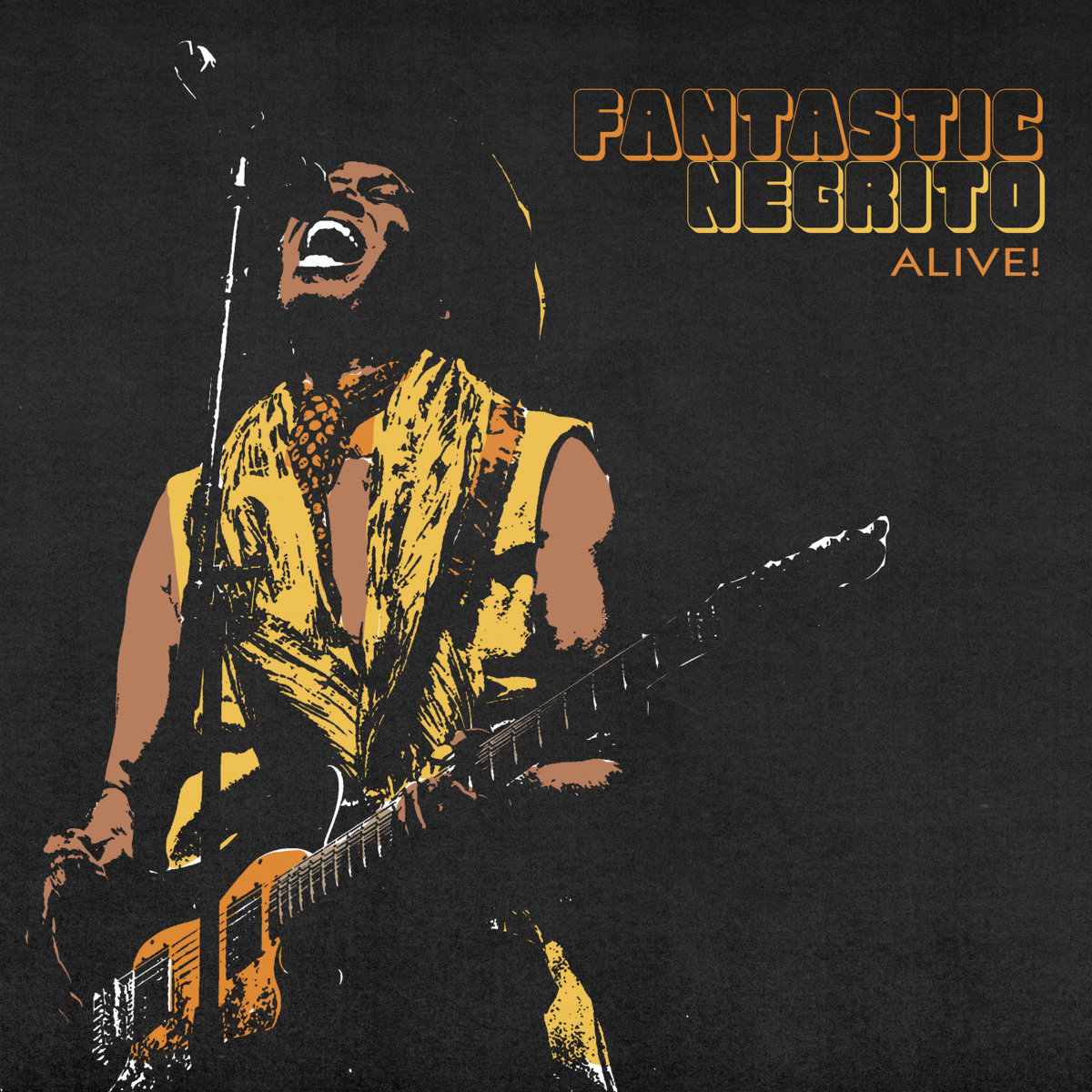
‘Alive!’ is the new live album by Fantastic Negrito, put together from performances recorded in Trieste, Brooklyn, Rubigen, Sogliano and Leeds.
The places and audiences change, but the idea behind the shows remains fairly simple. Negrito wants to connect with the people in the room, put the ego aside and give everything he has. He calls it “church without the religion.”
The album also includes ‘Please Computer’, a new song about technology, information overload and the growing place of machines in our lives. It’s not an anti-technology song. What concerns him is the point at which the computer stops being a tool and begins to take on something closer to authority. “There’s a very scary man behind these computers,” he says.
We also talked about the accident that changed the way he plays guitar, his years away from music, the Grammys, his family history, ‘White Jesus Black Problems’ and ‘Son of a Broken Man’. Again and again, the conversation comes back to people. “I don’t really care about politics,” he says. “I care about people.”
“Turn the bullshit into good shit”
What were you trying to say with ‘Please Computer’?
I am 58 years old. I feel like I’ve seen it all happen before: technology, out with the old, in with the new, empty promises of happiness by the power structure. The song is definitely not anti-technology. We’re living in the age of information. It’s a bit of a war of information. I know we need these tools to navigate this massive overload every day, but I do think there is a problem with the computer becoming God. The computer cannot cry. It could not have buried my 14-year-old brother, who was killed long ago. There’s a very scary man behind these computers, and that is the warning.
‘Alive!’ was recorded in Trieste, Brooklyn, Rubigen, Sogliano and Leeds. How much does the room change the way you perform?
Every room feels different, every country, every town, every city, every group of people that gather together. First of all, I’m lucky and blessed to be able to do this for a living. I think the most important thing is connecting with those people. You must put aside your ego and give it all. I call it “church without the religion.” Leeds, Trieste, Sogliano, Brooklyn, Switzerland, we just happened to really catch those incredible human moments.
Do you have a typical songwriting process? What usually sets a new song in motion?
Without inspiration, there is nothing. I don’t have a typical process when it comes to creating songs. I’m very happy that I don’t. It’s all extremely organic. I’m mostly trying to stay out of the way and let it just happen organically, however, whenever and whoever.
You returned to music as Fantastic Negrito after your years as Xavier, the car crash and time away from the business, then won the first NPR Tiny Desk Contest in 2015. Did Fantastic Negrito feel like a second chance, or more like a fresh start?
I don’t know if I’m telling the truth. Artists are so full of shit. I think I’m attempting to be a living, breathing, contributing human being on this planet during this time. When I was younger, I wanted fame. This incarnation of me struggles just like anyone else. I don’t wanna claim to have found the truth. As long as I’m contributing something, I’m on the right path, but remember, I am a recovering narcissist.
Did the injury to your hand after the crash become part of the way you play guitar? Do you feel those physical limitations helped shape your sound?
I think that is fair. Sometimes when we have less, we produce more. When we have less to work with, we are forced to take the shortest distance to achieve the mission. After spending three weeks in a coma and losing my playing hand, I was definitely limited, but I take that as a positive. Turn the bullshit into good shit.
You’ve won three Grammys for ‘The Last Days of Oakland’, ‘Please Don’t Be Dead’ and ‘Have You Lost Your Mind Yet?’. What did those awards mean to you?
I’m grateful for the Grammys. Not everyone gets to win one or even get nominated. But I was never going to, and I never will, let that define me. I started making it when I was well into my late 40s. I just stopped caring about what people expected of me. I am a marketing nightmare. I have accepted that. I’m very satisfied and grateful. I am self-produced, self-motivated, self-financed, self-managed, and a little bit selfish. It keeps me on the edge, keeps me on my toes.
A lot of your songs touch on social issues, but they usually begin with people and family stories. How do you keep that writing personal?
I don’t really care about politics. I care about people. When I decided to stop playing music again, you have to remember that I retired for five years, basically quit and sold all of my equipment. My goal was to get down to the train station, connect with people, stand in front of the coffee shop, connect with people. I still try to connect with people. I’m in Japan right now, and I’ll go down in the middle of the night and just play somewhere, just to make that connection with people.
For ‘White Jesus Black Problems’, you traced your family history back to a Scottish indentured servant and an enslaved Black ancestor in 1750s Virginia. Did discovering that story change the way you thought about freedom in America?
The concept of freedom has always been complicated in America. The story of ‘White Jesus Black Problems’, my seventh-generation grandparents in an interracial forbidden relationship on a tobacco plantation in Virginia. The year was 1759. That is the most punk rock story that I’ve ever heard. I’m so grateful that I came from those people. I am a descendant of them. What I love about the story is that they made it despite all the odds, and that is the story of Fantastic Negrito.
With ‘Son of a Broken Man’, you turned towards your father and your own childhood. Did writing the album change the way you saw him?
Well, it was very difficult to write the album. ‘Son of a Broken Man’, it’s an old story in the world, the challenges between a father and his son. I am the eighth of 15 kids. I grew up in a very broken, dysfunctional home and ended up in the foster care system. My father was 33 years older than my mother. It was never gonna work. Well, ‘Son of a Broken Man’ just taught me that a person who is your father or your mother, they are just a human being: struggling, imperfect, brilliant, horrible, all of those things, the full spectrum.
You often describe the live experience as “church without the religion.” What has to happen for a show to become more than just a performance?
I try not to need anything. I try not to want anything. Once that begins, then I start getting in trouble and it becomes dishonest. Remember, I’m a recovering narcissist. Everybody and everything is my teacher. It’s always scary up there on stage, but if you can be as honest as you can, it usually goes in the right direction, the spiritual high.
On ‘Alive!’, older songs sit next to ‘Please Computer’. When you hear them together, what kind of story do they tell you about life in America now?
The story. Well, it is a story about everything, living in America. We have so many things to write about. You’re correct: race, gender, wealth gaps, socioeconomic, so much great music has come out of America because people have had to face challenges growing up here, living here, trying to make a living here, trying to pursue that evasive American dream. I like to write about it all.
I live fairly close to Trieste, so imagine you came over and we spent an evening playing records in my basement, which is full of just about everything. What would you put on? I’ll start with one I’ve been playing lately: ‘Under the Sun’ by Human Arts Ensemble.
Well, I’d probably be really interested in what you were listening to. I sometimes go through all the same emotions: Robert Johnson, Stones, some really old Prince from the ’80s, Talking Heads, some Radiohead, lots of Fela Kuti, some early Bad Brains, Nina Simone, the early Led Zeppelin records, sprinkle in David Bowie, Kendrick Lamar.
Klemen Breznikar
Headline credit: Roberta Paolucci
Fantastic Negrito Website / Facebook / Instagram / X / YouTube