
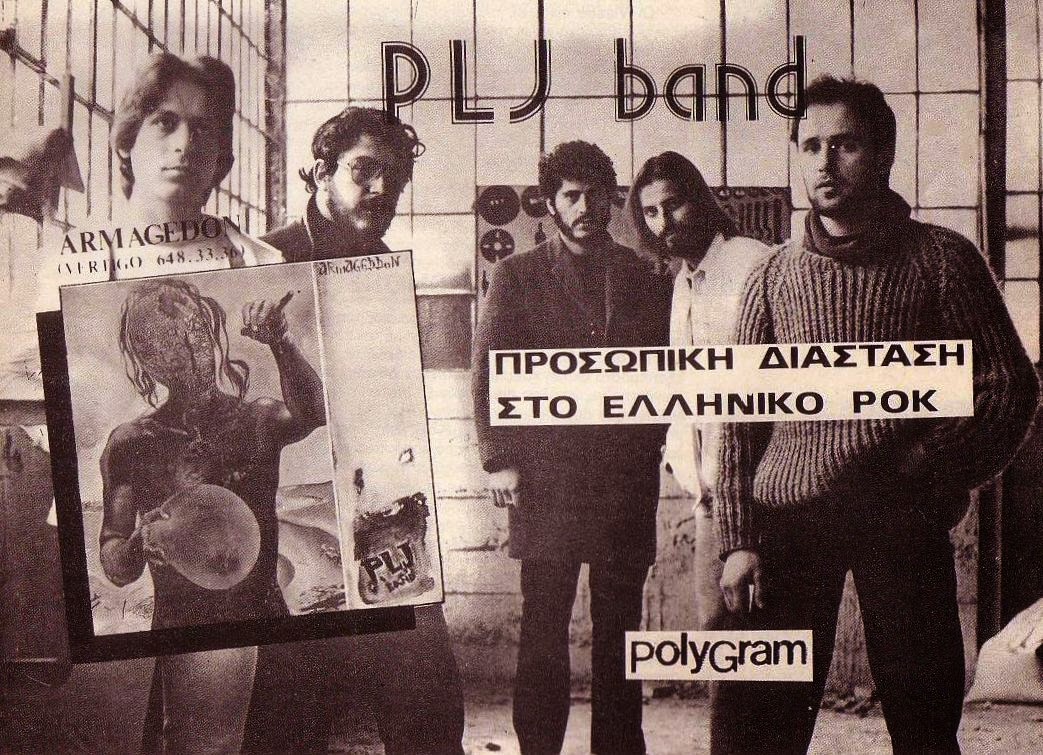

‘Armageddon’ Revisited: Adonis Mitzelos on P.L.J. Band’s Greek Progressive Rock Rarity
When ‘Armageddon’ appeared on Vertigo in 1982, it received little attention in Greece. Its English lyrics, passages in ancient Greek, long instrumental sections and dark biblical themes placed it well outside the country’s musical mainstream.
Over the years, however, original copies became increasingly difficult to find, and the album gradually reached a new audience among listeners of progressive rock.
P.L.J. Band had begun several years earlier, bringing together Lavrentis Machairitsas, Adonis Mitzelos, Pavlos Kikrilis, Jimmy Vasalakis and Tolis Skamajouras. The group’s first release was the independently produced ‘Gaspar’ EP in 1979, but ‘Armageddon’ was a far more ambitious undertaking. Drawing on the Book of Revelation and the prophecies of Ezekiel, the album combined acoustic and electric guitars with spoken passages, ritual-like vocals and extended arrangements. Mitzelos recalls that most of it was recorded during a single eight-hour session. “There was no room for error,” he says. “We played like a real band, with passion and very high concentration.”
The story did not end with the album’s initial failure. Mitzelos says unsold copies were withdrawn and later destroyed, while the loss of the master tapes prevented a proper reissue for many years. What the band had regarded as a disappointment slowly became one of the most sought-after records in Greek progressive rock.
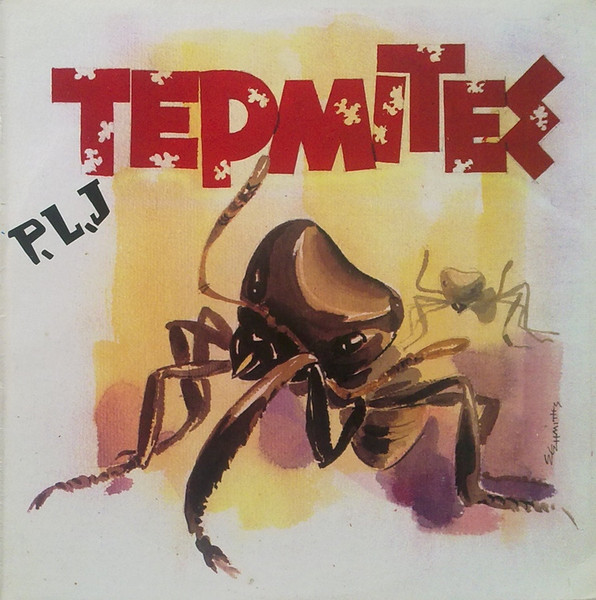
After releasing the album ‘Termites’ in 1983, the group adopted that name and moved towards Greek lyrics and a more direct rock sound. Mitzelos later established a long career as a guitarist, composer, arranger and producer. His work includes the 2000 album ‘Beyond the Light’, recorded in New York with members of Spyro Gyra, and music for a 2025 theatrical production based on Homer’s ‘Odyssey’.
In this interview, Mitzelos recalls the formation of P.L.J. Band, the making of ‘Armageddon’, the controversy surrounding its release and the group’s later transformation into Termites.
“Music is not art, but cosmic architecture.”
How did P.L.J. Band first come together, and what was the musical climate in Greece at the time?
Adonis Mitzelos: Indeed, a legend has been created around the band in Greece and the rest of the world. The idea of creating a band that would play progressive Byzantine rock, with elements of ancient Greek music and fusion, had been deeply present in me since my school days. I want to believe that the same was true for Lavrentis. A mutual friend of ours, a songwriter with whom I worked in 1979 and 1980 in the Plaka area below the Acropolis in Athens, introduced us. He had heard the music I was writing and playing at the time and thought that it fitted well with Lavrentis’ music. So we agreed to meet and play music together.
What did the first lineup sound like? Did the band have a clear direction from the start, or were you still searching?
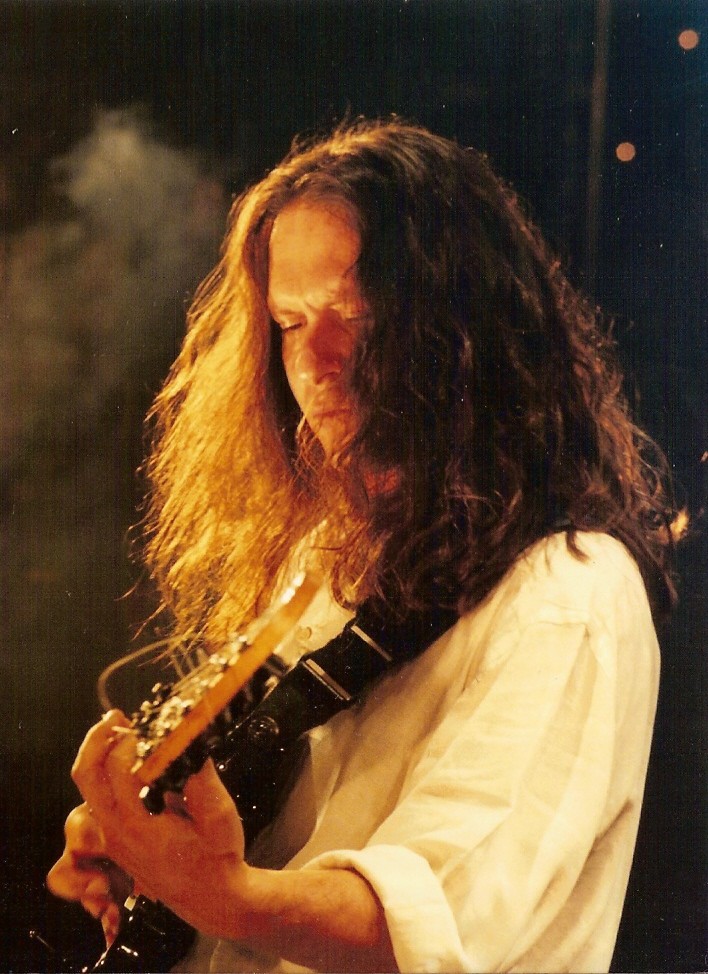
Lavrentis had met two friends while serving in the Greek army, Pavlos Kikrilis and Takis, or Jimmy, Vasalakis, and together they played rock ballads as amateurs on acoustic guitars. He introduced them to me, and we agreed to start exploring a new sound for a new band. We aimed for a global career, but with a Greek rock sound. Tolis Skamajouras joined the group on drums from the beginning. Takis played bass, Lavrentis played keyboards and sang some vocals, Pavlos played acoustic rhythm guitar and sang some vocals, and I played electric and acoustic lead guitar. They were amateurs, while I was already a professional musician. I immediately took responsibility for the arrangements and the musical realization of our ideas. This continued across all the subsequent albums we made together during the band’s ten years.
What led the band to move to Paris, and what were you hoping to achieve there?
This trip to Europe was a pivotal moment for us. We were nothing more than a group of musician friends trying to bring our music into the global scene. We believed that a sound like ours was missing. On the other hand, progressive rock was still in its infancy, still at its beginning. There was room. We aligned ourselves with the global trend, but with a new proposal. ‘Armageddon’ was and is a grandiose, eternal and universal work because it contains verses by the Apostle John from the Book of Revelation in ancient Greek, the mother of all languages. It speaks of the total destruction of humanity and the resurrection of the dead. It is a completely metaphysical work. We believed that the end of the planet would be caused by nuclear weapons. ‘Armageddon’ may also be the first reference to the ecology of the planet. It was also the first time that the sound of the ancient Greek language was heard on a record and integrated into music played by instruments, something that the Orthodox Church had forbidden for many centuries. The musical performances were dynamic, introspective and mysterious. Yes, we were ready for the great journey.
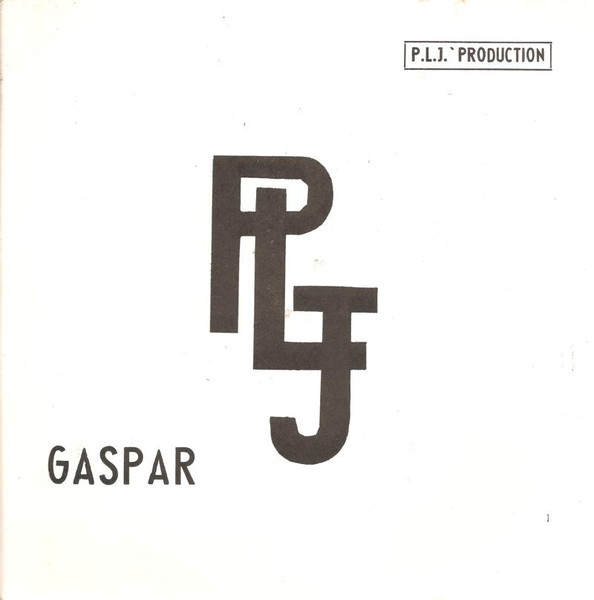
Before ‘Armageddon’, P.L.J. Band released the ‘Gaspar’ EP in 1979. What did that release represent for the early band?
It was the band’s first recording attempt, an independent production that passed from hand to hand. I did not participate in this recording, and Pavlos and Lavrentis played the guitars. It did not achieve anything special artistically or commercially. It belonged to the band’s early amateur phase, but it gave the first sign of our existence: “Here we are too!”
How did you describe the band’s music at the time? Did you call it progressive rock, psychedelic rock, Byzantine rock, or simply your own sound?
As I told you before, I had included many new elements for the rock of that era in the arrangements. The psychedelic atmosphere is a given, the forms are large, and the theme of the entire album is only one: ‘Armageddon’. My initial vision was to add traditional Greek instruments to the work, along with a Byzantine choir of chanters. I still consider the work incomplete. At that time, we said that we were playing Byzantine rock.
How did the concept behind ‘Armageddon’ develop, and how much did Revelation, Ezekiel and Aphrodite’s Child’s ‘666’ influence it?
Yes, it is about the Revelation of John and the prophecies of the prophet Ezekiel. We knew from the beginning what we wanted to do, and we did it to the extent that our extremely low production budget allowed. We entered the studio ready after months of rehearsals and research. Lavrentis had also been influenced to some extent by Aphrodite’s Child. Moreover, Vangelis Papathanassiou was a friend of ours because Machairitsas’ father had been a music teacher during Vangelis’ childhood in the city of Volos.
What do you remember about recording ‘Armageddon’? How prepared were you when the sessions began?
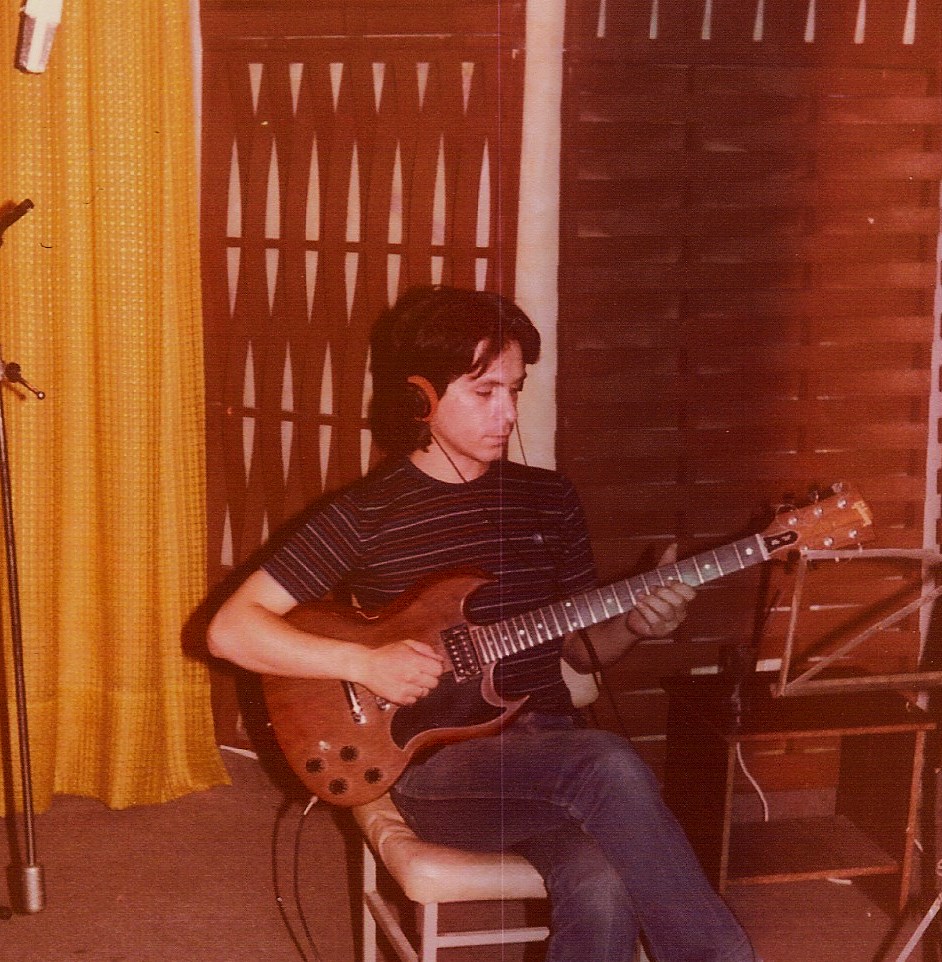
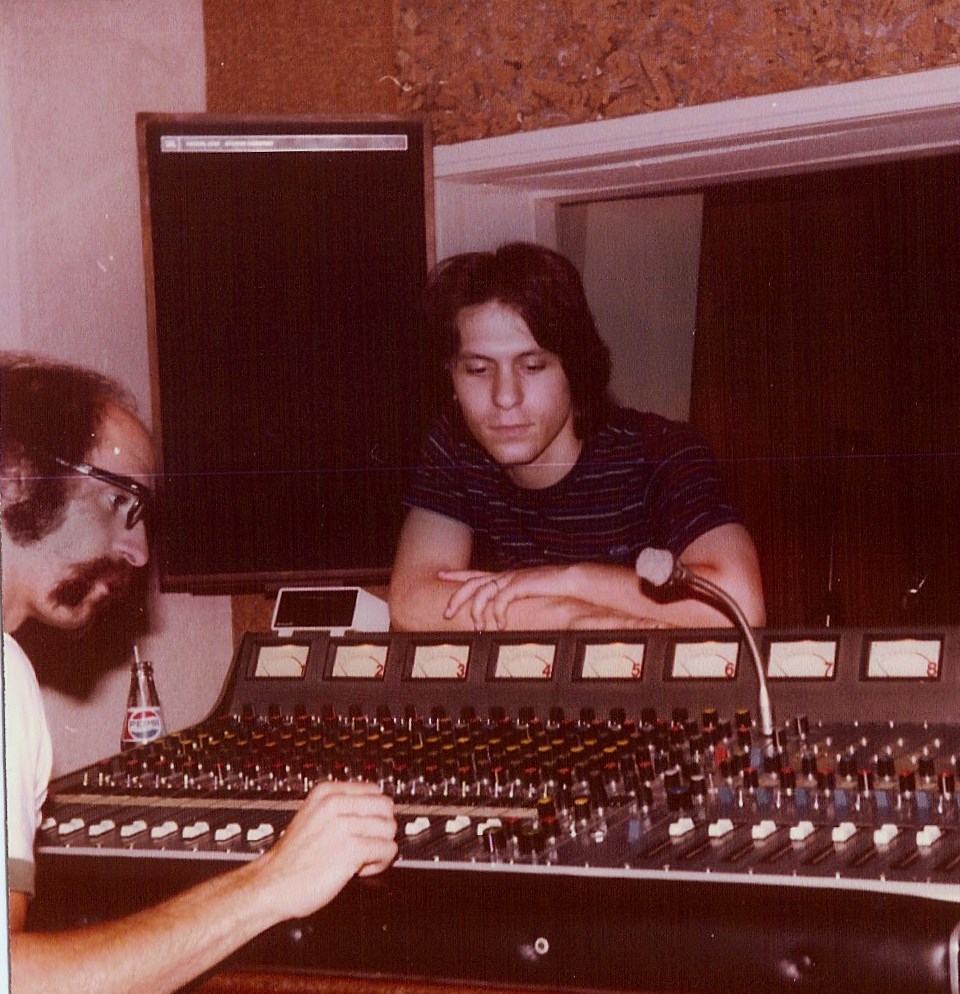
‘Armageddon’ was recorded in the early summer of 1980 in Athens at Kyriazis’ studio, called Mastersound Studio. The sound engineer was Johnny Allen, bassist and singer with the Vavoura Band. In total, the recording, playbacks, vocals, guitar solos and all the mixing were done within eight hours. It was an unimaginably short time for such a long album. It was, of course, an independent production, and the goal was a good demo. We had all put in a little money, and some friends and relatives had helped us. We had prepared quite well, and almost all the tracks were recorded literally only once. There was no room for error. Okay, we played like a real band, with passion and very high concentration! Only one song, ‘Armageddon I’, was recorded at Cosmos Sound with sound engineer Sakis Trikis a few months later. The studio costs for this song were paid by the great composer Mikis Theodorakis, with whom I later formed a strong and sincere friendship that lasted for many years.
Was the contrast between the acoustic and electric guitars built into the arrangements from the start?
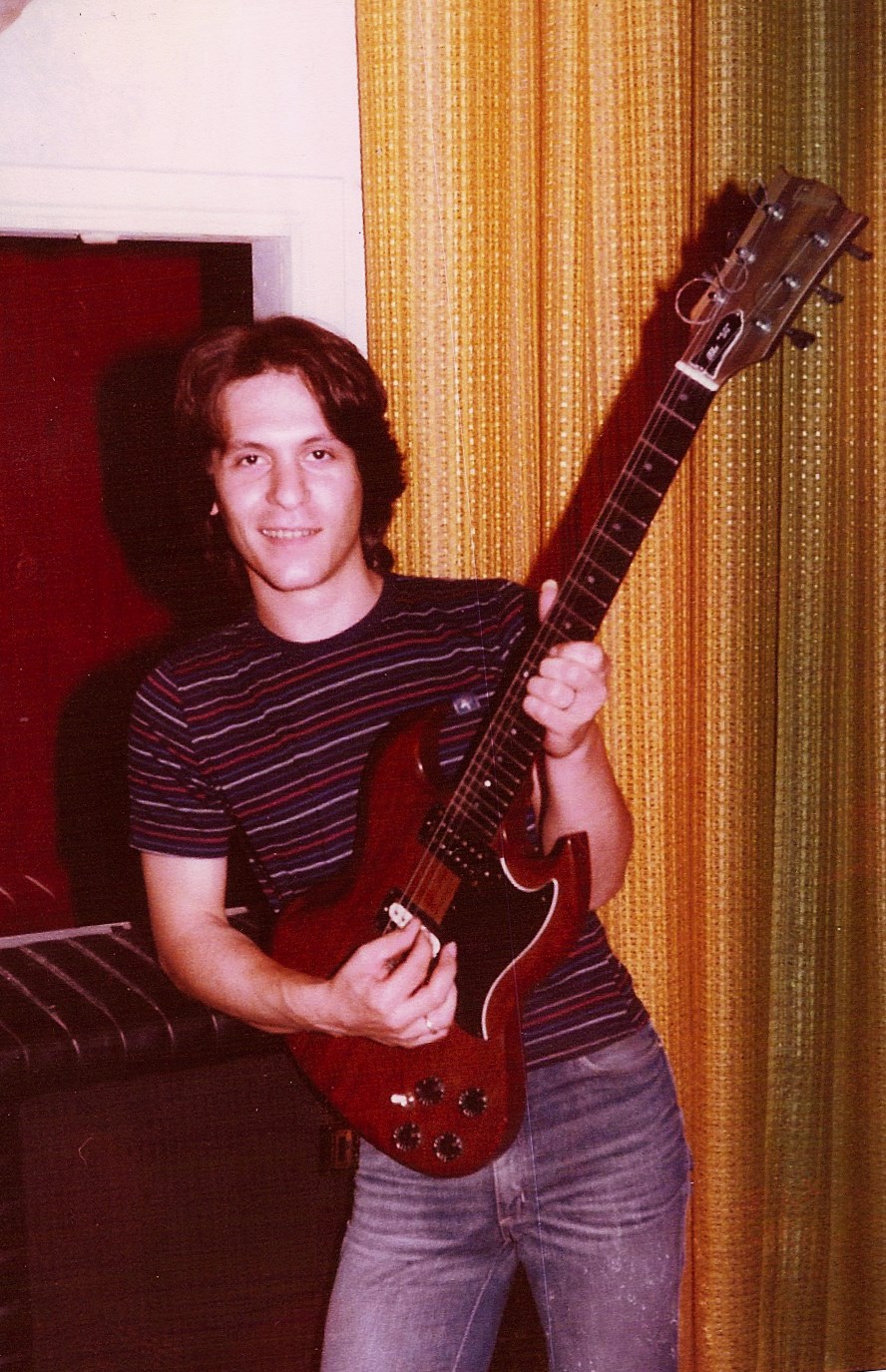
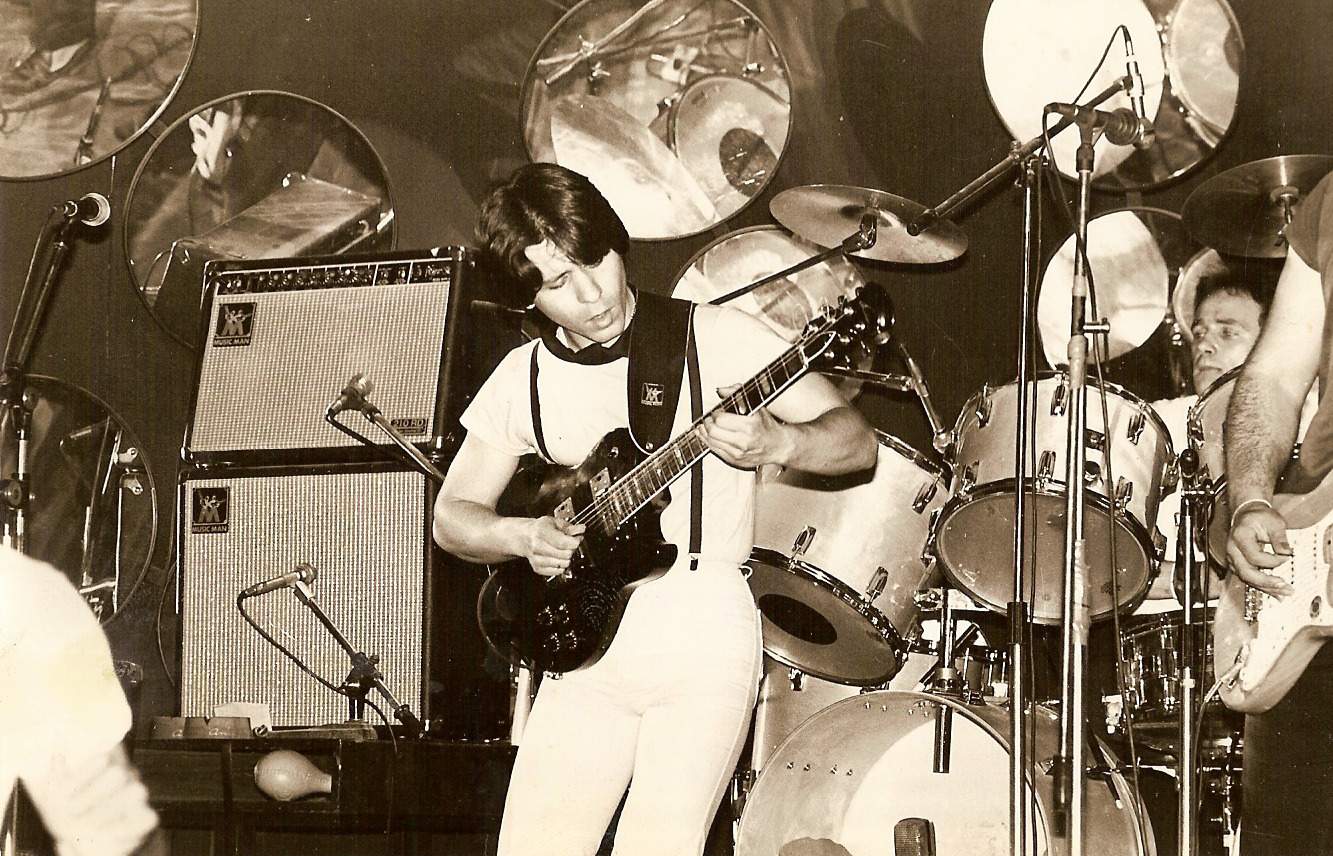
I’m glad you like the guitar interplay on the album. Yes, it was the first time I had recorded guitars in a studio, and I experimented a lot. It really gave a new sound to the compositions and, as you can hear, the guitars take on a leading melodic role. I then realized that my name should have been listed alongside the others as a composer. Only on ‘Armageddon II’ did my name finally appear. I still consider it unfair, but okay! What matters is that the work remains alive and interesting after half a century. I remember that, at the time, I only had a red Ovation Custom Balladeer acoustic guitar. I had borrowed a Gibson SG Studio in a natural wood finish for the recording from a student of mine. An excellent instrument! My friend Akis Tourkogiorgis of Socrates had also given me a Gibson Les Paul, a Fender amplifier and a 1979 Electro-Harmonix Big Muff pedal. I was only 18 years old at the time. Everything happened as though we had some higher protection above us, a guidance beyond all logic. I consciously incorporated the different types of guitar and their variations into the arrangements from the beginning.
How did you approach the vocals and the use of English and ancient Greek?
The lyrics are in English and ancient Greek. We wanted the melodic lines sometimes to recall Byzantine melos and ancient ritual songs, and at other times to recall pure rock songs. This was the way we thought of delivering the right message. The vocals are by Lavrentis, Pavlos, Eleni and me.
What happened after ‘Armageddon’ was released? Was it withdrawn, and why?
Indeed, after the release, we had problems because the work was considered blasphemous by the Church and dangerous for young people by part of the press. Our record company, Vertigo, was then forced to withdraw all the copies that had not been sold, and after a while they were destroyed. The first vinyl pressing consisted of 1,000 copies, of which approximately 300 to 500 were sold. These are now collectable, and for good reason.
Did the album feel understood when it first appeared, or was there little room in Greece for a record like it?
In Greece, folk songs and the music of the great Greek composers were flourishing. The album seemed like an alien in the record market. The audience was limited, and there were no places for us to play. Only in Athens were there two clubs, Kyttaro and Rodeo, where we played whenever we could. Few people understood what we were doing or what we were proposing in terms of composition. That is how the initial core of our audience was created. They were usually students, musicians and educated people, and then young people who liked rock.
When did you realize that ‘Armageddon’ had become a collector’s item and found an audience outside Greece? How did that feel?
Indeed, the original vinyl album and cassette are rare items. The masters were lost, and a reissue was impossible for many years. They are extremely rare and, from what I hear, very expensive. We had no idea what was happening with our music in the rest of the world. We had no contact. We had sold the rights to a publishing company, and they did what they thought was best for the work. Our own belief was that it had been a great artistic failure. At one point, when Lavrentis and I were playing at a large club in Athens, the then Minister of Culture came and asked us questions about ‘Armageddon’. We were surprised to learn for the first time in 2006 that the album was being released all over the world and that it had found an audience among rock listeners in Europe, America and Asia. The reviews were excellent. The Chinese Ministry of Culture had requested it at the time as a candidate to be heard at the 2008 Olympic Games in Beijing. The truth is that it filled me with a sense of vindication for the music I had written as a young man. Of course, the career that followed with Termites was very long and popular, but ‘Armageddon’ was our favourite child. I believe that if we had found support from critics and the media in 1980 to 1982, we would have continued on the path of progressive rock with very good compositional results. Termites are certainly one of the greatest bands in Greece of all time, with a long and influential history. Of course, Lavrentis and I continued on the same path as composers and performers, winning the bet.
What led the band to change its name to Termites and move towards Greek lyrics and a more direct rock sound?
Initially, it was the admission that creating and playing such progressive rock had not been a good idea. After what we thought was our failure, we turned to Greek lyrics and a form of rock that drew elements from fusion, blues and the ancient Greek musical mentality. Termites united the two opposing artistic camps in Greece at that time: those who listened to folk and traditional music, and those who listened only to English-language rock. My proposal offered a middle ground, essentially creating a new musical genre, the “modern Greek electric song”. It is what is still flourishing throughout the country, along with domestic pop, of course. So we acted realistically and won this piece of joy that belonged to us. The value of music grows when you share it.
When you listen to ‘Armageddon’ and the early Termites material now, do you hear a break or a clear continuity?
It was a development for me, as I had also taken on the band’s arrangements. I was looking for a new sound and new directions for Greek music. On the third album, ‘The Sinful Maria’, I believe I succeeded. After all, it was then that our music was loved, and we started playing in stadiums and large venues. However, the sense of progressive rock did not disappear from our music, but was transformed into a sound closer to rock ballads.
Does it bother you when P.L.J. Band is described only as an early stage before Termites? What do you think that view misses?
Both Lavrentis and I created significant careers in Greek music, each in his own field. After the breakup of P.L.J. Band and Termites, I continued to produce and arrange music for most of Machairitsas’ best-known albums. Of course, I also made my own music, with 26 gold and platinum records and concerts all over the planet. ‘Armageddon’ is a unique work of art, like a priceless diamond.
What was the idea behind the ‘Armageddon’ cover, and how involved was the band in choosing it?
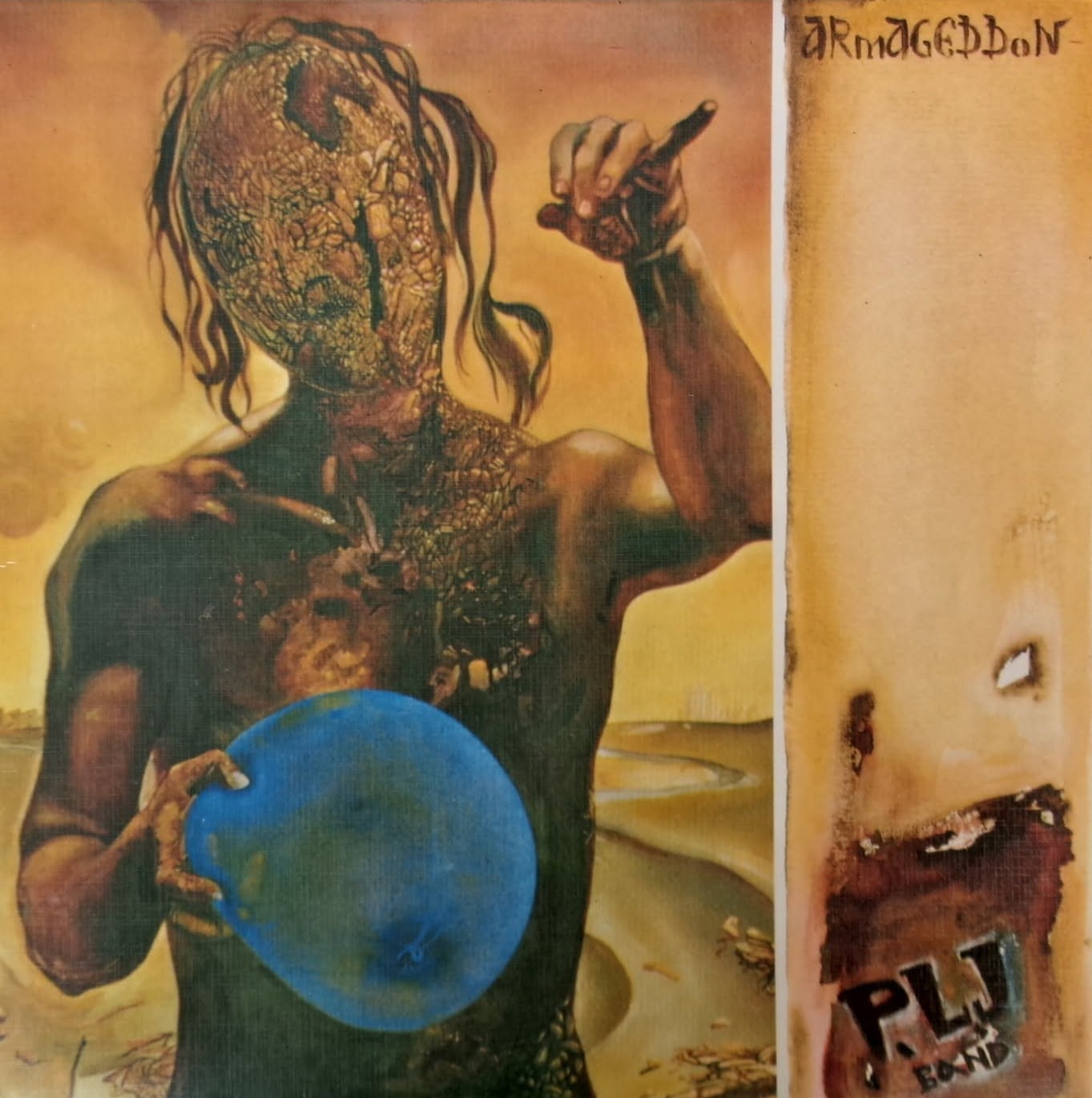
It is truly the ideal cover for this work. It is directly connected to the band’s ideas about the total destruction of the planet, presented in a surreal way that is consistent with our music. The figure of the mutant man holding a blue balloon is symbolic. The balloon about to burst is modern society. It is the moment just before Armageddon. It has a philosophical and poetic mood and a clear reference to the Byzantine iconographic tradition. This mixture creates a special atmosphere that fits perfectly with the dark, apocalyptic style of ‘Armageddon’. We had asked the painter Aristomenis Eleftheria Tsolakis to create it, and he painted it for us. The work is titled ‘Alienation’ and was created in 1977. I believe a German collector later bought the painting for his collection.
What was P.L.J. Band like on stage? Did you play the songs as they appeared on record, or did they change live?
The songs were played at the concerts exactly as they appear on the recorded album. When these pieces of music were played in large open spaces, they found their true essence. There was a huge amount of power and a large dose of truth, like a Byzantine army battalion advancing. The mysterious element grew considerably at the concerts. We always played my compositions that were not included on ‘Armageddon’. These were also progressive, but with many elements of fusion music, using ancient Greek scales and many similar elements. But the spiritual element and the philosophical view of music always prevailed, at least for me.
Which concert best captured P.L.J. Band at full force?
The band’s most important concert was at the Peace and Friendship Stadium in Piraeus in 1997, in front of 25,000 people. A large part of ‘Armageddon’ was played there, and the audience adored it. Another artistically important concert was held in 2014 at the Odeon of Herodes Atticus beneath the Acropolis in Athens, where ‘Armageddon’ was presented as the main work. This was also our last concert. We began and ended our journey as a band with ‘Armageddon’.
I don’t know about Europe, but today in Greece it is often considered one of the most exciting progressive rock albums ever released, a masterpiece of progressive rock music.
Do you think listeners outside Greece miss any specifically Greek elements in ‘Armageddon’?
Music is not art, but cosmic architecture. From the Orphics to the Pythagoreans, music is considered a language addressed not to the ears, but to the soul. It does not describe or explain the world. It reveals the world. If this is what young listeners receive from the work, then they are listening with a positive attitude and will receive corresponding benefits. If not, let them listen again when they are a little more mature. Music is a passage of sound that takes you out of everyday time and introduces you to a sacred time, and I arranged the album with this philosophy.
You have worked on many other projects. Which have been most important to you?
Yes, I have been, and remain, active in many projects. I have worked in Greece and the rest of the world over the last 46 years. The most important project after Termites broke up is the album ‘Beyond the Light’, which was recorded in New York, USA, and became a major commercial success around the world. It is a concept work like ‘Armageddon’ that combines world music, jazz, high-level electric guitar and ancient Greek elements. It features performances by world-class musicians, including Eleftheria Arvanitaki and the American musicians Scott Ambush on bass, Tom Schuman on keyboards, and Joel Rosenblatt on drums, all members of Spyro Gyra, as well as Amanda Homi and others. Its melody has made it stand out in my discography. It established me as an international composer, a guitarist with an international aesthetic and a producer with a distinctive personal sound. It was released in 2000 by Mercury/Universal. It has a cinematic atmosphere and a strong sense of melody. ‘Beyond the Light’ combines Greek emotion with international production. It remains timeless without sounding “of its era”. Many music analysts around the world characterize the genre created by Antonis Mitzelos as a type of modern classical music with ethnic progressive rock elements. That is exactly the evolution of the genre of the ‘Armageddon’ album. Critics often classify it in the same category as Pat Metheny’s ‘Secret Story’, Peter Gabriel’s ‘Passion’, Govi’s ‘Seventh Heaven’ and Dominic Miller’s ‘Second Nature’.
I have released my songs in Japanese with Akira Inaba. Another production is the recent 2025 concept album containing music for a theatrical performance based on the sacred text of Homer’s ‘Odyssey’. It was a huge commercial success and sold out in all the ancient theatres of Greece where it was performed. ‘Odyssey’ is not fusion, rock or world music. It is modern European music with a Greek soul. It has a Greek mythological identity, orchestral writing with world-modal elements, theatrical dramaturgy and rhythmic Greekness. It is a rare combination that makes ‘Odyssey’ one of the most important Greek works of contemporary music of the last 20 years. That is what the critics say.
I have published approximately 300 songs with the most important Greek performers, some of which are now considered “classical”. In recent years, alongside my guitar work and songs, I have also been composing modern classical music for small and large ensembles. I have completed a cycle of music consisting of ten compositions for string orchestra, several sonatas and string quartets, and four works for symphony orchestra.
In total, I released seven albums, two studio 7-inch records, seven collections and made five appearances with Termites (P.L.J. Band). I have released 12 solo albums and 30 singles, and I have participated as a composer on approximately 150 other multi-artist albums and collections. At the same time, I have arranged 30 albums for other artists.
I have played more than 3,500 concerts and performed as a musician on approximately 2,500 songs in the Greek discography. I have received 16 platinum and ten gold records. As a composer and guitarist, I have played at many ethnic and jazz festivals, including the Pirineos Sur Festival in Spain and the Hemispheres Festival in Sydney, Australia, as well as festivals in France, Belgium, Canada, New Zealand, Tasmania, Denmark, Great Britain, the Netherlands, Israel, the USA, Romania, Germany, Finland and Portugal. Highlights included concerts at the Sfinks Festival, the WOMAD festivals and the Montreux Jazz Festival in Switzerland during Verve Night at Miles Davis Hall, with Eleftheria Arvanitaki, Mari Boine and my musical mentor, John McLaughlin, on 8 July 1999. I have given concerts in historic venues such as L’Olympia and La Cigale in Paris, the Dominion Theatre and Barbican Centre in London, venues in Brooklyn, New York, the Palau de la Música in Barcelona, the Cirque Royal in Brussels, Madison Square Garden and Town Hall in New York, and the Berklee Performance Center in Boston. I have also performed at Ancient Olympia, the Odeon of Herodes Atticus and the ancient theatre of Delphi, among other places.
Apart from Greek artists, I have occasionally collaborated with important international musicians such as Earl “Chinna” Smith (guitar, Bob Marley), Elton John, Scott Kreitzer on saxophone, Tom Schuman on piano, Amanda Homi, Scott Ambush on bass, Joel Rosenblatt, Ara Dinkjian, Arto Tunçboyacıyan, Akira Inaba, Cesária Évora, Night Ark, Angelo Branduardi, Paolo Conte, Julie Massino, Eiji Kawamura, Toshiro Imaizumi and Fide Köksal, mainly playing jazz-rock fusion combined with ethnic world music. And we continue…
Which P.L.J. Band track best represents the group, and why?
The most representative is ‘Armageddon II’ because it brings together all the elements of the band’s personality. It is one of the most peculiar, dark and psychedelic musical themes on the album. Its sound combines acoustic and electric textures, space-rock atmospheres, folk elements and intense psychedelia, creating a unique sound universe that has gained international fame and cult status.
Is there anything else you would like to add?
For almost half a century, I have been writing music and playing guitar for my fellow human beings. The essence of music lies in the reason it was composed. My principle is that music does not transmit information, but states of existence. It does not say “what it is”, but shows how it is. It does not describe the truth; it is a way of accessing the truth. Music is secret knowledge because it does not pass through the mind, but through Being. Thank you for your goodwill, your insightful questions and the space offered by the excellent Psychedelic Baby Magazine. I hope my words illuminate the true story of P.L.J. Band!
Klemen Breznikar

I still cannot understand why the album was considered blasphemous. Was it quoting Bible text, or was it pushing a doctrine? I am a Baptist with total love for the Bible but reject the Orthodox Church as a man-made false religion; so I don’t really care about what the Orthodoxy calls true or false but from a Bible perspective I do of course. But since I don’t speak Greek or Latin I couldn’t work it out. I heard the song last night by the way for the first time ever (on Krautrock Radio World, online radio)