
Glenn Morrow: From Hoboken and The Individuals to Bar/None and Cry For Help
Glenn Morrow remembers a Hoboken where trash blew down mostly empty streets, the waterfront was lined with abandoned piers and six rooms could be rented for $80 a month.
His band “a” played the first show at Maxwell’s. Nobody knew yet what Maxwell’s would become, or that a whole network of bands, writers and friends would gather around that small part of New Jersey.
Morrow has had a useful habit of being around when things were starting. After “a”, he formed The Individuals. He wrote and edited for New York Rocker, where The dB’s practiced in the office and people like Joan Jett, Robert Fripp and The Go-Go’s would pass through. He remembers going out to Haledon to find out what The Feelies were doing, meeting Jeffrey Lee Pierce before The Gun Club, and hearing records by bands that were only beginning to travel beyond their own towns.
Then came Rage To Live and, in 1986, the first release on Bar/None. Morrow eventually became Tom Prendergast’s partner. One day in Tompkins Square Park he met John Flansburgh, liked the They Might Be Giants demo he was handed, and started helping the band. Soon enough Flansburgh called and said, “We want to be on Bar/None.”
Morrow spent the next several decades helping other people make and release records. But music never really became only a business. After playing at the closing of Maxwell’s in 2013, he found himself thinking, “I need to be in a band again!” New songs followed, and eventually Cry For Help.
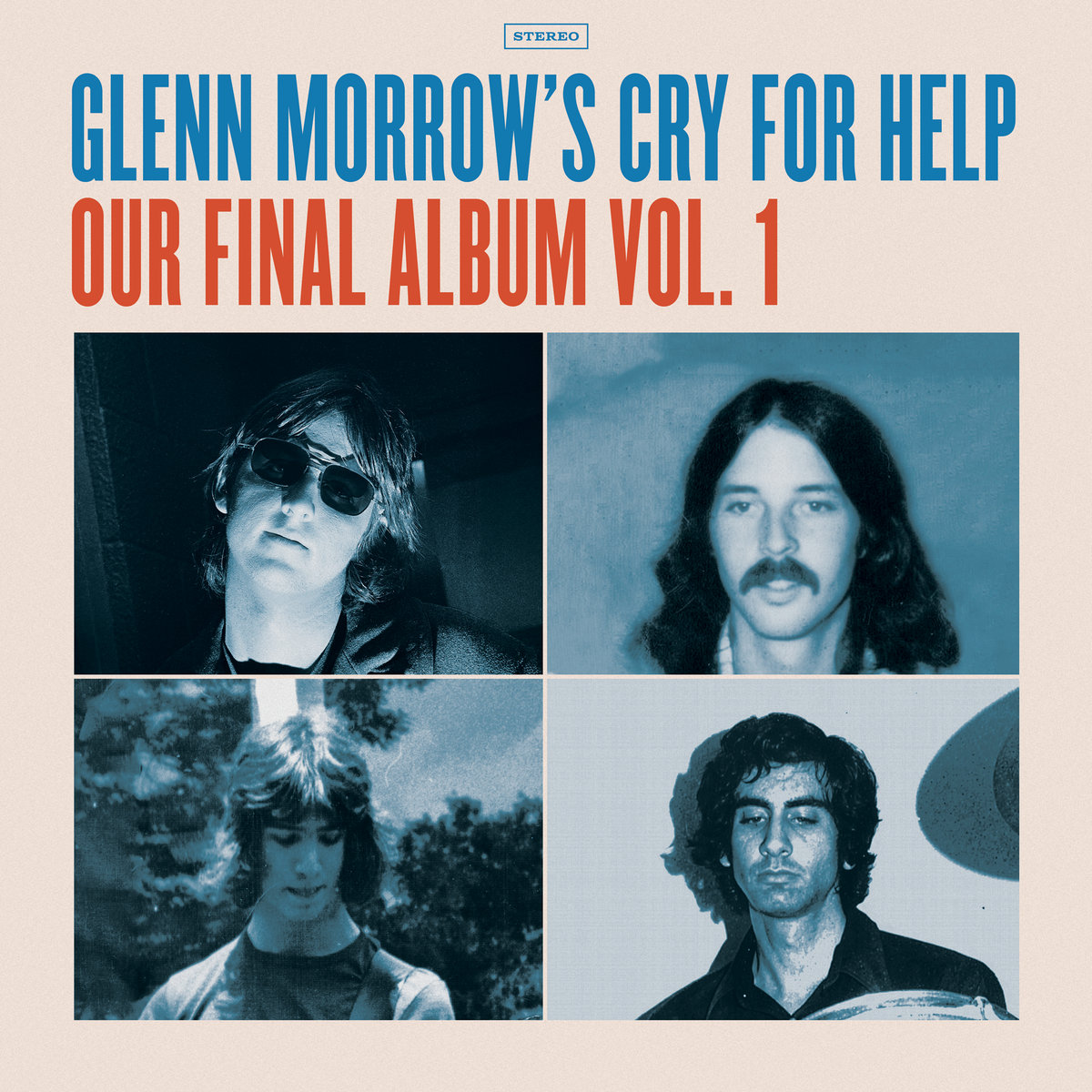
Their latest record is called ‘Our Final Album Vol. 1’. Morrow is 70 now and sees the joke in the title. He also sounds quite serious about continuing.
“More guitar, more travel, more writing,” he says.
That seems like a good place to begin.
“We feared no genre, although everything was probably a bit left of center.”
You’ve been involved in music in many different ways: “a”, The Individuals, Rage To Live, Bar/None and now Cry For Help. When you look back, does it all feel connected?
Glenn Morrow: I also worked at New York Rocker magazine in the late ’70s as a writer and editor and was a demo tape listener at Warner Bros. So there is certainly a through line of music, but along the way you meet all sorts of people that lead you into different opportunities.
“a” played the first show at Maxwell’s. What was Hoboken like at that time?
I remember trash blowing through empty streets and, on a Saturday night, an emergency room nurse telling me about all the knife wounds that came in from stabbings on the back side of town.
The waterfront was either closed off or there were abandoned, rotting piers. Now it’s all parks and walkways. My first apartment was six rooms for $80.00 a month.
The rest of “a” went on to form The Bongos, while you moved on to The Individuals. What led you in different directions?
I really enjoyed collaborating on songs with Richard Barone. He taught me a lot and had a very clear vision and some musical training, while I was just kind of making it up as I learned new chord shapes. I think we both got better as writers after we went our separate ways, but I do sometimes wonder what we could have come up with if we’d stayed together a little longer.
The Individuals are often associated with the “Hoboken Sound”, along with The Feelies and others. Did that feel like a real scene to you at the time?
It did seem that we shared some specific musical DNA with The Feelies, The Bongos, The dB’s, Human Switchboard. We all had reverence for the Velvet Underground and admired the bands that came out of the CBGB scene, especially Television, Patti Smith, Richard Hell and the Ramones.
You were also writing and editing at New York Rocker. How did that affect the way you thought about music and being in a band?
I might have been the first “journalist” to go out to Haledon, NJ, to find out what The Feelies were about. A lot of the New York Rocker crowd drifted to Hoboken. Ira and Georgia of Yo La Tengo did; Ira was an editor at the magazine. Most of The dB’s moved there, and they also practiced in the office.
Of course, I got turned on to all kinds of music that was coming through the door: records by The Embarrassment, meeting Jeffrey Lee Pierce, who ran the Blondie fan club before he started The Gun Club, R.E.M., Pylon, Prince, Flipper, no wave bands, George Clinton, all kinds of stuff. I remember Joan Jett, The Go-Go’s and Robert Fripp all stopping by the office.
Rage To Live became the first Bar/None release in 1986. How did you go from being in bands to becoming part of the label?
I always gravitated to the people doing the business, probably because I was a fairly untrained musician and I wanted to understand how it all worked. I also did most of the radio and press and management for The Individuals, so I had some skills and connections when I joined Bar/None as label founder Tom Prendergast’s partner. I had been pitching my own bands for about ten years when I started working at Bar/None, so I knew I wanted to find artists that were better than what I was up to.
When Bar/None was starting out, what were you looking for in a band or a record?
I was always looking for bands that had at least ten good songs so you had an undeniable album. Not an easy task! I felt like I wanted albums that felt like classics. I wasn’t interested in cookie-cutter knockoffs of things that were popular. Things would come in waves; there were a lot of jangly R.E.M.-style bands or hard rock bands that sounded like Van Halen.
How did They Might Be Giants become part of Bar/None?
Tom was just starting out with the Rage To Live album, and I met John Flansburgh from They Might Be Giants one day in Tompkins Square Park. I liked the demo he gave me. I started introducing him to people I knew: A&R guys, writers, club promoters. I got them a gig opening for The Replacements at Maxwell’s. One day he just called me up and said, “We want to be on Bar/None.” I went to Tom and said, “I found this band I want to work with. How about I become your partner?”
Bar/None has released artists who often don’t fit neatly into one category. Was that something you consciously looked for?
When people thought we were going in one direction, we would often pivot. We feared no genre, although everything was probably a bit left of center.
Did being an artist yourself affect the way you worked with musicians at Bar/None?
I knew when something was jive from an artist’s perspective. I also knew there were certain things that were necessary to provide to give an artist some kind of a shot.
After spending so many years working on other people’s records, what was it like to return to your own songs with Cry For Help?
I am on a very slow arc of becoming a better musician. I play more guitar than I ever have and really love learning stuff. I just finally learned how to properly read music. I feel like my songcraft keeps getting better, which kind of shocks me. Maybe I’m a little deluded!
Cry For Help began after the final night at Maxwell’s in 2013, when you played again with some of your old groups. What did that night change for you?
It was fun to be at the center of things again, having been perceived as more of a businessman than a singer-songwriter.
When the celebration was over, I thought, “Now what? I like this! I need to be in a band again!” And I was surprised when all these new songs suddenly showed up.
The new record is called ‘Our Final Album Vol. 1’. Where did that title come from?
Definitely “all of the above.” It’s like the record by R. Stevie Moore and Jason Falkner Bar/None put out called ‘Make It Be’. Stevie intones in a serious, sonorous voice, “When does your album drop?” It’s very funny. At 70 years of age, I know the future is finite, but I am loving this time right now. I kinda don’t give a fuck what anybody thinks.
Ray Ketchem has recorded the Cry For Help albums with you at Magic Door Studio. What makes him such a good fit for the band?
Ray actually played drums for us on early demos and some early live gigs before Ron Metz committed. He has always been incredibly enthusiastic about what we are doing, and he makes great-sounding records. He gets the best performances out of us that we are capable of and is a master mixer.
The new album moves through quite a few different styles. Have you always liked records that move around like that?
I’ve always liked records that go to a lot of places. Beatles albums, the third Velvet Underground record, Todd Rundgren’s ‘A Wizard, a True Star’. I love a Ramones album, but I also like a lot of change-ups.
Andrew Burton is featured throughout the new record and created the intro to ‘In Love With Love’. What did he bring to the songs?
He brought cinematic soundscapes on the slower tunes and banged away to push the rhythm along on the faster numbers. He is truly a creative master of a wide array of keyboards.
Plus, we both share a love of Nicky Hopkins.
You recently handed Bar/None over to Emmy Black. Is ‘Begin Again’ directly connected to that change?
Listen to the song ‘Begin Again’. It’s all about the handoff. I’m cheering for the next generation to move it forward. Emmy and I share a birthday, 30 years apart. She was born the year Bar/None started. The Bar/None baby!
What’s next for you?
More guitar, more travel, more writing. I moved out of Hoboken about seven years ago, and I live in West Harlem and I love it there. I love walking around the city taking photos. And I’m trying to stay healthy for the next decade at least.
Klemen Breznikar
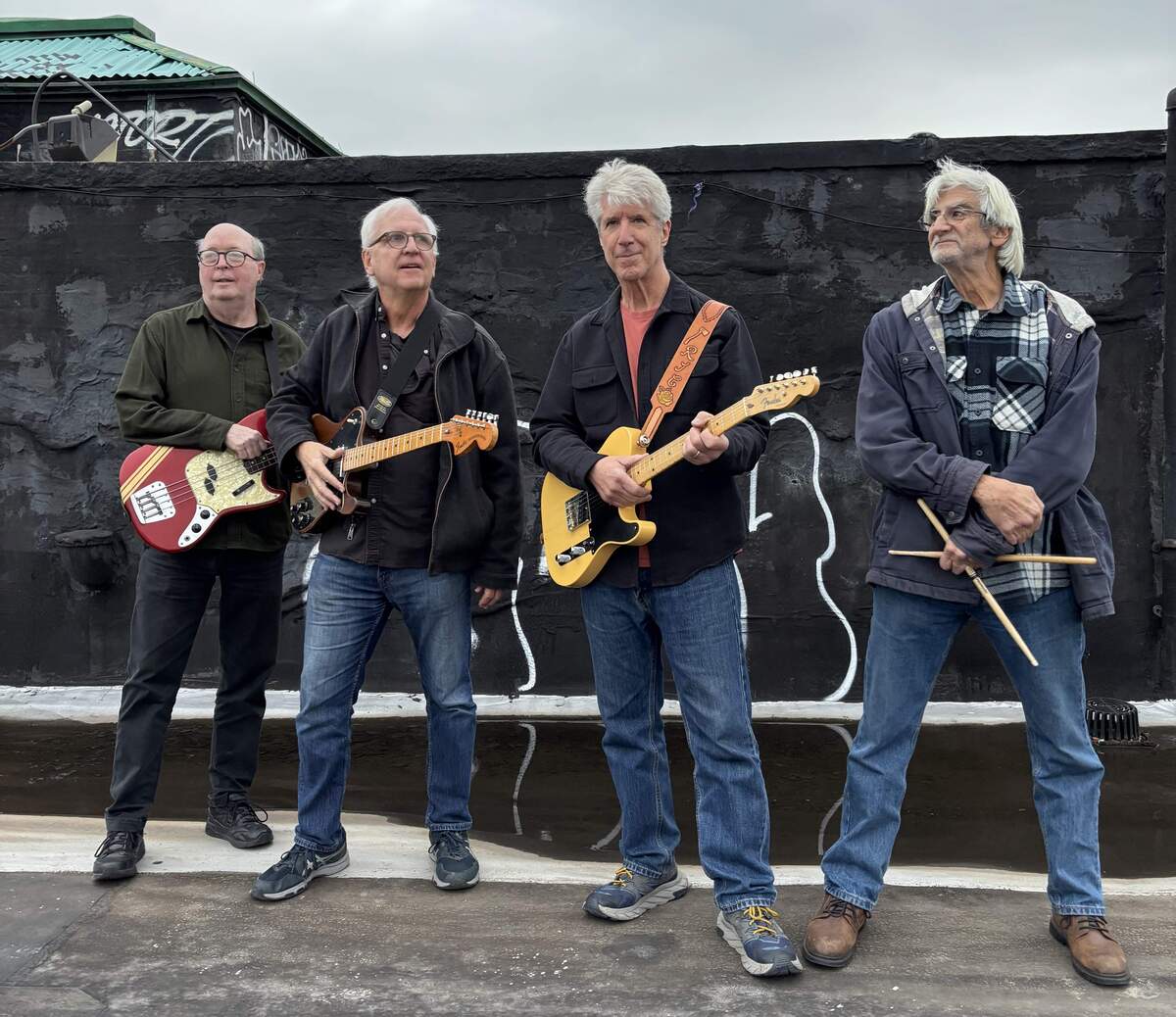
Headline credit: Glenn Morrow’s Cry For Help (Photo: Mike Sansevere)
Glenn Morrow’s Cry For Help Facebook / Instagram
Bar/None Records Website / Facebook / Instagram / Bandcamp / YouTube