
Alexander Hacke and Danielle de Picciotto: From Einstürzende Neubauten and the Love Parade to hackedepicciotto
The duo discuss Berlin, nomadic life and their new album, ‘LICHTUNG’.
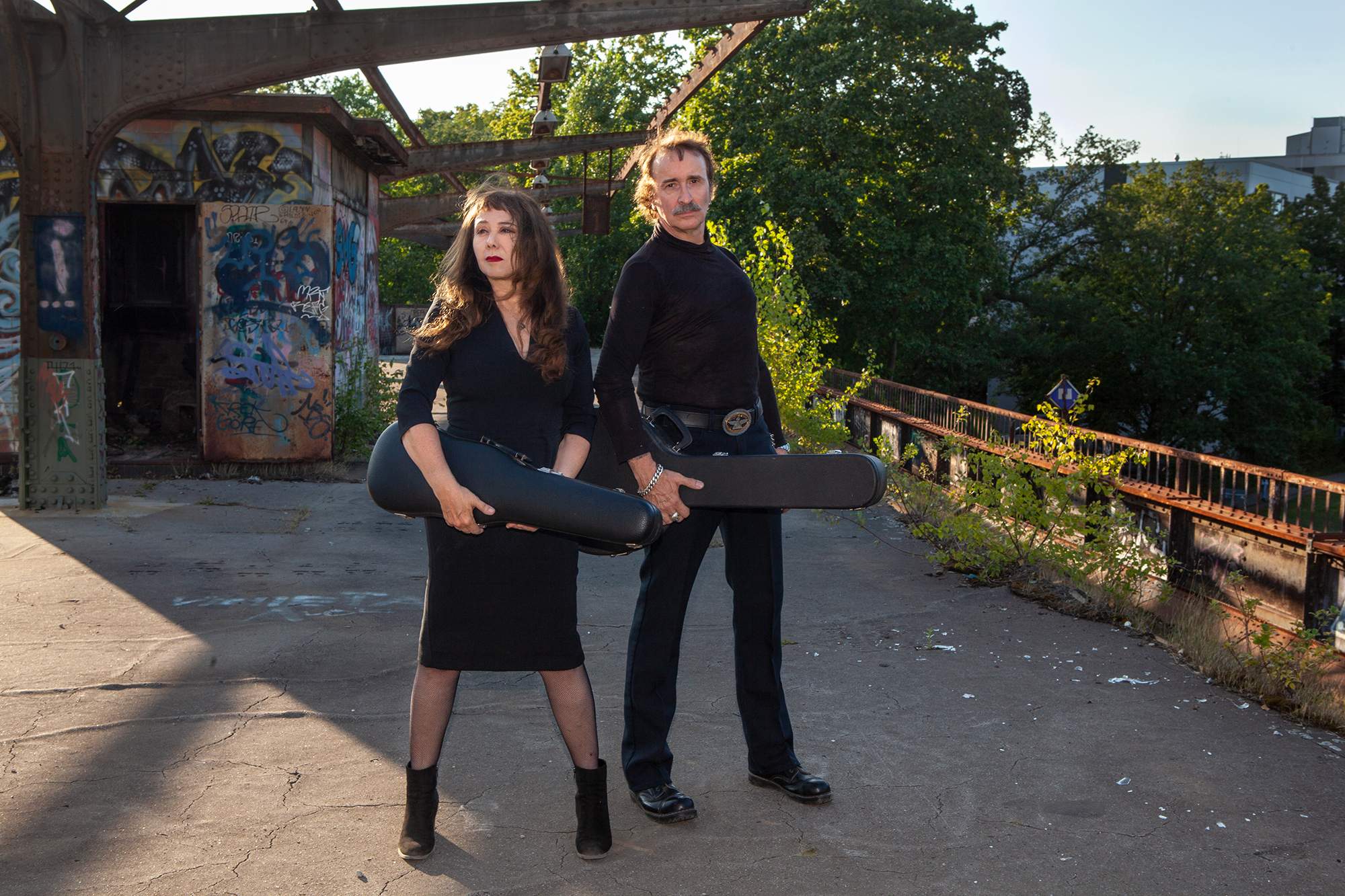
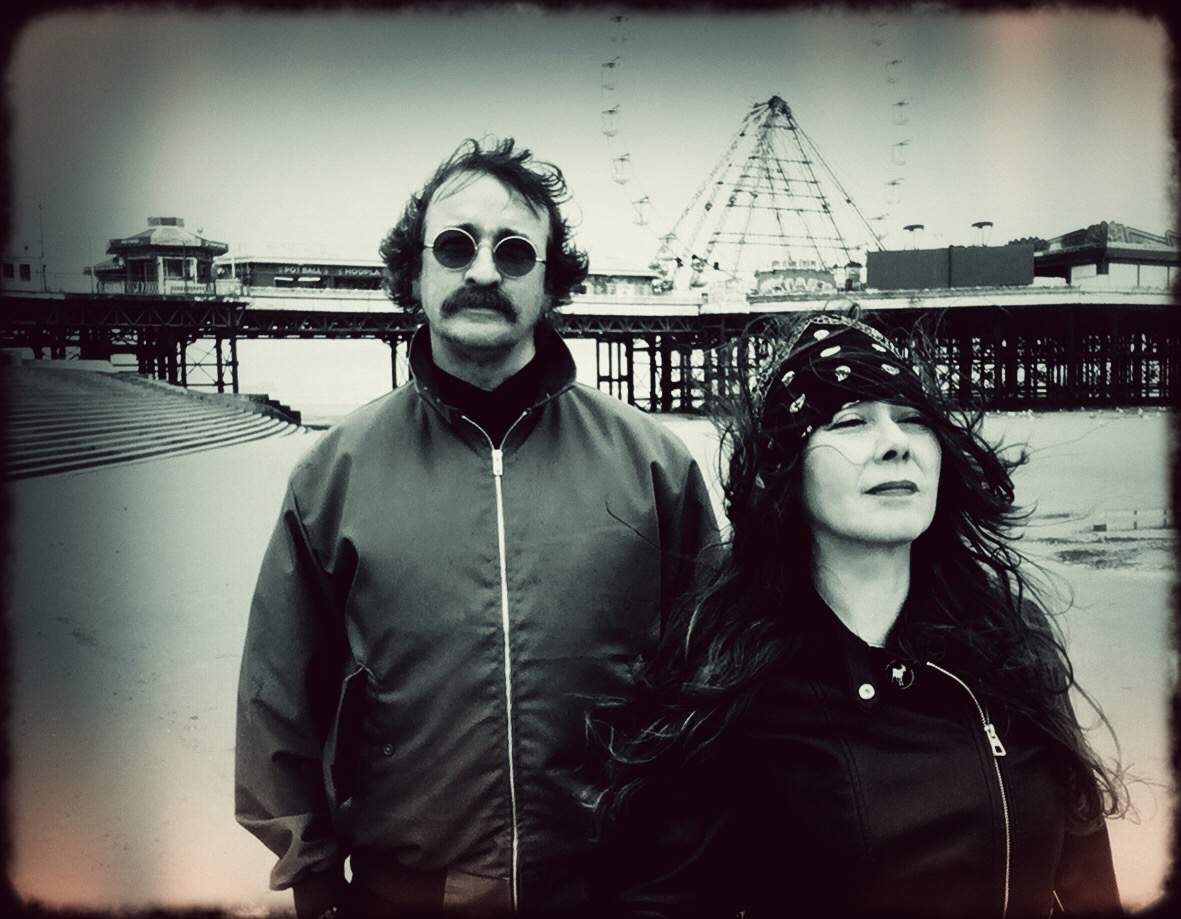
Alexander Hacke joined Einstürzende Neubauten as a teenager and remained a central member of the group for more than four decades. Danielle de Picciotto is an interdisciplinary artist, musician, filmmaker and writer who co-founded the Love Parade with Dr. Motte in Berlin in 1989. Their paths crossed within the city’s music and art scenes, and since forming hackedepicciotto they have developed a body of work built around sound, film, drawing, performance and years of constant travel.
For much of their life together, Alexander and Danielle were almost always on the move. They toured constantly, worked out of temporary spaces, and built hackedepicciotto without ever really having a permanent base. Their new album, ‘LICHTUNG’, comes after that long stretch of nomadic life and reflects a noticeably different way of working. They have now settled on the outskirts of Berlin, surrounded by nature and not far from the area where Alexander grew up.
For Alexander, being back there has brought up memories he thought he had left behind. He describes it as “a bit like time travel”, since he had mostly only returned to the area in dreams before. The change of place has also shifted the rhythm of their work. As he puts it, “the freedom of moving about has been replaced with the luxury of being able to look into things in much more detail.”
For Danielle, settling has been more complicated. “I was pretty much born a nomad,” she says, referring to a childhood spent moving between military bases in the United States and Europe. After years of hotel rooms, residencies and constant touring, she admits that “with a fixed home, I get panic attacks.” The stillness has taken some getting used to, but it has also given her more space to read, think, and return to visual work that was harder to maintain while travelling.
‘LICHTUNG’ carries this period of transition directly into the music. Danielle wrote all the lyrics in German for the first time, while the duo moved beyond the repetitive drones of some of their earlier work and began to explore electronics, rhythm, piano and unusual acoustic instruments in a more open way. There was no set concept guiding the album. As Danielle puts it, “we just jumped into the sound bath and let things happen.”
In the following interviews, Alexander and Danielle talk about the making of ‘LICHTUNG’, their changing relationship with Berlin, the end of their nomadic years, and the different paths that led them to this point.
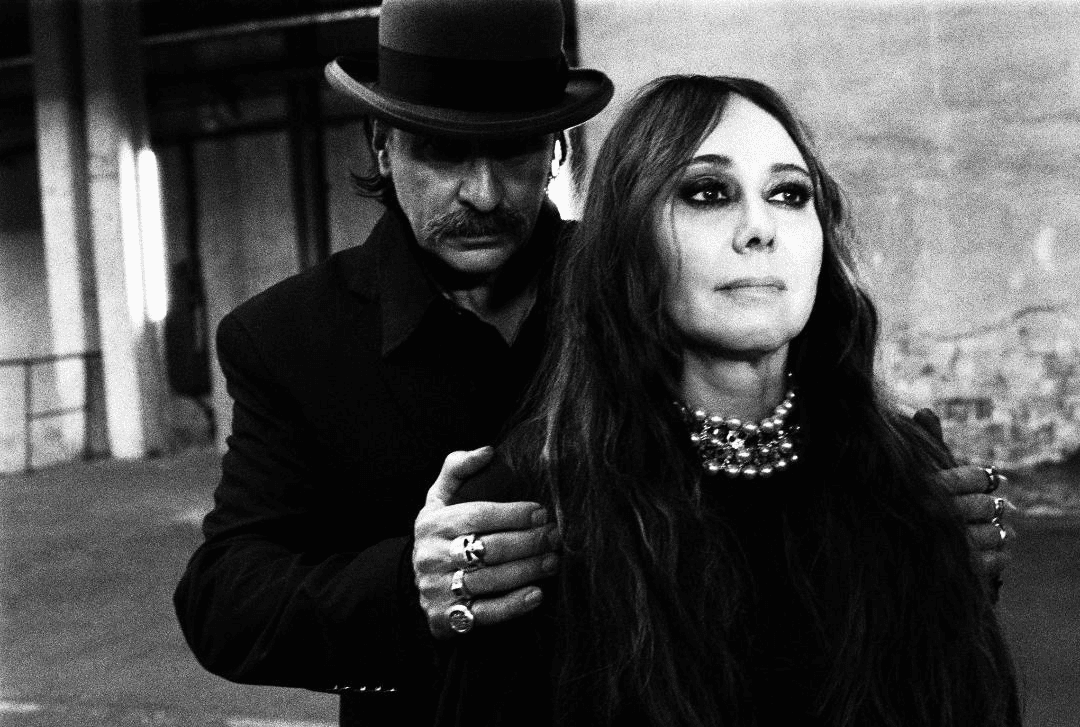
“Nostalgia is the longing for a past rooted entirely in imagination.”
‘LICHTUNG’ takes its title from a clearing in a forest. After fourteen years of living and working nomadically with Danielle, you have now settled near Berlin, close to nature and to where you grew up. How has returning to this area affected the album?
Alexander Hacke: To me it certainly feels a bit like time travel, because the place reconnects me to childhood memories. I have visited this area from time to time in the past, but mostly in my dreams, and I would never have imagined actually moving back here in real life.
This is the first hackedepicciotto studio album released since you left Einstürzende Neubauten. It also returns to electronic elements that were part of your early work as Alexander von Borsig. Did being back near the places where you grew up change the way you approached those sounds?
Well, I am a very different person now, and it would be worrying if that was not the case. Since my teenage years, I have undergone many transformations, experienced a variety of trauma, catharsis and joy. All in all, I believe I am a lot more capable than when I first lived here and my only desire was to get out and as far away as possible as soon as possible. I suppose that’s what most teenagers feel pretty much anywhere in the world.
Danielle wrote all the lyrics for ‘LICHTUNG’ in German. You have said that this moved the music away from some Anglo-American conventions. How did the change of language affect the way you approached the music?
They did! With the language, the topography of the music changed. Naturally, there is something very “old world” about this language, and therefore it creates a much more severe juxtaposition to the “otherworldly” electronics on the one hand, and on the other has a grounding effect, as German is not the language spoken in aviation communications all over the world, or used as the compromise lingo by tourists wherever they go, and it hasn’t dominated the world of mainstream music forever.
‘LICHTUNG’ is made up of long, connected pieces rather than clearly separated songs. How did settling down after years of travelling change the way you worked on the album?
As we feel at home and are not detached from a safe haven, as we were when we were nomadic, we get to look at the world from a different perspective. This may be a temporary and in itself transitory situation, you never know nowadays, but for right now the freedom of moving about has been replaced with the luxury of being able to look into things in much more detail, and we get the chance to make comparisons and research a completely different set of structures.
“We refused to adapt to any norms.”
You joined Einstürzende Neubauten as a teenager in West Berlin. At the time, what did the band’s use of metal, electronics, tape, noise and found objects mean to you?
For me it was not only rebellion against the system, as in dropping out of school, refusing to pick up a regular job and becoming a full-blown musician instead, but the music and the general approach and philosophy of Neubauten even negated the subcultural patterns of the time: punk rock was square and old-fashioned compared to what we were doing, and new wave was sleek and way too commercial to be interesting. We believed that something had to be raw and primitive in order to be authentic, and we refused to adapt to any norms.
At what point did you feel that Einstürzende Neubauten had developed a musical language of its own?
We had developed a language in musical terms and in the actual way of communicating while creating music. A lot of it would be informed by a certain sense of humor and our very own brand of anarchistic arrogance. There were no set lists or sound checks. A lot of what we would do on stage looked a lot more dangerous than it was, while other things were just insanely irresponsible without having any sensational optics whatsoever. In the same way, the background stories of many sounds would be a lot more interesting than what you would actually get to listen to, while others would just sound absolutely mind-blowing, while being produced with the most profane means.
Your role in Einstürzende Neubauten changed considerably over the years. How did you grow into taking greater responsibility within the band?
I learned that I could trust myself, I guess. I figured that I could actually handle the responsibility of being in charge.
Across albums such as ‘Kollaps’, ‘Halber Mensch’, ‘Haus der Lüge’, ‘Ende Neu’, ‘Silence Is Sexy’, ‘Perpetuum Mobile’, ‘Alles in Allem’ and ‘Rampen’, the band’s use of dynamics and space changed greatly. How do you see that development?
We learned about dynamics, about efficiency and the economics of energy. We would continue to research materials, structures, techniques and strategies, even if we often felt like there may not be a lot more to discover.
The supporter projects allowed people to follow the band’s work while it was being made. How did that affect the way you worked and your relationship with the audience?
At first we were worried that this intimacy could be demystifying and turn people off, but the more we revealed about ourselves and our practice, the more people would become enamored with us. It was truly baffling! But yeah, we would turn up in the studio on time and try to keep silly conflicts out of sight while we were online. And even though the projects were in no way democratic creations involving the supporters, their opinions and contributions were indeed very valuable in the process of creation.
Berlin has changed greatly since the early years of Einstürzende Neubauten. How has your own relationship with the city changed, and what do you think people misunderstand when they romanticise the old Berlin scene?
I too have changed! I don’t participate in the allegedly still vibrant nightlife of the city. My self-destructive days are over; that’s one thing I definitely failed at, haha.
I do not believe in sentimental romanticism about a place, though. Nostalgia is the longing for a past rooted entirely in imagination. Even though the place has completely changed in the past forty years, as any place damn well should, I enjoy my still-existing familiarity with it, and I am certain that there are interesting things being developed somewhere around here all the time, and people will discover spots and strategies well worth exploring.
You left Einstürzende Neubauten after more than four decades. How did the decision develop, and how do you feel about it now?
It was not an easy decision to make, but a situation had evolved, a pattern established itself, which I could no longer tolerate, and so, in order to stay sane and maintain my integrity, I had no choice but to make my exit. I am proud of almost everything we created together, and I cherish the many good times we had in those four and a half decades, but now I feel extremely liberated and detached from this set of personalities. I have no regrets, and I don’t miss being a part of it at all.
Alexander’s story situates ‘LICHTUNG’ within a much longer arc, from his teenage years in West Berlin and Einstürzende Neubauten through to his decision to start a new chapter. Danielle’s perspective follows, approaching the album through language, movement, visual art, and her own complicated relationship with the idea of home.
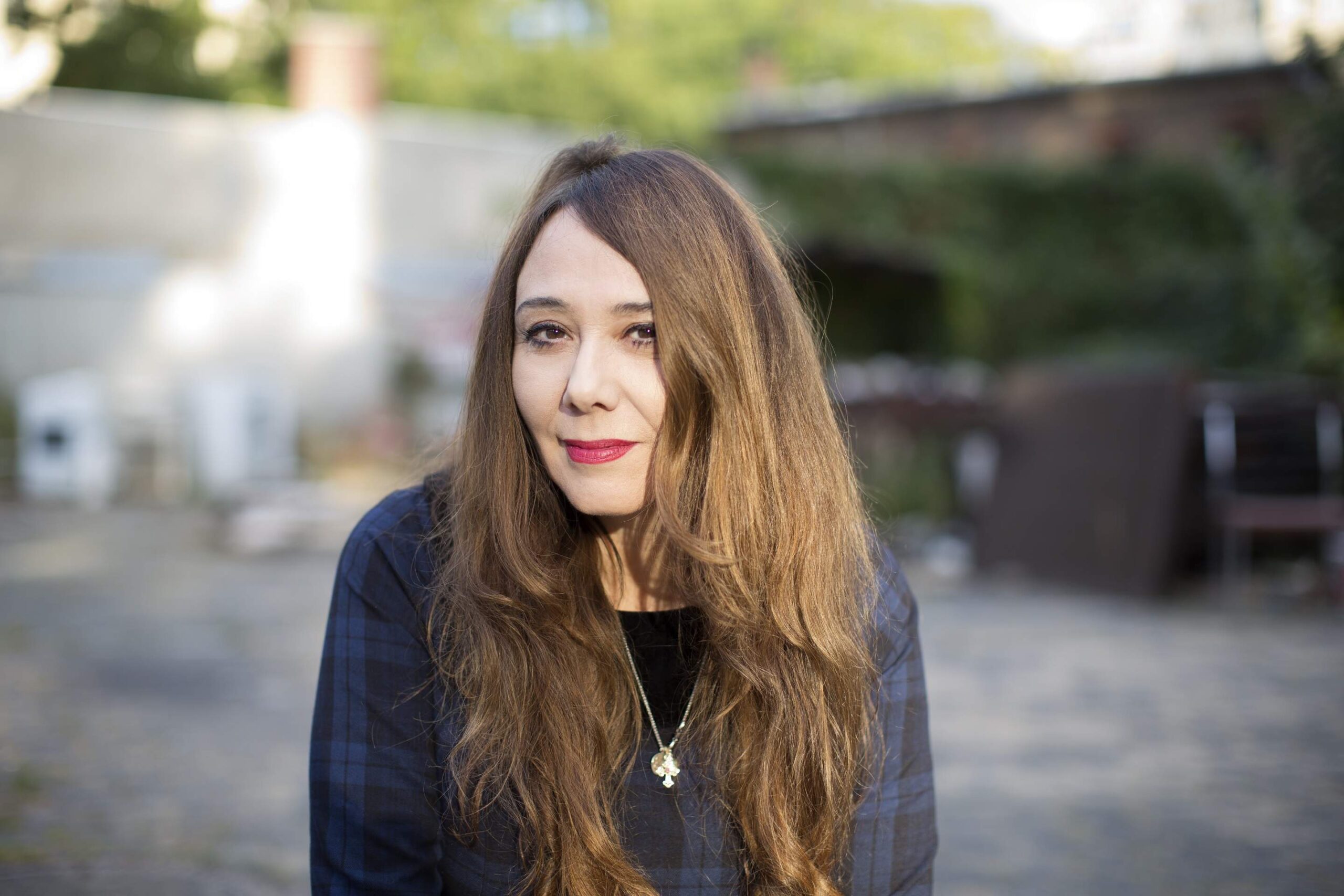
“We just jumped into the sound bath and let things happen.”
‘LICHTUNG’ is the first hackedepicciotto album with all the lyrics written in German. Since you have mostly written in English, how different was the process? Did it affect your relationship with Berlin or the German language?
Danielle de Picciotto: Writing in German was completely different from writing in English. Germans tend to put things in boxes and do so with their language as well. Many of the German words carry a political, historical or double meaning, so it is like walking on eggs. They can also be quite strict, so I am curious to see what their reactions will be. I used some words that are normally used for specific historical time periods in a different way than they usually do, so they may not be amused. Nonetheless, I really enjoyed doing this experiment. I am trilingual and speak fluent German without an accent. In spite of this, I still dream and think in English, having grown up in the US, so writing in German seemed abstract and more constructed; it was less an emotion than a thought. It has not really changed my relationship with Berlin, but I think the reactions to my work may. I still feel like an expat, so if they accept my efforts, then I may feel more at home, and if they do not, I may feel more estranged. Language is very important to me, maybe because I grew up with so many, and being able to express myself in the language of a country is something I do not take lightly.
After many years of travelling with Alexander, you have now settled on the outskirts of Berlin. How has your idea of home changed, and how are you adjusting to a more settled life?
I was pretty much born a nomad. My father was in the US Army, and I grew up moving every year, within the US but also in Europe, from one military base to another. So this state of flux is a huge part of my character, more than being settled down.
I am very flexible in feeling comfortable in hotel rooms or art residencies, knowing I will not stay forever. With a fixed home, I get panic attacks. Since we have settled down, I have had a difficult time getting used to quieting down and relaxing. I actually get more nervous and anxious being bound to a place. But I am working on going into depth and using the quiet to read and think a lot.
‘LICHTUNG’ combines acoustic instruments with electronic sounds. How did you balance the different elements and decide when a piece needed more or less?
I love odd sounds. That is why I play the hurdy-gurdy, the autoharp and the zurna (a Turkish flute). With this album, I had the urge to experiment with electronic sounds and make everything a little more contemporary while keeping the odd roughness of my antique instruments. I did not want to continue working as we had before, on repetitive drones, but instead wanted to build beats from sound, to compose unexpected small melodies within a wall of sound. That was fun but a lot more complex than what we had been doing before. There is always a point where you have to throw things away to let the piece breathe again, but we also had moments where the songs felt like they were falling apart, and I added piano melodies to glue them together again. It was exciting to experiment in this way and to manage to achieve a sound and style that we liked, also including our former sound within the new one.
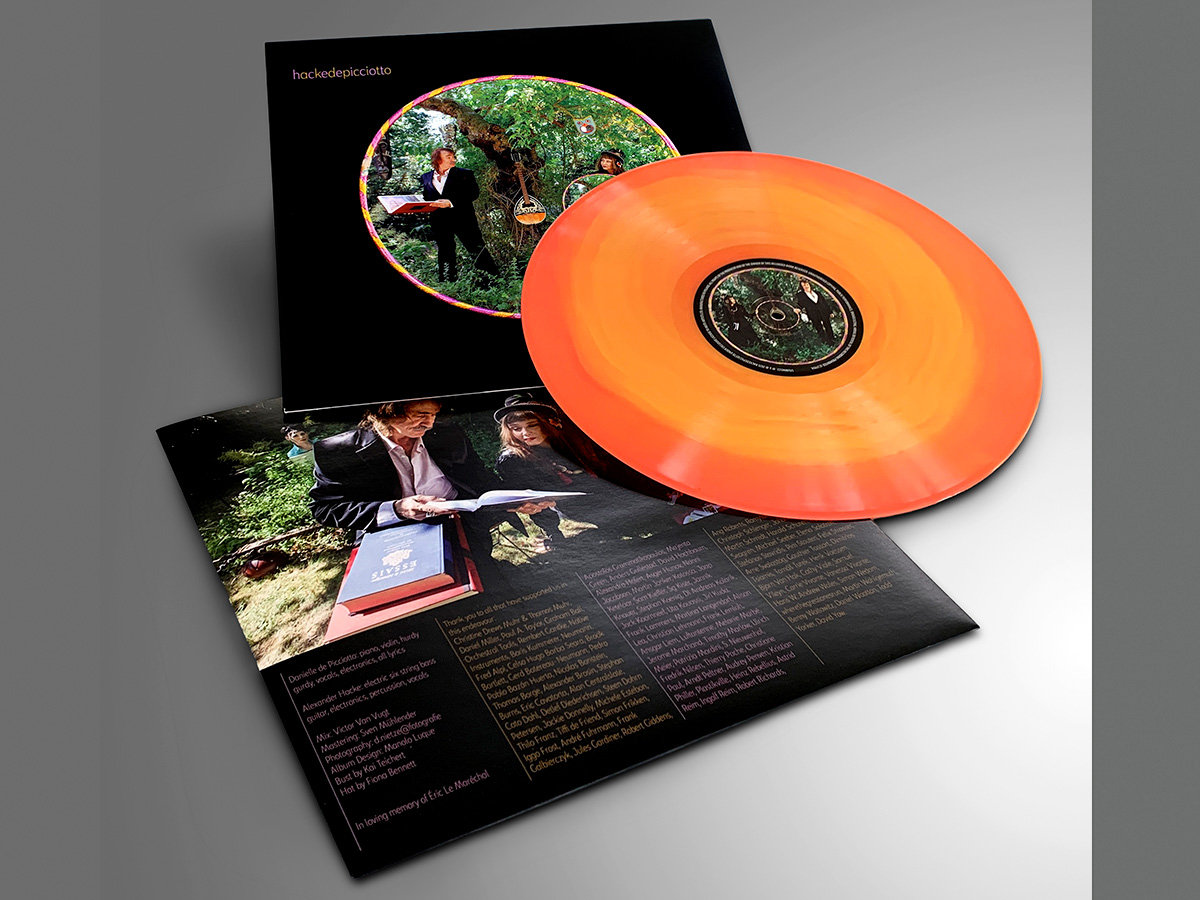
The album feels very cohesive from beginning to end. Did you begin with an overall theme, or did that sense of unity emerge while you were working?
To be honest, we are surprised about the cohesiveness ourselves. We were experimenting so much that for the first time we did not really have an overall theme or story, except that our nomadic journey was over. We just jumped into the sound bath and let things happen. This always tends to have surprisingly good results.
You have described Space Cowboys as your first real band. What did it teach you about performing, improvising and working with other musicians?
Coming from a classical background, I spent years trying to get Bach out of my fingers. When you have had a strict musical education, it is very difficult to improvise. I was also very shy, so performing with Space Cowboys helped me get over my shyness and learn how a band works.
In the early 1990s, Berlin’s rock, techno and hip-hop scenes were often quite separate. Was your interest in all of them unusual at the time?
I was interested in all kinds of music: techno, hip-hop, rock, classical music, etc. That was unusual for Berlin. Most people belonged to a certain scene and listened to only one music style. I think that is why Alexander and I fit really well together musically, because he also does not let himself be narrowed down to only one style. My main interest is odd and strange sounds and compositions, no matter what genre.
Space Cowboys faced problems with management and money. What did that experience teach you about protecting your work and making a life as an artist?
The main thing I learned was to stay true to myself. Space Cowboys fell apart because the bandleader let himself be manipulated by the manager to change our music. I do not think that it makes sense to compose music if it is not your own personal expression.
When I compose music and it does not sound like what I have in my ear, it is almost a physical pain. Being an artist or musician is difficult, and you never have the certainty of success. In fact, most musicians can barely get by. It only makes sense to choose this profession if you deeply love what you are doing; everything else is not worth the pain and work that goes into living this life.
You co-founded the Love Parade in 1989. How did your relationship with it change as it grew, and what did you take from the experience?
I never wanted to become a professional parade organiser. From the start, I have been an interdisciplinary artist and musician. The Love Parade’s success was unexpected; neither Motte nor I ever thought it would become as huge as it did.
When we decided to do it a second time, the Wall came down, and we danced down the Kudamm with East and West Germans dancing side by side. That was incredibly exhilarating and something I will never forget. Through these experiences, I learned that great things can happen without money (we were poor back then), and that if you manage to touch or connect with the feeling of a generation, it can create history. But then it became a habit, and I got bored. I admire Dr. Motte for still creating parades up till today, but I am content to have started it with him and then moved on.
After Space Cowboys, you worked across music, film, writing and visual art. Have you always seen those activities as parts of the same practice?
The Space Cowboys were only the beginning. I was young and experimented a lot with other bands and producers as well. I always wanted to break down boundaries. I am definitely a multimedia artist. I have always felt that everything belongs together. We have eyes, ears and a mouth and use them together all the time, so why should the arts be separated? I hope that at some point I will be able to get back to doing interdisciplinary performances to show how all of the different things I have been doing are actually one big piece of art.
Berlin between 1989 and 1995 is often remembered as a period of unusual freedom. How do you remember those years, and when did the city begin to feel different to you?
I have to say that I loved Berlin so much from 1989-1995 that I cannot think of anything negative. I felt completely free, money wasn’t a problem because everything was cheap, and I found a huge circle of friends who were as adventurous as I was. The city was unconventional, and I felt that I had finally found a place in which people understood me. It was only after 1995, when Berlin became the capital and things started settling down, that I became restless and unhappy. Things were being normalised, profit and gain were edging their way in, destroying friendships, and the rat race started. I am not especially good at bourgeois structures. I tend to be too extreme, intense and outspoken. I was lucky to then be discovered by the Goethe Institute, which started sending me around the world to present Berlin culture, and so I was back within my nomadic lifestyle. When Alex and I started dating in 2001, he insisted that I tour with him, so I have been travelling ever since.
Visual art has remained an important part of your work. How did touring affect the kind of visual work you could make, and has settling down changed that again?
Before 2010, I mainly worked with Super 8 films and photography, creating backdrops for clubs, performances and theatre. I also loved building objects, but when I started touring with Alex in 2001, I had to downsize and started really enjoying ink work.
I did this for almost 20 years. During all of our travels, I always had an ink pen and paper in my suitcase and created most of my work on buses and trains. Now that we have settled down for the time being, I have felt the urge to work on objects again or paint larger paintings. It kind of depends on how much time I have. Music is taking up most of my time at the moment. We are a cottage industry, and I have a lot of office work to do as well, so I have to dig out time to create new objects. An artist/musician has to do so much more than music and art nowadays.
After living between the United States, Germany and many years of travel, do you feel at home in one culture, or do you still feel between cultures?
I think that an expat never truly feels at home anywhere. I certainly do not. I always feel in between chairs and miss the country that I am not living in. I appreciate a lot of things in Germany and do not regret being here, but I cannot help but feel that I am a stranger even after being here for such a long time. The phase I felt most comfortable was when it was at its height of confusion within the Wall and after the fall of the Wall until 1995. It probably mirrored my inside state of mind perfectly. But we are touring a lot, so I have the chance to live a nomadic life in spite of settling down. That is probably the perfect mixture.
What are you working on at the moment?
We are currently collaborating with a French theatre production, La Compagnie du Zerep, on a piece called ‘Sturbzep’. Alexander and I composed the music for the complete piece and are performing the songs on stage during the piece, and we will be touring with them through France, Belgium and Switzerland until 2028. I absolutely love this kind of work, being creative with a large group of professional people and touring together. It’s a dream come true, especially as the director has a strong taste for surreal, Dadaistic stage sets, so it’s right up my alley. Alexander and I are also composing a lot of film music, something which I enjoy a lot as well. Our music is perfect for film music, so it’s like composing an album. All in all, I am happy that more and more people are discovering our music and like it!
Klemen Breznikar
Headline photograph: Mara von Kummer
Hackedepicciotto Website / Facebook / Instagram / YouTube / Bandcamp