
The Fox: The Story of ‘For Fox Sake’, the 1970 Brighton Psych-Pop Album Newly Reissued with Unreleased Demos
Stephen Brayne can still remember standing outside a Brighton milk bar as a boy, too young to go in, listening to the rock and roll records coming from its jukebox. When Bill Haley’s ‘See You Later, Alligator’ appeared on a children’s radio programme, the sound stopped him in his tracks. “That was probably the beginning of an obsession that has stayed with me ever since.”
That obsession eventually led to The Fox, a Brighton group whose only album, ‘For Fox Sake’, has outlasted the band by more than half a century.
Recorded in 1969 and released the following year, the album appeared as British music was moving towards a heavier sound. The Fox had developed from Brighton’s mod, soul and rhythm and blues scene, but their music also drew on folk, jazz, psychedelia and progressive rock.
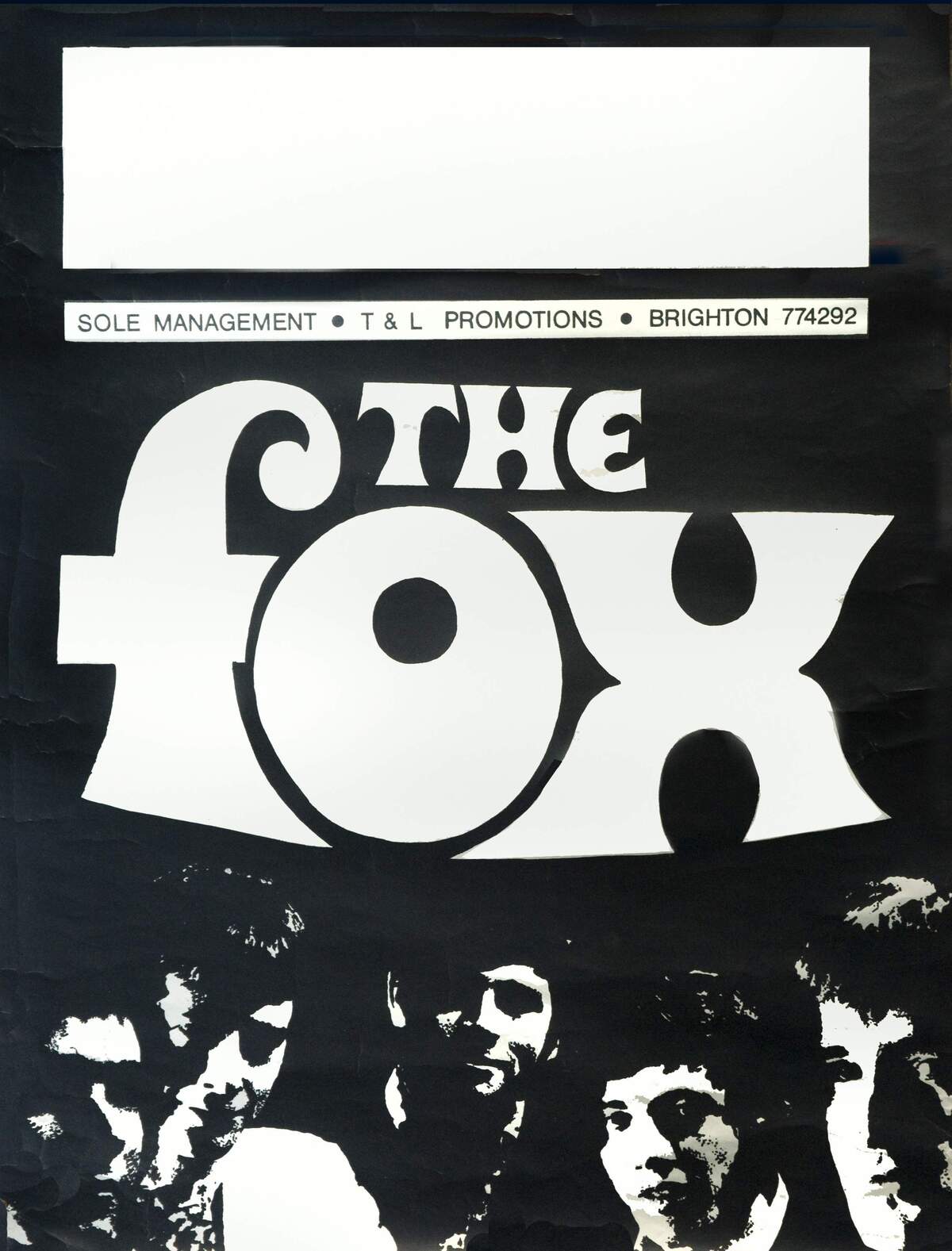
The members had known one another since childhood. Hammond organist Alex Lane and drummer Tim Reeves had played in The Alex Lane Group and The Urchins, while bassist Dave Windross had worked with Reeves in Omega Plus. Nick Apostiledes was the original singer and also wrote lyrics.
Brayne had played with The Beatroute before moving to Bristol, where he formed The Magic Theatre and became involved in the counterculture. When he returned to Brighton in 1968, he brought songs including ‘Mr. Blank’, ‘Man in a Fast Car’, ‘Glad I Could’, ‘Butterfly’ and ‘Madame Magical’. Lane and Apostiledes contributed material of their own.
The group rehearsed in a room above a pub in Portslade, spending long hours developing arrangements, harmonies and instrumental parts. From the start, the aim was to concentrate on original songs.
The arrival of guitarist Winston ‘Wince’ Weatherill completed the best-known line-up. Weatherill had previously played with Gary Farr & The T-Bones and brought greater experience to the group.
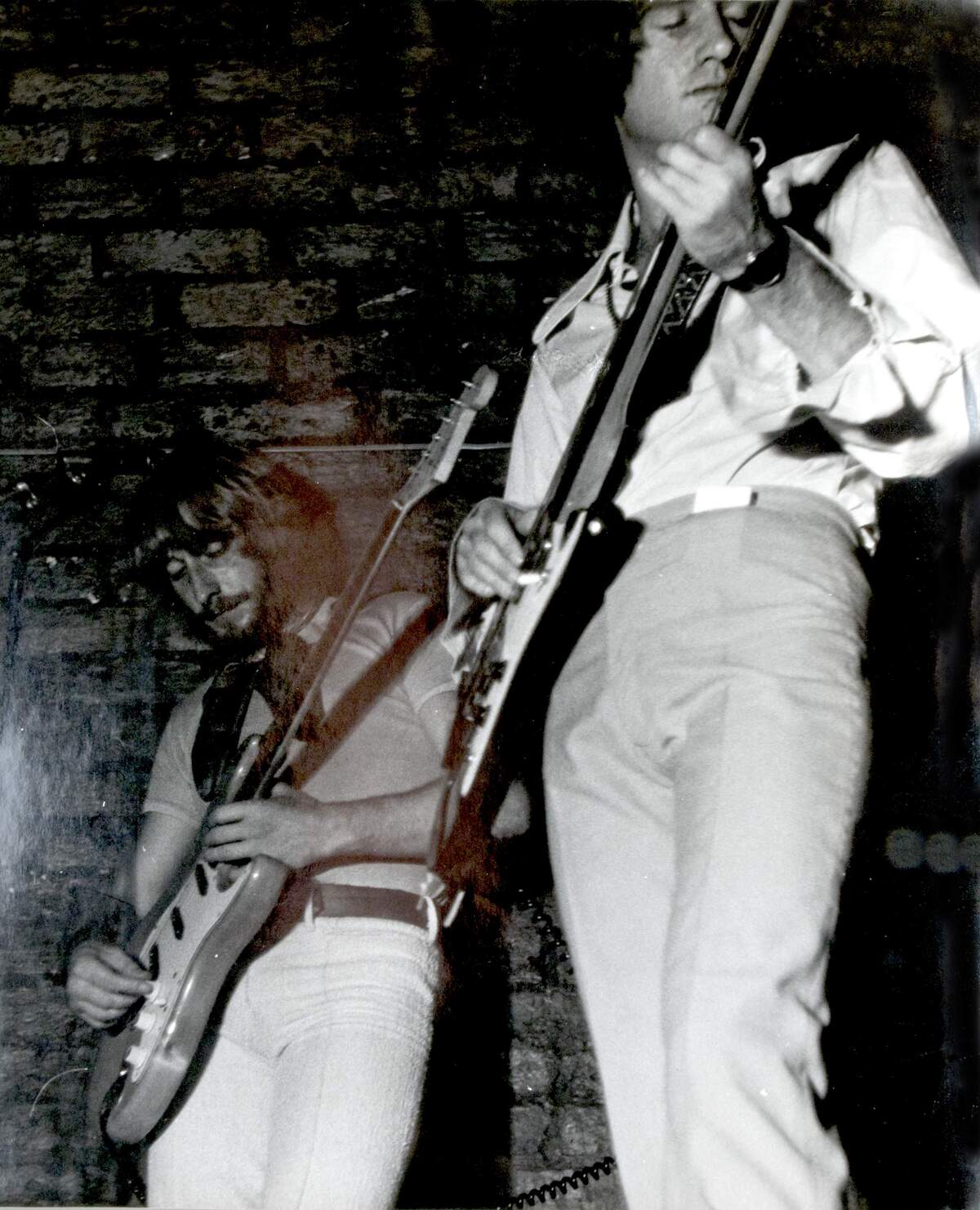
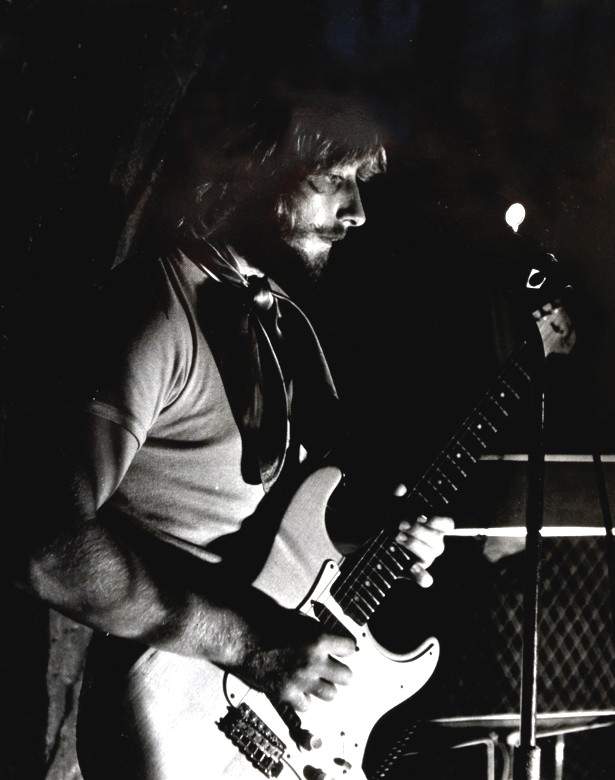
The Fox covered a wide musical range. ‘Butterfly’, their best-known song, was a quiet acoustic piece played in Drop D tuning. Weatherill created its sitar-like sound by placing cocktail sticks beneath his guitar strings.
‘Madame Magical’ was almost the opposite. The long, largely improvised track moved through a fairground-style introduction, funk, free playing, phased organ and guitar noise. Brayne created the ending by sliding a Zippo lighter along the strings of his Telecaster.
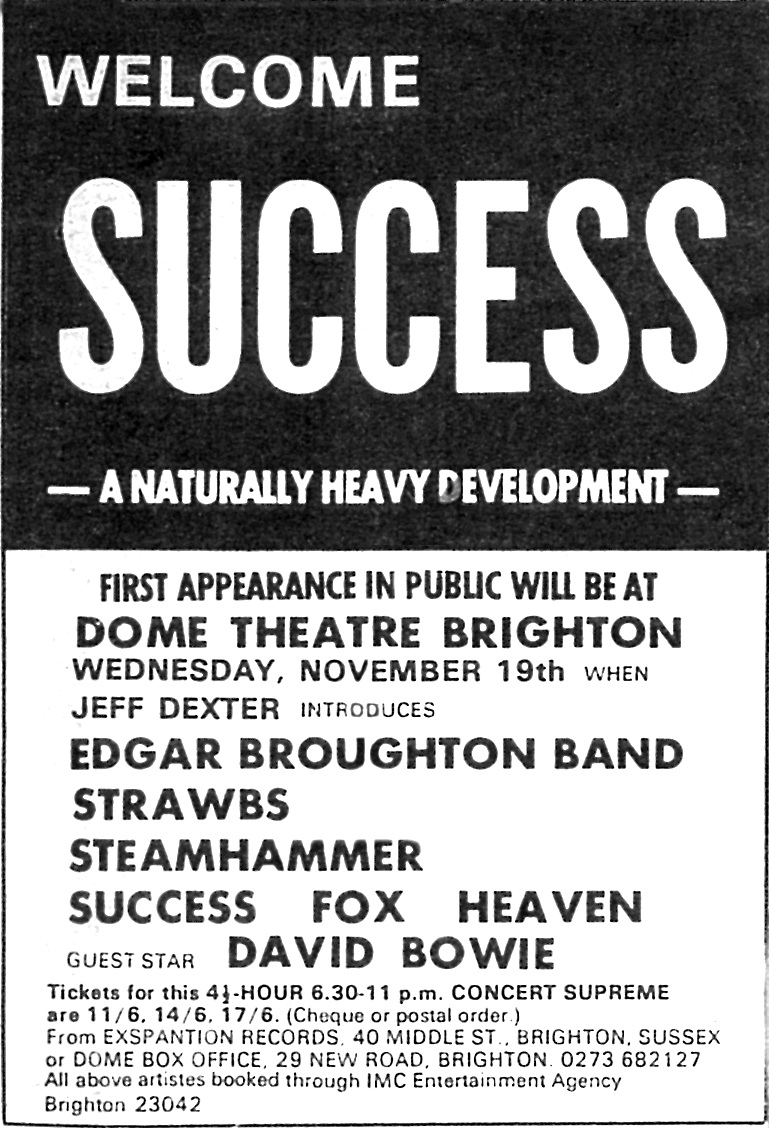
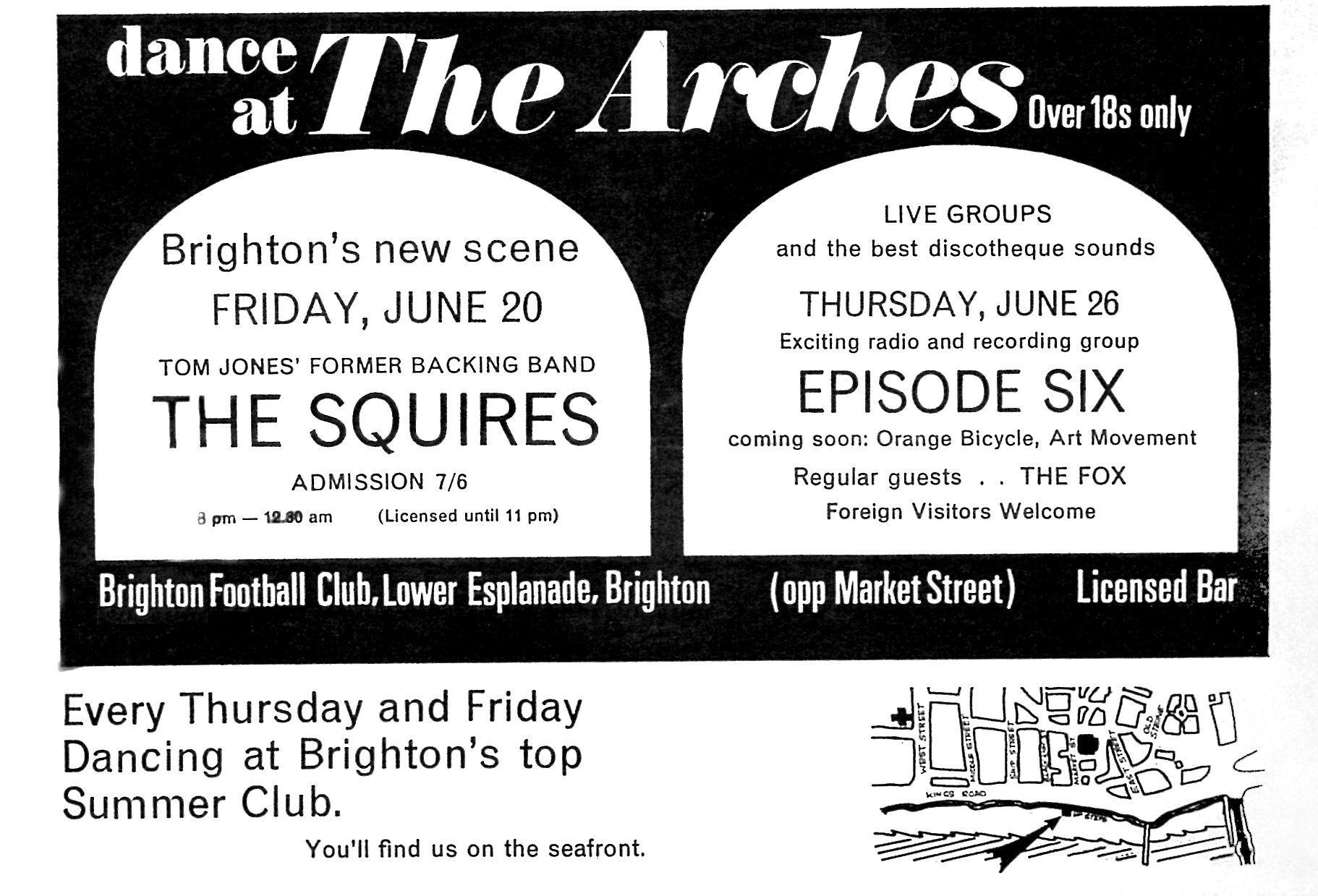
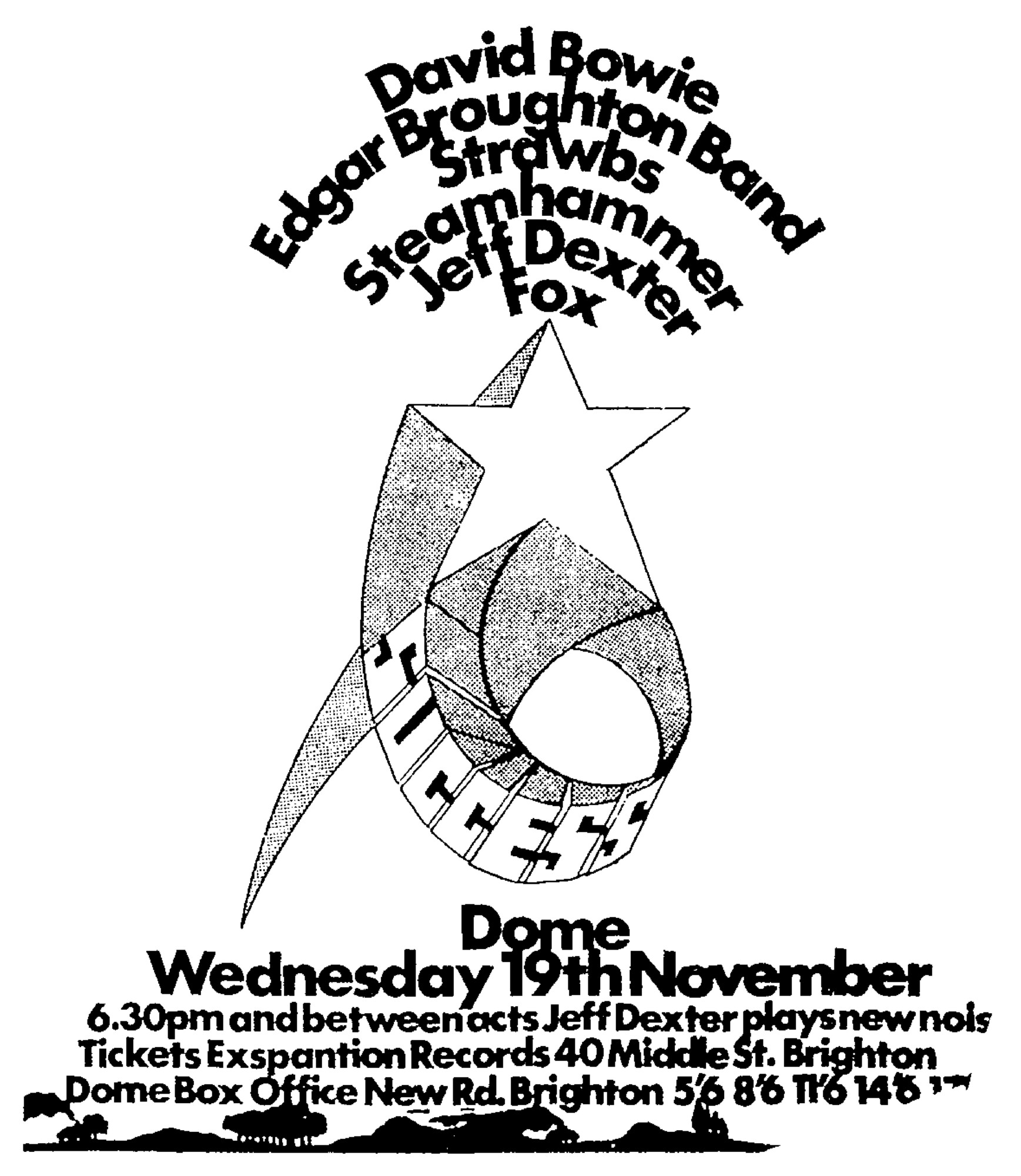
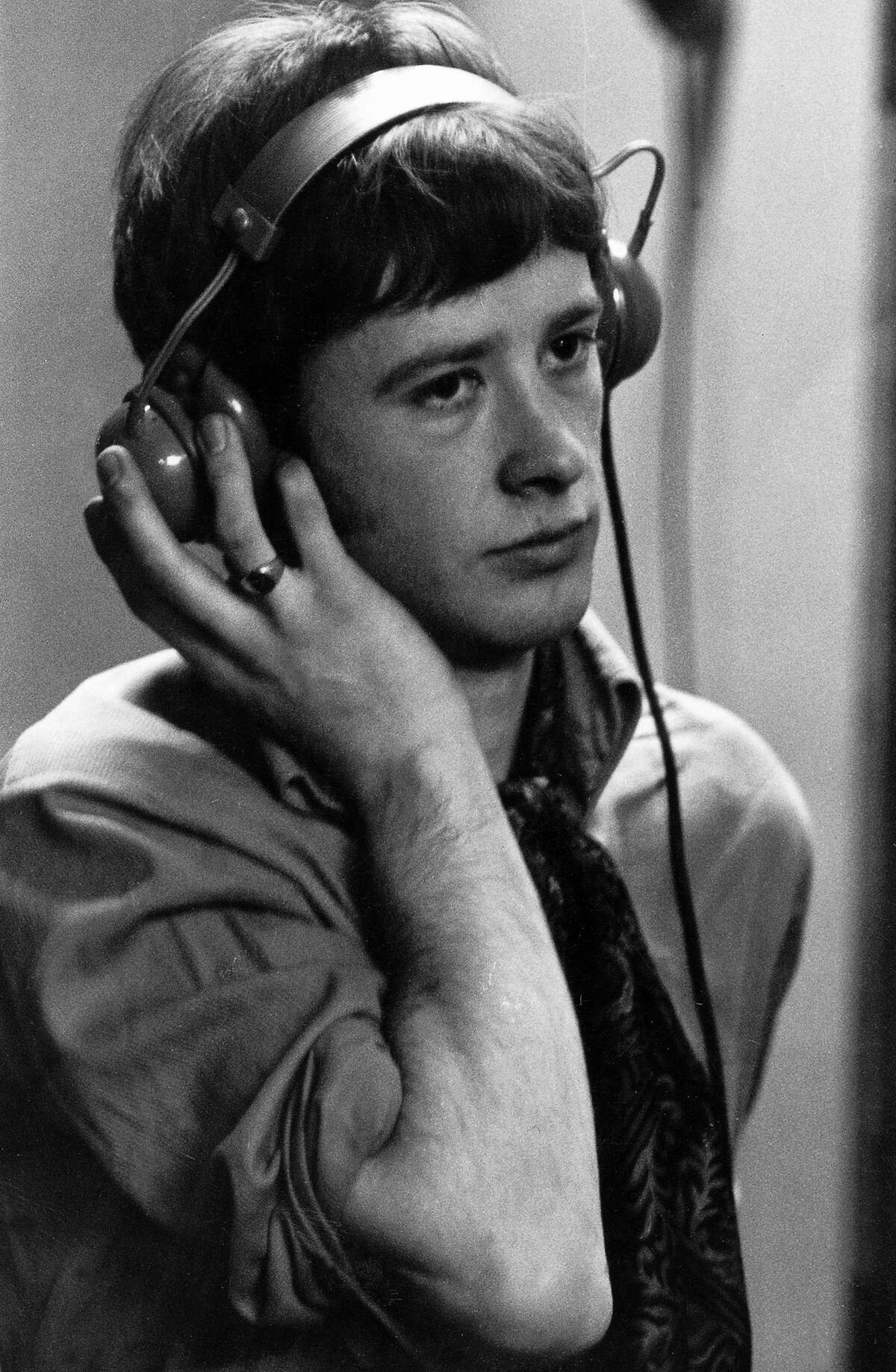
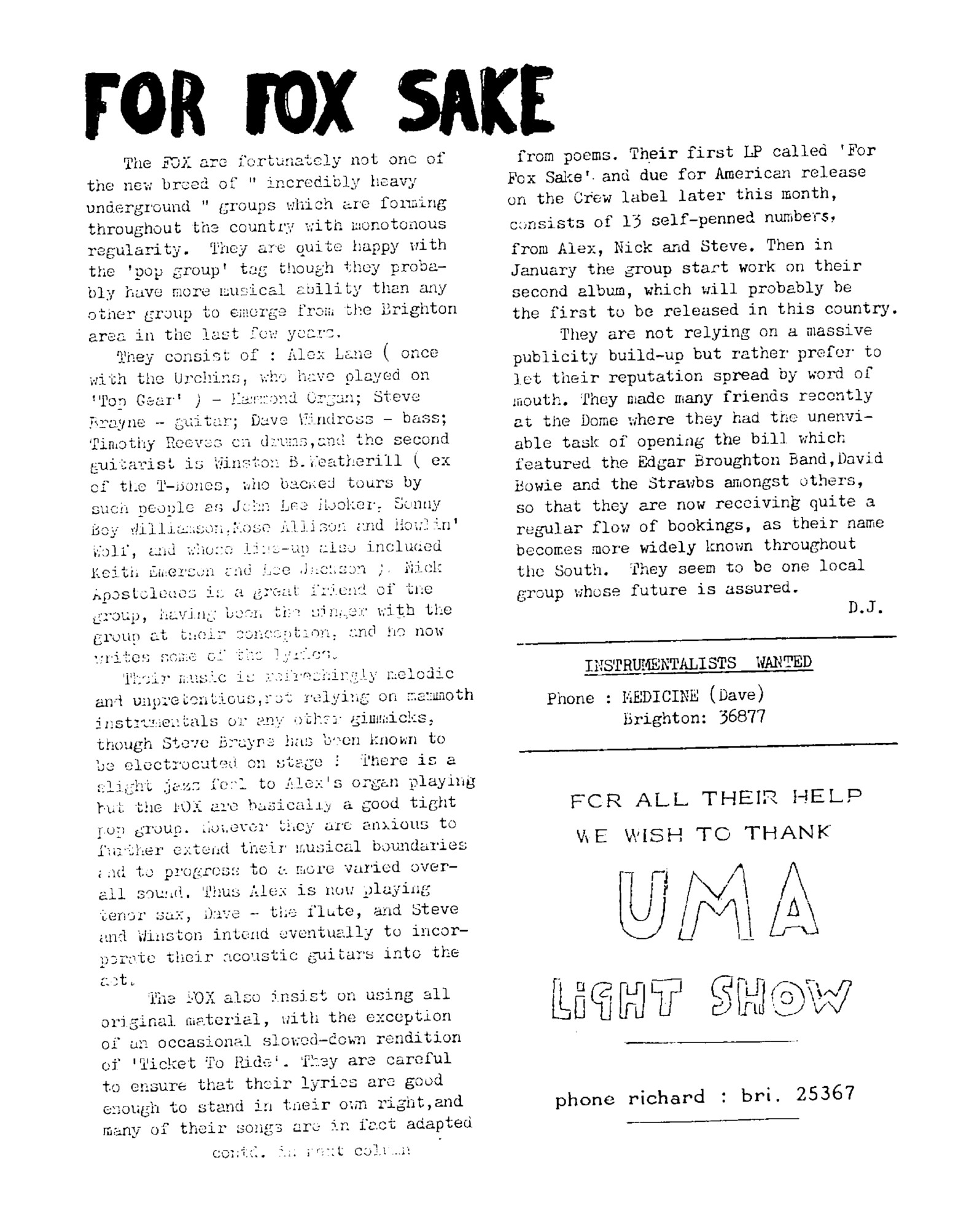
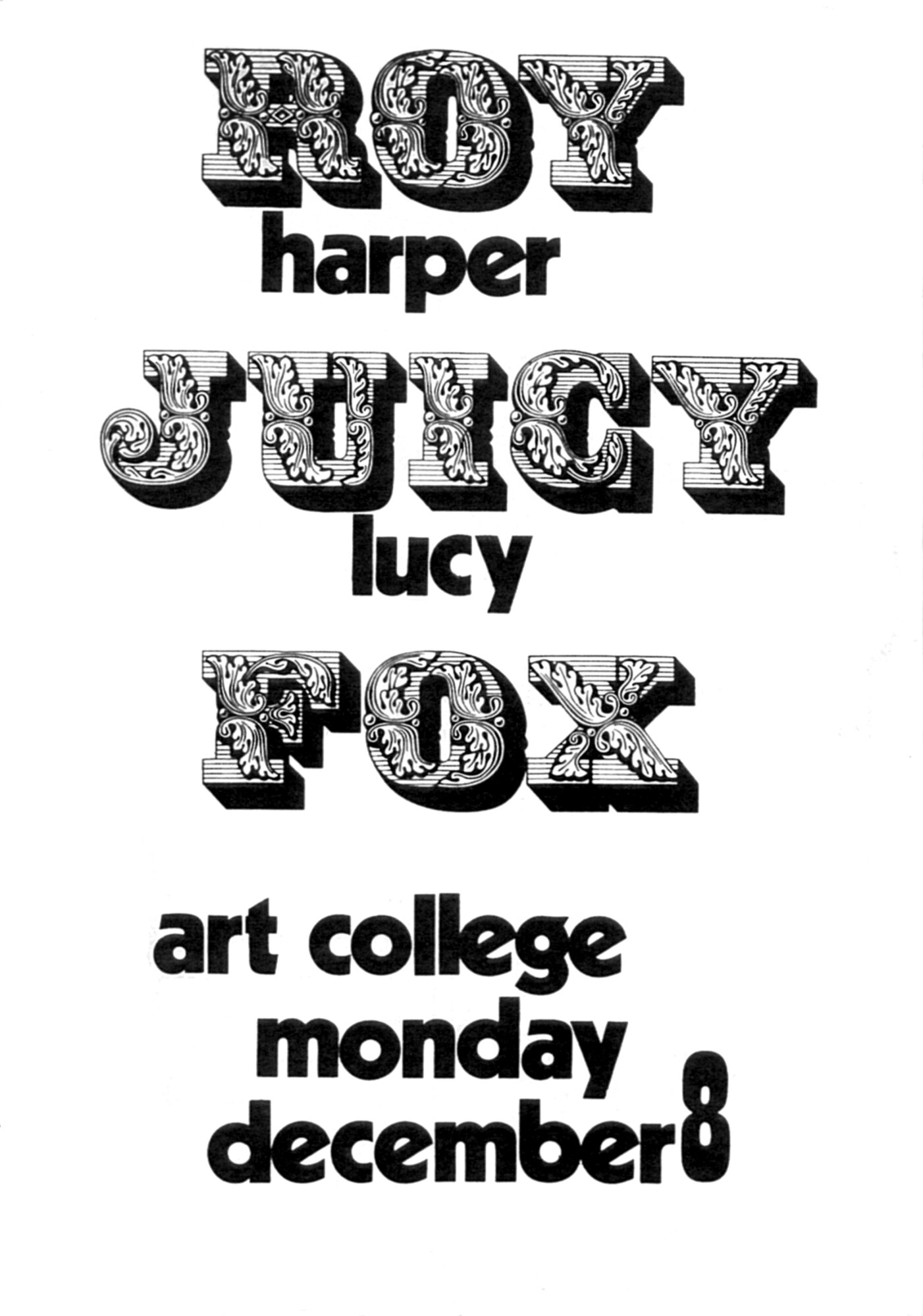
Onstage, the group were louder and more forceful than the album suggests. They supported The Herd on Brighton seafront and appeared with Roy Harper, Juicy Lucy, The Idle Race and Aynsley Dunbar’s Blue Whale. They also played at the Brighton Dome on a bill with David Bowie.
Brayne remembers the band as “loud, tight and full of confidence”. They had already begun performing longer and more complex material intended for a possible second album.
Their first recordings were made at Regent Sound in Denmark Street while Apostiledes was still the singer. After he left, Brayne and Lane shared the vocals. The band then attracted the attention of managers Patrick Meehan and Adrian Miller, who promised an album, new equipment, promotion and an American tour.
The Fox were taken to Radio Luxembourg Studios in London for what they believed was a test session. Eleven songs were recorded in one night, mainly live, with vocals and a small number of overdubs added later.
The musicians expected further studio time. Instead, they were told that the session would be released as the album.
At the time, the decision was a major disappointment. The band felt that some of the songs needed more work, and two tracks were later recorded again with Roy Thomas Baker. Today, however, the speed of the original session is part of the album’s character. It captures the group playing together with very little correction.
As Brayne says, “It is basically a live recording.”
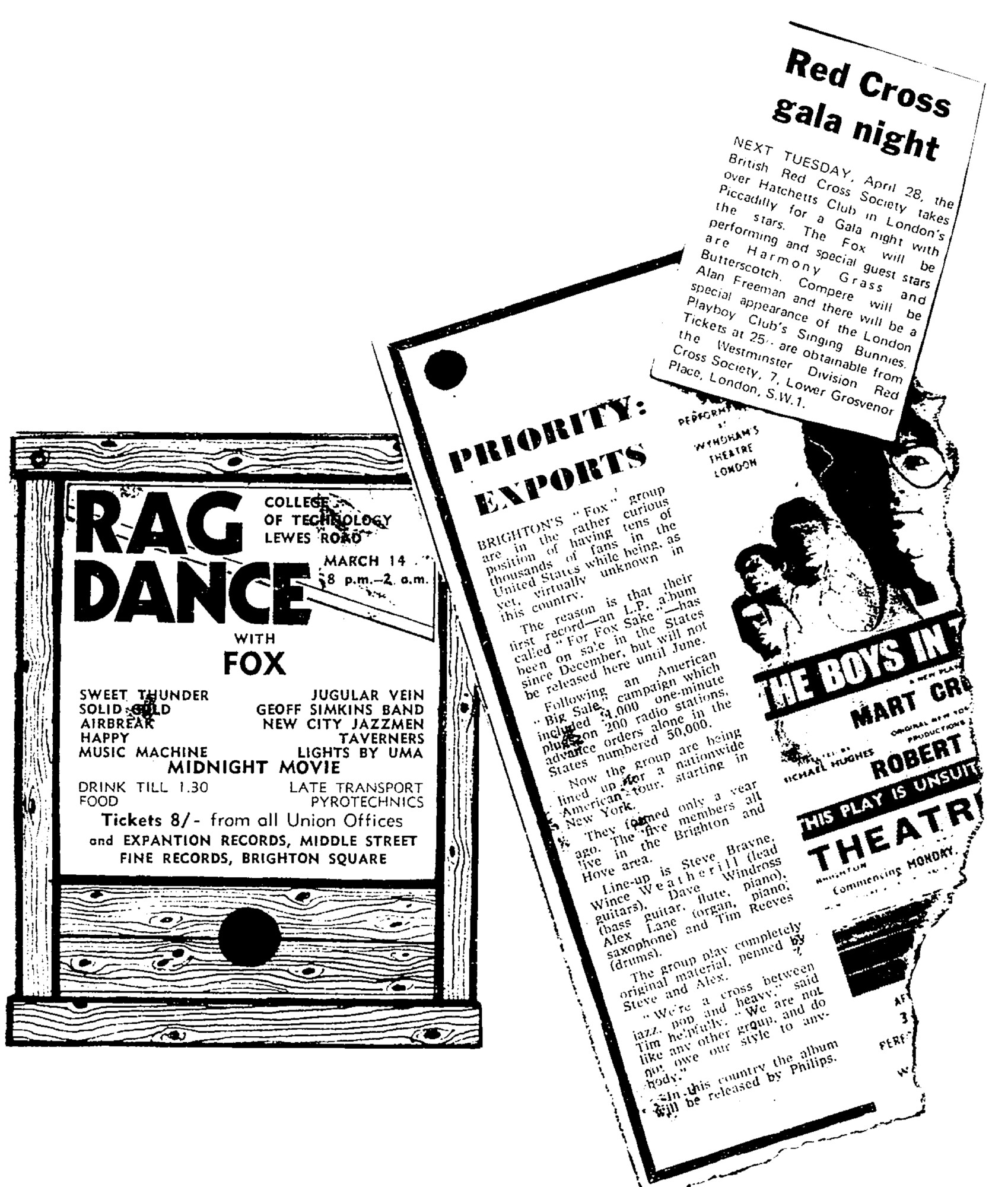
‘For Fox Sake’ was released in the United States on Bob Crewe’s Crewe label and in Britain on Fontana. The American edition was titled ‘Vol. 1’, although no second volume followed.
Management support soon disappeared. Promised equipment did not arrive, a cheque for a van bounced, good bookings became scarce and the proposed American tour came to nothing. When Meehan turned his attention to Black Sabbath, The Fox were left without effective support.
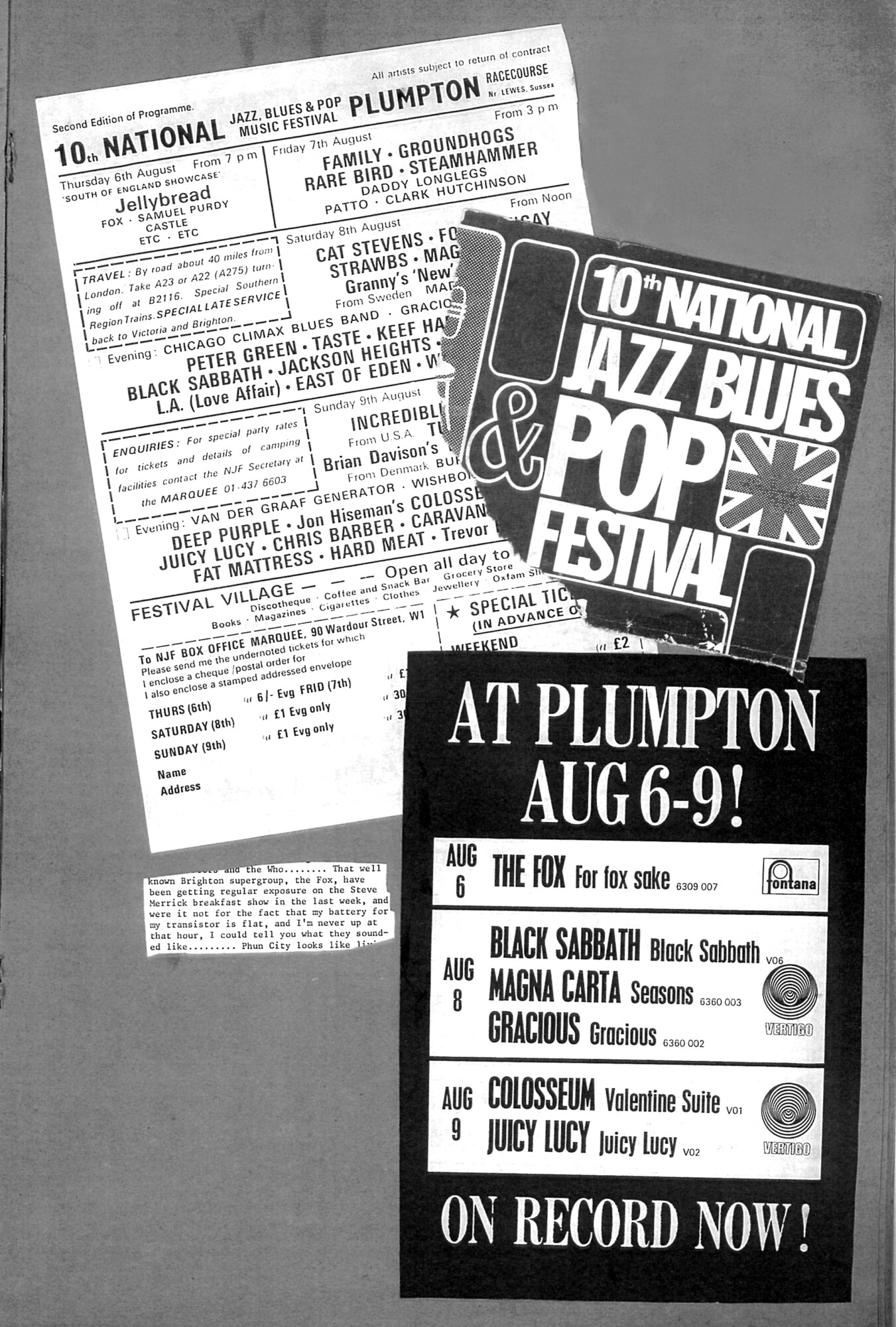
Windross and Weatherill left shortly before an appearance at the Plumpton festival. The remaining members considered replacing them, but the close friendships within the group made it difficult to continue.
After about eighteen months, The Fox came to an end. Recordings made for a possible second album have never been found.
For years, ‘For Fox Sake’ was known mainly among collectors. Unofficial CDs appeared, and ‘Butterfly’ was included on psychedelic compilations. A proper reissue followed in 2003, allowing the album to find the audience it had missed in 1970.
The latest Think Like A Key edition adds the Regent Sound demos with Apostiledes on vocals, along with the original Radio Luxembourg versions of ‘Lovely Day’ and ‘Mr. Blank’. Together, these recordings show how quickly the group developed and how much of its sound was shaped during the long rehearsals in Portslade.
In this interview, Stephen Brayne looks back on the band’s full story, from childhood friendships and the Brighton club scene to Bristol, Regent Sound, Radio Luxembourg, lost tapes, poor management and the album’s later rediscovery.
He also reflects on what The Fox might have achieved with more time and better support.
“I also believe that we deserved more time,” he says. “Had we been given the chance to develop, and had we had more sympathetic management, I do not think the band’s story would have ended so quickly.”
The group was short-lived, but the album remains. More than fifty years later, new listeners are still discovering ‘For Fox Sake’.
Brayne’s advice is simple: “Play it loud, very loud.”
“We believed in what we were doing.”
You knew Alex Lane and Tim Reeves from very early on, before The Fox existed. Could you take us back to Brighton before the band?
Stephen Brayne: When we met at school, aged about seven or eight, we were too young to be thinking about bands. We were probably just chasing each other around the playground and listening to whatever was on the radio. It would have been Danny Kaye, lots of crooners and children’s songs.
I do remember the first time I heard rock and roll. I was probably about ten years old and listening to a Saturday morning children’s radio programme. They usually played songs such as ‘The Deadwood Stage (Whip-Crack-Away!)’ and other children’s favourites. Then one day they played Bill Haley’s ‘See You Later, Alligator’. I stopped in my tracks and thought, “What is that?” The saxophone riff and the amazing guitar playing really struck me. That was probably the beginning of an obsession that has stayed with me ever since.
It was not always easy to hear that kind of music, but I remember hanging around outside what used to be called a milk bar in Brighton. Teddy Boys gathered there and they had a jukebox, which was incredibly exciting. I was too young to go inside, but I could hear all these great rock and roll records being played, and that fascinated me.
I remember buying Danny & The Juniors’ ‘At the Hop’ and the Everly Brothers’ ‘Wake Up Little Susie’. At some stage I went to my first big concert, with Dion and The Belmonts and Del Shannon on the same bill. I was hooked.
The other boys went to different schools in Brighton, while I was sent to boarding school in Leicester, about 150 miles away. While they were getting into bands, I was far from home. Then everything suddenly became much more exciting with The Beatles, The Rolling Stones and the whole explosion of music in Britain at the time.
After leaving school, one of the first places I discovered was a large local venue called the Starlight Rooms, a little like Liverpool’s Cavern Club. It was an old basement beneath a hotel, with bare brick walls. It was always packed, incredibly hot and full of atmosphere. People would stop at the pub across the road before heading downstairs. All the local bands played there, and it was fantastic to see them up close, playing very loudly only a few feet away. I wanted to be up there.
Bobby Sansom and the Giants were a terrific band. They even went to Hamburg, as did The Sapphires. The lead guitarist with The Sapphires was Winston ‘Wince’ Weatherill, who later played with Gary Farr & The T-Bones. We all knew one another from those early days. They were highly skilled musicians, playing in what would then have been called beat groups.
Not long after leaving school, I joined a band myself. I was studying at Brighton Art College when I met some people who were looking for a harmonica player and singer. I had been playing harmonica for a while, so I said, “I’m interested.” That was The Beatroute.
We played songs by The Yardbirds, The Rolling Stones, Manfred Mann, Chuck Berry and others. I remember the first time we played one of my own songs. I cannot remember what it was called, but I do remember the thrill of playing electric guitar at full volume for the first time.
Our first concerts were in church halls and at parties, and then we got to play the Art College. Meanwhile, Alex, Tim, Dave Windross and Winston were playing in bands more or less full-time. I was still an art student doing the occasional concert, while they were playing regularly in clubs along the South Coast, at American bases in Britain and Germany, and in London clubs such as The Marquee and The Flamingo.
Before The Fox, there were several local strands coming together: The Beatroute, The Alex Lane Group, Omega Plus, The Urchins, and the Brighton mod and soul scene. What was that local circuit really like from the inside?
The local band scene included The Alex Lane Group, featuring Alex, Tim and a friend called Lenny Barker, who had also been at school with us. Lenny later became our first manager. The group also included Nick Apostiledes, who was a percussionist and singer, and a very cool-looking Mod. They were all Mods, really. It was a Mod soul band, and they were very good.
I saw them at Hove Town Hall, supporting The Nashville Teens, Zoot Money’s Big Roll Band and The Zombies. They were all great. I woke the next morning to learn that the Town Hall had burned down. Hot concert!
Then there was Omega Plus, again with Tim, a little later, and Dave Windross on keyboards. There were also The Urchins, which was Alex’s band, and several others. I did not see them all because, in the meantime, I had joined The Beatroute, which was such a great name. We were mainly playing church halls.
The main point is that I was only really a part-timer. I was a student who occasionally played with The Beatroute. We were great fun, but we were not a particularly professional-sounding band. By contrast, The Alex Lane Group, Omega Plus and The Urchins were much more professional. They were doing proper concerts, short tours in Scandinavia, and playing American bases in Britain and Germany, so they built up real experience as performers.
They were seriously good, as were Gary Farr & The T-Bones with Winston. They took over the residency at The Marquee from The Yardbirds, who were managed by Giorgio Gomelsky. Gary Farr & The T-Bones came very close to making it. They were Brighton’s top group at the time, and I saw them at The Southern a couple of times. They were very tight, very bluesy and an excellent live band.
I remember one Art School concert with The Beatroute when I looked up and saw Alex, Tim and Lenny Barker standing in front of the band, watching me. They had come to ask me to join The Alex Lane Group because their singer had left. I was very flattered, but I was more serious about being a student at that time. I had just been offered a place at Bristol University to study French and Drama because, at that point, I was planning to become an actor. I changed my mind about that later.
You spent time in Bristol and had a group called The Magic Theatre before returning to Brighton.
Before going to Bristol, I had a couple of years out of school. I had started architecture at art college but dropped out. At that age, in 1966, I could not face the idea of seven years of study. Far too many interesting things were happening, particularly in music. We were listening to The Spencer Davis Group, The Yardbirds, John Mayall and all those great bands that were touring at the time. Many of them came to Brighton. The Who were absolutely stunning live.
Before Bristol, I had become completely immersed in music. Then came 1967 and the whole Flower Power and Summer of Love scene, which also involved a fair amount of acid and various other tonics. One memorable trip was to London’s UFO Club, where I saw Procol Harum. They were absolutely amazing. I was somewhat out of my mind on whatever I had taken, and I remember travelling home by train at dawn, hearing ‘San Francisco (Be Sure to Wear Flowers in Your Hair)’ and thinking, “Yes, it is the Summer of Love, and I love it.”
Going to Bristol was tremendously exciting. The only disappointment was arriving at my hall of residence. On the first evening, I walked in and everybody looked as though they had just left school. I had already been out of school for two years, wearing Carnaby Street and King’s Road clothes and growing my hair long, and I thought, “Oh my God, this is going to be boring.”
Then Martin Stellman walked in. Martin had a huge Afro. He was Jewish and jokingly called it his “Jewfro”. He wore flowered shirts and looked every bit as much a product of the times as I did. We immediately clicked, started talking about music and became friends. I had my guitar with me, Martin liked to sing, and we soon met Pete Lieberman, who was an exceptionally good fingerstyle blues guitarist. The three of us began jamming together and eventually decided to call ourselves The Magic Theatre.
Pete and I also began going to Bristol’s blues club, The Dugout, where members of the John Dummer Blues Band were playing. They were lovely musicians, and during the interval you could simply walk up and ask whether it was all right to play a number.
Pete and I had rehearsed a few blues songs, including ‘Rock Me Baby’. I remember picking up this fantastic Stratocaster, plugging it into a wonderful amplifier, although I have no idea what it was, and discovering just how loud it could be. I loved it. We played, I launched into the riff, and it all went down remarkably well. It was hugely inspiring.
Another memorable occasion came during a student occupation of the Students’ Union. I cannot remember exactly what we were protesting about, probably Vietnam and all the other things happening in the world that we disapproved of. Pete, Martin and I decided that our contribution would be to make as much noise as possible.
We did not own any electric equipment, so I somehow managed to contact Dave Arbus of the Bristol band East of Eden, who were becoming quite well known. I asked whether we could borrow a guitar and amplifier.
“Oh yeah, sure, man. No problem.”
That was simply the way things were then.
The Stratocaster they lent us had a vibrato arm, and I discovered that if you played harmonics through a loud amplifier while moving it, you could produce the most extraordinary feedback. I absolutely loved it.
The university also put on an incredible music programme. We saw The Moody Blues, and I remember dancing onstage with my girlfriend at the time, Sally Oldfield, while they played ‘Nights in White Satin’. It could not have been more 1968. We also saw The Nice, with Keith Emerson famously sticking daggers into his Hammond organ. Cream played locally, and we went to an extraordinary package tour featuring The Move, Pink Floyd and, at the top of the bill, Jimi Hendrix.
Meanwhile, we were constantly listening to ‘Axis: Bold as Love’, ‘Are You Experienced’, ‘Wheels of Fire’ and just about everything else we could get our hands on, soaking up the music while enjoying whatever relaxing substances happened to be available.
Sally was a wonderfully accomplished fingerstyle guitarist in the English folk tradition. She played traditional material and her own songs, with almost Shakespearean lyrics. She had a beautifully pure voice, as though she had stepped straight out of a cathedral choir. She was also extremely attractive, which certainly did not hurt.
She taught me my first altered tuning, Drop D, which opened up a whole new world. I still use alternative tunings today, so that was another significant influence.
One day Sally said, “My brother is coming up for the weekend.”
“Oh, that’s nice,” I said. “What does he do?”
“He is still at school.”
He was about fifteen or sixteen, and I remember thinking, “Oh dear, the younger brother is coming to stay.”
Then Mike arrived. Sally eventually persuaded him to take out his guitar. He was incredibly shy, but once he began playing I was completely astonished. I genuinely could not work out what he was doing. He was using open tunings and had such a natural gift that it was immediately obvious he was something very special.
Whatever happened to Mike Oldfield?
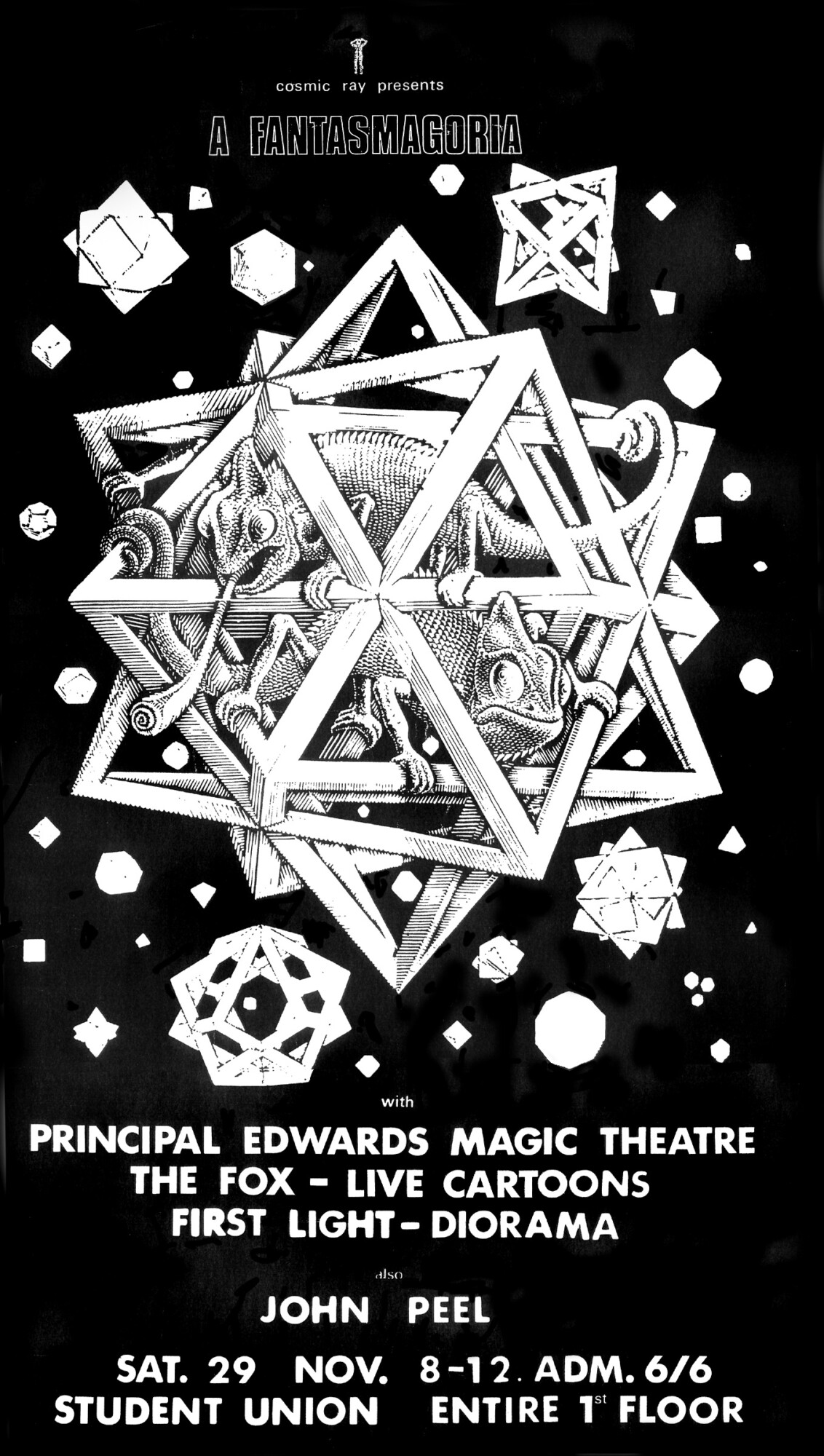
The other important musical development at Bristol involved friends from school who had gone to Exeter University. They were a wonderful crowd of long-haired hippies, all musicians, and they had formed a band called Principal Edwards. We all got on brilliantly, especially Martin Stellman, who spent quite a bit of time visiting them in Exeter. He eventually joined the band and took our name with him. Principal Edwards became Principal Edwards Magic Theatre, and The Fox supported them a few times after they signed to John Peel’s Dandelion label.
So yes, Bristol opened everything up. It gave me blues, folk, feedback, open tunings, psychedelic music and the confidence to experiment. A great deal of what I later brought into The Fox began there.
When you met Tim again in 1968, he told you that he, Alex Lane, Nick Apostiledes and Dave Windross had a group of songs and wanted to go professional with original material. You had ‘Mr. Blank’, ‘Man in a Fast Car’, ‘Butterfly’, ‘Glad I Could’ and ‘Madame Magical’. What do you remember about that first meeting?
I am sorry for going on about Bristol, but it was a sensational year for me, not least because we were out of our minds quite a lot of the time, playing music, doing plays and generally living it up. I was on the drama course and not doing very much French.
Of course, what happened was that I failed my examinations. I had not done enough work, so I dropped out of Bristol and returned to Brighton, where I met Tim in a pub.
He said, “What have you been doing?”
I said, “I’ve been writing some songs.”
He said, “Really? Well, I’ve got together with Alex, Nick and Dave Windross.”
He told me that Alex and Nick had written some very good songs, including ‘Secondhand Love’, and they were quite excited about them. They had Tim on drums, Dave on bass, Alex on keyboards and Nick singing.
Tim said, “Let’s all meet and hear you run through your songs.”
I went along with ‘Mr. Blank’, ‘Man in a Fast Car’, ‘Butterfly’, ‘Glad I Could’ and ‘Madame Magical’. They all seemed to think that it could work very well, so we got together.
We decided to rehearse original material. Alex, and I think Dave as well, had been in The Urchins. They had been supported by a local businessman who had bought all the equipment, including a Hammond organ, Vox AC30 amplifiers and guitars. We contacted him because he still had the equipment in storage after The Urchins had broken up, and we arranged to buy it back from him in monthly instalments.
We ended up in the rehearsal room with all this gear. For the first time in my life, I had a very nice Fender Telecaster and a Vox AC30. I was amazed by what it could do.
It became clear very early that we were all excited about the possibilities of the band and about developing the original material. We worked on arrangements, harmonies and solos. Alex was a terrific Hammond player. He had the Jimmy Smith style down, and we used to begin rehearsals with Jimmy Smith’s ‘The Cat’, which is wonderfully funky.
I was learning a great deal about playing electric guitar in a band. Alex and Dave gave me plenty of advice about what to play. When we worked on ‘Secondhand Love’, which opens the album, Alex played the opening Hammond line and said, “It would be nice to have some guitar over this.” I came up with the guitar melody that sits over it, and it worked very well.
We were all contributing. It was very much a collaborative band. We rehearsed for hours, probably twice a week, and afterwards we would sit in the pub, smoking roll-ups, drinking beer and discussing what we wanted to do and where we wanted to take the band. That was when it became clear that this was not simply another local group. We believed there was real potential in it.
How did you and Alex Lane work together as writers?
It worked both ways. I often wrote songs alone on acoustic guitar and brought them into rehearsal, where everybody contributed and the arrangement developed. Alex and I also began collaborating directly. We would sit together, with him playing piano or guitar, bring ideas to each other and work on them.
For example, ‘Look in the Sky’ began with Alex’s idea, and I contributed much of the middle eight, including the section with the line, “Isn’t it a shame and a pity?” We also worked out the harmonies together.
Alex wrote in a more complex way than I did. Harmonically, he had deeper skills, while I tended to begin from a lyric, a guitar figure or a more direct song idea. The combination worked well. Then the whole band would become involved. Dave had a very good understanding of harmony, Tim would shape the dynamics, and the guitar and organ parts would find their places.
We wrote several songs that did not make it onto the album. We later recorded material intended for a second album in various studios around London, but after the fiasco with the management, nothing happened. I have no idea what became of those tapes. The management probably disposed of them, which was a great shame.
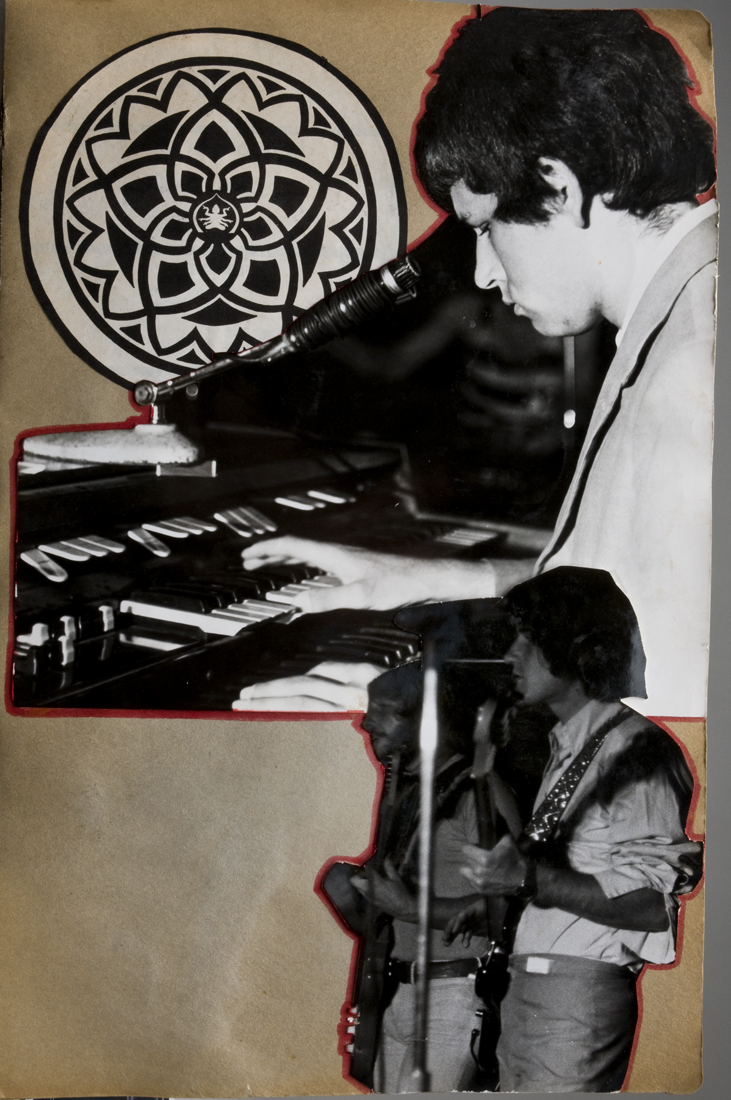
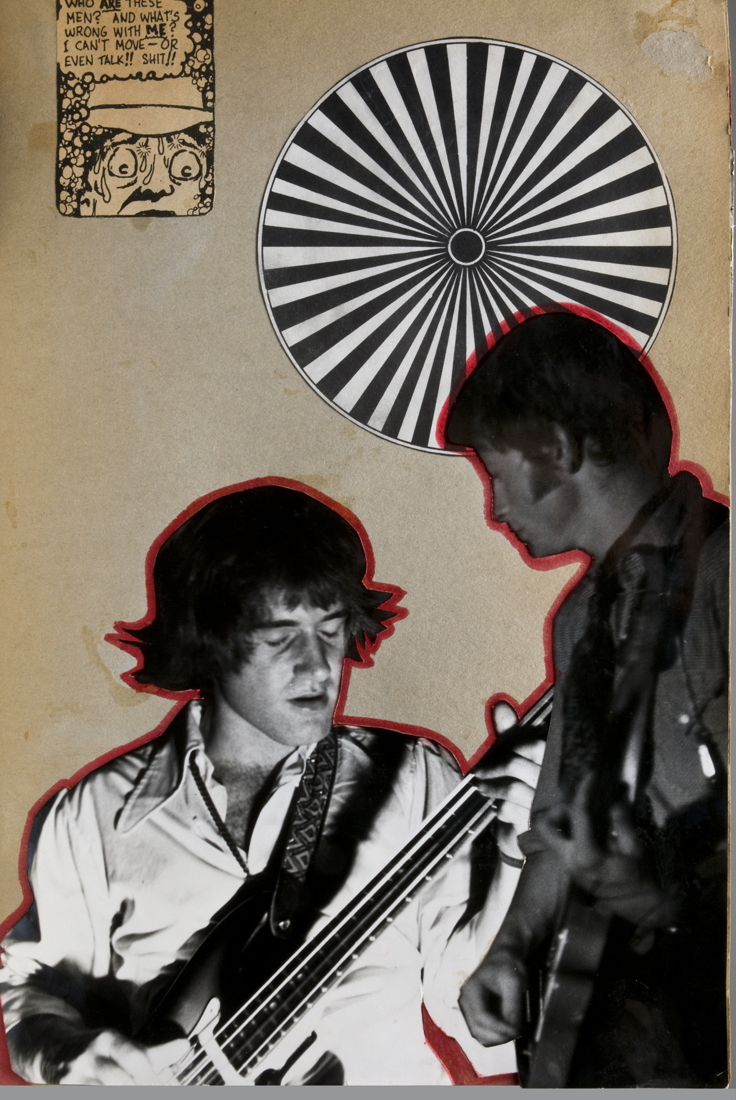
Nick Apostiledes was there at the beginning, both as a singer and as a writer. What did he bring to the band in those early days, and how did things alter once you and Alex took on the singing?
Nick was there from the beginning, both as a singer and co-writer. He also wrote a verse in ‘Madame Magical’ when I became a little stuck. As I said, he was the frontman at that stage, and he certainly looked the part.
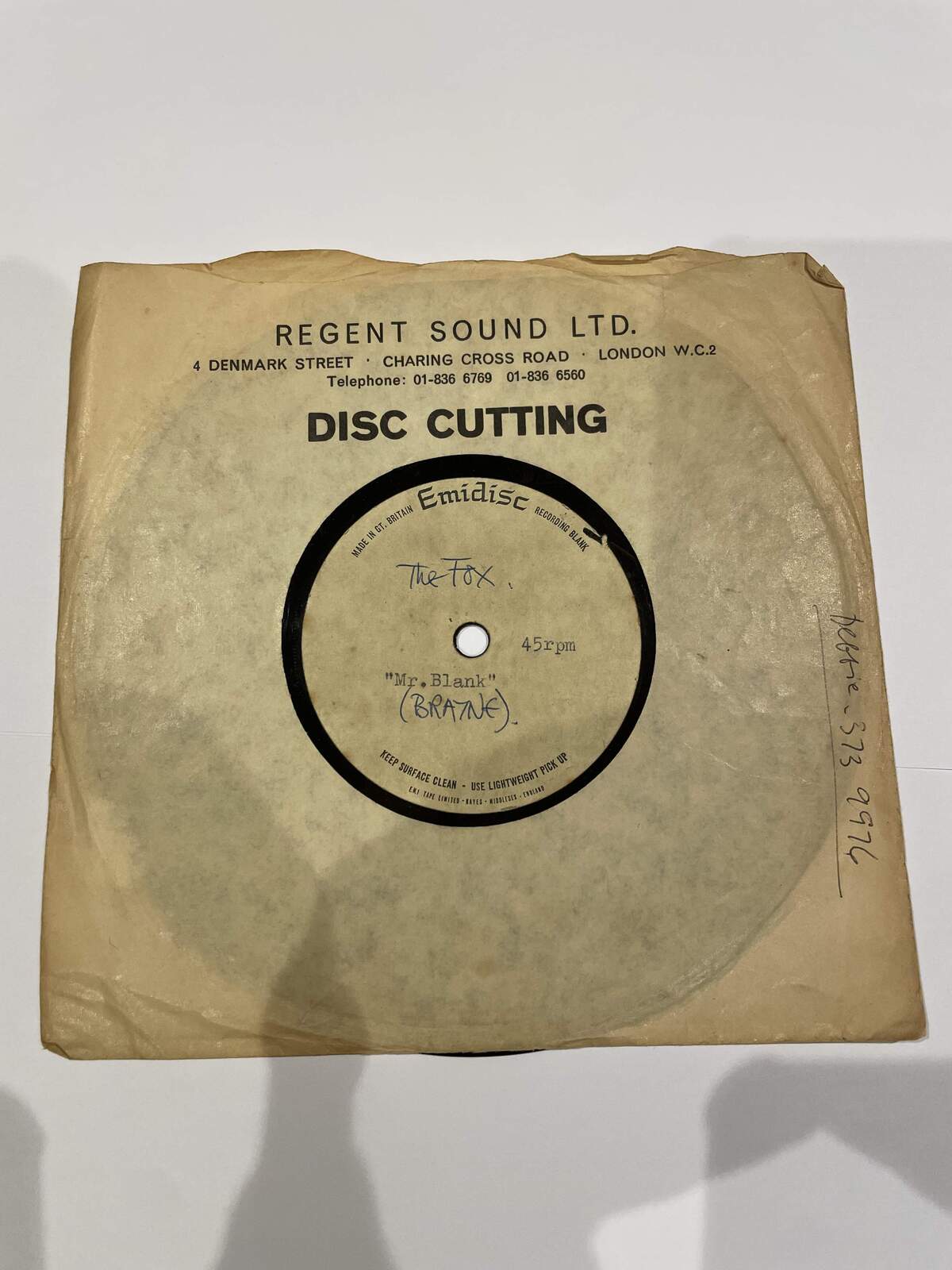
Lenny Barker, our manager at the time, organised a demo session at Regent Sound in London, where The Rolling Stones had recorded their first album, so that was very exciting. We recorded two numbers, which I think was all he could afford, ‘Mr. Blank’ and ‘Secondhand Love’. We were genuinely trying to capture the sound of the band.
When we received the demos, there was plenty of energy and good playing, and I thought the songs sounded strong. However, I came away feeling that the lead vocal was not really good enough.
I spoke to Alex and said, “I think you and I sing better than Nick.”
That led to the horrible situation in which we both agreed that, if we were going to move forward seriously, Nick would have to leave. It was an unpleasant decision, and understandably he was not happy about it, but at the time we felt that we had no choice.
In later years, after Nick had recovered from the initial shock, we became quite civil with each other. We could talk and it was all in the past. Perhaps it was not completely forgiven, I do not know, but we got on.
Once Alex and I took over the vocals, the sound changed because the singing became more closely connected to the writing and arranging. Alex and I also worked together on harmonies, so the vocal parts became another element that we could build into the songs from the beginning.
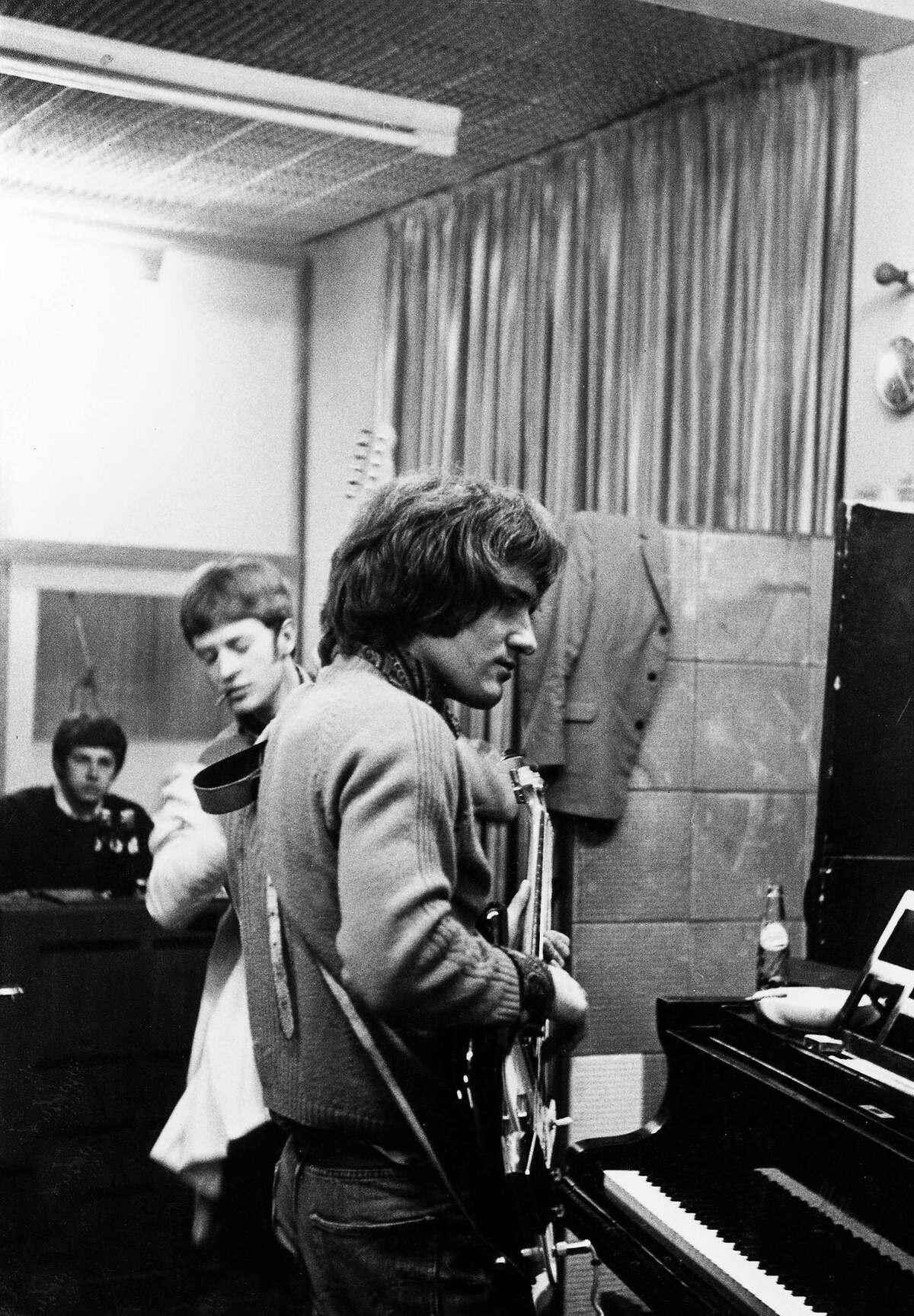
There is a lovely image of The Fox rehearsing above a pub in Portslade.
We rehearsed above the pub for several hours, twice a week. Alex and Dave were both very musical and had an excellent grasp of harmony. They had developed their skills through a great deal of playing and had real natural talent, so I was receiving quite an education.
We polished those songs endlessly before we went anywhere near a studio. We worked on the arrangements, the vocal harmonies, the changes between sections, where the solos would come in and how the instruments would fit together. Even the more open pieces had clear points at which we knew we would change direction or return to the written structure.
That preparation was one reason we could record most of the album so quickly. We were not trying to discover the songs in the studio. We had already lived with them for a long time.
Your early repertoire apparently included mostly originals, but also things such as a heavy Vanilla Fudge-style ‘Day Tripper’, Janis Joplin’s ‘Piece of My Heart’, Jimmy Smith’s ‘The Cat’, and a few R&B numbers. What did you get out of playing those covers, and how did they fit in with your own songs?
In those early days, we were determined to perform as much original material as possible, although we still had to fill out the set with one or two covers because we did not yet have enough songs for two complete sets.
We played Jimmy Smith’s ‘The Cat’, ‘Day Tripper’ in more of a Vanilla Fudge style, ‘Piece of My Heart’ and a few other things. There was also an R&B song that I have never been able to find since. It was a little like ‘High Heel Sneakers’ and was called ‘Sure Gonna Mess Him Up’. It was a very strong number, but I have no idea where it came from or where it went.
The covers gave us a chance to loosen up, stretch out and play material that audiences already knew. They also taught us a great deal about arrangement. Taking something such as ‘Day Tripper’ and making it heavier showed us how far a song could be reshaped by the band. ‘The Cat’ gave Alex room to play in that Jimmy Smith style and allowed all of us to develop our feel for groove and dynamics.
The covers were useful, but the original songs were always the main point. We wanted people to hear us as a band with its own material and identity.
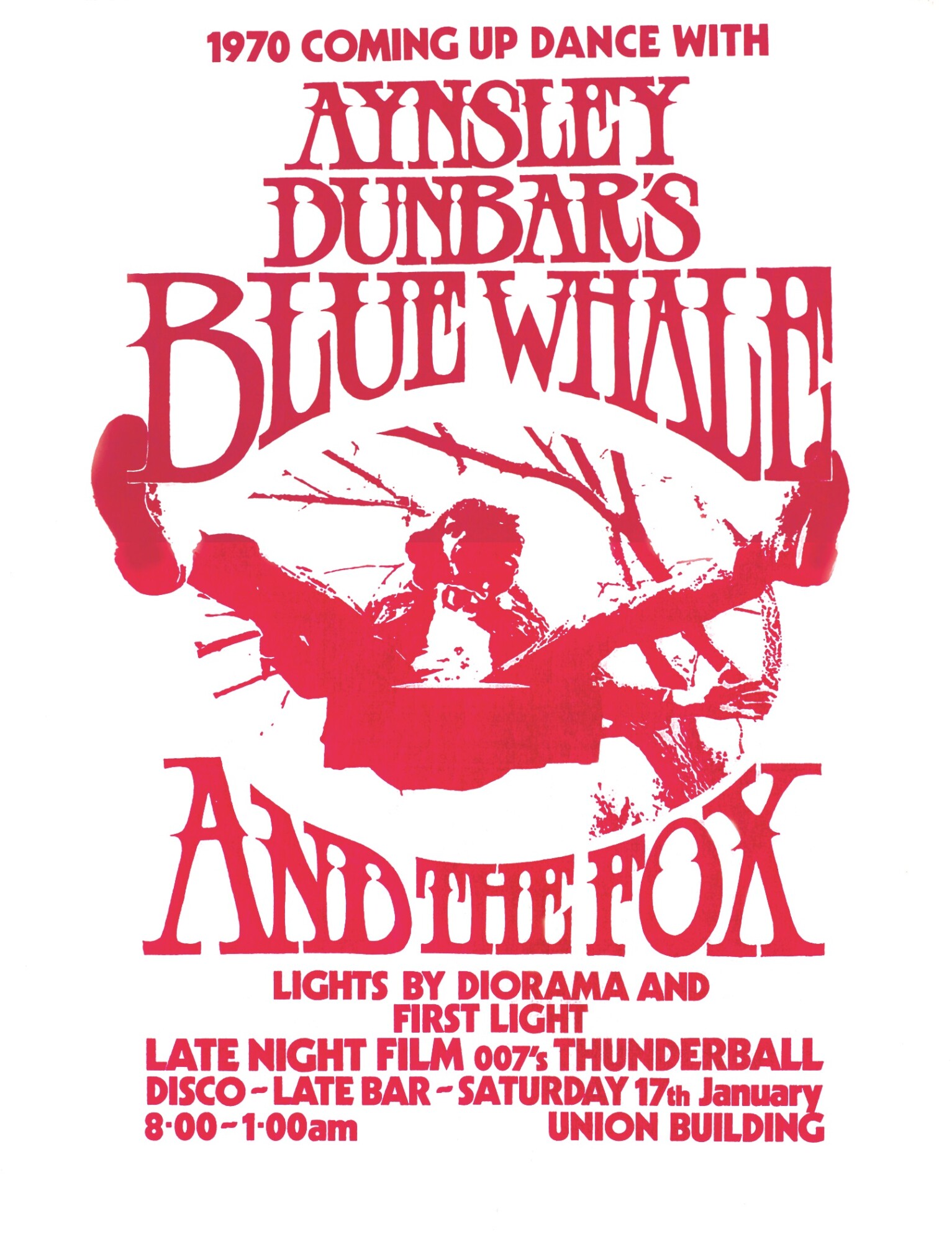
Winston Weatherill joined after the Regent Sound demo and was already known locally as a strong guitarist from Gary Farr & The T-Bones and other groups. What did Winston bring to The Fox?
Around that time, I had realised that although I was a songwriter and guitarist, I was not really an improvisational lead player. We all felt that it would be useful to have another guitarist who could handle the solos. Alex was brilliant at soloing on the Hammond, but we still wanted a true lead guitarist.
By coincidence, we all knew Wince. He had just returned from Norway, where he had been playing with a band called Shelley. They had apparently been quite successful there, but the band had broken up. We invited him to a rehearsal and asked whether he would like to join. He listened to us and said, “Yes, I think you sound good.”
That was really the beginning of the band as it would become.
Wince brought fantastic flair. Shelley had been more progressive, I suppose, so he was very melodic and inventive, with a strong tone and attack. We were also impressed that he played a Stratocaster that he had bought from Jeff Beck when The T-Bones and The Yardbirds were working on the same circuit and shared management.
That was the guitar he used throughout The Fox period. He later sold it because Jeff Beck had apparently shaved down the neck to make it thinner, and Wince did not like it. I am sure it would be worth a fortune now. Who knows where it ended up?
His arrival made me think much more carefully about my own playing. I took more of a back seat, played more rhythm and added melodic lines. I still played the solo on a few songs, including ‘Lovely Day’ and ‘Mr. Blank’, but Wince was definitely the lead guitarist. He also played great fills and rhythm parts, and I found my place by fitting around what he was doing.
The Fox had two strong guitar players, Alex’s Hammond organ, Dave Windross on bass and piano, and Tim Reeves on drums. How were the parts arranged so that each instrument remained distinct in the overall sound?
We spent a great deal of time working that out in rehearsal. Wince was the lead guitarist, so I concentrated more on rhythm, octave figures and complementary melodic lines. Alex and Dave suggested that I try octave parts, including the descending lines in ‘Secondhand Love’ and ‘Birthday Card’. Those lines gave the guitar a defined role without competing with Wince’s solos or Alex’s Hammond.
Alex knew when to fill the space and when to leave it alone. He could play very powerfully, but he was also an intelligent accompanist. Dave was equally musical, whether he was playing bass or piano, and Tim held everything together. Everybody listened to what the others were doing.
Because the songs were carefully arranged before recording, the parts had already been separated. We were not all playing at full force all the time. One instrument might carry a figure while another played sustained chords or left a gap. Even when the music became heavy, there was a sense of structure underneath it.
“We were louder, wilder and more exciting on stage”
Your first concert is remembered as supporting The Herd on Brighton seafront during the festival, and there were college concerts, Art College and Polytechnic dates, Bristol University with Aynsley Dunbar’s Blue Whale, and shows with Principal Edwards Magic Theatre. What kind of live band were The Fox? Were you heavier onstage than the album suggests?
Our first proper concert was supporting The Herd on Brighton seafront. We had rehearsed and rehearsed until we were very tight. Everybody knew exactly what to do, everybody played their parts well, and we made a strong impression. I remember what a thrill it was.
I also remember some girls running up to us and saying, “We thought you were The Herd!”
The Herd came on after us and were very impressive, well rehearsed, tight and professional. They were a kind of progressive pop-rock band and had a hit at the time called ‘From the Underworld’, which was quite a gothic song. Peter Frampton was playing with them. He was a great singer and guitarist and was younger than us. Gary Taylor, the bass player, also had a very deep voice and was a very good singer. Andy Bown was on keyboards and later became a very successful musician, working with many people and joining Status Quo.
After that, we played Brighton Art College, supporting Roy Harper and Juicy Lucy. We also supported Alan Price and The Idle Race. We played regular dates at the Polytechnic, and that was where Anne Nightingale, the BBC disc jockey and a Brighton resident, discovered us. She was very enthusiastic and described us as a band to watch in 1970. Unfortunately, we did not last into 1971.
We also played local concerts around Sussex and Hampshire, and returned to Bristol University for dates with Aynsley Dunbar’s Blue Whale and, on another occasion, Principal Edwards Magic Theatre.
By then, we had begun introducing new material intended for a second album. There were instrumentals with a jazzier feel, written by Dave and Alex, featuring interesting chord changes that I had to get used to. There was also a long song that Alex and I had written called ‘The River’, which was heavily influenced by the progressive rock scene. We were listening to King Crimson and thinking, “My God, we had better raise our game.”
We were loud, tight and full of confidence. I would love to have heard the band from the audience’s perspective, because your experience onstage is completely different. I am fairly certain that we came across as much heavier live than we do on the album. There are some lovely passages on the record and I am still pleased with most of it, but live we were louder, heavier and more powerful.
Do you remember particular concerts where everything worked?
Some concerts obviously worked better than others, although I think we were fairly consistent. All of us appreciated what the others were playing.
One of our most memorable concerts was at the Dome in Brighton, a large concert hall where we supported all sorts of people, including Edgar Broughton Band, Steamhammer and, famously, David Bowie, who was at the top of the bill.
He had already had a hit with ‘Space Oddity’, and we assumed he would appear with a powerful backing band. Instead, he came on alone, dressed in a striking red suit, with his hair bleached blond and permed. You simply thought, “This is what a rock and roll star looks like.” It was an amazing display of confidence to walk onstage with nothing but a twelve-string acoustic guitar and play his songs without any backing.
There was also a famous backstage incident when a fight broke out. Some roadies were having a punch-up and fists were flying. We all dived into what was essentially a storage cupboard to escape. Once we were inside, we realised that David Bowie was in there with us.
That was the only time I was ever in the closet with David Bowie.
At the other extreme, there was the Principal Edwards Magic Theatre concert where I was electrocuted. I could easily have died, but Alex realised what was happening and pulled out the plug. I was left with some nasty burns on my hands and, thankfully, no lasting damage.
Some people thought it was part of the performance when I leapt off the stage. In fact, I have no recollection of it. One moment I was playing guitar and reached up to adjust the microphone. The next moment, bang, blam, it was like being knocked over by a huge wave. Apparently, I jumped off the stage, landed on the floor and remained clamped to both the guitar and microphone until Alex disconnected the power. I was taken to hospital, had my hands bandaged and lived to tell the tale.
So yes, equipment could make the entire thing fall apart, and in that case nearly took me with it.
At some point Patrick Meehan and Adrian Miller came into the picture, with M&M and the promise of bigger things. How did they first hear about The Fox, and what exactly were you told at the time…?
I received a telephone call from a former girlfriend. She said, “I’m in London and I’ve met these men with a record label who are looking for new bands.”
I told her, “I’ve got this band and we’re really going for it. We’ve got original material.”
She said that she would bring them down to one of our rehearsals.
Patrick and Adrian arrived in Portslade in a Rolls-Royce. Both wore very sharp Carnaby Street-style suits. They were young, had long hair and seemed perfectly pleasant. They also had wallets bulging with money and were not shy about buying drinks.
We played our set, and afterwards they said, “We think you’re very good, boys. We’d like you to come to London. We think you could make an album. First, we’ll make a test recording, see how that goes, and if it is good, we’ll make a proper album.”
That was how it all began. We were completely taken in by the suits, the Rolls-Royce, the money and the whole image of the London music business.
They talked about managing us, recording a proper album, arranging promotion, buying equipment and a van, and possibly taking us to America. Once the contracts began, their offices in New Bond Street looked incredibly smart and professional. They told us they had worked with the Small Faces, which thrilled us. Suddenly, we felt that we were right in the middle of the record business.
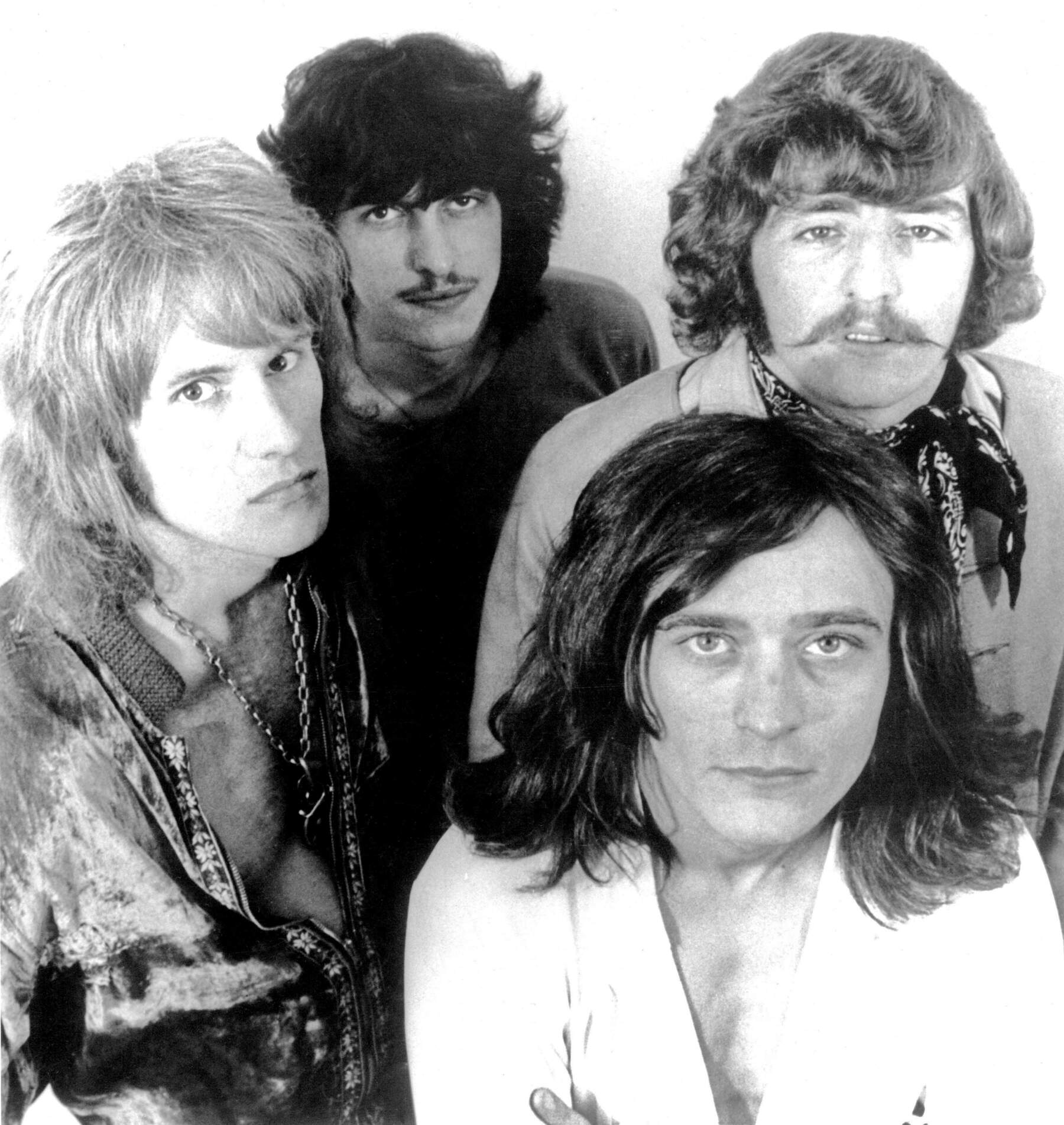
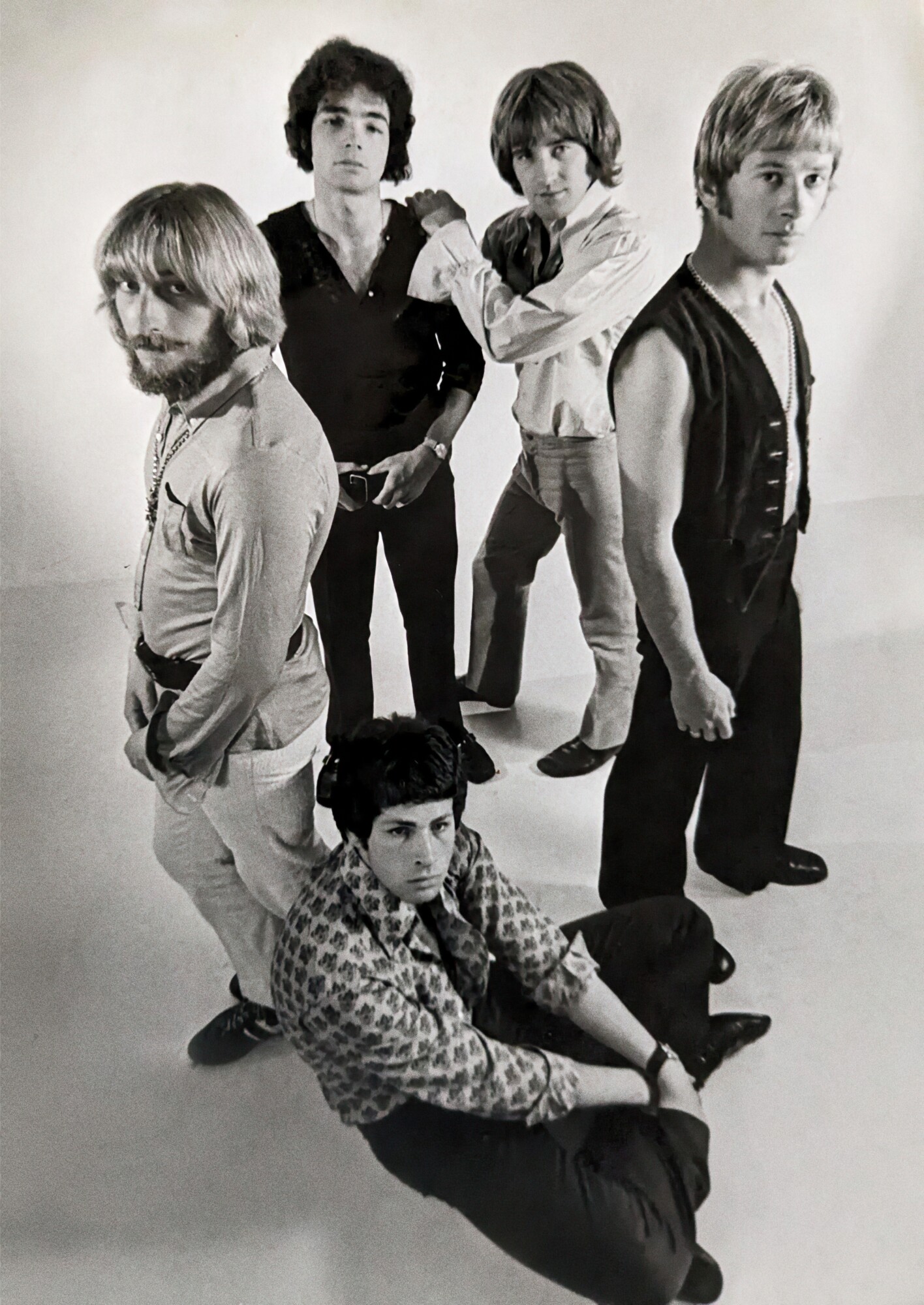
There were already plans for a second album. They also arranged a photographic session with Dezo Hoffmann, who had photographed The Beatles, The Kinks, The Who and just about everybody else. That really made us feel that things were happening.
The Regent Sound demos are now part of the story again through the new Think Like A Key Music reissue. What do you remember about that session in Denmark Street?
It was our first proper attempt to capture the band. Lenny Barker organised the session at Regent Sound in Denmark Street. The Rolling Stones had recorded their first album there, so simply going into that room felt tremendously exciting.
We recorded two songs, ‘Mr. Blank’ and ‘Secondhand Love’, which I think was all Lenny could afford. They were certainly intended to help us move forward and show people what we could do, but we were also genuinely trying to capture our sound. They were not casual rehearsal tapes.
Listening now, I hear a great deal of energy and some very good playing. That was the original line-up, with Nick singing and before Wince joined, so the recordings show a younger and rawer version of the group. They are probably closer to the sound we made while rehearsing above the pub than the finished album is.
15. The album was recorded in a twelve-hour overnight session at Radio Luxembourg Studios. Did you go in thinking these were still demos, or did anyone tell you they might become the actual album? What was the atmosphere like when you realised that was the version being used?
We went to Radio Luxembourg Studios in Park Lane, just behind The Hilton in London, for what was presented as a test recording. We thought that if it went well, we would later be given a proper album session with more time.
I cannot remember exactly when we began. It was getting dark, but I cannot even remember the time of year. We carried in all our equipment and played our set, which became most of the tracks on the album. Some of it worked very well and other parts less so, but we were thoroughly rehearsed, so it was essentially a live performance. We recorded guide vocals, overdubbed the finished vocals afterwards and probably added a few guitar solos in the usual way.
We emerged in the early morning after recording all night. I honestly cannot remember whether we kept ourselves going with beer, fish and chips or Coca-Cola. It is all rather vague now. Then again, it was 1969.
Later, we thought, “Great, if this works, we will get a proper recording session with more time.”
Patrick and Adrian said, “No, it is really good. It has a lot of life. We are going to release it as it is.”
We did manage to re-record a couple of songs, although I cannot remember where that happened, but for the most part the overnight session became the album.
When we realised that the recordings were actually going to be used, we felt that we had no power to object. It was already a done deal. I think Patrick had sold the tapes and arranged a licensing deal with Fontana, so that was that. The die was cast.
At the time, we were not entirely happy. More than fifty years later, people still seem to enjoy the record because it has so much life and energy. Perhaps that is exactly what they respond to. It is basically a live recording, and it is wonderful to know that it is still out there.
Richard Millard, Robin Sylvester and Roy Thomas Baker are all credited as engineers.
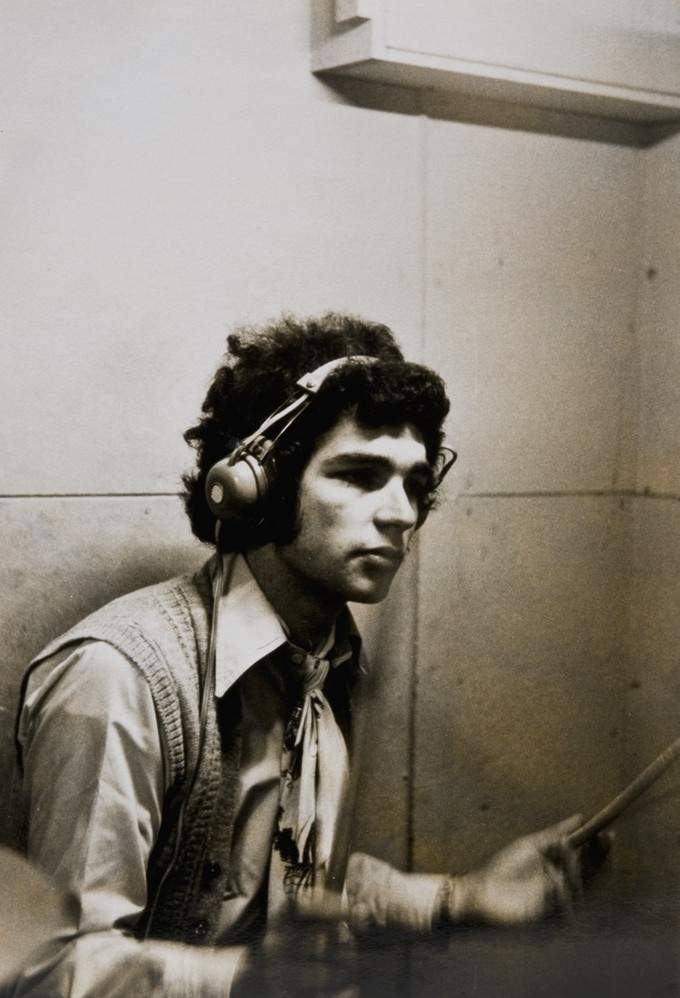
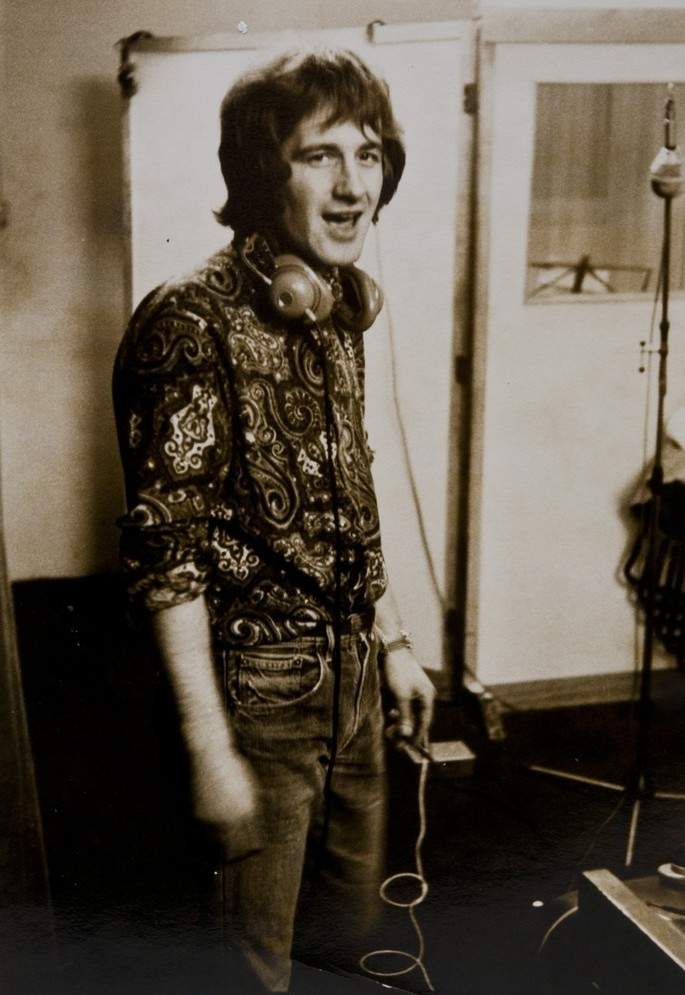
Richard Millard, Robin Sylvester and Roy Thomas Baker were all involved in the recording process, and they were extremely professional.
I cannot remember anything particularly detailed about working with them, except that they did their best to obtain the sound we wanted. We did not really get to know them personally. Their job was to capture what we played and make it sound as good as possible.
They would ask, “Do you like it like this, or like that?” They knew far more about recording than we did, so we trusted their judgement. They were good.
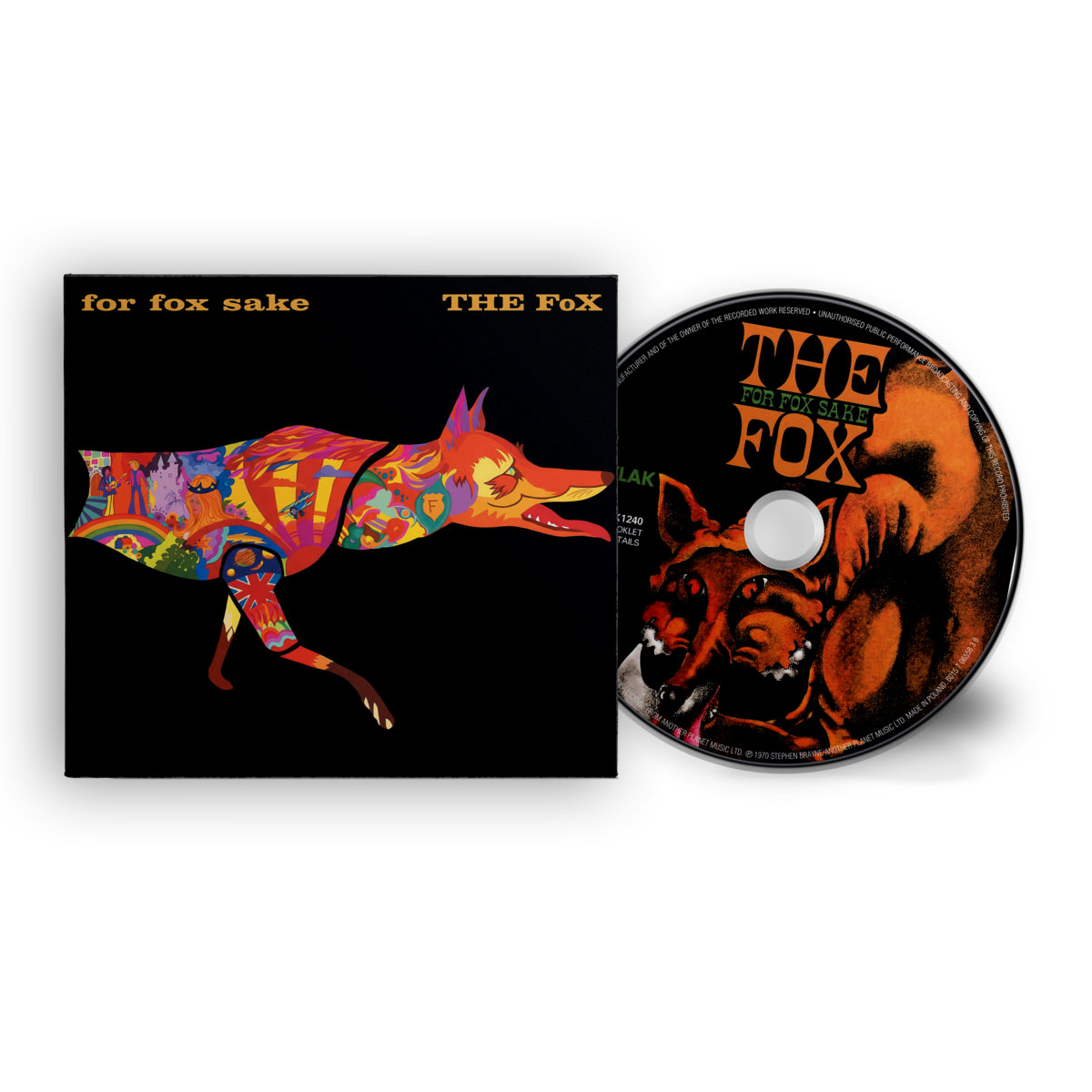
Roy also contributed the fairground recording at the beginning of ‘Madame Magical’, so in that respect he certainly had a direct creative hand in one of the album’s most distinctive moments.
‘Secondhand Love’ opens the album with that strong Hammond figure and became the single in Britain, with ‘Butterfly’ on the B-side. Why was ‘Secondhand Love’ chosen, and did you agree with that decision at the time?
‘Secondhand Love’ was chosen as the lead single, but we did not really have any say in the matter. It was all decided in London. We did always think that it was a strong song.
Listening now, I think it could have been done better. It might have benefited from being slightly more upbeat, although there is a great deal of good material in the track.
I was very happy that ‘Butterfly’ was on the B-side because it was so different. We recorded it very simply, and it has had the most extraordinary life since the album appeared.
Your own songs on the album move through quite a few moods: ‘Lovely Day’, ‘Glad I Could’, ‘Mr. Blank’, ‘Man in a Fast Car’, ‘Goodtime Music’, ‘Butterfly’ and ‘Madame Magical’. Could you go through those songs and say what you remember about writing them, and which ones changed most once the band got hold of them?
I particularly remember writing ‘Lovely Day’. I was living at home while we were rehearsing. One morning I woke up, the sun was streaming through the window, it really was a lovely day, and I thought, “I am going to write a song.” I picked up my guitar and wrote ‘Lovely Day’.
I was influenced by the gospel music around at the time, particularly the Edwin Hawkins Singers’ ‘Oh Happy Day’ and Billy Preston’s ‘That’s the Way God Planned It’. I had always loved gospel music, not because I was especially religious, because by then I was not religious at all, but because I loved its feeling and passion.
‘Lovely Day’ was not about God. It was about a girl, which is portrayed beautifully in the video the record company later made. I really like it.
‘Glad I Could’ was written with a friend, Glenn Brasse, whose name appears in the credits. Glenn went on to become a lawyer, which was probably a safer choice than becoming a musician. It was probably a fifty-fifty collaboration. Again, it is an upbeat song, and yes, it is about a girl. So many songs are about girls. It is amazing.
I wrote ‘Mr. Blank’ while doing one of the odd jobs we all had during the rehearsal period. Alex and I, like everybody else in the band, worked to pay rent to our parents and keep ourselves going. I worked in factories, on Newhaven Docks and for the local council, doing labouring jobs at the refuse depot, moving paving slabs and things of that kind.
At lunchtime, I often went to the pub because it was hard work and I was thirsty. Sitting there one day, I had the first ideas for ‘Mr. Blank’. I do not know whether I was influenced by ‘Nowhere Man’. It has that sort of feeling, although I think ‘Nowhere Man’ is probably a little better. Well done, John and Paul.
‘Man in a Fast Car’ began with the riff. It was about a local boy whose parents bought him a sports car for his twenty-first birthday, complete with his initials on the number plate. I remember thinking, “Oh my God.” He swaggered around as though he owned the world, so the song was basically making fun of him. He was simply a man in a fast car, a very fast car. I think it also involved a girl we both knew. Again, another girl.
‘Goodtime Music’ was an attempt to write a New Orleans jug band-style number, but we never had the opportunity to record it properly. It does not quite work on the album and has often been singled out as the one track that perhaps should not have been there. Given more time, I think we could have created a very good production. I imagined barroom sound effects, breaking glass and perhaps a New Orleans-style brass band. What appears on the album is really only a demo.
‘Butterfly’ was written in Bristol when I first learned about Drop D tuning, and it may well have been about Sally Oldfield. It is a song about letting go. I brought it to the band as an acoustic song, and the unusual instrumental section gave it a completely different atmosphere.
‘Madame Magical’ also takes me back to Bristol. Madame Magical was my girlfriend there. At the time, everything seemed perfect, until it was not. The song was obviously influenced by Hendrix, particularly the slight ‘Foxy Lady’ feeling in the riff, because I was completely immersed in Hendrix. It came out very differently, though. It begins with that three-four introduction, which Alex transformed into a wonderful fairground-style passage, before moving into the funky section.
Every one of those songs was written on acoustic guitar, apart from perhaps an occasional electric idea. I wrote them alone, except for ‘Glad I Could’. Then I took them into the rehearsal room and they blossomed. Everybody added ideas, the arrangements developed, and each song became larger and more interesting. That transformation was always one of the best parts of being in a band.
‘Butterfly’ is a very interesting track. What exactly is happening on that track instrumentally, and what was the song about for you at the time?
I am delighted that a song I wrote in Bristol when I first learned Drop D tuning, and which may well have been about Sally Oldfield, has had such a life of its own. It is a song about letting go.
It was a very strong song for me. When you write something, you hope that as many people as possible will hear it, enjoy it and perhaps tell you what it means to them. I have received more feedback about ‘Butterfly’ than about any other song I have written, and it has all been positive.
One person told me, “This is the song I listen to when I am feeling down and times are hard. Afterwards, everything seems all right.” You cannot ask for a better compliment than that.
We rehearsed it with two acoustic guitars and just a little keyboard at the end, played by Dave Windross. I think there is also a subtle touch of Hammond. Apart from that, it is simply two acoustic guitars, with Alex and me making whooshing sounds across the microphone. We rehearsed it several times, but the instrumental middle section was always created on the spot. It was improvised.
Wince was not actually playing a sitar, despite what the original label says. He did not own one. Instead, he wedged wooden cocktail sticks beneath the strings near the bridge of his guitar, which produced that rattling, sustained, sitar-like sound. He then played Indian-style scales and finished with some lovely harmonics. It was all very simply done and, thankfully, it worked.
Over the years, several people have made imaginative films to accompany the track. One used wonderful footage of a 1970s hippie festival, with stoned, long-haired hippies doing yoga and other things in fields. Another, which I sadly can no longer find, was a beautiful stop-motion animation made with butterflies and an old-fashioned plate camera. Those were wonderfully creative reactions to the song.
‘Madame Magical’ seems to be the great centrepiece of the album.
‘Madame Magical’ was the song in which the band was allowed to let loose. Onstage, it was always our big improvisational number. Everybody could stretch out and play, and that is exactly what we did in the studio.
What you hear on the record is what happened that day. It would probably never have sounded exactly like that again. There were several arranged points at which we knew we would change time signature and emerge from the improvisation, but apart from that it was completely free.
The ending, that crazy musical car crash, was me playing very high on the neck of my Telecaster. I was heavily influenced by Syd Barrett’s guitar playing because ‘The Piper at the Gates of Dawn’ is such a wonderful album. I used a Zippo lighter, sliding it along the strings while the engineers added a great deal of echo. I still quite like that ending.
The fairground recording at the beginning was Roy Thomas Baker’s idea. He said, “I’ve got some fairground tape we could use,” and when we heard it, we all thought, “That is perfect.”
We loved albums such as ‘Sgt. Pepper’s Lonely Hearts Club Band’, particularly ‘Being for the Benefit of Mr. Kite!’, so it immediately created the right atmosphere.
Had we been given more time in the studio, there would have been much more experimentation of that kind. Songs such as ‘Goodtime Music’ could have been developed into full jug band productions, and the entire album might have gone further into that late 1960s psychedelic world, even though we were already on the cusp of the 1970s.
The amusing part is that Roy Thomas Baker later reused the same fairground recording on Queen’s ‘Brighton Rock’. By complete coincidence, it was a song called ‘Brighton Rock’, and we were a Brighton rock band.
People have occasionally said that the beginning sounds like Queen, but no, ‘Madame Magical’ came first. Thank you, Roy Thomas Baker.
‘As She Walks Away’, ‘Look in the Sky’ and ‘Birthday Card’ suggest another side of the band. Was that where The Fox might have gone on a second album?
Those songs came in more or less fully formed, written by Alex with lyrics by Nick, apart from a few sections. ‘Birthday Card’ was fully formed, as was ‘As She Walks Away’. I think I worked with Alex on the middle eight of ‘As She Walks Away’. It may have been the section beginning “Was it something that I said?”, or perhaps we simply worked out the harmonies together. I cannot remember now.
With ‘Look in the Sky’, we definitely worked together on the middle eight. Those three songs were largely Alex’s work, with very good lyrics by Nick Apostiledes.
For ‘As She Walks Away’, Winston created the opening acoustic guitar figure. It is almost a piece in its own right, a lovely melodic introduction. When it moves into the more rhythmic section, that is something I added, and the two of us come in together on electric guitars. That is the second section before the song itself begins and the Hammond enters.
I was very keen on ‘As She Walks Away’ and ‘Look in the Sky’. I thought ‘Look in the Sky’ showed the direction in which we were heading. It has a great arrangement. Funnily enough, I was not so keen on ‘Birthday Card’ at the time because I thought it was almost too carefully worked out. Listening now, I think it is a little gem. We spent a long time arranging all those harmonies. I play a little wah-wah at the beginning, with descending chords, and Winston plays a lovely, stinging guitar solo. I like it very much now.
Alex wrote in a more complex way than I did, particularly harmonically, and that would certainly have carried into the second album.
We had about an album’s worth of material, much of which we had written together. There was a song called ‘Everything’s Changing’, which was intended to be the heavy number. Wince and Dave had written a pretty song called ‘Jacqueline’, with Winston on acoustic guitar and Dave playing flute. Dave had also written a jazzy instrumental.
There was a moody number called ‘The River’, which Alex and I wrote in a more complex, progressive style. We played it at the Dome and received some excellent feedback from a local music critic. There was also a more psychedelic song about the crazy days in Bristol, which included the lines:
“In grey and glowing morning light
Milk-bottling through the streets
A friend and I went drifting high
On feather-winging feet.”
It is a pity that those recordings were never released and that the tapes are now lost. What might have been?
There are references to BBC Radio One sessions, plans for America, and even work begun on a second album. What actually happened after the record came out?
The BBC Radio 1 session was very good. It was not something the management arranged, although it was exactly the sort of thing they could and should have done. It came about through a girlfriend of mine who lived in London and knew people in the music business, including the disc jockey Alan Freeman. She had also been out with Scott Walker.
Sue said, “I think I can get you a Radio 1 session.”
We said, “Yes, please,” and that was exactly what happened.
It was recorded at the BBC’s Paris Studio, not in Paris, but in Lower Regent Street in London. I think we recorded four numbers, three from the album, including ‘Look in the Sky’, ‘Lovely Day’ and ‘Secondhand Love’. We also recorded the Everly Brothers’ ‘When Will I Be Loved?’ because we were playing a fairly heavy version of it live.
It was a real thrill. I remember waking one morning with my transistor radio beside the bed. I knew the session would be played on the breakfast programme. I switched on the radio and there it was. The band sounded very tight, the production was excellent, and those BBC engineers certainly knew what they were doing. To be honest, the performances were probably better than the album versions.
In those days, however, you were not given a copy of the session, so the tapes simply disappeared. What a shame. The session was repeated later, which was wonderful, but as far as I know no recording survives.
Anne Nightingale reviewed the album in ‘The Daily Sketch’ and gave it a terrific review. She called us “a band to watch for 1970”, which was wonderful. It is a pity that we did not last into 1971. I do not remember the rest of the British music press being especially enthusiastic, but that is the way it goes.
The plans for America never progressed beyond promises and the release itself. The second album went further because we had written and recorded a substantial amount of material in different London studios. Unfortunately, I do not know of any surviving tapes, acetates or written notes. If anything still exists, nobody has located it.
23. The usual story is that the management’s attention shifted towards Black Sabbath just as heavy rock was taking over and The Fox were left behind. From your side, was it really that simple, or were there other reasons why the band stopped?
It became clear that the management were not helping us. They got the record released, which was good, but promoting it was another matter. It appeared in America, but there was virtually no promotion.
Then they took on Black Sabbath, who became enormously successful with ‘Paranoid’, and naturally their attention moved towards them. Black Sabbath were the new money machine, together with Led Zeppelin, at the forefront of what was then being called heavy rock.
At the time, I was much more interested in Traffic and that kind of music. We all liked jazz as well. Of course, we loved The Beatles and The Rolling Stones, but none of us was particularly keen on Black Sabbath or Led Zeppelin because it all felt so full-on, and subtlety was not really the name of the game.
There were many other disappointments. All our equipment was stolen from the rehearsal room, including the amplifiers, and the management promised to replace it, but the equipment never appeared. They said they would buy us a van. We found one, but their cheque bounced. It became a long succession of broken promises, and we grew thoroughly disillusioned.
Our enthusiasm began to disappear. The local booking agent was not finding worthwhile concerts. We arranged the university dates ourselves through friends, and we obtained the BBC session through our own contacts. The management arranged one bizarre nightclub booking in Piccadilly with a pop vocal band called Harmony Grass, which was completely unsuitable. Apart from that, nothing.
Then, to our complete surprise, Dave and Winston decided to leave. We had an important appearance approaching at the Plumpton Blues Festival, which should have been a major opportunity, but they had simply had enough and could not wait any longer.
That was really the end. We considered finding another bass player and guitarist, but by then everybody locally was playing heavy music, and nothing felt right. The whole thing gradually fizzled out through disappointment and disillusionment.
So Black Sabbath were part of the story, but the band did not end for only one reason. It was the lack of promotion, the broken promises, the lost equipment, poor bookings and the feeling that nobody was actually supporting us.
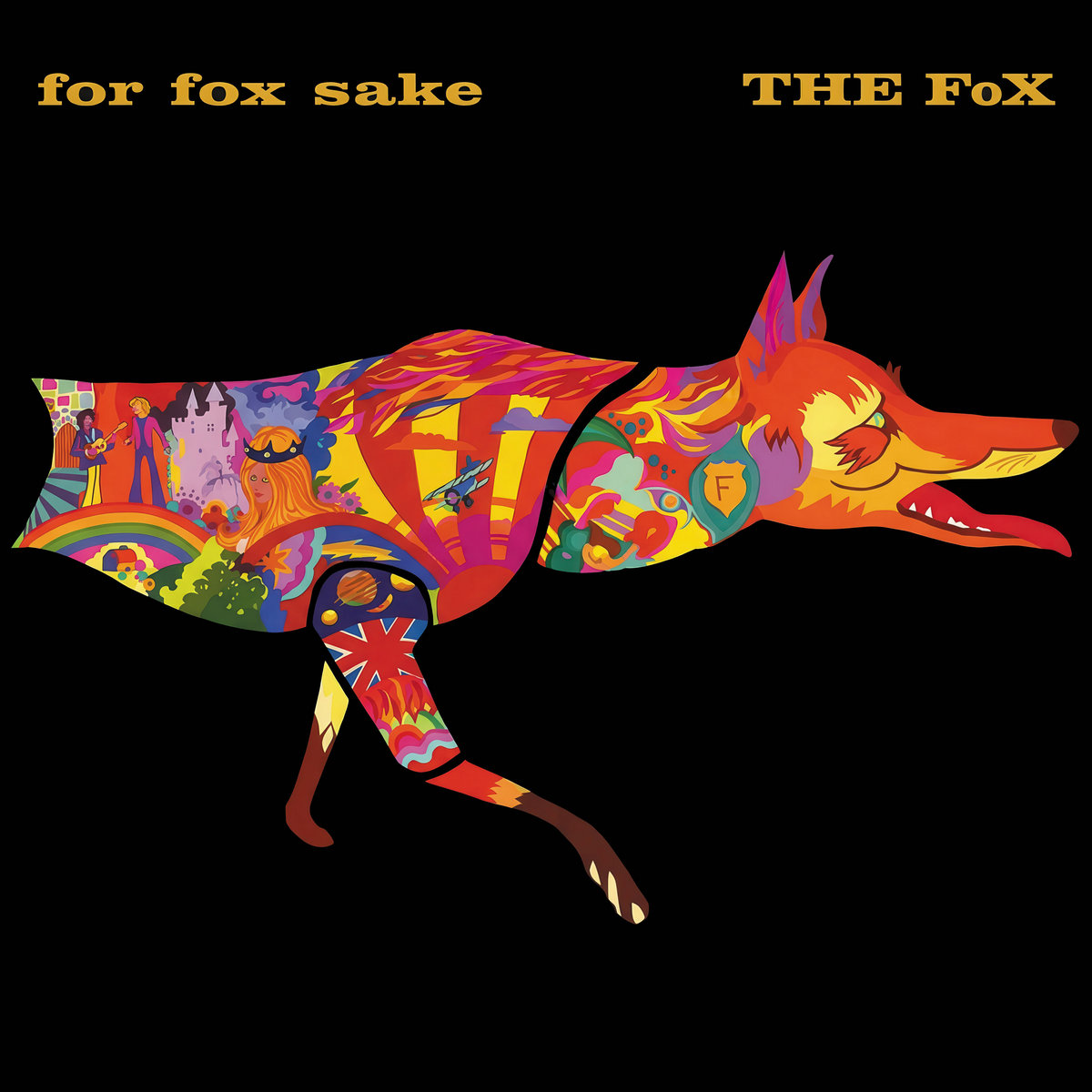
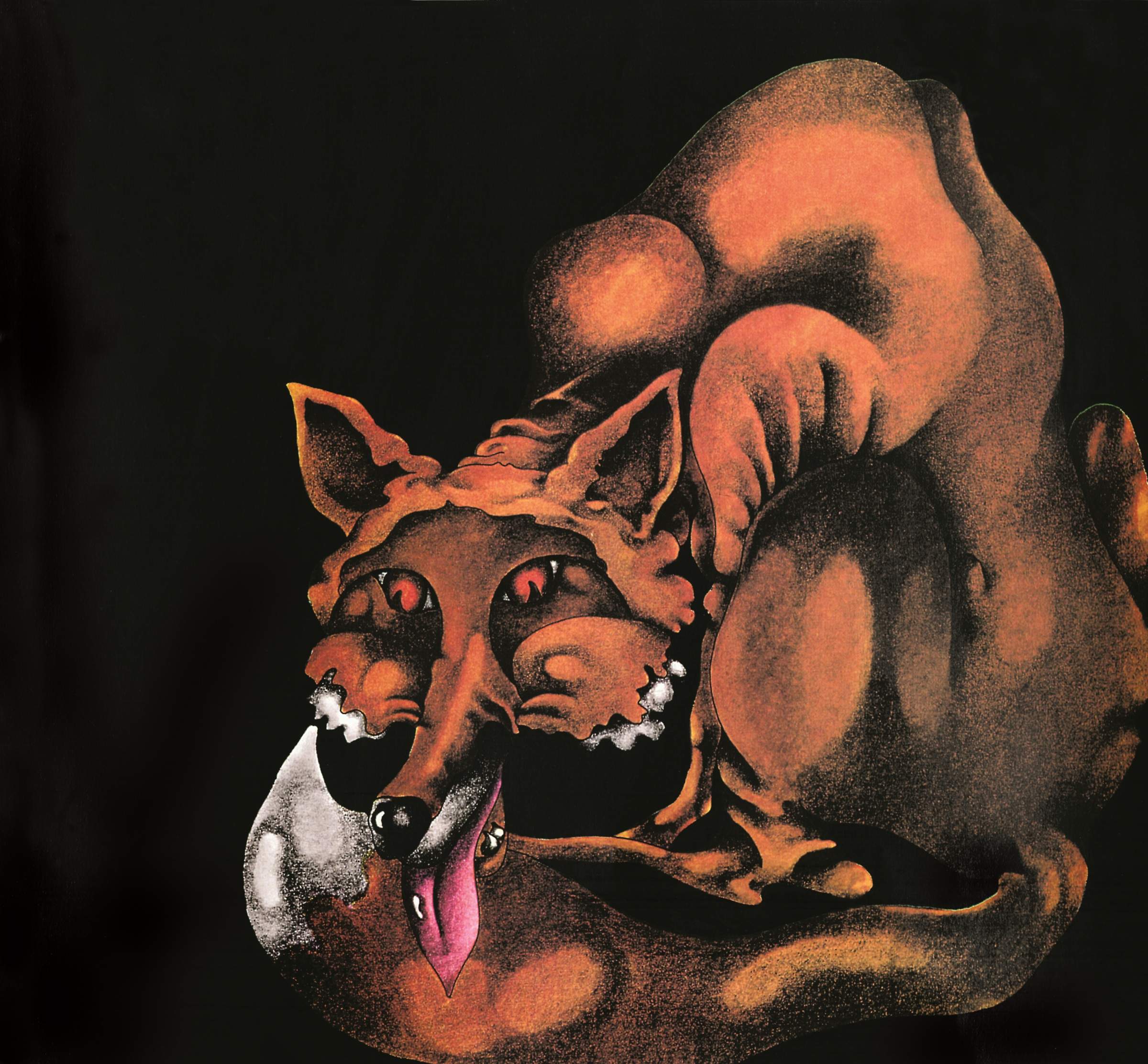
‘For Fox Sake’ appeared in Britain on Fontana, then in North America on Bob Crewe’s Crewe label with different artwork and the odd ‘Vol. 1’ title. Did you have any say in the title, sleeve, track order or American release? Did you ever see the Crewe version at the time?
No, we did not have any say in the album title. We actually disliked it. When the management came down and told us, “We’re going to call it ‘For Fox Sake’,” we all thought, “Oh no.”
It was not how we saw the band at all. It felt like a cheap, sensationalist title, but it had already been decided, printed and released.
The same applied to the American edition. We had no meaningful input into the artwork, track sequence or presentation. It was called ‘Volume One’ because there had been plans for a second album. Once the band broke up, those recordings were abandoned, so ‘Volume Two’ never appeared.
We were always the last people to know what was happening. The deals were done between management, Fontana and Bob Crewe, and the finished records simply emerged.
The record has had a long afterlife through collectors, reissues, ‘Butterfly’ on compilations, and now the Think Like A Key remaster with bonus material and fresh testimony from you. When did you first realise that people were still listening to The Fox, and what has been most surprising about the album’s return?
The long afterlife of the album has been fantastic and a genuine surprise. At the time, it seemed as though the whole thing had disappeared into a black hole.
I first became aware that the album was being pirated around 2000. A friend was in a record shop when he found a CD of the album. He telephoned and said, “Did you know there is a CD of The Fox?”
I said, “No, there isn’t. There has never been an official CD release.”
He bought the copy and brought it to me. I immediately realised that it was a pirate edition, issued by a company called Flash, I think, in Italy. That was the point when I decided that I had had enough. We had been ripped off in the first place by the Meehans, and now we were being ripped off again by pirates. It was too much.
I began speaking to people I knew in the record business, particularly people involved in reissues. A lawyer recommended that I assert copyright because we did not have any of the original publishing or management contracts. I am not sure we were ever given copies. That was simply the way they operated.
Once I had asserted copyright, I was put in touch with Mark Stratford at what was then RPM Records. I approached him and he said, “Oh yes, I know The Fox album.”
That was the beginning of a very enjoyable collaboration, and everything grew from there. The first proper reissue appeared in 2003. It was beautifully presented, with excellent artwork and a great deal of care put into the release. It was distributed by Cherry Red Records, and I was delighted with it.
Around that time, I began looking online to see what people were saying about the band. I was genuinely surprised and very pleased to find so many positive comments about the album and particular songs. It was also wonderful to discover that ‘Butterfly’ had appeared on various compilations.
One of the nicest surprises was hearing Pete Scion’s cover of ‘Butterfly’. It appeared on the psychedelic compilation ‘Pull Up the Paisley Covers’. His version was almost completely different from the original, but I was delighted that he had chosen to record it. As a songwriter, hearing somebody reinterpret one of your songs is a tremendous compliment. I would love to hear more cover versions in the future. It is one of the greatest rewards for any songwriter.
The most surprising part is simply that the music has continued to find people. Something that seemed lost and forgotten has returned more than once, and each reissue has brought another audience. The new Think Like A Key edition has also allowed earlier and alternative recordings to become part of the story, which means listeners can hear more of what the band actually was.
Looking back now, do you hear ‘For Fox Sake’ as the true sound of The Fox, or as a fast studio snapshot of a better live band? If you could change one thing about the way the album was recorded or released, what would it be?
Looking back, the album is what it is. It cannot be changed.
I think the production team did the best they could with what was essentially a live demo session, with a few overdubs added afterwards. If we had been able to find the original master tapes, which seem to have disappeared into the great blue yonder, perhaps we could have produced a new remaster from them. Unfortunately, that is not possible because the tapes have gone.
The album captures some of the band’s energy, particularly on ‘Madame Magical’, but I still think we were a louder, wilder and more powerful live group than the record suggests. In that sense, it is a fast studio snapshot rather than the complete picture.
If I could change one thing about the recording, it would be the amount of time we were given. We needed more time to develop the songs, refine the arrangements and improve certain aspects of each track.
Some songs came out very well and did not require much more work. Others contain little things that still annoy me. There are places where a vocal line is repeated and should have been edited out, for example. Those are the details that more studio time would have fixed. Songs such as ‘Goodtime Music’ could have become much stronger if we had been allowed to develop them properly.
As for the release, it would have helped enormously if the record company and management had made some effort to promote it. They simply did not.
The management had a notorious reputation. Before us, they had famously mistreated the Small Faces. Despite the band having several hit records, the members were reportedly living on very little money and accounts at Carnaby Street boutiques. They treated us in much the same way.
They also managed Black Sabbath, and that experience is reflected in Black Sabbath’s song ‘The Writ’, which concerns the band’s legal battle with management. I was never really a Black Sabbath fan because the music was not particularly to my taste, but when I finally heard ‘The Writ’, I thought Ozzy Osbourne sang magnificently. It completely changed my opinion of them. Good for them.
There is a line about “a devil father with a devil son”. I know exactly who that is about.
I also believe Gentle Giant later had serious contractual difficulties with the same management. I suppose we got off lightly.
Years later, I spoke to a music business lawyer after discovering that a BMI royalty cheque from America, dating from 1970, had been endorsed with what appeared to be a forged version of my signature. I had a photocopy of the cheque, which had been cashed in New York.
When I suggested that this was clear evidence of fraud, the lawyer asked who my management had been. When I told him, he simply said, “I would not pursue it. They have a bad reputation.”
I asked what he meant.
He replied, “Let’s just say they are known for sending the boys around with an iron bar.”
That was the end of the story. I decided not to pursue it.
What happened to the other members after The Fox ended?
After the band broke up, I moved to London fairly quickly. I had decided that I was not going to continue working with crooks. I could not live in that environment. I gave up any hope of a career in the music business and concentrated on finding a proper job that I could enjoy, which I eventually managed to do. More about that later.
Although I had left Brighton, which was my hometown, I returned regularly and stayed in touch with the other members. We all remained good friends.
Alex went on to work with American soul singer J. J. Jackson. He also resumed writing songs with Nick Apostiledes, and had some songwriting contact with the 1960s pop singer Adam Faith, who lived locally at the time.
Alex was a wonderful musician. He could turn his hand to soul, blues and jazz on the Hammond, and he had a deeper harmonic understanding than I did. He later moved to America and settled in Los Angeles. As far as I know, he is still there, although we have rather lost touch because he no longer seems to respond to messages.
Dave Windross and Winston both decided to concentrate on jazz, which was really where their hearts lay. They played some wonderful, funky jazz with Hammond organ and guitar. Winston, who is an exceptionally gifted guitarist, also became deeply involved in the music of Django Reinhardt and played in a gypsy jazz-style group.
Sadly, Dave died about ten years ago. He had been unwell for some time, and I do not think the cigarettes and alcohol helped. We all loved Dave. He was a lovely man and a wonderful musician.
Winston still lives in Brighton. I saw him recently, although he no longer plays guitar seriously. He told me, “I’ve got eight guitars. I sit and look at them sometimes. Every now and then, I’ll pick one up and play a bit of jazz or blues, but I haven’t touched one for a couple of months.”
That is a shame because he is a remarkable musician.
Tim joined a band called Octopus and toured clubs around the country. After that, he got the drumming job with Mungo Jerry, stayed with them for a couple of years and toured extensively throughout Europe and beyond.
He told me about playing enormous venues, including the Maracana Stadium in Rio before a huge audience. Years later, I visited Budapest and saw an exhibition at the city’s rock museum. There was black-and-white footage of the first Western band to perform there and, to my surprise, it was Mungo Jerry. There was Tim on the screen, playing to a packed audience in Budapest.
He came very close to joining Wings. He reached the final two or three drummers under consideration. Paul McCartney had apparently heard him playing in a theatre with another band and invited him back for further auditions. Tim eventually played with McCartney himself but narrowly missed out when Geoff Britton got the job.
I think that disappointment stayed with Tim for quite a while. He came so close. Still, he got to play with Paul McCartney, and that is something very few musicians can say. Well done, Tim. He later moved to Australia and, the last I heard, was living in Cambodia.
Nick was an important part of the original band. He brought the Mod look, fronted the early line-up and contributed lyrics, including part of ‘Madame Magical’. Our decision to ask him to leave was painful, but in later years we were able to speak and get along again. Whatever the difficulties at the time, his contribution belongs in the story.
The main thing I remember is that they were all friends and very good musicians. We were young, ambitious and completely committed to the band. That friendship and shared belief are part of the record, even if listeners cannot necessarily hear the full story in the grooves.
You later moved through different parts of life, including photography and continuing music with Sonic Blue.
I moved to London almost immediately after the band broke up. I had become completely disillusioned with the music business and the creatures who ran it, so I decided to move on and find work that I could genuinely enjoy.
My first job was in an art gallery, which was great fun, although it did not last very long. After that, I joined a publishing company specialising in film books. I travelled throughout Europe and Scandinavia selling their books and had a wonderful time.
From there, I moved to the Craftsmen Potters Association, where I spent eight very happy years running their shop and gallery just behind Carnaby Street. We sold handmade ceramics by potters from all over the country. It was a lovely job, and I found the potters themselves incredibly inspiring because of the independent way they lived and worked.
After eight years, I returned to college to study film, photography and television. That led to a long career as a photographer, working mainly with artists. The best known was probably Grayson Perry, now Sir Grayson Perry, would you believe? He is a wonderful artist and a fantastic character, and I was his photographer for many years before gradually beginning to retire.
Of course, I never really stopped playing music. Even while working as a photographer, I returned to bands. For the last twelve or thirteen years, I have been playing with Sonic Blue. We have released two albums through Another Planet Music with Mark Stratford, and we still enjoy playing live.
I have been lucky enough to work with a terrific group of musicians, many of whom have played with artists including Manfred Mann’s Earth Band, Fairground Attraction, and Graham Parker & The Rumour. They are all first-rate players. We recently added a Hammond organist, which takes the band back to something close to the original Fox line-up. I have always loved that Hammond sound.
That is really what I am doing now, writing songs, making records and playing live. I am working on more material and thoroughly enjoying it.
The Fox experience certainly made me cautious, but it became one chapter among many. It has also been a genuine pleasure to reconnect with the music through these reissues. There are still good people in the business, including Mark Stratford and Roger Houdaille at Think Like A Key, who have helped to make things happen. It has been a lovely surprise to see this music finding a new audience. It is genuinely exciting.
When you hear the Regent Sound and Radio Luxembourg bonus tracks now, do they show another version of the band, perhaps rawer, younger…?
Listening to the Regent Sound recordings reminds me of a different side of the band. They were made when Nick was singing, before Wince joined, and they capture us when we were younger, louder and still rehearsing above the pub. There is a real energy in those performances that I continue to love. They are raw, uninhibited and very much how I remember us sounding live.
Tim’s drumming, in particular, is fantastic on those tracks. By the time we made the album, I think we had become a little more careful. We wanted everything to be right and perhaps held ourselves back slightly.
The Radio Luxembourg recordings are also valuable because they show the album taking shape in real time. Some of the finished record captures the excitement of the live band, but I honestly think we were even louder, wilder and more exciting onstage than the album suggests.
For me, the best snapshot of the live group is ‘Madame Magical’. It might have benefited from a little editing, but the improvised section really captures what we were about.
If someone is hearing The Fox for the first time through this new edition, what would you like them to understand about the band that is not obvious from the record itself?
I would like them to understand that we were a genuinely committed band. We could really play, every one of us, and we believed in what we were doing. We had some strong songs and threw ourselves into them completely.
I also believe that we deserved more time. Had we been given the chance to develop, and had we had more sympathetic management, I do not think the band’s story would have ended so quickly. But that is how things turned out. There is no point trying to rewrite history.
What matters now is that the music is being heard again. There have been several reissues over the years, including a Spanish vinyl edition in 2015, and it is wonderful to know that people are still discovering these recordings.
To anybody hearing The Fox for the first time, I simply hope that you enjoy it. My advice is to play it loud, very loud. That is the best way to hear it because we were a pretty wild band, and we were all between twenty and twenty-two years old.
Finally, Klemen, thank you for giving me the opportunity to answer these questions. It has been a real pleasure to look back, remember the band, think about a group of great friends and great musicians, and bring those memories back to life.
Many thanks indeed.
Klemen Breznikar
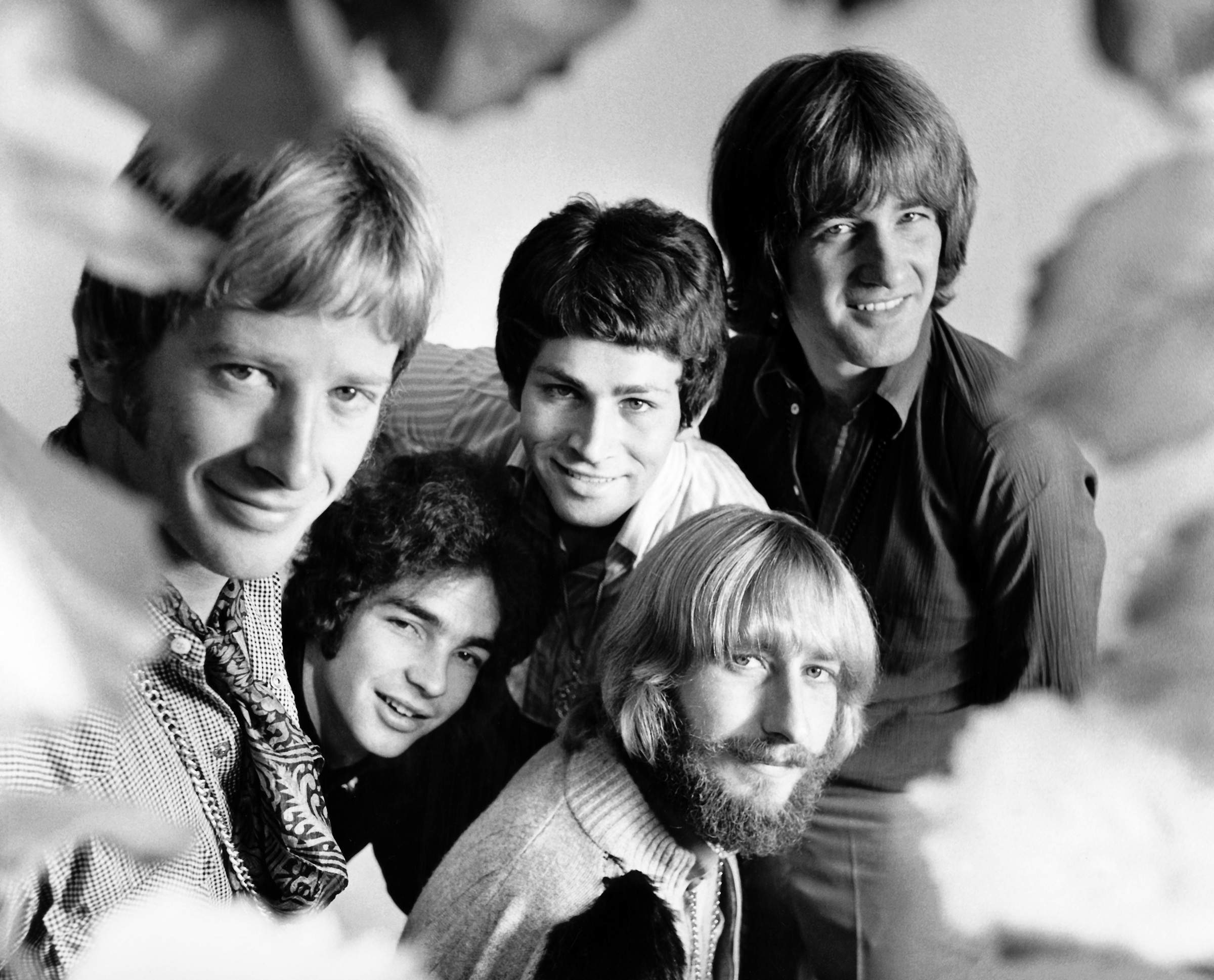
Headline photo: The Fox. Photograph Dezo Hoffmann
Think Like A Key Music Official Website / Facebook / X / Instagram / Bandcamp / YouTube