
Steven Bernstein Interview: The Trumpeter Rebuilds His Sound on ‘ResoNation Trio’ and ‘Ultra Resonance’
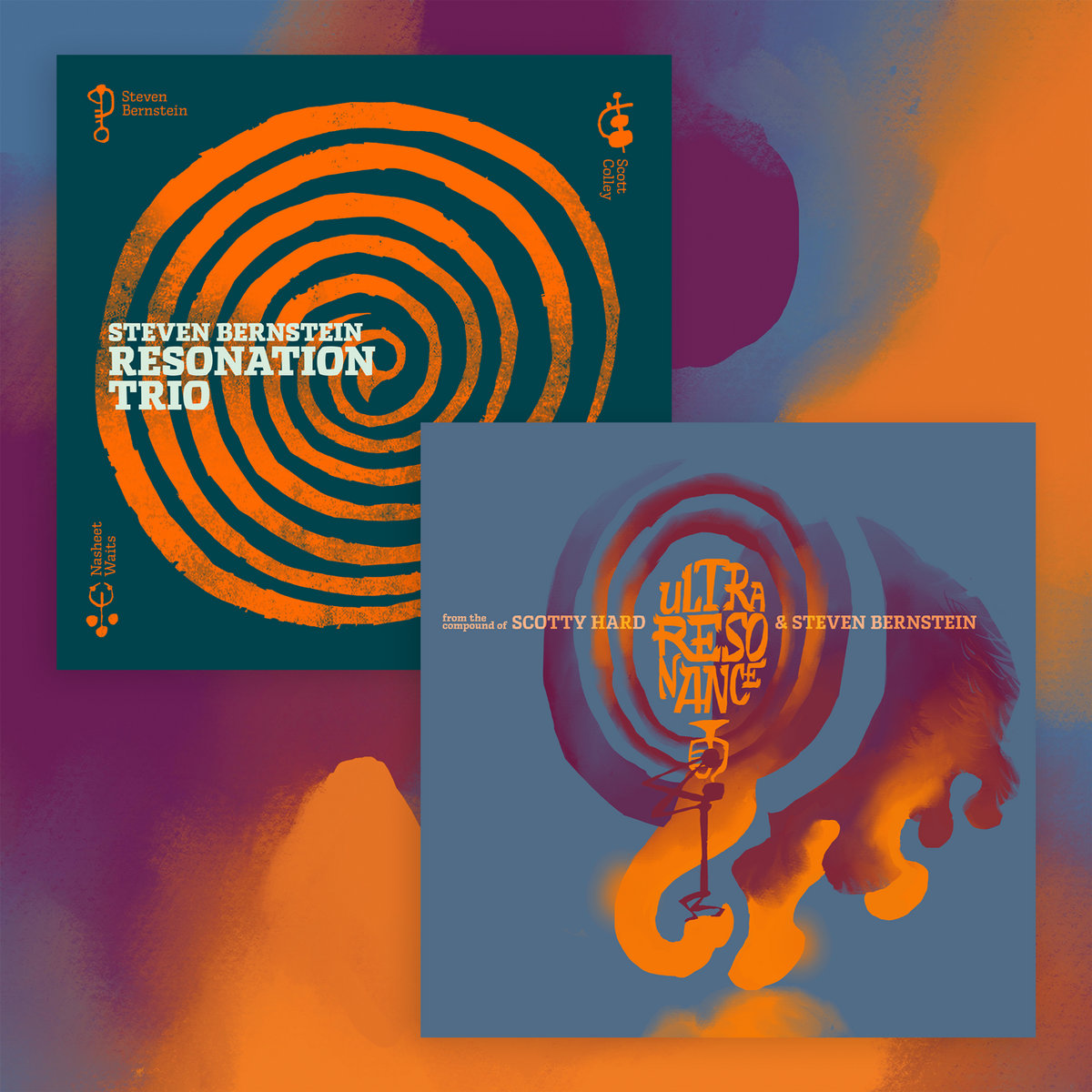
Steven Bernstein’s new double album, ‘ResoNation Trio’ and ‘Ultra Resonance’, brings together two very different sides of the same music. One is acoustic, spare and direct. The other is transformed by Scotty Hard into something more electronic, fractured and rebuilt. Both come from the same source, but they do not behave in the same way.
For Bernstein, the project is also a rare moment of stepping away from the slide trumpet, the instrument so closely associated with his sound, and playing only valve trumpet and flugelhorn. He describes it as a more private part of his playing finally being heard.
‘ResoNation Trio’ features Bernstein with bassist Scott Colley and drummer Nasheet Waits in a chordless setting. Without piano or guitar, the music depends on space, listening and form. Bernstein did not want to fill every corner.
The trio setting also connects to some of Bernstein’s earliest musical influences. Don Cherry, Lester Bowie, Baikida Carroll, Wadada Leo Smith, Butch Morris and Bobby Bradford are all present in the background of the record, not as references to be copied, but as part of the way Bernstein thinks about sound, structure and freedom.
On ‘Ultra Resonance’, Scotty Hard takes the trio recordings somewhere else entirely. This is not a standard remix album. Hard breaks down the material and rebuilds it as new composition, using Bernstein’s original sounds as the starting point.
That makes the double album feel less like an acoustic record with an electronic companion, and more like one idea seen through two methods of composition. One happens in the room, between three improvisers. The other happens later, through Hard’s editing, rearranging and reimagining of the material.
Bernstein has spent decades moving between bands, arrangements, film music, popular song, improvisation and experimental projects. Sexmob is now marking 30 years, and the Millennial Territory Orchestra 25. Yet this album does not feel like a career summary. It feels more like a specific answer to a question he is still asking.
When he finally heard the acoustic trio record on vinyl, Bernstein says he thought it captured something he had been searching for. That may be the simplest way into the album. After all the projects, collaborations and large-scale ideas, ‘ResoNation Trio’ and ‘Ultra Resonance’ return to sound itself: three musicians listening closely, and one producer hearing another possible world inside the same performance.
“I’ve Always Played Like This in My Room”
This new double album feels like two versions of the same dream: one acoustic, exposed, almost folk-like; the other taken apart and rebuilt by Scotty Hard into something electronic and strange. When you first heard the transformed version, did it feel like your music had been disguised, translated, or revealed?
Steven Bernstein: I felt like I had been waiting a long time to hear this. I couldn’t have dreamed it, but I could imagine its possibility…so it was amazing to finally hear it.
You are closely associated with the slide trumpet. On this record, you play only valve trumpet and flugelhorn. Did this feel like returning to an earlier approach, or like adopting a different way of playing?
It feels like I am letting the world hear what I do. I’ve always played like this “in my room”. Of course, as I’ve gotten older and more experienced, my ability to play the trumpet and spontaneously compose, or improvise, has gotten more refined. There are not many opportunities to play music like this until you make it, and I wanted to wait until I was ready.
You’ve said in the past that the slide trumpet gave you freedom partly because there were so few models to compare yourself against. With the valve trumpet, the history is heavier: Louis, Miles, Dizzy, Don Cherry, Lester Bowie, Wadada Leo Smith. How do you get free on an instrument where the ghosts are so loud?
One thing is that I am very experienced in creating music. I made my first recording in NYC 45 years ago, sitting in a trumpet section with Roy Campbell and Ahmed Abdullah, subbing for Butch Morris. I have made hundreds of records, played thousands of concerts, and toured Europe for 36 years as an improvising musician. I have my own take on the world, and no one plays the trumpet like me, or has experienced the life I’ve had. I’ve had the opportunity to make music with so many musicians: Roswell, Levon, Sam Rivers, Laurie Anderson, Britt Woodman, Lou Reed, Bernie Worrell, Hot Tuna. Improvising and making a humanistic sound on my instrument has taken me to many places. So all of this informs the sounds I create. Don Cherry and Lester Bowie left the planet at 59. I’m 64.
The trio with Scott Colley and Nasheet Waits is chordless, without piano or guitar. What possibilities did this instrumentation allow?
Exactly what you said! I felt the need to create music that doesn’t overwhelm the listener with information and technical displays. Let melodies, sounds, structure, the mystery of improvisation and the history of musical discipline…let all of that create something new. Create an environment where that is the possibility. I wanted to structure the music and the recording experience to allow that possibility. There are many ways to paint a picture, so this was a creation using this particular palette.
You first heard Scott Colley and Nasheet Waits together with Andrew Hill. What did you hear in them then that made you want this trio now?
They are both at the highest level technically, as far as sound production and rhythmic acuity, and have the ability to spontaneously compose at this high level as well. That was the manifesto. Go in and improvise the forms. Listen, communicate, make music, don’t question. No agenda other than making music. We recorded 20 pieces and then sculpted the record from these creations.
Much of your work has involved big colors and large ideas: Sexmob, MTO, film music, popular song. ResoNation Trio uses fewer people and more space. What does less give you now?
Again, this goes back to my intent. I love creating things. I have been producing and creating records for over 30 years, starting with Spanish Fly, working alongside Hal Willner. I’ve written many arrangements and come in with many concepts. Now here was an opportunity to use improvisation, structure and sound to create something that I hadn’t heard yet. I didn’t go in with musical expectations. With a trio, a natural symmetry can unfold if everyone is listening, conversing and excellent.
The album seems to circle back to some of your earliest listening: Don Cherry, Lester Bowie, Baikida Carroll, Wadada Leo Smith, Butch Morris. What did those musicians teach you that still feels unfinished in your own work?
The thing is, these people are in all my work. I started listening to Lester when I was 14, studied with Wadada at CMS when I was 16, first heard Butch when I was 13, and heard Baikida when I was 17. They are in my DNA. The whole structural concept of my music comes from Don…all of it. Lester, of course, showed me the power of having a modern sound, a sound that is of your time. But the unfinished part you are referencing is that I have never documented myself playing in an orchestration so directly connected to that earlier music that influenced me to create Sexmob, MTO, Diaspora, etc. BTW, let’s not forget Bobby Bradford!
Butch Morris was part of your early New York life, and his idea of conduction treated the ensemble itself as a living instrument. Decades later, do you think your real instrument is the trumpet, the band, the arrangement, or the situation you create for people to play inside?
All of that is me. That is who I am. Trumpeter, slide trumpeter, brass player, arranger, composer, band leader, musical director, sideman. But all of that is a result of my improvising mind. I hear things, and then I create them as needed. I love music. I’ve listened to a lot of music, so when I am playing music, any music, I try to create the best sound I can.
John Lurie seems to have taught you something that wasn’t only musical: how a concert can have an arc, how a band can be itself in front of an audience, how intuition can organize a piece. How much of your composing today still comes from that theatrical sense of pacing?
Very good ears! Everything comes from that. Once you know that, there’s no reason to do otherwise. Music is an experience for the listener. Our job is to transform the room. Magic is essential, and trust…and fun.
Ultra Resonance connects to a long idea you had about dub, especially after hearing Burning Spear’s ‘Garvey’s Ghost’, but Scotty Hard didn’t simply make a “dub version” of the trio record. He treated the session almost as raw material for composition. Where, for you, is the line between remix, arrangement, production, and authorship?
In this case, Scotty went into full authorship. Technically, we are both listed as composers, since I created the original sounds he is using, but Scotty composed brand-new pieces, again following his intuition. But his process takes so much longer than spontaneous composition. These are definitely not “remixes”. These are brand-new creations.
What does jazz lose when it tries too hard to be taken seriously?
I don’t know if I’m the person to answer that. That whole discussion is so fraught with strong feelings. Everyone plays what they believe is best. I don’t call myself a jazz musician. I’m a musician, so I feel like it’s not my place to answer this. But I have been passionately listening to jazz music since I was 12, and I love it and love the community. If anyone wants to call me a jazz musician, I’m also okay with that. I just love to create music and practice the trumpet.
You have three anniversaries or returns happening almost at once: Sexmob at 30, MTO at 25, and now this new acoustic/electronic double album. When you look across all of it, what is the through-line? Is there one question you’ve been asking since Berkeley, the Lounge Lizards, the Knitting Factory years, that you’re still asking now?
Absolutely! How do I make music that reflects who I am right now, and can I make it sound good? BTW, I finally had an opportunity to listen to the vinyl, and when the acoustic trio record came through my speakers, I thought, “This is what I wanted to hear. This is the sound I was looking for.” I wish Hal could hear it.
Klemen Breznikar
Headline photo: Andrew Blackstein
Steven Bernstein Website / Facebook / Instagram / Bandcamp
Royal Potato Family Website / Facebook / Instagram / YouTube