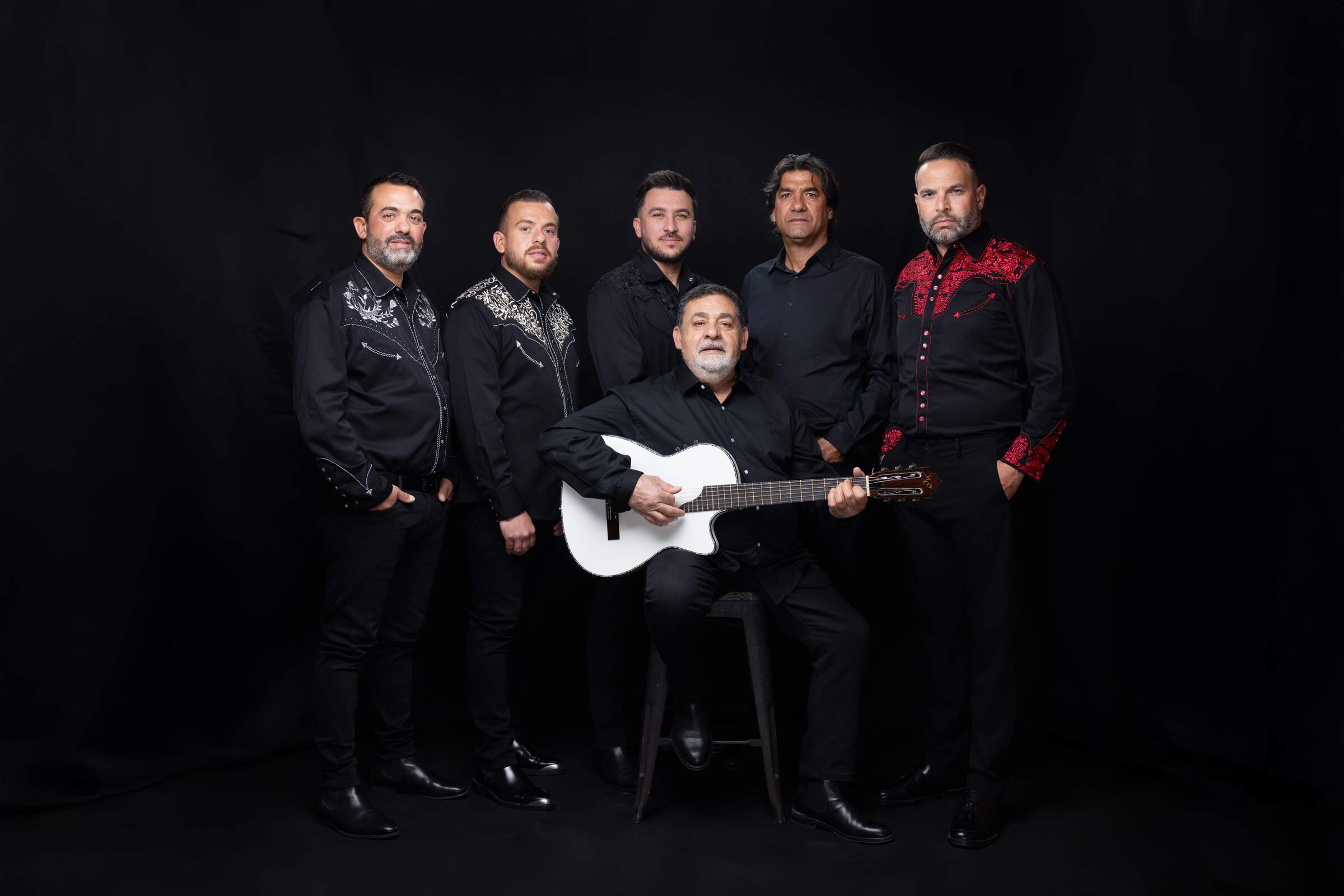

With ‘Historia,’ Tonino Baliardo Keeps the Gipsy Kings’ Family Sound Moving Forward
Before the Gipsy Kings became one of the few non-English-language acts to properly break through the pop bloodstream, before ‘Bamboléo’ became shorthand for a certain kind of global summer, they were working musicians from the south of France.
This background explains the directness of the music. The Gipsy Kings were not formed around a concept, they came from families, from guitars, from Catalan rumba and flamenco tradition, from Romani life lived in public and private, from fathers, uncles, cousins and sons playing until music became a household language.
Tonino Baliardo sits right at the centre of that story. He comes from the musical family of Manitas de Plata, and he started playing guitar as a child. At the end of the ’70s, he helped form the Gipsy Kings with Nicolas Reyes. The group’s sound was built from voices, handclaps and nylon-string guitars, with Catalan rumba and flamenco at its core. It was rhythmic, melodic and easy to recognise, even for listeners who did not understand the language.
By the late ’80s, ‘Bamboléo’ and ‘Djobi, Djoba’ had taken the group to an international audience. Their records were produced for a wide market, but the essential elements remained intact: ensemble voices, fast guitar work, strong rhythm and songs shaped by Catalan rumba and flamenco. The music was accessible without losing its connection to the culture it came from.
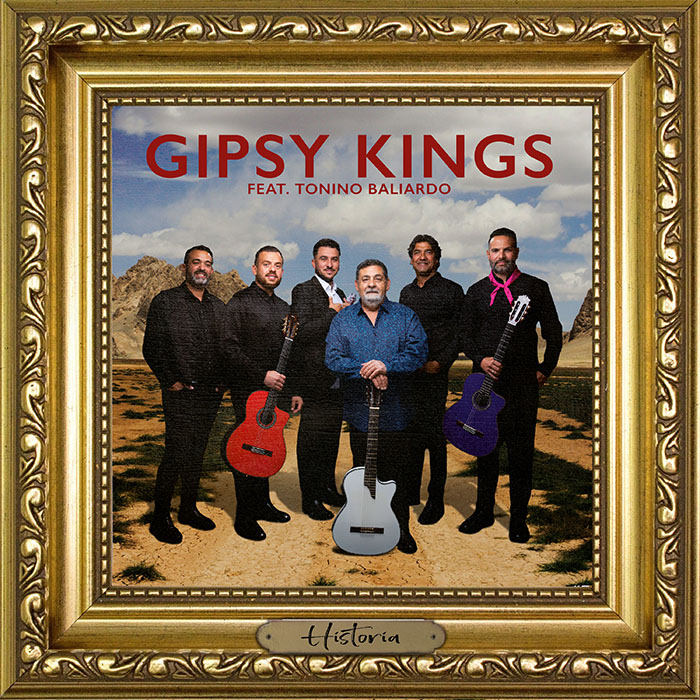
Their new album, ‘Historia,’ uses the group’s past as its main subject, but it is not simply a retrospective record. The songs connect older elements of the Gipsy Kings’ music with newer production and arrangement ideas. ‘El Campo’ refers to Romani clan life and the sense of movement, family and community around it. ‘Señorita’ is written around children and the idea of blessing. ‘Soñador’ brings in touches of pop and reggae, while ‘La Guerre’ addresses war and the need for peace in direct terms.
The family aspect is also central to the current band. Tonino now works with his sons, Cosso and Mikeal, which connects ‘Historia’ directly to the generational nature of this music. Older forms remain present on the album, but they are played by musicians who also listen to contemporary sounds and bring their own experience to the arrangements.
After more than four decades, the Gipsy Kings’ place in popular music is already established through their Grammy win, international sales, film soundtrack appearances and long touring history. ‘Historia’ adds to that record by showing how the group’s music continues to function within a family setting, with the guitar still at the centre and younger musicians now helping to carry it forward.
“All my life, I have carried my guitar”
It’s truly special to see the band continuing to evolve after four decades. ‘Historia’ feels like a beautiful balance between your classic, beloved sound and adventurous spirit, especially on tracks like ‘Soñador.’ How did you approach blending those fresh, modern influences while keeping that traditional flame of the Gipsy Kings burning so brightly on this record?
Tonino Baliardo: The concept of recording ‘Historia’ was, as you say, to capture our unique Gipsy Kings feel and spirit. My musical life is longer than forty years, as I started playing guitar around seven years of age. From the age of a baby in my mother’s arms, Gipsy and Flamenco music was always around me and in my soul.
Family has always been the heartbeat of this group, and it’s heart-warming to see the next generation, including your sons, stepping into the spotlight on this album. How has their perspective influenced the recording of ‘Historia’? Does making music with them bring a different kind of “duende” to the studio compared to the early days?
It brings me much joy to have my two sons, Cosso and Mikeal, on stage and in the recording studio. They, of course, are into modern music today and suggest ideas, which I am usually very open to. In fact, Mikeal also plays percussion on our live shows. On stage, we are joined by Mounin, Sami and Miguel, who also worked with me on the ‘Historia’ album. Recording techniques today are, of course, so different from the early days. Having young Gipsys working with me brings a different dimension to my songs, which I love.
‘La Guerre’ is such a touching ballad, especially given the history of your family and the state of the world today. It feels like a message of peace is more necessary than ever. Did you feel a sense of responsibility to use your music to offer comfort and hope during these times, or did that song emerge more from a personal place?
Yes, the world is in a dark place, and it saddens me, and I worry not only for my family but for others as well. There is one thing that always brings a smile to me. At the end of our shows, the audience leaves the theatre singing our songs with wonderful smiles all over. They have been to our Gipsy Kings Fiesta.
When you were in the studio, did you feel you were documenting the legacy of the Gipsy Kings for history, or was the focus more on the sheer joy of playing together in the present moment?
More, I think, it is the legacy of Gipsy life and Gipsy Kings. All my life, I have carried my guitar, and in the early days, life was tough for my family.
The track ‘El Campo’ paints such a vivid picture of the Romani clan life: the closeness, the traditions, and the movement. Since your music travels to so many corners of the world where people live very different lives, do you view this album as a warm invitation for the listener to step inside your world and experience the values of your community?
Yes. I have toured the world many times. So ‘El Campo’ does paint that picture. I never thought in my wildest dreams we would become leaders of World Music. We have just completed a documentary of my life as a Gipsy King, which takes us back to my early days and before busking the beach in St. Tropez, meeting Brigitte Bardot, etc. It will be screened on Amazon Prime in early summer.
The guitar work on this album is, as always, breathtakingly intricate. After so many years of touring and recording, does your relationship with the instrument change? On ‘Historia,’ were you challenging yourself to find new melodic phrases, or does the music just flow naturally from your hands like a language you have always spoken?
As a musician, I am always trying to improve my style. As a kid, I watched my Uncle Manitas De Plata play many times, in absolute awe.
There is a lovely sense of purity in the song ‘Señorita,’ which acts as an ode to the beauty of children. In a career that has seen such massive global success and busy touring schedules, does returning to these simple, fundamental themes, children, family, love, help ground the band and keep the songwriting honest?
In simple answer, yes. For me, the most important things are your family, friends, good health and my music. ‘Señorita’ is about everybody, and we should all be blessed.
Could you tell us about the specific, unrecorded elders or local musicians from your childhood in Arles, those hidden influences whose specific phrasings are secretly embedded in these new tracks, keeping the true, ancient soul of your people alive beneath the modern production?
As mentioned, my Uncle Manitas De Plata, who befriended the likes of Picasso, my father, his cousins… Sitting around the campfire with all the families, singing, laughing, crying and playing guitars has been the spirit of my life.
Klemen Breznikar
Gipsy Kings Website / Facebook / Instagram / YouTube