
The Qualitons Interview: Budapest’s Psych Explorers Enter A Looser Second Life
The Qualitons formed in Budapest in 2008 and have never stayed in one place for long. They started out drawing from ’60s beat, garage rock, funk and psychedelia, but over the years the sound kept opening up.
Jazz, soundtrack music, library records and Hungarian rock history all found their way in. By 2023, The Qualitons were active again, but not as a band trying to pick up exactly where it left off. The line-up had shifted, and the music began moving in a more open direction. Their new record, ‘Seat No. 250208,’ began as a rehearsal and turned into something worth keeping. The band hit record, kept playing, and let the atmosphere lead. In the interview that follows, The Qualitons talk about improvisation, old gear, KEXP, Kex, changing lineups, sudden attention, and why this new chapter feels freer than the last one.

“Just staying in the moment”
The new record feels so immediate, literally titled after the date you recorded it (Feb 8, 2025). The liner notes mention it started as a rehearsal that just took off.
We like to start each rehearsal with a bit of jamming. It serves both as a quick soundcheck and as a way of setting the mood. The only difference this time was that we hit the record button relatively soon, and we never wanted to stop. So it was less like stopping the rehearsal, and more like never starting it, just staying in the moment instead.
You released this with Psychedelic Source Records, and they are legendary for that very raw, “first-take” philosophy. Did working that way feel liberating for you guys?
We definitely enjoyed it a lot, even though at the time we had no idea that it was going to be released. We only saw its potential after listening to it a few times and realizing that the overall vibe outweighed the imperfections. I’m sure we’ll try this method again in the future.
When you’re jamming like this, are you guys picturing a movie in your heads? It feels very cinematic, almost like you’re scoring a film that doesn’t exist yet.
Good question! In recent years we have been quite addicted to the applied music of the ’70s and ’80s, the so-called Library Music, which was intended to serve commercials, sports programs, and movies. This genre has produced such a quantity of great music over the decades that it is incomprehensible in every respect. The two albums after our return were largely inspired by these works, so you can probably catch this on Seat No. 20250208.
Since ‘Seat No. 250208’ is basically a captured improvisation, how on earth do you play this live? Do you have to go back and relearn your own jams note-for-note, or do you just use the album as a vibe check and improvise totally new stuff on stage?
We won’t learn it note for note, as it was never written like that. We will probably play some of it live though, keeping only the silhouette of the original, or maybe using parts of it as intros or outros for other songs.
When you came back in late 2023, you announced this cool new philosophy: The Qualitons is now a “creative community” where the door is always open. Does looking at it that way take the pressure off? It seems like it would be way more fun to create without the stress of being a “traditional band.”
Yes, that was also part of the idea: to loosen up the band structure a bit. The band really did become more democratic, because we started writing through a lot of jamming, which hadn’t been very common for us before. Most of the time we began with concrete ideas or song sketches, and then developed them together, or learned them as a group.
Of course, as things start picking up again, the deadlines and tasks come back, and you can feel the stress in the air, but we’re trying to keep a balance.
Obviously, with Hunor moving on, the vocal dynamic has completely shifted. Has that forced the rest of you to step up in different ways? Like, who takes the lead now, or is it truly democratic in the room?
With Hunor leaving, it was very clear that more attention went to each member. At first it was hard to deal with, but we got used to it. There’s no frontman. Everyone has their key moments, and both the music and the vocals come from all of us. So as a listener, it’s worth paying attention to the whole picture, which I think often takes more energy.
Before the hiatus, you dropped ‘Kexek,’ the tribute to the legendary band Kex. Looking back, did you need to make that record to sort of “clear the decks”?
No, we did this simply because we felt like it, and we came up with the idea that everyone should choose one song to work on. At the same time, this partly pointed towards how we would work in the future.
I know everyone asks about the Red Hot Chili Peppers thing at the bridge in 2016, so I won’t make you retell the story. But I am curious about the aftermath. Did getting that kind of massive, sudden attention burn you guys out a bit? It feels like that would put a lot of pressure on an underground psych band to be “successful.”
At that time we were basically on the edge of breaking up, and we weren’t active at all. Ernő, our bass player, was living in Berlin with his family. Everyone else was busy with other bands or working. For that gig, Ernő was able to quickly come home. Anthony ended up there because he heard the concert from his hotel.
And then yes, suddenly there was a lot of attention: interviews, articles, we even ended up on the news. It came at a good moment for us too … not because we didn’t believe in ourselves, but something like that definitely gives you a boost.
That KEXP session in 2019 was such a huge moment for Hungarian rock music. When you watch that video of ‘Zöld-sárga’ now, what do you see?
We are all proud of that moment on KEXP, and in a way it was truly a peak moment in our careers. At the same time, though, the band was lacking the integrity and the management resources to really grab that momentum and start growing from there. In this sense, we are in a much more favorable situation right now. We might not yet do things as flashy as a KEXP session, but we feel more productive than ever, and we are getting better at a lot of aspects of running a band and planning for the long term.
You guys have traveled so far musically. ‘Tomorrow’s News’ was garage rock, ‘Echoes Calling’ was psych, and now you’re doing this jazz-fusion ambient stuff. Is the goal to just destroy the old sound every few years? Do you get bored easily?
Basically, we’ve always been interested in a variety of music. Then, a few years before the breakup, we had a greater need to dare to do a variety of things. And that’s why we don’t get bored.
Being a band from Hungary comes with a lot of interesting music history, bands like Omega and Illés… Do you feel a connection to that “Eastern Bloc Rock” heritage, or are you trying to do your own thing completely separate from that nostalgia?
No one denies their musical roots and heritage. We have listened, and still listen, to these great classics, but from the beginning we tried to think in a broader spectrum. A lot has happened in music in the last 18 years. We cannot ignore this even if we want to, and if we just keep in our hearts that we are an Eastern European band, and “adapt” to it the current influences that have affected us, interesting things can come out of that. Perhaps most of all for ourselves.
Let’s talk gear for a second… Did someone buying a specific vintage synth change the whole direction of the new sessions?
It’s funny, as this recording session was originally meant to be a rehearsal at the home studio of Andris, so we just used the keys we could hook up fast to start. There’s a Rhodes and a Farfisa always ready to record, and Andris is using his Nord through a bunch of guitar pedals for the synth tones. This is pretty much our touring setup, so it wasn’t really a new gear-based experiment.
We have used an old Crumar Multiman though for ‘Club Eco Vol. II – The Nest’. In that case, we got the instrument a few weeks before the session, so we really used it a lot on that album.
What’s it like jamming with the guy who is also going to be mixing the record? Is he technically “working” while he’s playing, or does he manage to switch that part of his brain off?
Originally, the plan was to record some ideas as a demo, so we did a really basic studio setup, hit record, and focused on the music. Technically, there are lots of noises and mistakes on this record, as we all focused on playing. We fixed some of these noises, but most of them we just left on the record as they are part of the true story of the record.
Imagine stopping at my place and we have a whole day to listen to any records you like… what would be some weird cuts that you would play?
Wow, I guess we would have to stay there for a bit longer than a day, haha. We would definitely dig deep into Library Music and weird Japanese and Scandinavian psychedelic funk and jazz records.
What’s next for you?
This is going to be a busy year for us. We are releasing a couple of singles, re-releasing some of the older albums on vinyl, and playing more gigs than in the previous two years. We are really looking forward to it!
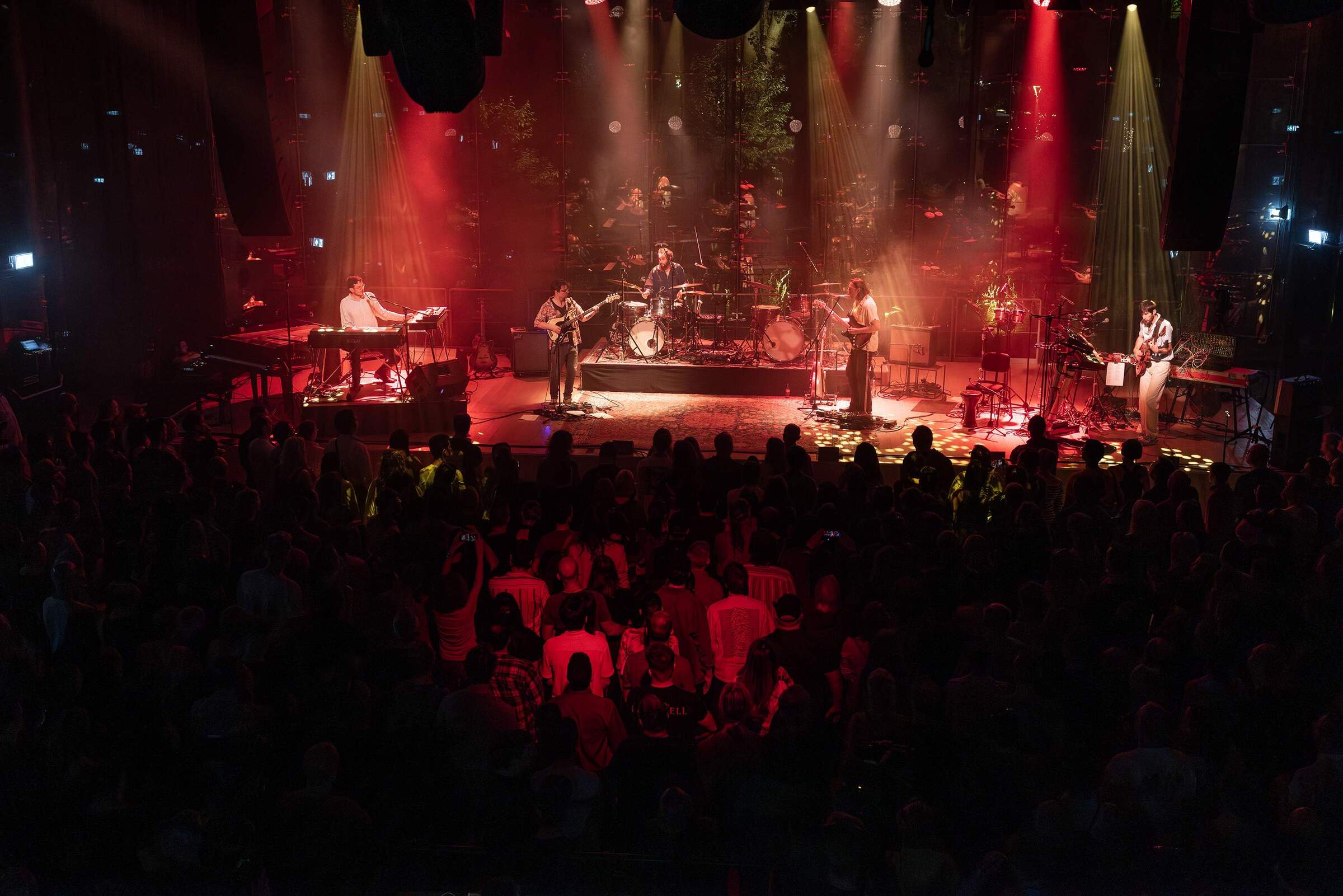
Are you excited about the Jam in the Psych Castle festival?
It’s super exciting to play a fully improvised set at a festival. This is definitely one of the highlights of this year’s concert calendar. The venue on its own is a place with a great atmosphere. We filmed the burial part of the music video for “Lil’ Bonch” in the garden of the castle, so we already have great memories of it.
Klemen Breznikar
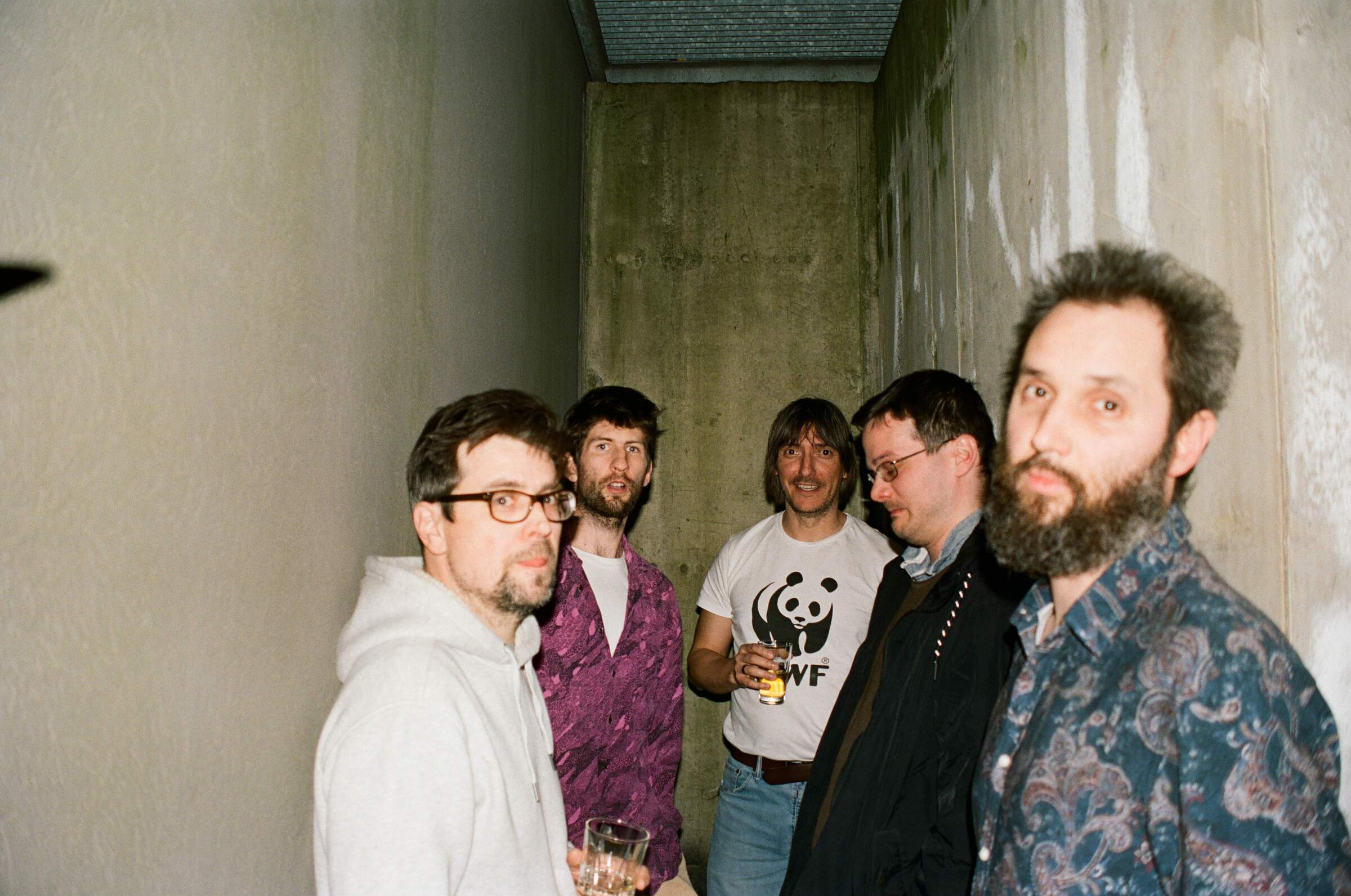
Headline photo: Bence Kocsis
The Qualitons Facebook / Instagram