
Inside Quatermass II’s ‘Long Road’: A Deep Purple and Warhorse Nick Simper Interview
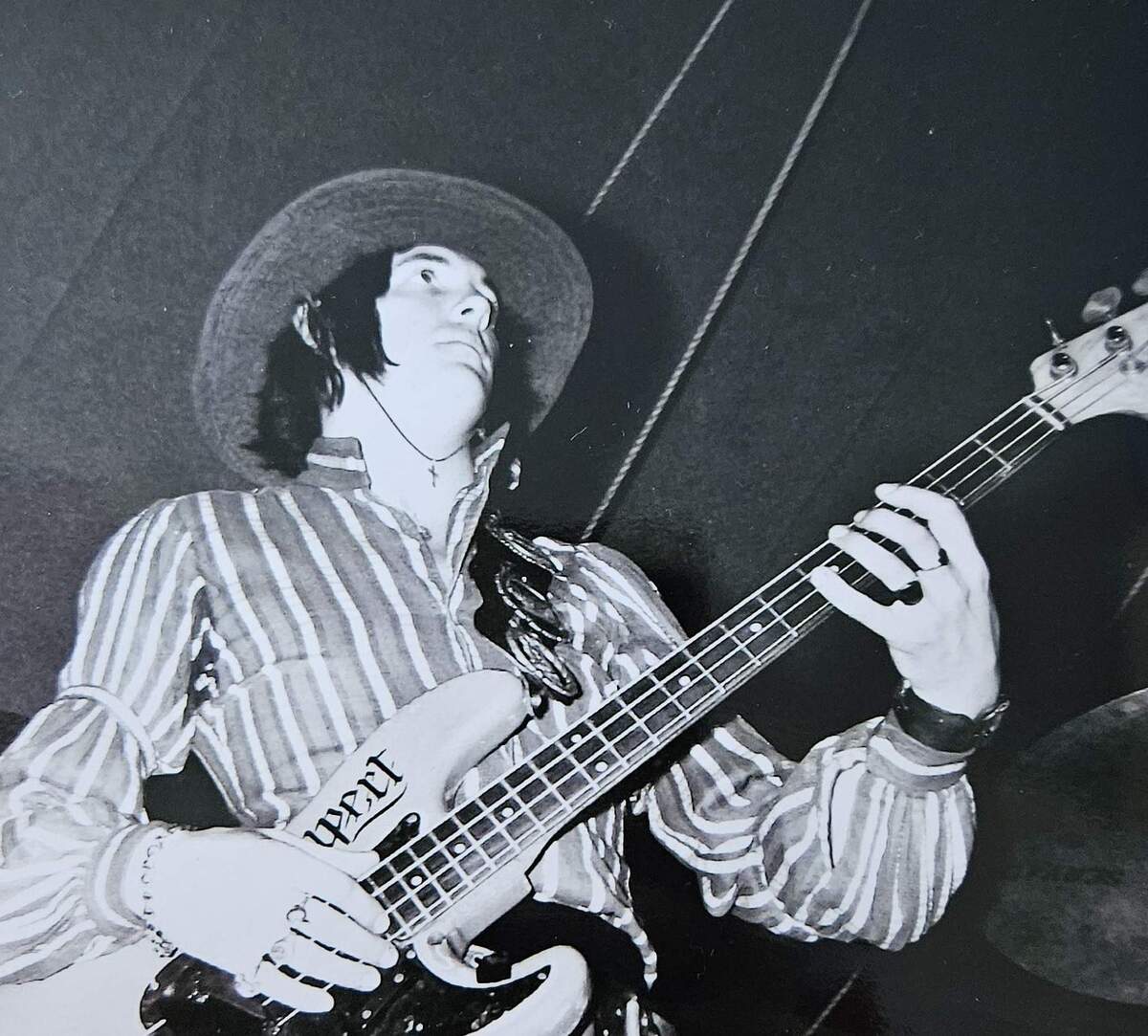
As the original bassist for Deep Purple and the driving force behind Warhorse, Nick Simper brings decades of hard-earned rock experience to his playing.
He spent the late sixties wrestling with Jon Lord’s massive Hammond organ stack. Decades later, that exact same energy grounds ‘Long Road,’ a 1997 studio oddity released under the banner Quatermass II. The project started by chance at a 1994 record label Christmas party. Simper bumped into Mick Underwood. Both musicians had been active in the scene for decades. Underwood had drummed for Ian Gillan and the original 1970 Quatermass lineup. The two men ran in the same circles for years but had never actually shared a rhythm section. Simper recalled the casual birth of the project. “Producer Derek Lawrence suggested that we put a band together and call it Quatermass II.” Lawrence brought in Bart Foley on vocals alongside guitarist Gary Davis. The real magic sparked when Underwood tapped Don Airey for keyboard duties. Airey provided the perfect sonic counterweight. He transformed a straightforward guitar group into a much more dynamic and complex outfit. They cut the record on a tight budget. With only basic gear in the room, they had to rely on pure playing skill instead of studio tricks. Original Quatermass bassist Johnny Gustafson even threw in two writing credits. The final product delivers twelve tracks of solid, riff-driven rock, topped off with a rough-hewn bonus demo called ‘Undercarriage’. Quatermass II never left the studio to tour. Still, ‘Long Road’ offers a fascinating glimpse into an overlooked 1990s collaboration.
‘Long Road’ by Quatermass II was recently released via Singsong Music.
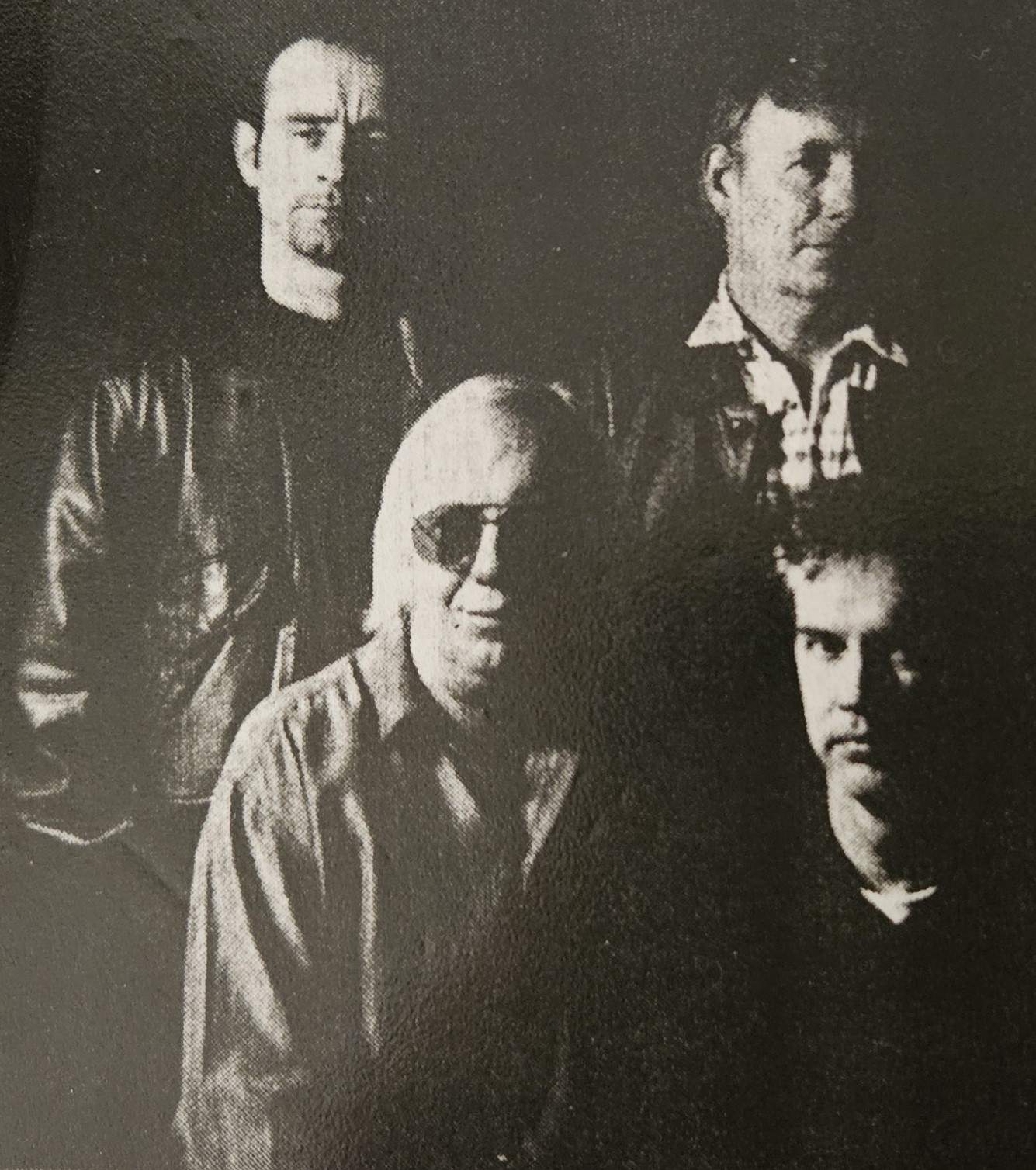
“I don’t think that there’s a key to my playing.”
Given the cult status of the original Quatermass and your own substantial musical legacy in Deep Purple and Warhorse, when you got this brilliant line-up together in ’94, why revive the name? Was it a wink and a nod to the past, or did you genuinely feel like you were tapping into the same sort of progressive, heavy spirit that the first band had?
Nick Simper: When Mick Underwood and I met at a record company Xmas party, we had been friends for years but had never been in a band together. Also present was producer Derek Lawrence, who suggested that we form a band and call it Quatermass II. We both thought it was a good idea but only considered the name as a working title. Then we realised that we couldn’t think of a better one! With our styles of playing, we figured that the band would at least be heavy, if not progressive!
The blurb mentions Quatermass II was essentially a “studio project,” even though the outcome was very well-received. As a seasoned player who cut his teeth on the road, what’s it like creating an album like ‘Long Road’ full of punchy tracks like ‘Coming Home’ knowing you won’t be taking that energy out on a stage? Do you think the lack of touring freedom changed the shape of the songs at all?
We never gave a thought about live shows but simply tried to make a good album as quickly as possible, as the budget was tight. As soon as it was completed though, we could not wait to perform live, which worked very well.
Mick Underwood, Bart Foley, Gary Davis, and Don Airey. What was the atmosphere like when you all got in the room? Did the combined experience of you “tried and trusted” British rockers lead to a specific type of creative shortcut or understanding?
Yes, having the right musicians certainly helped us to speed up the process, and the studio atmosphere was pretty electric! We used pretty basic technology to keep it simple, and it worked! We got off to a good start with Bart Foley having a bunch of songs already written. Initially, we were strictly a guitar group, but Mick suggested bringing in Don Airey, and his contributions were just perfect.
Johnny Gustafson, your mate from the original Quatermass, chipped in a couple of songs. How did those older contributions fit alongside the newer tracks mostly penned by Foley and Davis? Was there a conscious effort to make them blend, or did you like the idea of a couple of songs having that original DNA embedded right there in the Long Road album?
We never gave a thought to the DNA of the original Quatermass. It was a coincidence that John Gustafson had sent a few songs to Mick at that time, but we needed material so it was good timing. One that I loved was called ‘Just Looking,’ which wasn’t used on the album, but when Warhorse played their reunion gig in 2001 I suggested it to the band and it was included. The recording of the gig has just been released after 25 years and, as far as I know, features the only cover of the song.
‘Long Road’ came out in ’97, smack in the middle of a very different musical era. It’s a taut, crisply-produced album. Did you ever feel pressure to sound “modern,” or was the goal simply to produce the best, most assured British rock you possibly could, regardless of what the charts were saying?
No, we were never influenced by trends or charts; we just got on with what we did best!
You’ve played the low-end for some of rock’s most dynamic and different guitarists over the years. What’s the key to your bass playing… is it about adapting your style to fit the player, or do you find that your distinctive, driving rhythm is the constant that holds everything together?
I don’t think that there’s a key to my playing. I started as a lead guitarist, then changed to bass and was lucky enough to go professional with very little experience or knowledge! Playing with two well-known power trios, it was necessary to come up with a very positive bass style, and when I teamed up with the great drummer Carlo Little, he made me listen to lots of driving riffs, mostly by saxophone players, making me far better armed than before. As for guitarists, I never consciously adapted my style to suit them.
You and Mick Underwood have shared a rhythm section in the past. Does that long-standing musical relationship allow you two to lock into a groove, say on a track like ‘Hit And Run’ almost telepathically, or do you still have to work hard to nail that perfect foundation?
I never actually worked in the same band as Mick before QII, but his style suited me right from the beginning so it was never hard work – just pure enjoyment!
The album is back out now. Having listened back to it after all this time, which of the tracks, perhaps ‘River’ or ‘Wild Wedding,’ do you now think stands up as a particularly strong piece of writing or playing?
I definitely think ‘River’ has to be a favourite. Bernie Torme was our original guitarist until circumstances led to his departure, but we always planned to record that song, which was the first one that he offered to us. It’s such a good tune that very minimal playing was necessary to make it work.
The bonus demo ‘Undercarriage’ is a great little addition for fans, giving a glimpse into the creative process. Can you share a funny or unexpected story from the studio while you were recording the album, perhaps something that happened during the sessions for a track like ‘Circus’?
It was a very long time ago and we all had a lot of fun, but I can’t remember any stand-out hilarities. It was a great surprise though to receive an unexpected visitor to the studio. I hadn’t seen drummer Roger Pinah for several years and had no idea that he now lived nearby. He heard of our project and dropped by, a huge surprise! Mick and Roger, without doubt two of the greatest rock drummers in the business, spent about an hour hilariously reminiscing before we remembered why we were there and got down to work!
In our previous interview you mentioned that seeing Vanilla Fudge turned the early Deep Purple members on to a certain direction. That American band was known for drastically re-arranging songs into lengthy, heavy, and dramatic pieces. Beyond the general influence, can you recall a specific instance during the making of ‘Shades of Deep Purple’ or ‘The Book of Taliesyn’ where a decision was consciously made, either in the studio or in rehearsal—to say, “Let’s treat this song, this way, à la Vanilla Fudge”?
Yes, there were a couple of instances such as ‘Help’ and ‘River Deep, Mountain High’ where their style definitely was influential in what we came up with, but I think that both songs were a good choice for that kind of treatment.
Your bass line for Deep Purple’s ‘Hush’ is an iconic, driving force. Interestingly, you’ve mentioned that the core bass line for the Warhorse track ‘Red Sea’ began by kicking around the same bass line that you came up with for “Hush”. Could you elaborate on that creative bridge? Was the ‘Red Sea’ bass line a deliberate evolution or re-purposing of the “Hush” concept, or was it a purely subconscious return to a favoured rhythm motif that defined your sound at the time?
It was definitely more than subconscious! I absolutely loved playing ‘Hush,’ and never got tired of playing it, even to this day. I always wanted to use it again to see if it would work in a different song, so “Red Sea” was the result.
‘Hush’ and the ‘Red Sea’ material are quite different in tone. Did you find it creatively liberating to take that rhythmic foundation from a massive pop-rock hit and apply it to the heavier, more progressive canvas of Warhorse?
Yes, because Pete Parks came up with a clever set of chords which had no connection with ‘Hush’.
In Deep Purple Mk I, you, as a bassist, were creating the rhythm section with the drums, but you were constantly competing with the sonic wall of Jon Lord’s classical influences and organ. In Warhorse, you had Frank Wilson on keys. How did your role and approach to bass playing—your choice of notes, tone, and attack—differ specifically between having Jon Lord’s Hammond organ in Purple and Frank Wilson’s keyboards in Warhorse? Did one instrument require you to be more punchy and the other more melodic?
No, for most of the time I did exactly what I felt was necessary with both players. Frank Wilson, though, had more attack in his style which definitely spurred me on, probably a little too much at times!
“Warhorse had no one trying to dominate with their own agenda”
Warhorse was intended as a “huge antidote to the Deep Purple experience”. In musical terms, what was the most satisfying structural or arrangement difference between the two bands that allowed Warhorse to feel like a more rewarding experience for you? Rick Wakeman was briefly involved with Warhorse but had to depart before the recordings, due to being too busy. Given his eventual trajectory, when Rick had to step aside, did you have an immediate sense that Warhorse had missed out on a unique talent, or was it simply a logistical inconvenience at the time? Had he stayed, and assuming the music continued on its established, heavier path, how do you envision Rick Wakeman’s distinctive style might have altered the sound and direction of the first Warhorse album?
Whilst Lord’s ideas were always stifling the direction that myself and Blackmore wanted to follow, Warhorse had no one trying to dominate with their own agenda, and the band tried to be more original without consciously “borrowing” too much.
When we had to lose Rick, it was certainly inconvenient. Had he stayed of course it would have been a different album, but I don’t think that the style that he eventually developed would have suited the band. Of course Rick was always a great musician, but he didn’t show his potential in those days. We did try recording without keys, but when Frank Wilson did a session for us we knew that we had what we needed. He is without doubt the best keyboard player I have known, and I have worked with some good ones!
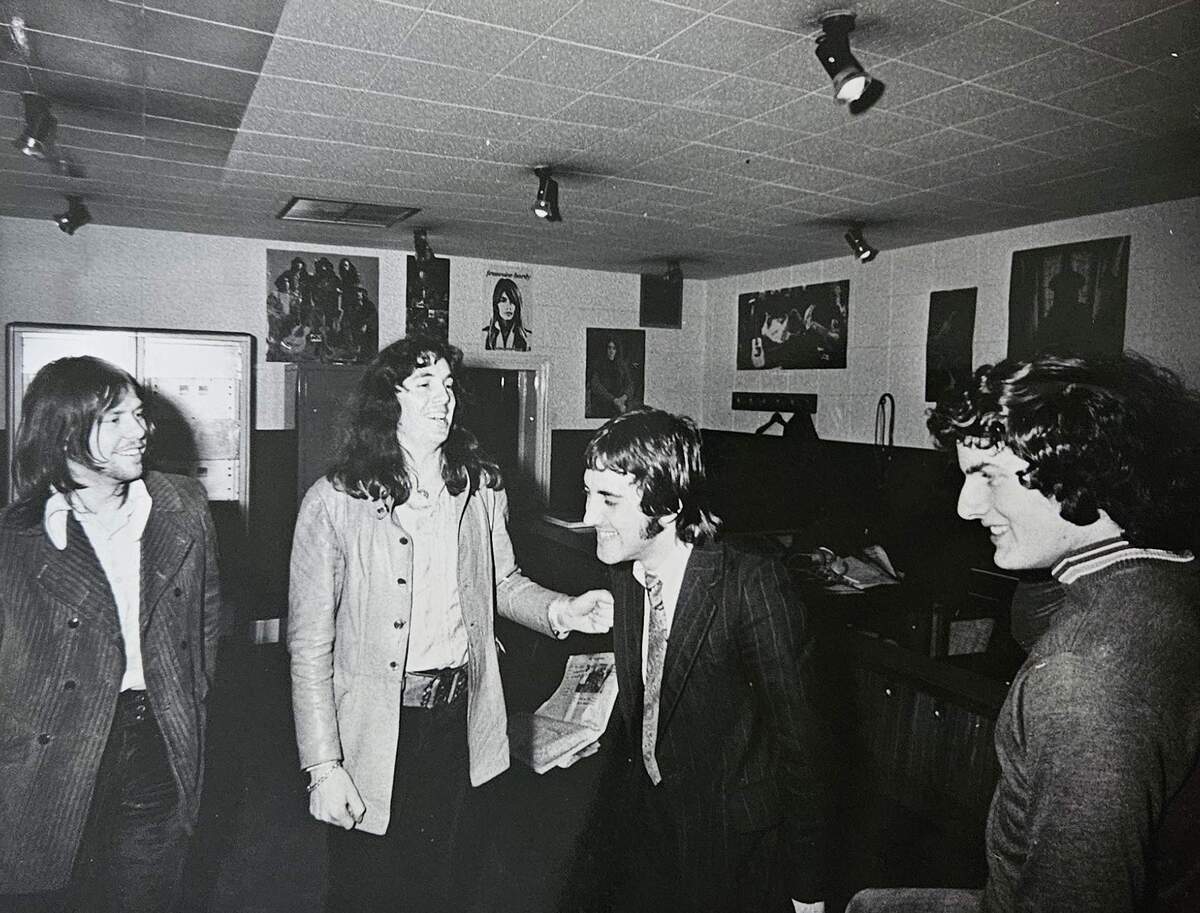
Before settling on Warhorse, you initially considered the name “Iron Horse” before finding it was already in use. Could you recall the moment, or who was responsible, for suggesting the name “Iron Horse”? And when you discovered it was taken, what was the discussion like that led to you suggesting the slight, but significant, change to “Warhorse”? The Warhorse album cover art, with the World War I battlefield concept, was your idea. Was this visual theme already settled upon when the band was still called “Iron Horse,” or did the slight name change inspire that potent and memorable imagery?
Even before John Entwistle of The Who told me that I should form a new band, I had the name Iron Horse in my mind if the opportunity ever arose. I thought that the imagery it evoked had terrific potential for artwork, and particularly for an album cover.
We spent a lot of time discussing this within the lineup so it was a huge disappointment to find out that it had been used. I think we kicked a few desperate titles about, but everyone was in agreement when I said, “What about Warhorse?”
When we really gave it some thought, we realised that this name had potential for even more imagery! Eventually, it was a toss-up between a Red Indian theme and a WWI theme. I think we made the right choice!
Klemen Breznikar
Headline photo: Photo courtesy of and from the personal archive of Nick Simper.
Nick Simper Official Website
Singsong Music Official Website
Nick Simper | Deep Purple | Warhorse | Interview