
The Dogmatics: Boston Garage Punk, Old Mates and ‘Nowheresville’
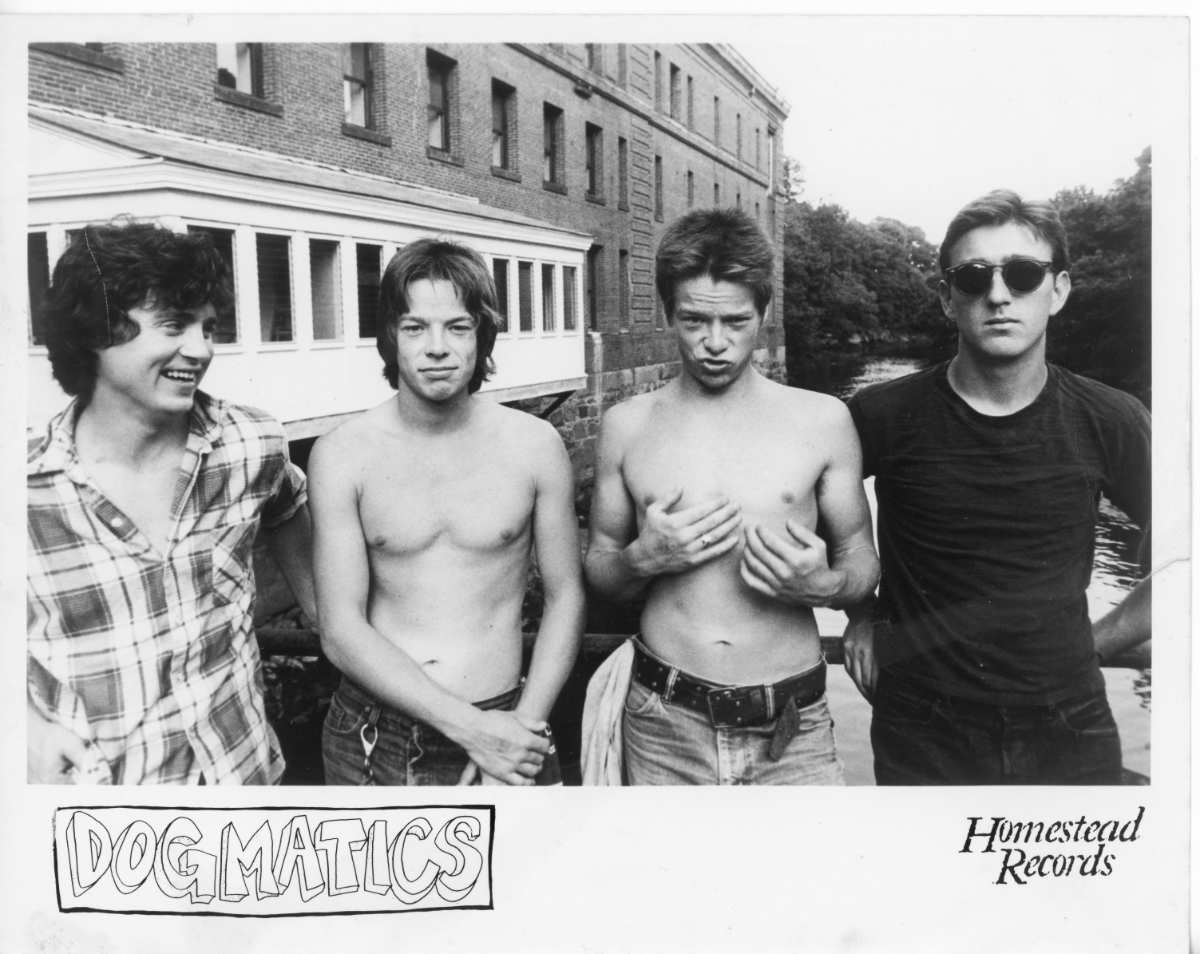
The Dogmatics sort of came together in Boston in the early ’80s. “We were just a bunch of guys who wanted to play loud,” they’ve said, recalling that early mix of garage, a bit of punk, and some rootsy bits creeping in.
They’d turn up at loft parties, clubs, college radio, wherever would have them. Before they landed on the name, they were calling themselves the Guttersnipes and mostly knocking out covers: “that’s how you learn, playing other people’s songs until you figure out your own,” as one member put it.
Their new album, ‘Nowheresville’, slipped out in July 2025 on Rum Bar Records, their first proper long-player in nearly four decades. “It’s like opening a box we never really closed,” they’ve said. There’s a pleasing rummage through the attic here, old chestnuts like ‘Rainy Nights’ from 1986 rubbing shoulders with newer curios. The title itself harks back to a fragment Jerry Lehane and Paul O’Halloran were tinkering with before Paul’s untimely passing in ’86. “We always knew that piece had something,” Lehane recalled. Elsewhere, you’ve got fresh cuts like ‘No Likes No Comments’, ‘With A Scarlet Letter’, and ‘Con Job’, the latter borrowing words from James Young’s father, Rick Young: “those lines stuck with us for years,” the band noted.
There is garage, punk, power pop, folk-rock, bluegrass, and country. Guests include Tom Baker, Billy Loosigian, and John “JG” Goetchius. The band recorded at Edsbarn in Canton with Ed Riemer. “Ed just gets it—no fuss, no pressure,” they’ve said. “Working with him is easy.”
The band is held together by friendship and family. “We’re still friends first,” they’ve emphasized. They still like to play together and keep things simple, “no big concept, just songs we believe in.” They do not treat this as a nostalgia project. “We’re not looking back—we’re still writing,” they insist. They mix old and new songs in their shows because, as they put it, “it’s all part of the same story.”
‘Nowheresville’ shows a band with a long history that is still active. Some things are the same, like their friendships and their connection to Boston. Some things have changed, like the lineup. They are still making new music. As they say, “No rust. Just songs.”
Special thanks to Michael Marotta for making this possible.
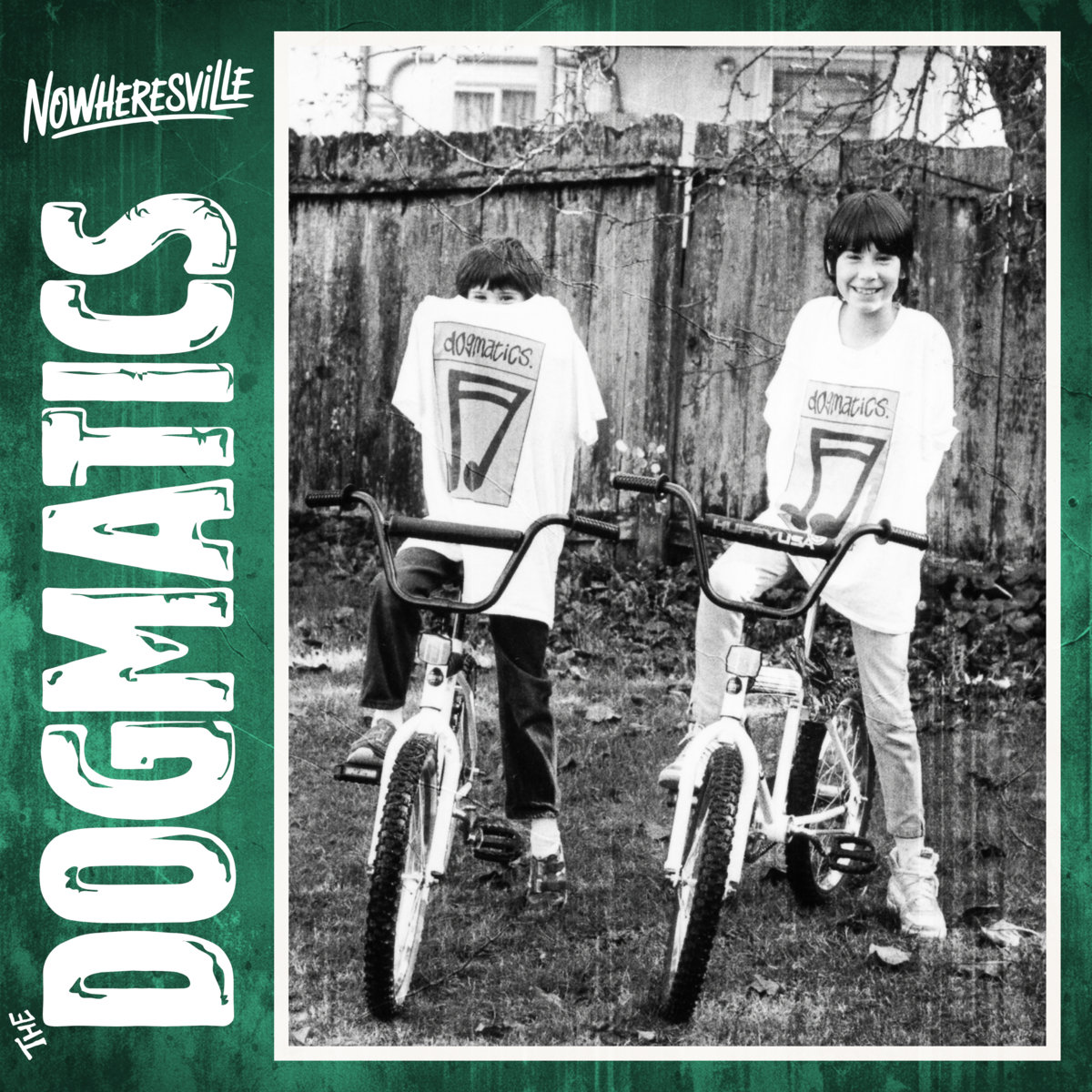
“We wanted to play music so we could hang out with each other and other bands.”
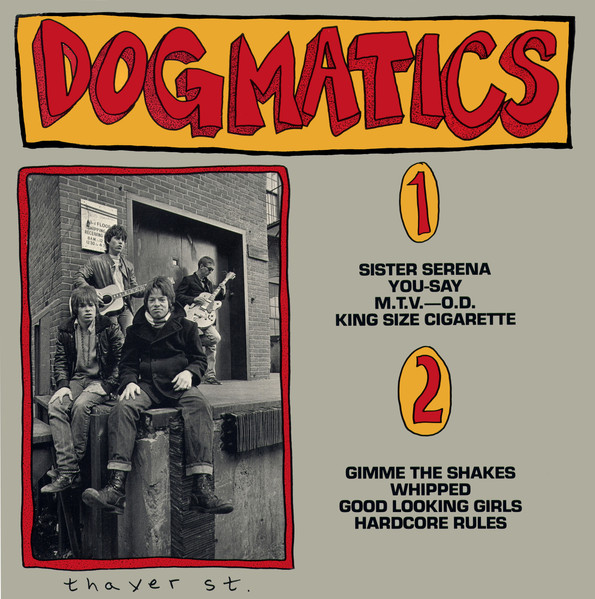
When you first started playing as The Dogmatics, before the name stuck, there was that one show as Guttersnipes in the Thayer Street loft. Do you remember anything specific about that night, or did it blur into the rest of those early rehearsals and parties?
The Dogmatics: The details are hazy, but a few things stand out. Peter remembers wearing his baseball T-shirt and long hair. The lineup was different back then. Tommy wasn’t playing yet. It was Dan Shannon on drums. The name wasn’t exactly settled, but Guttersnipes was the one that stuck that night, though the Enzymes had been floating around as a possibility.
We shared the bill with Spear Head Go, TK’s Band, including Tom Keenan of Last Stand, Barry Hall, B.C. Kagan, and Joey Olson behind the kit. As for the set itself, it was about 70% covers, played in the loft’s kitchen. A lot of Ramones, a lot of Eddie Cochran, maybe a New York Dolls song.
Boston in the early ’80s had a lot of bands chasing different things. Some leaning punk, some more roots, some trying to break out nationally. Where did you see yourselves fitting at that point, if you even thought about it at all?
We didn’t think about it at all.
College radio seemed to play a real role for you early on, with WMBR and WERS picking up the first single. Did hearing yourselves on the radio change anything, or was it just another channel in a scene that was already happening face to face?
It’s always great to hear your own song on the radio. We were already listening to those stations anyway and hearing our friends’ bands, so to hear our band actually get played on the radio, yeah, it was cool. But it didn’t change how we thought about what we were doing or why.
When you signed to Homestead and put out ‘Thayer Street’, did it feel like a step forward, or just another version of the same hustle you were already in?
It felt like a step forward, for sure. We weren’t hustling because we really fucked shit up. Before that, we didn’t have a record, and we only played gigs. The same gigs, Tuesday and Friday nights, same places. Making a record felt like traction. It got us playing outside of Massachusetts. And when ‘Thayer Street’ landed on the cover of the ‘College Music Journal’, everything changed.
Radio play was huge. People from BCN who had never, ever talked to us, radio broadcasters, were suddenly coming around saying, “Your record’s on the cover of CMJ.” All of a sudden, we were getting offered gigs, getting a guarantee, playing New York. And that’s where the phoniness comes in. All of a sudden, people who never knew who we were before were suddenly like, “Hey, how you doing?” We were like, now they know who we are.
Touring with bands like Dinosaur Jr. or Los Lobos puts you in front of very different audiences night to night. Did you ever change your set depending on who you were opening for, or was it always the same approach no matter what?
We never toured with any of those bands. We backed them up once, that’s it. And we never really toured with anybody. Just ourselves.
As for changing the set, we generally took the same approach, with two exceptions. One was Cleveland, playing a show on Lake Erie with Steve Marriott from Packet of Three. We grew up listening to Humble Pie in TK’s attic, so we threw ‘Money Honey’ in the set. But we probably would have played it anyway, knowing he’d like it. He did like it. He sang it the way it was supposed to be sung.
The other time was more recent, in March 2016, opening for the Dropkick Murphys at Brighton Music Hall. We brought in Johnny Coe, Marie Kettenring, and James Young, who has been in the Dogmatics since 2019, as they were in Peter’s side project band, The Hired Men. We wanted to sound more Irish so they wouldn’t throw shit at us. We closed out the set by bringing those three up to play ‘Boys from County Hell’ and a couple of others.
There’s that moment when Dan Shannon leaves and Tom Long comes in at 18. That kind of change early on can shift the feel of a band. Did you notice that right away, or did it take time to settle?
There was plenty of warning. Dan was heading to college, so the transition was already underway. It wasn’t like we were left without a drummer for months. Someone, maybe Jay Johnson or TK, said, “Hey, there’s this kid, Tommy Long from Quincy, he’s 17.”
We ran into him at the music hall the night The Clash played. Everybody was there, and the next day he came to the loft. He showed up, we said, “This is what we do,” and he just did it. Baptism by fire. Day one, it was rough. Day two, he was playing everything. It was fast.
He was a skinny kid, 110 pounds soaking wet, probably with a crew cut, and it wasn’t like we had any body of recorded work for him to study up on. We were mostly playing loft parties and after-hours parties anyway, pretty loose, not a lot of pressure. We’d play for hours, running through cover songs we only kind of knew. ‘But I Ain’t Got You’ was in the regular rotation. It was that kind of scene.
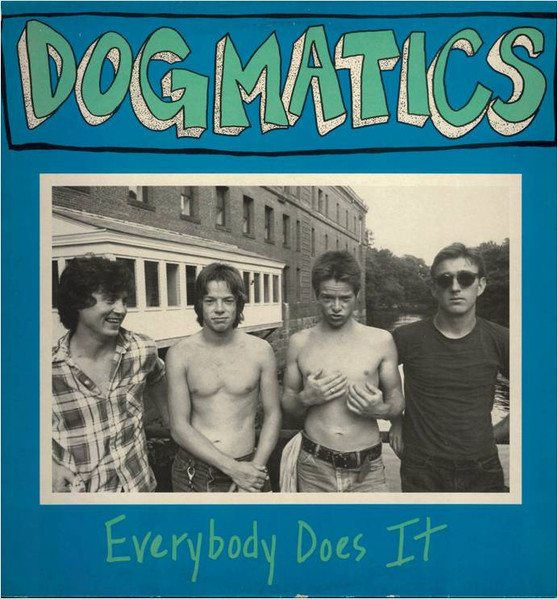
Paul O’Halloran’s death didn’t just stop the band, it closed a chapter abruptly. After that, when you occasionally regrouped for charity shows, did it feel like stepping back into the same band, or something more tentative, like testing whether it still existed?
Neither, really. The framing of the question doesn’t quite fit. There was nothing tentative about it, and it wasn’t some attempt to recapture what had been. Whenever we got back together, we just did our thing, for whatever reason brought us together that time. It’s not an easy thing to put into words.
There’s a long stretch where the band isn’t active in the traditional sense, but the music keeps circulating. Reissues, compilations, other bands covering your songs. Did you pay attention to that at the time, or were you mostly focused on other parts of your lives?
We were developing careers. Some were getting married, and lives had moved on. When something came through, like Dash Riprock covering one of our songs, whatever it was, we noticed it, but it was not a big deal. You know?
When The Mighty Mighty Bosstones covered ‘It Sure Don’t Feel Like Xmas Time’, did that hit you in any particular way, hearing something from that earlier period reframed in a different scene?
It was cool. They were our friends, our contemporaries; they were popular, and they made their own arrangements, which showed respect. A band gets big and they throw it back to you, that’s really, really good. They never co-opted it or claimed it as their own. They always gave credit where it was due. They even invited us to perform it with them on certain occasions.
The way it happened was very Boston. Jerry and Keo used to go to Charlie’s Kitchen upstairs every Friday, and one day, Nate Albert came over with a contract. He goes, “Hey, this is gonna be great, it’s gonna be on major radio, it’s gonna have huge ears, but you have to know it’s also a charity, so all the money is going to… ” So we got the cover, and we weren’t gonna make any money. Double-edged sword. But it actually brought more attention to the Dogmatics because the Bosstones were so popular at that time. The cover was recorded before our past keyboard player, John “JG” Goetchius, eventually joined the Bosstones.
And they weren’t strangers. Dickey, Joe, all those guys, we knew each other from previous bands. We were all kicking around the same scene. Jerry lived with Dickey for a while and lived with Joe. So yeah, it meant something.
Jump ahead to 2019 and the Rum Bar releases. What actually triggered the decision to record again after more than thirty years? Was there a specific moment, or did it build slowly?
The kids moved out of the house. And around that time, pre-COVID, Jerry said, “We gotta start making some more music. We don’t have much time left.” The more we thought about it, the more he was right. Why not? Let’s do it. We kind of had our hand in quite a bit still, playing benefits or bar gigs with some of us in The Hired Men, so it wasn’t like we’d gone completely cold.
Those early comeback singles, did they come together quickly, or was there a period where you had to shake off rust and figure out how to write together again?
Nope. Damn, it came together fast. Jerry was hanging out at band practice for The Hired Men and said, “I want to write something with a Buddy Holly sound,” and that was basically it. He showed us some handwritten lyrics and went through a chord progression once. Peter knocked out a classic guitar lead. No laboring over it, no “have we forgotten how to write together.” The song ‘She’s the One’ was written, and that’s about as much practice as we got before going to Ed’s Barn, however many weeks later, to record it.
The B-side was a different story. We brought James in to sing backup vocals on the title track and also wanted him to play mandolin on ‘The Ballad of Wilbur Ross’, which was written just because of who was in the administration at the time. In hindsight, the douchiness bar was only going to go higher, which made it feel like a solid political song was wasted on the wrong subject. But the song itself, with the mandolin melody, a sea shanty kind of thing, came out great. And that was one of the first times they leaned into that accent, almost like a melody mimicking the lyric.
In contrast, for the EPs that followed, Peter’s songwriting process has longer gestation periods. Songs bubble under for over a year before they surface, but when they do come out, the idea’s already been forming the whole time. Overall, we keep it simple. No rust. Just songs.
The documentary, ‘The Dogmatics: A Dogumentary’, digs through the whole history, including things you might not have revisited in years. Watching it, did anything feel off, or did it line up with how you remember it?
It only feels awkward when you’ve seen it four-plus times. Of course, anything can be done better. There are interviews the director, Rudy Childs, couldn’t make happen, and there are things said on camera that we’d love to rethink, but you can’t, so whatever. And some of it gets complicated. JG’s a family man now, has kids, and here’s the loft footage of him running amok. Maybe you’re crossing a line. But then again, that’s how things used to be, so who cares?
In the end, the one thing we could all rally around was that it was done in memory of Peter’s twin brother, Paul O’Halloran, who was really the catalyst in forming the band. It was very much a family-and-friends project, with niece Jada Maxwell, the archivist behind the photos and footage, and brother Dan O’Halloran of Darkbuster and Black Cheers narrating the film. And of course, the real star of the whole thing was the family matriarch, Anne O’Halloran. She passed away in 2025 at the age of 96, so it was a real gift to document her perspective of those times.
The screenings and film festivals we attended were a great excuse to bring the Boston music community together. The best night was the IFF, Independent Film Festival Boston, screening in Harvard Square. We packed the place. It was like a music-scene reunion.
Like many rock docs, the really fun stuff didn’t make it in anyway, so it’s kind of a sliver of what actually happened. Jerry wishes he hadn’t done his interview on the lawn with a boat in the background, while everyone else was in their rooms with guitars, making him feel lame. Peter joked, “But I sound like a knucklehead with a Boston accent… Oh, yeah. I am.”
Working with Ed Riemer at Edsbarn on ‘Nowheresville’, what did he bring into the process? Was he shaping the sound in a noticeable way, or mostly capturing what you were already doing?
We’d just say that it was incredibly comfortable. It’s like he’s a member of the band. It’s just easy with him. Often, you go into a studio and hire guys who do their job, but there’s no real connection or feeling. With Ed, we’re buddies because we go way back. We’ve worked with him on everything since 2019.
And beyond that, he’s someone whose ear you really trust. Because he’s a friend, he’ll tell you exactly what works and what doesn’t. He’s not gonna hold back. “Yeah, that sucks, don’t do that.” But if you push back on what you want, he listens to that, too. And if his original opinion turns out to be wrong, he has no problem admitting it. No crying about it, just, “Alright, let’s do it your way.”
He’s one of the local producers who flies under the radar, compared to others in the Boston scene. Ed’s quiet, reserved, no bluster. He’s a wildly talented musician himself, and he’s got an amazing ear. He’s great with all of us, knows when to tell you to back off and when to push harder, and how to fine-tune something. Also, his studio is like our happy place. We go there, and it’s both relaxing and energizing. The atmosphere nurtures creativity.
It’s all Ed’s place, yeah. We’ve never gone anywhere else. That could very well be the name of our next record, ‘All Ed’.
The album jumps between styles. Straight garage rock, punk, then something like ‘Con Job’ pulling in bluegrass and country elements. Were those directions coming from specific members, or did the songs just dictate their own form?
Specific members brought specific influences. Some of those songs weren’t written as Dogmatics songs. They came from somewhere else, written without a clear context, and ended up here. The Hired Men infecting the Dogmatics, basically. That’s all James’ fault. The country and bluegrass stuff aside, what keeps the whole thing from flying apart is the setup itself. We’re lifelong friends, brothers. So the nonsense tends not to break the bank, you know?
We don’t have individualists who, once things go well, decide they’re too talented for this and want to start their own thing. Jerry points out, “We just don’t have that shit. It’s the weirdest thing. I love it.” It’s a compact little rock band, and that’s exactly what it should be.
‘Con Job’ has that direct family connection through James Young’s father’s lyrics. Did bringing that into the band change how you think about what material belongs under the Dogmatics name?
As Peter says, “Well, it opened the door a little bit wider, didn’t it?” Not in a negative way. You’re like, you’re getting better musically. You’re stretching what you’re already doing.
Also, it aligns with the Dogmatics pattern of playing others’ songs when they resonate with the band. In 2013, James helped his dad, Rick Young, start a blog for his poetry.
In that process, Rick also shared some song lyric ideas, and James has set two to music so far. The first one James worked on was ‘Play the Roll’, and the second was ‘Con Job’. The Hired Men would often play ‘Con Job’ live, and we are glad Rick got to hear some early renditions before he passed in 2022. The rest of the band liked it, so we decided to record it in Rick’s honor.
‘Rainy Nights’ stretches back to 1986, while something like ‘No Likes No Comments’ is rooted in now. When you put those side by side on the same record, do you hear continuity, or contrast?
We aren’t necessarily aiming for either continuity or contrast. But I think people will agree that we’ve always had a mix of tones, serious songs alongside goofier ones. ‘No Likes No Comments’ fits right in that tradition of poking fun at contemporary conundrums.
And ‘Rainy Nights’, that song has been recorded so many times, and it never worked until it did. It’s probably the hardest song to sing because it doesn’t have energy. It needs a really good singer. Sung by someone like Steve Earle, that song might be a hit. It’s been called the perfect pop song from our catalog, and we believe that, even if we’re not sure we’ve ever done it full justice.
The honest thing about the record overall is that some of those songs were figured out as we recorded them, very little live time with the material, and a couple of things we’d barely heard before we tracked them. That’s the challenge of keeping the band going relative to other life commitments. We were not a band that got to play live for six months until we really owned all the songs, and then went in and memorialized them. Some of it was almost first takes, built up from nothing in the studio.
If we recorded some of those songs now, they’d probably sound better because we’ve practiced and honed them live. But that’s just the way it went. The album sounds good, and we think it holds up. That’s the way we do it, and we are just happy to have the chance to still be recording and sharing new music.
You’ve got guest players like Billy Loosigian and John Goetchius coming in. Did those collaborations happen organically, or were you deliberately pulling in people tied to your earlier scene?
A combination of both, really. JG was a former member, so that part was organic. It’s natural to call him if you want a piano part. He knows where things are going to go, where they’re going to fit. He’d already done a track on ‘I Love Rock and Roll’ in 2019, and we just sent the latest song, ‘Key of B’, out to him. He sent along a few options from the West Coast, and one just stood out as the perfect fit. And we were super happy that he joined our set for the nine-band ‘Nowheresville’ record release party. The timing was lucky because he happened to be in town. He did his thing and fucking played lights out.
For ‘Rainy Nights’, Billy was already at Edsbarn recording with Ed, so that was opportunistic. Ed heard the song and said it was very Stones-y, and Billy was right there. And then he played a 12-string that gave it this jangly, Byrds-ish feel at the top, then basically did ‘I Fought the Law’ for the lead.
Tom Baker’s guest vocals on the track fit perfectly. He’s been singing that country-fried bar sound for years, and that was an ingredient Jerry threw in there. Also, the band goes way back with so many people in this sphere. In the past decade, we’ve done “variety” shows like the ‘Mess Around’ out of the Plough and Stars in Cambridge, thanks to Tom, Jay Allen, and the late Justine Covault, who really did so much to keep the Boston music scene vibrant.
Back in the ’80s, songs like ‘Teenager on Drugs’ or ‘Teenage Girls’ were tied closely to that specific moment. With newer songs, do you still write from a place that immediate, or does time change the way subjects come into the music?
Yeah, like mentioned earlier, ‘No Likes No Comments’ is very much of its time, in the spirit of Paul’s song ‘MTV O.D.’ and ‘Hardcore Rules’. But nowadays, it’s hard not to “be political” when the cultural climate is highly politicized and polarizing.
So recent songs like ‘Automat Kalashnikov’ and ‘With A Scarlet Letter’, both written by Peter, lean into concerns that are both timely and, unfortunately, timeless. He really develops these types of songs through a historical lens, which fits with how he can take a complex topic and frame it up in a clever way that doesn’t dilute the underlying message. A little musical version of a Popeye punch to the face.
We recently had the privilege of playing an edition of an ongoing music series called ‘Which Side?: A Protest Music Teach-out’, hosted by author James Sullivan and our manager for like five minutes way back when, Joyce Linehan. We updated the lyrics of the classic protest song ‘Eve of Destruction’, and Peter worked overtime to finalize a new song that we played live after only one rehearsal and hope to record soon. Look up that show on their YouTube.
The new material since 2019 almost matches the output from the original run in terms of numbers. Does that surprise you at all, or does it feel like you’re making up for lost time?
No. That hasn’t been the goal. It just felt right to start recording, and we hope to continue it while we feel that way. But it’s been fulfilling to reflect on how the contemporary catalog has built up over the last seven years. We are just a few new songs away from exceeding the studio recordings count of the early days. That’s been a surprising result, more than a deliberate strategy.
Playing live again after so long, did the physical side of it hit you differently, or did it come back faster than expected?
Thanks for reminding us we are old. Jimmy still jumps around on stage like a leprechaun, so we have that. We have fun when we play live, and we tend to get the crowd going.
There’s always a risk with second acts that the audience is split. People who were there the first time, and people discovering you now. When you’re on stage, do you think about that split, or just play?
“All we care about is the money.” Tommy delivered that with his signature deadpan tone.
Hey, we are excited to see anybody in the audience. Whether it be old people or young people. Sometimes shows look like a family reunion, but we’ve also played local festivals where the audience is all sorts of age ranges and vibes. It feels great if you can engage a diverse audience and get them dancing and having fun and sharing that experience together.
The release show in Waltham pulls together a wide circle of bands. That kind of event feels closer to a community gathering than a standard gig. Is that something you wanted deliberately, to reflect how the band has always operated?
That’s exactly how the band has always operated. We’ve always been a catalyst for a community. It goes back to the loft party days. It was also an opportunity to put together a show that we’d want to see. I mean, look at the lineup: Black Cheers, Jay Allen and the Archcriminals, Last Stand, Gypsy Moths, Tom Baker and the Double Down, Stop Calling Me Frank, The Dogmatics, and Band 19.
James joked that we had to put out a 10-song LP just to get Last Stand on stage again. They hadn’t played an event since a Charlie Chesterman event back in 2012/13. That’s what those shows do. It wasn’t a deliberate strategy so much as just the natural way things tend to go around us. Who else is going to listen to this album other than our family, friends, and buddies from other bands?
Looking at the full timeline now, from 1981 through the break and into the current run, where do you see the real turning point?
Playing the same clubs with fewer people. Being old and complaining about body aches from actually playing. That’s the turning point.
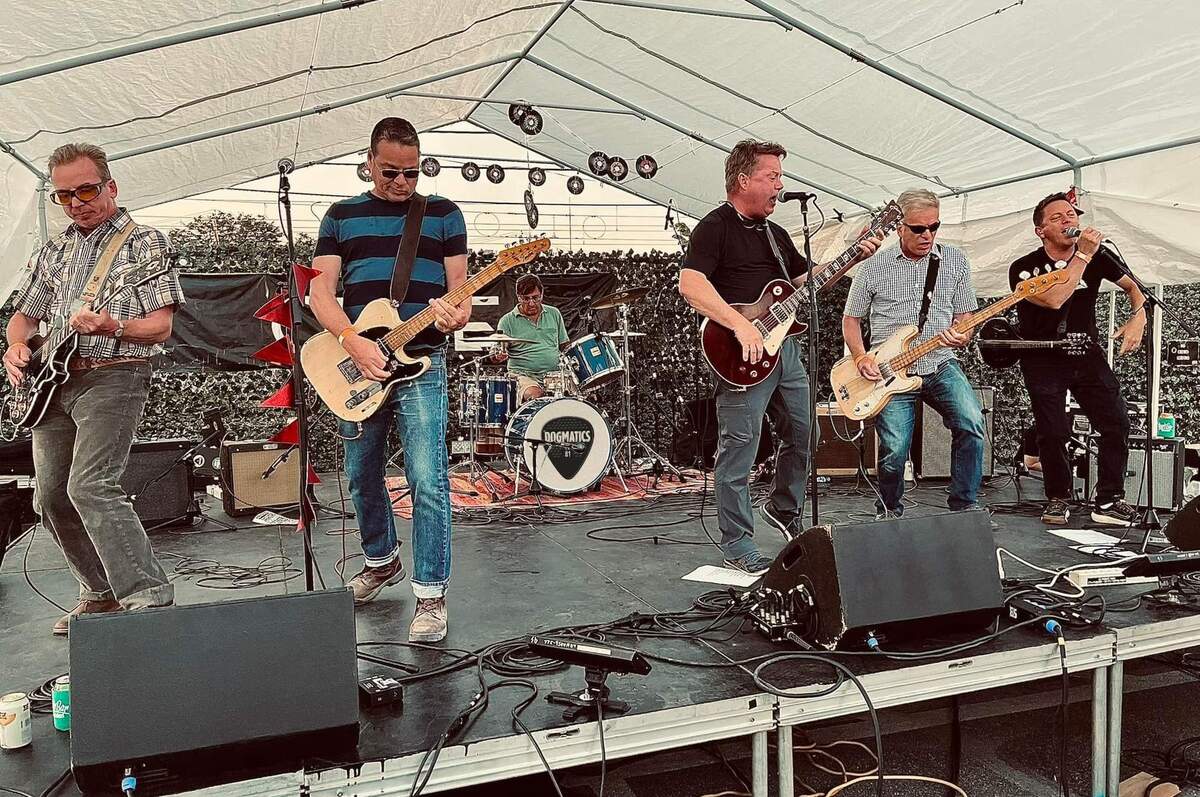
And at this point, with new songs, new lineup elements, and the old history still present, what defines The Dogmatics now? What makes it this band and not just a continuation of something that ended years ago?
It’s kind of both of those things at once. We have the continuation of the original band, missing Paul but always replaced by one of his brothers, Johnny or Jimmy, or both when Johnny is visiting from Tucson, and something that’s evolved.
There are new elements, another instrument, another person, and that makes it more interesting without making it something else entirely. We probably take ourselves more seriously now than we used to, but we’re still trying to be fun and energetic. It doesn’t feel like a museum piece. We rethink our set lists and how we can blend past and present songs.
The other thing, which goes back to the beginning, is that we’re still buddies. We wanted to play music so we could hang out with each other and other bands. That spirit is still what holds it together.
Klemen Breznikar
Headline photo: The Dogmatics promo photo
The Dogmatics Website / Facebook / Instagram / YouTube / Bandcamp
Rum Bar Records Facebook / Instagram / Bandcamp