
Skooshny’s ‘The Recordings 1971–1981’: The Overlooked Los Angeles Band Finally Collected in Full.
David Winogrond discusses Skooshny, Mark Breyer, Brevity, Athanor, Graced Lightning, Michael Penn, and ‘The Recordings 1971–1981’.
Skooshny were an early ’70s Los Angeles trio that sadly received almost no attention. The band was run by three friends who wrote a lot of material, but they had no manager. As a result, they did not get regular live work, and they also did not have a car. In most cities that would have been inconvenient, but in Los Angeles it was almost absurd.
Yet between 1971 and 1981, Mark Breyer, David Winogrond, Bruce Wagner and a small circle of friends put together a body of recordings that somehow made more sense later than it did at the time. The music was too melodic to be underground in the usual sense, did not align with the power pop that was on the airwaves, and was produced independently without any publicity. You hear the Byrds, the Kinks and Big Star, but also something that is hard to describe without hearing the recordings… a warmth comes to mind.
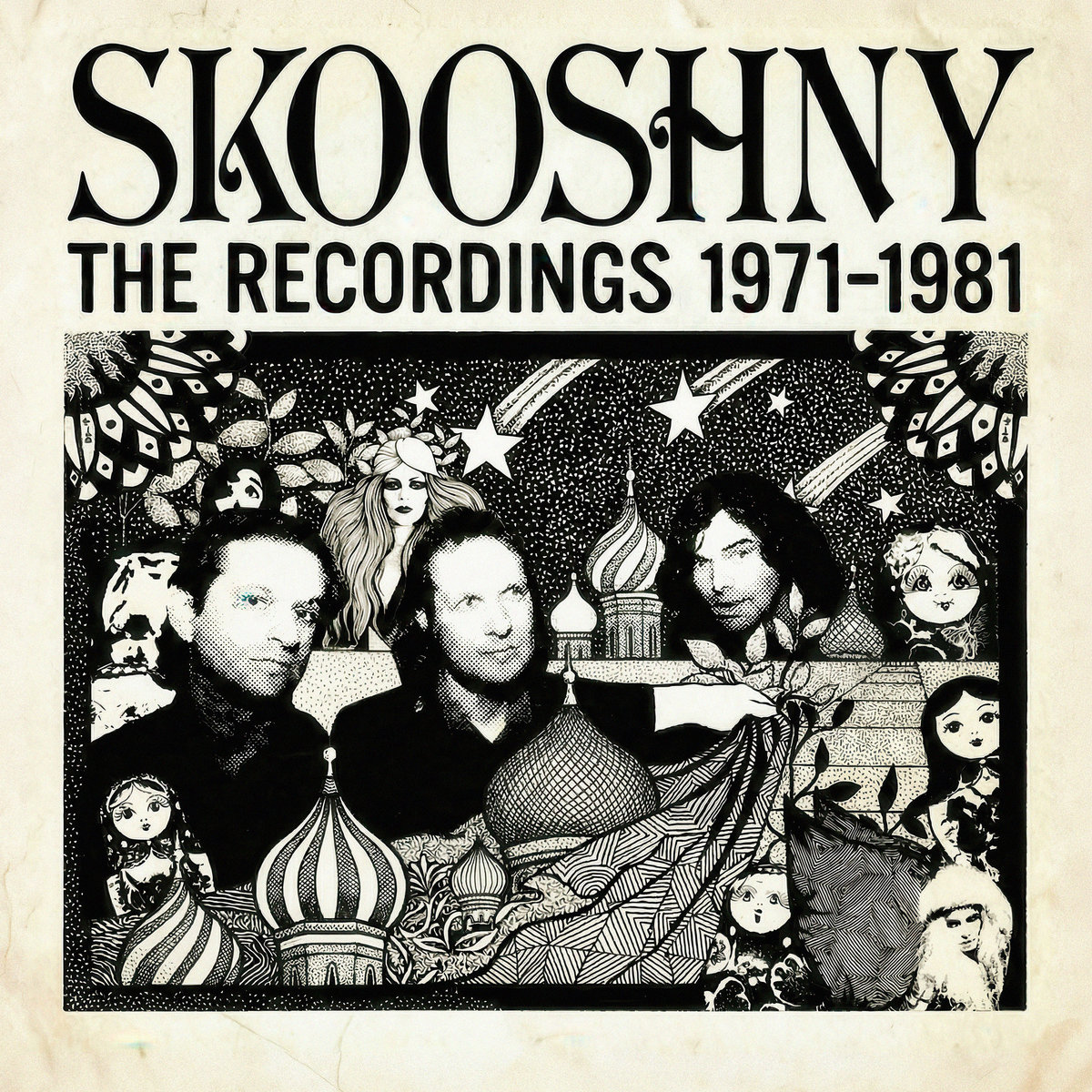
Think Like A Key’s ‘The Recordings 1971–1981’, restored and remastered by Prof. Stoned, gathers the full early Skooshny story into one place. It includes the familiar recordings from the band’s cult afterlife, but also the demos that show how fluid the whole thing really was. Skooshny grew out of Brevity, brushed against Athanor, passed through Graced Lightning, and eventually found its own strange world in basements.
David Winogrond speaks about all of it: being just friends, odd decisions, and the long afterlife of Mark Breyer’s writing.
“We didn’t really fit snugly in any one genre.”
This new collection is presented as everything Skooshny committed to tape between 1971 and 1981. When you went back through the masters and demos with Think Like A Key and Prof. Stoned, what did you hear that surprised you, either about the band or about Mark’s writing?
David Winogrond: Well, no surprises, really. But, if anything, I was struck by how eclectic we were. We didn’t really fit snugly in any one genre.
The 1991 Minus Zero compilation already gave Skooshny a second life. What changes when the story is told again now, with four additional demos and with Mark no longer here to help explain the songs?
I’m just hoping this repackaging brings Skooshny some better attention. Nothing really changed.
Think Like A Key describes ‘One Wrong Move’, a surviving 1972 basement recording, as the first time Mark Breyer sang with a band on tape. In our Brevity interview, you described the reworked version of ‘Cakewalk’, with Mark’s newly added lead vocal, as the first attempt at a Skooshny song. Were these two different kinds of beginning: one the first recording, the other the point when Skooshny became an idea?
It wasn’t well thought out or anything. I was remixing some Brevity songs to continue trying to get us a record deal. With ‘Cakewalk’, I thought it’d be fun to record Mark singing it. I was, of course, familiar with his singing on his home demos. But this was the first time he recorded in a studio. We used it in the demo collection we were shopping at the time of Brevity.
But then when I compiled the songs that were used on the first Skooshny EP, we decided to think of ‘Cakewalk’ as being a Skooshny song. Anyway, after Brevity, but before Skooshny, Mark and I recorded ‘One Wrong Move’. Technically, it wasn’t a band. Just a casual recording in a basement. But since Mark and I described Skooshny in the early days as being the two of us and anyone else who was around, we decided later to think of that track as the first Skooshny recording. But so was ‘Cakewalk’. Just in different ways.
Basically, Brevity morphed into Athanor, Graced Lightning and, later, into Skooshny. It was all very fluid and not well thought out or defined at the time. Graced Lightning was basically Brevity without Rick, plus another guitar player and, briefly, another singer/bass player. Very different! We were a prog rock band and played many gigs in the Chicago/North Shore area for over two years before I quit to move back to Los Angeles, where Mark joined me, and we continued trying to get Brevity a deal, remixing ‘Cakewalk’ and so on. We eventually gave up and pursued Skooshny. I didn’t mention Graced Lightning before because Rick, Mark or Greg weren’t involved, so it felt too unrelated. But if you’re interested in a family tree, Graced Lightning was one of the Brevity branches.
In the Brevity interview, Rick Vittenson spoke about brevity as an idea, and about trying to use very little language to express something. Did that approach stay with Mark when he began writing for Skooshny, or did Skooshny give him room to become more open, more personal, or more mysterious?
My recollection was they were interested in making music that was simpler than what was popular at the time: concept albums, prog, long solos, etc. Hence, ‘Brevity’. But the name was also a combination of Breyer and Vittenson. I don’t think “saying as much as possible with very few words” was part of their thinking.
With Skooshny, the main difference was that Mark was writing for himself singing the songs and for his vocal style. But did he take a different approach, lyrically? I don’t know. I’d imagine writing for Rick singing the lyrics was probably different than when he sang his songs. But I can’t really speak for Mark on this.
There is an overlooked bridge between these bands: after Brevity, Mark produced Athanor’s first single, and you played on it, before Skooshny settled into its lasting form. What was Mark learning from Athanor at that moment, and did any of that experience feed directly into Skooshny?
I can’t really speak for Mark regarding what he might have learned from Athanor. I’d imagine Greg and Rick learned from Mark, as well. He was friends with Greg Herriges, who told Mark he wanted to record some songs with Rick but didn’t have a band, so he asked Mark if he could find some people to play on it. Mark asked me and I brought in John Bunkelman on bass and Mike Miranda on guitar. We rehearsed one time and then recorded ‘Graveyard’ and ‘Inner Space’. It all came together in about a week. Mark helped with some of the initial song arranging and construction, which is why he got production credit, before everyone else started working on the instrumentation.
Brevity came close enough to serious interest from Muff Winwood and Herb Cohen to imagine another life, but that life never arrived. When Alien Records began, was self-release mainly practical, or had you already decided that preserving the music on your own terms mattered more than entering the usual record business?
I created Alien Records because no labels wanted us.
Skooshny are often described as a band that did not perform live during the original period. Is that quite right?
Well, we did one show. It was a tribute to Love to raise bail money for Arthur Lee. We did one, or maybe two, songs by Love. No Skooshny songs, since it was a Love tribute. Bruce and I were also in Davie Allan and The Arrows, so we played on the same show.
Mark never wanted to play live. That’s about as much as we thought that out. I always preferred recording to gigging, so I was fine with that. To me, recording is creating. And gigging is recreating, unless the band features a fair amount of room to improvise. That situation in the studio brings its own freedom that I prefer.
Mark once said that ‘Cakewalk’ was your idea for the first EP, and that ‘Odd Piece In The Puzzle’ was too chaotic for his taste. Looking back, were you consciously pushing the band away from the more melodic side of Mark’s writing, or did those stranger choices feel like another way of bringing his songs into focus?
I picked the songs for the first EP and wanted to show a wide variety of styles that represented various sides of the band. Mark always preferred the more folk-rocky stuff. ‘Cakewalk’ and ‘Odd Piece In The Puzzle’ weren’t really his thing, musically.
You said that your own taste ran more toward the strange…
I don’t know if I used that word. I have a wide range of music I like. Mark’s tastes in music were narrower. That’s not a criticism. I’m sure he’d have agreed with that.
But that balance between different tastes was part of what made Skooshny work.
Yes. And I think that’s what makes any cool band work. It’s all about the collaboration of different people and styles.
So were those stranger choices another way of bringing Mark’s songs into focus?
We just all brought our own influences. Skooshny was always Mark’s vision, though. And Bruce and I supported it in our own way. Bruce also has his own influences and approaches that he brought with him to Skooshny.
The first EP is called ‘It Hides More Than It Tells’, which feels almost like a definition of Skooshny’s whole character. Discogs also lists a test pressing under the title ‘It Hides More Than It Sells’. Is that an actual variant, a mistake, or an inside joke, and what do you remember about putting that record into the world?
I don’t know anything about that. It must be some typo on Discogs.
The 1979 single, ‘You Bring Me Magic’ backed with ‘Crossing Double Lines’, seems to catch Skooshny becoming both more luminous and more assured. Michael Penn entered the picture a little later…
Michael was, chronologically, a little after that single.
Again, none of this was thought out. Michael and I became friends, he had a studio, we recorded there and Michael collaborated with us. I thought it worked well.
‘Trish De La Roe’ was recorded in 1975 and was the first Skooshny recording to feature Bruce Wagner. What do you remember about bringing Bruce into that session, and what did he add that made it clear the band had found its lasting shape?
Mark and I had some studio time booked, but no band. We’d just put things together any way we could. We also didn’t drive, so sometimes the driver became the bass player, etc. I had previously met Bruce at a jam session. We didn’t exchange phone numbers, but we bumped into each other at the import bin of a record store, started talking about The Small Faces, and I told him Mark and I had a session booked and asked if he’d like to play on it. I got him a copy of Mark’s home demo and we recorded ‘Trish De La Roe’ a few days later. Mark and I loved what he played, so that was that.
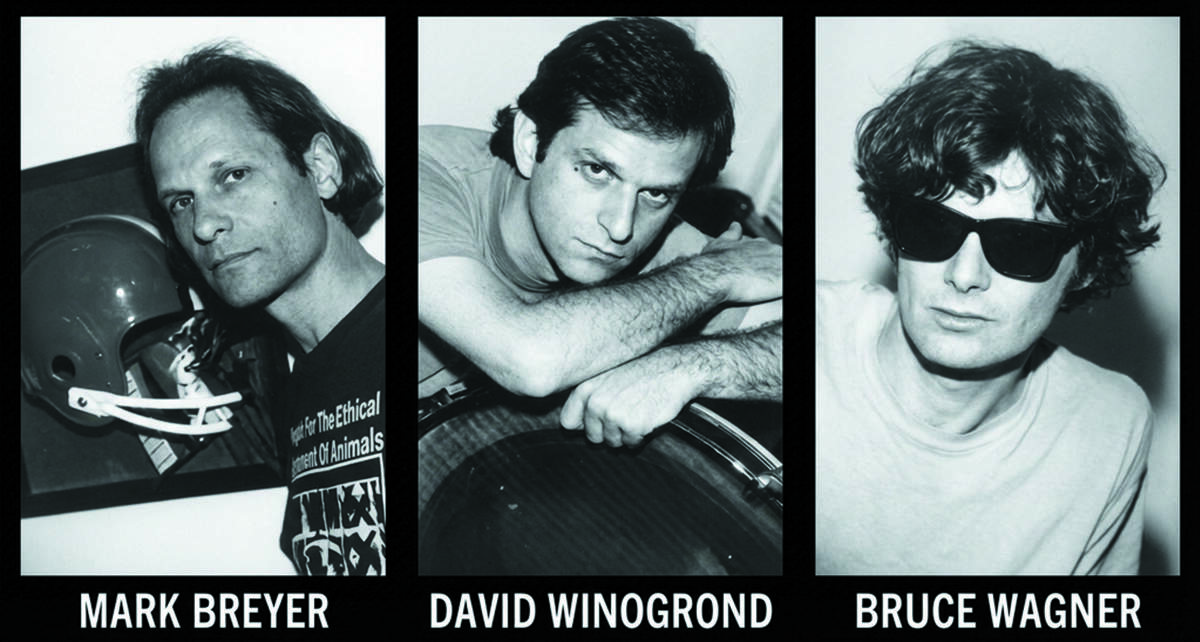
In that sense, ‘The Recordings 1971–1981’ brings together all twenty-one known Skooshny recordings made between 1971 and 1981, including four tracks that had not been issued before, and presents them in one place for the first time. The material comes from a mix of sources: early basement demos, home recordings, sessions made at Michael Penn’s backyard four-track studio, and later work that circulated privately or on small labels like Alien Records. The set has been newly remastered, and the liner notes trace how the music moved through different phases and names, linking Brevity, Athanor, Graced Lightning and Skooshny as part of the same loose circle of musicians and ideas.
Heard together, the recordings show that Skooshny were never really a conventional band in the usual sense. They worked more as a recording project built around Mark Breyer’s songs, with friends coming in and out over time. The notes make clear how informal the process often was, with songs recorded wherever equipment was available and released, if at all, in small runs that later became hard to find.
Klemen Breznikar
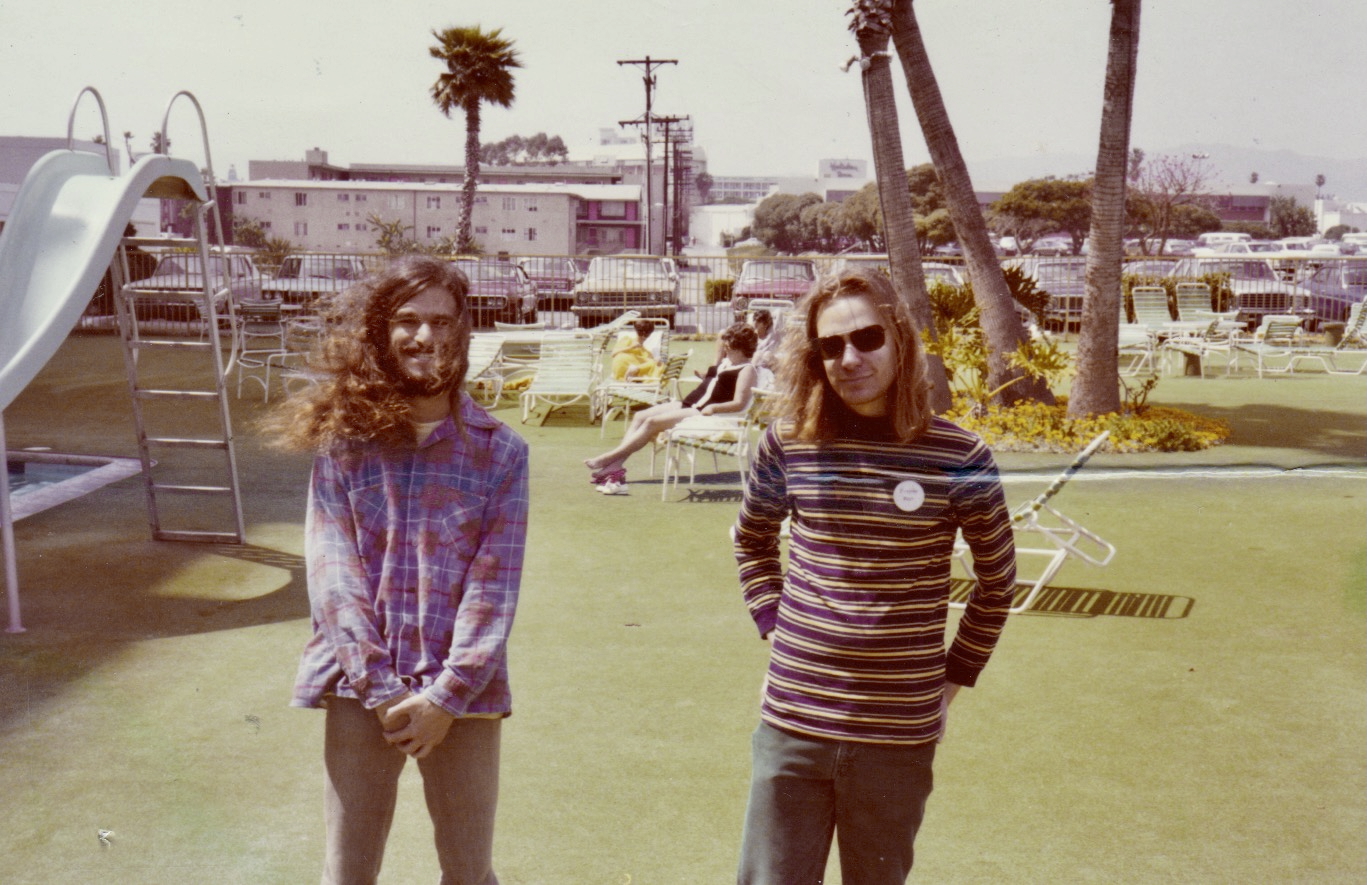
Headline photo: Mark Breyer and David Winogrond of Skooshny, sometime in the 1970s. Photograph: courtesy of the Winogrond archives
Think Like A Key Music Official Website / Facebook / X / Instagram / Bandcamp / YouTube
Chicago’s Underground Revealed | Brevity’s Long-Lost Album
Athanor | Interview | “Flashback”