
Sean Imboden on ‘Uncharted Realms’: “You Can Only See as Far as the Headlights”
“I never want the band to stay in its comfort zone, or in traditional jazz waters,” Sean Imboden says.
“I always aspire to break new ground, leaving the music open to all of the influences I’ve taken in. I let the music go wherever it wants to go, following that direction through all of its twists and turns, holding on and enjoying the ride.”
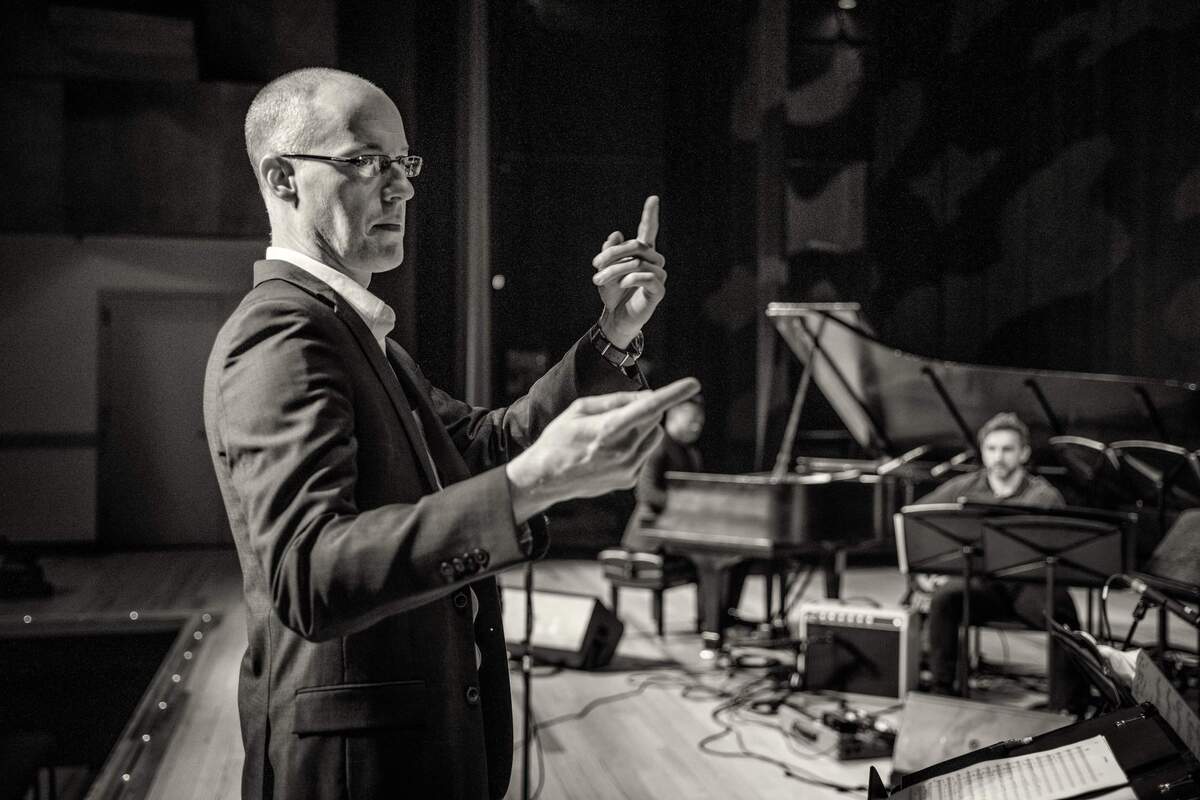
The Indianapolis-based saxophonist, composer and bandleader has built the Sean Imboden Large Ensemble into a 17-piece group with a clear sense of identity. Its first album, ‘Communal Heart’, brought wider attention, but Imboden has kept his focus on the writing itself: how a melody can be expanded, how a large ensemble can shift colour, and how far a piece can travel without losing its thread.
The new album, ‘Uncharted Realms’, released May 1, 2026, follows that line of thought. ‘Flowing Currents’ began as a short small-group piece before Imboden opened it out for the full ensemble, adding horn passages, rhythm-section movement and new layers of orchestration. ‘When You Look Beyond’ moves further still, passing through lyrical writing, a march feel, horn writing touched by Mahler and Shostakovich, and a heavy guitar solo from Joel Tucker.
Imboden describes writing as a process of following what appears in front of him. One image he uses is driving at night: “you can only see as far as the headlights.” That idea runs through ‘Uncharted Realms’. The music is shaped and detailed, but it does not feel locked to a plan. It moves from clear melody to denser ensemble writing, from broad colour to sudden shifts in texture.
The band itself is part of that development. Imboden speaks of the players not only as performers, but as people who help test and refine the music. The charts are demanding, and the group has grown through rehearsing, performing and recording them. ‘Uncharted Realms’ builds on ‘Communal Heart’, but it feels more open in its movement, more willing to follow a piece wherever it leads.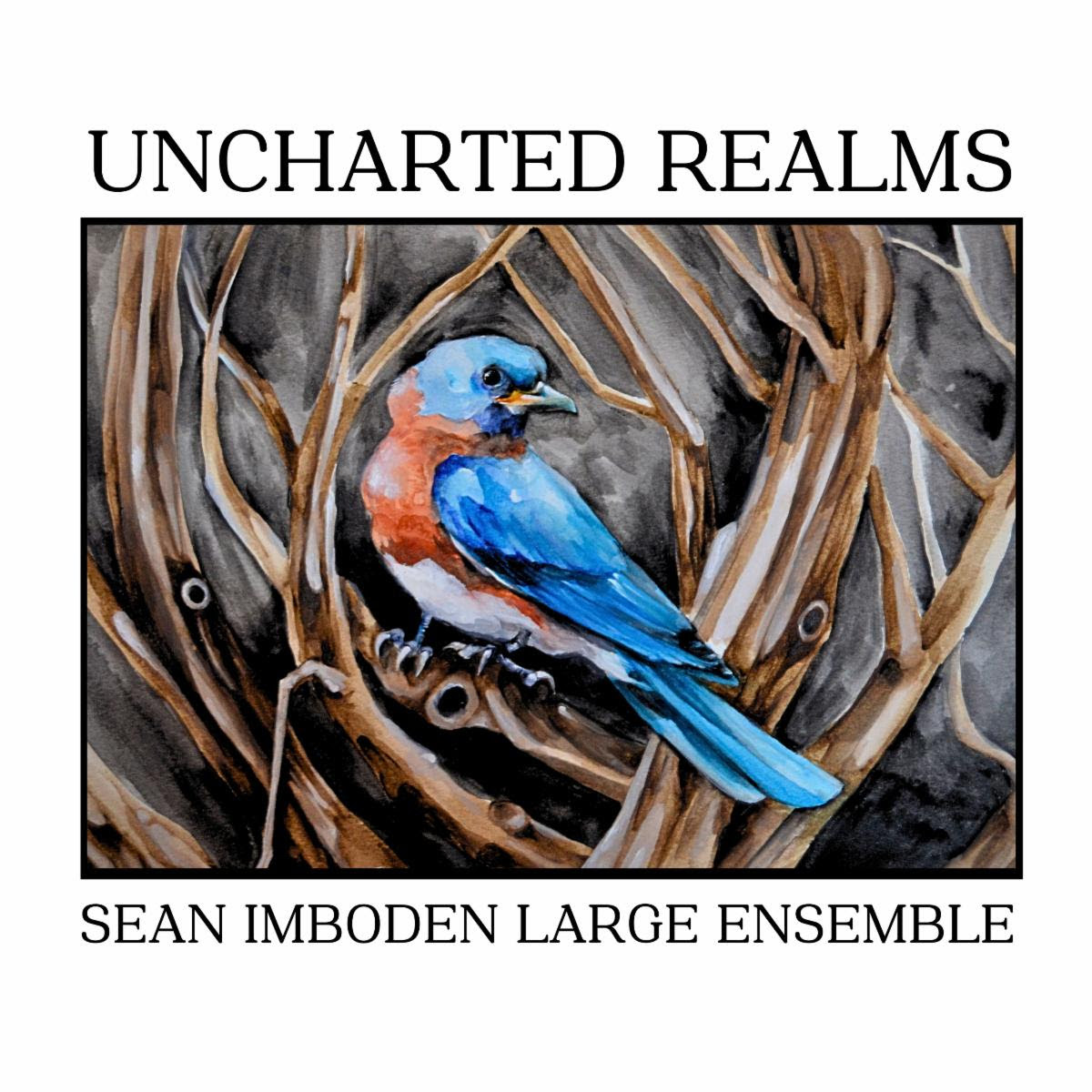
“Every chart on this album ventured into unknown territory at some point.”
You’ve spoken about the first Large Ensemble gig in 2017, playing outdoors in a muddy park to barely anyone. When you think about that day now, does it feel funny, painful, useful, or somehow necessary for what the band became?
Sean Imboden: When I think about that first gig, I feel proud, and a bit nostalgic. Just getting to that point of the initial performance was a ton of work: finishing the charts, hiring the band, booking the gig. When it finally came together, I was really happy with the result, and I knew we had something worth continuing. I’m glad I took the initiative to start this project, because it’s grown into something really special that I want to continue to cultivate. Next spring, we have the opportunity to play at Dizzy’s Club in NYC, and I certainly never would have thought that was possible back in 2017.
After ‘Communal Heart’ was so warmly received, did that change the way you approached ‘Uncharted Realms’? Did you feel more confident, more pressure, or simply more curious about where the ensemble could go next?
I don’t think much changed in my approach to the second album, but the more I write and orchestrate ideas for the band, the better I get at crafting my vision for the music. It was nice that the first album was well received, but I try not to let any external response, positive or negative, to my work affect my internal musical voice. Mainly, I try to stay focused on where I want the music to go, and stay open to any possible outcomes.
The title ‘Uncharted Realms’ suggests movement into unknown territory. What felt genuinely unknown to you while making this record? Was it the writing, the sound of the band, the emotional space, or the idea of what a modern large ensemble can be?
Good question. I think all of the above were unknown in various ways. One description of writing I strongly relate to is that writing is like driving a car at night. You can only see as far as the headlights. When I’m writing at my best, this is true for me. While I may have no idea where a piece is going or where it will finish, if I stay focused and follow each particular idea through to its end, I will end up with a well-crafted chart. As far as the sound of the band, I actively explore finding new timbres and methods of developing a melody. One example of this would be ‘The Gentle Giant’, which starts off with bombastic energy, then transitions to a delicate, introspective, calm section. When I started that composition, I had no idea it would make this shift, but through the writing process, that was the path it naturally took. Every chart on this album ventured into unknown territory at some point. As in life, we don’t always know how we will feel or where we will end up, but if we focus on the present moment, we will find our way.
‘Flowing Currents’ began as a small group piece before becoming part of the Large Ensemble world. What happens to an idea when you give it to that many players? Does it become bigger, or does it become something completely different?
This is the main thing I love about the large ensemble. It has the ability to enhance and thoroughly develop an already effective musical idea. ‘Flowing Currents’ is a 24-measure tune, but with the full band, I can write an extended intro that begins with just the horns, then grows as the rhythm section joins. Once the melody enters, we’re already moving along at a nice clip. The tenor solo is over the form, then the guitar solo is over a vamp, enhanced by layering in horn backgrounds, all the way to the end. I can create so many more ebbs and flows with 17 voices at my disposal.
A lot of your pieces seem to have a story inside them without becoming too literal. ‘Flowing Currents’, ‘Balcony’, ‘When You Look Beyond’ and ‘Follow the Kite’ all suggest movement, perspective and change. Do titles come after the music, or are they part of how you find the music?
The titles always come after the music. I think it is helpful for an audience if I give each piece a descriptive backstory and title, although I’m never thinking about this while I’m writing the music. Writing is an abstract process for me, but I try to give the music a concrete, real-world tie-in afterwards.
You’ve said you don’t want the band to stay in traditional jazz waters. At the same time, the writing is still very melodic and approachable. How do you push the music forward without losing the listener?
I like this question. It is something I think about from time to time. When I first started the band, I strictly wrote music for myself, and was genuinely surprised when we started getting big audiences. I actually thought a lot of our music would be too modern or dissonant to connect with the broader public. Once I noticed that it did seem to connect more than I expected, I felt some reassurance that it was okay to continue to write “for myself.” By this, I mean that the work must pass my critical judgment before I share it, not that I don’t want others to enjoy it. I love simple, clear melodies, but I also love when things get crazy and dense, and maybe a bit unclear. For me, it’s all about striking a balance, and letting a ray of sunshine peek through the clouds at the right moment.
‘When You Look Beyond’ moves through lyrical writing, a march feel, horn writing that points toward Mahler and Shostakovich, and then a heavy guitar explosion from Joel Tucker. Did that piece surprise you as it developed, or did you know from the start it would need to travel that far?
This piece definitely surprised me as it developed. This was one that was so fun to arrange for the large ensemble, because I knew I had a core melody and chord progression that I liked, but there were unlimited creative possibilities with how I could present it. I had no idea it would span from lyrical, to march, to rock guitar, but this is part of the risk you must embrace as an artist, and the willingness to try anything. I’m really happy with the outcome!
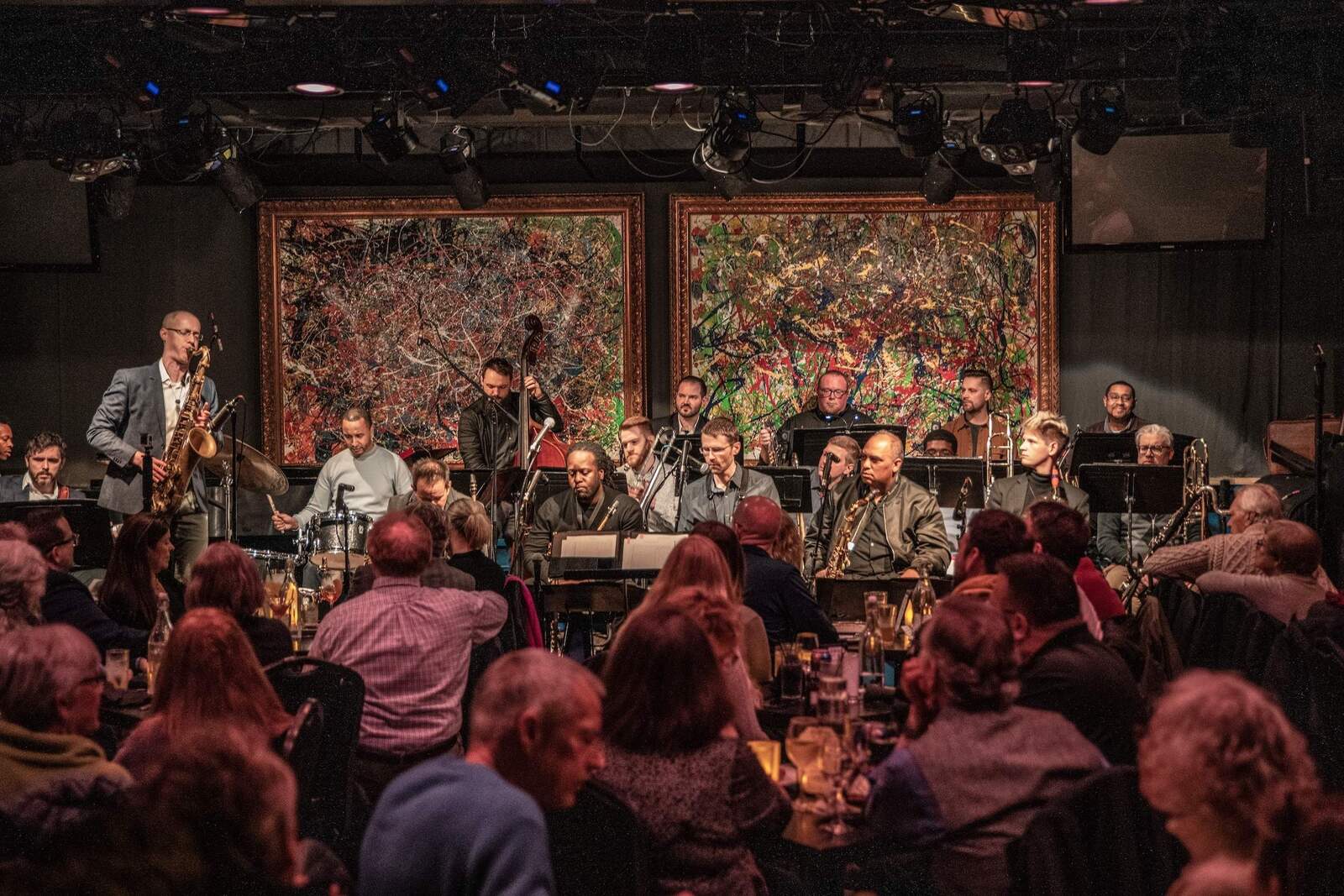
You’ve often talked about the community feeling around the Large Ensemble. What have the players taught you about your own writing, and what can they do together now that they could not have done when the band first started?
They’ve taught me that I write challenging music, haha. Well, difficult but worth the effort seems to be the consensus. I get really good feedback from the musicians about the charts, and at this point, everyone is comfortable giving their suggestions if something could be improved with a change, or if something is unnecessarily difficult. Every time we learn a new batch of charts and go through the process of rehearsing, performing and recording, the band gets more polished and more confident. A couple of weeks ago, we recorded our third album, and it was a smooth process. We’re looking forward to sharing that music next spring.
Klemen Breznikar
Headline photo: Sean Imboden | Credit: Rich Voorhees
Sean Imboden Website / Facebook / Instagram / YouTube