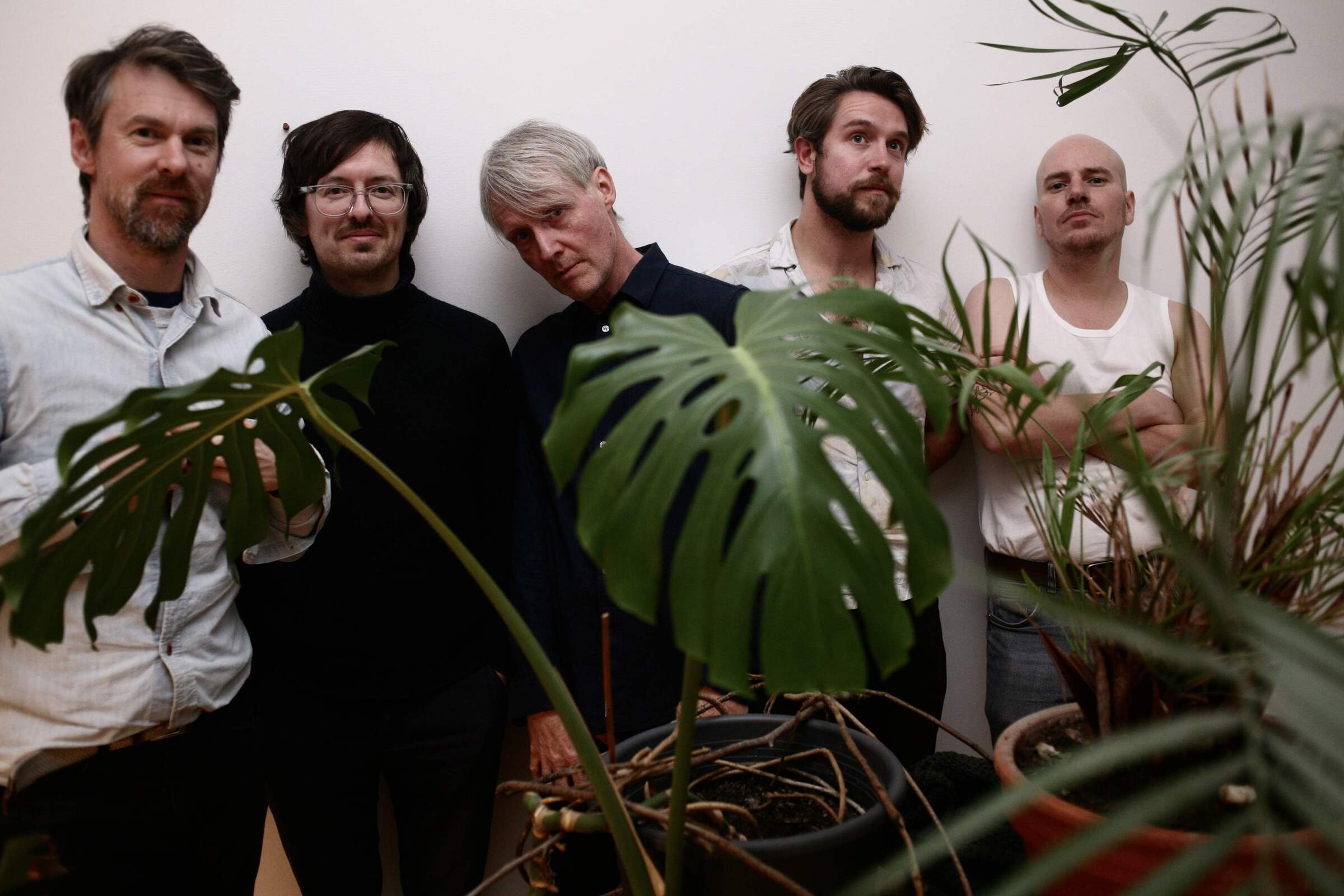

Flaming Star: Lost “Stoned Gnome Music” from the Syd Barrett–Inspired Underground
Flaming Star’s ‘In the Piper’s Magical Kingdom’ comes from the British underground counterculture of the early 1970s, a world of home recordings, fanzines and small networks of dedicated freaks.
Originally made in 1974 and now officially released by Bright Carvings, it’s a wonderfully odd outsider trip built around Syd Barrett worship, assembled far from any recognised music scene and operating according to its own hermetic logic, the sort of private-press oddity that could only have been made by a handful of committed music heads and hermits, tucked away in their own little corner of the British psychedelic underground.
John Steele, the group’s main man and founder of the Syd Barrett Appreciation Society, calls it “Stoned Gnome Music,” which is funny, but also rather exact. The album carries the spirit of Barrett while wandering off into its own hedgerow burrow. As Steele says of first hearing Barrett’s solo work, “You either got it, or you didn’t.”
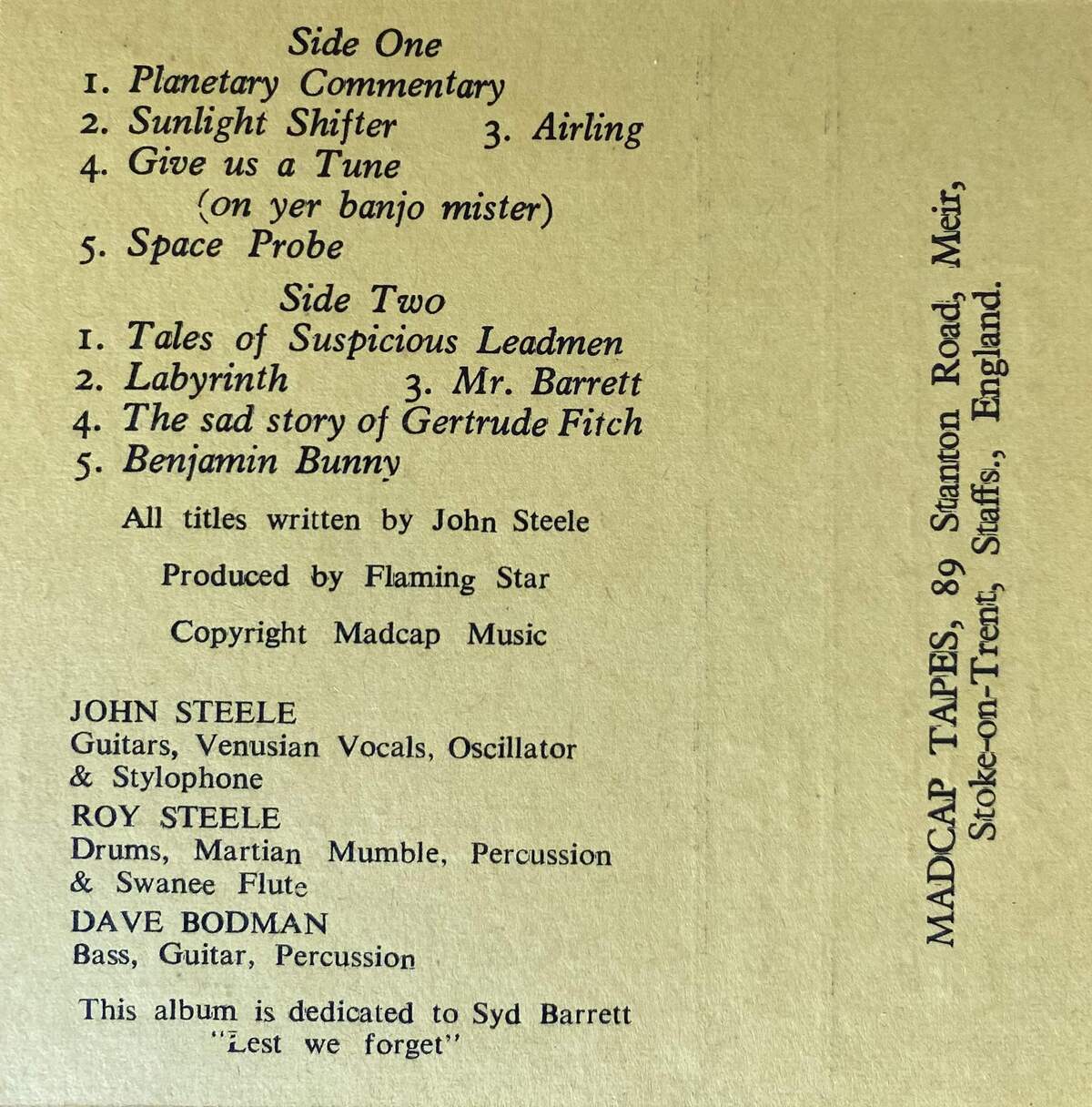
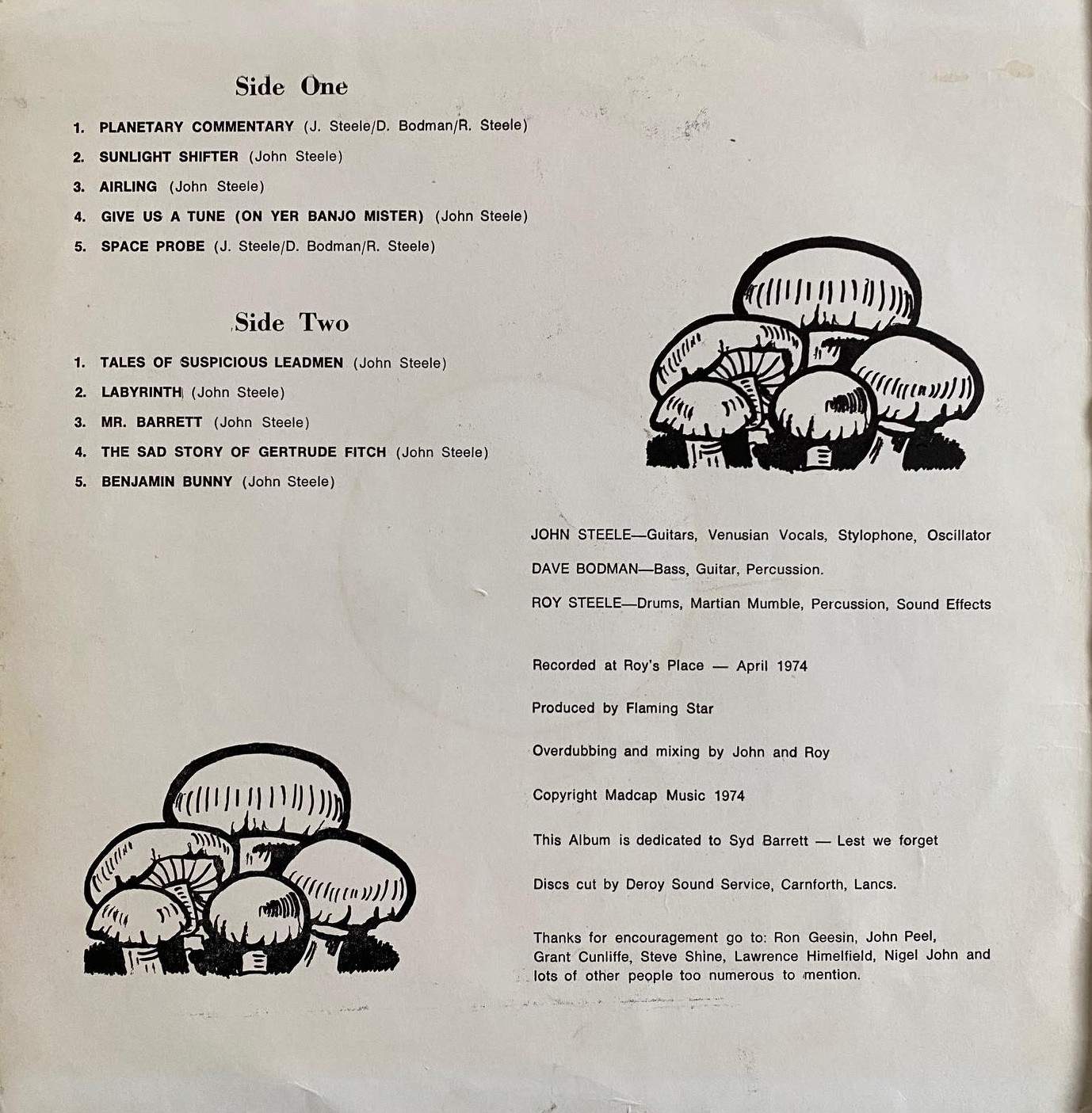
The recordings began simply, with John, Roy Steele and Dave Bodman meeting on Saturdays in Roy’s semi-detached house. There was a drum kit, small amps, a cheap microphone, an old 4-track open-reel recorder, and not much else. “Straight out the gate – no overdubs, as it happened, fluffs included,” Steele remembers. What started as a private project for people around the Syd Barrett Appreciation Society gradually travelled much further, helped along by John Peel, music-paper mentions and the old underground network of fanzines and tape collectors.
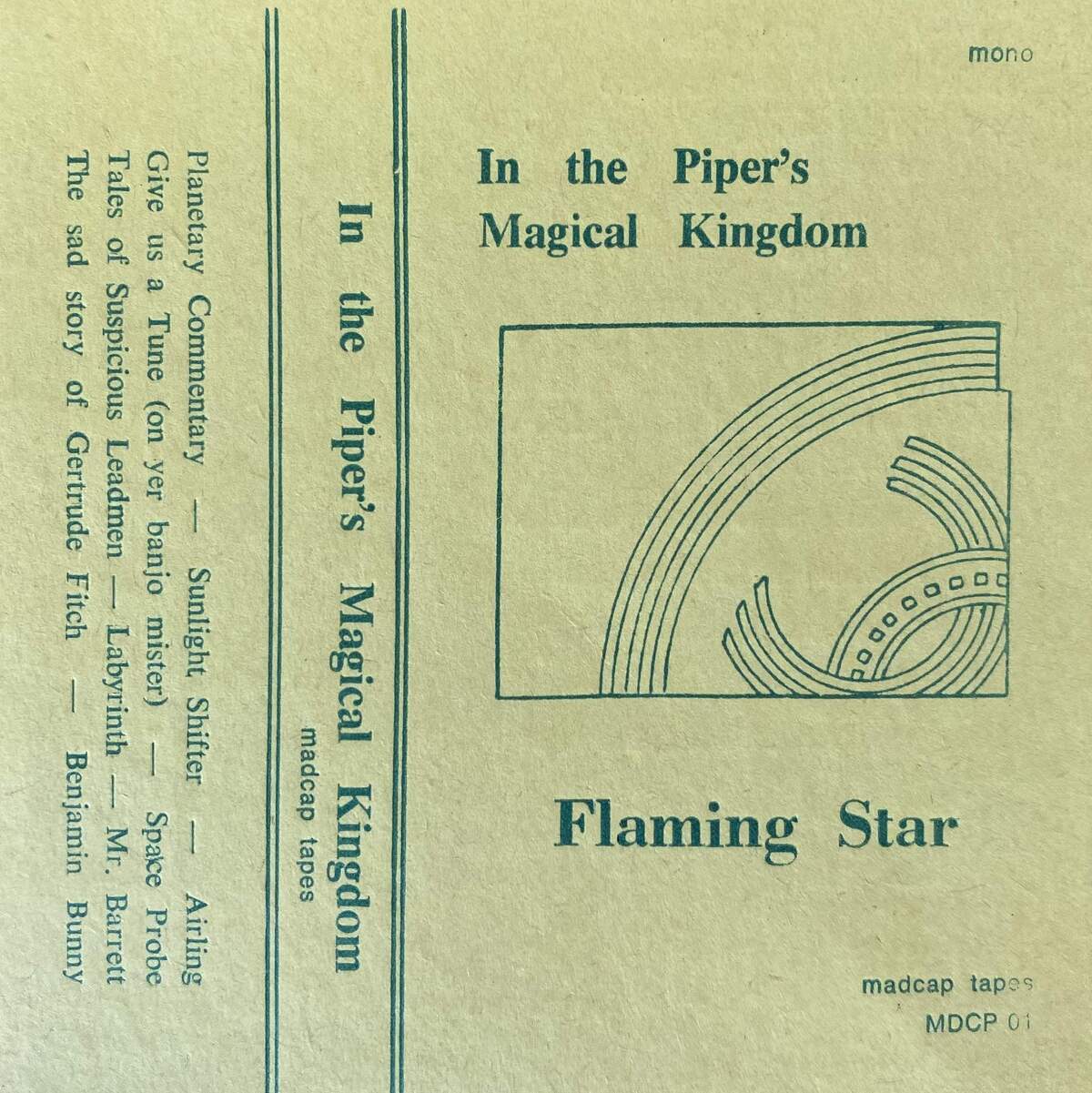
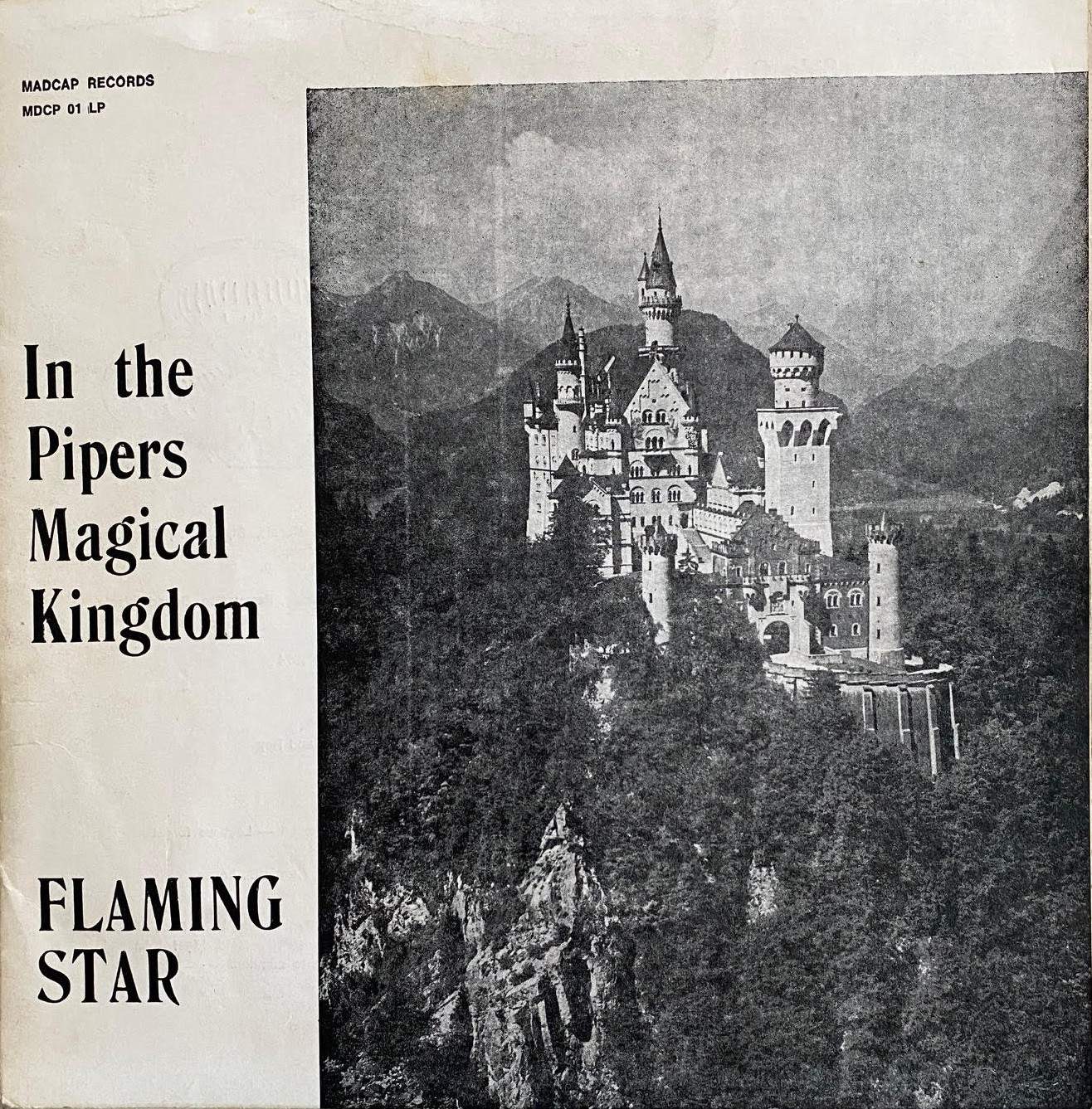
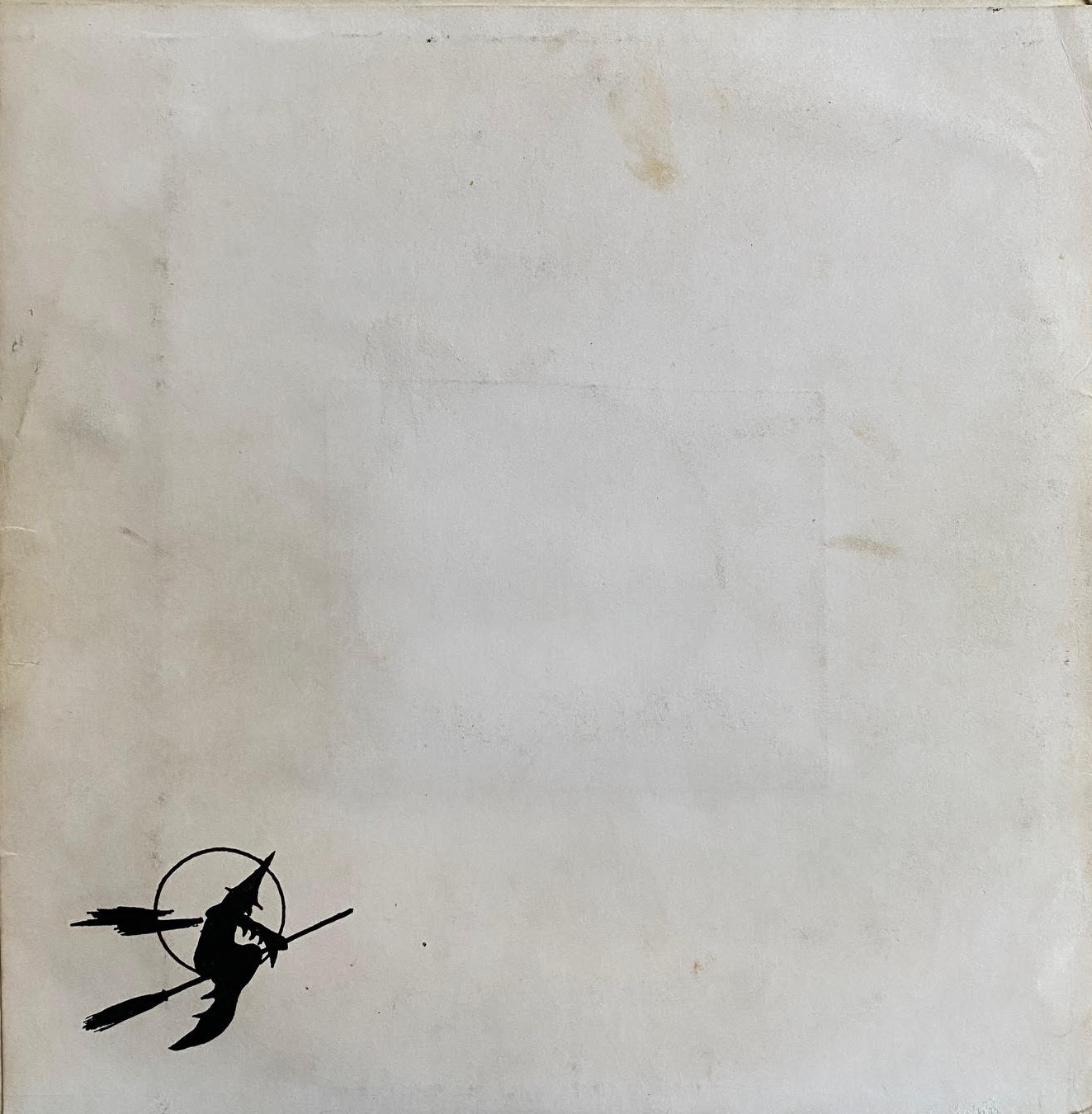
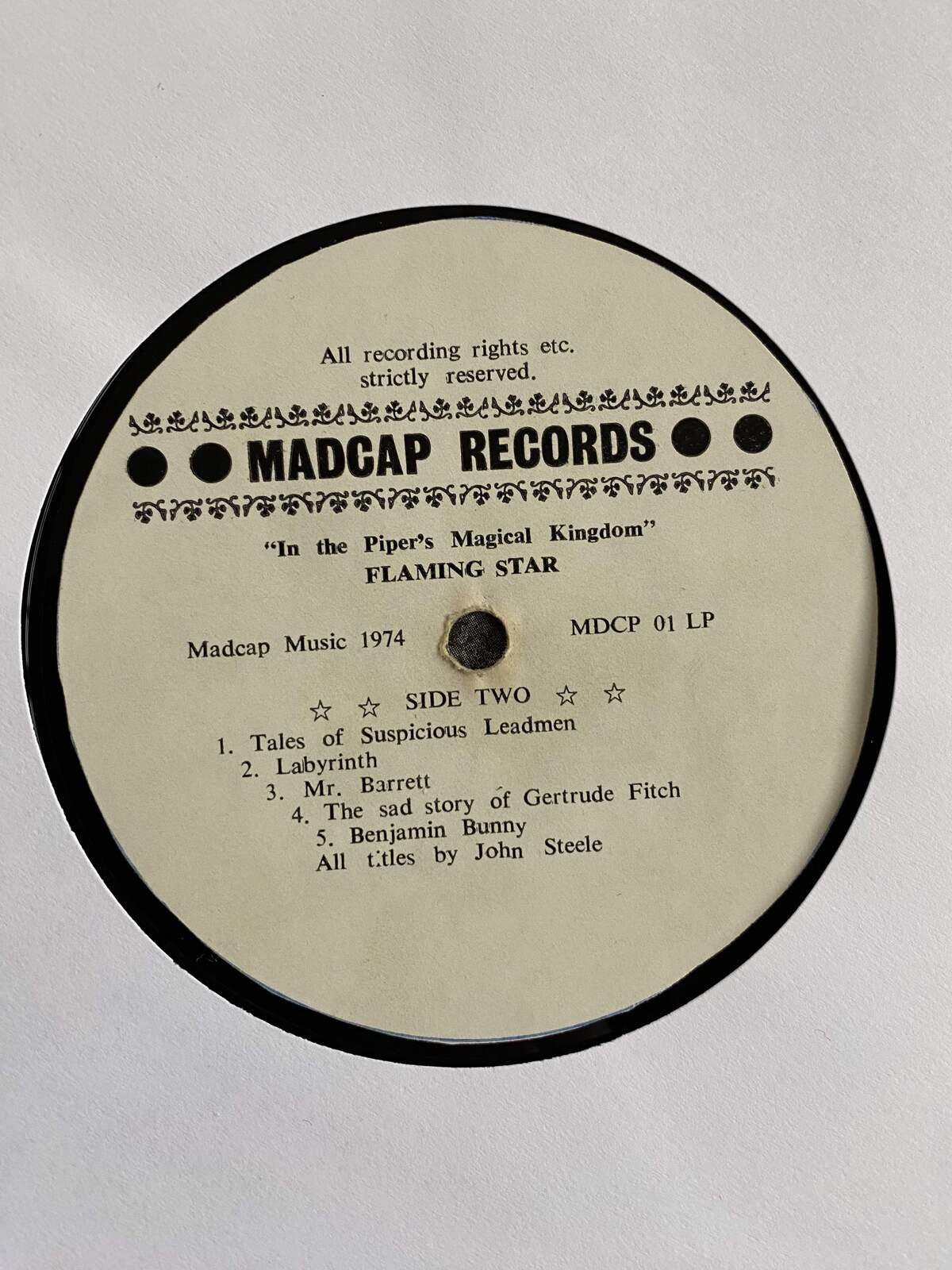
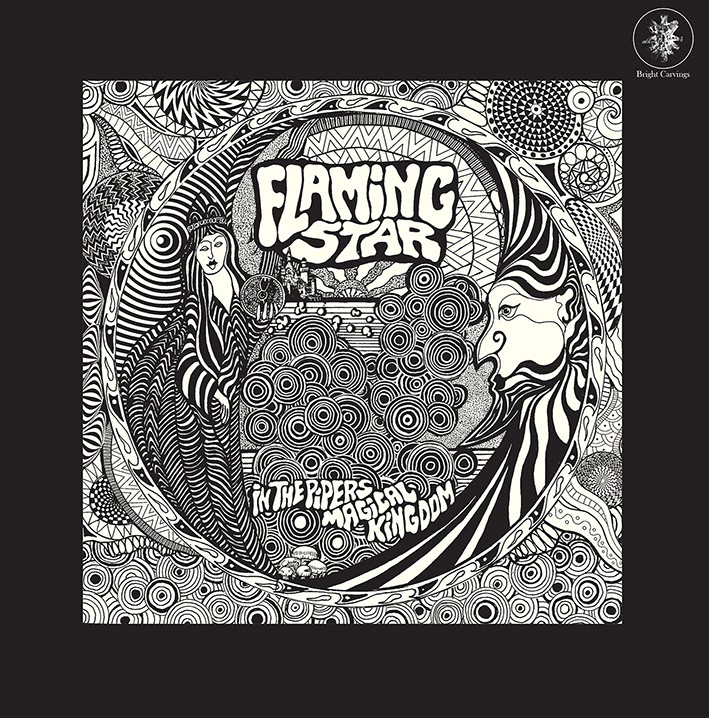
This official release uses John Steele’s original proposed LP artwork for the never-released 12-inch vinyl version and has been rescued from the better of only two acetates made at the time. Half a century on, ‘In the Piper’s Magical Kingdom’ still feels handmade, peculiar and oddly touching: a small message from the Syd Barrett underground, carried by people who cared enough to keep the flame going.
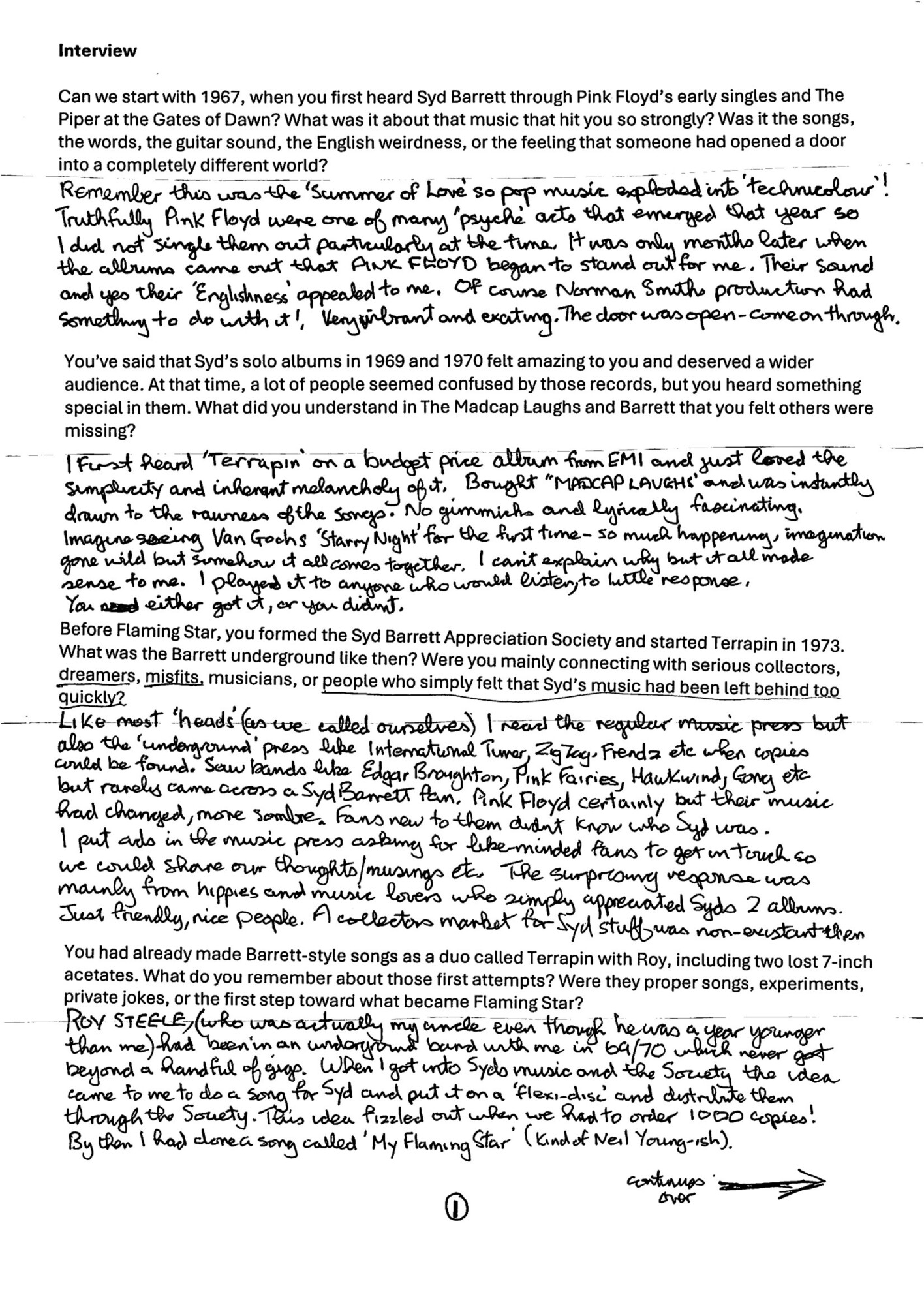
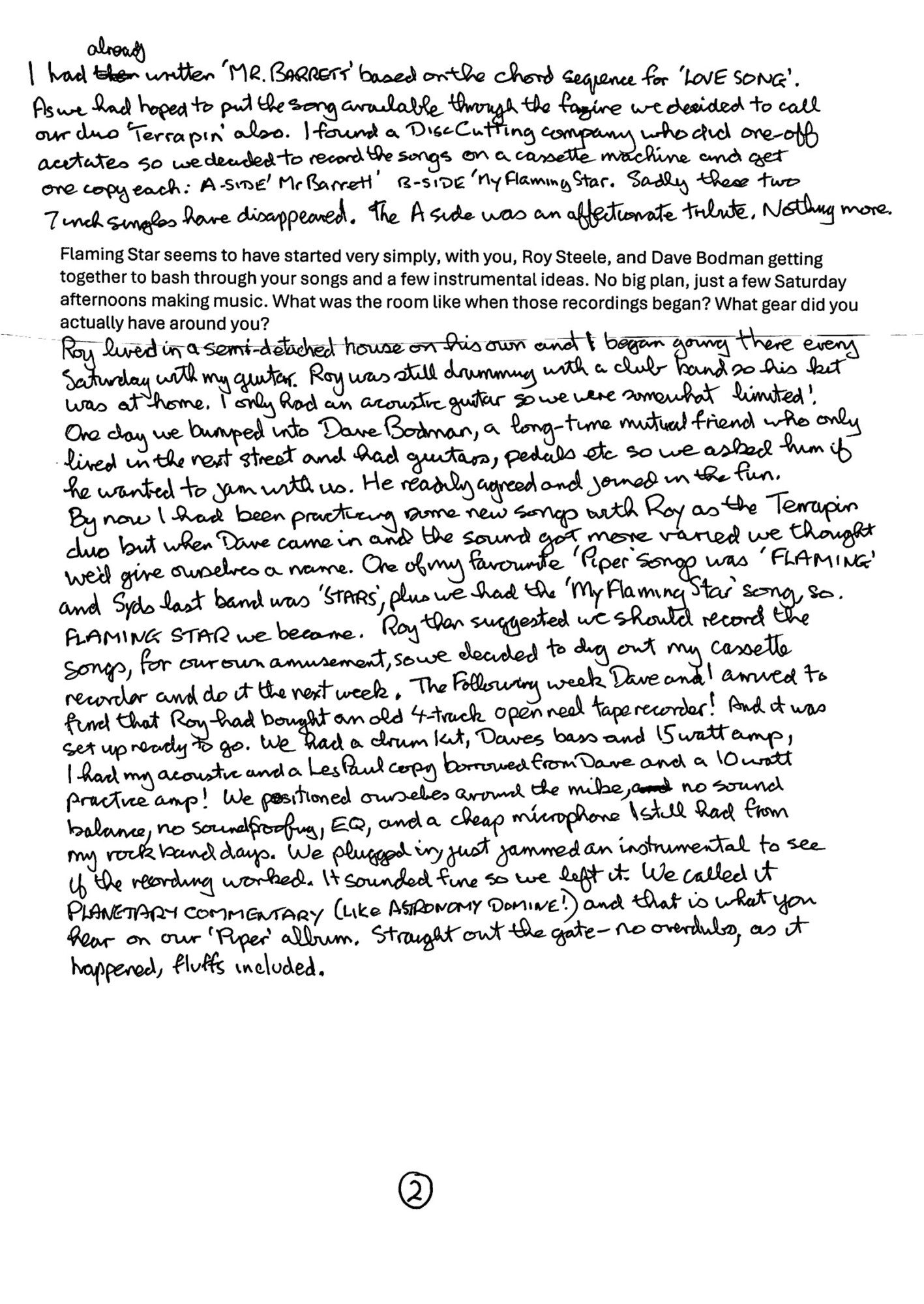
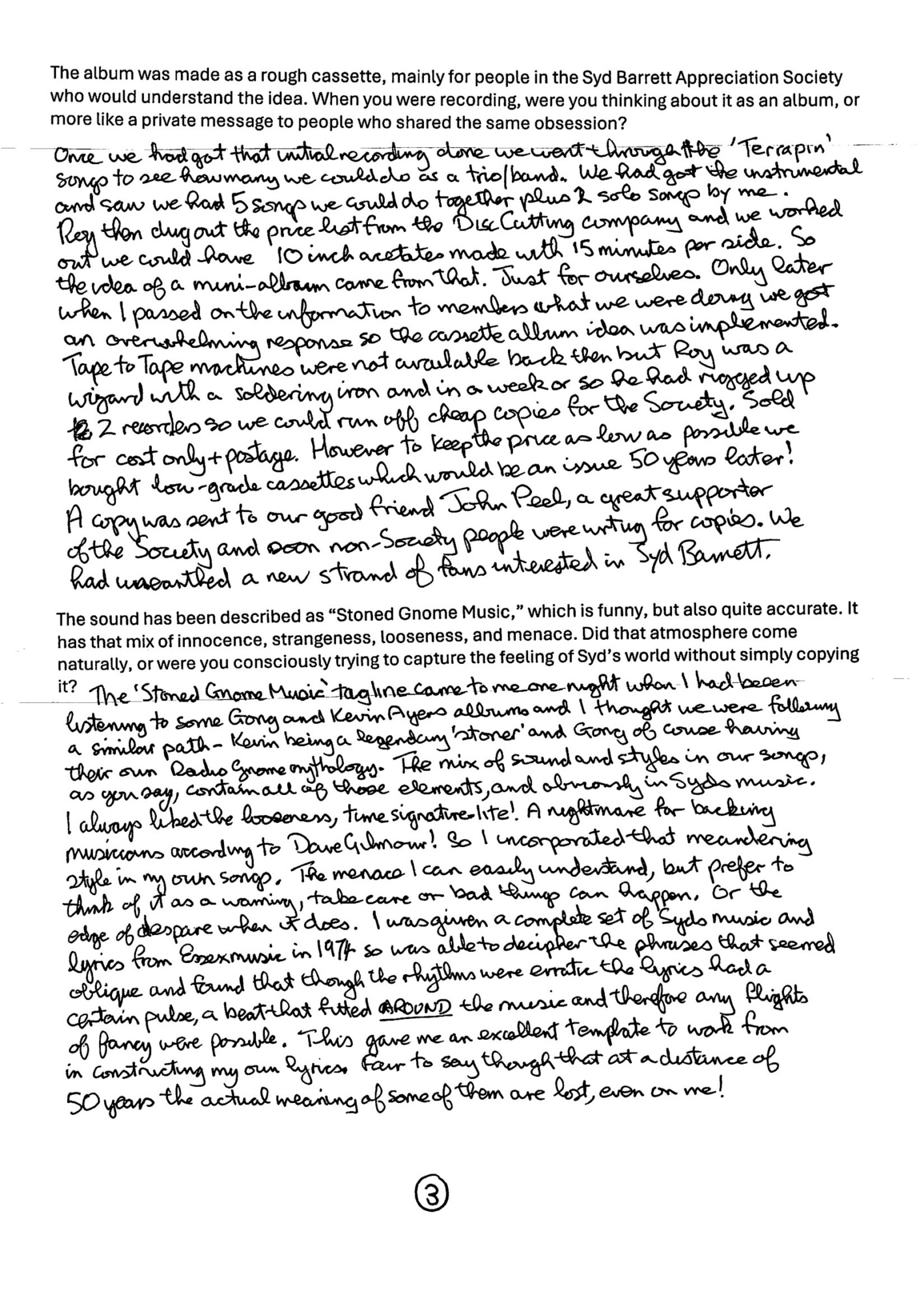
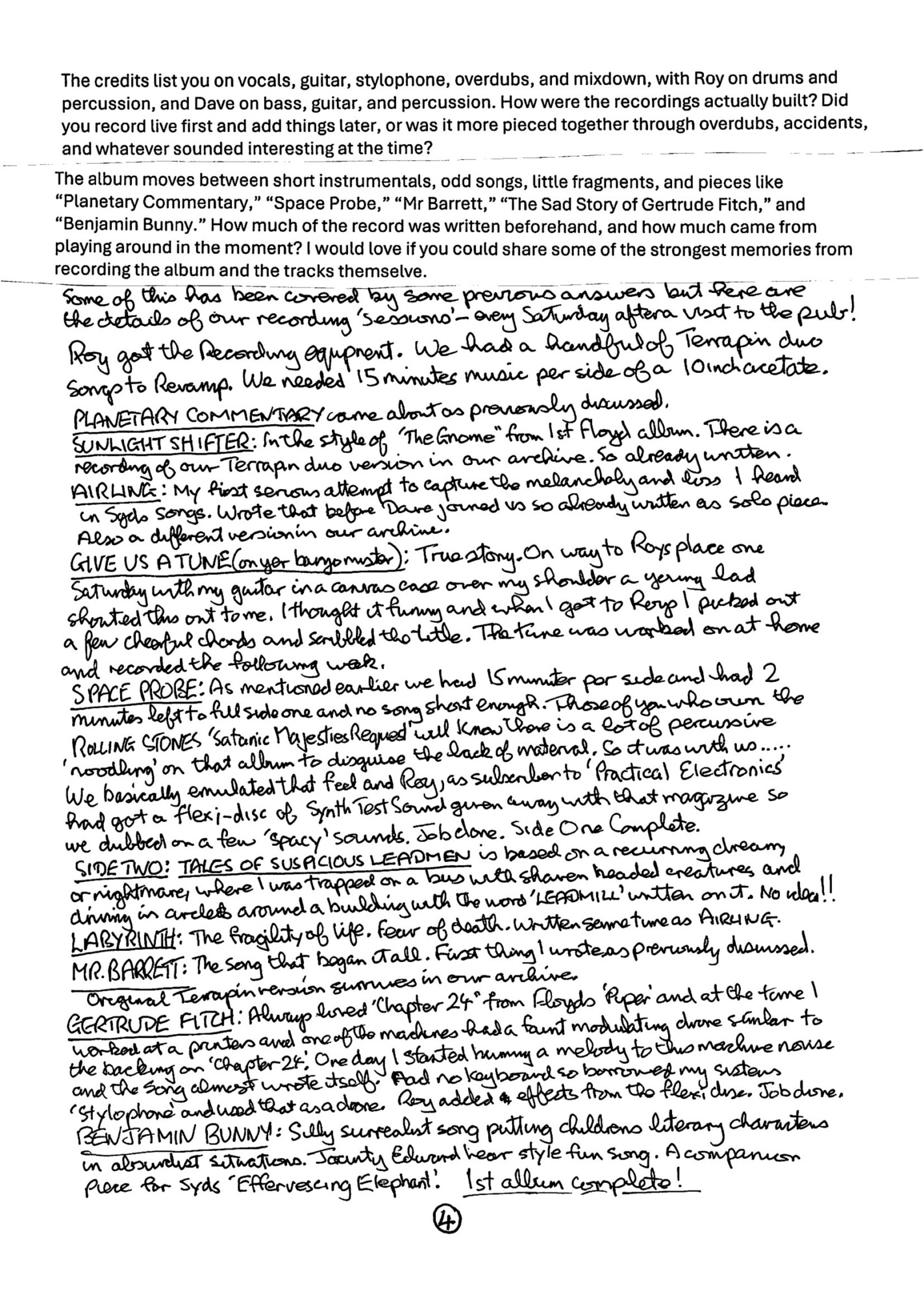
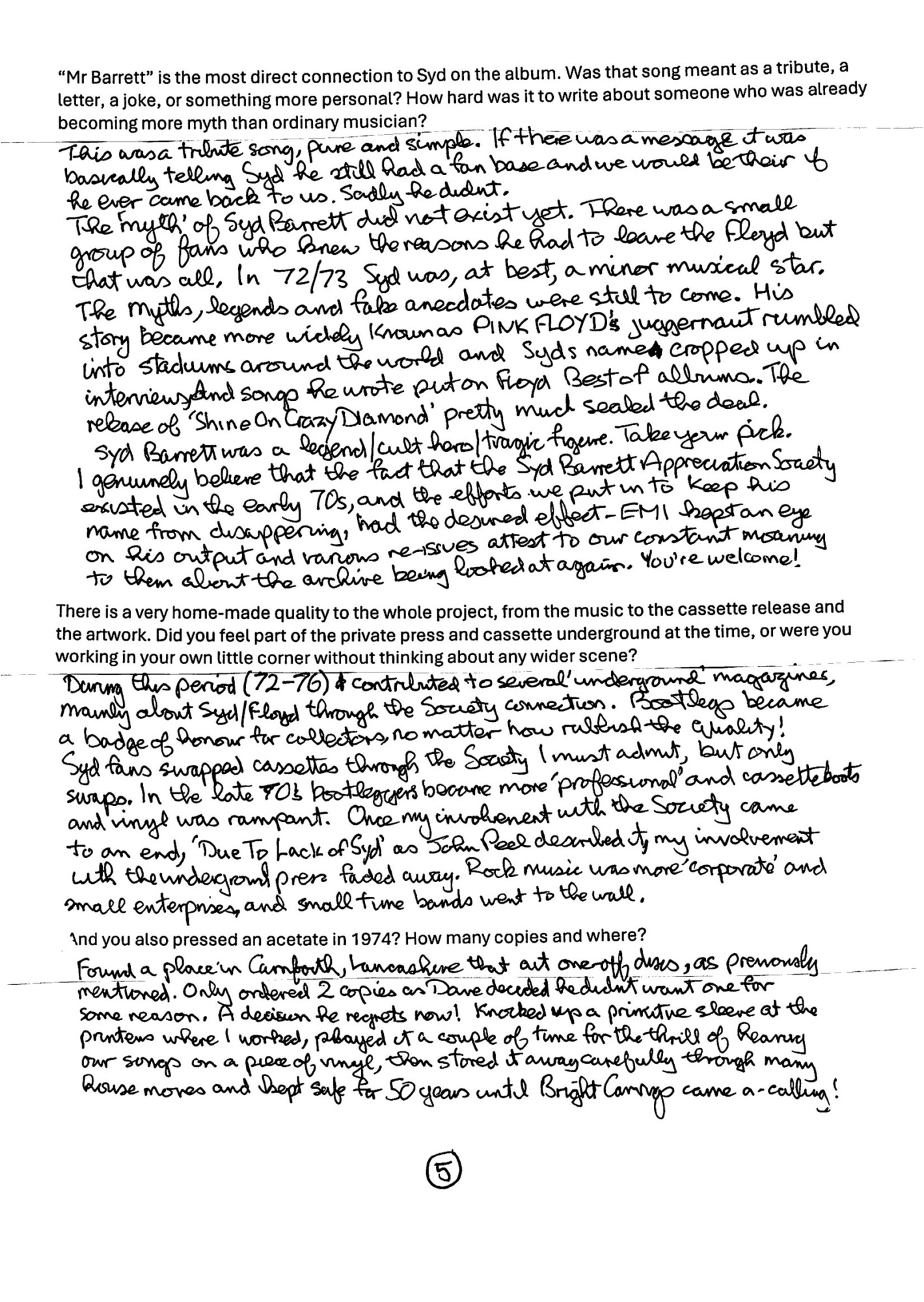
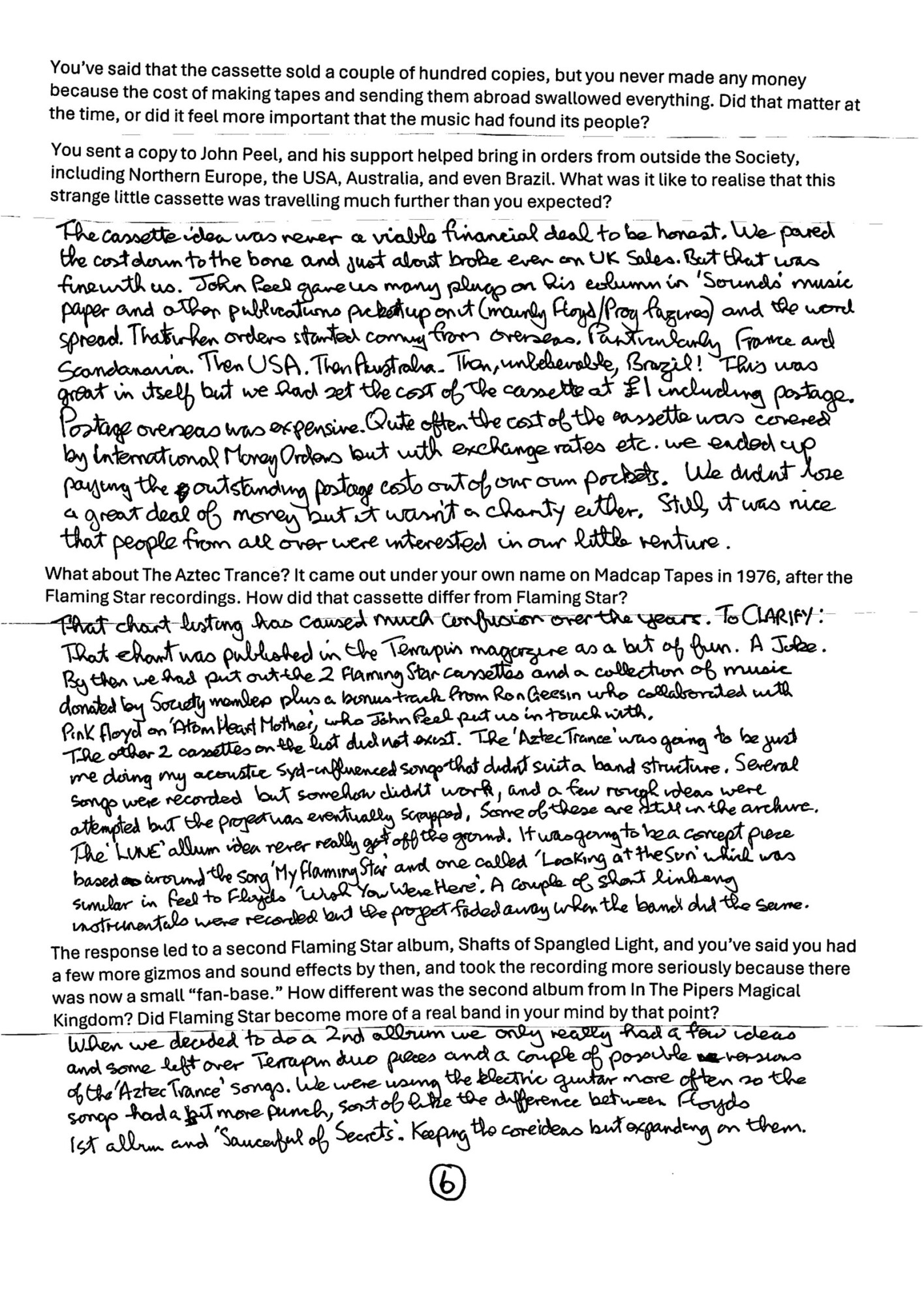
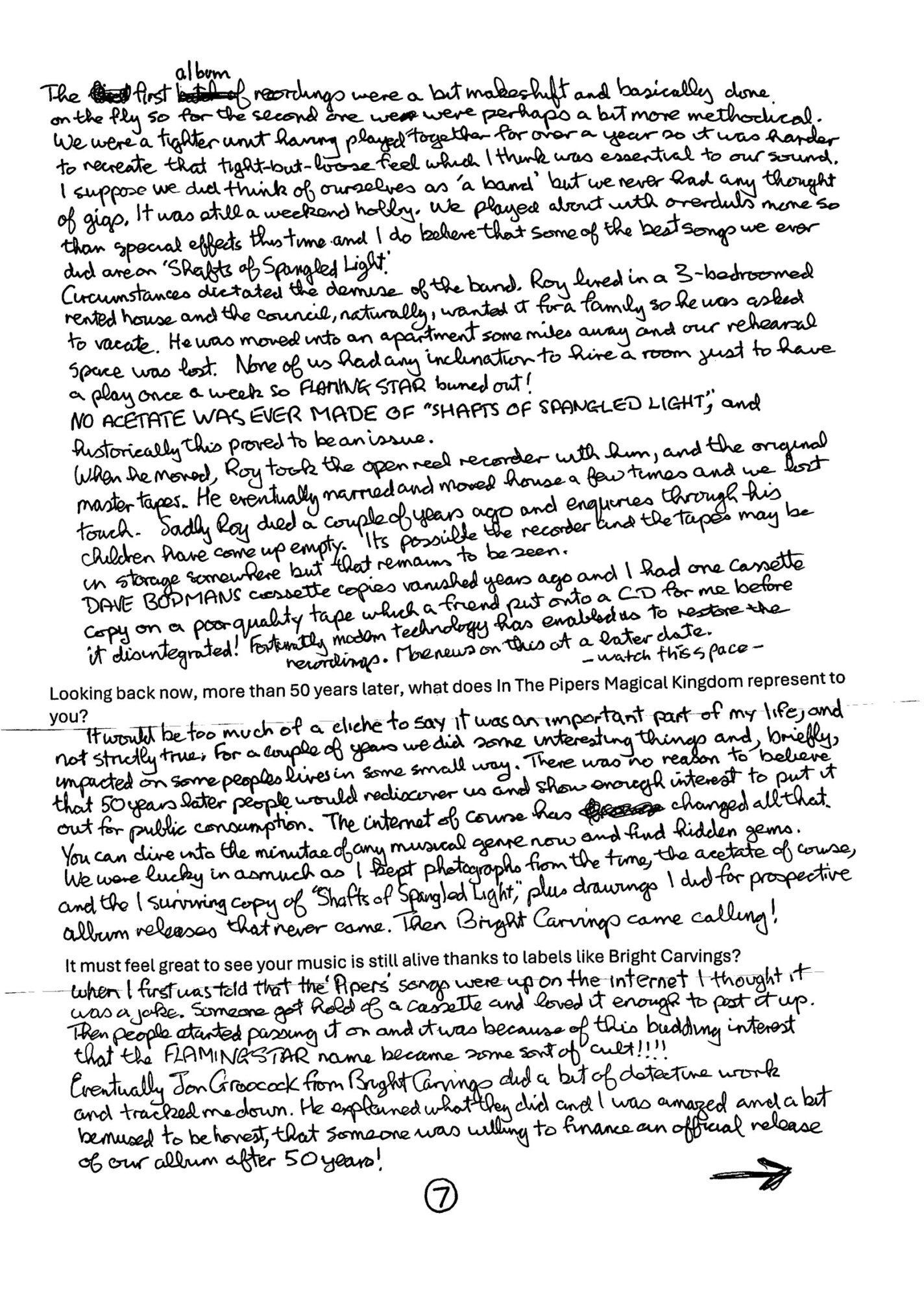
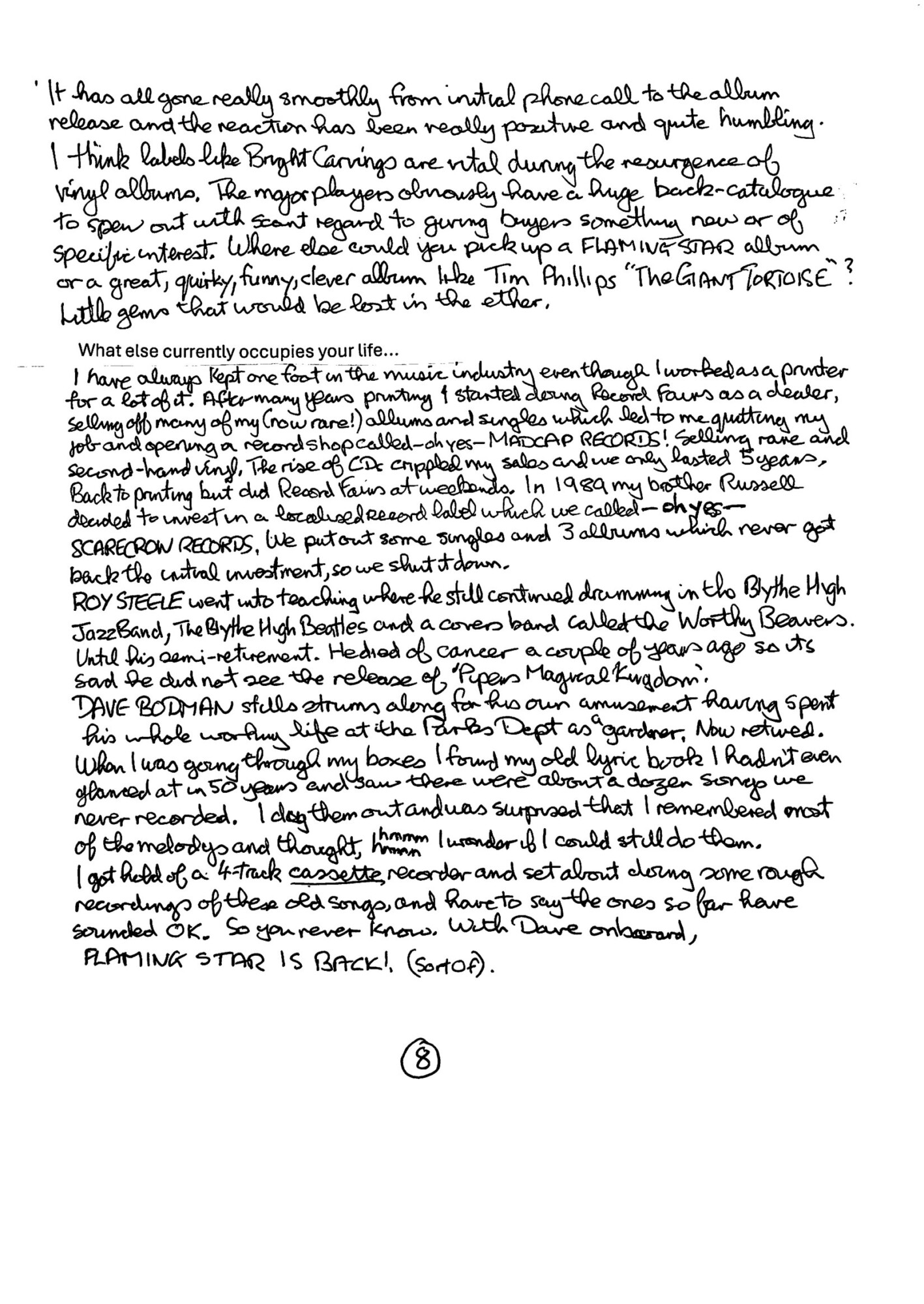
Below this article you will find a facsimile of John’s original handwritten responses. As John does not use the internet, this interview was conducted entirely by letter, making its completion something of a minor miracle. Special thanks are due to Jon for helping to make it possible.
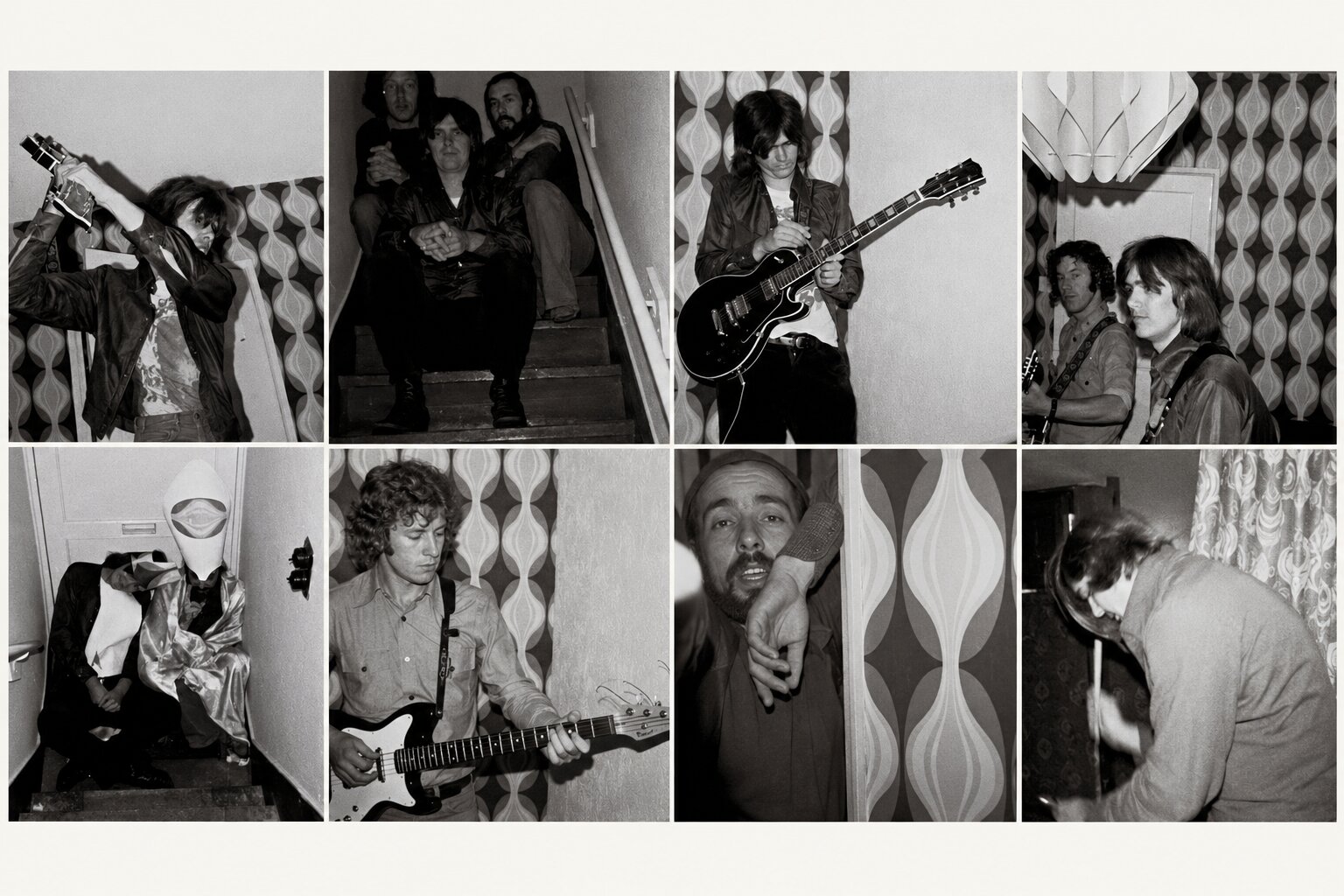
“You either got it, or you didn’t.”
Can we start with 1967, when you first heard Syd Barrett through Pink Floyd’s early singles and ‘The Piper at the Gates of Dawn’? What was it about that music that hit you so strongly? Was it the songs, the words, the guitar sound, the English weirdness, or the feeling that someone had opened a door into a completely different world?
John Steele: Remember, this was the “Summer of Love”, so pop music exploded into “Technicolour”! Truthfully, Pink Floyd were one of many “psych” acts that emerged that year, so I did not single them out particularly at the time. It was only months later, when the albums came out, that PINK FLOYD began to stand out for me. Their sound and, yes, their “Englishness” appealed to me. Of course, Norman Smith’s production had something to do with it! Very vibrant and exciting. The door was open – come on through.
You’ve said that Syd’s solo albums in 1969 and 1970 felt amazing to you and deserved a wider audience. At that time, a lot of people seemed confused by those records, but you heard something special in them. What did you understand in ‘The Madcap Laughs’ and ‘Barrett’ that you felt others were missing?
I first heard ‘Terrapin’ on a budget-price album from EMI and just loved the simplicity and inherent melancholy of it. Bought ‘The Madcap Laughs’ and was instantly drawn to the nuances of the songs. No gimmicks, and lyrically fascinating. Imagine seeing Van Gogh’s ‘Starry Night’ for the first time – so much happening, imagination gone wild, but somehow it all comes together. I can’t explain why but it all made sense to me. I played it to anyone who would listen, to little response. You either got it, or you didn’t.
Before Flaming Star, you formed the Syd Barrett Appreciation Society and started Terrapin in 1973. What was the Barrett underground like then? Were you mainly connecting with serious collectors, dreamers, misfits, musicians, or people who simply felt that Syd’s music had been left behind too quickly?
Like most “heads” — as we called ourselves — I read the regular music press but also the “underground” press like International Times, ZigZag, Frendz etc. when copies could be found. Saw bands like Edgar Broughton, Pink Fairies, Hawkwind, Gong etc., but rarely came across a Syd Barrett fan. Pink Floyd certainly, but their music had changed, more sombre. Fans new to them didn’t know who Syd was. I put ads in the music press asking for like-minded fans to get in touch so we could share our thoughts/musings etc. The surprising response was mainly from hippies and music lovers who simply appreciated Syd’s two albums. Just friendly, nice people. A collector’s market for Syd stuff was non-existent then.
You had already made Barrett-style songs as a duo called Terrapin with Roy, including two lost 7-inch acetates. What do you remember about those first attempts? Were they proper songs, experiments, private jokes, or the first step toward what became Flaming Star?
Roy Steele, who was actually my uncle even though he was a year younger than me, had been in an underground band with me in 69/70 which never got beyond a handful of gigs. When I got into Syd’s music and the Society, the idea came to me to do a song for Syd and put it on a “flexi-disc” and distribute them through the Society. This idea fizzled out when we had to order 1,000 copies! By then I had done a song called ‘My Flaming Star’ — kind of Neil Young-ish.
I had already written ‘Mr Barrett’ based on the chord sequence for ‘Love Song’. As we had hoped to put the song available through the fanzine, we decided to call our duo ‘Terrapin’ also. I found a disc-cutting company who did one-off acetates, so we decided to record the songs on a cassette machine and get one copy each: A-side ‘Mr Barrett’, B-side ‘My Flaming Star’. Sadly, these two 7-inch singles have disappeared. The A-side was an affectionate tribute. Nothing more.
Flaming Star seems to have started very simply, with you, Roy Steele, and Dave Bodman getting together to bash through your songs and a few instrumental ideas.
Roy lived in a semi-detached house on his own and I began going there every Saturday with my guitar. Roy was still drumming with a club band, so his kit was at home. I only had an acoustic guitar, so we were somewhat limited! One day we bumped into Dave Bodman, a long-time mutual friend who only lived in the next street and had guitar, pedals etc., so we asked him if he wanted to jam with us. He readily agreed and joined in the fun. By now I had been practising some new songs with Roy as the Terrapin duo, but when Dave came in and the sound got more varied, we thought we’d give ourselves a name. One of my favourite ‘Piper’ songs was ‘Flaming’ and Syd’s last band was ‘Stars’, plus we had the ‘My Flaming Star’ song, so FLAMING STAR we became. Roy then suggested we should record the songs, for our own amusement, so we decided to dig out my cassette recorder and do it the next week. The following week, Dave and I arrived to find that Roy had bought an old 4-track open-reel tape recorder! And it was set up ready to go. We had a drum kit, Dave’s bass and 15-watt amp, I had my acoustic and a Les Paul copy borrowed from Dave, and a 10-watt practice amp! We positioned ourselves around the mic: no sound balance, no soundproofing, no EQ, and a cheap microphone I still had from my rock band days. We plugged in and just jammed an instrumental to see if the recording worked. It sounded fine, so we left it. We called it ‘Planetary Commentary’ — like ‘Astronomy Domine’! — and that is what you hear on our ‘Piper’ album. Straight out the gate – no overdubs, as it happened, fluffs included.
The album was made as a rough cassette, mainly for people in the Syd Barrett Appreciation Society who would understand the idea. When you were recording, were you thinking about it as an album, or more like a private message to people who shared the same obsession?
Once we had got that initial recording done, we went through the ‘Terrapin’ songs to see how many we could do as a trio/band. We had got the instrumental and saw we had five songs we could do together, plus two solo songs by me. Roy then dug out the price list from the disc-cutting company and we worked out we could have 10-inch acetates made with 15 minutes per side. So the idea of a mini-album came from that. Just for ourselves. Only later, when I passed on the information to members about what we were doing, did we get an overwhelming response, so the cassette album idea was implemented. Tape-to-tape machines were not available back then, but Roy was a wizard with a soldering iron and in a week or so he had rigged up two recorders so we could run off cheap copies for the Society. Sold for cost only + postage. However, to keep the price as low as possible, we bought low-grade cassettes, which would be an issue 50 years later! A copy was sent to our good friend John Peel, a great supporter of the Society, and soon non-Society people were writing for copies. We had unearthed a new strand of fans interested in Syd Barrett.
The sound has been described as “Stoned Gnome Music,” it has that mix of innocence, strangeness, looseness, and menace. Did that atmosphere come naturally, or were you consciously trying to capture the feeling of Syd’s world without simply copying it?
The “Stoned Gnome Music” tagline came to me one night when I had been listening to some Gong and Kevin Ayers albums, and I thought we were following a similar path – Kevin being a legendary “stoner” and Gong, of course, having their own ‘Radio Gnome’ mythology. The mix of sound and styles in our songs, as you say, contained all of those elements, and obviously in Syd’s music. I always liked the looseness, time-signature-lite! A nightmare for backing musicians, according to Dave Gilmour! So I incorporated that meandering style in my own songs. The menace I can easily understand, but prefer to think of it as a warning: take care or bad things can happen, or the edge of despair when it does. I was given a complete set of Syd’s music and lyrics from Essex Music in 1974, so was able to decipher the phrases that seemed oblique, and found that though the rhythms were erratic, the lyrics had a certain pulse, a heartbeat that fitted around the music, and therefore any flights of fancy were possible. This gave me an excellent template to work from in constructing my own lyrics. Fair to say, though, that at a distance of 50 years, the actual meaning of some of them is lost, even on me!
The credits list you on vocals, guitar, stylophone, overdubs, and mixdown, with Roy on drums and percussion, and Dave on bass, guitar, and percussion. The album moves between short instrumentals, odd songs, little fragments, and pieces like ‘Planetary Commentary,’ ‘Space Probe,’ ‘Mr Barrett,’ ‘The Sad Story of Gertrude Fitch,’ and ‘Benjamin Bunny.’ How much of the record was written beforehand, and how much came from playing around in the moment? I would love if you could share some of the strongest memories from recording the album and the tracks themselves.
Some of this has been covered by some previous answers, but here are the details of our recording “sessions” – every Saturday after a visit to the pub!
Roy got the recording equipment. We had a handful of Terrapin duo songs to revamp. We needed 15 minutes of music per side of a 10-inch acetate.
‘Planetary Commentary’ came about as previously discussed.
‘Sunlight Shifter’: In the style of ‘The Gnome’ from the first Floyd album. There is a recording of our Terrapin duo version in our archive. So already written.
‘Airline’: My first serious attempt to capture the melancholy and loss I heard in Syd’s songs. Wrote that before Dave joined us, so already written as a solo piece. Also a different version in our archive.
‘Give Us a Tune (on yer bumper)’: True story. On the way to Roy’s place one Saturday, with my guitar in a canvas case over my shoulder, a young lad shouted this out to me. I thought it funny and when I got to Roy’s I picked out a few cheerful chords and scribbled the title. The tune was worked on at home and recorded the following week.
‘Space Probe’: As mentioned earlier, we had 15 minutes per side and had two minutes left to fill side one and no song short enough. Those of you who know The Rolling Stones’ ‘Satanic Majesties Request’ will know there is a lot of percussive ‘noodling’ on that album to disguise the lack of material. So it was with us…! We basically emulated that feel and Roy, as a subscriber to Practical Electronics, had got a flexi-disc of synth test sound given away with that magazine, so we dubbed on a few ‘spacey’ sounds. Job done. Side one complete.
Side Two: ‘Tales of Suspicious Leadmen’ is based on a recurring dream, or nightmare, where I was trapped on a bus with shaven-headed creatures and driving in circles around a building with the word ‘HEGOMIL’ written on it. No idea!!
‘Labyrinth’: The fragility of life. Fear of death. Written at the same time as ‘Airline’.
‘Mr Barrett’: The song that began it all. First thing I wrote, as previously discussed. Original Terrapin version survives in our archive.
‘Gertrude Fitch’: Always loved ‘Chapter 24’ from Floyd’s Piper, and at the time I worked at a printer, and one of the machines had a faint modulating drone similar to the backing on ‘Chapter 24’. One day I started humming a melody to this machine noise and the song almost wrote itself. Had no keyboard, so borrowed my sister’s stylophone and used that as a drone. Roy added effects from the flexi-disc. Job done.
‘Benjamin Bunny’: Silly surrealist song putting children’s literary characters in absurdist situations. Jaunty, Edward Lear-style fun song. A companion piece for Syd’s ‘Effervescing Elephant’. First album complete!
‘Mr Barrett’ is the most direct connection to Syd on the album. How hard was it to write about someone who was already becoming more myth than ordinary musician?
This was a tribute song, pure and simple. If there was a message, it was basically telling Syd he still had a fan base and we would be “there” if he ever came back to us. Sadly, he didn’t.
The myth of Syd Barrett did not exist yet. There was a small group of fans who knew the reasons he had to leave the Floyd, but that was all. In 72/73 Syd was, at best, a minor musical star. The myths, legends and false anecdotes were still to come. His story became more widely known as PINK FLOYD’s juggernaut rumbled into stadiums around the world and Syd’s name cropped up in interviews and songs he wrote were put on Floyd best-of albums. The release of ‘Shine On You Crazy Diamond’ pretty much sealed the deal.
Syd Barrett was a legend/cult hero/tragic figure. Take your pick.
I genuinely believe that the fact that the Syd Barrett Appreciation Society existed in the early 70s, and the efforts we put in to keep his name from disappearing, had the desired effect – EMI kept an eye on his output and various reissues attest to our constant moaning to them about the archive being looked at again. You’re welcome!
There is a very home-made quality to the whole project, from the music to the cassette release and the artwork. Did you feel part of the private press and cassette underground at the time, or were you working in your own little corner without thinking about any wider scene?
During this period, 72-76, I contributed to several “underground” magazines, mainly about Syd/Floyd through the Society connection. Bootlegs became a badge of honour for collectors, no matter how rubbish the quality!
Syd fans swapped cassettes through the Society, I must admit, but only swaps. In the late 70s, bootleggers became more ‘professional’ and cassette bootlegs and vinyl were rampant. Once my involvement with the Society came to an end, due to ‘lack of Syd’, as John Peel called it, my involvement with the underground press faded away. Rock music was more ‘corporate’ and small enterprises, and small-time bands, went to the wall.
And you also pressed an acetate in 1974? How many copies and where?
Found a place in Carnforth, Lancashire that cut one-off discs, as previously mentioned. Only ordered two copies, as Dave decided he didn’t want one for some reason. A decision he regrets now! Knocked up a primitive sleeve at the printers where I worked, played it a couple of times for the thrill of hearing our songs on a piece of vinyl, then stored it away carefully through many house moves and kept it safe for 50 years until Bright Carvings came a-calling!
You’ve said that the cassette sold a couple of hundred copies, but you never made any money because the cost of making tapes and sending them abroad swallowed everything. You also sent a copy to John Peel, and his support helped bring in orders from outside the Society, including Northern Europe, the USA, Australia, and even Brazil.
The cassette idea was never a viable financial deal, to be honest. We pared the cost down to the bone and just about broke even on UK sales. But that was fine with us. John Peel gave us many plugs in his column in Sounds music paper and other publications picked up on it, mainly Floyd/prog fanzines, and the word spread. That’s when orders started coming from overseas. Particularly France and Scandinavia. Then USA. Then Australia. Then, unbelievable, Brazil! This was great in itself, but we had set the cost of the cassette at £1, including postage. Postage overseas was expensive. Quite often, the cost of the cassette was covered by International Money Order, but with exchange rates etc., we ended up paying the outstanding postage costs out of our own pockets. We didn’t lose a great deal of money, but it wasn’t a charity either. Still, it was nice that people from all over were interested in our little venture.
What about ‘The Aztec Trance’? It came out under your own name on Madcap Tapes in 1976, after the Flaming Star recordings. How did that cassette differ from Flaming Star?
That chart listing has caused much confusion over the years. To clarify: That chart was published in the Terrapin magazine as a bit of fun. A joke. By then we had put out the two Flaming Star cassettes and a collection of music donated by Society members, plus a bonus track from Ron Geesin, who collaborated with Pink Floyd on ‘Atom Heart Mother’, who John Peel put us in touch with. The other two cassettes on the list did not exist. The ‘Aztec Trance’ was going to be just me doing my acoustic Syd-influenced songs that didn’t suit a band structure. Several songs were recorded but somehow didn’t work, and a few rough ideas were attempted, but the project was eventually scrapped. Some of those are still in the archive. The ‘Lune’ album idea never really got off the ground. It was going to be a concept piece based around the song ‘My Flaming Star’ and one called ‘Looking at the Sun’, which was similar in feel to Floyd’s ‘Julia Dream’ or ‘See Emily Play’. A couple of short linking instrumentals were recorded, but the project faded away when the band did the same.
The response led to a second Flaming Star album, ‘Shafts of Spangled Light’, and you’ve said you had a few more gizmos and sound effects by then, and took the recording more seriously because there was now a small “fan-base.” How different was the second album from ‘In The Pipers Magical Kingdom’? Did Flaming Star become more of a real band in your mind by that point?
When we decided to do a second album, we only really had a few ideas and some leftover Terrapin duo pieces and a couple of possible versions of the ‘Aztec Trance’ songs. We were using the electric guitar more often, so the songs had a bit more punch, sort of like the difference between Floyd’s first album and ‘A Saucerful of Secrets’. Keeping the core ideas but expanding on them.
The first album recordings were a bit makeshift and basically done on the fly, so for the second one we were perhaps a bit more methodical. We were a tighter unit, having played together for over a year, so it was easier to recreate that tight-but-loose feel which I think was essential to our sound. I suppose we did think of ourselves as ‘a band’, but we never had any thought of gigs. It was still a weekend hobby. We played about with overdubs more than special effects this time, and I do believe that some of the best songs we ever did are on ‘Shafts of Spangled Light’.
Circumstances dictated the demise of the band. Roy lived in a 3-bedroomed rented house and the council, naturally, wanted it for a family, so he was asked to vacate. He was moved into an apartment some miles away and our rehearsal space was lost. None of us had any inclination to hire a room just to have a play once a week, so FLAMING STAR burned out!
NO ACETATE WAS EVER MADE OF ‘SHAFTS OF SPANGLED LIGHT’, and historically this proved to be an issue.
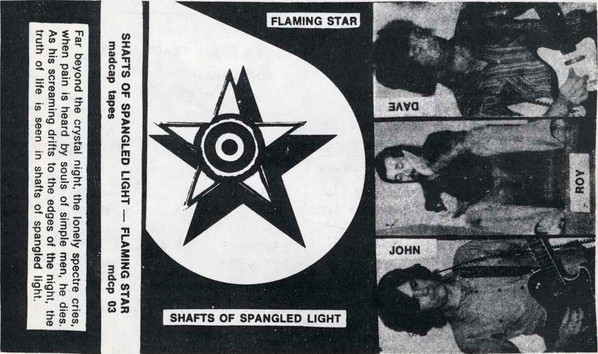
When he moved, Roy took the open-reel recorder with him, and the original master tapes. He eventually married and moved house a few times and we lost touch. Sadly, Roy died a couple of years ago and enquiries through his children have come up empty. It’s possible the recorder and the tapes may be in storage somewhere, but that remains to be seen.
Dave Bodman’s cassette copies vanished years ago and I had one cassette copy on a poor-quality tape which a friend put onto a CD for me before it disintegrated! Fortunately, modern technology has enabled us to restore the recordings. More news on this at a later date. Watch this space.
Looking back now, more than 50 years later, what does ‘In The Pipers Magical Kingdom’ represent to you?
It would be too much of a cliché to say it was an important part of my life, and not strictly true. True, for a couple of years we did some interesting things and, briefly, impacted on some people’s lives in some small way. There was no reason to believe that 50 years later, people would rediscover us and show enough interest to put it out for public consumption. The internet, of course, has changed all that. You can dive into the minutiae of any musical genre now and find hidden gems. We were lucky inasmuch as I kept photographs from the time, the acetate of course, and the one surviving copy of ‘Shafts of Spangled Light’, plus drawings I did for prospective album releases that never came. Then Bright Carvings came calling!
It must feel great to see your music is still alive thanks to labels like Bright Carvings?
When I was first told that the ‘Piper’s’ songs were up on the internet, I thought it was a joke. Someone got hold of a cassette and loved it enough to post it up. Then people started passing it on and it was because of this building interest that the FLAMING STAR name became some sort of ‘cult’!!!
Eventually, Jon Groocock from Bright Carvings did a bit of detective work and tracked me down. He explained what they did and I was amazed, and a bit bemused to be honest, that someone was willing to finance an official release of our album after 50 years!
“It has all gone really smoothly from the initial phone call to the album release and the reaction has been really positive and quite humbling.”
I think labels like Bright Carvings are vital during the resurgence of vinyl albums. The major players obviously have a huge back catalogue to spew out with scant regard to giving buyers something new or of specific interest. Where else could you pick up a FLAMING STAR album or a great quirky, funny/clever album like Tim Phillips’ ‘The Giant Tortoise’? Little gems that would be lost in the ether.
What else currently occupies your life…
I have always kept one foot in the music industry even though I worked as a printer for a lot of it. After many years printing, I started doing record fairs as a dealer, selling off many of my now rare albums and singles, which led to me quitting my job and opening a record shop called – oh yes – MADCAP RECORDS! Selling rare and second-hand vinyl. The rise of CDs crippled my sales and we only lasted five years.
Back to printing, but did record fairs at weekends. In 1989, my brother Russell decided to invest in a record label which we called – oh yes – SCARECROW RECORDS. We put out some singles and three albums which never got back the initial investment, so we shut it down.
Roy Steele went into teaching, where he still continued drumming in the Blythe High Jazz Band, The Blythe High Beatles and a covers band called the Worthy Beavers. Until semi-retirement. He died of cancer a couple of years ago, so it’s sad he did not see the release of ‘Pipers Magical Kingdom’.
Dave Bodman still strums along for his own amusement, having spent his whole working life at the Parks Dept. as a gardener. Now retired.
When I was going through my boxes, I found my old lyric book I hadn’t even glanced at in 50 years and saw there were almost a dozen songs we never recorded. I dug them out and was surprised that I remembered most of the melodies and thought, hmm, I wonder if I could still do them.
I got hold of a 4-track cassette recorder and set about doing some rough recordings of these old songs, and have to say the ones so far have sounded OK. So you never know. With Dave on board, FLAMING STAR IS BACK! (sort of).
Klemen Breznikar
Bright Carvings Official Website / Facebook / Instagram / YouTube