

Bob Bert Interview: From Sonic Youth and Pussy Galore to His First Solo Album ‘Beach Bongo Bloodbath’
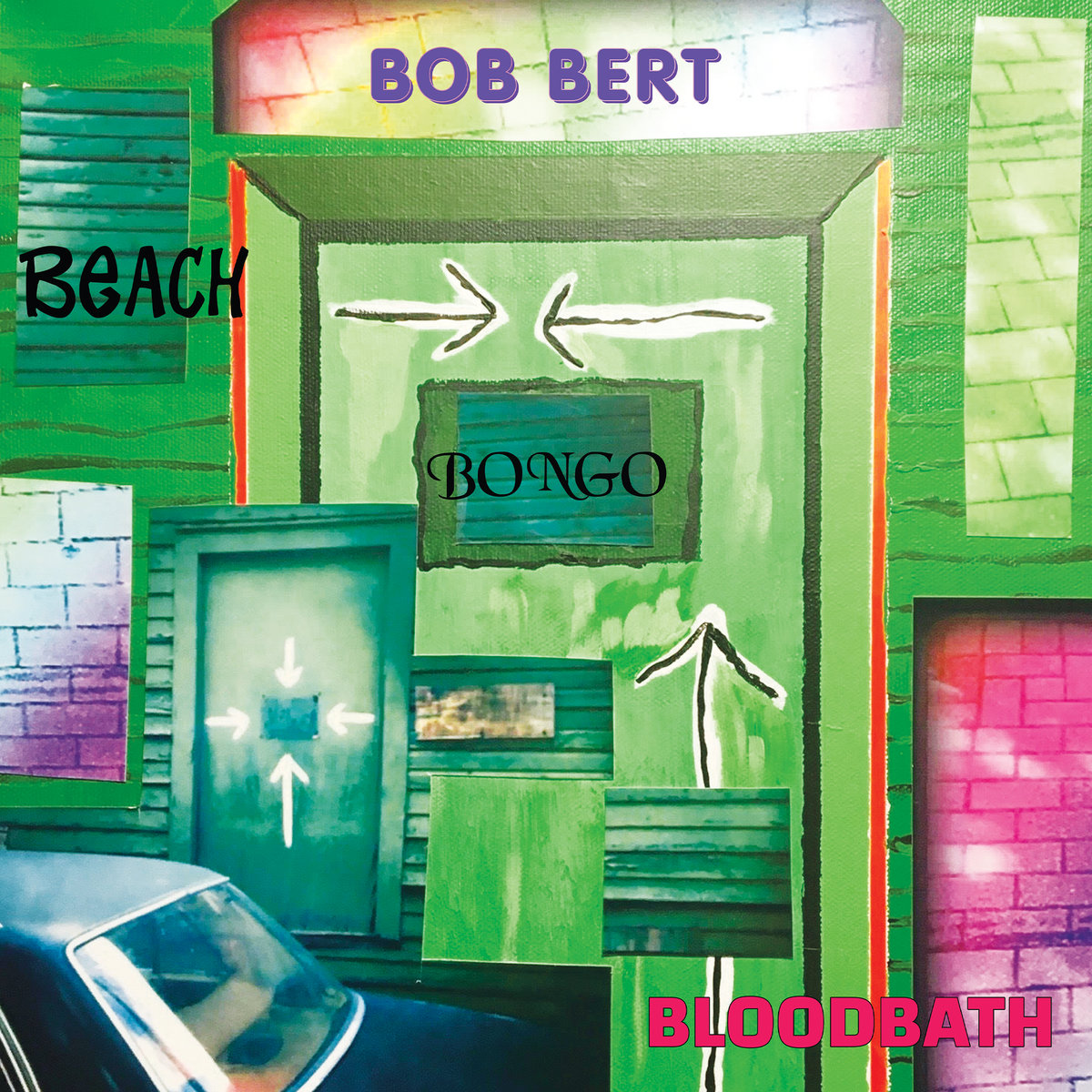
Bob Bert, the drummer who helped put the voodoo thud into early Sonic Youth before battering car parts with Pussy Galore, finally has a solo album out today with ‘Beach Bongo Bloodbath’ on Bar/None Records.
For anyone who has followed the American underground from the early 80s onwards, Bert has always been there somewhere, slightly off to the side, doing the essential dirty work. He played on Sonic Youth’s ‘Bad Moon Rising’, the first full album he appeared on with the band, and later brought a junkyard attack to Pussy Galore, where a gas tank could count as percussion. After that came Bewitched, the Chrome Cranks, Knoxville Girls, Five Dollar Priest, Lydia Lunch Retrovirus and Jon Spencer & the HITmakers. A neat CV it isn’t. A great one, absolutely.
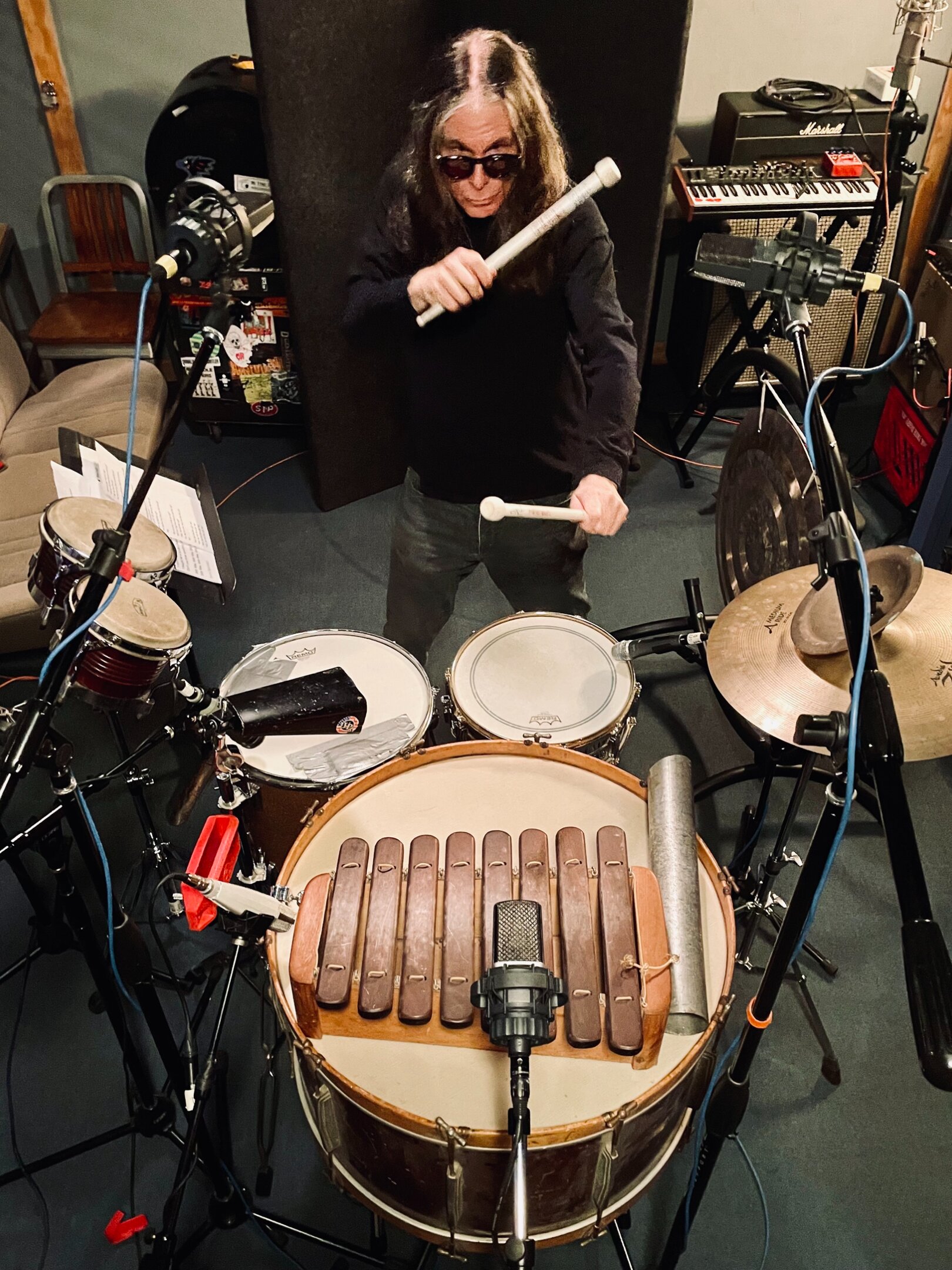
‘Beach Bongo Bloodbath’ arrives after all that, though Bert says there was never much of a masterplan. He had been playing solo shows with a strange percussion setup, then began recording casually at Deepsea Studios in Hoboken, a space he shares with Mark C of Live Skull. “This slowly evolved into ‘Beach Bongo Bloodbath’,” he says. The record keeps that loose, slightly homemade charge. There are no guitars or bass, quite a statement from a man best known for noisy guitar bands. Instead, it runs on bongos, junk percussion, keyboards, theremin and instinct.
The covers are handled with the same bloody-minded logic. “Nothing worse than a cover that sounds like the original,” Bert says of his guitarless ‘Mississippi Queen’. Elsewhere he pulls in Pussy Galore’s ‘Fuck You, Man’, with Julia Cafritz adding her voice by phone.
Before the drums took over, Bert was a visual artist and silkscreen printer who worked on Warhol prints while already tangled up in Sonic Youth and Pussy Galore. ‘Beach Bongo Bloodbath’ feels like a funny, scrappy, art-damaged scrapbook from someone who has kept his ears open. As Bert puts it, some early listeners had a one-word review: “Fun.” That’ll do nicely.
“Nothing worse than a cover that sounds like the original”
Great to have you back. The last time we spoke, we covered a lot of ground across Sonic Youth, Pussy Galore, and everything after, but now you’ve got ‘Beach Bongo Bloodbath’ out under your own name. Why did it take this long to make a proper solo record?
Bob Bert: Because I never had any plan or desire to make a solo record. It just so happened that after playing and touring for years with Lydia Lunch Retrovirus and then Jon Spencer & the HITmakers, suddenly I was home and had to be a caregiver. I did a few solo shows with a weird percussion setup, and since I have access to a rehearsal/recording space here in town that I share with Mark C from Live Skull, I decided to casually record some tracks. This slowly evolved into ‘Beach Bongo Bloodbath’.
You’ve been in bands for decades, but this is the first time it’s clearly your record from start to finish. Did that change how you approached things, or did it feel like a continuation of what you’ve always been doing anyway?
Well, playing in bands as a drummer, you need to do what’s called for. So, yeah, having complete creative freedom is a whole other ballgame. This record was approached in a completely different way, starting with the basic percussion setup.
The album has this strong “soundtrack to a B-movie” feel running through it. Was that something you set out to do from the start, or did it reveal itself as the tracks came together?
It was definitely not thought about at all. In a few interviews I’ve done recently, this has been brought up. I think maybe because the title is a take on ’60s beach movies like Beach Blanket Bingo, and there are bongos throughout the album, it gives it that vibe, which is cool with me. As Redd Kross sings, “Annette’s Got The Hits.”
There’s also a very deliberate absence of guitars, which is interesting given your history in some pretty guitar-heavy bands. When did you decide to strip things down to percussion, keys, and electronics?
It started out with my solo live performances. As I was recording, I toyed with the idea of adding guitars but ultimately decided to leave them off. An ancient philosopher once said, “Guitars are like hemorrhoids, sooner or later every asshole gets one.”
Your take on ‘Mississippi Queen’ is a good example. It takes something very familiar and turns it into something else entirely. What draws you to a cover like that, and what’s your process when you break it apart?
Nothing is worse than a cover that sounds like the original. Covering ‘Mississippi Queen’ with no guitars can only sound unique.
More broadly, how did you choose the covers for this record? There’s a thread running through them, but it’s not obvious on the surface.
The covers were chosen because they were songs that I liked and that I could play and sing at the same time. All the covers on the album were played live a few times, with the exception of ‘Oink Oink’, which I was planning on doing live but never got around to.
You’re playing a lot of the instruments yourself here. Did that come naturally, or did you have to push yourself into new territory?
I have no real ability or talent to play any instruments. Everything was played on instinct.
Drums, junk percussion, keyboards, theremin. What were you using in the studio, and how much of it was planned versus just experimenting in the moment?
Nothing was planned. The recording process for this record was that I would go in for a couple of afternoons, take that home and listen to it for a couple of weeks, and think about what I would like to add, etc. This went on for months. At some point, I thought, hey, I’m digging it, and eventually it fell into place as an album.
The record was done at Deepsea Studios in Hoboken with Mark C from Live Skull. What did he bring to the sessions, especially given your shared background in that whole New York underground world?
Mark C and I have been good friends since 1982. We have shared a practice space for at least the last 20 years. It is Mark who has all the gear and is the recording engineer. This record could not have been made without him. He plays the more melodic keyboard on ‘Pablo Picasso’. I am actually filling in on drums for Live Skull at a show on May 15th at Main Drag in Brooklyn.
You’ve got guests like Julie Cafritz and Mary Hanley on there as well. How did those collaborations come about, and what did they add to the record?
One of the covers on the album is ‘Fuck You, Man’ by Pussy Galore, so I contacted Julie Cafritz and had her say ‘Fuck You, Man’ over the phone and added her to the song. Mary Hanley has been my partner for the past 12 years and sang in the synthwave duo Bunny X. Sadly, she now lives in a nursing facility with dementia at the age of 56. 💔
Garage rock, glam, Warhol-era art, CBGBs, even novelty records. When you listen back, does it feel like a summary of your influences, or something more specific?
All those things that you mentioned are definitely a big influence on my life. When I listen back, I’m proud that I created something cool and that the few people who heard it are digging it.
You’ve talked before about seeing The Beatles on The Ed Sullivan Show as a kid and getting hooked from there. Do you feel like that early spark is still somewhere in this record?
I guess. That’s what set me on the path to drumming. I don’t think my album is gonna give Sgt. Pepper’s a run for its money.
You stepped away from drumming for a while and got deep into visual art, even working with Andy Warhol. Do you see ‘Beach Bongo Bloodbath’ as connected to that side of your life as much as your music career?
I started out as a visual artist and fell into being a musician accidentally. I was in Sonic Youth and Pussy Galore when I had the job of printing Warhol’s art.
The downtown New York scene in the late ’70s was such a collision of music and art. You saw bands like Television and Patti Smith early on. Do you think that environment shaped how you think about making records even now?
Not really. When I was seeing those bands, and even bands like the New York Dolls before that, being a musician was the farthest thing from my mind. It was the No Wave movement that set me on the path to drumming and was kind of an arty scene, which said to me that you don’t have to be technically skilled to create a new sound.
“I brought a primitive voodoo beat to the mix”
There’s a moment in your story where you join Sonic Youth almost by accident, just answering a flyer. Looking back, what do you think you brought to that early version of the band?
I was the only one to answer that flyer. I think I brought a primitive voodoo beat to the mix.
Fans still talk about that formative Sonic Youth period a lot. When you hear those early recordings now, do they feel connected to what you’re doing on this album, even in a distant way?
‘Bad Moon Rising’ is the first full album I play on. I would have never imagined that people would still be digging it all this time later. People approach me all the time and tell me how this album affected them. I still play it a couple of times a year and groove to it.
After Sonic Youth, you moved into Pussy Galore, which had a completely different kind of energy. Did that experience open up your approach to sound in a way that shows up here?
The gas tank and metal snare are still stored at Deepsea Studio, so I pulled them off the shelf and used them on my album.
You’ve said you were hitting gas tanks and scrap metal in Pussy Galore. Do you see ‘Beach Bongo Bloodbath’ as a more controlled version of that same instinct?
No, Pussy Galore is an entity all on its own, but hey, like I said, I do my version of the Pussy Galore classic ‘Fuck You, Man’ on ‘Beach Bongo Bloodbath’.
You’ve played in a long list of bands over the years, from Chrome Cranks to Lydia Lunch’s Retrovirus. Did working in all those different setups prepare you for making something this self-contained?
No. Like I said earlier, being in a band, practicing all the time, making albums and traveling around the world is like night and day to casually walking to Deepsea Studios and having fun experimenting with instruments I don’t know how to play.
At any point earlier in your career, did you consider making a solo record like this, or did it only make sense now?
I had my project Bewitched that started out in this vein, but then turned into a real band that recorded two albums. This is what Bewitched should have been.
There’s also a sense of humor running through the album. Titles, interludes, the whole vibe. How important is that to you? Has that always been part of what you do, even when the music itself is pretty intense?
It’s more natural than thought out. I’m just a funny motherfucker!
You ran the BB Gun fanzine for years and later wrote I’m Just the Drummer. How does making a record compare to documenting a scene in words?
Two totally different worlds, but I guess one wouldn’t have existed without the other.
Do you feel like this album says something that your previous bands didn’t quite allow space for?
No. Each band I was in was a totally different world from the others, and like you said, most, if not all, of the bands that I’ve been in have been loud, noisy guitar bands. So, yeah, maybe that had an influence on me to not have guitars or bass on my album, to create a whole new atmosphere.
When people hear this record, what do you want them to take from it?
A few people, including Howard, gave me a one-word review: fun. I’m just happy that people I respect, like Lydia Lunch, dig it! I sent my version of ‘Love Comes In Spurts’ to Richard Hell, who dug it and is in the video being made as a cameo.
Looking ahead, do you see this as a one-off project, or the start of a series of releases under your own name?
I don’t think ahead too much, just happy to wake up in the morning. I have some other projects in the works, like a photo book and photo shows. It’s not out of the question that I make another album in this vein again. Lucky to have access to the studio.
Are there more recordings already in the works, or ideas you didn’t get to finish on this one?
No. This one comes out on June 12th, and there is an album release bash scheduled for June 15th with an all-star lineup that I haven’t announced yet.
And more broadly, what’s keeping you busy right now outside of this release?
Life. I still go out and see bands, do the occasional concerts helping other bands, staying healthy. Go see art exhibits. The last three years, I’ve been a caregiver for Mary, and now I live alone, which is a whole new lifestyle to adjust to.
If we were putting records on after this, what would you reach for first?
‘Saucerful of Secrets’ by Pink Floyd, ‘Psychedelic Percussion’ by Hal Blaine, ‘Urge to Kill’ by Lydia Lunch Retrovirus.
Thank you. Last words are yours.
Nazi Punks Fuck Off.
Klemen Breznikar
Headline: Bob Bert (Photo: Michael C)
Bob Bert Facebook / Instagram
Bar/None Records Website / Facebook / Instagram / Bandcamp / YouTube
Bob Bert | Interview | Sonic Youth, Pussy Galore, Lydia Lunch Retrovirus, Chrome Cranks


