
Steve Tilston Interview: Folk, Freedom and the Final Call
A Liverpool-born guitarist and songwriter who emerged from the late ’60s folk circuit, Steve Tilston announced himself with ‘An Acoustic Confusion’ in 1971, followed by ‘Collection’ in 1972, then made his real declaration of independence with ‘Songs From The Dress Rehearsal’, issued on his own Cornucopia label in 1977.
Produced by Rupert Hine, with Michael Giles and John G Perry among the supporting cast, the album caught Tilston somewhere between folk-baroque precision, literate English songwriting and the studio imagination of the post-psychedelic ’70s. Later came the Run River years, ‘Life By Misadventure’, the instrumental grace of ‘Swans At Coole’, the cool jazz shadings of ‘Such & Such’, WAZ!’s quicksilver ‘Fully Chromatic’ and, finally, the late-period poise of ‘Last Call’.
Often placed near Nick Drake and John Martyn, Tilston was always his own man: earthier, sharper, politically awake and rhythmically self-possessed. The lost Lennon letter, which eventually helped inspire ‘Danny Collins’, is the headline for casual observers, but the records tell the better story: supple guitar, traditional roots, jazz colour, melodic nerve and a craftsman who stayed stubbornly, beautifully Tilston.
“I stayed true to my muse.”
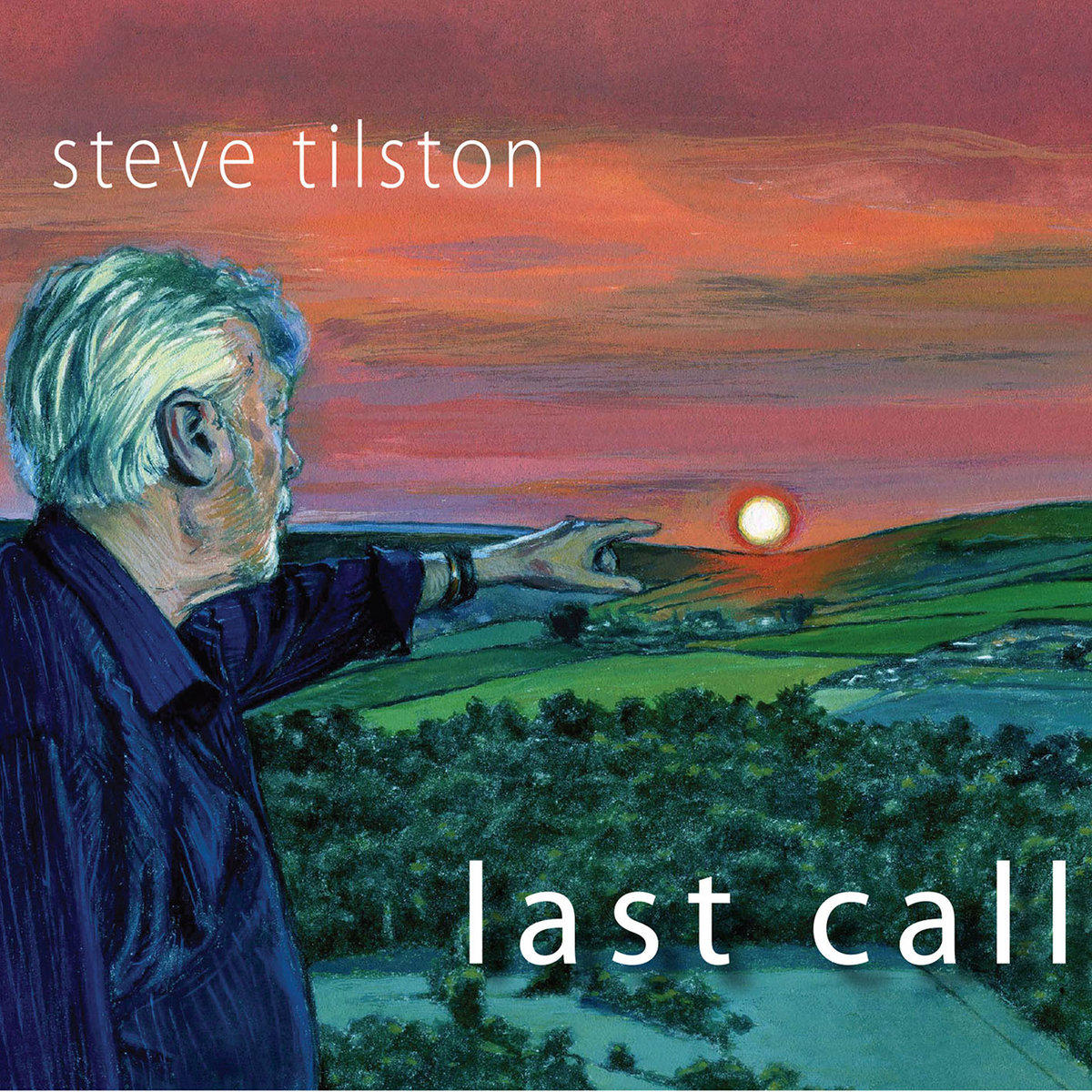
Steve, your 2025 album ‘Last Call’ came with the suggestion that it might be your final set of new songs. Now that it’s been out in the world for a while, does it still feel like a closing chapter, or have songs like ‘Apple Tree Town’ made you think there might be more to say after all?
Steve Tilston: Yes, I still stand by the statement that it’s my last album of new original material. I will, however, still continue to write new pieces, both song and instrumental, but I’ll only release them digitally and probably individually. There’s also scope for another retrospective album like my ‘Distant Days’ from a few years back, taking older songs and having a fresh look at them.
On “Last Call”, the title track, you finish with a solo guitar piece and no words at all. Was that important to you? After all those years of writing songs, did it feel right to let the guitar say the last thing?
Exactly so. It’s an amalgam of some of my different musical influences. You’ve spotted it, so it seems to have served its purpose.
With the Singsong Music reissues, ‘Life by Misadventure’ feels like a real turning point. You were working through your own Run River label and taking more control of the music. When you hear a song like ‘These Days’ now, does it sound like freedom to you, or does it also bring back the stress of having to be the artist and the label boss at the same time?
Actually, I did that on my third album, ‘Songs From The Dress Rehearsal’, from 1977. In fact, all my albums after my second, ‘Collection’, 1972, whereby I was somewhat musically manipulated and I swore to myself, “Never again!”
My good friend the late Fred Underhill, an American and friend of Dylan’s in the early days, set up Run River Records and designated me as a director, but Fred had the finance and called most of the shots. We released some lovely albums from Bert Jansch, Wizz Jones, Ship Of Fools, and yes, ‘Life By Misadventure’ was a bit of a turning point. ‘These Days’ was pretty political; it was pretty well received.
That album is also known for the Arpeggione, the bowed guitar you had made by the Kinkade brothers. What did that instrument give you that a normal guitar couldn’t? Did it change the way you wrote or arranged pieces like ‘Rhapsody in Dropped D’? And do you still have it today?
‘Rhapsody in Dropped D’ was originally off my instrumental album ‘Swans At Coole’. I was musing with a cellist friend about a bowed guitar, and he said that what I meant was an Arpeggione and that it had been invented in the early 19th century, and that Schubert had written a sonata for it. I tracked a copy of an album down and fell in love with the sound and the music. I managed to get Johnny Kinkade, a Bristol luthier, interested, got in touch with what was then the Museum of West Berlin, and miraculously, they had copies of the original plans and kindly sent copies through to us. Apart from the headstock and modern guitar tuning pegs, it’s pretty close to the original, although built a bit stronger to accommodate modern cello and guitar strings.
I used to take it out as an accompanying instrument for the late Maggie Boyle’s singing, but now I tend to use it as a writing aid for melody lines. If it sounds good and stands alone as single-note passages on the Arpeggione, I think I’ve got a good melody. Tunes are pretty easy to come by, but a melody is a bit special in my way of thinking.
The reissue of ‘Songs From The Dress Rehearsal’ brings us back to that hot summer of 1976. You’ve talked before about fire engines interrupting the sessions, which is a great story, but I’d love to hear more about working with Rupert Hine. He had such an inventive way of using the studio. How did that fit with your more acoustic, song-based approach, especially on something like ‘Face of a Friend’?
Rupert had been a firm friend a few years before we did that album. His then-girlfriend worked for Transatlantic Records, the company that had put out my second album, and she suggested he produce my next album. Unfortunately, it was before Rupert had a track record and they weren’t interested. I dug my heels in and it led, ultimately, to me leaving that label. It took another couple of years to come together for my third album, ‘Dress Rehearsal’, and I’m still proud of that record, although it didn’t sell so well as I put it out on my own label, Cornucopia Records. In a way, this was quite cutting-edge, as not many people had gone down this route before. Now it’s very common and accepted to do this. It was recorded at Mike Giles’ King Crimson studio in the New Forest in the summer of ’76. There was a heatwave and some of the nearby trees were starting to spontaneously combust. Despite all this, we got it done in the allotted time.
With ‘Such & Such’ coming back into focus too, it feels like one of the jazzier records in your catalogue, especially with Andy Sheppard on saxophone and Maartin Allcock on fretless bass. On a track like ‘Mirror Dance’, there’s a loose, floating feel that brings Joni Mitchell’s ‘Hejira’ period to mind. Was that jazz-folk direction something you were consciously reaching for, or did it happen naturally because of the musicians around you at the time?
I suppose I evaluated the songs I’d written and knew I was in musically capable hands, and the arrangements went where they were nudged. Really, Andy Sheppard’s sax gave it a “Cool Jazz” feel. It was a real pleasure to have him onboard. All of the musicians on that album were good friends, and it was a real pleasure to record.
On ‘Such & Such’, ‘The Constant Lover’ stands out because it’s a traditional song on an album full of your own modern, jazz-leaning material. What drew you to that particular ballad, and why did it feel right for that record?
I love traditional music, and although, in some respects, it may appear out of place, I just wanted to include it. It’s as simple as that. In fact, I’ve done a similar arrangement of a trad song on ‘Last Call’. It’s also the last piece on that record.
One of the most exciting parts of these reissues for collectors is ‘Fully Chromatic’ by WAZ!, your trio with Maartin Allcock and Pete Zorn, finally becoming available digitally. Is there a track where you feel the three of you found a mood that you could not have reached on your own?
If memory serves, the song ‘I Will Return’ fits that category. It has a fast-paced Rhumba rhythm and we all got fully into the feel of the piece.
After all these years of playing, has the physical side of the guitar changed for you? Do you still use the same tunings, shapes and hand positions you found in the early ’70s, or has your way of playing had to change with time?
I tend to use just a few tunings, mostly normal, dropped D, double dropped D, occasionally DADGAD. I went through a period of using CGDGBE. In fact, a couple of pieces off ‘Such & Such’ are in that tuning. In the ’70s, I could barely read music, so most of my playing was instinctive without necessarily knowing what I was doing. The guitar fingerboard was a thing of mystery and wonder. I tend to view it differently now. In lots of respects, I’m a better, more knowledgeable musician, and that has to try and balance with the almost effortless physical dexterity of youth.
We should probably mention the Hollywood chapter too: the lost John Lennon letter, and how that story later helped inspire Danny Collins. Now that the film, the attention and the red carpets are all in the past, what does that letter mean to you today? Do you see it as a reminder to stay true to the work, rather than chase the money or the noise around it?
I’d like to think so. One of the reasons I embraced the “Folk/Roots Scene” was to be taken seriously as a musician, and apart from a couple of musical detours, I’ve remained true to that end. Had untold riches come my way via following my musical path, in all honesty, I’m sure I would have grabbed it and been thankful. Being a professional musician ain’t all a “bed of roses”, more a case of “feast or famine”. Certainly, when I was younger, that was the case, and bringing up a young family would have made my mind up for me. Getting back to the ‘Lennon letter’, it would have been good to have met him, and who knows what effect it would have had on my 20-year-old self?
If someone comes to these reissues as a new listener and then follows the path all the way to ‘Last Call’, what story would you hope they hear in that journey? What would you want them to understand about Steve Tilston by the end of it?
Without labouring the point, “I stayed true to my muse.”
Klemen Breznikar
Steve Tilston Official Website / Facebook / Twitter / Bandcamp
Singsong Music Official Website