
Black Tempest on ‘Folding Space’: “To the Infinity of Space”
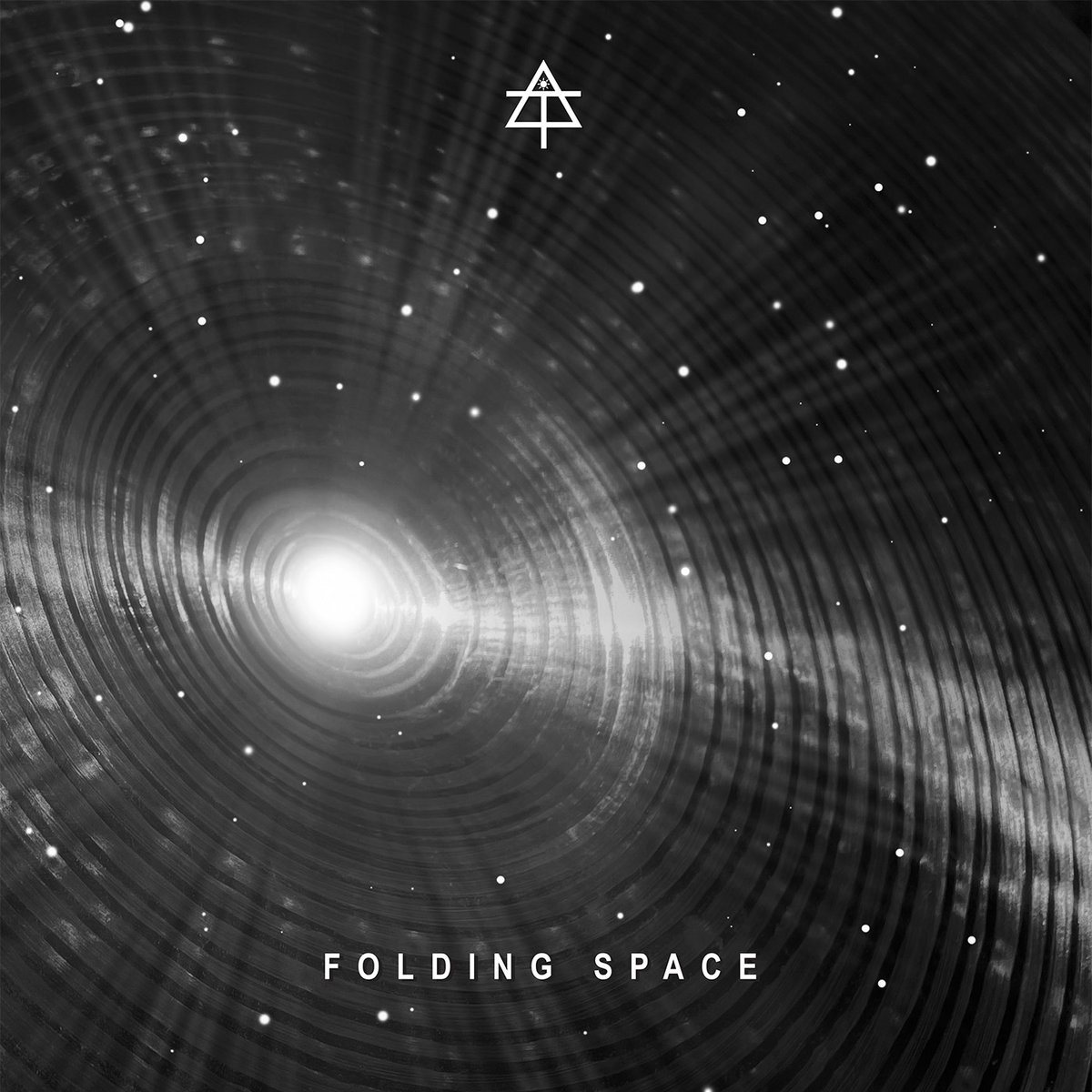
Black Tempest recently released ‘Folding Space,’ a new full-length that pushes Stephen Bradbury further out of the pastoral zones of 2024’s ‘Astral Pastoral’ and into something colder, more distant.
Where that last record leaned into “rural psychedelia,” this one is, in his words, about “the vastness of outer space” but also “the intimacy of local space.” It’s a fitting frame for music that feels both expansive and strangely close.
The album was made in collaboration with percussionist Nick Raybould, trading recordings back and forth, and that process shapes the sound. You can hear the back-and-forth in how tracks build, parts arriving in layers, rhythms locking in late rather than leading from the start. That motorik engine is still there, but it feels assembled piece by piece, not just switched on and left to run.
Bradbury also strips things back in terms of texture. Earlier Black Tempest work pulled in archival voices and field recordings that grounded the music in something human. Here, the sources are more abstract: shortwave radio signals and modular synth phonemes. He describes them as “less obviously human,” and they give the record a more isolating feel. Some passages almost sound like transmissions cutting in and out.
Even so, it’s not all bleak. Bradbury points to the “darker geopolitical world situation” as part of the mood, but says there’s still “hope at the heart of it.” One minute it’s floating off into the void, then suddenly it snaps into a pulse that feels nailed down, like someone just slammed the machine back on and said, alright, move.
‘Folding Space’ works as a clear contrast piece to ‘Astral Pastoral,’ less about landscape and more about distance. Not quite a clean break, but definitely a shift in perspective.
“Moving away from the earthbound… to the infinity of space”
Your latest release, ‘Folding Space,’ immediately summons Frank Herbert’s Dune universe. The ability to travel without moving. Is this record intended as a literal soundtrack to that kind of sci-fi dislocation, or is “folding space” a metaphor for how you treat the listener’s sense of time? You know, compressing long-form drones into something that feels instantaneous?
Stephen Bradbury: I wanted a title which not only suggested the vastness of outer space, but simultaneously the intimacy of local space – hence using the sci-fi idea of folding space to achieve instantaneous travel between two distant points. It also seemed appropriate for a collaborative project between myself and Nick Raybould (the drummer/percussionist), which was done at a distance and yet felt close-up and intimate.
Coming so soon after 2024’s ‘Astral Pastoral,’ ‘Folding Space’ feels like a deliberate counter-statement. If ‘Astral Pastoral’ was grounded in the rolling hills and “rural psychedelia” of Southern England, is ‘Folding Space’ the result of finally leaving the atmosphere? Do you view these two records as a diptych? Like, I don’t know, “Earth” and “Sky”?
I guess so, yes. Although perhaps not so much a diptych as a contrast – moving away from the earthbound, moving away from the pastoral, to the infinity of space. A contrast between the familiar and the otherworldly, a comparison between the two extremes.
Following the specific “Light/Dark” duality of your previous trilogy (‘Darkness Unfolding,’ ‘Enfolding Light,’ ‘Psyberspace’), this new record seems to occupy a greyer, more mysterious middle ground. Did you approach the composition of Folding Space differently, knowing you were no longer bound by that rigid dualistic concept?
The main difference in approach was the collaborative aspect. Working with someone at a distance inevitably brings changes to the conception of the songs. We were swapping ideas and elaborating on each other’s recordings. I think the mysterious feel of Folding Space is more a result of mood, perhaps reflecting the darker geopolitical world situation of our times. I like to think it isn’t all dark, though. There is hope at the heart of it.
You’ve previously used archival voice samples and “found sound” like the WWII footage references in live sets to ground your synths in human history. On this new record, the texture feels more isolating and mechanical. Was there a conscious decision to remove the “human element” to reflect the cold vacuum of the concept?
I’ve always liked using field recordings and found sound, and on Folding Space I used two main sources – recordings taken from shortwave radio and phonemes generated randomly on my modular synth. These are less obviously “human” or natural than the samples used on previous records. The shortwave recordings can sound remarkably alien.
To me, ‘Arcana’ (2013) remains one of your most fascinating undertakings, effectively translating the Major Arcana of the Tarot into sound. This wasn’t just “spooky” music, it actually felt structural, as if you were using the cards as architectural blueprints. Tell us more about it.
To some extent, yes – the cards did form a blueprint for those recordings. I chose two major and two minor Arcana cards as my inspiration (the major cards for the two longer pieces). The Chariot in particular holds deep symbolic significance for me as a yoga teacher, a direct reference to Krishna and Arjuna’s chariot in the Bhagavad Gita, and many other references in the Sanskrit texts:
“Know the Self as lord of the chariot, the body as the chariot itself, the discriminating intellect as the charioteer, and the mind as reins. The senses, say the wise, are the horses; selfish desires are the roads they travel. When the Self is confused with the body, mind, and senses, they point out, one seems to enjoy pleasure and suffer sorrow. When a person lacks discrimination and their mind is undisciplined, the senses run hither and thither like wild horses. But they obey the reins like trained horses when one has discrimination and has made the mind one-pointed… with a discriminating intellect as charioteer and a trained mind as reins, they attain the supreme goal of life.” – the Katha Upanishad
With the Arcana project, you stepped into a lineage of electronic esotericists like Coil or early Tangerine Dream. Did you find that submitting to the strict structure of the Tarot deck liberated you creatively, or did you ever feel trapped by the need to make the sound “fit” the archetype?
Creatively, it is liberating rather than constricting. Having a source of inspiration is the equivalent of having a muse. The music seems almost to write itself. Paradoxically, constrictions can be liberating in themselves. For example, using a restricted musical palette can release a stream of new ideas and ways of working.
We have to talk about the hardware. Can you walk us through the relationship you have with your primary sequencers?
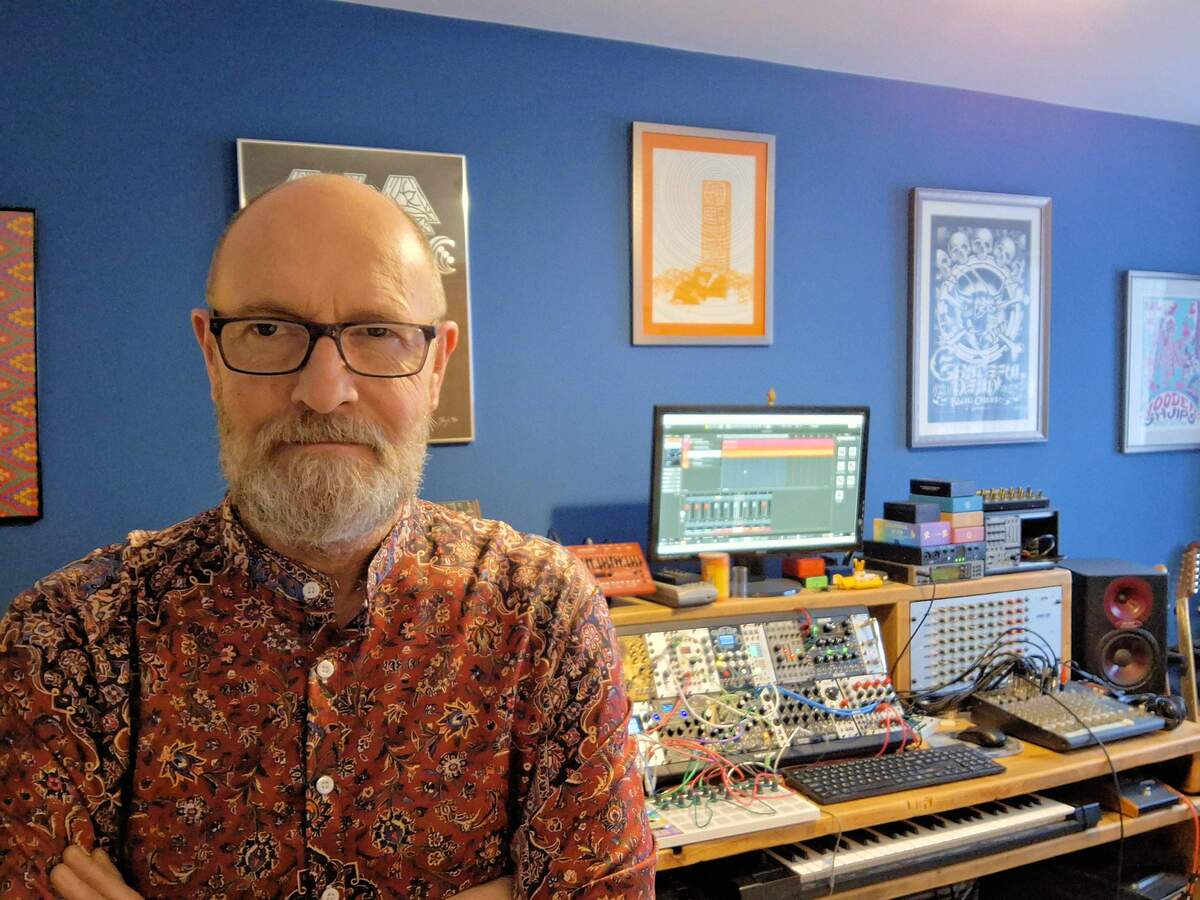
I could go on for hours about the hardware I use and the way it evolves and changes through time! Sequencer-wise, I started years ago using a Doepfer MAQ 16/3, which is a fantastic machine, but it proved too fragile and bulky for live work, and the operating system was somewhat esoteric. I have used a Doepfer Dark Time, which is great fun, but with no presets or the equivalent it was impossible for live work. More recently I use an Arturia Beatstep Pro, a great little machine. It is portable, you can save your work, it has a nice MIDI implementation, and other useful features. I have found that it doesn’t quite have that old school feel of the Doepfers, though. Most recently I have been trying to downsize my live rig and have been porting my pieces onto my AKAI MPC Key 37, which is essentially a touch-screen PC in a box with sampling, plug-in synths and a keyboard. Although it means I can run a lot more in one box it does have its disadvantages, load time being the most obvious. I’m still searching for the “perfect setup”, and probably always will be.
There is a “motorik” drive to many of your tracks that aligns you with the Krautrock tradition (Neu!, Faust), but there’s also a very English, almost punk sensibility buried in there, perhaps a nod to things like Hawkwind or The Fall. Do you feel more kinship with the German cosmic scene or the UK festival scene?
Both equally, I think. I love working with a combination of the two schools. I like to think it is what makes my work uniquely mine and stops it being a direct copy of any one style. I also like to use both soft, pastoral sounds and more elemental bursts of noise. The variation in textures appeals to me and captures my various moods.
Your collaboration with Dead Sea Apes (‘The Sun Behind The Sun’) was a brilliant clash of guitar textures and your synth work. Since you are so often a solo pilot in the studio, what did you learn about your own playing by having to leave space for a loud, psychedelic rock band?
I learned that Chris Hardman (the DSA drummer) has an amazing ear! I was sending them basic recordings to work with, and he would spot immediately if there was even a hint of a tuning or timing issue. I’m essentially a “non-musician” in the Eno mould. I don’t read music and have very little music theory, so it was interesting having that discipline imposed on me.
Dead Sea Apes are a great bunch to work with, very amenable and willing to push the boundaries. We’ve become good friends over the years, lovely people!
Looking at your extensive discography, you’ve been prolific. How do you decide when a piece of music is a Black Tempest track versus something that might belong to a different headspace? Is there a specific “Black Tempest criteria” a track must meet before it makes the cut?
I am always recording, but it is only occasionally that a number of pieces coalesce into the form of an album. To be honest, I’m not sure what the magic ingredient is that causes that coming together. A cohesive feeling or style is a part of it. I must have hundreds of hours of recordings that have never made it to an album!
You’ve explored the Tarot, deep space, and internal meditation. Now that ‘Folding Space’ is out in the world, what is the next frontier for the project?
Good question! At the moment I’m working on putting a new live set together, with a view to a London concert in the summer. It takes me a long time to write and prepare a whole set, partly because of the constraints of being a (mostly) solo performer. It has to work seamlessly, it has to allow me space to improvise, and it has to be physically possible, as well as sounding good!
The work involved will probably generate some new material, but I don’t know what the new direction will be yet. Often new material arises as a result of using new equipment or new methodologies. I suspect that once the live set begins to take shape I will return to exploring my modular set-up, and that will bring a whole new set of sounds and ideas. An example of this is my current use of the AKAI MPC. I am making more use of samples than previously, and this is changing the overall sound. It is possible I will return to a more pastoral sound for the next album, and I love working on long form pieces, so those may well feature. Part of the excitement is not knowing what will come next!
Klemen Breznikar
Black Tempest Bandcamp