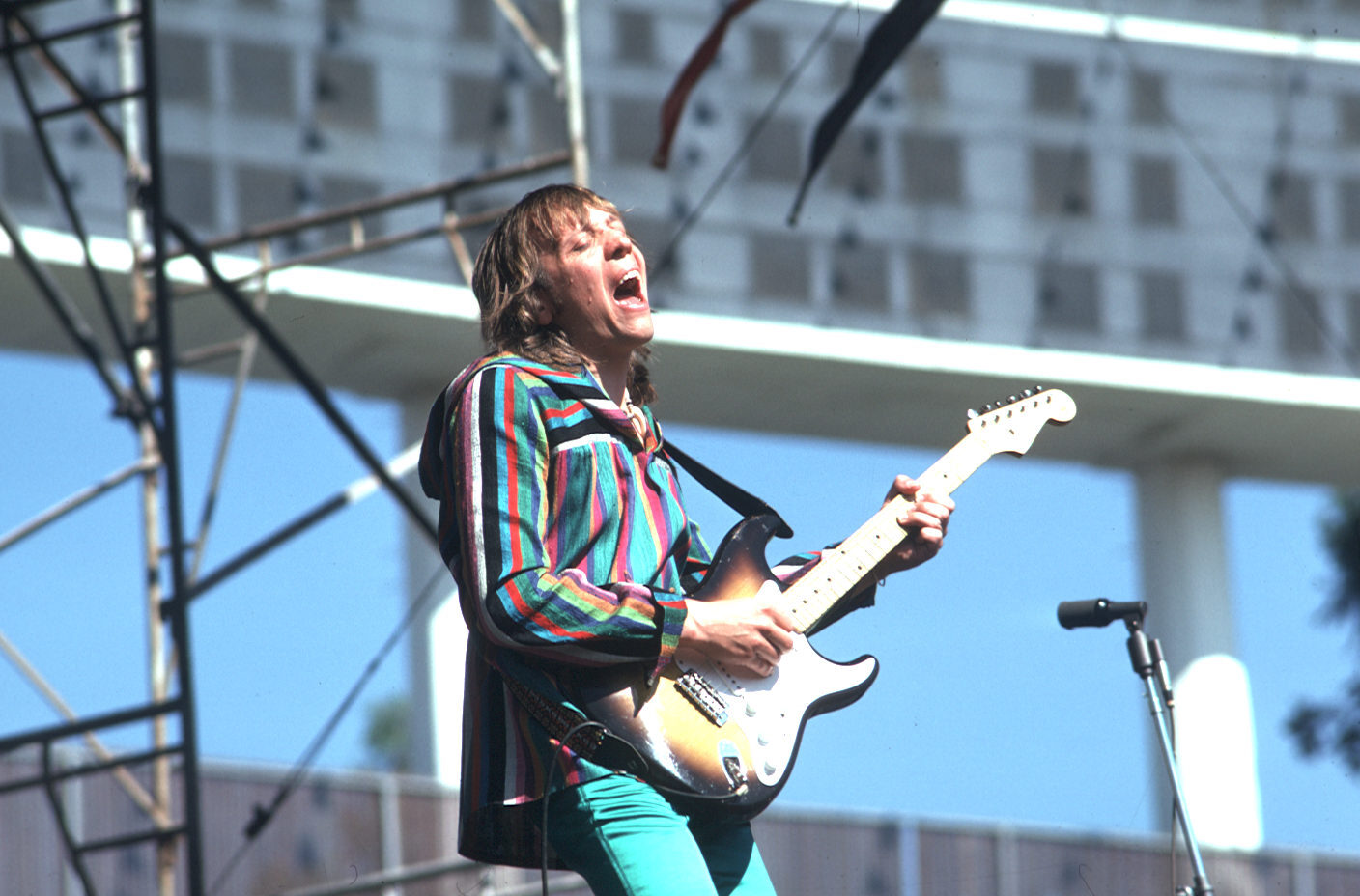

Robin Trower on the Live! 50th Anniversary Reissue: The Night in Stockholm, As It Really Happened
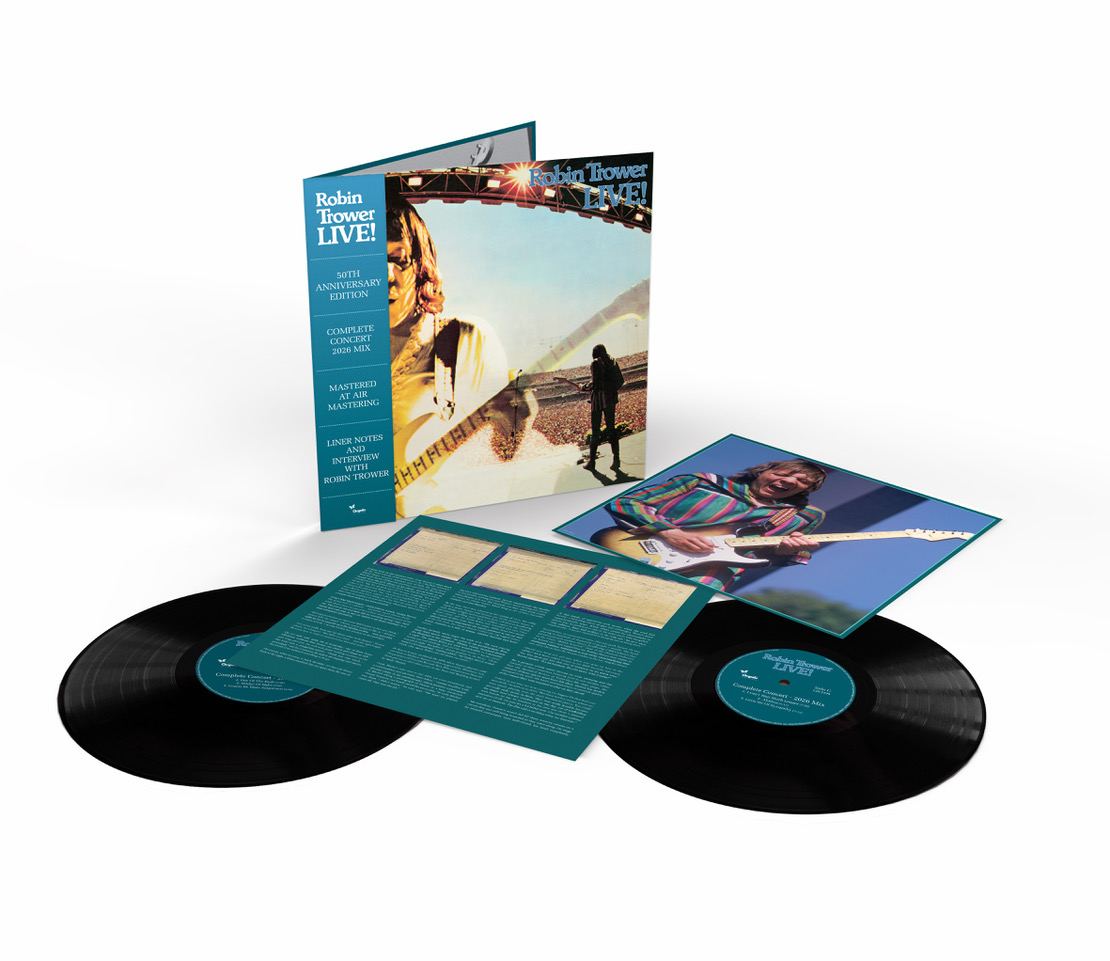
Fifty years on, ‘Live!’ comes back sounding less like the record we thought we knew, and more like what actually happened. Out on 3 April through Chrysalis, the 50th Anniversary Edition brings the full Stockholm gig back as it happened, in sequence and pretty much untouched.
For decades, listeners knew ‘Live!’ as something powerful but shaped, a record assembled from a single night yet subtly rewritten in the studio. Tracks were removed, reordered, even partially re-sung. It worked, commercially and artistically, but it was never quite the night itself.
This new edition changes that. It restores the arc, the pacing, the sense of three musicians moving through a set in real time. It’s not really an upgrade, more like putting things back the way they were.
“I think the set was very “up”… it was the first night of a tour.”
Robin Trower, characteristically, doesn’t romanticise the process.
“I must admit, I only listened to the new version of ‘Live,’ to see if the mix was ok. I couldn’t really relate to the performance as it is so long ago and the way we play those songs is so different now.”
There’s none of that in his answer. No sense of looking back or revisiting who he was then. For Trower, the past feels more like something that happened than something to hold onto.
Go back a few years and Trower is still in Procol Harum.
Trower stepped into Procol Harum at the end of the 60s, by which point the band had a very clear shape. The music was precise, arranged. But every now and then you can hear him pushing at it, trying to stretch things out, letting the guitar speak a bit more freely.
By 1971, he’d left.
He wasn’t looking to go bigger. If anything, he stripped things right back. A trio. Guitar, bass, drums. Nothing much to lean on. The early rehearsals were rough, but you could tell something was there.
“Early sessions were a bit raw, but I knew something special was there.”
That “something” would first take shape with Reg Isidore on drums, and by the time ‘Bridge of Sighs’ arrived in 1974, they’d found their sound.
Bill Lordan would come in afterwards, starting with ‘For Earth Below,’ bringing a more fluid, funk-influenced feel shaped by his time with Sly and the Family Stone. You can really hear that shift on Robin Trower ‘Live,’ where the interplay between Trower, James Dewar and Lordan feels especially dynamic.
The Stockholm show catches them right at that point. Things are getting bigger around them, but onstage it’s still very much about the three of them, locked in together rather than playing to the room.
That said, the room does matter.
Stockholm Concert Hall isn’t an arena. It’s a wooden, resonant space, home to the Swedish Royal Philharmonic, and you can hear it straight away. The recording itself is very simple, just kick, kit, bass, guitar, vocal and the audience. That’s all there is.
“I feel the new mixes make the whole thing much clearer, although maybe the original is more earthy.”
That contrast runs through the whole reissue. It’s clearer, more open, you can pick everything out. But the original had a weight to it that’s hard to shake.
The 1976 ‘Live!’ album never pretended to be the full picture. It couldn’t be. Twelve songs were cut to seven. The sequence was reshaped. The opening stretch of the actual concert, ‘Day of the Eagle’ through to ‘Fine Day,’ disappeared entirely. The encore turned up halfway through the record. It worked, but it altered the narrative.
“I can’t remember why we chose those tracks, I imagine we thought they were the most passable of all the tracks that were available. Also, in those days, there was a limit to the time that you could squeeze onto a record.”
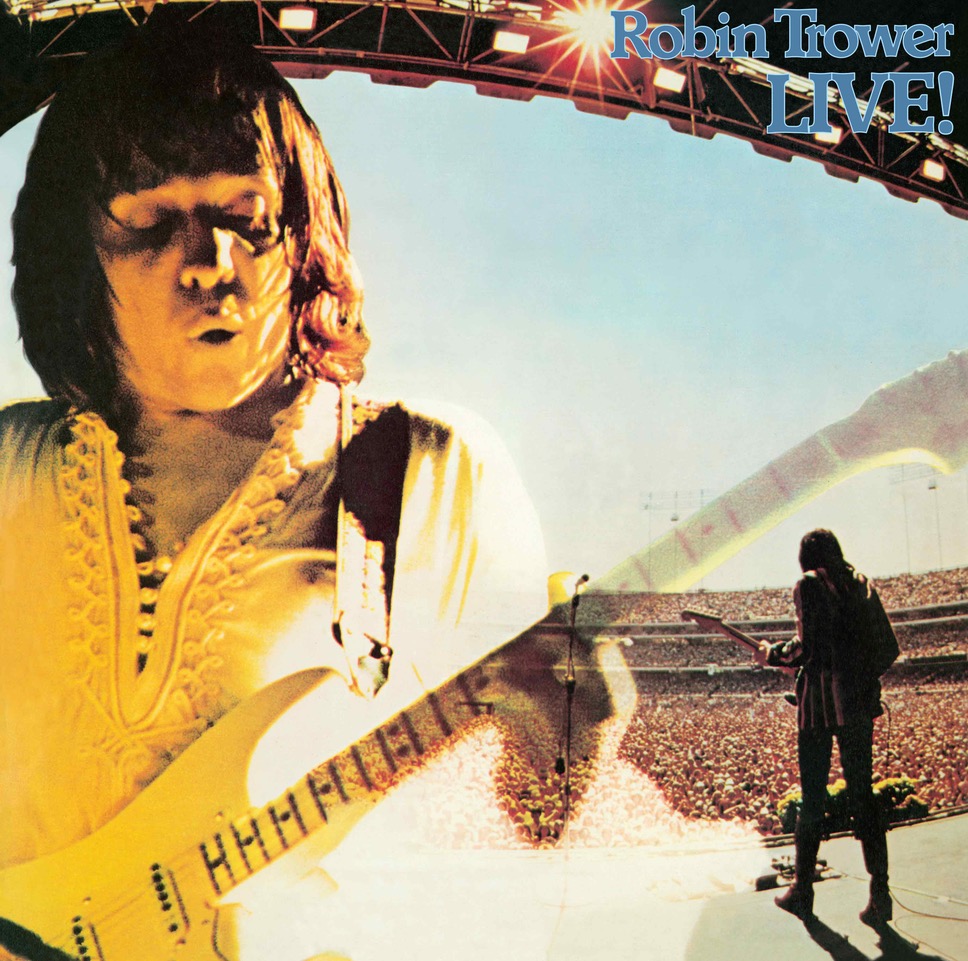
That’s all it was really, what worked, what would fit, and what made sense on vinyl.
Hearing it now, you can tell how much that reshaping altered things. Put back in order, it flows in a way it never quite did before. The set rises and falls naturally. It feels like a night unfolding, not a record being built.
And right at the centre of it is James Dewar.
His voice holds it together. Strong, steady, never overdone. On the original album, most of it had to be re-recorded at AIR with Geoff Emerick because of spill.
Here, much more of the original vocal is left in place.
“Jimmy always sang great every night. He was a big part of why the music crossed over into the mainstream.”
You hear it straight away. There’s a rougher edge to the vocal, something the studio version smoothed out. It just feels more real.
If there’s one track that really shows where they were at that night, it’s ‘Too Rolling Stoned’.
They take it at a speed that still catches you off guard, the whole thing pushing forward hard, like they’re right on the edge of it.
“I think the set was very “up” because it was the first night of a tour plus great energy from the audience. I can’t really say whether people appreciate the effort that goes into making a three-piece work, but it can be a joyful thing.”
Joyful, yes. But also demanding. There is no room to drift in a three-piece. Nothing gets hidden. Every move is right there. When it works, it lifts.
The acoustics helped.
“That room had wonderful acoustics. That definitely made the guitar sound inspiring. Couldn’t say about Madison Square Garden, such a long time ago and I don’t remember the gig at all.”
Again, the pattern. Sound remembered. Detail lost.
There is a moment early in the set where Trower introduces ‘Daydream’ as a dedication to “The Man”. Jimi Hendrix, of course. The comparison has followed him for decades, sometimes fairly, often lazily.
“I’ve always admitted to the influence of Mr H. But, I think my own thing started to develop from the first album. I don’t hear about the comparison so much these days.”
Listening back to the Stockholm show now, you can hear the difference. It’s in the phrasing, the way he lets things breathe. It doesn’t sound like imitation anymore.
By 1975, the trio were playing with real confidence.
“I hear three musicians playing with confidence and loving what they are doing. That period was a commercial peak. The artistic side of things is still developing.”
That last line tells you where his head was at. Even then, it wasn’t finished, just part of the run.
They close with ‘Rock Me Baby’, a loose, bluesy send-off.
“Finishing with ‘Rock Me Baby’ was great because it was such fun to play.”
Fun, again. That’s really what it comes back to, underneath everything else.
And that night itself, the one he once summed up as “we were just flying”.
“Acoustics and the crowd can lift a performance. It was so long ago, I’m not sure it’s even memory.”
It’s a curious answer. The tape still sounds alive, but for him it’s already distant.
Maybe that’s why this release lands the way it does.
For years, Live! was the version people carried with them. This one just lets the night play out properly. Three musicians, a good room, everything falling into place.
No fixes, no reworking.
Just the sound of it as it happened.
Step back from that night for a moment and it sits in a very particular place in Trower’s story.
By early 1975, things had moved quickly. The first solo record, ‘Twice Removed From Yesterday,’ had come and gone without much noise. Then ‘Bridge of Sighs’ landed and everything shifted. It wasn’t sudden in the sense of a hit single, more that it spread. The sound, the feel of it, people picked up on it and stayed with it. In the States especially, it caught on in a big way, the album climbing into the Top 10 and turning Trower into something much larger than he’d been before.
What mattered just as much was the band.
James Dewar wasn’t just a bassist filling space, he carried the songs. That voice, steady but never pushed, gave Trower’s playing somewhere to land. And once Bill Lordan came in on drums, replacing Reg Isidore, the whole thing tightened up without losing its feel. By the time ‘For Earth Below’ came out in early 1975, they were properly locked in, the record pushing even higher into the US charts and confirming that this wasn’t a one-off moment.
So when they walked onto the stage in Stockholm that February, it wasn’t a band trying to prove anything. It was already working.
That’s probably what comes across most clearly in the recording. There’s no sense of reaching. No overplaying. They just settle into it. The songs stretch where they need to, pull back when they should. It’s all very instinctive. You get the feeling they could have kept going like that for another hour if they’d wanted to.
At the same time, everything around them was getting bigger.
By that point, the touring had already stepped up, especially in America. Bigger places, bigger crowds. That usually changes how bands play, whether they mean it to or not. But you don’t really hear that in Stockholm. It still sounds like three people focused on each other.
That’s probably why it works.
There’s nothing added to it. No extra players, nothing trying to fill space. Just guitar, bass, drums. Even when it gets loud, it never turns into a blur. You can follow everything.
It also helps that they weren’t thinking about it as a recording.
As far as they knew, it was just going out on Swedish radio. So they just get on with it. No playing up to the tape, no second-guessing. They stretch things out when it feels right, pull it back when it doesn’t.
You can’t really plan that.
A lot of live albums from around then ended up being tidied up afterwards, fixed here and there, shaped into something else. This one always felt a bit different, even before this version.
Hearing the full set now, it makes more sense.
It’s not about getting everything perfect. It’s just a band on a good night, right in the middle of it, before anyone stopped to think about what it might become.
And that’s probably why it still sounds like it does.
Klemen Breznikar
Headline photo: Robin Trower (photo credit: Ron Draper)
More on the Live! 50th Anniversary Reissue (via Chrysalis) here.
Robin Trower Website