

Ko Shin Moon Interview: Mapping the Sacred and the Electric on ‘Sîn’
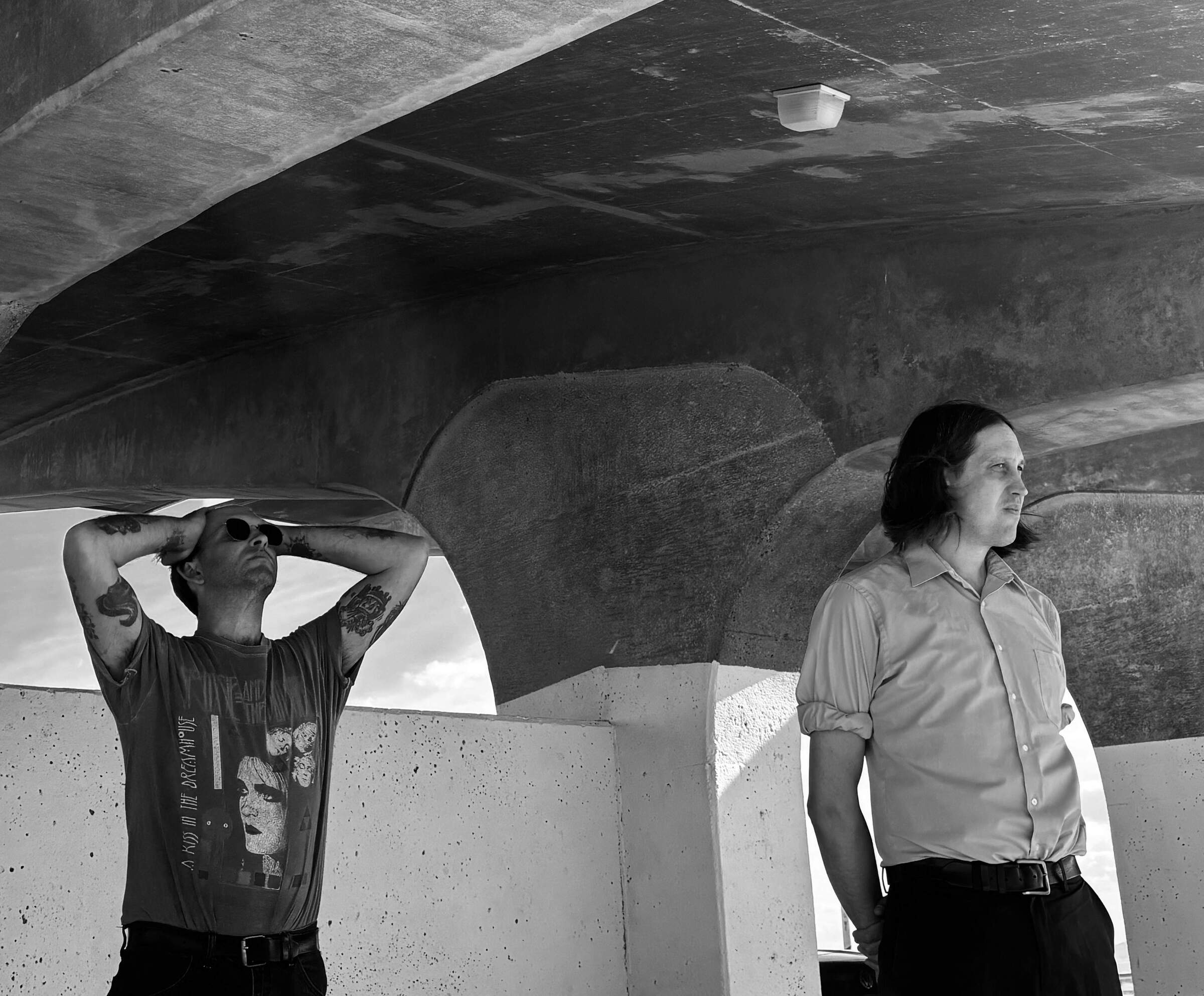
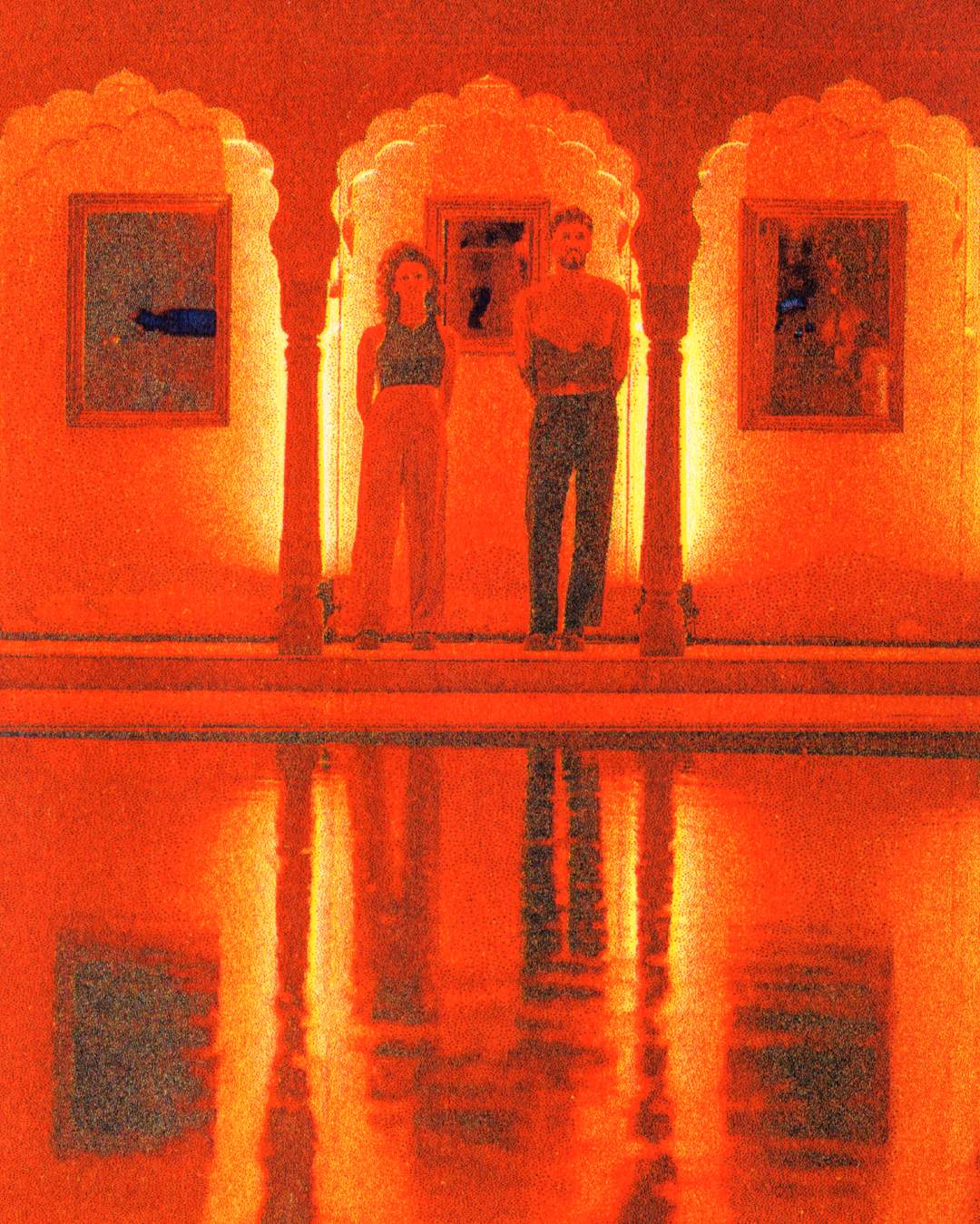
Ko Shin Moon began as a suitcase full of instruments. In 2017, Axel Moon returned to Paris after four years in India, hauling back rubabs, dutars and a head full of field recordings. The project soon became a duo with Myriam El Moumni, whose banks of synths and drum machines refract those folk textures into something closer to space disco séance than anything else.
Their name, lifted from a Haruomi Hosono exotica curio, points to their lineage: Yellow Magic Orchestra’s glassy electronics, Patrick Cowley’s driving sequencers, a touch of Ilaayaraja’s widescreen melodrama.
On record, they splice Afghan strings with Minimoog basslines and Solina chords, Mellotron flutes brushing against sampler presets modelled on Bulgarian choirs. Live, the pieces stretch and mutate. Touring across the Levant, Korea, North Africa and beyond, songs were stress-tested in front of crowds, reshaped through improvisation, then carried forward in altered form.
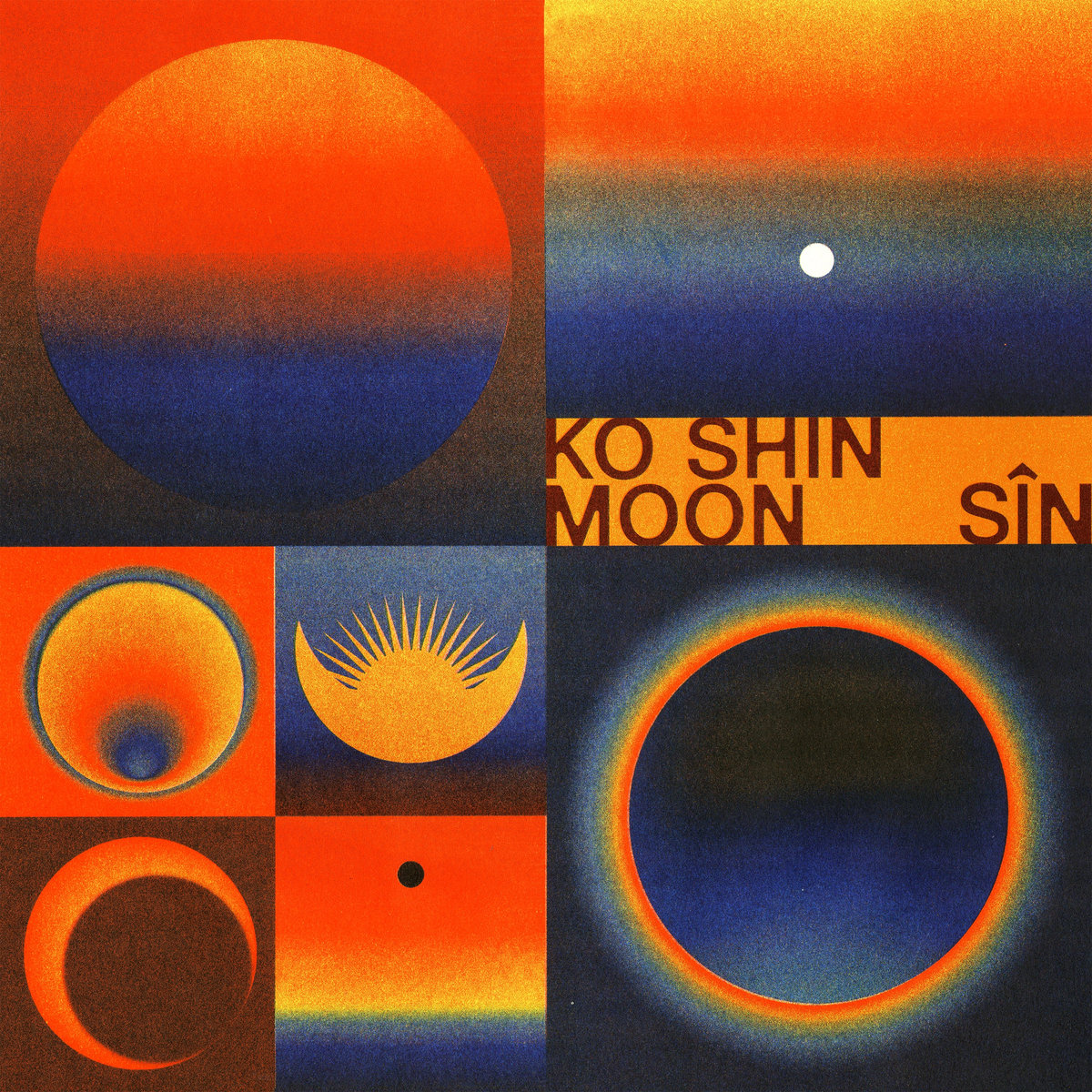
Their fifth album, ‘Sîn,’ grew out of that motion. Named for the Mesopotamian moon god and shadowed by the English “sin,” it moves from dawn to dusk in ten tracks sung in Arabic, French, Italian, Turkish and Tamil. The record is caught between devotion and transgression, circuitry and skin.
“We conceived this album as a journey”
You guys basically built ‘Sîn’ in transit while you were touring ‘Miniature’. That’s a huge shift from sitting in a studio in Paris. How did the constant movement, from Korea to the Levant, seep into the DNA of these tracks? Did a specific city unlock a specific song?
The second half of the album consists of tracks that had been played on stage for years and which slowly developed concert after concert according to the audience’s reaction. It’s not really linked to a specific place, but more to how people responded in a live context.
You’ve mentioned that melodies for this album emerged from live improvisations. That’s a scary (and exciting) way to write! Can you tell us about a specific moment on stage where a mistake or a jam session suddenly turned into, “Oh wait, we need to record that immediately?”
Yes, a lot of parts of these songs were shaped by adjustments during live performances. We always leave room for improvisation, and that’s where new melodies often emerge. Some songs were recorded live, and we listened back afterward. If there was a part that worked well, we kept it and arranged the track around it.
Let’s talk about the title, ‘Sîn’. Obviously, it nods to the Mesopotamian moon deity, which feels like a perfect spiritual successor to your band name. But there’s also the English word “sin”—the forbidden. Were you playing with that double meaning of holiness vs. transgression when you were putting the tracklist together?
Exactly. Most of the songs talk about this double path that humans walk. Sometimes we choose transgression—something that might hurt ourselves or others—to reach a better place and start seeking holiness. It’s about that internal conflict we all have inside: the creative part, the destructive part, the search for peace, and the tendency toward chaos.
The album is described as a journey from “dawn to dusk.” Most dance records are strictly for the night, but you guys have always straddled that line between daytime folk and 3 AM club energy. How do you balance those two moods? Do you see this as a daytime driving album or a nighttime warehouse album?
We conceived this album as a journey, with songs tightly connected to one another. It’s more of a continuum.
We have to nerd out on the gear for a second. You guys are famous for blending traditional Eastern strings with retro-futurist synths. For Sîn, was there a new instrument—either an old folk piece Axel found or a new machine Myriam plugged in—that became the “MVP” of the record?
Well, the synth that has always been central to our records is the Minimoog. For this album, I used the Solina a lot, but since I couldn’t get my hands on a real one, we used the plugin version.
In terms of traditional instruments, we also used the Afghani rubab and dutar on the first part of the album. We also used a lot of Mellotron flute there, as well as a sampler preset that emulates Bulgarian polyphonic vocals. Those were all newcomers.
You’re singing in five different languages on this record (Arabic, French, Italian, Turkish, Tamil). That is wild. How do you decide which language fits the “personality” of a specific track? Does the synth line dictate the language, or does the language shape the melody?
The melody is generally composed according to the language we want to use. We compose the vocal line by singing in phonetic approximation first, then we try to write lyrics either by ourselves or with the singer.
Your name pays tribute to Haruomi Hosono, and you’ve always had that exotica/Yellow Magic Orchestra lineage. But ‘Sîn’ feels a bit darker, maybe a bit more “cold wave” in spots. What were you listening to in the van while touring that might surprise people? What was the soundtrack to the making of ‘Sîn’?
It’s hard to say, because most of the music I listen to daily is traditional. The non-traditional references in my head are older, from things I listened to when I was younger. I think Niko, who was more involved in the project, added a more solar, funky, playful touch. Myriam has more of a psychedelic rock/metal background. And I probably bring a more childish, naïve, dreamy approach to sound. I guess the album contains a bit of all of that.
You’ve got this incredible friction in your music between the “old” and the “futuristic.” When you are mixing a track, how do you know when you’ve gone too far in one direction? Is there a conscious effort to make sure the machines don’t overpower the human element, or vice versa?
From the first album, we have always tried to blend different geographical sources and eras to give listeners the feeling that they can’t really place where or when the music comes from. We use different recording techniques and sampling to blur the lines. To be honest, it’s not easy and it doesn’t always work.
We also tried collaborating with different mixers, but I realized that if we want to reach what we’re aiming for, it’s better to do the work ourselves, even if it’s energy- and time-consuming.
We definitely like to preserve a human feel in electronically produced tracks—we aim for that consciously. I think it works especially well live; for recordings, we’re still working on it.
What’s next for you?
We’ll start the tour in March, and we’re working on a new EP.
Klemen Breznikar
Ko Shin Moon Website / Facebook / Instagram / YouTube / Bandcamp
PFR Records Website / Facebook / Instagram / Bandcamp