

Gary Marks: Staying Inside the Song on ‘I Guess It Never Stops’ and New LP ‘Crossroads’
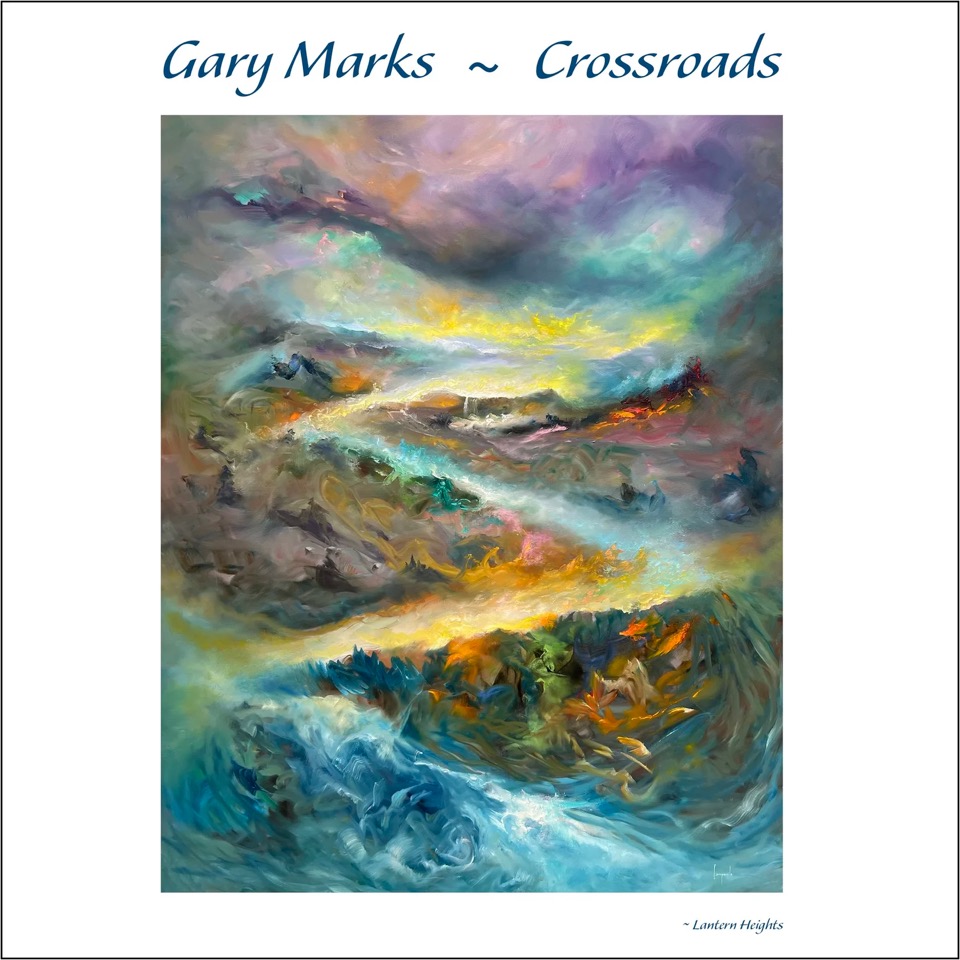
After five decades of writing in the shadows of an industry he walked away from, Gary Marks returns with ‘Crossroads,’ a chronological reckoning arriving April 18.
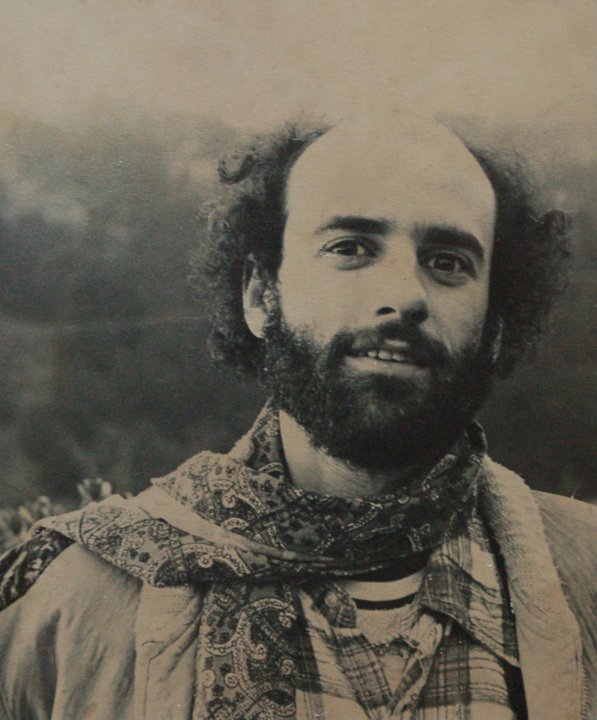
This Record Store Day exclusive finally bridges the gap between his 1970s cult classics and the present day. The lead single, ‘I Guess It Never Stops,’ serves as a haunting centerpiece. It carries the same DNA as his early work with jazz giants like John Scofield, but with a weathered perspective. Marks watches the rainforests fall and the boardrooms carve up the map with a heartbreak that feels earned. “The daily news cycle is something I don’t pay much attention to,” he admits. “It’s an issue of sanity.” Instead, he focuses on the long-term cycle where truth and fiction are easier to pull apart.
By choosing studio time over the grind of the road, Marks preserved a specific kind of freedom. “I just knew I would not have fun… becoming an employee of a record company,” he notes. ‘Crossroads’ gathers fourteen tracks, including nine previously unheard gems, proving his internal drive never flickered. Whether he is tracking live in a circle or cutting two-inch tape by hand, the goal remains the same. As Marks puts it, “We would stay inside the song, and nothing else existed in that moment.”
“Freedom encompasses all areas of the human experience.”
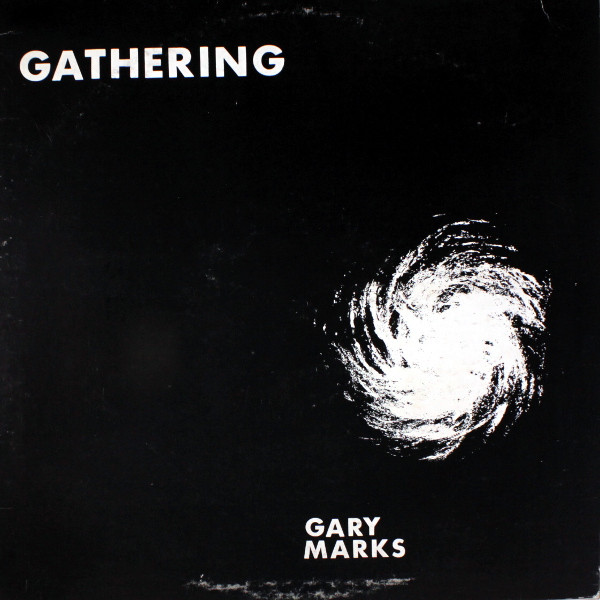
Taking it back to the beginning, your 1974 debut ‘Gathering’ featured John Scofield’s first time in a studio. You were surrounded by guys like Paul McCandless and Mark Isham before they became giants in modern jazz. Looking back at those early sessions, what was the magic in the room like? Did you all know you were capturing something that would become a cult classic among vinyl heads?
Gary Marks: No, we didn’t know what we were doing on so many levels!
I considered those players on ‘Gathering’ my first real band. I met Michael Cochrane, already a great jazz pianist at the age of 21, while hearing him play in a practice room at the New England Conservatory. I was wandering around various practice room hallways all over Boston trying to find someone who I thought could play my very odd, very complicated songs without just riffing over the changes.
I had my guitar with me, just in case…. So I knocked on his practice room door, sat down on the floor, and played him a song that I thought would win him over.
Halfway through the song he started trying to figure out the chords I was playing. After he agreed to be in my band and make a record, I asked him who the best guitar player in Boston was. He said John Scofield. So I went to John’s apartment, and we bonded over the music pretty quickly. I asked John who the best vibraphonist was in Boston. He said David Samuels. David was super cool. He wrote the chord charts to the songs in great technical detail and passed them around to the rest of the guys.
Those three players became the core of the ‘Gathering’ band that recorded at Ultra-Sonic studios in New York a few months later. We rehearsed for a few months in Michael’s living room in Boston, played a few gigs, then drove to New York. I had been gifted free recording time by the recording engineer who had heard me play solo at the Mercer Arts Center. He goes by the name of Michael Tapes now. But really, everything was just happening without a preconceived idea about where this would all lead.
We gathered in a big circle in the tracking room and played all the songs live in one take. It was kind of a miracle, really. But again, we didn’t know there was any other way to do it. In the end, we were very excited about how well the album turned out. But because we were in our early twenties, none of us knew anything about the future, except that we would probably stay friends, and hopefully keep getting better as musicians.
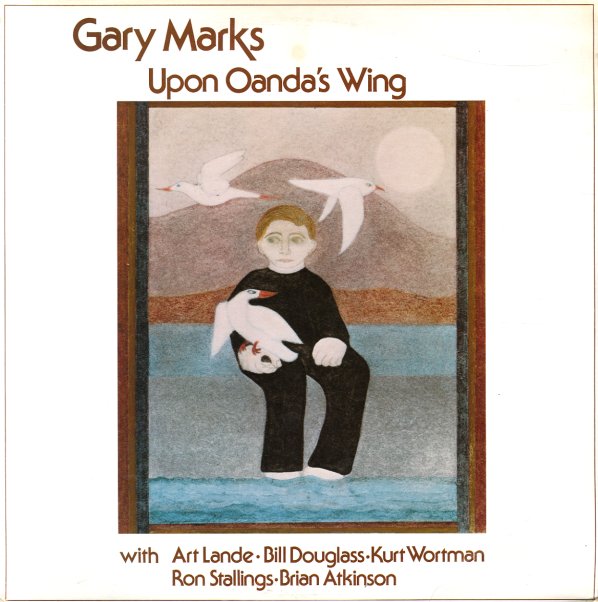
Art Lande and his band Rubisa Patrol (ECM), including Mark Isham, was “my band” on my second record, ‘Upon Oanda’s Wing’.
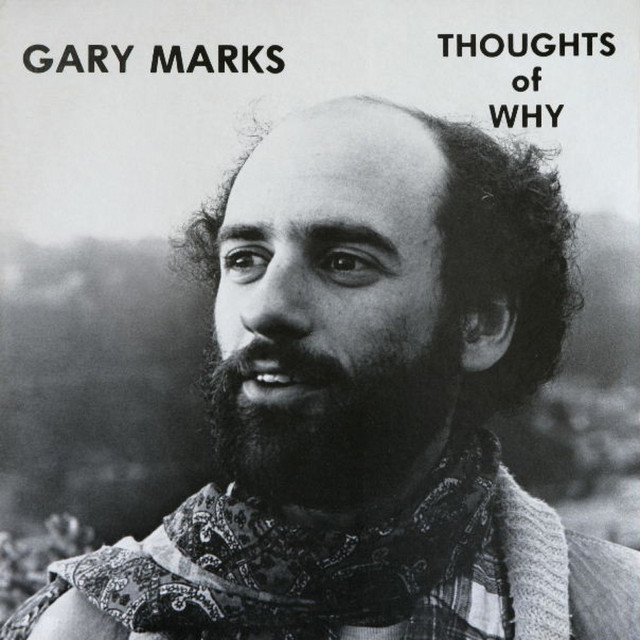
Paul McCandless joined Art’s band, and John and David, on my third record, ‘Thoughts of Why’.
Paul McCandless also played on an album I wrote and recorded in the mid-80s, which was never released — one of many unreleased albums, until now! He played an amazing solo on one of those songs — ‘The Elemental Line’ — which will be on my new album, ‘Crossroads,’ coming out in April.
And, of course, we had no idea if any of those unreleased albums would ever lead to anything either, or be heard by the general public.
Like ‘Gathering,’ we just made music with no expectations. We would stay inside the song, and nothing else existed in that moment. Maybe that’s how you get “magic in the room.”
You stepped back from the traditional album, tour, and promo grind a long time ago. A lot of artists tie their creative worth to external validation, but you just kept your head down and wrote eight full records on your own terms. What fueled that internal drive when the industry spotlight faded?
Honestly, I didn’t like touring. I didn’t like singing the same songs night after night to strangers, and the travel was a total grind. I wanted to practice piano and study with great players like Art Lande, and read great books, and write songs.
But when I made the decision not to tour, the record company interested in my next record walked away. No tour, no sales, no money. And I understood that, and understood it was my choice. But I just knew I would not have fun, or write the kinds of songs I wanted to write, becoming an employee of a record company and taking a sales pitch on the road. Some artists are entertainers. They love the applause. I don’t. I love the recording studio, and turning knobs, and creating sound!
But truly, there is no right or wrong, and I have zero judgment about other artists’ choices.
For me, I like to have fun as much as possible day to day. And touring just wasn’t fun.
The new single ‘I Guess It Never Stops’ hits hard right now. You sing about Eden being stripped and carried off in trains, a theme you have warned listeners about since the 70s. Sitting here in 2026 watching the rainforests still getting hacked down, do you feel a sense of tragic vindication, or is it pure heartbreak that the boardrooms are still dividing up the spoils?
Pure heartbreak. Not surprised though.
When you see how good corporations and politicians are at hiding the truth, and hiding their motivations, and you see the choices the voting public makes when they believe what they are told, then voting for Nixon — and now Nixon 2.0 — the rest becomes inevitable.
Strip-mining and chopping down the forests where Eden may have once existed is all just a reflection of who we’ve become.
But you know, everything changes. The pendulum will soon swing back in the opposite direction. Then we’ll see….
By the way, I can remember recording the song you’re alluding to — ‘I Guess It Never Stops’ — like it was yesterday. I remember conversations I had with the players. And I remember things like cutting two-inch tape at the end of that song so I could splice in a trippy “Eden Animal” synth part I came up with. One wrong move by the engineer cutting the tape and that entire song would have been gone.
Fortunately, the world can forgive more than one wrong move. The question is, how many chances will we get?
The tracklist on ‘Crossroads’ moves straight down the timeline, tracking your progression from 1976 right up to the 2020s. Curating that arc had to be an emotional trip. What was it like putting those tracks side by side, hearing the evolution of your own voice and worldview unfold across two sides of wax?
Gary Marks: Well, my singing voice has definitely gotten deeper now! Hopefully my writer’s voice and my worldview has as well.
‘Crossroads’ was made because so many of the songs I wrote forty years ago, and ten years ago, resonate with what we are dealing with in 2026 America. Externally and internally.
So I really didn’t think about the songs comparatively or emotionally in that way. The songs that spoke to the present moment made the album regardless of when they were written. The others will have to wait. Hopefully some day people will get a chance to hear them too.
A fascinating lyrical thread connects your older work to the newer material. In 1978’s ‘Thoughts of Why,’ you sing about being a windblown cloud trying to remember why you are here. Jump forward to ‘A Whisper Can Change the World,’ and the focus shifts to how quiet actions disrupt loud logic. How has your relationship with finding answers evolved over the decades?
Honestly, I read a lot, and I try to summarize observations and revelations I come to by putting them in my lyrics. My observations deepen with the years and the times, like most people. Some revelations are about the mind — which forces you to constantly pay attention to it, or you suffer the consequences. Some revelations are about what I think love truly must be if we’re going to define it as actual love. Some songs became philosophical sci-fi novels compressed into four minutes of lyrics, like “Looking Glass.” I try to make sense of human nature and human history through my own experiences in songs like ‘A Whisper Can Change the World.’ Like the rest of us, I just try to keep learning as I go. I guess it never stops.
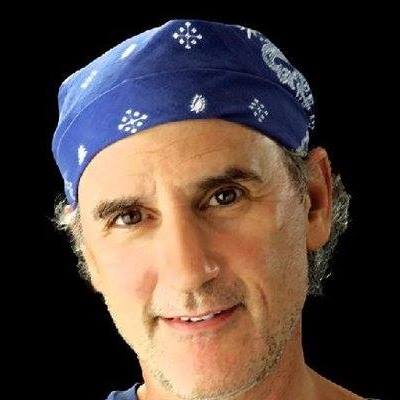
Your catalog blends the intimacy of a singer-songwriter with some intense jazz harmonies. It takes a unique touch to guide players like Art Lande or Stef Burns through those changes without losing the emotional core of the song. How do you approach arranging your material so the technical side never overshadows the feeling?
That’s a great question. For me, every note, every sound, and every solo has to match the story of the lyrics, line by line, and scene by scene. Most players, and most jazz players, are thinking about their sound, their performance, and they never get to the place the song needs them to get to.
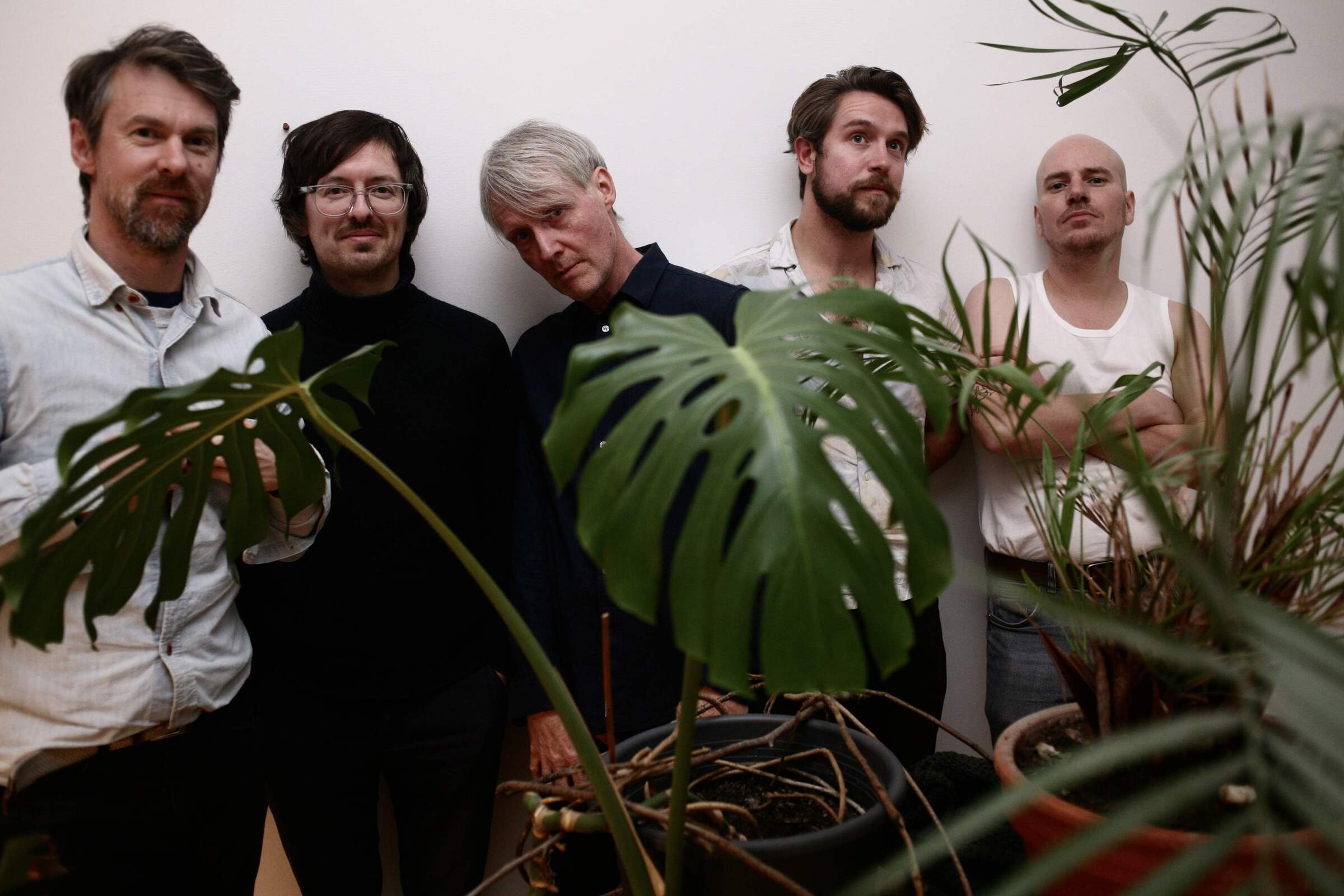
But the ones I choose to record with are the exceptions. They get it. Stef, Art Lande, they are so inside the music; they might try a few ideas until I say, “Yes — that.” Then they can stay in that mood and harmonic space for as long as the song needs them to. Sometimes I come up with parts. Sometimes, I come up with entire solos. But when you’re talking about geniuses like Art Lande and Scofield and Paul McCandless and Stef, honestly, they just get it. I don’t really have to say much. We just play.
Let us talk about the gap years. You have those eight undistributed albums living on your website. Whittling down decades of hidden gems to fit onto Crossroads alongside nine unheard tracks must have been agonizing. What was the ultimate deciding factor for a song making the cut for this specific Record Store Day release?
Out of the ninety-eight songs I’ve recorded and published, twenty-four fit the lyrical theme of Crossroads. We are at a crossroads in America and in human history. What will democracy turn into? What will humans become? Out of those twenty-four songs, fans and friends and family gave me their input. Jac and Barbara at Lantern Heights did as well. It was amazing that we could squeeze fourteen songs on the album, and fortunate, because I wouldn’t have wanted to leave any of those songs behind. The other ten will hopefully be heard some day as well.
You have always tackled the concept of power and cultural fracture head-on. In the new single, you call out “fathers playing God.” Back in the day, rebelling against authority looked like one thing, but the power dynamics in 2026 are warped beyond recognition. How do you find fresh ways to write about democracy and conscience without getting bogged down by the 24-hour news cycle?
The daily news cycle is something I don’t pay much attention to. It’s an issue of sanity. Because all the news outlets have their own form of nightmares and fairy tales to sell us. It’s the decade-long news cycle I look at, because then it’s easier to tell truth from fiction. I write from that longer-term perspective. But I also don’t think the power dynamics have changed that much. Because, yes, the Supreme Court has expanded the power of the presidency beyond recognition. But what this president is doing legally, with no one able to stop him, Nixon simply did illegally and in secret.
So, it’s really just a different set of rules with the same outcome.
It’s wild to think about Upon Oanda’s ‘Wing and Thoughts of Why’ getting reissued seven times across Europe and Japan, becoming white whales for record collectors. Now Lantern Heights is putting out ‘Crossroads’ as an official UK and Europe RSD exclusive.
Yes, ‘Gathering’ was reissued three times, and the other two albums were reissued twice each.
But the exciting thing about ‘Crossroads’ — aside from the overall socio-political theme — is knowing the nine songs no one has ever heard before made it onto the album. They were written and recorded between 1985 and 2020, many years after those first three records.
I also feel really honored that Crossroads was chosen as an RSD exclusive. It’s a lot of fun to see my name alongside some of the other RSD selections this year, like Springsteen and Joni Mitchell and The Rolling Stones. A big thanks also to Jac and Barbara at Lantern Heights for believing in the project.
Freedom is the absolute backbone of your music. You broke away from the commercial game to protect your artistic autonomy, and you write about personal liberation on almost every record. After five decades of exploring the concept, what does true freedom look like to Gary Marks right now?
To me, freedom encompasses all areas of the human experience.
Freedom to form our own opinions and beliefs about God, gods, or no god.
Freedom to vote for those we think will best preserve that freedom.
Freedom from having to form any conclusions at all.
Freedom from the incessant dark thoughts of our own minds — finding the ability to break free of those kinds of thoughts, and feel truly alive in the moment.
Freedom to find our own way in life without having others define what that has to look like.
Basically, I’m describing America in its highest form, love in its highest form, and a level of decency and compassion for those who are different from us, so they can be free too.
My personal belief is, if we are not free in all those ways, we are not yet free.
I’m certainly holding myself to that standard as well, and working on it.
“Writing in the flow, moment to moment, without pre-formed ideas, is the ultimate freedom.”
Your 1974 debut, ‘Gathering,’ holds an incredible reputation as the missing link between Tim Buckley and those classic early Impulse sessions. Carla Bley’s JCOA label handled the distribution, but the actual recording process at Ultra-Sonic Studios in New York remains the most fascinating part of the story. You had players like John Scofield and David Samuels making their recording debuts. The studio lore states your band laid down all nine tracks live in first takes with zero overdubs. When you look back at that energy, how did you capture lightning in a bottle on your first time steering a major studio session?
Naivety, most of all. There was no one from a record company telling us to change things, or telling us what “would work out there.” I was free of all that.
But technically, we also didn’t even know what overdubs were! Ultra-Sonic was a 16-track studio, state of the art. But all we knew was — we were being recorded.
First I played two songs with just John. Then we all gathered in the main room. We each had headphones on, and could really hear each other for the first time, since our rehearsals were pretty loud and chaotic. We felt like we knew the songs emotionally, and knew what we wanted them to sound like. Tim Buckley was, in fact, one of my inspirations for the free-form arranging and the instrumentation — especially having vibraphone be so prominent on many of the tracks…. Dylan and Joni Mitchell were my inspiration for the lyrics. In other words, they were going to have to be special or the song wasn’t going to make it onto the record.
So we all gathered in a big circle. I was sitting in a chair with my 12-string Martin, and my voice mic on a boom stand. The engineer worked on the sound for a few hours, then he said he was ready…. and we played the songs. Then we sat at the soundboard and listened and said, “Wow, this sounds great.” Then we all drove back to Boston….. And that’s how you capture lightning in a bottle, I guess.
A massive philosophical shift occurred between Upon Oanda’s ‘Wing’ in 1976 and your 1978 release ‘Thoughts of Why’. You posed the ultimate human question in the title track, asking the listener why we are here. To avoid leaving the record incomplete, you dove into Will Durant’s The Story of Civilization to find a concrete answer. That historical deep dive birthed the closing track, ‘The Grace to Be.’ Synthesizing centuries of human history into a single folk-rock arrangement is a massive undertaking. How did that intensive research phase change your approach to building a song?
I knew once I wrote the lyrics to ‘Thoughts of Why,’ if I didn’t come up with an answer to why, that song was basically meaningless. The search for an answer came from Will Durant, Steinbeck’s East of Eden, Ram Dass’s Be Here Now, the Tao of Physics…. In fact, that time, that search was my entire education beyond high school, since I dropped out of college in my freshman year.
But ‘The Grace to Be’ didn’t come from an outline of what I learned. I actually found the answer from writing the song. That’s what formed my approach to writing songs and novels after that.
The “building blocks” don’t exist beforehand. Musically, everything comes from improvising — playing something interesting enough and surprising enough to make me record it.
Lyrically, or even when I start a novel, I start with a sentence. If the sentence naturally leads to a next thought, I write that down. Then sometimes the thoughts form a story. Then sometimes the story gets too long to be a song and I write a novel instead.
But it all comes from the free-flow state that I learned while improvising on the piano. Art Lande was my teacher for a number of years. I learned to trust the sound, trust the movement, and keep trusting. Control should only come after you understand what it is you’re creating.
I still write that way. I guess we could include that way of creating when talking about what freedom is. For me, writing in the flow, moment to moment, without pre-formed ideas, is the ultimate freedom.
Klemen Breznikar
Gary Marks Website / Facebook / Instagram

Klemen, thank you so much for the truly thought provoking questions and for diving so deeply into the music and the journey. Warm regards.