
Gregg McKella of Paradise 9 Talks ‘Songs From The Underground’: An Interview
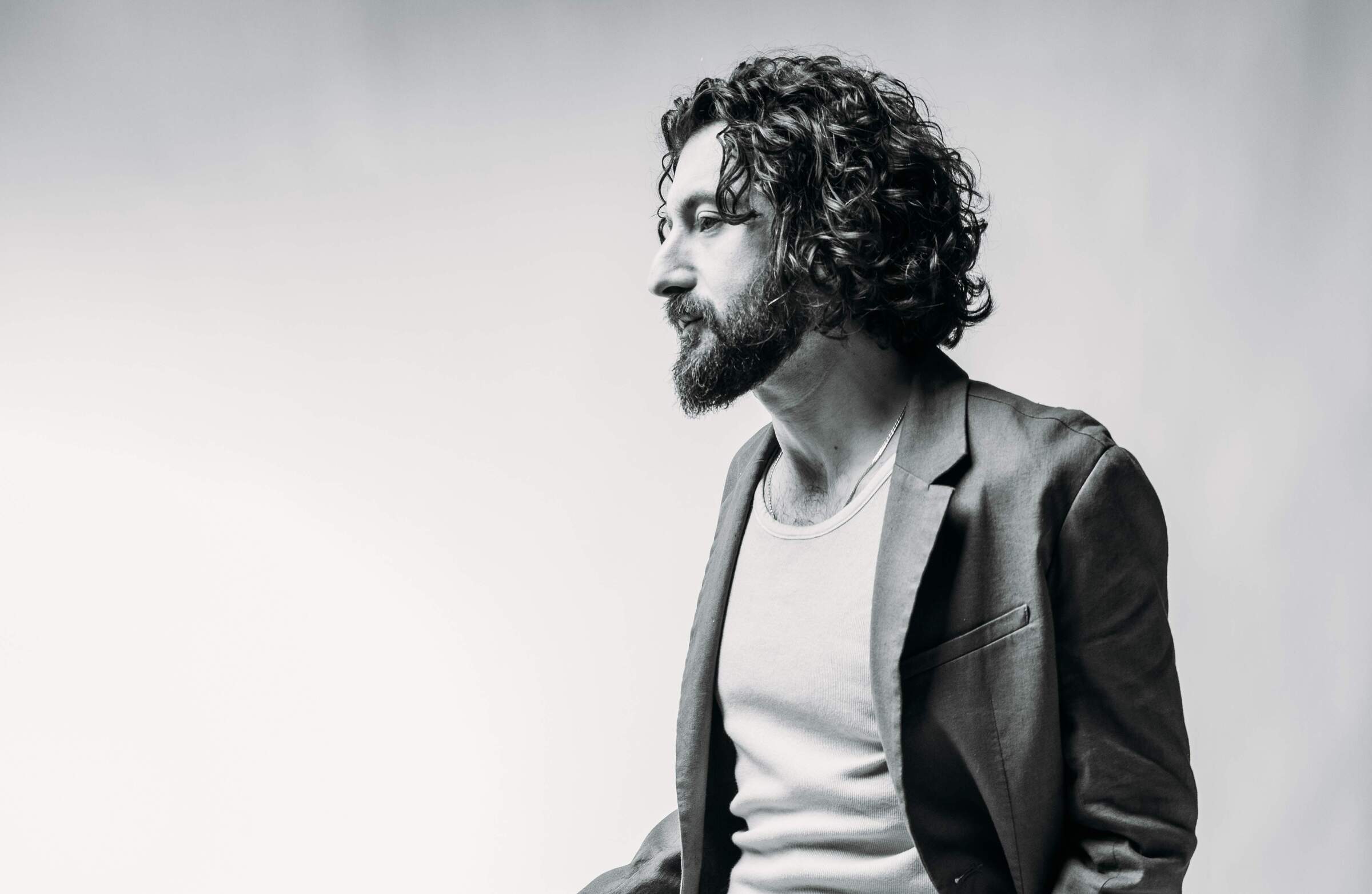
Gregg McKella has spent decades moving through the UK underground scene, collaborating with curiosity, and a willingness to follow unusual sounds wherever they lead.
From the early self-released days of Paradise 9 to later releases on Flicknife Records, his path reflects what he calls the reality that it has “always been hard for bands and artists to basically get themselves noticed against an ocean of talented acts.” He kept experimenting, adding instruments that rarely appear in rock contexts, including the clarinet, which he sometimes plays “Nik Turner style,” though he insists he uses it “just where it’s appropriate to add a bit of wind.”
That approach carries into his latest solo work, ‘Songs from the Underground,’ a project shaped by years of collaboration, personal challenges, and the close-knit underground community that has surrounded him since the early London and Brighton gigs. The songs also connect to the message behind ‘Inner Spark,’ a track written as “a rallying song, to keep things positive in moments of true hardship,” inspired by friends facing illness and later by his own cancer journey.
Despite decades of releases, Gregg still treats songwriting as a living process. Sometimes ideas arrive while “playing around with chords on a guitar,” other times lyrics sit waiting in a notebook or phone until the right piece of music appears. When everything lines up, he says, “the best songs just write themselves,” and that belief continues to drive the next chapter of his long underground career.
“There’s always been a vibrant underground scene, of which I’m pleased to still be a part.”
‘Songs From The Underground’ is a fantastic title, especially since you wrote these tunes while busking back in the ’90s. When you were out there on the streets, did you feel like you were part of a whole different musical world, a proper “underground” scene? And what’s it like to finally get these songs out there and give them their moment in the sun after all these years?
Gregg McKella: Yes, it was an underground scene. I first started busking in the subways on the Hammersmith gyratory. There was a whole load of buskers around then, taking our self-policed, allocated slots. We used to end the day in the Swan pub on Kings Street in a snug bar. It was there I discovered a load of my fellow buskers were actually busking on the tube, to and from Heathrow Airport, and I soon joined the tube buskers. Both on the tube, and in the subways and street, there was a real community, and I have remained friends with a few fellow buskers.
I decided to revisit my earlier songwriting years, but COVID lockdown and then getting prostate cancer (which slowed the recording process down for a time) gave me extra impetus to get these songs out and gave me a greater sense of urgency. The material from these times is a snapshot of life in the 90s that covers emotional and social themes of those times (but I would add they still appear to be reflective of today). It is great to get these songs out, and I must say I am really proud of this album. I have a big thanks to Martin Litmus, who made this project a realisation and worked so well with me in getting these songs produced to where they needed to be.
You’ve described the album as a mix of “folksy” and “space-folk,” which is a brilliant term. Could you tell us what a “space-folk” song actually means to you? Is it just about the lyrics and using a glissando guitar, or is it a more abstract feeling of being a bit floaty and cosmic?
I’d say all of the above, haha! A lot of the album has my fingerpicking, which lends itself to the folksy feel, I think, but a few songs have a load of bluesy chords too, and I still like to incorporate glissando guitar and synth noises (wibbley-wobblies and whooshes, as we technically like to call them lol), which always gives songs that floaty feel to them. But although these songs are floaty at times, they are also rooted in real life and politics, as folk and blues music often has been over the years. We didn’t shy away from using synths and synth effects to give some of the songs a “space-folk” feel to them, but I don’t think we’ve overdone it.
I’d add that I have now checked the Every Noise At Once website that shows every music genre in the world, and “space-folk” is not a given genre, so I believe I am the founding pioneer of this wonderful new genre (he says tongue in cheek, haha).
The story behind this album is really moving, coming after your health scare. A lot of artists say that kind of experience gives them a new fire. Did you feel a different kind of urgency or freedom when you were recording these songs compared to a Paradise 9 album? Was it a case of “now or never” for these tunes?
Absolutely! As I stated above, you realise your mortality, and I feel, as a lot of folks who’ve had health scares do, it makes you re-set what is important in life. We had already started the album, but it was put on the back burner while Paradise 9 got busy releasing our ‘Science Fiction Reality’ album on Flicknife Records. So when I was diagnosed, and ultimately went under the knife to rid the offensive tumour, once recovered, it gave me a real urgency to finish the project. And as I said earlier, these songs were part of my earlier life, but I didn’t feel they were appropriate Paradise 9 material. I wanted to take a different approach for these songs.
You’ve got some cracking guests on the album, like Nick Pynn and Tyrone Thomas from Paradise 9. How did the recording process for this solo effort differ from a full-band project? Did having Martin from Litmus as a multi-instrumentalist producer give you a lot more creative wiggle room to play with?
As I said earlier, it was about taking a different approach to the album. The songs are “flavoured” differently to the band stuff, so yes, it did mean we could use different instrumentations on the album, like mellotron and various synths, more acoustic guitars, glissando guitars, my clarinet. I was delighted to get Nick Pynn to agree to add some violin on three tracks, as well as Mr Eugene on ‘Face In The Crowd’, and my P9 buddy Tyrone Thomas, who added some great lead guitar on ‘Gone So Silent’ and completely moody slide guitar on ‘Motherless Children’. Also Jeanette Murphy added some great backing vocals, who I worked with in a band from the 90s called “Image Wot Image?” She is a great singer/songwriter who, back in the day, was also a fellow busker.
Having Martin play, record, and produce the album has also been a real pleasure, as he reads my songwriting very well, plus he is an excellent accomplished multi-instrumentalist and producer.
Paradise 9 has that unique psyche/proto-punk vibe, but this solo album feels much more folk-driven. Do you feel like you have to switch hats between these projects, or is it just all part of the same thing? How do you go from the high-energy stuff to the more reflective, song-based material?
I guess it is a case of wearing hats, but having said that, with Paradise 9 we do have the odd reflective track, like ‘Crystallised Moments’ or ‘Distant Dreams’. However, I am more of a songwriter than a virtuoso instrumentalist. When I write songs for Paradise 9 I definitely have my P9 hat on, though sometimes songs just pop out, and they might not be in any particular genre I’d normally compose in.
Let’s wind the clock back to the ’80s. You were in a band called The Presence and played with some real legends like Marillion and Ozric Tentacles. What was that whole scene like back then? What were the big influences that were shaping you as a musician at the time?
Marillion came from my hometown of Aylesbury, and in my young formative years I promoted them a couple of times at a pub called the Britannia, along with other bands like Solstice and other local groups. I was 19 years old at the time. At that point I was just starting to get into playing with bands, eventually getting a fairly decent combo together called The Presence. Getting to play support with bands like Marillion and Ozric Tentacles certainly inspired me. Marillion played really lengthy tours up and down the UK, and they got so tight musically that within 12 months of playing my small joint they signed a major deal with EMI and were next playing Hammersmith Odeon. They really earned their success.
Musically, Ozrics were a definite inspiration, as they were new kids on the scene at that time, so getting a support slot in the 80s was a real joy. Along with them, bands like Hawkwind, Pink Fairies, Pink Floyd, Gong, Steve Hillage, Here & Now, and Inner City Unit were my inspirations.
After that, you formed Image Wot Image in London. What was the transition like from the ’80s prog scene to the bustling London underground? What was the energy of Image Wot Image, and how did that band help you find your feet as a songwriter?
Image Wot Image came about after I’d been busking for a couple of years, and I teamed up with singer/songwriter Jeanette Murphy. We enlisted another busker, Mufa, on drums, then Debbie Vannozzi on bass, and Tyrone Thomas (from Paradise 9/ex-Alternative TV) on lead guitar. The sets were made up of Jeanette’s songs and my own songs, and a couple of co-written songs. This was my first time working with another songwriter in a band, and I learned a lot from Jeanette. We did have quite different writing styles, which did make us a bit genreless, but that suited our name Image Wot Image? Folks liked us because they never quite knew what kind of song would pop up next! I guess we were quite indie, but we’d also have psyche, punk, dubby, folk, and even African in there!
Dreamfield came along in 2000, and you had some singles that did really well. What was the driving force behind that project, and what did you pick up from working with a producer like Poppy Gonzalez?
Poppy was definitely a driving force, and again I learnt a lot from her, production-, playing-, and writing-wise. Attention to detail was a main thing I learned from Poppy. And space. Knowing less is more sometimes. So things like: do we really need any more instrumentation on this? The middle 8 only has eight descending notes… is that enough? Oh yes it is! Does this song really need a third verse? No it doesn’t… let’s go with a longer moody outro, etc.
We were kind of dreamy indie with psych edges, with trip hop soundscapes. We had a little success, getting to do a small tour in Estonia, recording in America, and had a single of the month, ‘Take Me with You,’ on the then GLR (now Radio London) and number 1 in the early indie download charts, which stayed there for many weeks.
Your connection to the Gong family is fascinating, especially with Daevid Allen’s Glissando Guitar Orchestra. Can you explain the idea behind the “seven drones” and what it feels like to be part of that collective? What’s the glissando guitar all about for you? It’s such a unique instrument.
The technique of playing “glissando guitar” is where the player uses a metal implement such as a screwdriver (Capt Sensible uses a beer can!) and in effect bows the strings, but unlike a violin, the screwdriver moves up and down the fretboard to play the pitch. Using delay and compression effects (I sometimes also use a chorus pedal) gives an ethereal sound that was perfected by Daevid Allen and Steve Hillage. The story goes that it was Syd Barrett, who used to use a Zippo lighter on the early Floyd tunes, who actually invented the technique and passed this on to Daevid. I have always loved the sound it creates, and was absolutely made up to be invited to join the Glissando Guitar Orchestra!
The actual idea of the 7 Drones came to Daevid Allen. He learnt many techniques and practices in the fields of meditation and self-awareness. So the drones are the notes, starting in ‘C’ being played over several minutes, then progressing through the scales, going to ‘D’, then all the way to ‘B’, these being the major notes of the musical scale C through to B. The drones give a balancing and meditative effect to both the players and the audience listening, as in theory each musical key is connected to one of the seven chakras. It’s quite a powerful thing, and to be a part of the orchestra creating the drones is quite a moving shared experience.
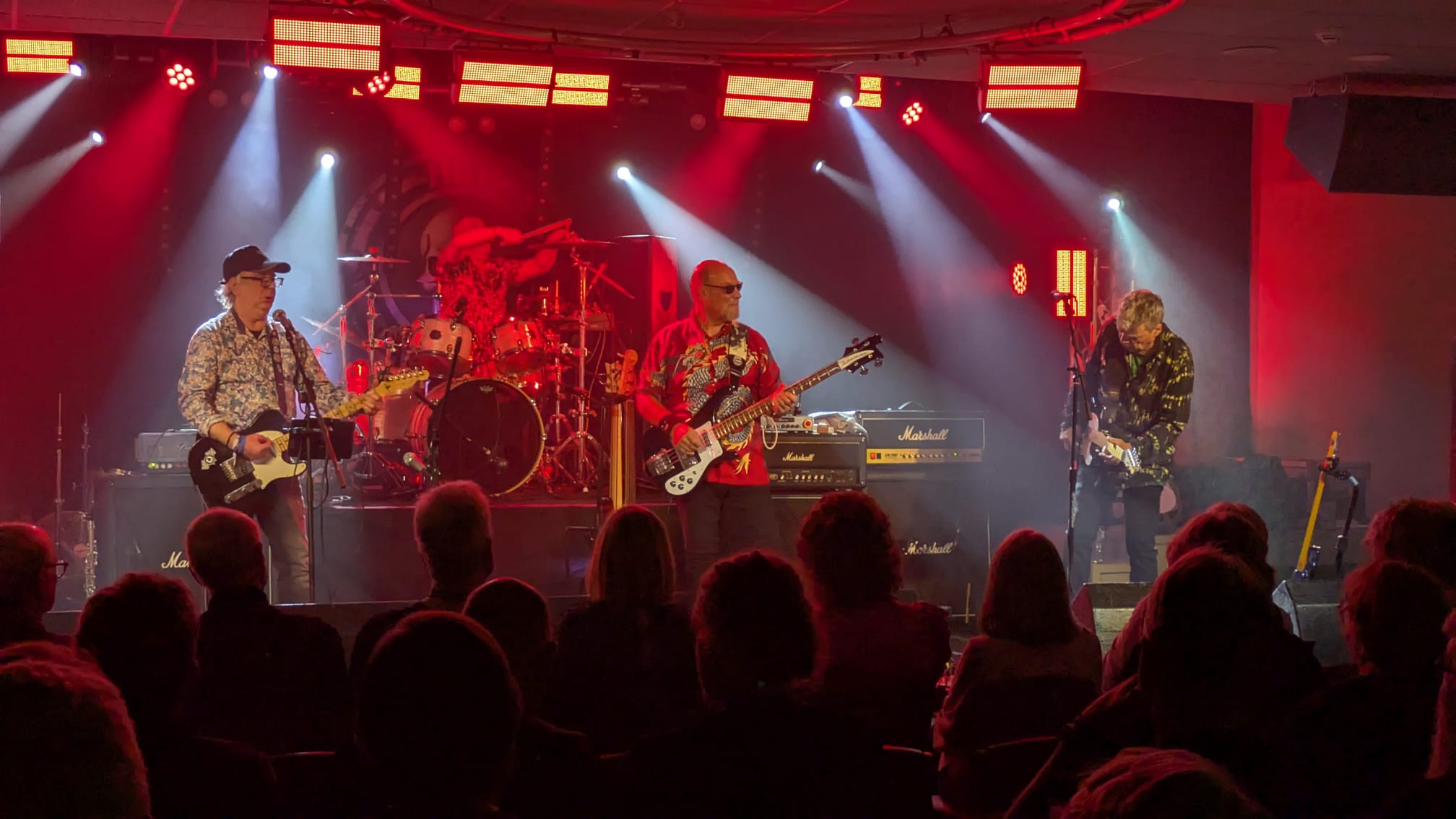
You’ve been up on stage with Nik Turner’s Inner City Unit and Space Ritual… What was it like being in that orbit? Any brilliant stories or mad moments from a gig that stick out in your mind?
I was first invited up when I moved from London to Brighton and became friends with Judge Trev Thoms, who with Nik Turner had formed Inner City Unit. I’d been seeing ICU since the early 80s, so when Nik and Trev put ICU back together in 2006 I was absolutely made up to be invited to guest clarinet at their reform gig at Vikrams in Slough. After that I was invited along to guest clarinet in a few of Nik’s projects, Space Ritual and the Outriders of the Apocalypse. Yes, that was a real blast! I also got to duet with Nik on flute, and me again on clarinet on one of my favourite Nik-penned Hawkwind songs ‘D Rider’ with his Space Ritual band.
I remember when I was asked to guest with Space Ritual at the Borderline, I was backstage while the band were on, warming up my clarinet, as Nik invited me up to play on ‘Master of the Universe’ and ‘Brainstorm’ at the end. I got a bout of real fear and stage fright and mentioned this to Nik’s pal and wingman, the lovely late Ervine, who recently had surgery for throat cancer and had a voice box, but he kindly rasped and reassured me that “Nik wants you up there. He is expecting you. You’ll be fine”. That gave me the fire and confidence to grace the packed stage. Nik was very generous and very inclusive with his support for budding musicians and always had guests up on his Space Ritual gigs. I was thrilled to be one of them. At one gig he had a trumpeter, trombonist, flautist, myself, and a synth player guest on ‘Brainstorm’ with the 7-piece Space Ritual. Yes, the stage was a little cramped, but Miss AngelFlame still managed to strut her dancing!
Your synth work is on Steffe Sharpstrings’ Sentient album. Tell us a bit about your connection to The Real Music Club. It sounds like a proper hub for local talent.
Again I was lucky to be invited to play synths with Steffe’s Sentient, which was released as ‘Live at the Real Music Club,’ which is still available on the Planet Gong web shop. That was another special gig for me for sure.
I have stepped down now, after nearly 20 years with the RMC, to concentrate on my own music and also my volunteering with PCaSO (Prostate Cancer Support Organisation).
I got connected to the RMC when I first moved to Brighton in early 2006, when Judge Trev and his mate Honkin’ Stu were handing out flyers for a gig they were putting on in a pub. I became a regular at the gigs the RMC put on and later in 2007 joined the promo organisation. Paradise 9 played our first Brighton gig with the Sumerian Kyngs, with Judge Trev guesting with us.
The ethos of the club was to put on local original bands and artists, to put on eclectic nights, and essentially to make sure acts got paid something, as at that time it was hard getting paying gigs. Sadly Judge Trev passed away with pancreatic cancer in December 2010. So every year after Trev’s passing we held a memorial gig for Trev, with funds going to Pancreatic Cancer UK and Brighton & Hove Community Radio, a station Trev helped set up with local celebrity Susi Oddball. Every year Nik Turner would play this event, over the years with Krankshaft, Project 9, and The Nik Turner Band (which was a band myself, Kev Ellis, and Martin Litmus put together, bringing in ICU bassist Nazar Ali Khan and drummer Dino Ferari from Italy).
Through the RMC I also got to meet counterculture hero Mick Farren and ultimately play with my musical heroes from the Pink Fairies, Duncan “Sandy” Sanderson and Russell Hunter, through our RMC fellow member Tim “Slim Tim Slide” Rundall (who ran the Fairies fanzine UHCK), as Mick Farren & The Portobello All Stars, playing a couple of gigs in London and Brighton.
The RMC is still going and continues to promote original local talented bands and artists in Brighton.
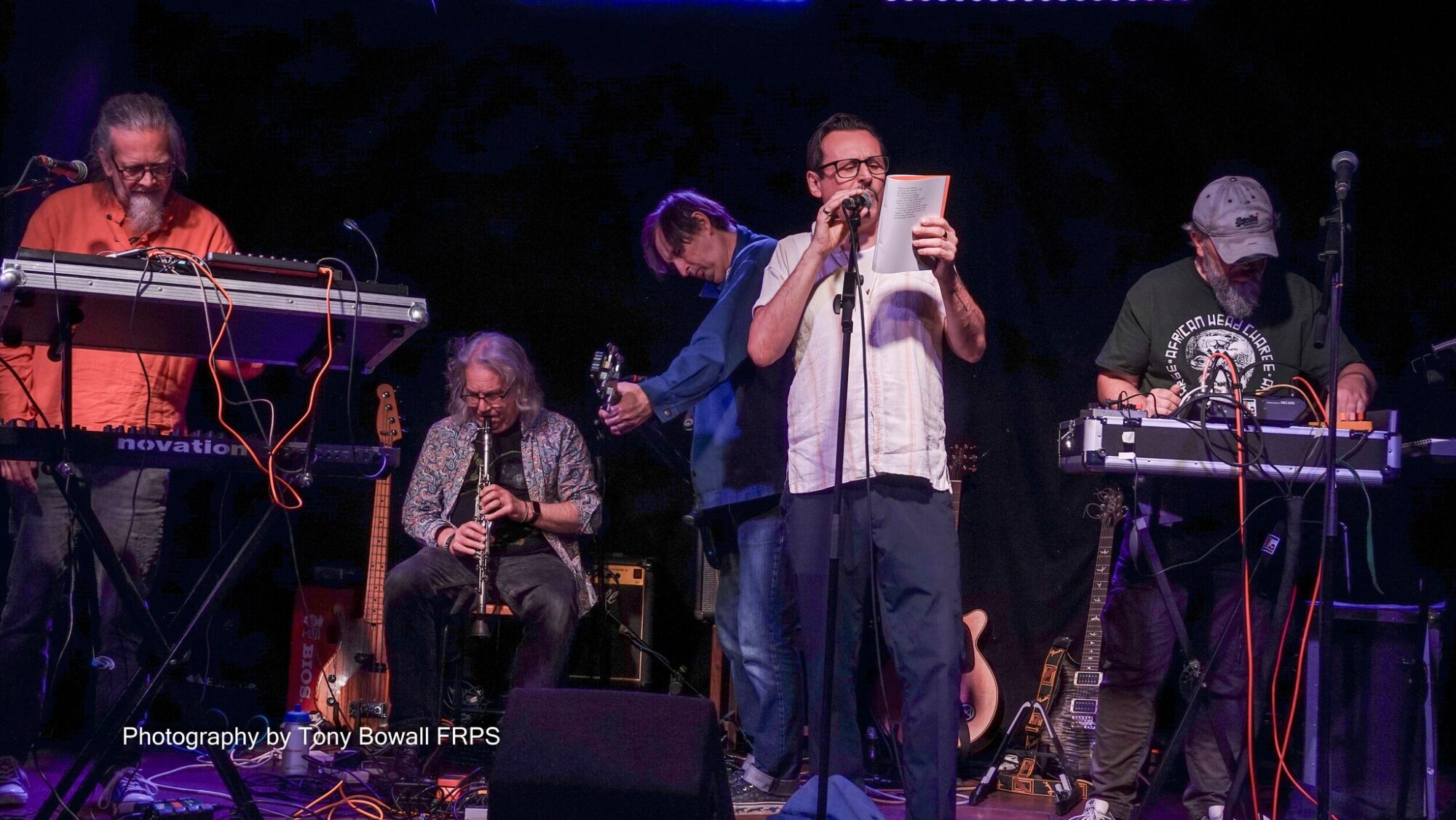
The clarinet! It’s not an instrument you expect to hear in this kind of music, which makes it brilliant. When did you first start playing it, and why did you decide to bring it into your songs? Does it serve a specific purpose, like adding a certain feel or atmosphere?
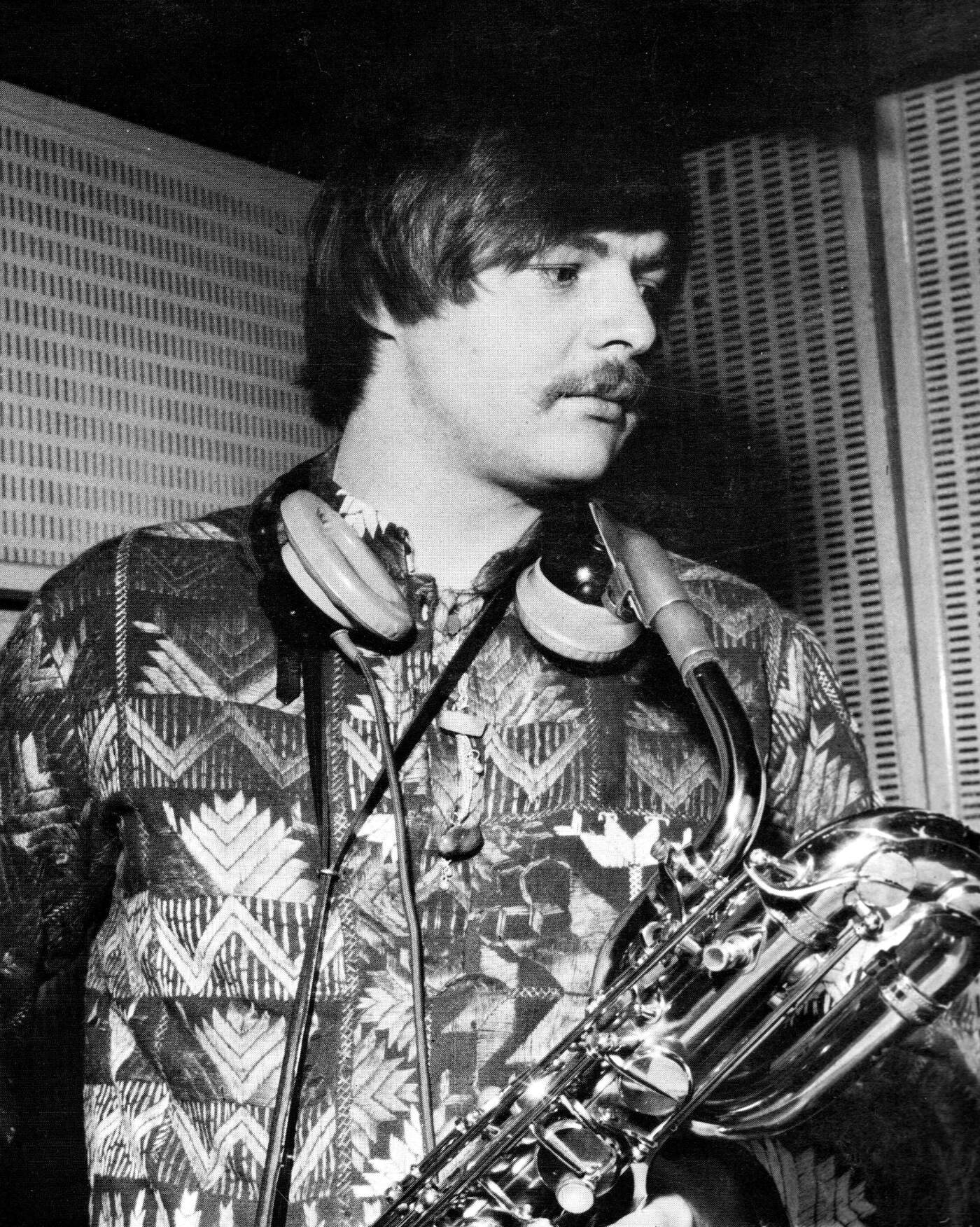
I learned the clarinet at school, and then left it a bit. It wasn’t until I started busking in London that I got to pick it back up again. I got to play with a lot of different buskers and singer/songwriters. Unlike a sax, it’s a gentler instrument, although with Paradise 9, I play it Nik Turner style (how could I not!). However, with Paradise 9 I don’t overuse it, just where it’s appropriate to add a bit of wind (if you pardon the expression!).
I also now play with an electronic ambient dub band called Rubber Bus, and with them I get to play with lashings of delay and wah. They’re a very soundscape-textured band, so it allows me to weave in and out of their soundscapes.
The Spirits Burning collaboration on “This Alien Heat” is something else. You’re on a track with members of Blue Oyster Cult and Hawkwind. What was the process like for that, and what did it mean to you to be part of such an epic, all-star project?
Yes, I was made up to be asked to contribute to the Spirits Burning and Michael Moorcock 2018 album. Don Falcone, who heads the project, invited me to add guitar, plus I added some glissando guitar, which I was pleased he used well on the track ‘To Steal a Space Traveller’.
Again, I was totally made up to play with the likes of founding Blue Öyster Cult’s Bouchard brothers Albert and Joe, along with ex-Hawks Harvey Bainbridge and Adrian Shaw, Groundhogs’ Ken Pustelnik, and of course the literary legend himself Michael Moorcock.
You’ve been making music for a long time, going from a self-released debut to putting stuff out on labels like Flicknife. How has the music scene changed for a band like Paradise 9 over the years? What have been the biggest lessons you’ve learned?
It’s always been hard for bands and artists to basically get themselves noticed against an ocean of talented acts out there. And the major companies have always gone for the safe, sexy acts that will get them quick returns rather than acts that could provide longevity. It is especially harder for this younger generation these days, where streaming is the main media platform, so songs are written to grab a listener with immediacy, rather than album tracks that are ‘audio growers’ that have any depth.
As such, a lot of bands are going the DIY route, as they get to control their own content, rather than have companies dictate to them. Getting our last Paradise 9 album ‘Science Fiction Reality’ on Flicknife Records was great though, as still an original independent from the 80s, with all their history, gave us some recognition being part of their label for that release. They didn’t interfere with the creative content either, keeping to their independent label ethos.
‘Inner Spark’ from the ‘Science Fiction Reality’ album is a really powerful track. Can you tell us a bit about what inspired that song and what it was like to write and record?
The music itself was written by bassist Neil Matthars, arranged by the band, and the lyrics by myself. At the time, I had a couple of friends going through their own medical journeys, one going through cancer. The music inspired me to make this a rallying song, to keep things positive in moments of true hardship and personal battles. Both friends got through their journeys and became survivors.
Ironically, I was then diagnosed with prostate cancer a year after the release of the album, after being given a PSA blood test. Alarmingly, as with so many guys, I had no symptoms. In fact, this test ultimately saved my life!
And so I started my own journey. I joined a local support group called PCaSO (Prostate Cancer Support Organisation), an organisation run by guys who have gone through their own journeys, who offered invaluable advice and helped me to keep positive during a very difficult time. In January 2022 I had surgery to remove the offending tumour, and suffice to say, with huge thanks to our NHS, I am still cancer free today. I am now a volunteer for PCaSO.
So now, at every gig we play, prior to playing Inner Spark, I give an announcement, briefly telling my story and advising the guys over 40 years in the audience to get themselves checked by going to their GPs and asking for a PSA blood test. Guys reading this… take notice!
You’ve played at some amazing places and festivals. Are there any gigs that really stand out in your memory as being particularly special, either because of the performance or the crowd?
I have to say Kozfest is the event of the year, and to my mind the best psyche festival in the UK. We’ve been playing this since it started in 2012. The festival was started by the legendary DJ and compere Kozmik Ken, who sadly passed away in 2021, Jon Snak, Paul ‘Woodbine’ Woodwright, and Mark ‘Snake’ Lee. Having started off in Devon, it is now relocated to Builth Wells, and still carries a special vibe that keeps the psychedelic flag flying.
The most bizarre gig was Dreamfield playing at the Museum of New Art (also known as The Charlie Chaplin Museum) in Parnu in Estonia. We opened an all-day festival that was televised for their national TV and radio station, only no one told us we were to be part of the schedule. Only during the seated gig, at various times members of the audience one by one disappeared, having their chairs collapse beneath them! Still, the gig went well and we got a follow-up show broadcast about the band (although I never got to see it!).
Special venues, well, London has to be the Half Moon in Putney, and notably the Paradise 9 20th anniversary gig in 2017 was a special one, where we pretty much got every ex-member up on stage at the end, and also last February’s gig we did with Here & Now.
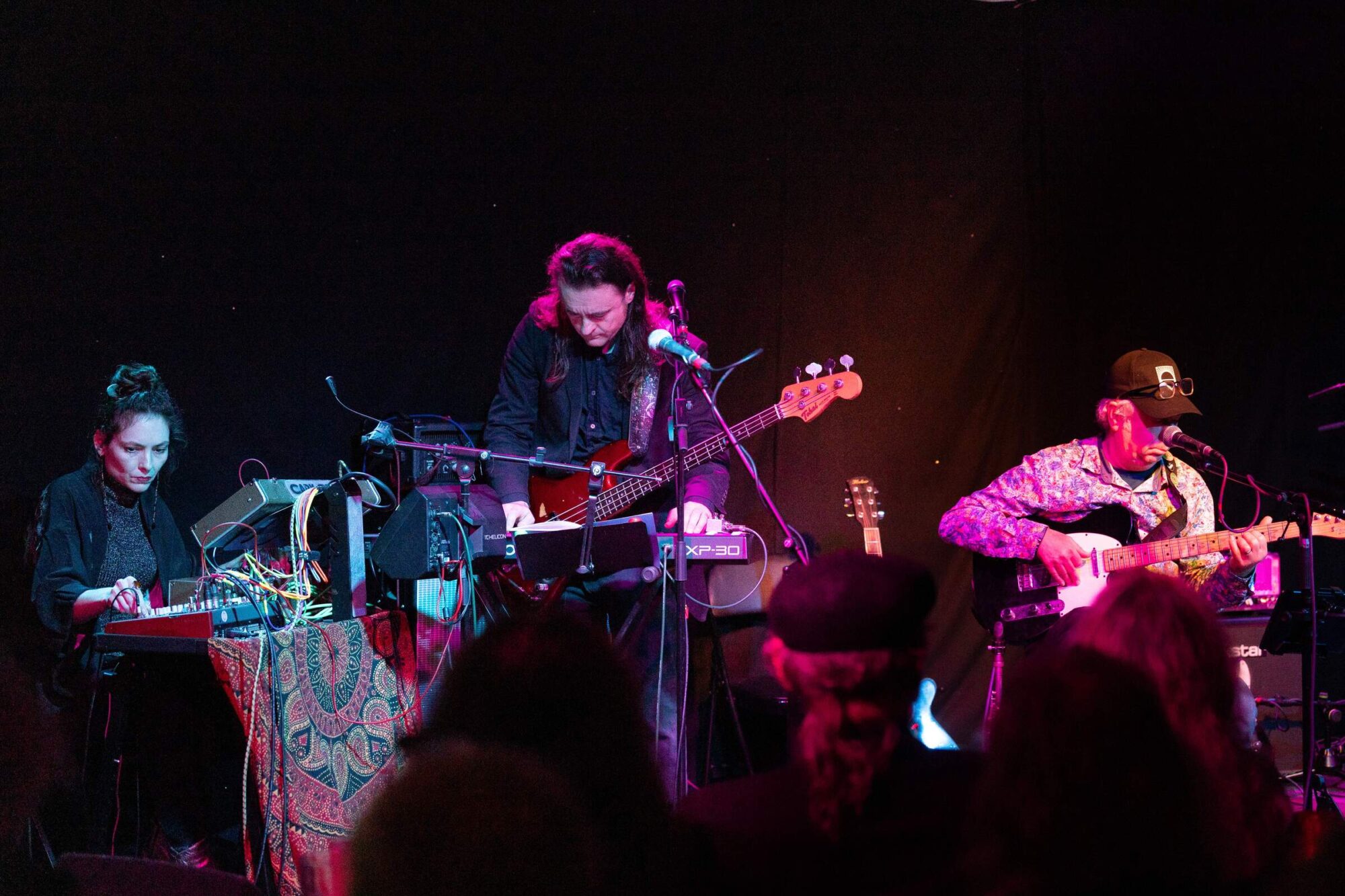
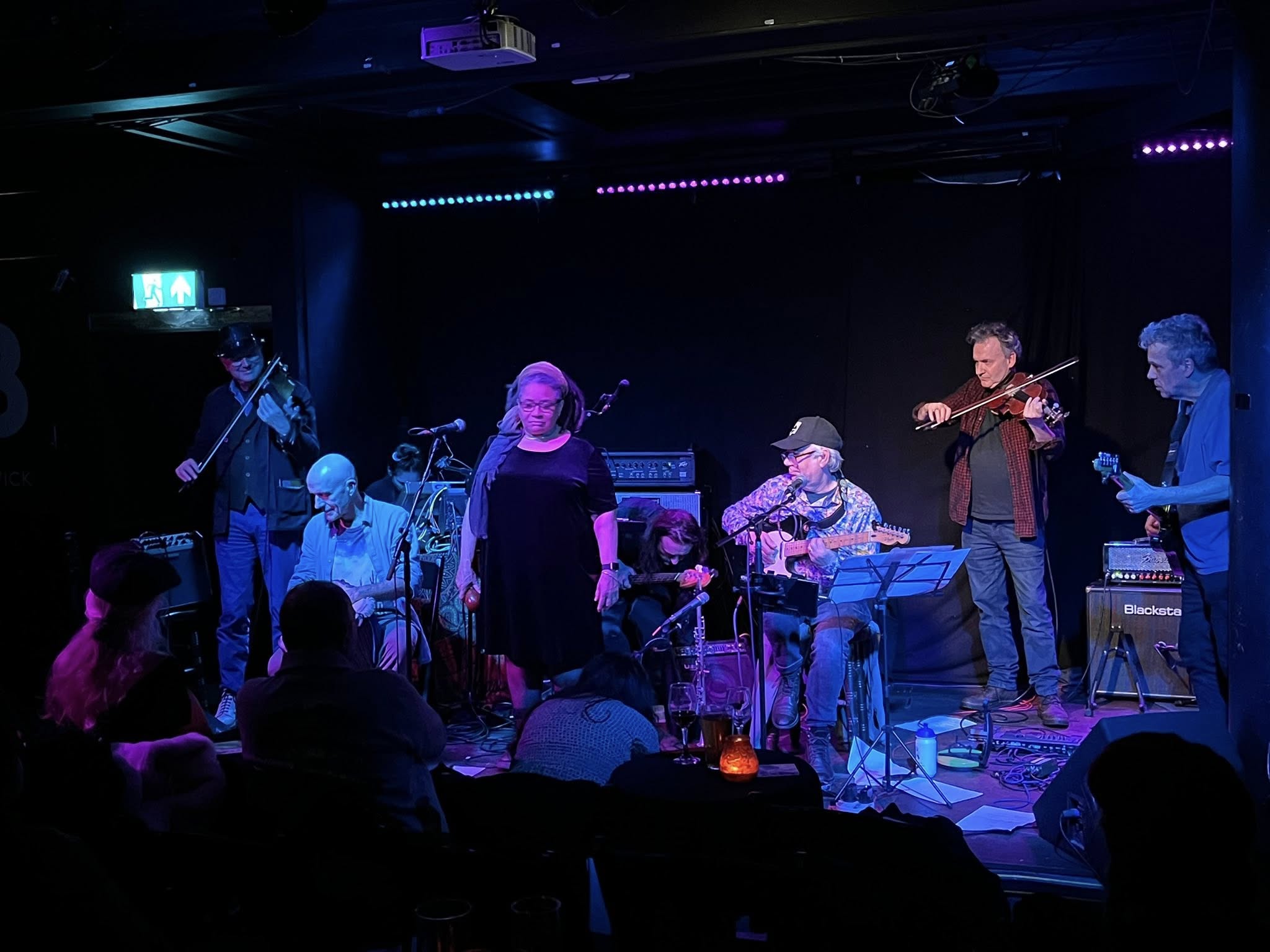
As earlier mentioned, the Brunswick pub in Hove, where the RMC held the Judge Trev and Nik Turner memorial gigs, and being part of the Judge Trev/Nik Turner Band, were always very special gigs. There was always a lot of love in the room at these gigs, and this is the venue where I launched the new CD on Sunday 7th December. Again, another special event, where I had all the contributing musicians, Nick Pynn, Tyrone Thomas, Mr Eugene, and Jeanette Murphy, plus Wayne Collyer and synth player Cary Grace.
Your lyrics often feel like they’re telling a story, with a mix of sci-fi and personal themes. How does your songwriting process work? Do you get the words or the music first, or is it more of a simultaneous thing?
Ordinarily, and like most songwriters I think, I’ll be playing around with chords on a guitar, and something will develop from there. Music initiates a mood and feel, which then directs how the lyrics form, whether it’s something joyful, or more often than not, not so joyous lol! Some songs come from my experiences, but I also don’t mind admitting that I’ve always been a sci-fi buff, and that the likes of Hawkwind, and especially Robert Calvert, have been a massive influence over the years. Also I am a big fan of The The and Matt Johnson’s social and political commentary and observations.
I also jot lyrics with no music in mind, and ‘bank’ them on the computer or mobile (used to be notebooks, of course), and sometimes music I’d have written, I would find suitable lyrics to draw on from there.
But at the end of the day, I think the best songs just write themselves, like when the muse is with you, you play a load of chords and the lyrics and melodies just pour out. You write them down, and there’s little to do with adjusting anything.
How much of your music is improvised, both in the studio and when you’re playing live? It seems like it’s a huge part of what makes you guys so good.
With Paradise 9, we always have the main structure organised, but will have wig-out sections within them, like instrumental tracks such as ‘Ocean Rise’ and ‘Into the Ether’. So in the studio, the main structures of the songs are worked out, but middle 8s are improvised, while other songs are all properly worked out.
In Rubber Bus there’s more improvisation, but again within the structured content of the songs. Again, as in both bands, I get to improvise on clarinet, with delays and effects, which is fun stuff to do.
You’ve been a key part of the UK underground scene for decades. What do you think is the best thing about this community, and how has it supported you throughout your career?
In Britain, and especially in London and Brighton, there’s always been a vibrant underground scene, of which I’m pleased to have been, and still am, a part of, whether it be psychedelia, punk, folk, or acoustic songwriter nights. And they come with great community spirit, where great friendships are forged. Players and audiences may lose touch over time, but many years later re-connect, and these friendships continue just as before. And getting this support for my music over the years, and ultimately the support and good wishes I received through my cancer journey, was very powerful and moving.
What’s next for you? Now that “Songs from the Underground” is coming out, is it back to Paradise 9, or are there more solo projects on the horizon?
Paradise 9 is taking a little break, as Tyrone is sadly retiring from the band. His final gig will be at the Half Moon in Putney on May 31st, where we open for the mighty Here & Now. This is all amicable, but he will be hard to replace as he has such a distinctive style, which has become such a part of the P9 sound. This year I want to take the solo album out while we explore our options.
I do have another recording project on the go, momentarily on hold while the solo album goes out, which I hope sees the light of day, but that is all under wraps for the moment…..
Oh, and one more. If you would stop by in my little town and had enough time, what records would we play?
Haha, well this is always the difficult bit, in as much as there’s so much good stuff that’s been, and stuff that’s still being created (despite what some people say!).
From Brighton, I’d stick on some Codex Serafini and their last album ‘Mother Give Your Children Sanity’. I love the tribal psych chanting, driving rhythms, with James’ sax work very reminiscent of Nik Turner.
Then some heavy psych with 3-piece south coast Black Helium and their excellent ‘UM’ album.
I’d stick on 4-piece Bristol band Shoun Shoun ‘Monsters & Heroes’. They have a great art-noise sound (how they describe themselves, which seems fitting). It’s a great album of moody dynamics with very deadpan vocals from Annette Berlin.
Next up would be Italian 4-piece GIÖBIA, and their new album ‘X-ÆON’ for some driving motoric.
Back to London with 3-piece Nukli’s fab new album ‘Acid Funk’. The band are not exactly new, as they’ve been around the psych scene since the age of dawn! As have Deviant Amps and their latest “Ergot Wheat and Rye”.
And it would be remiss of me not to play you the latest Rubber Bus ‘ambient-dub infused protest music’ album “Welcome to Karmic City”, where I guest on clarinet.
Finally, thank you for the interview, and your continued support of our music, Klemen, and for keeping the psychedelic flag flying!
Klemen Breznikar
Headline photo: Gregg McKella with Cary Grace and Martin Litmus at CD launch gig | Photo by Richie Mountain
Gregg McKella Website / Facebook / Instagram / Bandcamp