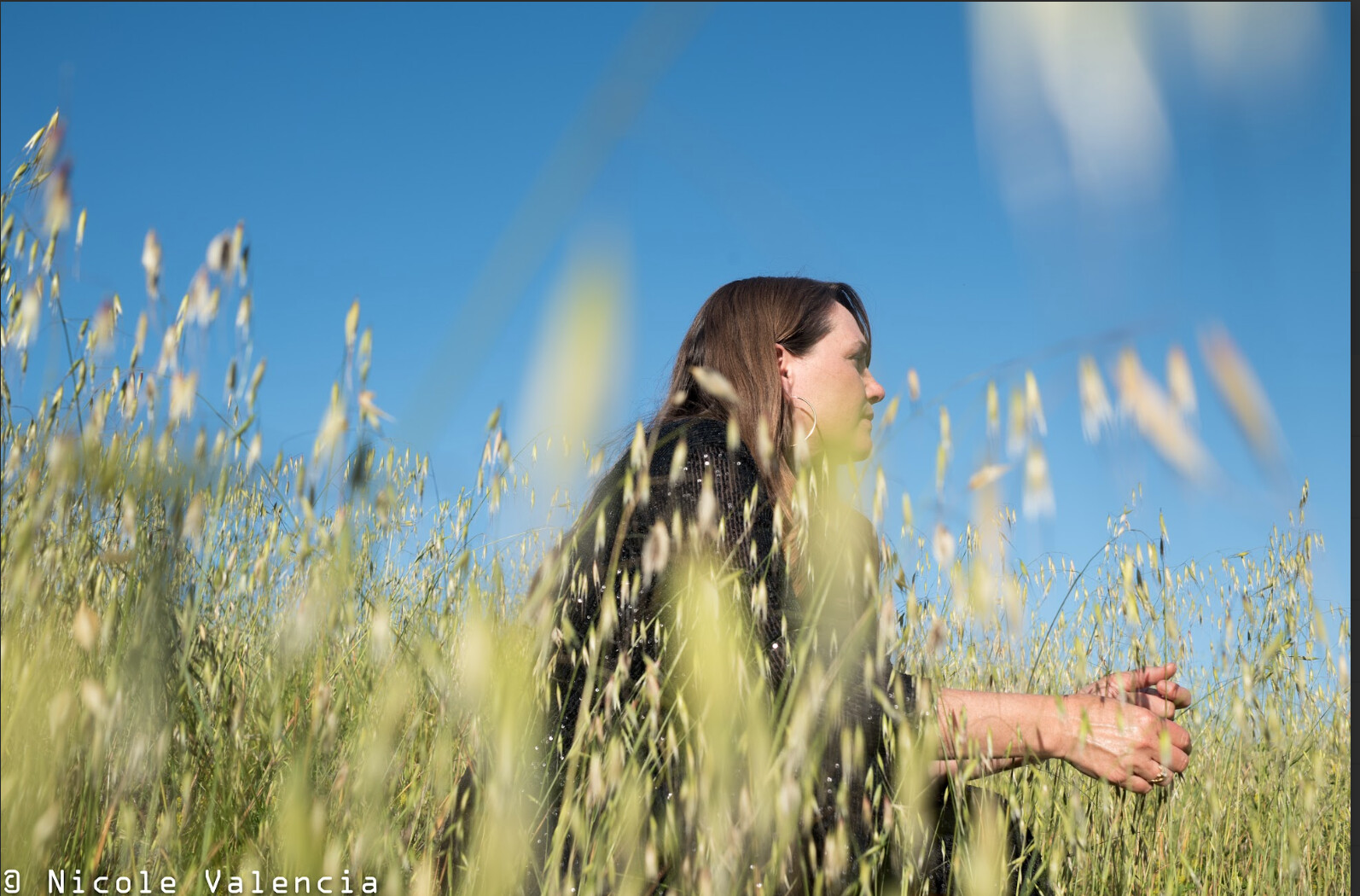

Shelley Burgon on ‘The In Between’: An Intimate Conversation About Sound, Silence, and Place
With ‘The In Between,’ harpist and composer Shelley Burgon reimagines the instrument as a living voice, moving through time, air, and fading light.
Recorded without amplification as evening settles over Ojai, the piece unfolds at a pace that invites stillness and heightened awareness, allowing environmental sounds to drift naturally into the music’s fragile architecture. Rather than resisting distraction, Burgon embraces it, asking listeners to recognize how attention itself shapes what is heard.
The composition moves through slow accumulation and gentle release, suggesting a quiet emotional arc that mirrors cycles of departure and return. What emerges is not traditional virtuosity, but an intimacy between performer, instrument, and place. The result feels like a shared moment suspended in time, where listening becomes a meditative act, and the boundary between music and world gradually dissolves. The album was released via Thin Wrist Recordings / Black Editions.
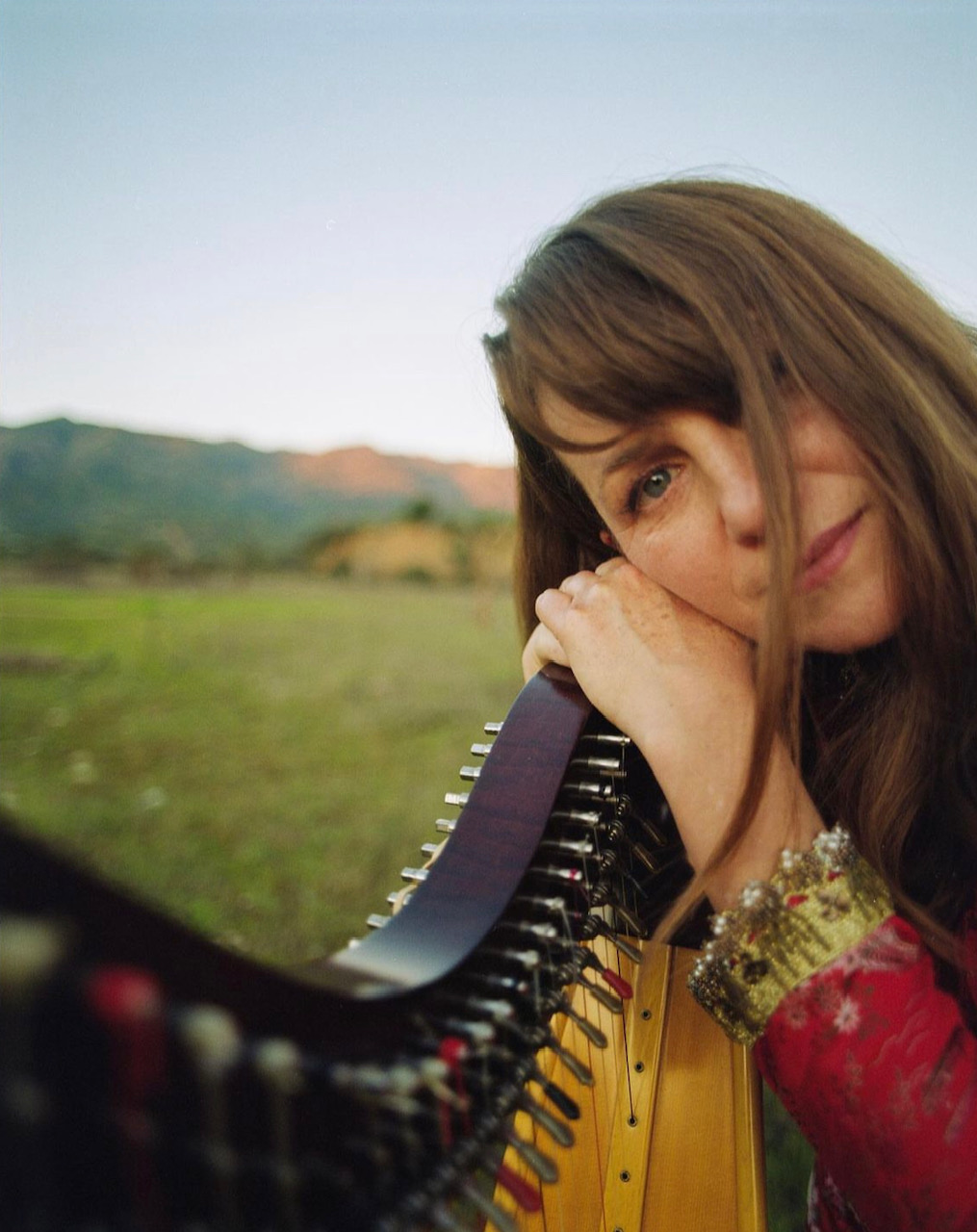
“I am very influenced by the New York School of composers from the mid-twentieth century”
‘The In Between’ presents such a singular vision: an acoustic concert harp, unamplified, recorded live as day turns to night in Ojai. This feels like a radical embrace of inherent sound and environmental context. Can you speak to the motivations behind this specific approach, particularly the decision to eschew any amplification or effects, and how much of the “composition” truly emerged in that moment, responding to the fading light and encroaching sounds of nature?
Shelley Burgon: This is indeed a radical embrace of both the harp solely as an acoustic instrument and the environmental sounds of the moment. It’s a long winding road on how I got here as a composer and quite unusual for my first full length to be just acoustic harp. Those that have known me since the beginning know that I’ve always played harp with electronics. My degree is in electronic music and recording, and my focus for the past twenty years has been harp with electronics. In 2016, when I first wrote this piece, I was living part time on the west coast dealing with severe burnout amongst other things that makes one stop everything in their tracks. Without getting too deep into a personal history, I can say that overall this piece is about stripping away everything and seeing what is left, which for me is the harp with no additional tools used for prepared harp or electronics. This was me coming into my fullness as a harpist, showcasing some of my favorite things to play on the harp.
The form of the piece is through-composed, utilizing a stopwatch. This overarching form provides the container for indeterminacy in how each performance is played. As I pass through these different harp moments, they are separated with periods of rest. Each moment of rest becomes longer and longer till we reach the end of approximately fifty-six seconds. I was very much drawing inspiration from John Cage’s 4’33” by writing these restful moments into the form. I’ve always loved that piece for what it represents and for what it brings about in terms of the audience’s listening experience.
The moments where the harp is at rest, the outer world becomes more in focus, and as time goes by you hear these different aural perspectives as one. There is an element of chance in this regard, as I am not cueing bird sounds. They simply coexist until the listener’s perspective shifts them to all be part of the same piece/experience. As a listener, this takes a high level of focus and attention to the moment in order to experience all the harp sounds and environmental sounds as one unified piece.
The press release mentions a “Feldman-esque unfurling.” Morton Feldman’s work often explores duration, quietude, and a sense of unfolding time. How do you see your approach on ‘The In Between’ resonating with or departing from Feldman’s philosophy? Were there specific compositional strategies or a mindset you adopted to allow the music to breathe and evolve in this extended, continuous form?
I am very influenced by the New York School of composers from the mid-twentieth century, along with the lineage of minimalism and indeterminacy that prevailed in New York and in modern classical music in the years following. One of my all-time favorite pieces is Morton Feldman’s String Quartet No. 2. It is six hours of slow evolution. I was lucky enough to see the Flux Quartet perform it at Zankel Hall and the Ne(x)twork Quartet perform it at Issue Project Room in NYC. I am quite drawn to long form pieces and to music that involves indeterminacy. I took an entire class from David Bernstein on Feldman, so the influence of his music and his approach is definitely deep within me. Experiencing a piece like his String Quartet No. 2 definitely instilled a sense that music could exist slowly and over long periods of time.
Given your extensive background interpreting works by luminaries like Pauline Oliveros, John Cage, and Cornelius Cardew, alongside your own compositions for dance and ensembles, how have these diverse experiences shaped your understanding of silence, space, and the act of listening, all of which seem so crucial to ‘The In Between’?
I think all these experiences have instilled in me a sense of being versus doing. Being with the music, being inside the music, being one with the music. Being with the silence, being inside the silence, being one with the silence. There are plenty of musicians that can perfectly read every single note on a page and sit still during all the rests. But holding emotional energetic space for those notes and for those moments of rest becomes a different experience, both for the performer and for the audience. From Pauline Oliveros, I definitely learned to understand the difference between listening and hearing. I studied privately with Pauline Oliveros at Mills and she really helped me to appreciate my own inner sound world and how to capture it from my imagination and bring it into the physical world. When I first learned about John Cage’s music for prepared piano, my inspiration to write music with these “new” sounds really took off and I realized the harp could also make very unusual sounds. I was encouraged and supported at Mills by Pauline Oliveros, Maggie Payne, and Fred Frith to experiment with the harp in this way. Compositionally, in regards to ‘The In Between,’ there is no denying that John Cage’s 4’33” is a direct inspiration. I performed 4’33” at The Stone in NYC when it was on the Lower East Side, which provided a very rich environmental performance of this piece. During my time at Mills I also studied musique concrète and learned how to make tape music, which highlighted how environmental sounds could become part of the music.
The album is described as being “one of memory and foresight.” Can you elaborate on this? Is there a narrative, emotional, or structural journey within the piece that connects these concepts of past experience and future anticipation? How does the immediate nature of a single-take recording contribute to this sense of memory and foresight for you as the performer?
The earlier origins of this piece are steeped into the way that quartz fractures. The brittle material creates arched ripples on the surface. Black obsidian is an example of the type of material that fractures this way. One of the last pieces I wrote for my chamber ensemble Ne(x)tworks was titled ‘Conchoidal,’ and it is from that piece that this solo work was born. At the time I was writing this solo piece, I was fractured mentally and emotionally, and so ‘The In Between’ starts with a single note and slowly adds notes and different ways of playing those notes as it continues. Then the reverse happens and those notes are slowly taken away along with the different ways of playing those notes until you’re left with the returning single note. This addition and subtraction of notes symbolizes the exploration away from yourself and then returning back to yourself.
You’ve collaborated with an incredible range of artists — Björk, Anthony Braxton, Fred Frith, Joan La Barbara, among others. Each of these collaborations undoubtedly brought unique challenges and opportunities. How have these profoundly different musical dialogues informed your solo work, particularly the development of your “deeply personal, spiritual vision” as a composer and performer? Is there a common thread or recurring learning experience from these collaborations that you carry into your own compositions?
For me, the common thread of all the composers you listed is that each one has a very unique voice and a deep passion for what they are creating. When you hear Björk, you know it’s Björk, and so the same can be said for Joan, Fred, and Anthony. So my takeaway from all of these artists is to stay focused on being purely and authentically me by creating music that is only directed by my ears and internal compass.
Let’s talk about the harp itself. It’s an instrument often associated with classical grandeur or ethereal textures, yet in your hands, it seems to transcend these expectations, becoming a conduit for something more elemental and resonant with the natural world. What is your relationship with the instrument beyond its technical capabilities, and how do you coax such a raw, almost visceral presence from it, especially without external manipulation?
Thank you so much for experiencing my playing in this way, this is a deep compliment. The answer to this question goes back to an earlier answer about what I learned from my mentors. I do feel the harp is an extension of me. I’ve always improvised with my eyes closed. This is what sharpens my hearing and deepens my connection to the feelings I am translating through my playing and staying purely in the moment by resting my ears deep inside the sounds of the harp and the surrounding environment. I’ve played in the auditorium where this recording took place many times, and the acoustics are so beautifully compatible with the harp, so I partly wanted to just hear acoustic harp in this room. Also, I spent many years preparing the harp with different implements for improvisation, and I’ve always processed it with electronics, but over time I wanted to expose just the pure sound of the harp under my hands and this room felt perfect for that. At a certain point when electro-acoustic music became more and more common, I started to yearn for just purely acoustic harp. So I decided to start making music that was repetitive without the use of an electronic loop station. I still love and use electronics and will be releasing a back catalogue of my work utilizing both electronics and prepared harp, but for now this release is like starting with a blank canvas and then slowly reconstructing and releasing the various iterations of my music from the past 20+ years.
The “wider, vibrant sound world that we all inhabit” is an explicit part of this recording. What was it like to surrender to the sounds of the Ojai Valley — the birds, planes, crickets, frogs, even the creaking auditorium — and integrate them into your performance? Was there a moment during the recording where you felt a true symbiosis with the environment, where the boundaries between your playing and the surrounding sounds dissolved?
Yes, there definitely was a symbiosis that happened during this take of the recording sessions. We spent two days in the auditorium recording this piece. I can only play it about two or three times in a row, as it is a very intense piece to perform. This recording is actually the last take on the last day. It was not the plan to record as day turns to night. It was just the serendipity of this final take, but I knew about halfway through that there was something special to this take, and as soon as I finished I knew that this would be the record despite any perceived imperfections in my performance. The energetic essence that I was hoping for was there and that was what was the most important to me. The first performance of this piece was actually at a church in Brooklyn, New York, in 2016, so the environmental aspects of that recording are quite vibrant. Eventually we will release that recording as a digital download. It is very different in that you hear the sounds of a very busy Brooklyn neighborhood passing by. I love that version too for different reasons. The audience that day was mostly friends, and a lot of them told me that they were brought to tears during the performance. I too was brought to tears during the performance even though I couldn’t see the audience’s tears; it seems I could feel them that day. As unbelievable as that sounds, it’s a feeling I will always remember. It was mid-performance and I wasn’t personally sad at the time, so I mentally stepped back and realized I was feeling something from the audience and absorbing their feelings. Sitting with a group listening to music can be powerful, but sitting in the in-between moments together as the world swirled around us was even more powerful.
This album marks your debut solo release. After such a long and distinguished career as a performer and collaborator, what prompted you to finally present a full-length solo work now?
Honestly, this isn’t a happy or sunny answer. Just thinking about the answer brings tears to my eyes as I think about all the years that have passed, all the music that I’ve written and recorded but never released. The truth is, I just didn’t have self-confidence to prioritize my music. I was struggling mentally for many years, just barely getting by. I’ve written so much music and I’ve recorded a lot of it, but I struggled to put it out despite much encouragement from many friends and colleagues. But after a lot of solitary, introspective, healing time in Ojai post many years in New York, and with the help of my amazing label Thin Wrist / Black Editions and the immense patience and unwavering support of Peter Kolovos, I am finally at a place where I believe in myself and my music enough to release this record. This record alone took 10 years to get out, but now that I am here, I’m excited to also release my back catalogue of all my music — electronic, chamber, improvised, and all of my electro-acoustic songs — so there’s a lot more to come and I’m super happy that I’m finally here after traveling down a very long and winding road.
Looking back at your work with the Merce Cunningham Dance Company, how did composing for and performing with dancers influence your understanding of musical movement, gesture, and the interplay between sound and physical space? Are there echoes of that spatial awareness in the way ‘The In Between’ unfolds?
The work with Cunningham was composed in the same tradition as Cage and Cunningham had worked, which is the music and dance are created separately without knowledge of the other, and so they come together for the first time during the performance. I recently found a video of this performance online and it is quite amazing to see how my harp parts sync up with the dancers all purely by chance. It’s an interesting process because the dancers could hear me play and I could hear and feel them moving, but I couldn’t really see them, so it was more about letting go and trusting the process.
The sustained notes and periods of silence in ‘The In Between’ demand a particular kind of attention from the listener. In a world saturated with constant stimulation, what do you hope listeners will gain from engaging with a work that asks for such deep, meditative immersion? Do you see it as an antidote?
I hope that anyone listening to this record has a reduction in stress from their life and is filled with a sense of peace and a deep introspection into their life. I hope people find their own special sense of meaning, peace, and calm that brings to light something that is dear to their heart, even if it’s simply just that they are relaxed and purely being in the moment.
The album’s continuous 56-minute duration, spread across two LPs at 45 RPM, speaks to a deliberate pacing and fidelity. What was the thinking behind this format choice, and how do you feel it enhances the listener’s experience of the piece compared to other formats? Is there a certain reverence for the physical object and the ritual of listening being invoked here?
I love vinyl and I am a big record collector, so it’s very exciting to finally have my music out on vinyl. The choice of 45 RPM was to support the delicate nature of this recording with higher sound quality. In general, I feel records keep your attention in a way no other format can, simply due to the sound of the runout groove reminding you to get up and turn the record over. You physically have to engage with the medium in order to listen to the entire piece. A one-track CD version would give the listener an experience closer to the live performance, so I hope to have those pressed too.
Considering your early experiences, such as your studies at Mills College, and the supportive environment you found there, how did those formative years and the open-minded approach of your mentors and peers shape your willingness to explore, experiment, and ultimately arrive at a work as bold and understated as “The In Between”? Was there a particular “wall” you hit, as you’ve mentioned in the past, that led you to this kind of profound sonic exploration?
Studying at Mills really instilled a sense of individuality and exploration of alternative ways to communicate musical ideas on paper. In my first semester there, I definitely struggled coming to terms with the openness that was being presented to me. My undergraduate degree is from a more traditional and conservative university, so when I got to Mills it was my first time experiencing a more progressive approach to music making. It was very liberating to be encouraged to explore all of my ideas. I really grew as a performer and improviser while I was there and I was presented for the first time with a school of thought that felt very natural. This question about a particular wall is a deep question, and I would imagine that these formative years did play a role in pushing past any walls I came across or put up, plus the resilience of a very sincere determination to keep going and learning to ultimately get out of my own way and to just focus on making and sharing music that truly speaks from my heart.
Klemen Breznikar
Headline photo: Credit: Nicole Valencia
Shelley Burgon Facebook / Instagram / Bandcamp
Black Editions Group Official Website / Facebook / Instagram / Twitter / Bandcamp / YouTube