

The Rousers: Lost New York City Sessions Finally See the Light
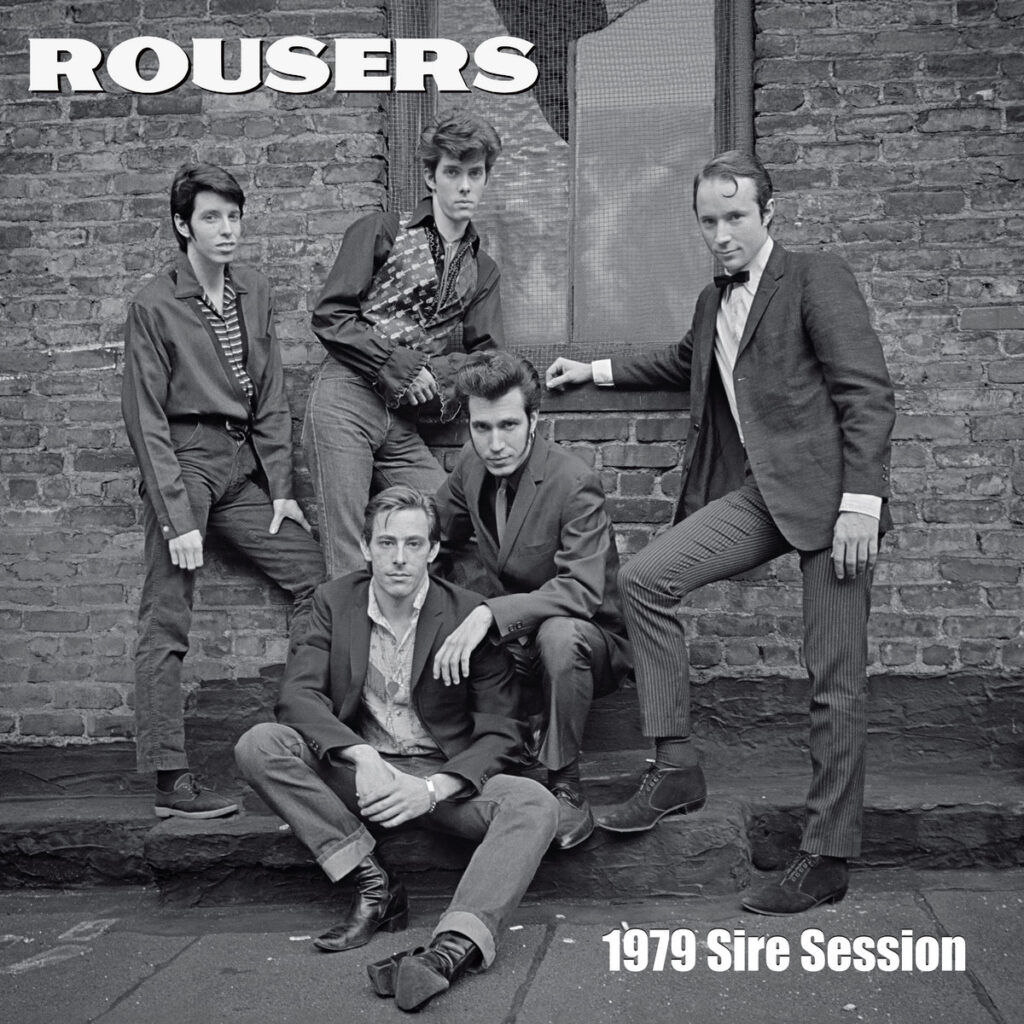
A long-lost chapter of New York City’s 1970s downtown rock scene is finally being heard! The Rousers, a five-piece outfit once courted by major labels but never officially signed, are having their long-shelved 1979 ‘Sire Session’ released for the first time by Left For Dead Records.
They formed in Manhattan right in the middle of all that creative chaos spilling out of places like CBGB’s. But dig this: The Rousers didn’t sound like everyone else. They took the swaggering sneer of the New York Dolls and mashed it up with the twang and roll of ’50s cats like Duane Eddy. They had that primal energy, sure, but they were also packing serious pop hooks…
The lineup was Jeff Buckland, Bill Dickson, Tom Milmore, John Hannah, and Jerid O’Connell. They cut those Sire demos with producer Ed Stasium, who’d just been in the studio with the Ramones and Talking Heads.
These tapes were MIA…long thought lost in some dusty Rock and Roll Hall of Fame archive, but they’re restored and they absolutely scream momentum. Now out on vinyl and CD, Rousers ‘1979 Sire Session’ and it’s the sound of a great band that deserved to be huge. Don’t sleep on this!
It’s always very exciting when something lost finds its way onto the table. Are you excited to have your music finally available worldwide?
Bill Dickson: Yes indeed! At the time, we were pretty convinced we were making music that a lot of people who saw us enjoyed, and that they were only the fortunate fraction so far. We played well, had good songs. It seemed likely we might get somewhere. It’s gratifying to hold that black vinyl after all this time, to hear those songs again, displayed as well as they can be. I hope people get a kick out of it.
Would you like to share about your upbringing? Where did you all grow up? Tell us about daily life back in your teenage years.
I grew up in Massachusetts, California, and Connecticut. We moved to Weston when I was about 11 or 12, fifth grade. Weston, CT, was an interesting town, rural and artsy, a lot of creative types, cartoonists, TV people, corporate types, actors. The Testor family from Testor’s Glue lived there; there was some money. In my mid-teen years, I recall spending a lot of time throwing rocks at bottles.
My friend John Laedlein and I liked to mix up some jungle juice from my parents’ liquor cabinet, then sneak out of the house at night and roam the roads for hours, hiding from cars and getting wasted. Or camping out and doing the same thing. We loved The Rolling Stones. We’d hang out with friends and girlfriends, dance to records, get stoned, get up to antics.
I had an acoustic Guild guitar; I started trying to write some songs. I borrowed a drum kit from a fellow named George Phillips for about a year, and I’d bash around on it in a room over our garage. I was friends with a lot of girls in the grade above me for some reason: Tonda Holwerda, Merrilee Heifitz, Lisa Courcier. We were all kind of hippie-style kids. There were a lot of kids that had amps and guitars and whatnot, and they would lend them to you!
Eric Holwerda lent me his white hollow-body guitar and an amp I don’t remember, and I recall playing that in the church basement. Years later, around 1974, a dude named Bill Reed lent me his Gibson ES-335 and a Fender Super Reverb for an extended period. It was what I really learned on when I was first starting to play guitar in a band setting.
Was there a certain scene you were part of? Maybe you had some favorite hangout places? Did you attend a lot of gigs back then?
I suppose I’d be among the “freaks,” as stoner rock and roll types were called in the late 60s and early 70s. I grew up in a very square, WASPy household. I was, as one of our high school band songs proudly proclaimed, a “Rich Punk Brat.”
There was a town- or church-sponsored place called The Barn where kids could hang out. I’d go there some weekends. We had various bands and we’d play dances… lots of Rolling Stones, Chuck Berry, Rod Stewart, Alice Cooper, etc. Staples High School in Westport produced a lot of concerts with touring bands. Edgar Winter for one.
We’d go see bands at the Capitol Theater in Port Chester, NY… Johnny Winter And, for one. Saw the Stones twice at Madison Square Garden. I saw Elvis at Madison Square Garden with my pal Bill Hoffman (he later played bass in The Cannibals, our band before The Rousers), the Saturday matinee show. All those Instamatic light bulbs flashing in circles around and around. I believe a comedian opened for him.
But seeing the New York Dolls in Bridgeport was the show that changed my life, all our Rouser lives. They were like The Rolling Stones had come out the wrong side of the mirror, and there was an odd accessibility about them that made us believe, “Hey, we could do this!”
If we were to step into your teenage room, what kind of records, fanzines, posters, etc., would we find there?
I loved Robert Crumb and S. Clay Wilson, and National Lampoon and Rolling Stone. I had black-and-white posters of W.C. Fields and John Dillinger… you could get them at the Remarkable Bookstore in Westport. I painted some of them with day-glow fluorescent paint; that was big … black light and black music.
I had most Rod Stewart and Rolling Stones albums, Creedence Clearwater, Johnny Cash, lots of Greatest Hits albums, Supremes, Ten Years After, The Who, J. Geils Band, Duane Eddy. I liked to read… big mystery fan, Ross Thomas, etc. Books about music, too. For many years, I shared a bedroom with my brother, so our stuff was intermingled.
Was The Rousers your very first band, or were you involved with any other bands?
I was the singer in several bands in Weston; we played church and school dances. We played oldies and current songs. Jerid O’Connell and Tom Milmore were in most of them. We eventually built our own PA, but we would borrow Kevin Gallagher’s Fender amp a lot.
We stole the name Billy Universe and the Satellites from some late-night movie, maybe Get Yourself a College Girl or something. Another band was called Step’n’Fetchit. We were starting to write a few songs.
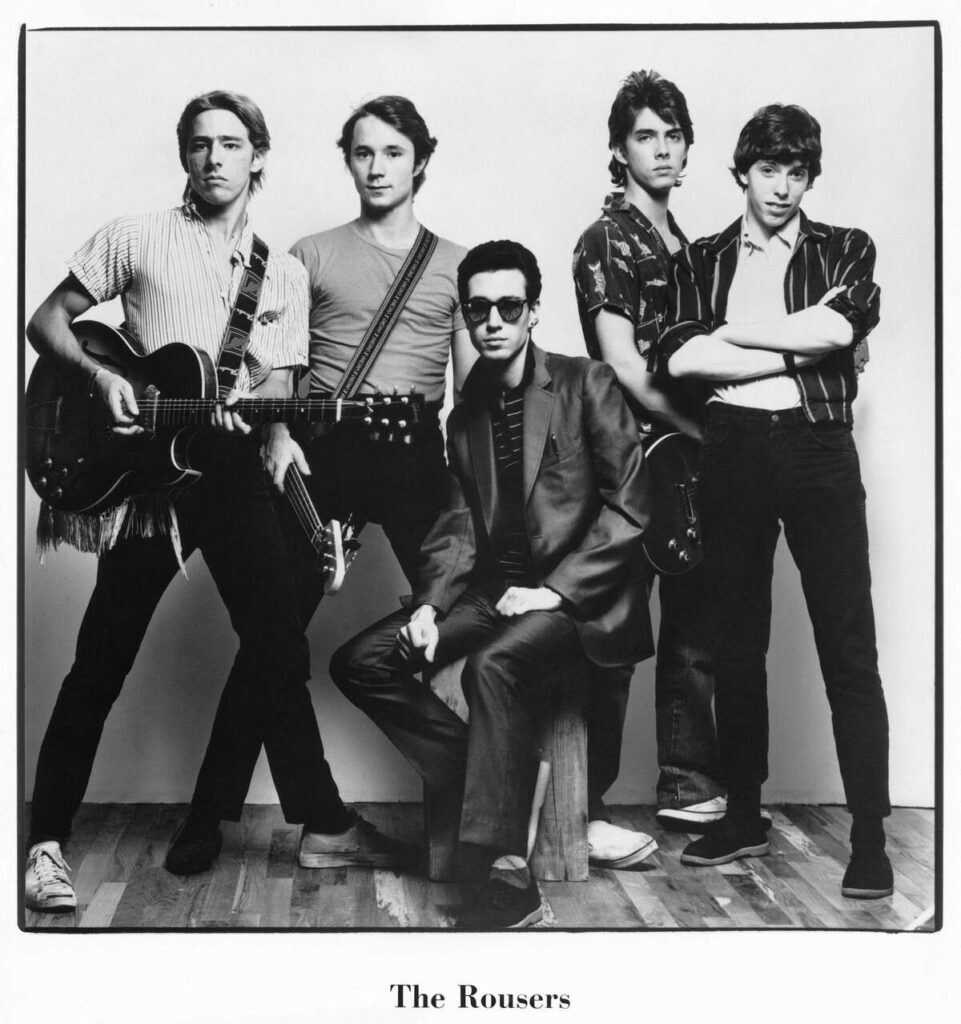
Can you elaborate on the formation of The Rousers?
Around 1974 or 1975, we formed a band called The Cannibals that was made up of Conan Thornhill on vocals, Jerid O’Connell on drums, Tom Milmore on lead guitar, Bill Hoffman on bass, and me on rhythm guitar. We were very excited by the New York rock scene (in fact, The Cannibals appeared in an issue of Rock Scene magazine posing in a tree).
I wasn’t a beginner guitarist, but this was the first band I played guitar in. Such fun! Jerid and I moved to New York to go to Coloring College. Conan was a roommate on 21st Street for a while. Hoffman and Thornhill joined the military, and time went on. My recollection is that The Rousers were formed in hopes of playing at an SVA party. The other fellows can probably offer a more complete account.
‘Product of the USA’ is a killer title. What was the vibe like in the late ’70s NYC punk scene? The mention of patriotism in that song is surely ironic commentary, or is it something else entirely? Did the band feel like a “product” of that specific American counterculture moment?
Thank you. We didn’t consider it a “punk scene.” There were probably fewer than a dozen punk bands- It was much wider, more varied than a single type of music or point of view. That’s what made it so exciting. A scene where Mink DeVille and Tuff Darts, even The Rousers, had a place.
We were not political. The song is basically about finding the American dream to be a hollow pursuit. A dishonest distraction but the only game in town. Or something like that!
The liner notes mention dueling Gibson guitars and Fender amps, which resulted in your own sound. Could you talk about that?
Tom had a 70s Les Paul Deluxe with mini humbuckers. I had an ES-125 TCD thin-line hollow body with P90s… had to be stuffed with foam rubber or it would feedback. Tom had a blackface Vibrolux Reverb; I had a used 1974 silverface Vibrolux Reverb. (I still have the guitar and amp!) It was a festival of twang with good depth and bite.
I don’t know if John Hannah still had his Rickenbacker bass or the Fender bass on these recordings. He had an Acoustic 150 head and an Acoustic 106 cabinet. At the time, we were able to move the entire band, including the drums, in a single Checker cab!
Ed Stasium’s production on these tracks is amazing. Given his work with the Ramones and Talking Heads, what was it like working with him in the studio? What was his philosophy or approach to capturing your sound, and how did it differ from other producers you might have worked with?
I agree the sound is very satisfying! (It should be noted that, except for ‘Bumblebee Rock,’ the sound on the record is fundamentally formed by Bob Stander, who mixed and mastered it.) That said, Ed had us down cold. He knew what we were, got good performances, and was very easygoing. Remember, it was a quick demo in a basement eight-track studio; the only real “production” was mic placement, in a sense.
There’s some talk at the beginning of ‘Pipeline’ with Ed saying, “You wanna do ‘Pipeline’? Let’s do ‘Pipeline.’” And that sort of typifies the whole thing to my mind. Here’s the dude who mixed ‘Midnight Train to Georgia’ recording The Rousers? Count me in forever!
The ’79 Sire Session sat in the archives for 45 years. As a band, what’s it like to have this forgotten piece of your history suddenly brought back to life? Do these tracks sound like a snapshot of who you were then, or do they feel like a completely different band from the one you remember?
Vastly entertaining. I’d say “snapshot” is accurate. We were a good band playing well, and that didn’t surprise me much, but the frenzy of ‘Man oh Man,’ for instance, is almost alarming. And there’s a certain sweet goofiness, a geniality about some of the songs I still find appealing. Hell, I’ve been playing ‘Bumblebee Rock’ and ‘Party Boy’ for decades now!
Do you see this release as more of a historical document for punk rock fans, or as a chance to connect with a new generation of listeners?
It’s not punk music, so I don’t know what punk fans might be hoping for. We don’t play punk rock except by accident. I suppose a song like ‘Party Boy’ could be considered punkish. (I blame John Holmstrom and Legs McNeil and Punk Magazine for making that the catchall to describe New York rock, but New York Rocker is a more complete take on what was what. Sorry for the rant.) Yes, I’m hopeful that people who like The Stray Cats or similar, or who are twang-curious, might stumble upon it and enjoy it. There’s some good music on this record for both the young and the old.
The song ‘Be My Girl’ is described as splitting the difference between Tommy James and Marshall Crenshaw. That’s a fascinating comparison that places the song both in the 60s and the 80s. What were the band’s songwriting influences? How did you approach writing songs that felt specific to that era?
Jeff is a very talented writer, I hope he answers this question. We liked all kinds of music, and we tried to write in lots of styles. Jeff’s songs ‘Teleprompt Me’ and ‘Rock and Roll Hair’ were staples of our live shows. Tom Milmore also wrote a few good ones. I was the principal writer, and I always had a pen and notebook on me in case some idea would pop up. I was trying to write hit songs, and a song like ‘Footsteps’ sounded like a hit to us and to a lot of our fans.
Let’s talk about the scene. The Rousers were a popular CBs and Max’s band. What was the rivalry or camaraderie like between bands at the time? Were there any other bands you felt a particular kinship with, either musically or just as fellow travelers in that scene?
A lot of bands at the time seemed tedious or derivative, a lot of loud forgettable music. Then you’d have a band like Sorrows or The Senders, and you’d be so full of admiration and envy and pride at being friends with them. Bands like Blondie, Talking Heads, and the Ramones were beginning to enjoy success, and we figured we had as good a chance as anybody in joining them. It felt very cool to be an accepted band on the scene.
The band never got a major label deal due to mismanagement, despite having multiple offers. How did that experience impact the band’s morale? Do you feel that in a weird way, not being signed to a major label actually helped preserve your creative integrity?
As far as preserving our integrity, I doubt it, but we’ll never know. Sure, we got bummed out that we’d do demos for labels and nothing came of them, but it also gave you hope, “we must be doing something right or they wouldn’t even ask” kind of thing. It was frustrating to not get the big beat message out to a wider audience. We felt our music deserved to be heard by people besides those in the same room with us. We wanted our music on the radio.
The cover of Wilson Pickett’s ‘If You Need Me’ is an interesting choice. What led you to cover that song? Was it a nod to your soul and R&B influences, or was there something about that specific song that resonated with the band’s energy?
Jeff and I really enjoyed soul and R&B, and he has a good voice for ballads, I think. Eventually, I wrote a pretty good ballad called ‘King of the World,’ and his brother Richard’s ‘Don’t Let the Band Stop Playing’ was a great song that we killed with. We’d be playing two sets a night. At a place like the Rocker Room, people came to dance, so you needed mostly lively songs with some slow ones. We covered songs like ‘Band of Gold,’ ‘Agent Double O Soul,’ ‘She’ll Return It,’ etc. The ratio of covers to originals was about 40 to 60, I’d guess. I don’t recall ‘If You Need Me’ having any particular meaning to us, it was just a great song we could do a reasonable job on.
The album is being released on vinyl and CD first, with digital to follow in 2026. What’s your take on the resurgence of physical media, especially vinyl, in the modern music landscape? Does it feel right that these tracks, recorded on tape, are finally being released on vinyl?
It’s fun that the vinyl resurgence is happening, and this LP is a must-have for any turntable that turns at 33 1/3 RPM, because this one does too. A CD release of this is welcome, with its room for additional songs, but yes, the vinyl is the essence in this case. Crafty consumers will certainly wish to own both and to gift them to all but their most insufferable friends and family members. It wouldn’t surprise me if people started GoFundMe campaigns to raise funds for the purpose.
What occupied your life after the band disbanded?
Other bands, mostly, and mostly with Tom Milmore. We all had day jobs; market research coding was a popular job with artists, writers, and musicians. I did that for years. After the second Rousers disbanded (Sal Capozucca and Brett Wilder taking over drums and bass) around 1983, I played in The Backbones, then in various lineups with various names (Praise Jockeys, The Shambles, The Mockingbirds, and eventually back to being The Rousers). A lot of fun, a lot of good music, no particular success in terms of making a living doing it.
I got married, had a child, divorced, moved to New Hampshire for a couple of years, then to Long Island to work for Acclaim Entertainment. That was a fun job. I was always in bands.
What currently occupies your life?
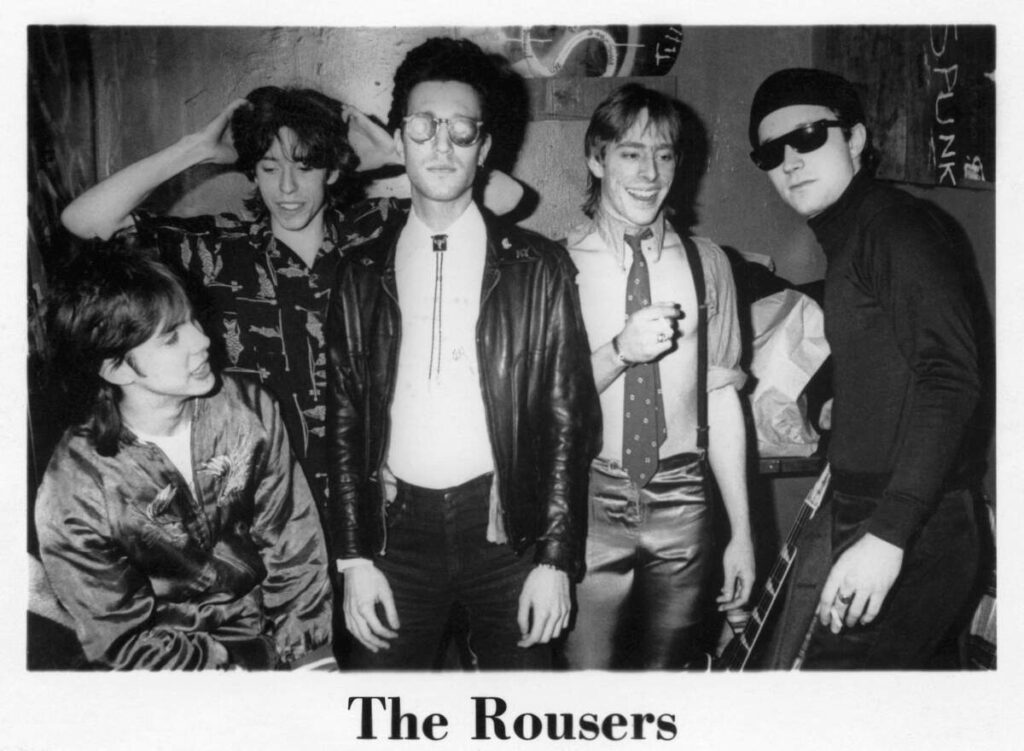
I live on Long Island. I turned 70 this summer, been retired since 2018. Work is for squares, I’m glad to be done with it. My son is married and has a son, so it’s fun to see him come along. Until Sal Capozucca died of Covid in 2020, The Rousers appeared and recorded as a trio with me and Tom. His death put the brakes on music for me, though I was involved with the memorial tribute concert in New York that Brett Wilder and Mitro Valmis put together for Philippe Marcade, which was very satisfying.
I worked with Bob Stander on the mixes for this project, which was a lot of fun. Bob has great ears and instincts; we’ve worked with him on recordings for decades, going back to the Praise Jockeys, Mockingbirds, and later Rousers trio recordings. Aside from that, I go to the library, mow the lawn, grow some weed, play pickleball, hang out with my darling Mary Burger and sometimes her kids and grandkids and great-grandkids. I seldom listen to music except for oldies or Willie’s Roadhouse on the car radio. I’d like to find some local country players, maybe start a little band. I have a lot of pretty decent country songs.
Klemen Breznikar
Headline photo: Credit: The Rousers
The Rousers Website
Left For Dead Records Website / Facebook / Instagram / Bandcamp