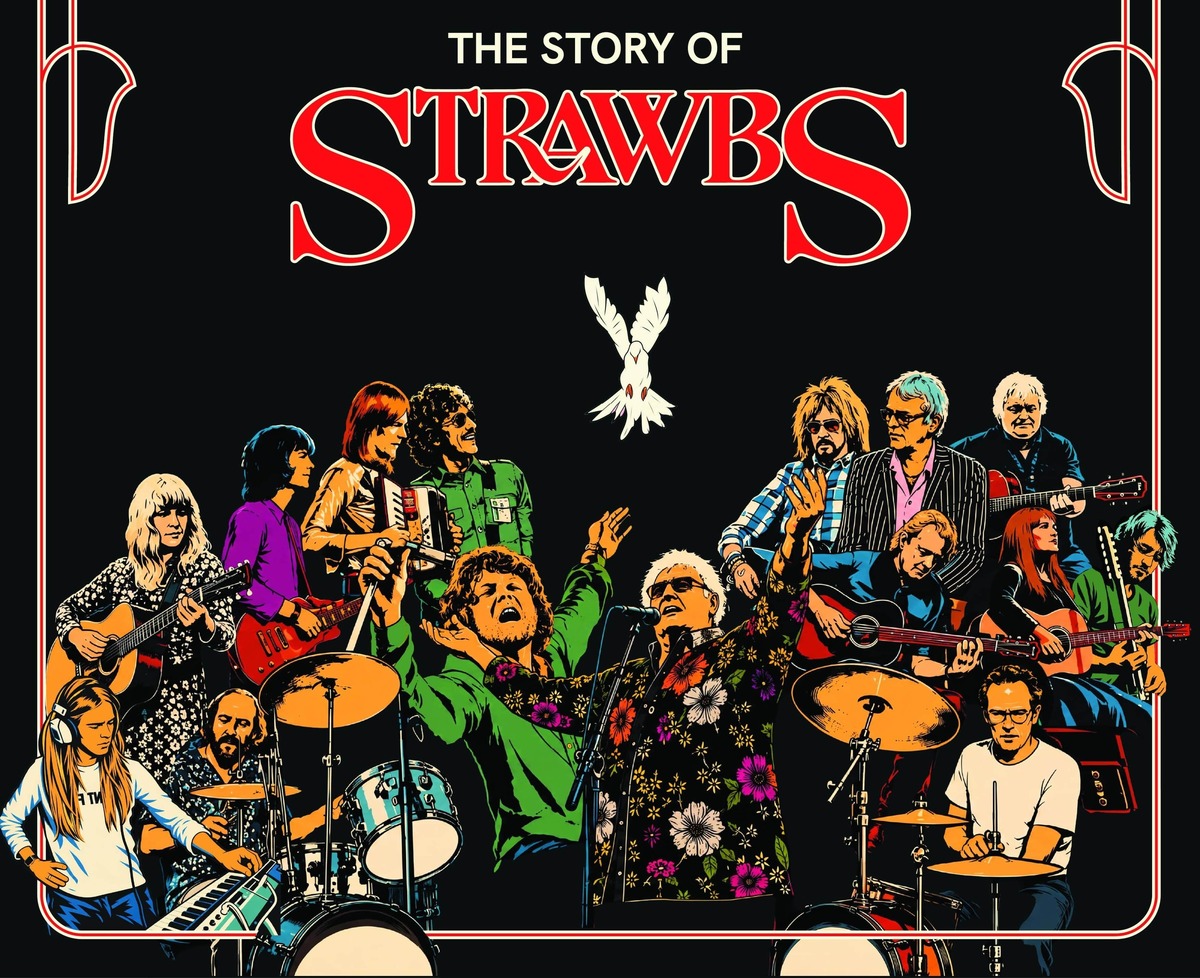

Niel van Deventer on Dave Cousins and the Strawbs Documentary ‘The Magic of It All’
South African filmmaker Niel van Deventer discusses the Cape Town recording sessions, Strawbs’ final concert at Cropredy and his time with Dave Cousins.
In September 2022, Dave Cousins was in Cape Town recording what would be Strawbs’ final studio album, ‘The Magic of It All’. Niel van Deventer was there with a camera. He hadn’t set out to make a feature-length documentary, but conversations with Cousins and the other musicians over lunch convinced him there was a much bigger story to tell.
The film grew to include interviews with Rick Wakeman and Tony Visconti and footage of Strawbs’ final concert at Cropredy in August 2023. Cousins died in July 2025, having seen an early cut of the documentary.
‘The Magic of It All – The Story of Strawbs’ screens at Regent Street Cinema in London on Sunday 8 November as part of the Doc’n Roll Film Festival, followed by a Q&A with van Deventer and Blue Weaver.
“You can spend a lifetime becoming a legend to the world. But there’s something rather special about being a legend in your local pub, simply because of the person you are.”
How did Strawbs first come into your life?
My first encounter with Strawbs was actually rather unlikely. In 2005, I was working as a security officer at the Department for Culture, Media and Sport, just off Trafalgar Square in London. My night-shift partner was a wonderful 65-year-old gentleman named Tom Whiting. One evening, Part of the Union came on the television, and Tom launched into a fascinating history lesson about Margaret Thatcher, the trade unions and British politics. I can’t remember everything he told me that night, but I certainly remembered the song. And the name of the band.
I also knew Lay Down, but that was pretty much the extent of my Strawbs knowledge. So no, I certainly wasn’t a lifelong fan. What initially fascinated me about the project was the band’s extraordinary history. The stories about parties with Led Zeppelin, encounters with people like Leonard Cohen, and the realisation that Strawbs had somehow been woven into so many different chapters of British musical history.
But what ultimately drew me in was David Cousins himself. Here was a man who had spent more than half a century making music, experienced the extraordinary highs and inevitable lows of the industry, and remained absolutely determined to write the final chapter of his musical career on his own terms. I found that irresistible.
And now, 21 years after that night shift with Tom Whiting, we’re premiering The Magic of It All at Regent Street Cinema in London, just around the corner from where my own Strawbs story began. I rather love the symmetry of that. A young South African security guard hears a song on television in the middle of the night, and two decades later returns to almost the exact same spot with a film about the man who wrote it. I think Tom would have got quite a kick out of that.
What was Dave Cousins like when you first met him?
My first encounter with David was over Zoom, shortly before he came to Cape Town to record the album. It was really just an introduction, as I would be documenting the recording sessions. But I remember being immediately impressed by him. Even through a computer screen, David had an unmistakable gravitas. He struck me as someone who knew exactly what he wanted and who took his artistic vision very seriously.
What surprised me when I eventually met him in the studio, however, was his gentleness. Behind that commanding presence was a deeply thoughtful, sensitive artist. Someone who seemed to examine everything he created with an almost relentless critical eye. And I think that contrast was what made him such a fascinating subject.
There was enormous conviction in the man, but also a sensitivity that I hadn’t necessarily expected. It was a side of David I would come to appreciate more and more as we worked together.
You went to Cape Town to film the album sessions. When did you realise there was a much bigger story?
Initially, the plan was simply to document the recording of the album. Nobody had commissioned us to make a feature-length documentary, and I certainly hadn’t arrived with that intention. But then we started having lunch with these guys. And that’s where things got interesting. Almost casually, they would start telling stories about their lives. Extraordinary encounters, legendary musicians, remarkable friendships and adventures that seemed to span virtually the entire history of modern British popular music. The more we listened, the more we realised just how influential these people had been. Not necessarily always in the spotlight themselves, but connected to an astonishing number of the musicians, recordings and moments that had shaped popular music over the past sixty years. At some point, we began looking at one another and thinking: Hang on. There’s a much bigger story here.
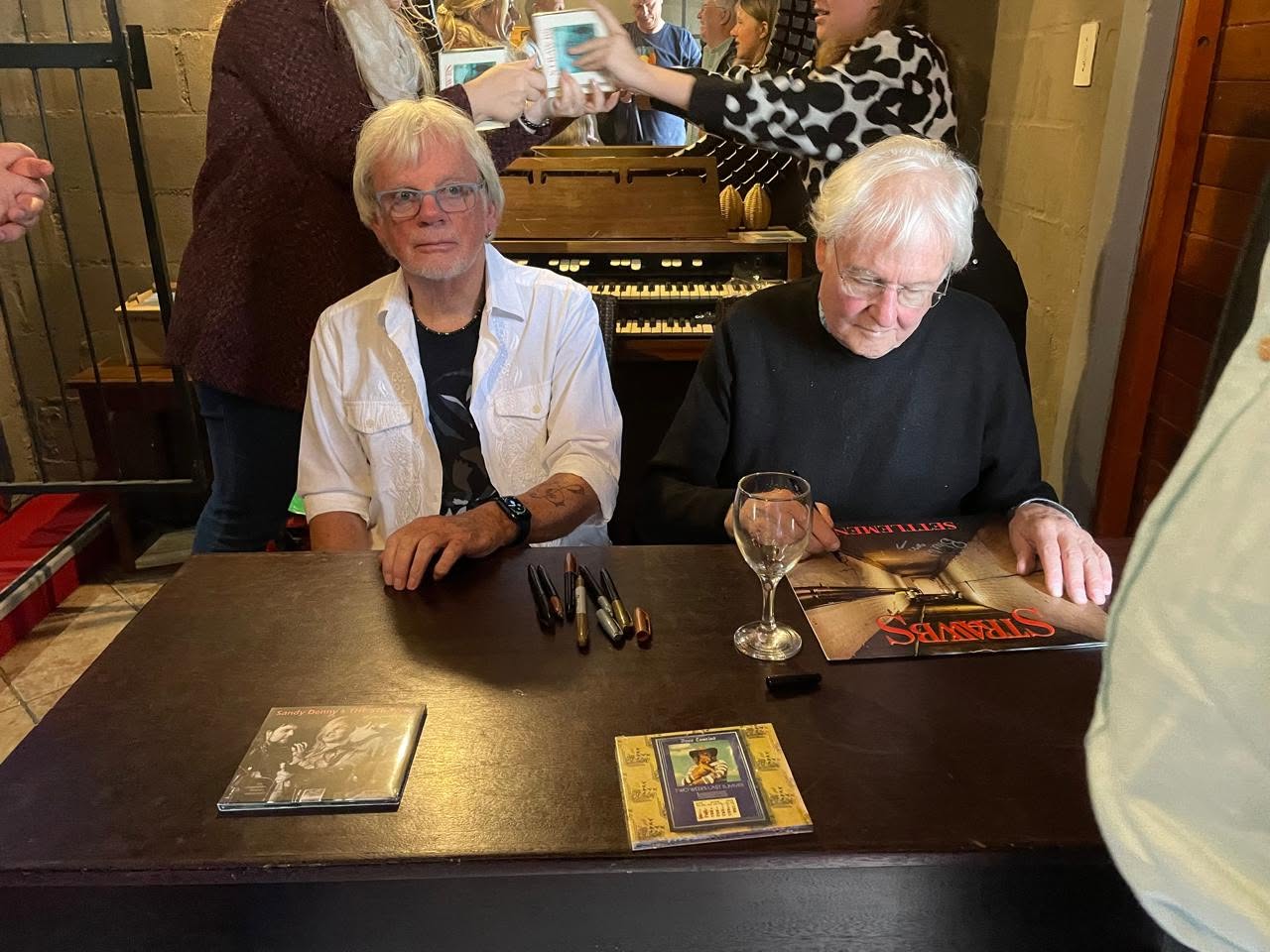
There’s also a lovely backstory to how the musicians came together. Schalk Joubert, Mauritz Lotz and Kevin Gibson had previously played with Crash Test Dummies during a South African tour. Sometime afterwards, Blue Weaver encountered one of the band members in Germany, who spoke incredibly highly of the South African musicians. So when everyone eventually came together in Cape Town, there was already this wonderful sense of mutual respect. And that’s what struck me most. These were accomplished musicians from very different backgrounds, but they were all there for exactly the same reason. The music.
There was one particular moment, though, when I realised we were witnessing something far more profound than simply the recording of another album. I was watching David through the glass of the recording studio as he sang the final passage of Everybody Means Something to Someone. It’s a song about old friendships, the people we lose touch with, and the importance of reaching out while we still can.
And as he sang those final lines, tears began streaming down his face. I was standing on the other side of the glass, watching a man who had spent more than fifty years making music being moved to tears by his own words. There was something incredibly intimate about that moment. He wasn’t performing for an audience. He was simply feeling what he was singing. And I think that’s when I truly began to understand David Cousins.
What was it like watching Dave, Blue Weaver and the South African musicians working together?
It was one of the most beautiful creative processes I’ve ever witnessed. There was this extraordinary exchange of ideas. Someone would suggest something, another would pick it up, add something of their own, and suddenly it would become something richer, more interesting, more beautiful than the original idea. And it all seemed to happen so effortlessly. I suspect that’s what happens when you put a group of people together who are genuine masters of their craft. There was no sense of anyone needing to prove themselves. No competition for attention. Just extraordinary musicians listening to one another, responding instinctively, and collectively making the music better.
As a filmmaker, I found that fascinating to watch, because it’s not unlike the best creative collaborations in our own industry. When you’re working with people who really know what they’re doing, the process can appear almost deceptively simple. But of course, there’s nothing simple about it. What you’re actually witnessing is decades of experience, instinct and musical intelligence coming together in real time. You weren’t watching individuals trying to make their mark on a record. You were watching musicians make something together that none of them could have made quite the same way on their own.
“He wasn’t performing for an audience. He was simply feeling what he was singing.”
Strawbs have had a devoted following in South Africa. How did Dave respond to that?
I think Rob Abendanon and Natie Botes are probably better qualified than I am to explain the historical and cultural reasons behind Strawbs’ extraordinary popularity in South Africa, particularly during the apartheid years. It’s a fascinating part of the story, and one that deserves proper context. What I can speak about is David’s reaction to it. I think he was genuinely astonished by the affection South African audiences still had for Strawbs. There was something incredibly touching about watching a man who had spent more than half a century making music discover just how deeply that music had resonated with people thousands of miles away. And the more time I spent making this documentary, the more I realised that this wasn’t exclusively a South African phenomenon.
There’s a rather wonderful story from our trip to New York to interview Tony Visconti. We were staying at a hotel in Manhattan, and the evening before the interview, we decided to have a few drinks at an Irish pub just around the corner. What I didn’t realise, not knowing New York particularly well, was that our hotel was also just around the corner from Madison Square Garden, where Dave Matthews was performing that evening. Shortly after midnight, the pub suddenly filled with hundreds of concertgoers. We got chatting to a group of Canadians who had travelled all the way from Toronto specifically to see Dave Matthews. Naturally, they asked what had brought a couple of South Africans to New York. I explained that I was there to interview Tony Visconti for a documentary about Strawbs. And suddenly, these complete strangers from Toronto turned out to be absolutely enormous Strawbs fans!
I found the whole thing wonderfully surreal. Here I was, thousands of miles from home, preparing to interview one of the most influential producers in rock history about a British band whose story we were documenting, only to stumble across a group of Canadians who needed absolutely no introduction to Strawbs. It was one of those unexpected moments that kept reminding me just how far the band’s music had travelled. Whether in South Africa, Britain or a crowded Irish pub in Manhattan, I kept discovering that Strawbs had touched far more lives than I’d ever imagined. I went to New York to interview a rock legend. I didn’t expect to find a little piece of the Strawbs fan club at the bar.
You spoke to Rick Wakeman and Tony Visconti. Did they reveal a side of Dave you hadn’t known?
Interviewing Rick Wakeman and Tony Visconti was quite extraordinary. Here were two genuine giants of the music industry, men who had worked with some of the biggest names in rock history, and yet when they spoke about David Cousins, there was an almost boyish admiration in their voices. I remember sitting there thinking, hang on a minute, these guys are genuine rock stars, and they’re talking about David almost as though he was their hero! It was one of those moments when the true scale of David’s influence really began to sink in.
What I also loved was discovering a rather different side of David. Both Rick and Tony had some wonderfully entertaining memories of his younger days, particularly his enthusiasm for a good party. I couldn’t help laughing, because the David I’d come to know was this gentle, dignified, thoughtful gentleman. Clearly, there had been another David Cousins long before I arrived on the scene! And then there’s the remarkable Wakeman connection. To have Rick, Adam and Oliver Wakeman all contribute to the documentary is something rather special. Three extraordinary musicians from the same family, each with their own relationship to the Strawbs story. There’s something beautifully fitting about that. The calibre of musicians involved in this film is also quite astonishing. Tony Visconti, Adam Wakeman and Mauritz Lotz have all received major recognition for their work, and what’s particularly wonderful is that some of that recognition came after we’d already started making the documentary.
But for me, the awards and famous names aren’t really the point. What stayed with me was the affection. These weren’t people simply paying polite tribute to a fellow musician. They were talking about someone who had genuinely mattered to them, creatively and personally. And I think that’s one of the things this documentary reveals about David Cousins: his influence wasn’t always obvious to the outside world, but to the people who knew the music and helped make it, it was enormous.
There were tensions around the album and the farewell concerts. How did you decide what belonged in the film?
To be honest, I was largely unaware of the extent of any underlying tensions, particularly in the beginning. I was far more conscious of the fact that we were documenting something historically significant. Here was an extraordinary story that might simply have remained untold had we not decided to make the film. There was one occasion when David expressed his disappointment about how certain things had unfolded, and that was a particularly personal moment. But I think there’s something very important about the relationship between a documentary filmmaker and the people who allow you into their lives.
When somebody gives you the kind of access David gave us, not only to his professional world but to his life and inner circle, they’re placing an enormous amount of trust in you. And I believe the very least you can do as a filmmaker is treat that trust with the respect and sensitivity it deserves. That doesn’t mean avoiding uncomfortable truths. Quite the opposite. It means telling the story as accurately and honestly as you possibly can, while never losing sight of what the story is actually about. And for me, this was ultimately a story about pioneers of rock music who, the more I learned about them, the more I felt had never quite received the recognition they deserved.
Particularly towards the end, I made a conscious decision to allow events to unfold naturally and simply document what was happening. And what happened was extraordinary. There were moments of joy, disappointment, reflection and genuine emotion, all unfolding in ways none of us could have anticipated. In the end, I don’t think we could have scripted it better if we’d tried. And perhaps that’s the greatest privilege of documentary filmmaking. Sometimes reality gives you a story far more powerful than anything you could have invented.
You filmed Strawbs’ final concert at Cropredy in August 2023. What has stayed with you from that day?
We knew it was going to be the last performance. David had told us back in May 2023 that he’d accepted the invitation to perform at Cropredy, and that he intended to isolate himself until August to give himself the best possible chance of getting through that final show. He was absolutely determined to perform one last time, and to do it on his own terms. That determination was something I’d come to admire enormously about him.
There were just two of us filming the concert: myself and my director of photography, William Collinson. When the band started playing, I was actually on stage with a camera in my hand. William concentrated on capturing the performance while I focused on the audience. At one point, I made my way right through the enormous crowd to the very back of the field to capture some wide shots. And standing there, looking back towards that stage, with something like 25,000 people gathered in front of it, I remember being struck by the sheer scale of what we were witnessing. This wasn’t simply another concert. This was the final public performance of a band whose story stretched back more than half a century. And we were there to document it.
But strangely enough, the moment that has stayed with me most vividly happened after the music had stopped. It had been an emotional, beautiful occasion. And then the festival organisers came to collect the band because hundreds of fans were queuing to have their memorabilia signed. The other musicians went off to meet them. But David couldn’t. His health simply wouldn’t allow it. And there was something terribly poignant about watching him remain behind while the others went to greet the people who had come to celebrate their music.
Here was a man who had devoted his entire adult life to those songs, who had fought so hard to make it onto that stage one final time, and who had just given everything he could to the audience. And now, when the music was over, he had to stay behind. I think that image will remain with me for a very long time. He had made it to the stage. He had finished the show. He had done what he’d set out to do. And somehow, that made the moment both heartbreaking and extraordinarily beautiful.
Dave was able to see an early cut of the film. How did his illness and death affect the project?
I don’t think I fully appreciated just how ill David was until I learned that he was starting chemotherapy on the Monday immediately after his final performance at Cropredy. Whether he’d deliberately played down the seriousness of his condition, or whether I’d simply been naive, I’m still not entirely sure. But it hit me hard. Suddenly, his determination to perform that final concert took on an entirely different meaning. He knew what lay ahead of him, and yet he was absolutely determined to get onto that stage one last time.
We never really discussed the possibility that David wouldn’t live to see the completed documentary. Instead, we were determined to get the first cuts to him as quickly as possible. And we did. David remained actively involved in the editing process, and ultimately saw an early version of what became our final cut. He was very happy with it. That means an enormous amount to me, particularly now. There’s something rather bittersweet about the fact that, in many ways, this was almost a film that needed to be released after his death. Not because we ever intended it that way, but because the story had a final chapter that none of us wanted to arrive.
I remember exactly where I was when I heard he’d died. It was Sunday, 13 July 2025. It was raining in Cape Town, and I was driving to the shops when a message came through on our production group informing us that David had passed away. I turned off the road and drove out towards Cape Point. And I put The Magic of It All on the car stereo. I must have listened to that song ten times, over and over again, driving through the rain. And I just cried. It’s difficult to explain how someone who entered your life through a documentary project can become so important to you. But David had.
Interestingly, his death didn’t fundamentally change the film. We didn’t go back and restructure the story or try to manufacture a different emotional conclusion. The film was already the story we wanted to tell, and importantly, it was a story David himself had seen and was happy with. All we really needed to change was the wording at the end. And I’m enormously grateful for that. Because ultimately, I wanted this to be a film about David’s life, his music and his extraordinary contribution to popular culture. Not simply a film about his death.
What was Dave like away from the cameras?
I think the best answer to that question actually came from someone who had absolutely nothing to do with the music industry. We were filming in Sandgate, where David lived, and one late afternoon I popped into his local pub, The Providence, for a beer. Behind the bar was a chap called Darryl, covered in tattoos and piercings. We got chatting, and he asked where I was from and what I was doing in Sandgate. Now, I was trying to work out how on earth I was going to explain to this heavily tattooed barman that I’d travelled all the way from South Africa to make a documentary about an elderly English musician called David Cousins. I hadn’t even finished my sentence when he interrupted me. “Oh, David? He’s a legend!” And then he started telling me how David used to come into the pub, have a glass of wine and entertain everyone with his stories.
And then he said something that really stayed with me. “We really miss him since he’s fallen ill.” I found that incredibly moving. Because here I was, making a documentary about a man whose musical career stretched back more than half a century. A man who had worked with extraordinary musicians, influenced some of the biggest names in British rock and lived through an astonishing period of musical history. And yet, in this little pub in Sandgate, none of that seemed particularly important. To Darryl, David wasn’t a rock star or a musical pioneer. He was simply David. The lovely old gentleman who came in for a glass of wine and told wonderful stories. And they missed him.
I think that told me more about the man than almost anything else. You can spend a lifetime becoming a legend to the world. But there’s something rather special about being a legend in your local pub, simply because of the person you are. And that, to me, was David Cousins.
Klemen Breznikar
Headline credit: Photograph courtesy of the filmmakers of ‘The Magic of It All – The Story of Strawbs’.
Film screening: Sunday 8 November 2026, 2 pm, Regent Street Cinema, London, followed by a Q&A with Niel van Deventer and Blue Weaver.