
You Can’t Franchise Devotion: Inside Japan’s Jazz Kissa
Jazz kissa are often presented outside Japan as mysterious places governed by strict habits and an almost religious attitude towards sound.
That image is not entirely false, but it can obscure how ordinary these places once were. During the 1960s and 1970s, they belonged to everyday youth culture. Young people went because they could hear music that was difficult or too expensive to find elsewhere. A cup of coffee gave them access to a world that many could not enter at home.
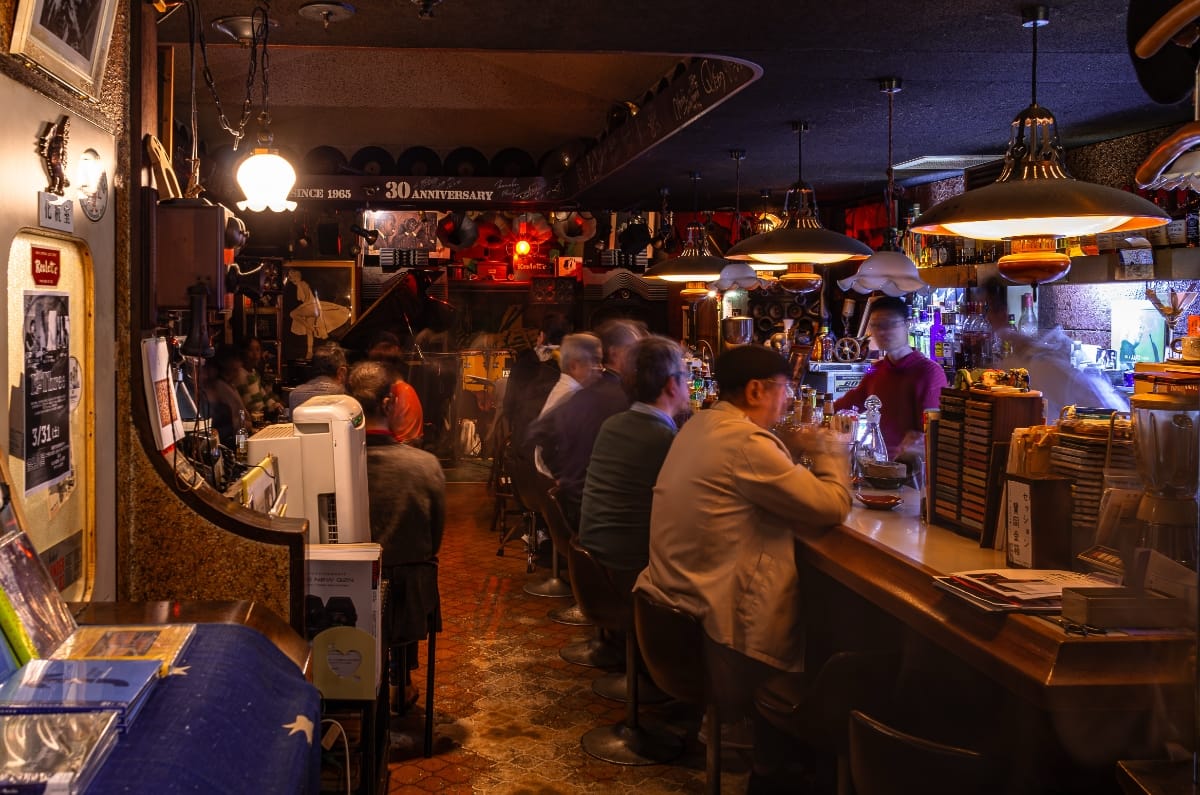
Katsumasa Kusunose was one of those young listeners. As a university student in Tokyo, he spent entire days in jazz kissa and often stayed until late at night. He describes the experience as something that changed his relationship with music, although he finds it difficult to explain exactly how. What remained after all those hours became, in his words, a private ‘harvest’ and ‘treasure’.
Ted Gushue came to the subject through publishing. Kusunose had already spent much of his life inside it. Gushue explains how the photographs became a book. Kusunose looks back on the culture that shaped him and on the years when many of these rooms stood almost empty.
The interviews are strongest when the familiar image of jazz kissa begins to fall away. Gushue says that ‘you can’t franchise devotion’. Kusunose describes the older owners in similar terms. For many of them, ‘jazz is everything’. Yet he is careful not to turn every owner into an audio mystic. Some cared far more about the records than the equipment and relied on trusted regulars when technical problems arose.
The book brings the reader close to these places, but Kusunose does not suggest that it can replace being there. The photographs show the rooms in remarkable detail, but the real experience begins only when someone enters a jazz kissa, sits down and listens.
“You can’t franchise devotion”
ERG has published many different kinds of books, but Jazz Kissa seems to have begun from a more personal place. What drew you to Kusunose’s work, and why did this book have to be approached differently?
Ted Gushue: I was already deep in this world before I ever thought about making a book – and the path that got me there runs directly through Devon Turnbull.
About five or six years ago, we made a documentary film for Type 7 FIlms with Devon about his hi-fi listening practice, OJAS — directed by my friend Jeremy Elkin. That process was a complete education. Devon had built something remarkable: he’d taken a culture that had lived almost entirely in trade magazines, niche online forums, small electrical fairs, and specialist clubs – genuinely cloistered, not particularly interested in new audiences – and made it feel vital and contemporary. DIY amplification, tube circuits, historic approaches to sound reproduction.
That film sent me down a path I haven’t come back from. I started building my own systems. I became personally, emotionally, and financially invested in a way that only happens when something gets fully under your skin. And it was Devon himself who eventually pointed me toward Katsumasa Kusunose’s Instagram – these extraordinary photographs of jazz kissa from across Japan and beyond, this years-long solo mission to document an entire culture before it disappears. When I saw that work, the book was almost inevitable.
Jazz has been the backbone of my working day for as long as I can remember. Japan had already changed the way I think about beauty and ritual. The hi-fi world Devon opened up for me was the third piece. Jazz Kissa is where all three converge.
The process was different from any other book we’ve made because the subject resists conventional editorial structure. A car archive has a taxonomy – models, years, racing history. Jazz kissa answers to nothing except the devotion of whoever built it. You can’t impose order on that. You have to follow it.
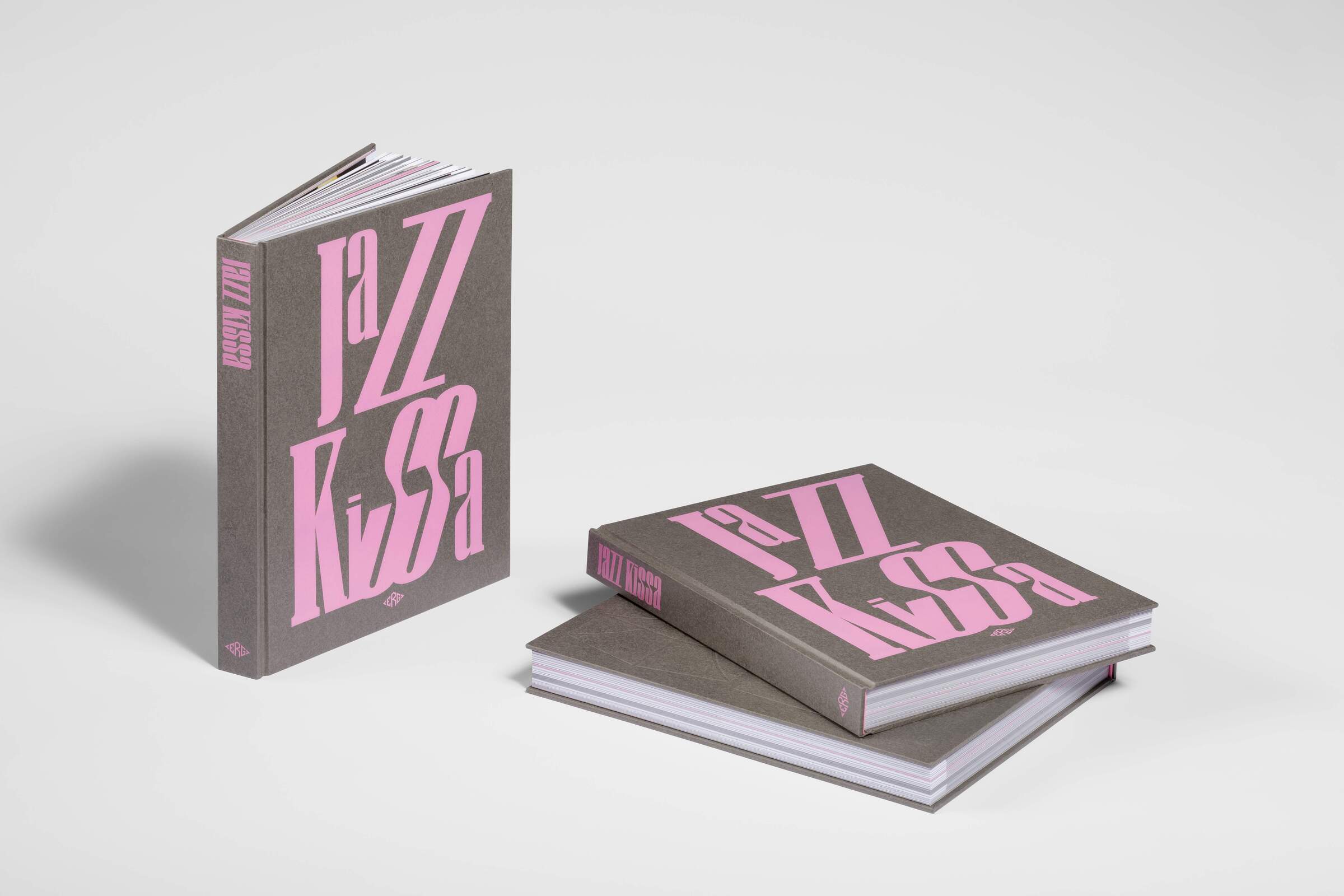
You often speak about books as physical objects. When did you realise that Jazz Kissa had to feel as though it belonged in the rooms it documents?
Immediately. The moment we understood what the book was actually about, we understood what the book had to physically be. You can’t make a book about listening rooms that treats the act of listening as incidental.
The Altec A7-inspired cover texture was one of those decisions that arrived almost fully formed. Those Voix du Theatre cabinets are monumental, almost architectural objects – their surface has a specific weight and presence. We wanted you to feel something the moment you picked the book up, before you’d even opened it. The OBI strip came from the obvious visual language of Japanese jazz vinyl – it felt wrong not to include it. The paper choices were about finding something that could hold the specific darkness of those rooms without losing the warmth. There is a very particular quality of light in a jazz kissa, and getting the printing wrong would have destroyed everything. Scale mattered too. These books are meant to sit on a shelf the way a speaker sits in a room – with purpose, not decoration.
Jazz kissa are now being discovered by people who may know them only through photographs or the recent listening-bar trend. How did you avoid turning the book into a collection of beautiful interiors?
This is the central tension of the whole project, and it’s particularly sharp right now because the global ‘hi-fi bar’ moment is real and genuinely complicated. All over the world – Tokyo neighborhoods that weren’t known for it, New York, London, Seoul, Bangkok – bars are installing nice speakers and calling themselves listening bars. Some of them are wonderful. But putting a hi-fi system in a beautiful room doesn’t make it a jazz kissa. That’s a different thing entirely, and it’s important to be clear about why.
What makes a jazz kissa is the host. Not their taste exactly – though taste matters. Their level of intention. The places that have genuinely moved me are run by people who do this as a vocation, as a calling, as a life mission. Not as a job. The owner is often also the bartender, the busboy, the janitor, the accountant. These are not commercial institutions. They are small, intensely personal family operations built around one person’s singular devotion to music and to the experience of listening. You feel that the moment you walk in.
Kusunose-san understood this before anyone else. He’s a preservationist at heart, because he sees the fragility clearly: when these owners pass away or decide to move on, there is very rarely someone to take up that torch. It’s too particular. It calls to you or it doesn’t. This is not a business where the founder retires comfortably and hands it to a management team. You do it until you can’t do it anymore. And then, in many cases, it’s gone.
That urgency shaped the book entirely. Kusunose-san’s photographs are not romantic documentation. They are a record of something that may not exist in the same form in twenty years. Our job was to honor that without adding our own romantic gloss.
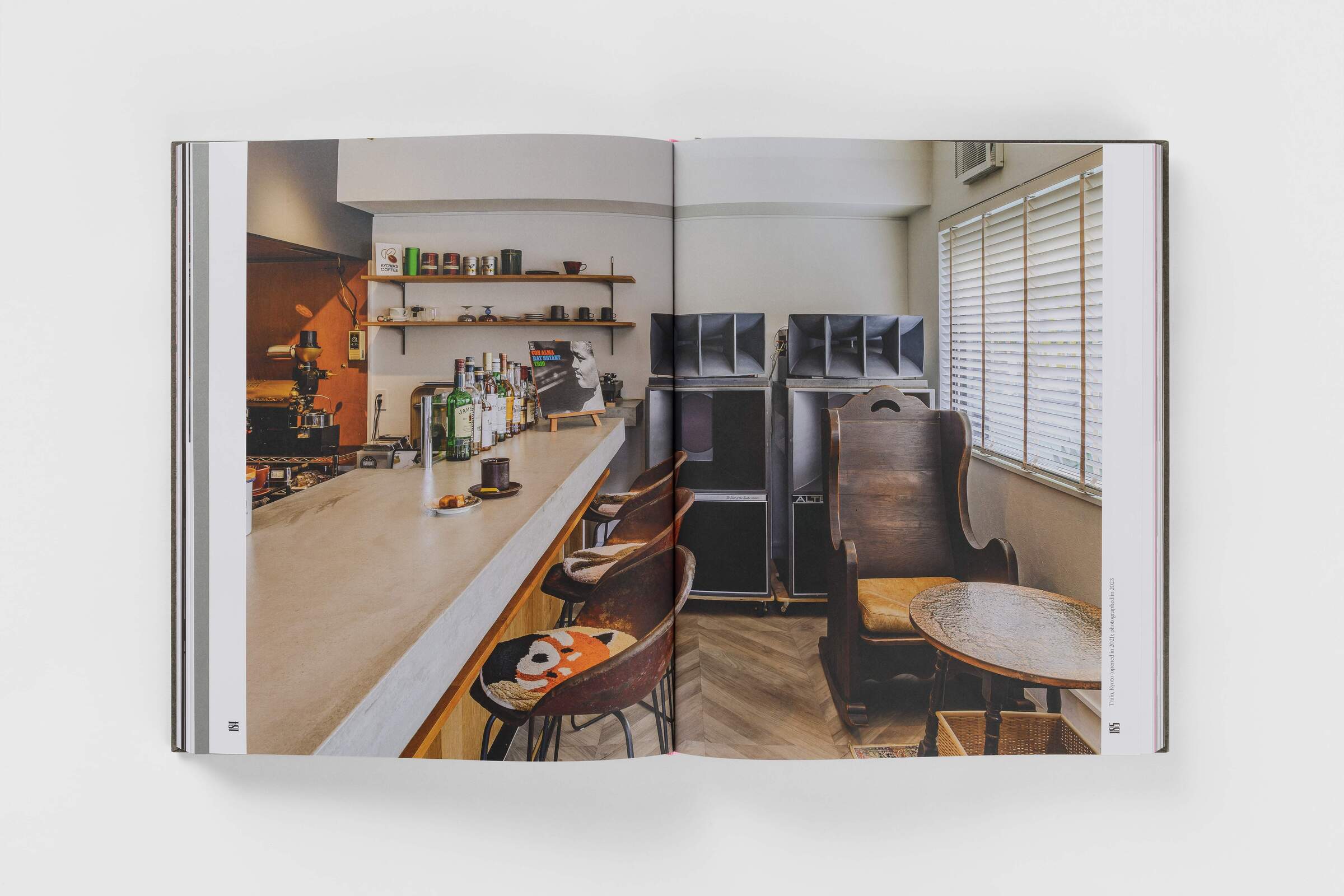
Jazz kissa often carry the marks of long use, while ERG books are highly finished objects. Did you worry that making the book too polished might work against the character of the places themselves?
Constantly. And I think that internal tension made the book better. There’s a real argument that any attempt to make something this subculture beautiful and collectible risks betraying it – turning someone’s life’s work into a lifestyle object for people who’ll display it on a shelf and never set foot in Osaka.
But I kept coming back to the records themselves. A Blue Note pressing from 1959 is one of the most carefully designed objects in human history – the covers, the gatefold, the liner notes. None of that feels like a contradiction with the music. It feels like respect. We tried to make the book in the same spirit – careful, not precious; beautiful, not ostentatious.
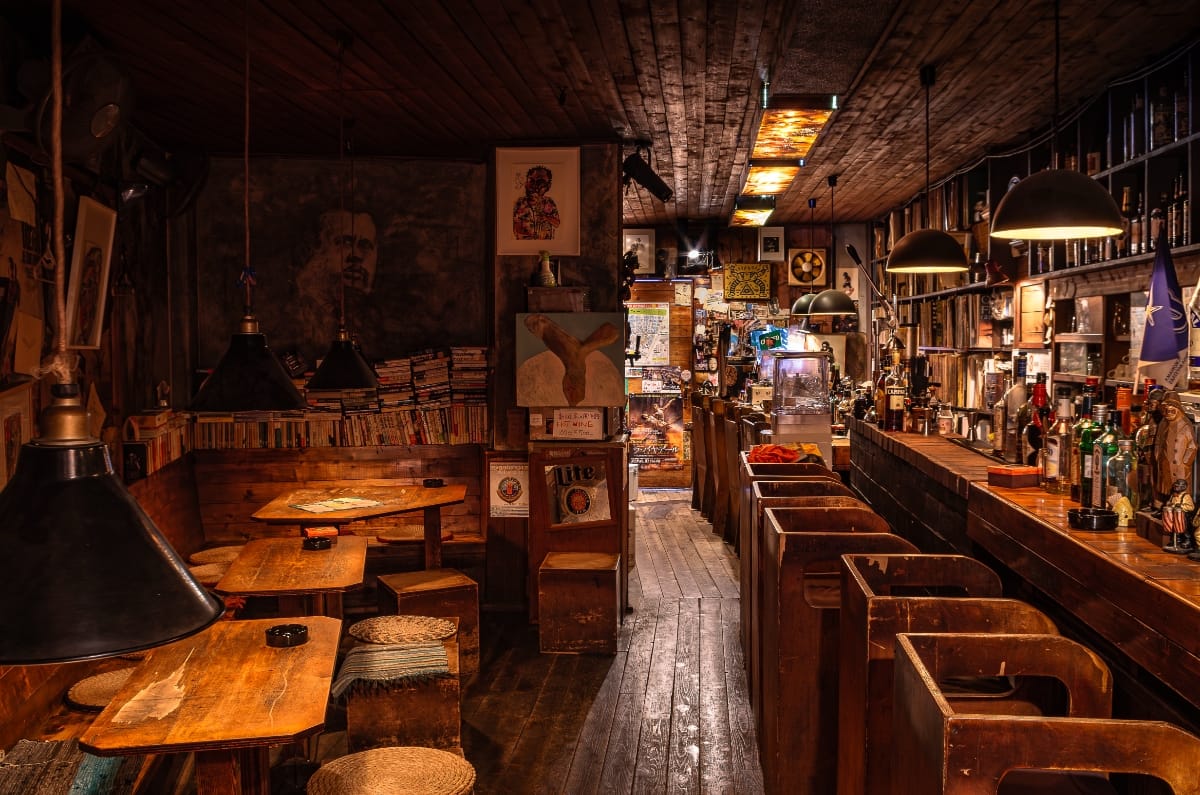
We also made a deliberate decision never to clean up the photographs. The grime on a lens housing, the faded veneer on a speaker cabinet, the water-stained ceiling tiles – those aren’t imperfections, they’re evidence. Proof that something real happened in that room over a very long time. That evidence is the whole point.
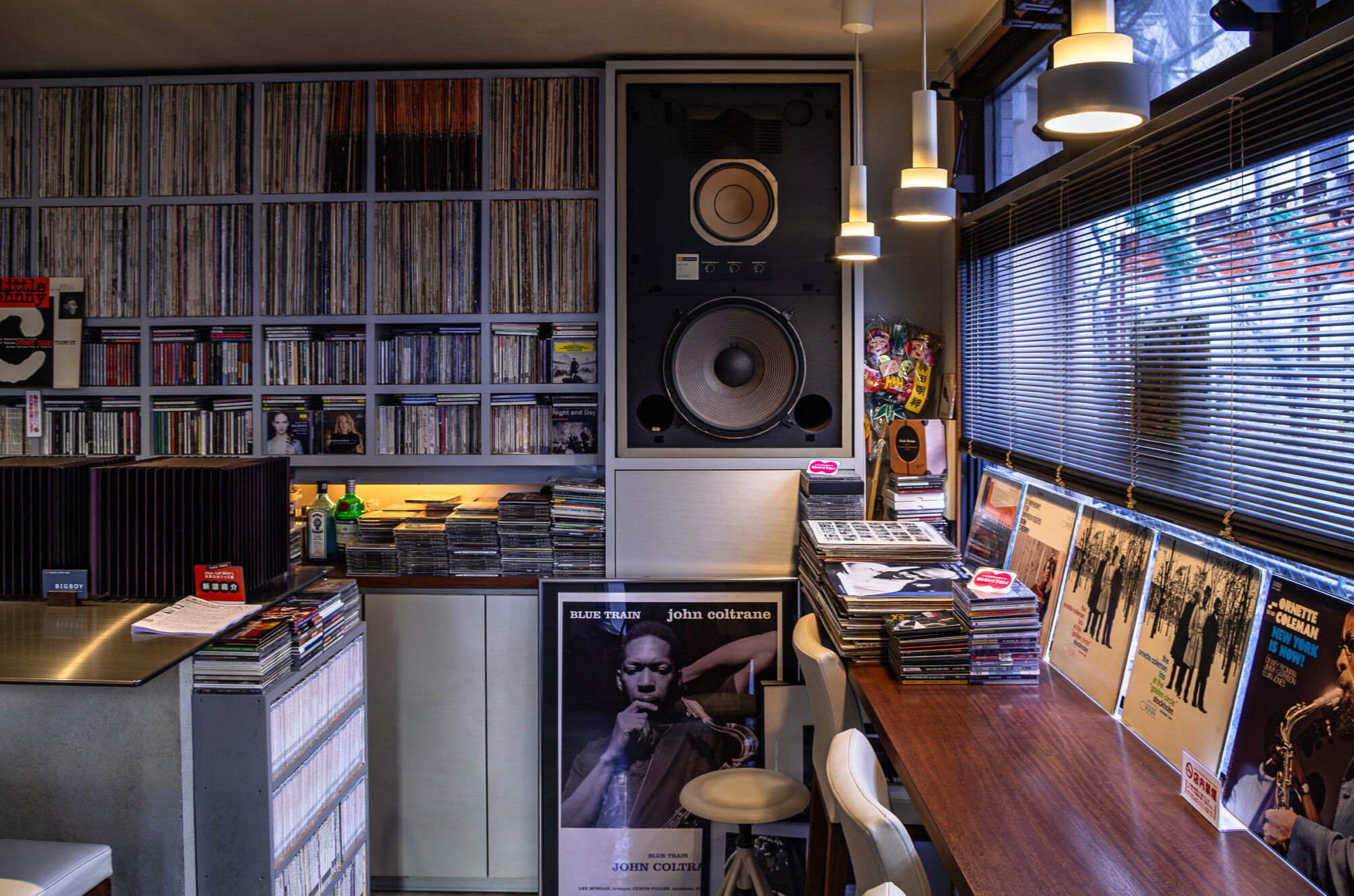
“You sit down and something in the room is listening back at you.”
Your photographs preserve the look of these rooms, but the experience of being inside one is harder to hold onto. What was most difficult to carry into the book?
The intentionality of the host. The fact that you are in a room that someone has given their entire life to.
A photograph can capture the physical space. It can capture the equipment, the light, the particular arrangement of chairs. What it cannot fully capture is what it feels like to sit in a room where the person behind the counter has been making these decisions – which record, which moment, which volume, which silence – every single day for thirty or forty years. There’s a quality of attention in a great jazz kissa that you feel before you consciously identify it. You sit down and something in the room is listening back at you.
What Kusunose-san’s photography does better than I could have hoped is capture the after-image of that devotion. The worn edges of a counter. The hand-written tracklist. The specific relationship between a chair and a speaker. These things are evidence of time spent in the right direction.
The equipment is central to many of these rooms, but it could easily take over the story. How did you write about it without turning the book into something only audiophiles would understand?
In a jazz kissa, the equipment is never really technical – it’s biographical. These objects tell you who this person is, what they spent decades pursuing, what they sacrificed to get there.
An owner running vintage Altec A7s has a completely different story than one who built their own horn systems from scratch, which is different again from someone with a hand-wound step-up transformer and a Garrard 301 they restored over years.
We didn’t want to reduce it to a buyer’s guide. But we also couldn’t pretend the equipment was scenery. Our approach was to let the specificity of the gear serve the portrait of the person. If you know what an A7 sounds like, the mention of it tells you something emotionally significant about the room. If you don’t, you still understand that this is someone who made irreversible, obsessive choices in pursuit of something they couldn’t fully explain to anyone who wasn’t already listening. That’s the real story either way.
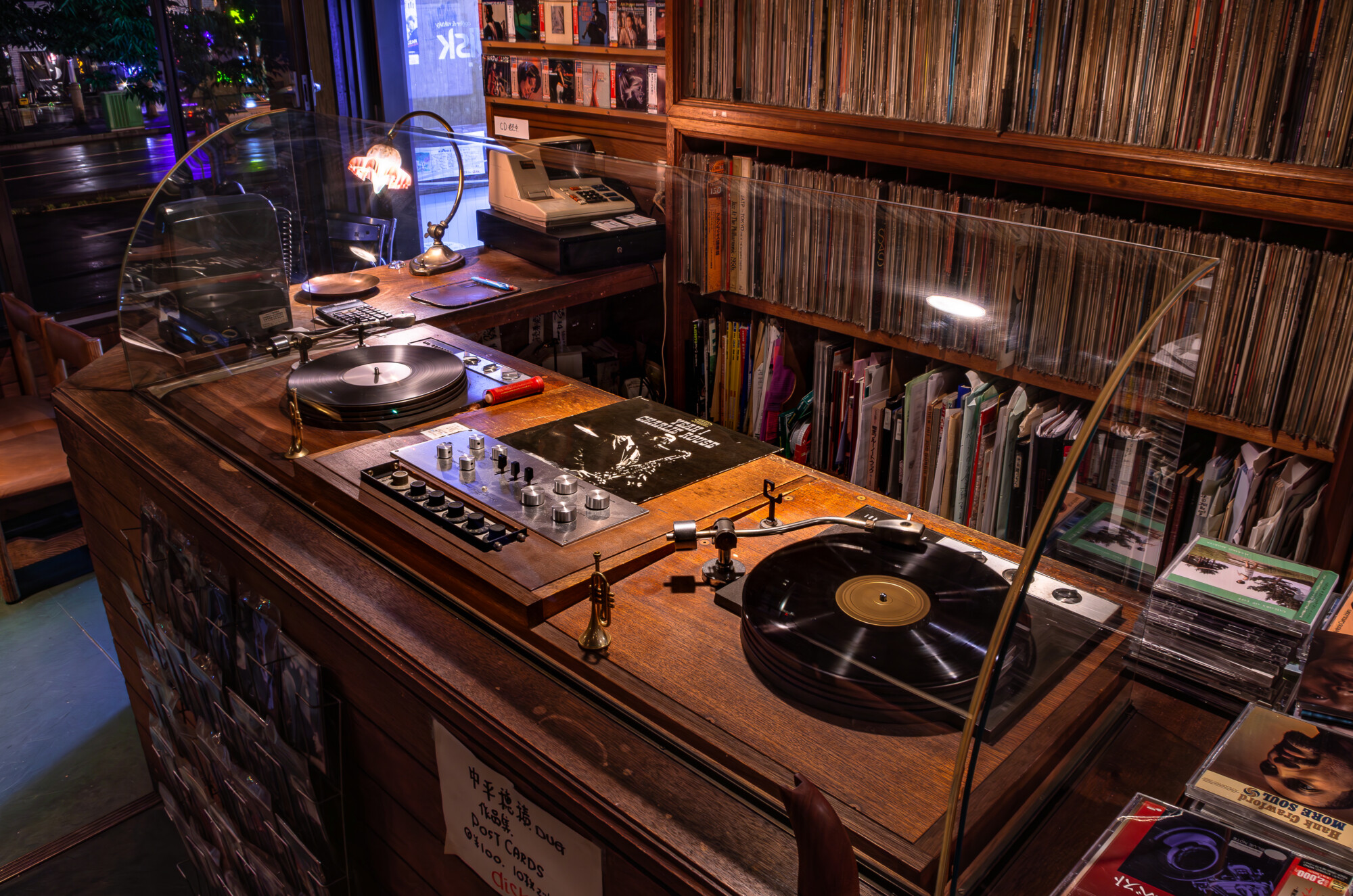
Devon Turnbull wrote the foreword. Why was he the right person to introduce the book?
Devon is where this whole chain of events started for me, so his involvement in the book feels less like a curatorial choice and more like a natural closing of a circle.
When we made the documentary with him for Type 7, I watched him do something genuinely difficult: take a culture that had deliberately kept itself small and insular – hi-fi obsessives who traded components through forums, who met at small fairs, who were deeply suspicious of anything that looked like mainstream attention – and bring it into the light without cheapening it. He didn’t simplify it. He didn’t make it aspirational in a consumerist sense. He just made it clear that the pursuit of extraordinary sound was a serious and beautiful thing, and that the DIY, tube amplification, historically-informed approach to audio was worth understanding on its own terms. A lot of people came to this world through Devon. I was one of them.
He’s also the one who introduced me to Kusunose-san’s Instagram. So in a very literal sense, there is no Jazz Kissa book without Devon Turnbull.
His foreword carries that weight. He’s not writing as an outside observer lending credibility. He’s writing as someone whose own practice – OJAS, his listening rooms, his whole approach to sound – is a direct continuation of the spirit that built the original jazz kissa in postwar Japan. The foreword makes the argument that what those owners were doing in Tokyo and Osaka is the same thing Devon and a new generation are doing now. That the obsession, the vocation, the refusal to compromise on how music should be heard – that doesn’t belong to one era. It just finds new people in every generation.
In one interview, you said that jazz is the backbone of your day and that Japan changed the way you think about beauty, ritual and simplicity. This book seems to sit exactly where those things meet. Was there one particular jazz kissa that made the project feel especially personal to you?
For me it is Jazz Kissa Eagle in Yotsuya, if you have been you know how special it is.
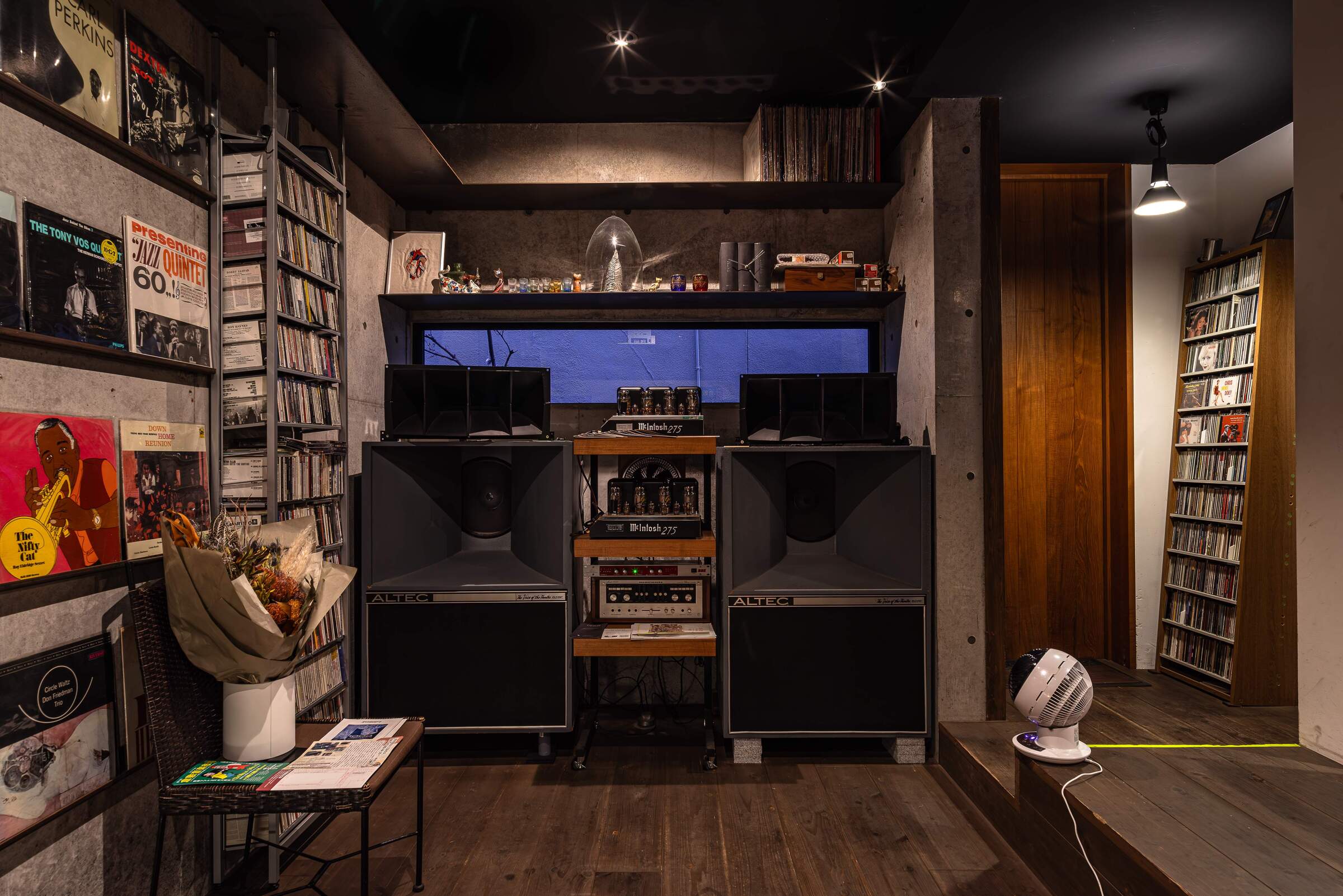
Did you sequence the book with the rhythm of a listening session in mind? What kind of feeling did you want to leave behind when the reader reached the end?
Yes – the sequencing was one of the decisions we spent the longest on. You don’t open a listening session with the heaviest, most demanding record in your collection. You bring people into the room first. You build trust. The book tries to do the same thing – it opens with more accessible, more narrative material, and then deepens and gets stranger and more specific. By the time you’re looking at the rooms with the most extreme histories and the most obsessive equipment, the hope is that you’ve already surrendered to the logic of the world and you’ll follow wherever the music takes you.
What I want people to feel when they put the book down is the specific quality of quiet that follows a good listening session. The particular kind of still that comes from having actually heard something.
The paper we chose for the cover is a japanese stock made by Takeo, which in my opinion is one of the best papermakers on earth. We love working with them, so when we found a paper stock that matched the hammertoe aesthetic of a lot of hifi equipment we were over the moon.
What do you hope the book changes for someone who has never entered a jazz kissa?
All of it. Genuinely.
If someone reads the book and gets on a plane to Tokyo and spends an afternoon in one of these rooms – ideal. If they can’t make the trip but they start listening to records instead of streaming, good. If they build a dedicated listening corner, better. If they just put their phone away for the length of one album side, that counts.
But the thing I care most about is that people understand what’s actually at stake. These places are not going to be preserved by trend cycles. The hi-fi bar moment will pass, as trends do, and most of those bars will pivot. What survives will be what always survived – the people who couldn’t imagine doing anything else. And there are fewer and fewer of them, because this is a vocation, not a career. When an owner retires or passes away, the room almost never continues in the same form. You can’t franchise devotion.
Kusunose-san understood this before anyone. The book is partly a record of things that may not exist in another generation. What I hope is that it creates new people who understand that urgency – who visit while there’s still time, who listen more carefully, and who maybe, in some cases, feel something pull at them. Because the culture needs people who feel called. Not hired.
Katsumasa Kusunose: Inside the Jazz Kissa
Ted Gushue’s answers explain how the book came together and why ERG wanted to bring this culture to a wider audience. We now turn to Katsumasa Kusunose, whose photographs and decades of experience inside jazz kissa form the heart of the book.
“Jazz is everything”
You first discovered jazz kissa as a high school student in Kochi and later spent much of your university life in them. When you think back to those years, what did spending so much time there change in you?
Katsumasa Kusunose: This is the most difficult question to answer.
When I was a university student, I spent my days at jazz kissa from morning until late at night. Back then, jazz kissa were everywhere in Tokyo, not just in my neighbourhood, so I could spend my free time there. Once I entered a jazz kissa, I completely lost track of time. Some people described jazz kissa as ‘opium dens’ back then, and I was certainly like a junkie, immersed in jazz all day long in such places. I definitely learned a lot about jazz at jazz kissa. At the time, I also gained knowledge about jazz from the radio and books, and borrowed many records from the library. But there are limits to what you can learn on your own. At jazz kissa, you can encounter jazz you would never have imagined, so it definitely broadens your world.
At jazz kissa, you can encounter jazz in ways you never expected, and your world will undoubtedly expand. Furthermore, at jazz kissa, you meet people of all ages, from diverse backgrounds and with diverse perspectives, including the owners. As a result, frequenting jazz kissa will undoubtedly change not only your approach to jazz, but also your overall way of listening to and engaging with music. However, after spending countless hours at jazz kissa over the past several decades, it is incredibly difficult to truly grasp what you have learned. Moreover, it is not something that can easily be shared with others; it is perhaps best described as an extremely personal ‘harvest’ and ‘treasure’.
Jazz kissa are often imagined outside Japan as severe or almost sacred places. How different is that from the way they felt to young people at their peak? And what should visitors understand before entering one today?
The heyday of jazz kissa lasted from the 1960s to the 1970s. Many people, both overseas and in Japan, mistakenly believe that ‘jazz kissa in their heyday were sacred places’. The popularity of jazz kissa in the early 1960s was, without exaggeration, a nationwide boom. Jazz kissa owners who remember that time recall that ‘it was an era when you could make a fortune if you opened a shop’. What is important here is that the core of this boom was young people in their teens. Jazz kissa at that time were undoubtedly part of youth culture. Many of the shop owners were in their twenties and thirties, close in age to their customers. Some owners even opened their jazz kissa at the age of eighteen or twenty. Jazz kissa have a 100-year history, but the 1960s and 1970s were the period when the greatest number of young people flocked to them, which means that jazz kissa at that time were by no means exclusive or intimidating places for young people.
From the late 1920s to the mid-1950s, jazz kissa were largely for professionals, the intellectual class and the wealthy. During this period, jazz kissa could be described as ‘special places for hobbyists and connoisseurs’. However, the jazz kissa that emerged in the 1960s allowed young people with limited means to experience the world created by records and audio equipment—things previously unattainable because of their high cost—for the price of a cup of coffee. These jazz kissa liberated what had previously been the property of a privileged few, making it accessible to young people. This was a revolution in the world of Japanese popular music, signifying the widespread popularisation of jazz appreciation. It is inappropriate to call such jazz kissa ‘mysterious temples’, as I and other young people at the time entered them quite casually.
From my observations, the majority of tourists who come to Japan specifically to visit jazz kissa do not seem to misunderstand what a jazz kissa is. However, the problem is that many visitors know very little about jazz kissa. They often continue to behave noisily even when they are inside one. You frequently see people sitting at the counter of a jazz bar, talking loudly about things completely unrelated to jazz. They do not seem to realise that talking loudly in a Japanese jazz kissa is a nuisance to the other customers and to the establishment.
I explained earlier that jazz kissa in the 1960s were filled with young people and that this was a popular phenomenon, but that does not mean they behaved noisily. Just as everyone quietly watches the screen while a film is playing in a cinema, it is normal in Japanese jazz kissa to listen quietly while records are playing. While it is fine to have conversations unrelated to jazz, most people understand that ‘this is a space for listening to jazz’. Even young people who are usually boisterous naturally adopt the behaviour of ‘not making noise here’ when they are in a space such as a jazz kissa. This may be a unique cultural trait shared by Japanese people. I am sure that those of you reading this article understand that you should behave quietly in a Japanese jazz kissa, but I hope you will also share this unique Japanese custom with those around you.
After meeting so many owners, what separates someone who has simply opened a café with good records and speakers from someone whose entire life is bound up with jazz?
Many of the owners of older jazz kissa either quit their jobs immediately after graduating from school or opened a jazz kissa without ever having held another job. Most of them are people who say, ‘There’s nothing I like more than jazz’. For them, jazz is everything. There is a difference between these people and those who say, ‘I love jazz, but I also love other things’, although it is difficult to put into words.
You have said that genuine love of jazz can be felt as soon as you enter a jazz kissa. What gives it away?
Cats and dogs seem to be able to tell immediately whether a person they meet for the first time likes them or not. It is the same principle. I believe you can judge whether someone’s affection is genuine from the vibrations they give off.
Many of your photographs show empty rooms. Was this an aesthetic decision, or did it also reflect the reality of how quiet many jazz kissa had become when you began photographing them in 2014?
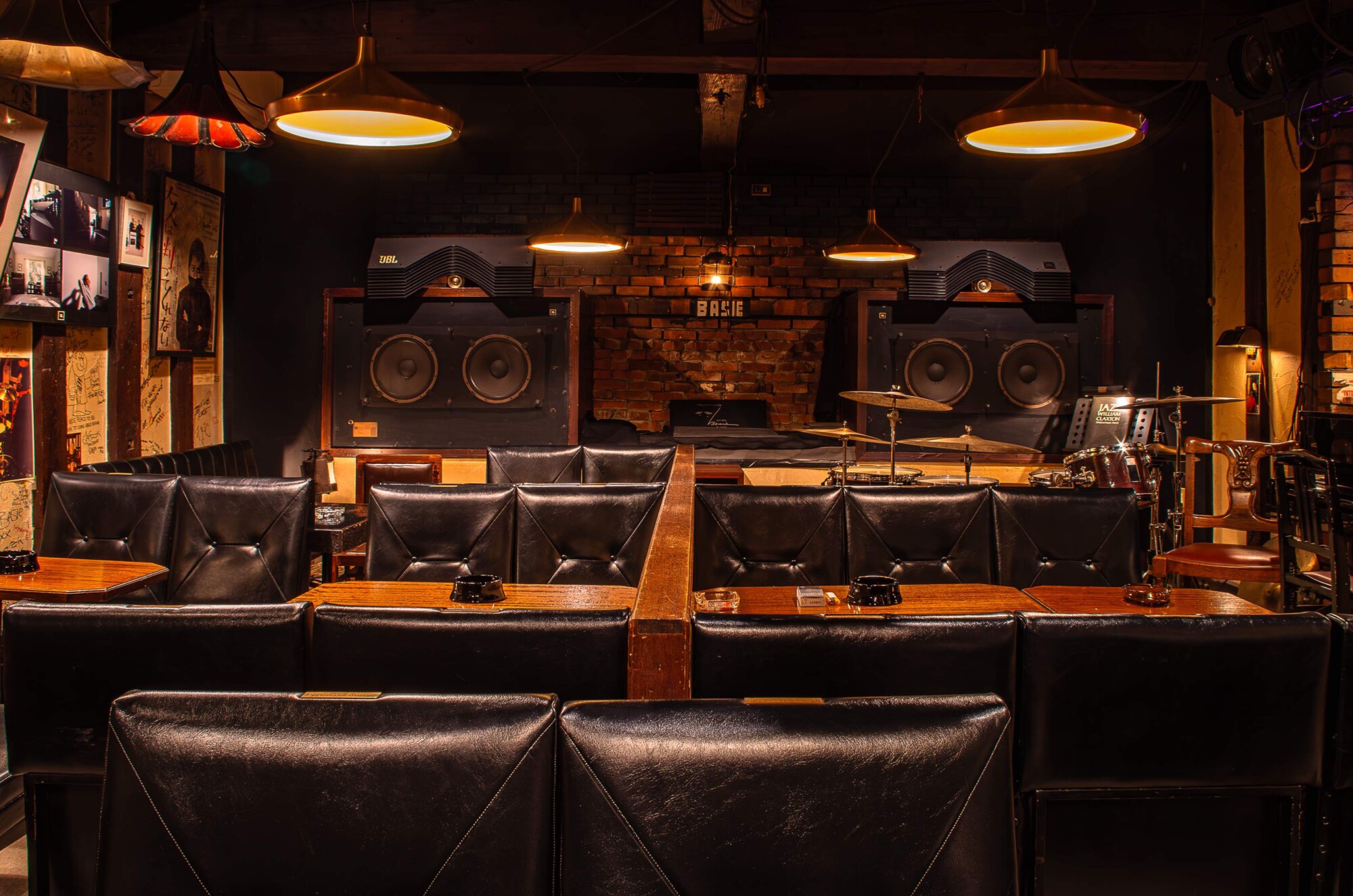
I started taking photographs of jazz kissa in 2014, which was the lowest point in the popularity of jazz kissa in Japan. The reason there are no customers in my photographs is not that I intentionally avoided photographing them, but that there simply were no customers. I would spend about two hours photographing each jazz kissa, and during that time, no customers would come in. Even at a jazz kissa such as ‘BASIE’, which is said to be one of the best in Japan, there was not a single customer.
Also, many elderly owners would refuse, saying, ‘Please don’t take my picture.’ I photographed every owner who gave me permission. Furthermore, most owners in large cities such as Tokyo stipulate that you cannot take photographs during business hours. Nowadays, there are issues surrounding portrait rights, so owners try to avoid such problems. They also want to avoid disturbing customers who are looking forward to listening to music or making them feel uncomfortable. This is a common problem with journalists from overseas, who often show up unexpectedly without making prior arrangements to conduct interviews and take photographs. Japanese business owners are generally tolerant of foreigners and often allow such behaviour, but if we Japanese did the same thing, we would inevitably be scolded by the owner or refused an interview.
This is my principle regarding photography: when photographing people, I try to capture them in a way that shows they are aware of my lens and are facing it directly. Rather than surprising the subject, I aim to capture the moment when they look their most beautiful, with their consent.
My style of photographing jazz kissa while minimising the presence of customers seems to have had a positive effect. The absence of other people enhances the sense of immersion in the establishment and seems to stimulate the viewer’s imagination more.
For years, people who had never visited a jazz kissa were warned that they would be judged for knowing too little. How much did that reputation contribute to the decline, and why has it begun to change?
The popularity of jazz kissa in Japan began to decline rapidly in the late 1980s, and by around 2010, most jazz kissa were practically empty. This was because a preconceived notion had become ingrained among generations who had never visited one: ‘At jazz kissa, you will be ridiculed and scolded by elderly owners and customers for not knowing anything about jazz.’ Those who had been going to jazz kissa for a long time knew that this was not true, so they continued to frequent them. However, as these people grew older and stopped coming, the next generation feared that they would be bullied if they went to jazz kissa, so no one went. It is no wonder that no one came under these circumstances.
However, the situation has improved considerably over the last five years or so. The next generation also began to try jazz kissa, and upon experiencing them firsthand, they discovered that they were not places where unpleasant things happened, but rather comfortable places for them. As this happened more often, and a positive image of jazz kissa spread through word of mouth and the media, their popularity began to recover. It is now not uncommon to see lines forming in front of these establishments.
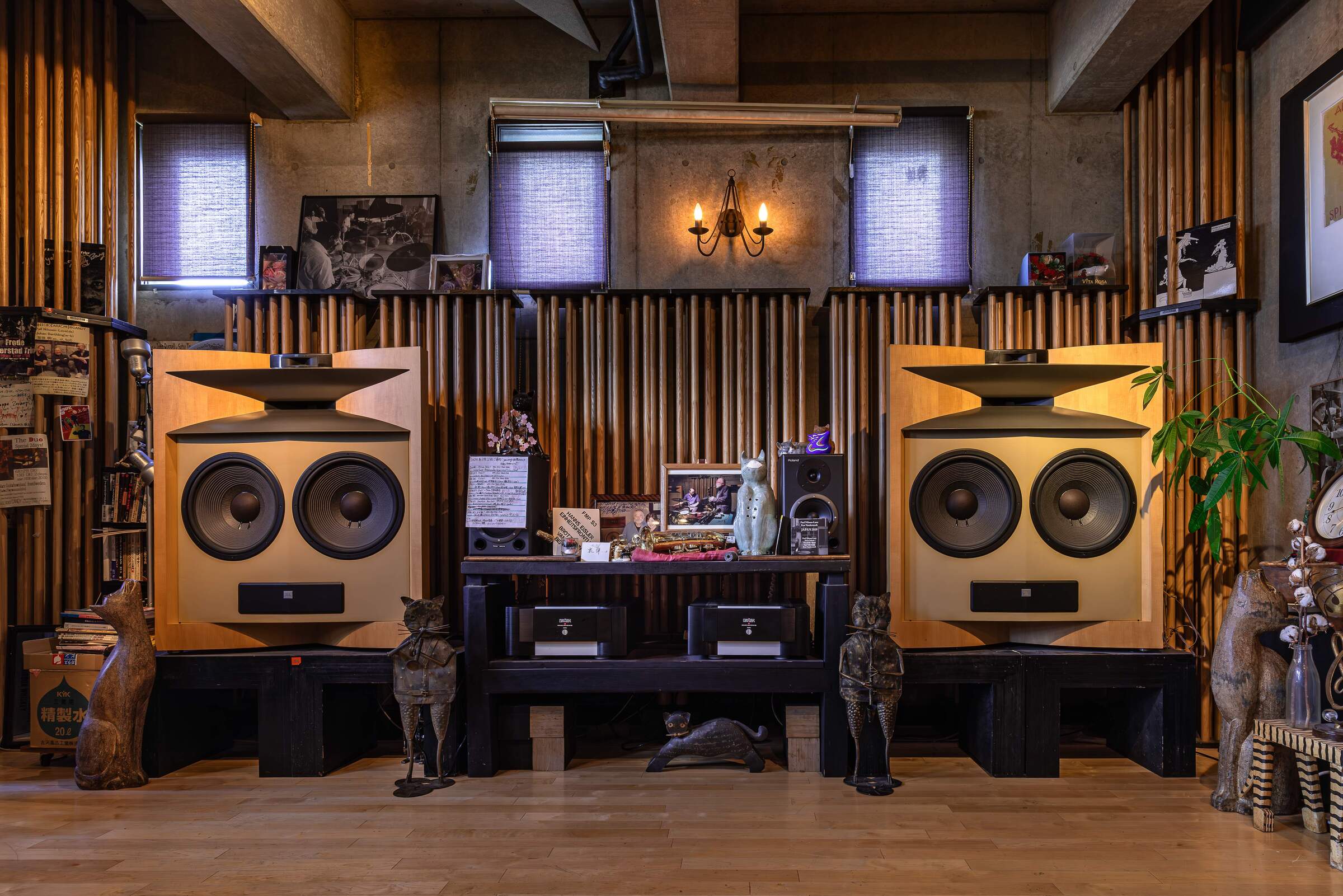
“As long as humanity continues to listen to music, jazz and jazz kissa will never disappear from this world.”
Do you believe jazz kissa are disappearing, or simply changing with the times?
It is fair to say that the 100-year history of jazz kissa is perfectly intertwined with the 100-year history of jazz music itself. Just as jazz has survived this long by constantly changing its form, jazz kissa have also continued to change in line with the times. As long as humanity does not become extinct, it is hard to imagine jazz disappearing, and similarly, I believe jazz kissa will never completely disappear. In other words, as long as humanity continues to listen to music, jazz and jazz kissa will never disappear from this world.
How did your years in magazine publishing help you build JAZZ CITY independently, and what changed once your work began reaching people through Instagram?
I gained a great deal of experience as a magazine editor, but the most important job was managing the budget as the person in charge of the magazine. I believe that this experience of avoiding financial collapse has been invaluable in my own company’s publishing activities. In terms of practical editorial work, I have handled everything except photography since my twenties, including interviewing, writing and editing. For example, when I was in my twenties, magazine publishing still used phototypesetting to create layouts, and I was involved in design and layout work. Now I do DTP by myself using InDesign, and that experience from my twenties has proved incredibly useful.
Instagram has undoubtedly changed the latter half of my life. The great thing about social media is that even very niche topics can reach people who understand them. I can only say that the attention received by a very niche and specialised subject such as jazz kissa is thanks to social media.
You had deliberately stepped away from collaboration before making this book with ERG. What did working with Ted Gushue and the team allow you to see in your own work?
Since becoming independent and starting my own company, I have deliberately avoided collaborating with others. While magazines owe much of their appeal and strength to the dynamism that arises from bringing together people with diverse perspectives and styles, I had grown weary of collaborating with others after many years of working in that field. However, seeing the results of ‘Jazz Kissa’ reminded me of the dynamism and immense power that collaboration can bring. The concept of emphasising not only the cafés but also hi-fi design came from Ted Gushue; I would never have conceived of such an idea myself.
Many readers of ‘Jazz Kissa’ praise it, saying that they feel ‘as if they are actually inside a jazz kissa’. However, the jazz kissa in this book are merely virtual spaces, not real ones. If you wish to experience the essence and true nature of jazz kissa culture, the only way is to visit jazz kissa yourself—ideally every day—and experience them firsthand.
Some people outside Japan romanticise jazz kissa owners as men who spent decades endlessly tuning their systems. How close is that image to the truth?
Japanese jazz kissa culture has been built on the interplay between ‘records’ and ‘audio’. However, it may surprise jazz kissa fans overseas that many Japanese jazz kissa owners have focused more on collecting and enriching their record collections than on refining their audio systems. The same is true of the customers; while there are certainly many audiophiles, what customers cared about most was which records the establishment had and which records the owner played. Therefore, it would be somewhat romantic to view jazz kissa owners as masters who have spent decades tuning audio equipment.
In reality, I have interviewed approximately 300 owners, and many of them answered, ‘I don’t know much about audio.’ However, this includes a degree of humility on their part, and it does not mean they are complete novices when it comes to audio. The reason they behave this way is probably that they know very well that there are no limits in the world of audio, and that once you become hooked on it, it is like falling into a bottomless swamp. It seems they feel that, if they are going to fall into a bottomless swamp anyway, they would prefer it to be the swamp of jazz records.
Interestingly, many jazz kissa have regular customers who act as advisers on audio matters. They repair the establishment’s audio system if it breaks down, bring in replacement equipment, regularly check the condition of the system and offer advice. Jazz kissa owners often leave audio matters to them. These regulars are an indispensable part of Japanese jazz kissa.
In the chapter ‘What Is A Jazz Kissa?’, you describe a ‘Swing Record Concert’ held in Tokyo in March 1938, shortly after Benny Goodman’s Carnegie Hall concert. The event attempted to recreate that concert through records. Why is this early listening session so important to understanding the purpose of jazz kissa and the Japanese desire to make recorded jazz feel like a concert?
In the second chapter of ‘Jazz Kissa’, titled ‘What Is A Jazz Kissa?’, I describe several facts that no one has mentioned before. One of them is a Benny Goodman record-listening session held in Tokyo in March 1938 by a major Japanese newspaper company, billed as a ‘Swing Record Concert’. This event celebrated the world’s first jazz concert, which Benny Goodman held at Carnegie Hall in January of the same year. By playing Benny Goodman’s records, the programme of the historic concert was recreated. The aim was to introduce people to ‘swing jazz’, which was hugely popular in America at the time.
I believe this event symbolises the significance of Japanese jazz kissa. It represents the act of ‘simulating a real jazz performance through record playback’. As audio entered the high-fidelity era in the 1950s, this enthusiasm among Japanese people intensified even further. Japanese jazz enthusiasts who could not hear live performances by American jazz musicians tried to simulate that experience at jazz kissa. Therefore, audio technology in jazz kissa began to focus on ‘how to make records sound like a real live performance’.
Sugano’s idea of the ‘record performer’ seems very different from the usual Western idea of hi-fi, where the listener is often told to disappear and let the equipment reproduce the recording as neutrally as possible. As I understand it, Sugano thought playback itself was an active act, almost like interpretation. Do you think you could explain what he really meant by that, and how this idea changed the way Japanese audiophiles listened, adjusted their systems, and judged sound?
Okihiko Sugano is one of Japan’s greatest audio critics, but the person who had the greatest influence on the approach of jazz kissa to audio was not him, but Chiaki Iwasaki, who lived during the same era. Iwasaki was born in 1929, four years before Sugano, who was born in 1932, and he died in 1977 at the age of forty-eight. Both Iwasaki and Sugano were audio researchers of the ‘record performer’ type, and it seems that they respected and admired each other. Sugano’s relationship with jazz kissa was not particularly deep, but Iwasaki loved jazz kissa and had such a close connection with them that he even opened his own jazz kissa, called ‘Jazz Audio’, in Tokyo in 1970.
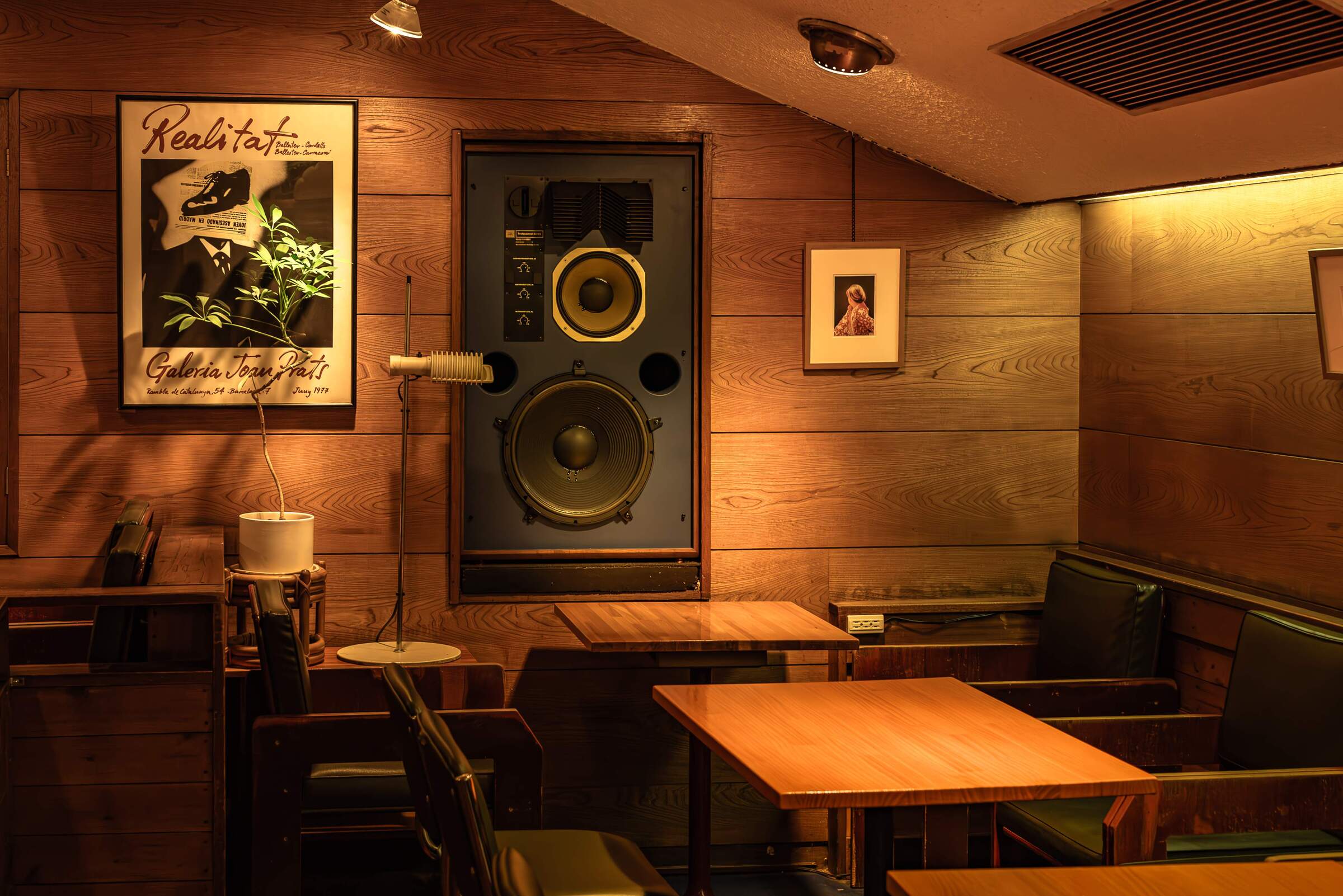
Iwasaki, who was active as an audio critic from the 1950s, wrote many regular columns for jazz and audio magazines during the 1960s. His passionate and romantic writing brought him charismatic popularity among young people at the time. It was Iwasaki who recommended the JBL D130 to readers as the ideal unit for listening to jazz. His influence was tremendous, and from the 1970s until the mid-1980s, the JBL systems most frequently used at jazz kissa were those consisting of the D130 and 075, or the D130 and LE175DLH.
Iwasaki focused on the astonishingly high efficiency of 103 dB/W/m offered by this large, fifteen-inch full-range speaker. He argued that the speed, energy, vividness, sharpness and dynamism of the sound projected forwards were ideal for reproducing jazz performances, and he put this into practice at the jazz kissa he managed.
The system recommended by Iwasaki clearly had a narrower frequency range, but it was precisely because of this that it was able to create a sense of presence ‘as if the musicians were playing right in front of you’. It was as if the drummer’s kick of the bass drum, the cymbal legato indispensable to jazz, the piercing trumpet and the roaring saxophone—all essential elements of a jazz performance—were being reproduced. However, this was not the same sound field that you would hear in an actual live venue. It could be called a cleverly staged deception, but the audio equipment recommended by Iwasaki was able to create a sound field that came closest to the pleasure of experiencing a live jazz performance, and was arguably even more moving than a live venue.
Even if the measured waveforms were not necessarily the best, the JBL system recommended by Iwasaki clearly surpassed others in terms of the sharpness of response felt the moment a record was played, its ability to reproduce subtle nuances and its sense of presence, which resembled a live performance. That is what Iwasaki and Sugano meant when they insisted on the idea of the ‘record performer’.
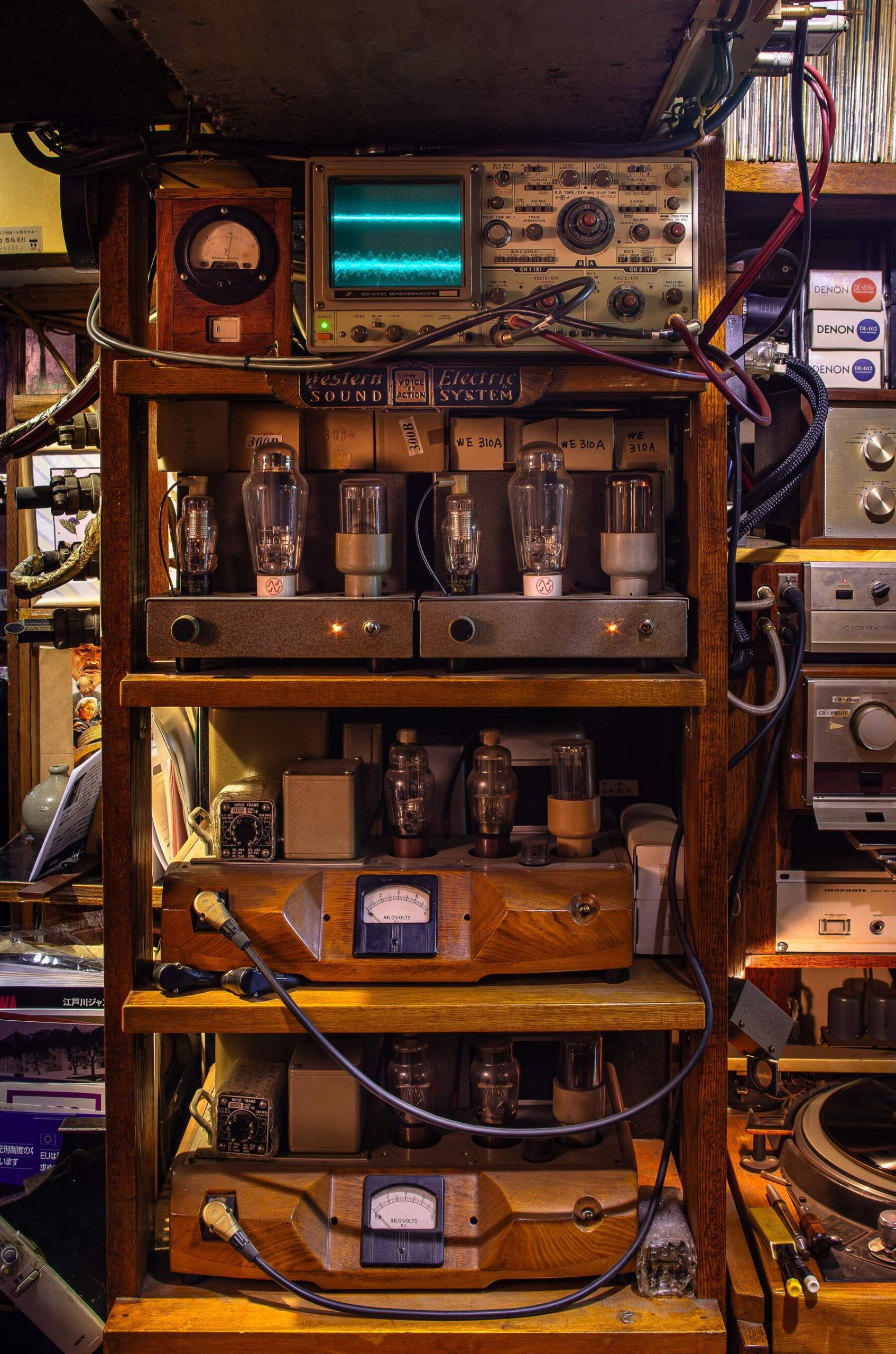
When people see Kei Ikeda’s Western Electric system, its scale can overshadow the sound. What is it about those horns that makes listeners believe in them so completely?
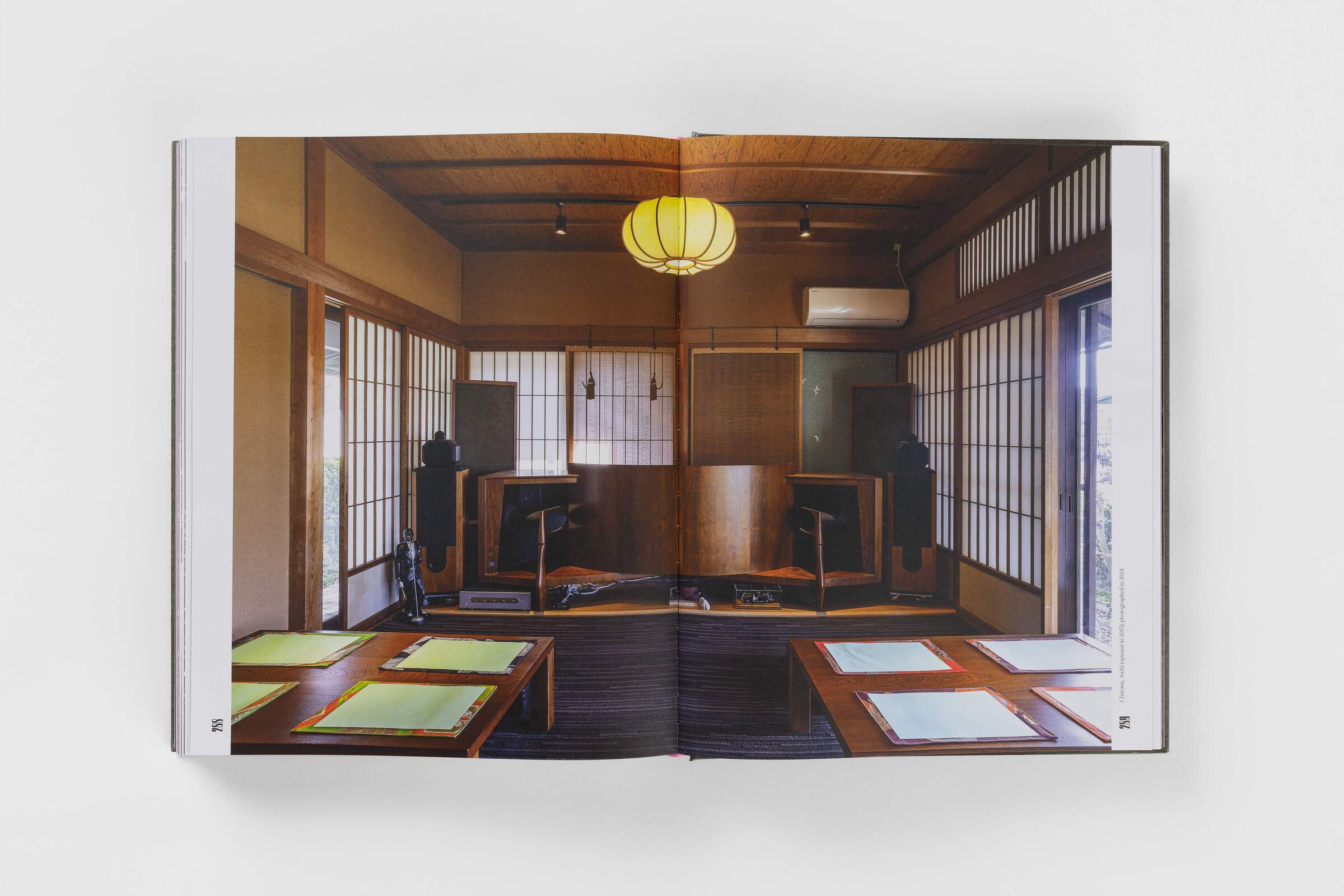
Western Electric remains in a class of its own even today, incomparable to anything else. Its massive horn speakers are truly awe-inspiring to those who see them. When you actually experience the system, it produces an overwhelming, almost otherworldly sense of awe, so it is understandable that a ‘myth’ has developed around it.
In modern times, there are systems that are numerically superior and ‘more accurate’ than WE. However, what makes WE horns superior to everything else is their overwhelming persuasiveness. They convince listeners that ‘Ah, this is the singer’s true voice’, or ‘This is the tone and performance of this pianist’. Once people have had such an experience, they will never be able to shake that myth from their minds.
People often describe Japanese audio culture as more willing to build or alter equipment. Was that really a matter of philosophy, or did it begin because imported equipment was simply too expensive?
In modern times, I believe that Japanese and overseas audiophiles share almost the same temperament, and there is not much difference between them. There seem to be many audiophiles in Japan who prioritise accuracy, measurements, originality and the ‘right’ use of equipment, and I feel that such people are in the majority. However, the situation was completely different in Japan until around the late 1970s. Several jazz kissa owners told me, ‘Back then, the Japanese economy was weak, and imported goods were expensive, so we couldn’t afford them. We thought that, if we couldn’t buy them, we would simply make them ourselves.’ It was not only jazz kissa owners; it seems that many Japanese audiophiles in the past made their own equipment because of these circumstances. This situation may have differed from that overseas.
It also seems that Devon Turnbull was greatly influenced by these Japanese DIY audiophiles. I think that influence may also lie at the root of OJAS’s DIY spirit. However, the ‘Listening Room’ he is trying to create is one in which the best possible environment is provided for both the audio equipment and the listener. It is completely different from the acoustically flawed jazz kissa in Japan. The acoustic flaws of Japanese jazz kissa are not due to negligence on the part of the owners. Rather, most jazz kissa in Japan occupy rented spaces in multi-tenant buildings and were not originally designed as perfect environments for enjoying audio.
Devon describes the sound of these Japanese jazz kissa in the preface to our book as ‘The soundscape embodies wabi-sabi, favouring warmth and character over sterile precision.’ This beautifully and elegantly expresses the charm of the unique audio experience that can be enjoyed at Japanese jazz kissa.
After photographing so many extraordinary systems, what do you choose to listen to at home?
My room’s audio system is as follows:
Speakers: KEF LS50 Meta
Turntable: REGA Planar 3 Mk2
Cartridge: REGA Exact2
Phono amp: REGA FONO MM
Amplifier: MARANTZ Model 30
I am not an audiophile, and if I wanted to pursue audio pleasure, I would go to a jazz kissa, so I do not use a particularly elaborate system. I prefer a system that is not too distinctive and allows me to enjoy various sources clearly.
Klemen Breznikar
Headline photo: Basie, one of Japan’s most renowned jazz kissa, opened in 1970. After being closed for around five years, it reopened in spring 2026 and now opens on Saturdays and Sundays. Photograph: Katsumasa Kusunose/Jazz City LLC