

The Deviants: Original Guitarist Sid Bishop Looks Back at the British Underground
The Deviants were part of the British underground counterculture before anyone had quite worked out what to call that strange, noisy, anti-mainstream thing.
They came out of the late-sixties underground around Ladbroke Grove, UFO, the alternative press and street politics. The Deviants were never, in any meaningful sense, constructed with an eye toward the conventional showbiz ascent, nor did they exhibit the slightest inclination to submit themselves to its polite expectations; rather, they existed as a kind of unruly disturbance, employing guitars, drums and a singer armed with a particularly sharp pen as their chosen instruments of disruption.
At the centre was Mick Farren, whose name has, over time, come to dominate the way in which the band is remembered, and not without reason, though it would be a simplification to leave matters there; for bands are seldom the product of a single will, and the peculiar noise and character of The Deviants arose from the interplay of those around him, each contributing to the whole in ways that resist easy reduction. One of those was guitarist Sid Bishop, who joined when the band was still called The Social Deviants and is now the last surviving member of the original core.
Bishop came from a different place. Before The Deviants, he was playing blues in South London pubs, thinking of himself as a purist. He answered an advert in Melody Maker and found himself auditioning in a half-derelict house in Whitechapel, full of what he remembers as “spaced-out hippies”. He felt, as he puts it, “like a pork sausage at a bar mitzvah.”
That lifelong interest in guitars never really left him. Bishop later co-authored ‘A Century of the Electric Guitar’ with David Plues, an illustrated history of the instrument, from the early electric designs of the 1920s through to the classic guitars that shaped rock, jazz, country and popular music. It is a fitting side note here, because Bishop’s story with The Deviants also begins with a young guitarist trying to move beyond the pub circuit and ending up somewhere far stranger.
Farren told him to forget his blues roots. The Social Deviants would be more abstract and free-form. Bishop agreed, and that was that.
The early Deviants played the underground circuit, including UFO and the Alexandra Palace Love-In. Bishop remembers the live material as under-rehearsed, but explosive.
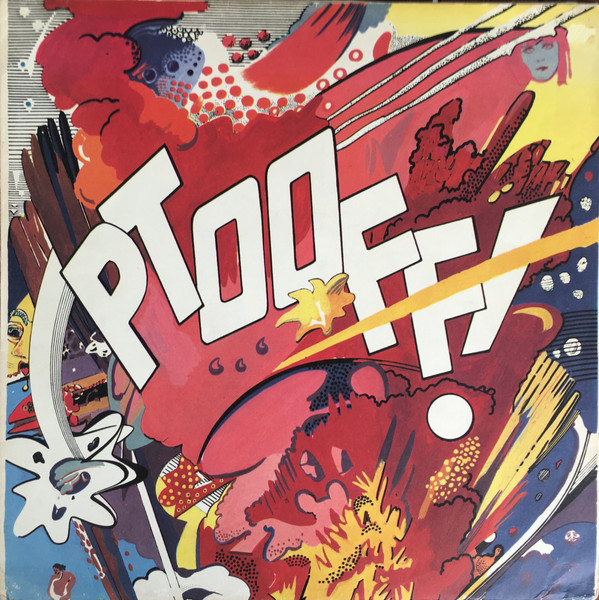
Their debut album, ‘Ptooff!’, remains one of the great odd documents of the British underground. Recorded at Sound Techniques and financed with help from Nigel Samuel, it was first sold through the underground press before being picked up for wider release. Bishop is unsentimental about it: “40% of that album is awful, 40% is just ok and 20% is absolutely brilliant.” It still sounds like a record made by people trying to escape the normal rules before deciding what the new ones might be.
The idea of The Deviants as a true “community band” was more vision than reality. The Ladbroke Grove connection is important, but Bishop is clear that the sound came from the musicians themselves.
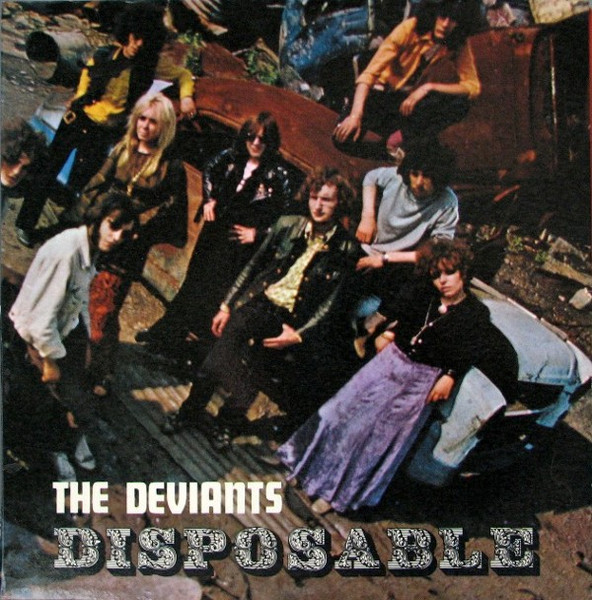
By ‘Disposable’, pressure had crept in. The band were taken more seriously, and the next album leaned toward shorter songs. Bishop does not pretend to love it. He feels much of what made The Deviants distinctive had been “airbrushed out”. It still has its moments, but carries the smell of compromise.
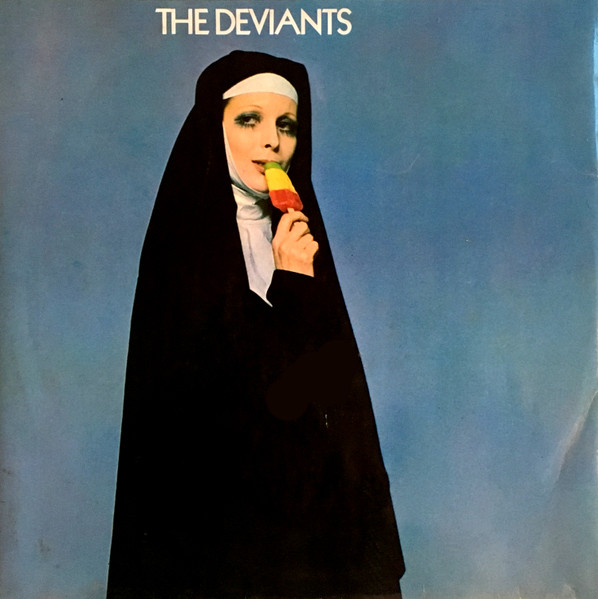
Bishop left before the American West Coast trip that helped reshape the band. Paul Rudolph came in, ‘The Deviants 3’ followed, and the road led toward the Pink Fairies.
Still, Bishop understands why people later heard something proto-punk in The Deviants. The label came later, but the attitude was already there. They were anti-slick, anti-showbiz and uninterested in behaving themselves. “We weren’t the Dave Clark Five or the Hollies,” he says, “and had no intention of being on that hamster wheel.” Years later, punk would make a virtue of that fuck-off refusal.
Special thanks to Rich Deakin for making this interview possible.
“A record that was unlike any other.”
Great to have you here. There’s plenty written about Mick Farren and the wider counterculture, but much less from your side of the story, so I’d like to start right at the beginning and build this from the ground up. Before The Deviants had even settled into a proper band, what was happening in your life musically, and what first pulled you into that whole Ladbroke Grove world?
Sid Bishop: I would like to begin this interview by stating how honored I am to have been approached on this subject. We are discussing events which took place almost sixty years ago. The Deviants are recognized now as being one of the seminal bands that emerged from the London underground scene of the late sixties. As things have turned out, I am the only member of the original core band still surviving, and I feel a heavy responsibility to pass on my memories to the readers of this publication. The Deviants certainly weren’t the best band in the world, but they were the loudest. Now to the questions!
Prior to The Deviants, I had been working in a couple of blues bands, playing in any local pub that would pay us, principally around the South London area. I saw myself as a blues purist, Buddy Guy, Otis Rush, etc. I had a desire to advance myself beyond the pub band stage and was actively looking for a pro band to slot into. I spotted an ad in Melody Maker, a now-defunct music industry newspaper, that advertised for a lead guitarist. This seemed encouraging, so I went for the audition, and much to my surprise, got the gig. The audition was held in the basement of a semi-derelict house in the Whitechapel area of London’s East End. Many of the windows were broken and the stairs were littered with cat shit. The house was evidently one that the slum clearance contractors had forgotten, and it seemed to be populated by a bunch of spaced-out hippies. I felt like a pork sausage at a bar mitzvah. Mick Farren, the singer, told me that I could forget my blues band roots, that this band was called the Social Deviants and would be performing more abstract and free-form material. Sounds good to me, I said, and I was in.
The group began as The Social Deviants before it became simply The Deviants. When you first came into it, how did that actually happen? Who approached you, and what did you think you were joining at that point?
Mick had decided to drop the Social part of the band name around the same time that ‘Ptooff!’ was released. I’m not sure why. Perhaps he thought it was a bit clumsy. I explained earlier how I got into the band. Initially it was all somewhat of a culture shock, and it took a little while to fully understand what I’d got myself into.
When you stepped into that early version of the band, what did it feel like from the inside? Was it already a band in the usual sense, or more of a loose underground happening that gradually turned into one?
A bit of both, really. The Social Deviants had already been performing for a while, and I had replaced Clive Muldoon, the original guitarist. They seemed to know what they were doing, despite the obvious mayhem, and worked as a gelled unit, not loose in any way, I don’t think. In any case, they were already well established in the underground genre that existed then.
If we’d stepped into your room at the time, what would we have found? Records, guitars, posters, books. What were you feeding off before the band really took shape?
The simple answer is blues records, everything from Robert Johnson to Howlin’ Wolf. Oh yes, and a guitar or two.
The early Social Deviants played places like UFO and the Alexandra Palace Love-In. Do you remember those first gigs as exciting, chaotic, under-rehearsed, or something else? What did those rooms feel like?
Under-rehearsed, certainly, but I could feel the dynamic and knew something was happening. There was momentum in the underground scene of the time. Our live material seemed to evolve organically, little in the way of rehearsals, and we probably never played a song the same way twice.
A lot of people now describe The Deviants with terms like psychedelic rock, proto-punk, freakbeat, garage rock. Back then, how did you hear the band yourselves? What were you actually trying to do?
Looking through the lens of that time, I’d always thought of The Deviants as a psychedelic band, and tailored my playing accordingly. Only in later years were The Deviants described as proto-punk, and this is mainly due to music DJ and entrepreneur Jeff Dexter once describing the band as a bunch of punks. Interestingly enough, the very first time that the term punk was used referencing any band was to The Deviants. I think it’s a good fit.
Mick later mentioned influences like The Who, Charles Mingus, the Velvet Underground, and Frank Zappa. How much of that lines up with your memory, and what were you personally bringing into the mix as a guitarist?
Yes, I got that too. I spent a lot of time listening to, and absorbing, material by the Velvet Underground, the Grateful Dead, Frank Zappa and Captain Beefheart, and all of those bands greatly influenced my own playing, and indeed still do to this day.
Once the lineup narrowed down to Mick Farren, Russell Hunter, Cord Rees, and you, did it feel like the band had found its first real identity? What did each person bring once that version settled?
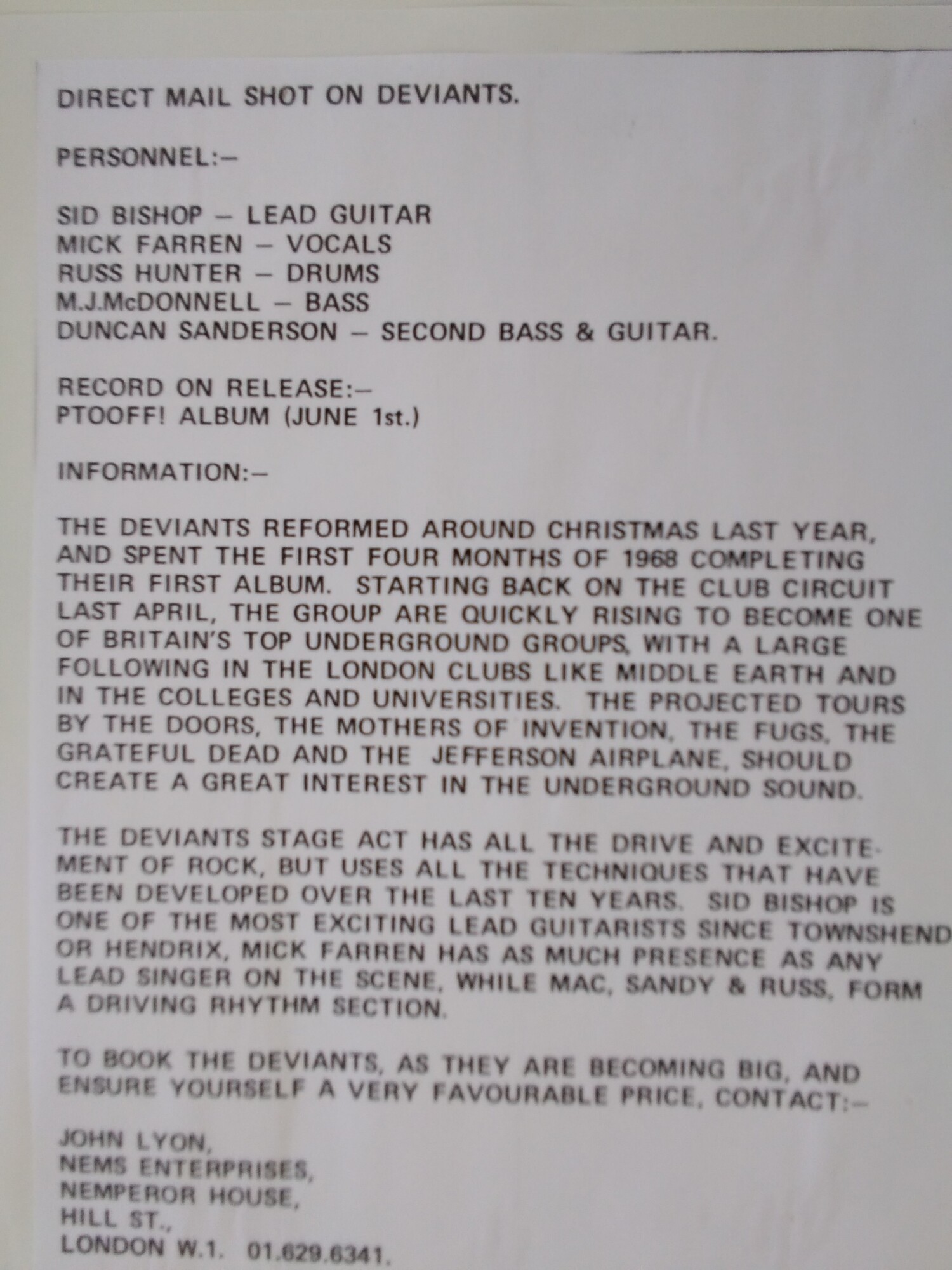
I have to make it clear that Cord Rees was never a member of the band. Judging from what various people have told me in the years since, he was a wannabe pop star who knew somebody in the business, who knew that The Deviants were recording an album, and thus he was parachuted in to contribute a couple of tracks just to make him happy. He had no clue as to what The Deviants were all about, so his tracks were out of context and don’t fit. In my opinion, they serve merely as fillers. He never rehearsed with us and never did a gig with us. Apart from that, everybody knew what they were doing. Duncan Sanderson played bass on ‘Ptooff!’ but wasn’t credited on the original cover. Cord Rees finally got what he wanted, which was his name on an album cover.
There’s often this idea that The Deviants were a “community band,” tied closely to the Ladbroke Grove scene. How true was that in practice? Did it really function that way day to day, or was the core group more defined than people assume?
That community ethic was certainly the vision, but in practice actually never happened. It was, in principle, a great idea for the band to all live in the same house like the Grateful Dead, but Mick lived in a flat in Shaftesbury Avenue, Russell lived in the East End, and I lived in Brixton, South London. Neither I, nor my wife at the time, had any desire for such an arrangement, so the dream never came to fruition. I believe that during the Pink Fairies period, things might have been different. I think the community image was promoted more as an effort to build the band’s credibility.
I’d love to hear about the practical side too. What guitar were you using around the ‘Ptooff!’ period? What amp, what pedals, if any, and how much of your sound came from gear versus sheer volume and attitude?
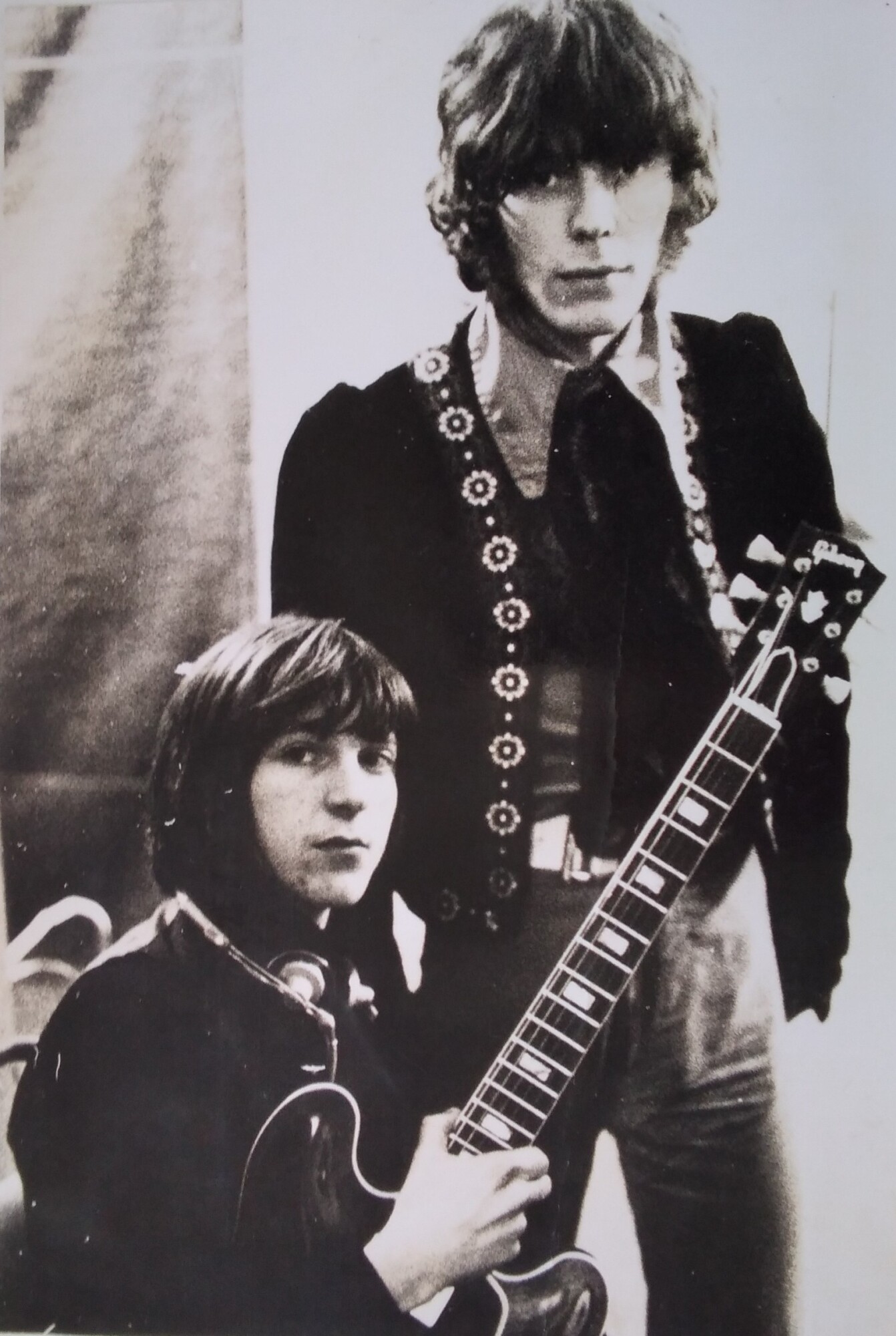
When I joined the band, I had a Burns Shortscale Jazz, a budget British-made guitar popular at the time. This was accompanied by a Burns Orbit 60 amp. I quickly realised that more top-end pro gear was required, so I bought a Gibson ES335. I used that guitar for the remainder of my time in the band. At one point I bought a 1963 Fender Stratocaster, but I didn’t really get on with it and only used it once. I augmented the Burns amp with a Vox AC30 and used them in tandem. This setup served me until we purchased a set of Triumph stacks. Much more volume. I never used any pedals.
The story of ‘Ptooff!’ is one of those classic underground moments. You had financial backing from Nigel Samuel, pressed it yourselves, and sold it through the underground press before Decca picked it up. How did that process actually work from inside the band?
I personally had nothing to do with the business operations, but it was as you’ve said. Mick borrowed a sum of money from financier Nigel Samuel and set up his own record company. The result was ‘Ptooff!’. Such was the reputation of the band, no established record label would touch us with a ten-foot pole, so, as Mick really wanted to make a record, going independent was the only option. All I did was play guitar.
What do you remember about the actual recording of ‘Ptooff!’? The studio, the sessions, and how the material came together.
The album was recorded at Sound Techniques in Chelsea. The producer was Jack Moore, who added all of those unique sound effects and crafted it into what you hear now. In my opinion, 40% of that album is awful, 40% is just ok, and 20% is absolutely brilliant and, for the time, groundbreaking. We all went in with only a vague idea of what we were going to do and just let things happen. No “songs” on that album.
How were songs built in that first album period? Did Mick arrive with words and structures, or were the pieces shaped more collectively in rehearsal?
No. As I explained previously, it was all made up as we went along. With hindsight, I think Mick was after spontaneity rather than structure and discipline. He wanted a record that was unlike any other.
And on that point, how did songwriting really work between you? What ended up on paper as a credit, and what actually happened in the room? Was it more collaborative than it looks from the outside?
This is difficult to analyse, particularly after so many years have passed. I don’t recall us all sitting around a table with the object of writing a song. It was more like one of us having an idea and the others adding bits over a period of days until we were satisfied with what we’d ended up with. Many aspects of the band were like that. We just made it up as we went along. Sometimes that approach worked, and sometimes it didn’t.
‘Ptooff!’ still sounds like a record that didn’t try to smooth anything out. Did you have a clear sense that rawness and collision were part of the point, or was that just the most honest version of what the band was?
I suppose I could say that we wanted to avoid being conventional and wanted our output, whether live or recorded, to be honest. A slap in the face for the record industry and the machine that drove it. We were anti pretty much everything.
What was the reaction when ‘Ptooff!’ came out? Did people around the underground scene get it straight away, or did it confuse as many people as it excited?
I can’t really answer that. I guess you’d have to ask them. I am of course aware that some people liked it and some didn’t. The same goes for everybody.
Then Cord Rees left and Duncan Sanderson came in. What changed when Sandy joined? Did the band tighten up, loosen up, or shift direction?
I think I covered that earlier. Cord was never in the band, so never “left”. Sandy replaced the original bass player, Pete Munro, as I recall. Sandy was a great guy and slotted in well. Not much more I can say on that.
That leads into ‘Disposable’. When you think back on that record, what feels different from ‘Ptooff!’?
Once ‘Ptooff!’ had been picked up by Sire/Decca, many began to take us more seriously. We ended up being signed to the Stable label, a subsidiary of Island Records. They wanted to record an album, but they emphasized that they wanted something more commercial, with two-and-a-half-minute songs that were more radio friendly. No more weird, rambling, psychedelic jams. We did our utmost to satisfy their demands. Our efforts were only partly successful, however, and to be honest, I’ve never really liked that album. Although it has its moments, most of it is a sell-out. Most of the ethos that made The Deviants what they were had been airbrushed out. The guitar-led sound had been largely diminished and more instruments were added, organ, electric piano, saxophone and trumpet, to name a few. I also played acoustic 12-string guitar on a couple of tracks. What happened???
Would you talk through ‘Disposable’ in a bit more detail? Not necessarily every track, but how you saw the album as a whole at the time?
I think I covered that in the previous paragraph. I didn’t really like the record and can’t really say any more about it.
By that point, did you feel more confident in your role in the band? It sounds like a moment where your guitar voice was more defined.
I’m glad to hear you say that, but I’m not sure I’d agree. I did, however, feel that my role in the band had settled and that I was working as an essential part of a unit. I felt that connection.
There’s also the question of how much of The Deviants’ sound came from the band itself and how much from the wider scene around you. Did the music mainly come from the four of you, or was the Ladbroke Grove environment inseparable from it?
The sound came from the band itself, and the contribution made by each member. Inevitably, there were influences, as I touched on earlier. I don’t think the Ladbroke Grove factor was relevant, not musically anyway, and I think that aspect may have been exaggerated over the years. The only way that impacted the band at all was on Mick’s political opinions.
At some point you married and left the band. How do you remember that decision? Was it something that had been building for a while, or did it come quite suddenly?
In fact, I’d been married shortly before joining the band in October of 1967. In early ’69, Mick had announced that a series of gigs had been arranged in the USA. As my then wife had a baby well on the way, I had no option other than to leave the band, which I did in the early summer of that year, passing the reins to Paul Rudolph. A difficult decision, but the only reasonable one.
Paul Rudolph then came in on guitar. What was your impression of him at the time, both as a player and as someone stepping into that role?
I only met him once, and even then only briefly. He seemed like a nice guy.
Even though you weren’t on ‘The Deviants 3’, I’d still like your view on it. When you first heard it, did it feel like a continuation of what you’d helped build, or did it already sound like a different band?
I must confess that I’ve never listened to that album in its entirety, just the odd track such as ‘Billy The Monster’, so it wouldn’t be fair of me to make any comment. From what I have heard, however, it seems to carry on from ‘Disposable’ in the same vein. Mick’s political motivations seemed to have subsided.
Could you hear, even then, the direction that would lead into the Pink Fairies once Rudolph, Sanderson and Hunter carried on?
No. I had no further interest in the band once I’d left. I’d moved on to other things.
From your point of view, how much of the tension in the band by that stage was musical, and how much was personal?
I definitely think that it was personal rather than musical. Working in a close-knit unit like a band, being on the road, stuck together in a van for so many hours, all of the stress and tensions, inevitably means that conflict will occur at some point. You actually spend more time with your bandmates than you do with your own families, and in less comfortable surroundings. According to my memory, I think we all got along pretty well, but I’ve edited out all of the bad bits.
The American West Coast tour is usually seen as the breaking point for the Mick Farren version of the band. From where you were standing, how did that whole situation look, and when did it become clear that the original Deviants story was over?
Of course I wasn’t there, but when I did get to hear about that disaster, I can’t say that I was especially surprised. Obviously it was the end of the band as it then existed and the downfall of Mick’s vision, for now at least.
When you look at the three albums together now, how do you hear them as a sequence? ‘Ptooff!’ as the initial explosion, ‘Disposable’ as a tightening of the sound, and ‘The Deviants 3’ as a shift into something else, or do you hear it differently?
No, and I think you’ve described it very well. I can’t really think of anything to add. Each album is unique and stands alone. As time passed, tastes changed, motivations changed, and commercial factors increasingly brought a different pressure to bear. When all is said and done, we had to sell records.
Because Mick Farren became such a visible figure as a writer, the story of the band is often told through his voice. Do you feel that misses something about how the band actually worked as a group?
No, I really don’t think so. The Deviants was very much his baby, and his vehicle. Of course we all had our own stories and our own views. I have attempted to tell my story here. Sandy’s or Russell’s might well be different. They are gone now, so we will never know.
“Revolution with guitars, not bullets”
Do you remember particular gigs that say the most about what The Deviants really were live? Not necessarily the biggest one, just the one that captures the band properly.
After this length of time, my memory of gigs is just a blur, and I recall very few. One that still stands out is our performance at Trafalgar Square. This was in 1969 and was to 30,000 anti-Vietnam War protesters. Mick was in his element, using the phrase “Revolution with guitars, not bullets”. It went down well.
Which venues or bills stand out now, and were there bands around London at the time that felt like allies or fellow travellers?
We played alongside bands such as Sam Gopal, Junior’s Eyes, Gong, Pete Brown’s Poetry Band, The Action, Man, Fairport Convention, Hawkwind and others I’ve now forgotten. We also supported bigger names like Pink Floyd and Led Zeppelin.
When people later started describing The Deviants as proto-punk, did that make sense to you, or did it feel like a later label being pushed backwards?
As I think I mentioned earlier, that did make sense to me.
Listening back now, what jumps out first in your own playing on ‘Ptooff!’ and ‘Disposable’?
When I first joined the band in ’67, I’d only been playing for about five years or so, not long in the grand scheme of things, and I was not very good, if I’m honest. Gigs make for good practice, and by ‘Disposable’ I’d improved a little. Learning to play guitar well takes a long time, and my best years as a player were still many years in the future. Sadly, I wasn’t a teenage guitar prodigy like Ry Cooder or Rick Derringer.
What do you think people still misunderstand about The Deviants?
I can’t really say. Many people have said that The Deviants as a band were pretty bad. What they don’t realize is, that was the whole point. We weren’t the Dave Clark Five or the Hollies and had no intention of being on that hamster wheel. Years later, nor did the Sex Pistols or the Ramones. Slick over-produced pop commercialism wasn’t a dream, it was a nightmare. We, amongst others, ploughed a different furrow.
Last one. If we were putting records on after this, what would you go for first?
Blue Cheer, or anything else that was really, really loud.
Last words are yours.
I can only bring this to a close by saying that my time in this band was an experience, and a valuable one that I am grateful for. There were good times, and bad times. Sometimes we were awash with money, then periods when we had no money and had to sell instruments just to put food on the table. But that’s life, and I wouldn’t have missed it for the world.
I would sincerely like to thank Klemen for putting these questions together. It has caused me to dig up memories long buried and to relive events from six decades ago. In fact, I’m surprised, and somewhat flattered, to find that anyone is even interested in this stuff. I thank you all for remembering.
Please keep the freak flag flying.
Sid Bishop. April 2026.
Klemen Breznikar
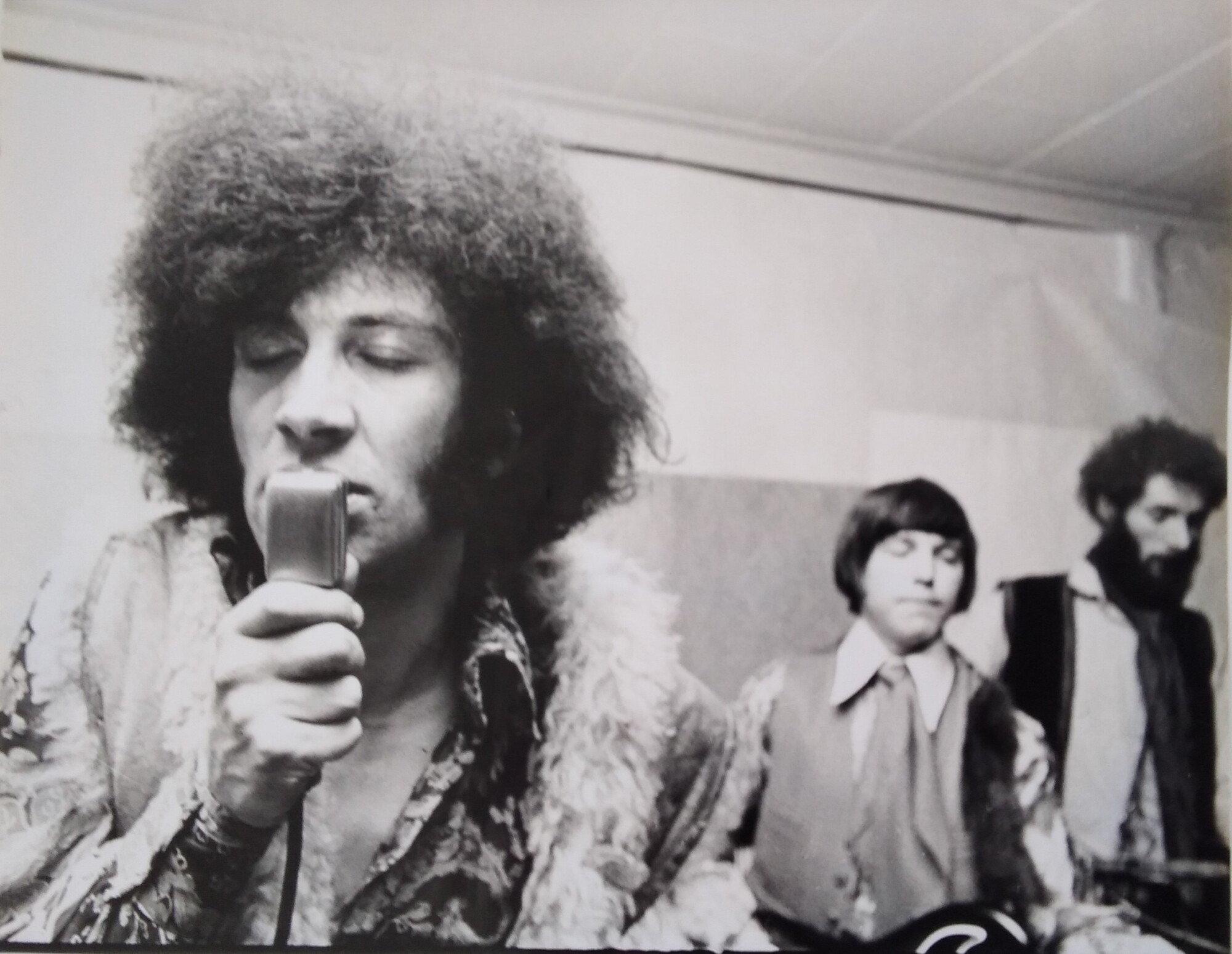
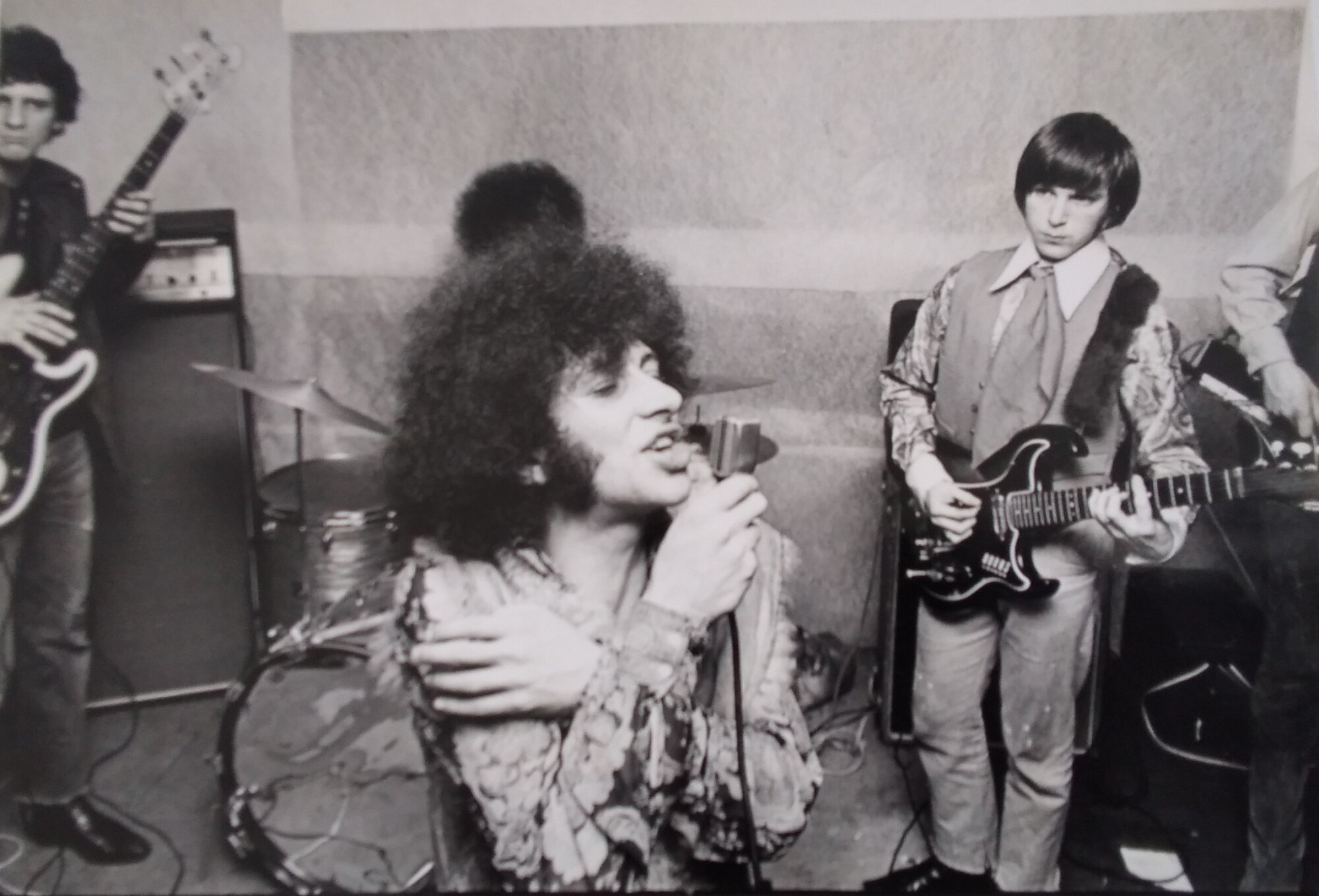
Headline photo: The Deviants rehearsing shortly before the ‘Ptooff!’ recordings. Photograph: Sid Bishop private collection.

A Fantastic Interview! I met Mick later in LA and he was a great guy IMO. I also loved the Deviants music as well.