
Cat Violet: Lost Scottish Progressive Rock Recordings Released by Seelie Court
Cat Violet were active for only a short time, but the surviving recordings collected on their new self-titled album reveal a gifted Scottish group caught between the final years of the 1960s and the heavier, more progressive music beginning to emerge in the new decade.
Released on CD by Seelie Court in association with Good Time Records, Cat Violet contains nine recordings made around 1971 at Central Scotland Studios in Falkirk. Engineered by studio owner Jim West, the original master tapes have now been restored and issued more than half a century after the band split.
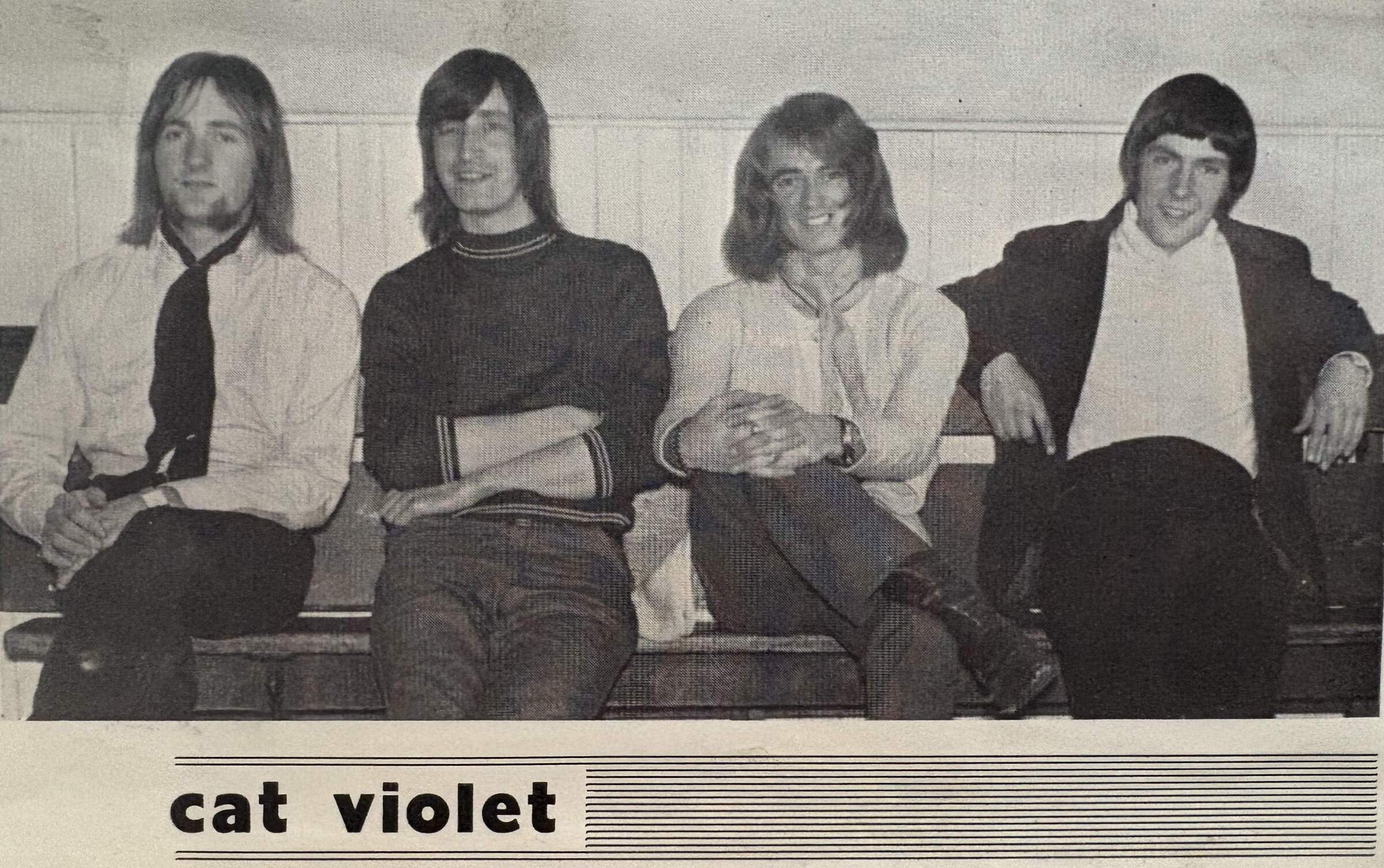
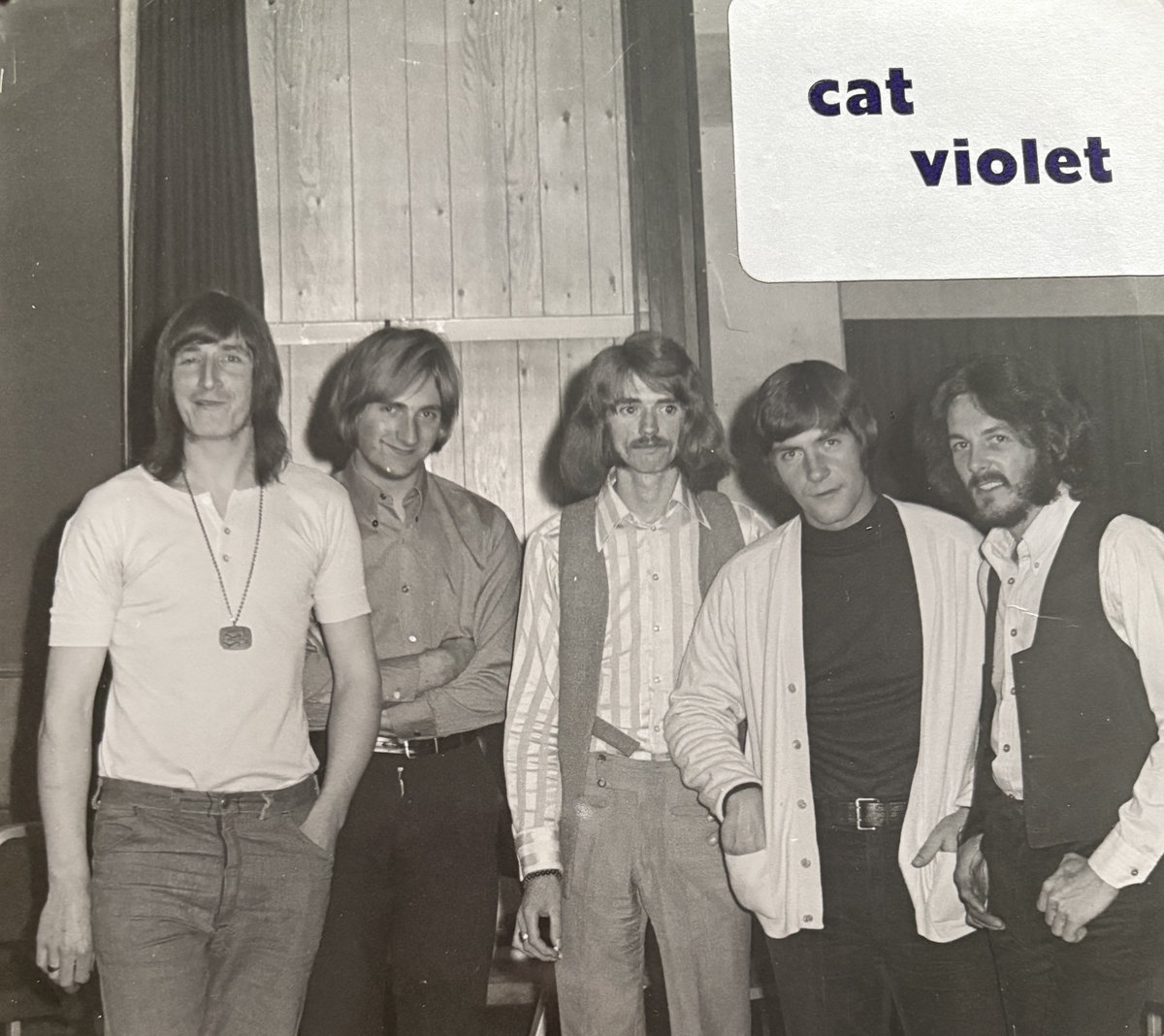
Cat Violet formed in Stirlingshire in 1969. Guitarist and singer Roy Clark and keyboard player Ronnie Glen had previously played in The Blue Sabres, a local pop group known for being a smart turn-out and always having a few crowd-pleasers up its sleeve. They were joined by bassist Charlie Dyer and drummer Hamish Miller, who had returned from Italy after playing with Friendship.
The four musicians came from different backgrounds, but the combination worked quickly. Their manager, Tom Hunter, remarked at the time: “The way the boys are playing, you would think they had been together for years instead of just a few months.”
Their sound drew on hard rock, soul, pop and the expanding progressive scene. Led Zeppelin and Three Dog Night were among the groups whose heavier approach entered their repertoire, but Cat Violet were developing a sound of their own rather than simply following the better-known groups of the day. Ronnie Glen’s keyboards gave the music much of its character, while Roy Clark’s guitar and vocals lent it plenty of punch. Charlie Dyer and Hamish Miller kept things nicely together underneath, allowing the band to shift with ease from more melodic passages to moments that really gave it some welly.
During the summer of 1970, Cat Violet played a series of open-air concerts in Callendar Park, Falkirk. Later that year, guitarist and singer Jim Marshall, formerly of Manuela & The Dops, joined the group. Cat Violet also became a popular live attraction around Scotland, performing in dance halls and other local venues at a time when the musical characteristics associated with progressive rock were still in the process of formation and had yet to coalesce into a clearly defined genre.
The album offers a good picture of the group’s musical interests. Its nine tracks include interpretations of Randy Newman’s ‘Bet No One Ever Hurt This Bad’, Marmalade’s ‘Rainbow’, ‘The Letter’, Fairport Convention’s ‘Meet on the Ledge’, Spirit’s ‘Give a Life, Take a Life’, ‘It’s for You’ and The Beatles’ ‘Getting Better’.
Their choice of material was broad, but the performances are held together by the band’s own sound. ‘It’s for You’, written by John Lennon and Paul McCartney and originally recorded by Cilla Black, became one of Cat Violet’s signature numbers. Their version of Marmalade’s ‘Rainbow’ takes the polished Scottish pop of the original towards something more spacious and psychedelic.
The recordings also provide another glimpse of the underground music developing around Falkirk at the beginning of the 1970s. Central Scotland Studios, operated by Jim West, was used by several local groups, including Bodkin, Tentacle and Soho Orange. Much of this music received little or no attention beyond Scotland at the time, and some of it was preserved only in very small private pressings or on tapes that remained unheard for decades.
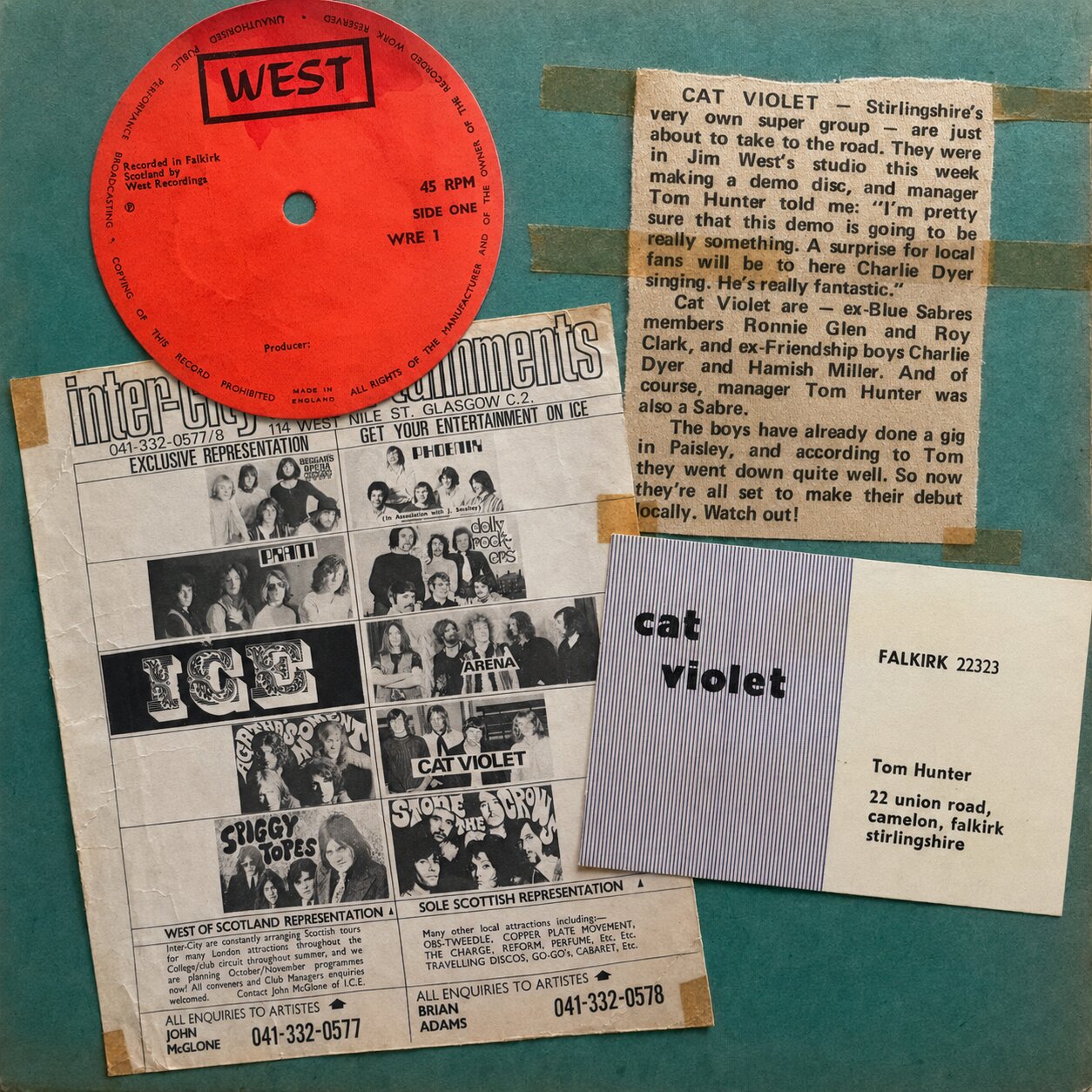
By 1971, Cat Violet appeared to be moving closer to a professional career. They supported Ashton, Gardner and Dyke in Glasgow, after which, according to the surviving account of the band’s history, Decca Records expressed interest and discussions began over a possible recording contract. Cat Violet broke up before an agreement was signed.
Charlie Dyer later formed the country-rock group Thrush, who developed a strong live following in Scotland during the early and mid-1970s. The Cat Violet recordings, meanwhile, remained unreleased.
Their survival owes much to Charlie’s daughter, Beth Dyer, whose help made the present release possible. Charlie, the last surviving member of the original quartet, remained closely connected to the band’s legacy in his later years. He has since died, but the recovery of these tapes ensures that an important part of his musical life, and that of the other members, has not been lost.
What we have here isn’t a proper studio album in the accepted trade sense of the thing, more a snapshot of a band caught in full flight, with all the excitement and rough-edged charm that implies. Cat Violet were clearly listening hard to what was coming out of Britain and America at the time, but they weren’t merely lifting ideas wholesale. Rather, they took those influences, gave them a good stir of their own, and turned them into something distinctly theirs, driven along by Ronnie Glen’s keyboards, Roy Clark’s guitar work, sturdy harmonies and a rhythm section that knew how to put a bit of backbone into proceedings.
I had the pleasure of writing the liner notes for this release, drawing together the band’s history and the story behind the recovery of the tapes. Hearing these recordings now, it is clear that Cat Violet deserved to be remembered as more than a footnote. Their career may have ended just as wider opportunities were appearing, but the music remains full of confidence, character and promise.
Cat Violet was released on 12 June 2026 by Seelie Court in association with Good Time Records. The CD was mastered by Mint Audio and features artwork by Martin Robert Cook. Catalogue number: AX004CD.
Klemen Breznikar
Headline photo: Cat Violet (Credit: Seelie Court / Good Time Records)
Seelie Court Facebook / Instagram
Good Time Records Website / Facebook / Instagram