
Eddie Prévost On AMM, Free Improvisation And Why No Sound Is Innocent
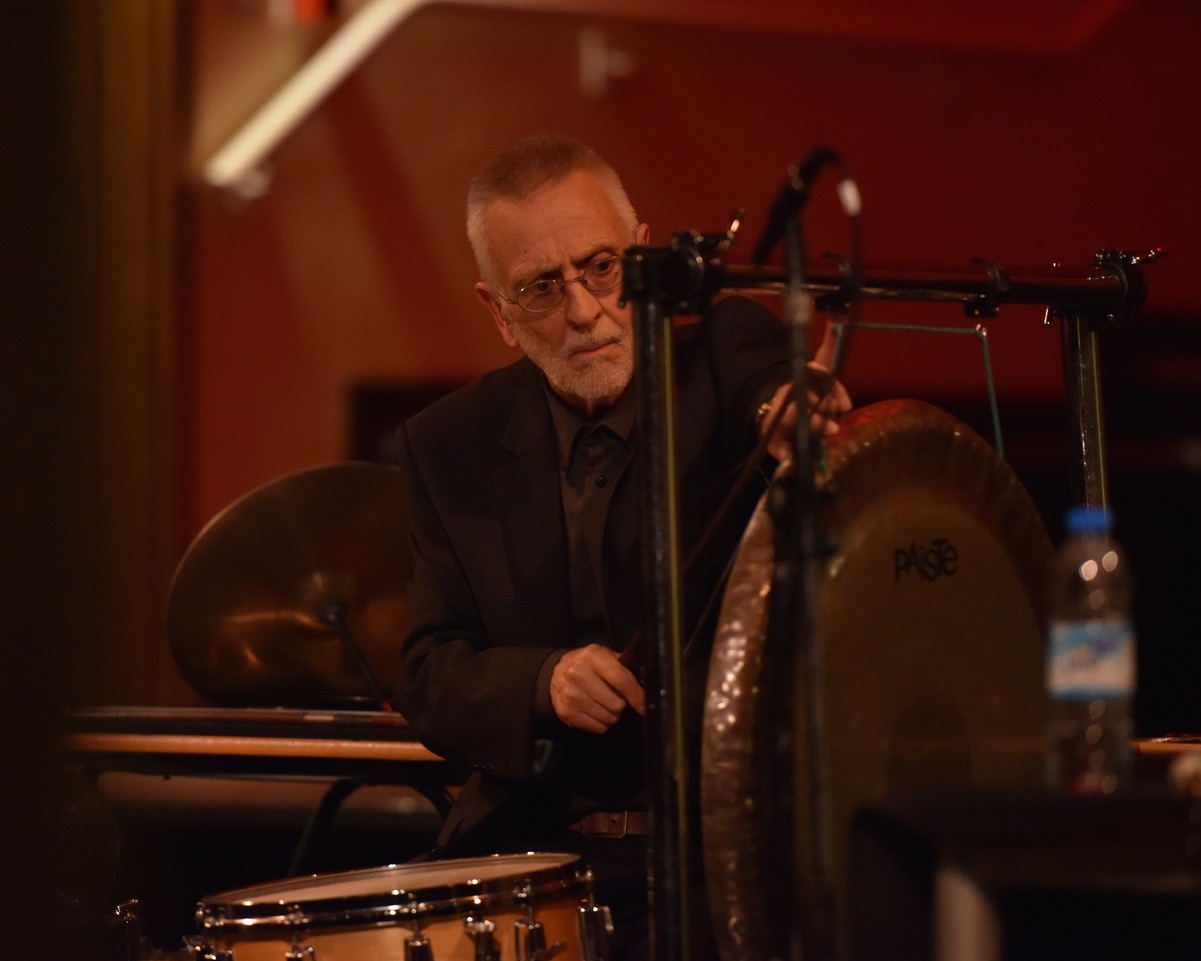
Edwin “Eddie” Prévost stands as one of the defining figures in postwar experimental music: a percussionist, theorist, publisher and founding member of AMM, whose work has persistently asked what music might become once habit, display and inherited form are stripped away.
Born in 1942 and raised in postwar Bermondsey, Prévost came up through skiffle, trad jazz and modern jazz before the harsher freedoms of Ornette Coleman, Albert Ayler and the London avant-garde opened another route entirely. By 1965, with saxophonist Lou Gare and guitarist Keith Rowe, he had helped form AMM, initially out of exploratory sessions that moved beyond jazz language into something more unstable, collective and unnamed.
The group’s early music, heard on ‘AMMMusic’, recorded in 1966 and released by Elektra in 1967, remains startling because it does not behave like a record of its time. Piano, saxophone, guitar, percussion, transistor radios, feedback, silence and incidental sound are not arranged into drama so much as placed under pressure. With Cornelius Cardew and Lawrence Sheaff entering the group’s orbit, AMM became less a band than a zone of inquiry: no solos in the usual sense, no fixed hierarchy, no reassuring division between instrument and environment. Its sound could be abrasive, becalmed, forensic or almost ritualistic, but its central act was always listening. Cardew later described the group as “searching for sounds, and for the responses attached to them”; Prévost would spend decades deepening that thought into an ethics of practice.
Unlike many musicians associated with freedom, Prévost has never treated improvisation as mere release. His playing is physical but anti-spectacular, alert to friction, resonance, struck metal, drum skin, breath-space and the social consequences of each gesture. In his formulation of “heurism and dialogue”, improvisation becomes a method of discovery, not a style. The point is not to express personality over others, but to test agency inside a shared, unstable field. This is why his 1995 book ‘No Sound Is Innocent’ remains so important. It argues, in effect, that every sound carries responsibility: aesthetic, social, historical.
Prévost’s later work extended this argument institutionally. Through Matchless Recordings, founded in 1979, he helped preserve AMM’s music outside conventional industry structures. Through his London improvisation workshop, begun in 1999, he offered younger musicians not a doctrine, but a practice of attention. Across AMM, his writings, his teaching and his austere, searching percussion, Prévost has pursued a rare proposition: that music is not an object to be perfected, but a situation in which freedom must continually be earned.
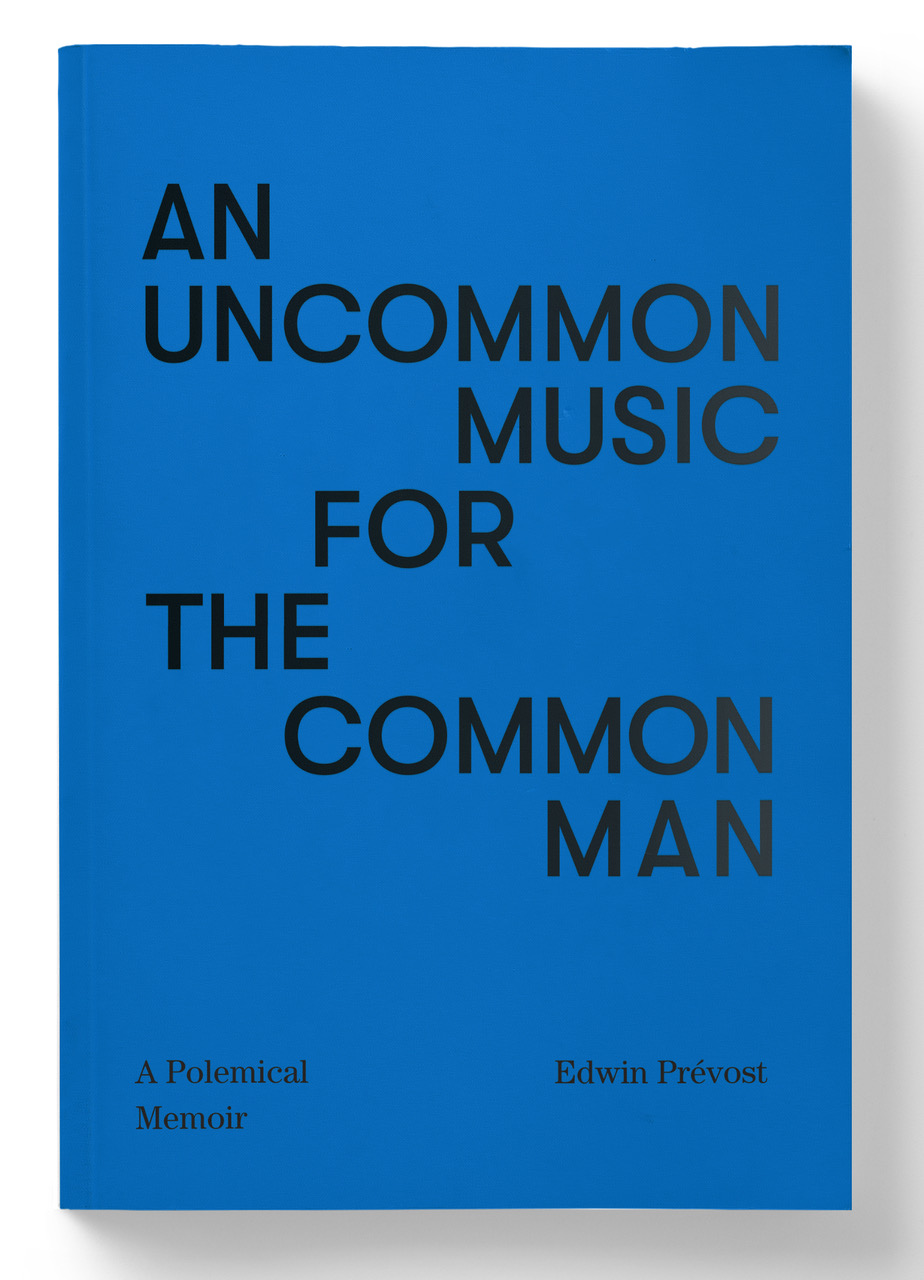
“No sound is innocent.”
Prévost grew up in the late 1950s playing trad jazz and skiffle before discovering modern jazz, which he described as having more bite, impact and mystery than other music he had encountered.
You began as a drummer in trad jazz and skiffle before moving into free improvisation. When you think back to that shift, was it a rejection of something, or a gradual realisation that the music you wanted simply didn’t exist yet?
Eddie Prévost: I think the question burdens a young man (c. 18–19 years old) with rather more self-awareness than can be justified. I recall standing in front of the low stage at The Flamingo Jazz Club in London’s Gerrard Street, with the twinned tenor saxophones of Tubby Hayes and Ronnie Scott aimed (as it were) straight at me. Truly, a blast. My own prowess as a drummer was still at a very formative stage. And, I was experiencing a world to which I could see no entry point.
Later, although not too much later, I began to play an emulative sort of bebop. It was in this context that I first met, and played with, tenor saxophonist and later co-founder member of AMM, Lou Gare. So, there was, as you put it, a gradual, dawning realisation that the music we admired, and tried to imitate, was not a reflection of our sense of being. This was more intuited rather than some conscious deliberation.
It was, of course, influenced by many of the cultural messages that filled the social space of the mid-1960s. Lou, at the time of our collaborations, was also part of the Mike Westbrook Jazz Orchestra. Alongside him in that unit was one Keith Rowe. It didn’t take long before these three questing souls began to coalesce. We three were the heart of an emerging aesthetic that became AMM. But, before we formulated the cloaked acronym, we also accommodated another escapee from the Westbrook orchestra: its then bass player, Lawrence Sheaff. These four were proto-AMM. A recording of which, now in 2026, is being considered for a release. I am not sure how well its release will live up to expectations. But it needs to be heard, and understood, within the context of its time. It is, though, symptomatic of a gradual self-awareness that, for example, the jazz we had all so admired was the product of another time and place, and of a cultural reflection of other peoples, with their particular history. White working-class young men in London c. 1965 ultimately had to transcend the model and find a form of expression which reflected their own social and cultural history and aspirations. But the one lesson we did take from our free-jazz heroes was: permission to disobey.
When AMM began in the mid-1960s, audiences were often bewildered by the group’s sound. Prévost has spoken about performances taking place in near darkness, with silence playing a central role, shifting attention away from individual display and toward collective listening.
Could you describe how those early performances, where the lights were off and silence was as important as sound, affected the group’s dynamics and the music you were creating?
First of all: as many as there might have been who were, as you say, “bewildered” by the formative AMM experience, there were some who were enchanted by it.
However, AMM’s use of silence had nothing to do with ‘4’33″‘. That is, no reference to John Cage, who I had never heard of at the time of AMM’s inception. Playing in darkness was analogous to the moments of silence. They were environmental phenomena to be explored and embraced. Each added tension, and sometimes serenity, within our sonic interactions. Each acted to focus us upon what was going on. I recall our attention to “darkness” and “silence” mostly from our weekly sessions at the London Dance Centre called The Place. This was in the London area of Bloomsbury/Euston. Our informal audience, these were not public performances, but word spread of our activity, was a small group of people gathered along with us each week. They would often lay on the floor, some cocooned in a blanket. They created their own preferred deep-listening conditions.
Here I should refer you to Lou Gare’s description of our sessions during this period. It gives a good sense of the atmosphere I am trying to invoke for you.
“I arrive at The Place; probably we have played there in previous weeks. Mostly we play once a week. The place is familiar then.
Some or all of the other players are there.
We chat a bit, set up equipment, tinker with things. Small sounds go on. The playing increases as we get involved in listening, searching, trying to perfect a sound, an action.
The lights go out, or sometimes stay on but usually very low, almost dark.
In the dark it is like having your eyes shut. All the sounds seem to go on inside. The sudden shocks of loud noise jolt one into alertness.
The energy flows through the body. I think, a sound isn’t good, it doesn’t fit, we’ve heard it before, but all the time I’m playing. And then something happens and I’m listening very closely, it’s beautiful and sharp and falls away, everyone is maintaining it, a slight change comes in, it alters, breaks down, picks up again. It makes me laugh. I work hard. I can’t go on. It’s too difficult, why don’t they stop, but I play all the same.
Just for an instant, or slightly more, I’m right on the brink, so to speak. It is good just to listen. I don’t know what to do.
Keith is playing fantastically tonight. Why is Eddie laying on the floor? I can’t hear Cor. Why doesn’t Christopher turn that thing off, whatever it is?
I shall go deaf if this noise goes on much longer.
Why doesn’t someone turn the lights on, I hope they don’t, don’t stop. I can’t bear it.
One is tossed this way and that, and I don’t move.
It would be nice to play in this.
It is very quiet. I must have been sitting here a long time, my ankle hurts.
The silence goes on for what seems like a long time. The lights come on.
Cor is still playing the cello.
There are one or two more people in the room as well. It seems as though I can’t listen, it has come to me. We chat a bit, make arrangements, discuss business, say goodbye.”
Lou wrote this piece in the late 1960s or early 1970s. I include it here as an indication of a very alternative sense of a musical occasion. I am sure this period of ensemble introspection had an active influence upon how we all developed.
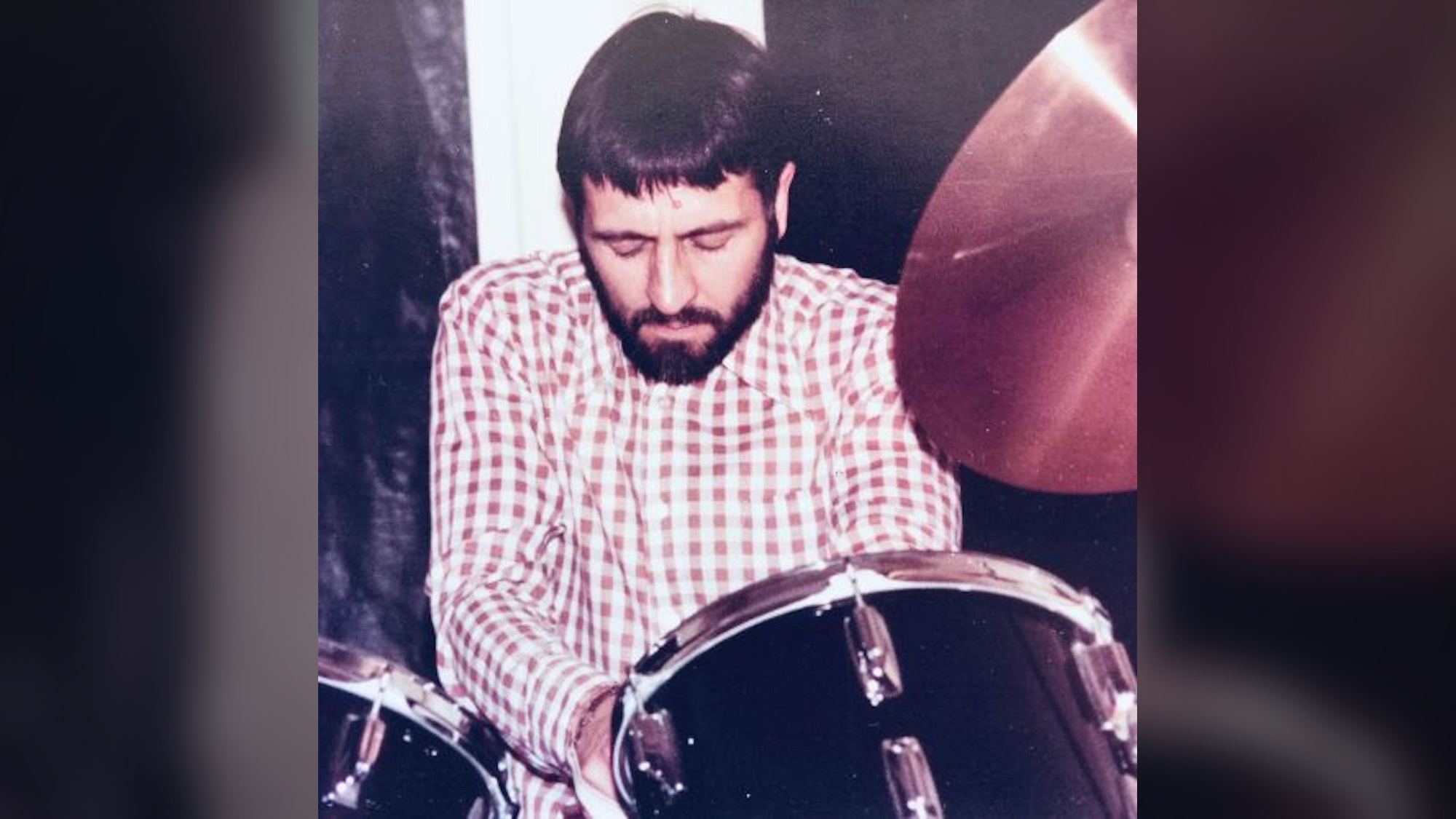
AMM’s first album, ‘AMMMusic’, recorded in June 1966 and released in 1967, was a radical statement, incorporating electronics such as transistor radios alongside instruments and exploring texture, everyday objects and non-instrumental sound.
What do you remember about making ‘AMMMusic’, and what were you hoping to explore through those early investigations of texture and sound? When you listen back now, do you hear a clear intention behind it, or does it still feel like something being discovered as it unfolds?
Essentially, we did in the recording studio exactly what we were doing at our regular sessions. What happened, of course, was a mismatch of expectations on the part of the recording engineering staff. They saw piano, saxophone, guitar, drums, clarinet, accordion, and so on. They inferred, quite reasonably, from their normal experience, that certain protocols would be followed. Needless to say, there was a comprehension problem. I recall that one studio assistant wanted to remove the front head skin from my bass drum and stuff the inside with a cushion. The others probably suffered from similar acts. To cut a long story short: these misapprehensions were not resolved, the recording session was in a state of confused disarray, and consequently abandoned.
The producers of ‘AMMMusic’, Pete Jenner, John “Hoppy” Hopkins, Ron Atkins and one other, I think Alan Bates, collectively known as “DNA”, hurriedly contacted the head of the Elektra label, Jac Holzman, to repair the situation. Along the way, I think Joe Boyd also got involved. AMM returned to the studio a short while later and the recording was subsequently made with all parties open to a “different approach” required to capture our aesthetic. Although not articulated at the time, I sense this was an early occasion when our emerging instrumental mutation, which was increasing exponentially, was having an impact.
As I recall, it was an AMM session like our usual weekly explorations. Nothing was prepared beforehand to accommodate any recording expectation. It still felt like walking into foreign terrain. Full of doubts, physical exhilaration and moments of repose.
(The original ‘AMMMusic’ LP bore the maxim: “The reason for playing is to find out why I want to play.”)

This suggests music as a form of self-inquiry. How does that idea of questioning oneself guide an AMM performance? In practice, how do the musicians remain unified as a single sound without a written score? How is musical direction, or “leadership”, handled or consciously avoided in such situations? And after decades of work, has that question changed for you, or does it remain unresolved?
This is a deceptively complex question. As you note, there was no written score, or any kind of informal protocol, to guide us. There was, though, I suggest, the exciting dynamic of independent activity: bolstered, and challenged, by the audacity of other voices. It was a situation in which anything could be done. There was still a sense of “what worked”. Our normal perceptive apparatus may not have been adequate to make measured manoeuvres. It demanded another kind of heightened awareness to cope with the magnitude of the ensuing maelstrom. This, I think, explains the necessity for the deep moments of silence, especially at the end of each expedition. In a sense, it received and accommodated the built-up tension. Psychological relaxation was not only necessary, but it was a fitting way to seal the realisation. Later, as you note, decades later, I think the same “necessary” concluding process is required. It has become a kind of anti-musical flourish. And, it has, perhaps, become the role most effectively mastered by John Tilbury. There is, of course, a danger of making it an anticipated formality. But I believe our collective sensibility obviates the artificiality of such a procedure. It is not, I suggest, a formula. Its execution must be handled with care. But, like Iris Murdoch, we subscribe to the notion that spirituality must be wrested from religion. I can only point to numerous occasions when audiences have themselves confirmed the necessary veracity of such conclusions. Given the tension that often suffused an AMM concert, the endings often serve as a kind of relaxation, a spiritual warming-down exercise.
You ask about how musicians remain unified when there is no format, e.g. “a score”, to follow. Or some kind of convincing directive for a collective outcome. To put it boldly: these are exactly the scenarios that free improvising needs to escape from. Real agency, like freedom itself, is never secure if it is given. Agency has to be taken, and the takers have to bear responsibility for their actions as free agents. Relying on external directives is an abnegation of, or the abandonment of, agency.
This segues into the debate about “leadership”. In AMM there could never be a leader. This is not to say that there were never any controversial trials of influence. And, to my mind, this is exactly where any potential crisis within AMM lay. The general capitalist culture always looks for some kind of control mechanism for any social or economic situation. There were good examples of this cultural cognitive bias in relation to the perception of AMM’s first album, ‘AMMMusic’. As I have recalled above, Cardew joined AMM. Yet, because of his personality and experience, there were two particular media responses worth noting, though there are others. And, although there was no evidence for the following assumptions, in The Musical Times AMM was described as “The Cornelius Cardew Ensemble”, while Jazz Journal referred to AMM as “The Cornelius Cardew Quintet”. I think this neatly reveals the common cultural biases, seemingly coming from diverse cultural sources. Each in thrall to the imperatives of a market ideology, which demands a ruling authority. An obsequious atmosphere is encouraged to percolate through all walks of life. I believe that AMM was resistant to this potential situation. And we were not always successful.
How did Cardew’s presence influence AMM’s music and your own thinking at the time? Looking back now, what do you feel was learned, or perhaps unlearned, from the period in which politics became more explicit around the music? Did it clarify the purpose of the work, or risk narrowing something that was essentially open?
Before tackling the question of Cardew’s undoubted influence upon AMM, we need to adjust one of the question’s underlying assumptions. At the time when Cardew joined AMM, he had no interest in politics, and especially not left-wing and Marxist thought. All that came later.
Cornelius Cardew, son of potter Michael Cardew, was a chorister at Canterbury Cathedral, who later went on to study at the Royal Academy of Music. He was among a few of his generation interested in the avant-garde. Subsequently, he became assistant to Karlheinz Stockhausen. Thereafter, an advocate and collaborator of the New York school of Cage, Feldman, Brown and Wolff. This, and much more, is explained and developed in John Tilbury’s biography: “Cornelius Cardew: A Life Unfinished”. This was all before he joined AMM.
His alignment with three young men, each of whom arose from a far more modest socio-economic and cultural background, changed us all. Including, of course, Cardew himself. In 1965 I reached my 23rd birthday. Cardew was 30 years old. And he had already made an impact and stood out among his cultural contemporaries. But this status meant little to the founding members of AMM. In fact, there was, initially, a mood of cautious suspicion regarding his presence. Which, incidentally, occurred through his search for creative minds to engage with and help Cardew realise performances, and ultimate completion, of his graphic masterpiece “Treatise”.
In effect, joining AMM interrupted his preoccupation with “Treatise”. There are indications that he thought about abandoning “Treatise” altogether. Be that as it may, Cardew characteristically gave himself to this new phenomenon, making a sonic-art that owed little to his previous musical life. I guess it also introduced him to mores and relationships which stirred from a different social stratum. This, perhaps, is the root, and the route, that ultimately led him to his later radical left-wing politics.
But let us return to Cardew’s impact upon the generative practice of AMM music. Because we, Gare, Rowe, Sheaff and myself, were already well on the way towards a very original formulation. Albeit intuitively, we had distanced ourselves from the jazz milieu, and offered a different counter-cultural response than other improvising initiatives like, for example, the SME, Spontaneous Music Ensemble, which included protagonists like John Stevens, Trevor Watts, Derek Bailey and Evan Parker. There were also other like-minded musicians. Some of whom dipped their toes cautiously into this experimental ferment. But it is safe to say that gradually AMM began to harden its aesthetic carapace. And Cardew’s presence added to our growing confidence. And it was soon very apparent that his skills and sensibility suited and influenced our aesthetic trajectory.
More could be said about Cardew’s developing music and social and political life, as he embraced associations like The Scratch Orchestra. This is arguably where his political awareness was awakened, and where Cardew was introduced to Marxist thinking. Again, I refer readers to the Tilbury biography of Cornelius Cardew.
Prévost has noted that hearing Ornette Coleman and Albert Ayler in the 1960s “gave us permission to disobey.”
In your conversation with George McKay, you described AMM’s process as grounded in “heurism and dialogue”. What does “heurism” mean in performance, and how does it affect the way musicians listen, act and respond in real time?
It was Cardew who observed the way in which AMM was experimental, as discussed in a previous part of this interview. He noted and articulated that AMM “searched for sounds, and for the responses attached to them”. This, in the moments of performance, rather than thinking them up beforehand and introducing them into the playing environment. My contribution to this discussion was to elaborate and advance the dual imperatives implicit within Cardew’s construction. That is, the “we”, i.e. the collective, and “the searching”. These seemed to me to be the most generative elements of our aesthetic. But, I should add here, that my formulation and general propagation of these energising capacities are not necessarily given the same priority by other members of AMM as I do.
This is also an area where retrospective appreciation, of what has been described as “modular mutation”, can be discussed advantageously to illuminate the generative capacity idea of heurism. My notes for the AMM CD ‘Phlegm: AMM at Huddersfield 2015’ offer a discussion of such.
In his 1995 book “No Sound Is Innocent”, Prévost attempts to articulate the AMM aesthetic in words, suggesting a form of meta-music.
What do you mean by the phrase “no sound is innocent”? How does this principle influence the sounds you choose, or refuse, when improvising? Do you experience improvisation as carrying an ethical or moral dimension?
There is an easy but pernicious tendency to dismiss cultural effects as meaningless, throw-away items of human detritus. This casual adoption and quick-to-discard condition suits a market-led economy. Consumers are encouraged to eat more and be profligate with resources. The idea that “a sound” possesses something more than a transient effect, i.e. does more than push the button for instant gratification, is derided.
Anyone making a sound, either purposely or by accident, in some fundamental way, is responsible for its existence. We can choose to ignore it, as perhaps an unimportant by-product of an activity, or we can focus our attention upon it and notice if it has any effect upon our own, or others’, sensibility. Highly trained musicians probably have a greater propensity to notice, and therefore attempt to control, any unintended effects. These could be considered blemishes. Those musicians, perhaps we should refer to them as sound-artists, who exercise a more experimental process, are more likely to be conscious of unintended possibilities. And, the more thoughtful, or perhaps the less inhibited of their kind, will actively look for, and take a serious interest in, the results of contingent effects. My point here is that those practitioners who are actively and generally concerned with the sounds relating to their creative activity are usually conscious of, and responsible for, audio outcome. In my opinion, if a sound-artist is not aware of what they are doing, and this can include a conscious engagement with contingency, then they are failing in the fundamental exercise of an examined life. Hence: no sound is innocent.
As founder of Matchless Recordings, Prévost has overseen the release of much of AMM’s work, alongside writing and lecturing extensively on improvisation.
How do your roles as musician, record-label director and writer relate to one another? Has writing about improvisation changed how you play, or did performing give rise to the writing? Do you see these activities as distinct, or as part of the same ongoing process?
I would like to think that each of the activities you have outlined in the question serves the total project. Each contains an aspect of autonomy within the wider social, cultural and economic environment.
In brief: the development of AMM music attempts to wrest creativity, and the protocols of sonic activity, away from a controlling authority, i.e. what we are taught to consider as the prevailing positive cultural mores. We offer a different view, a countervailing philosophy, and a praxis predicated upon an emergent generative activity.
Matchless Recordings, much like other so-called independent labels, extends the required autonomy to how a wider audience can be served and embraced. We turn the usual commercial model around. Commercial music concert tours were organised primarily in order to sell product, physical recording and attached merchandise. This model has changed recently because of the advent of digital technology. So, the tours meld into a publicity programme.
It is probable that the existence of AMM recordings has enhanced the possibility of concert performances. In reality, though, as the catalogue will confirm, concert appearances have often been the source of subsequently released AMM recorded material. These become evidence of creative activity made into a commodity form. Something, I suggest, that is analogous to how a painting, or a print, is evidence of visual art activity. These facsimiles give each respective occasion an afterlife. But, as our old friend and one-time manager, Victor Schonfield, remarked: recordings of AMM are not as good as hearing them live.
Likewise, the writing and any subsequent publishing of narratives relating to, or arising from, the activity are no substitute for experiencing AMM, or for interested aspiring improvisers to make their own music. However, the educational objectives, and the social and cultural mores and strictures of our current capitalist economy, are not easily countered. So, sometimes words and written narratives assist a more general awareness of other possible creative and social models.
Prévost has long led workshops in London, bringing together participants from a wide range of cultural and musical backgrounds, often noting how this diversity strengthens rather than complicates communication.
What key principles do you try to convey in these workshops? Why do you think free improvisation is able to bridge cultural and linguistic differences so readily? What do you hope participants leave with: a way of making sound, or a way of being with others?
I first convened the London weekly workshop in November 1999. The idea arose as a result of an exchange I had with violinist LaDonna Smith. She had observed the manner and content of a presentation I gave to those interested enough to attend a percussion clinic event that was part of the Guelph Music Colloquium and Jazz Festival.
I think the usual approach to such things is for the practitioner to demonstrate the conventional hows and whys of playing the drums. It was not a formulation that I cared for. I decided to demonstrate the potential in the percussion instrumentarium. And this consisted of treating the drums as elemental sound boxes from which, with imagination, a multitude of sound possibilities can be extracted, using bows and other unconventional sound-inducing materials. It was, essentially, a demonstration of the practice I apply with AMM’s “exploring for sounds” tenet, so deftly articulated by Cardew to our early practices. He was, of course, describing the process, not prescribing it. My demonstration in Guelph, on the other hand, was to suggest that the generative features of this way of doing things could produce interesting results. As Keith Rowe has observed: the experimental kind of improvisation, as practised by AMM, has no repertoire. The creative conundrum is: from whence can the informal improvising develop and extend their material? The more obvious sources of technical practice most easily arise from emulating an existing example. But, apart from sailing close to mere plagiarism, such emulation ignores, or neglects, the social and the acoustic context that promoted the copied example. No sound is innocent. In making this point I am hoping that questing improvisers will examine their own practice carefully. See it for what it is, or can be, within their own social and musical milieu. Obviously, later, the workshop narrative became more nuanced and developed. Although, I hope to have never said too much. Revelations are only really effective if they arise from an individual’s own experience. I have, though, often enough, encouraged participants “to notice” happenstance. Often such circumstances may manifest themselves as possibly embarrassing mistakes. They can, though, be the source of new material. If only one can notice the effect and then, perhaps, develop this. This seems to me very much in the same vein as Thelonious Monk’s lament about “playing all the wrong mistakes”! Therein, this practice offers possibilities galore. Thus, any “exploratory procedure” could become an active practice not simply in the practice room but in the practice of a concert itself.
What this exposition has not yet included is the collective social nature of the practice of improvising. To which Cardew only referred obliquely by recognising “we”, i.e. AMM, conducted their communal experiments. From this I tend to magnify the enriched potential of incoming signals from sonic sources other than one’s own. Of course, the indeterminate and irregular nature of such material may be disconcerting and even perceived negatively. Nevertheless, accepting the challenge of a provocative input is the practice of dealing with the contingent. I believe it assists musical and social agility.
Do you recognise any kinship with punk’s spirit of refusal? How do you respond to Moore’s suggestion that AMM realised a form of autonomy that punk often claimed for itself?
This gets close to the various conversations I have had with my eldest son, who has become something of an expert on the punk movement. I get what Thurston is getting at. And, up to a point, my son agrees, except he values the visceral energy and the raw political rage he perceives in punk, but not in AMM. It would be easy for me to characterise punk as simply a populist movement. It is that, of course. But it is also more than that. Just as, I think, some might suggest that AMM music is ultimately anodyne and quietist, and has no significant socio-political content.
My general analysis of punk music is that it is a fiercely “negating” force. By that, I believe that its power comes from a fundamental loathing of the commodity form that much of the youth rock movement had, arguably, degenerated into. Thus the punk alternative was itself a performative mode, advancing poverty and the social anger it perceptively recognised as the lot of much of the youth at the time of its inception. Paradoxically, The Sex Pistols, for example, found themselves fronting a new fashion nexus through their association with McLaren and Westwood.
However, The Sex Pistols were not “the punk movement”. Although the publicity machine ensured that the broader public thought they were. This example diverts us from reviewing a greater underlying phenomenon. The expression of apathy, anger and a sense of hopelessness, which could be relieved by a visceral expectorate: literally, phlegm, together with an audio analogue. The project was to negate the social-economic negativity perceived in capitalism’s “approved” music, and its attendant consumerism. In other words, a rebuke to the excesses of unnecessary consumption, through throw-away fashion, and the general hedonism of those carelessly enjoying a perceived undeserving access to a leisure lifestyle.
Those that had been discarded, or left behind, by the Friedmanite monetarist economics of the time, vented their anger and displayed their latent energy through plugging their tongues with metal studs, pinning torn clothes together with safety pins, and generally making a public nuisance of themselves. Their sounds representing these conditions. Who could blame them?
Punk represented a negative condition. And, after becoming an alternative lifestyle complex, picked up and played with by capricious market forces which turned the whole project into something fashionably consumable, it has settled itself into resigned middle age. Content to play out, or play on, the tropes and mannerisms of its origins while maintaining a wistful nostalgia.
Punk, in effect, got caught up in, and ensnared by, its resentments. They tried to negate a negative. As a consequence, they created an equivalence. Punk music became a mode and, ironically, became modish. It did not offer an alternative, i.e. it failed to supersede the hated genre.
Whether or not AMM achieved what Thurston Moore suggested, “delivered” what punk promised, is yet to be confirmed. As they say, the jury is out. Certainly, the protocols of Western music, classical or popular, were dispensed with. More accurately, perhaps, one could say they were held in abeyance, or at arm’s length. For even in John Tilbury’s hands, did the piano really escape its modularity? Although he, and others, did achieve a great degree of mutability, enough perhaps to exorcise the hegemony AMM sought to transcend and countermand. Time will tell.
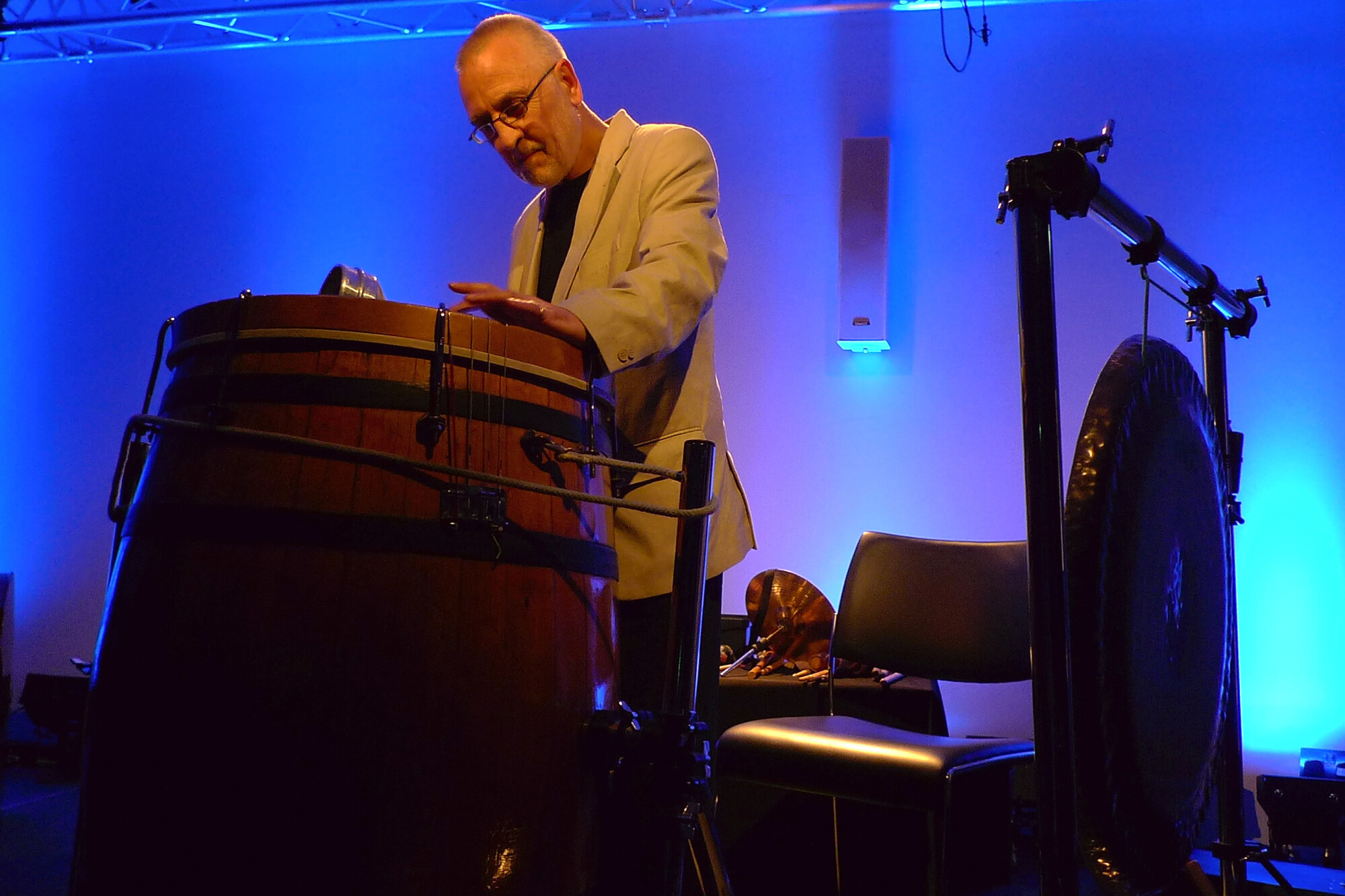
Prévost’s memoir “An Uncommon Music for the Common Man” reflects on decades of musical and ideological development within AMM.
Looking back now, what core ideas or values from your work do you most hope will endure? And, on the other side of that, what would constitute failure in this music? At what point would it stop being alive?
It was during the period of writing “An Uncommon Music” that I experienced my eye trauma. This rendered me partially sighted. I am currently registered as a blind person, but I can see some. I feared, though, that my sight would deteriorate further and that I would be unable to complete the book I was working on. So, to preface the answer to your question, I would like to direct readers to further, what I call, “loose-leaf chapters” to “An Uncommon Music”. These can be found as free-to-download PDFs within the book section of the Matchless Recordings website. Alongside the entry for said book.
I have, of course, in my previous writings, workshop exchanges, and even within this interview already, referred to the moments that I think positively and generatively distinguish an “exploratory form of improvisation” from other modes of sonic-art, which are numerous. But, given the current social-economic and political hegemony, the Western classical music protocols seem to be fixed in the general mindset. Our way of proceeding counters this sonic sol-fa-ism and the attendant strict tempi discipline. It is a vehicle for personal and collective agency. And I believe its essential practice of enquiry tends towards a respect for the material world, as well as an appreciative creative regard for the input of others, rather than a competitive anguish.
Of course, all I have done is to articulate an operational procedure, of collective and individual creativity, that is being applied, maybe intuitively, by many people in different societies and cultures. And perhaps it has probably existed for millennia. As I have mused elsewhere, the approach we are advocating may well be a continuation of earlier Homo sapiens practices. [See loose-leaf chapters.]
However, may I venture to suggest, controversially, that early 20th-century European modern art was only progressive because it critiqued modern culture. Much of the work of the likes of Arp, Klee, Miró and Picasso bears striking resemblances to Palaeolithic cave art. Their work, arguably, opposes the doctrines of exactitude, which are a foundational tenet of modernity. The “progressive” attitude was towards the social and economic ravages which culminated in the First World War, and the rampant capitalist culture which followed in its wake. Exploratory sound-art of the kind I have practised and discussed herein is itself a critique of the protocols of Western music and the emotional and environmental atmosphere it nurtures and supports.
I am aware that such a statement lacks nuance. It also lacks a significant amount of supporting examples. There are strong hybrid, or partial, strategies which straddle the two contending structures I have portrayed. There are two exceptionally strong examples from my own musical experience: Marilyn Crispell and John Tilbury. Both pianists with high levels of competence. Both of whom also operate in the experimental milieu I have described, including myself, while maintaining a strong conventional harmonic profile. Maybe this situation confronts the progressive dilemma: constant revolution marshalling a complete change, or evolutionary gradualism.
I have an open mind on this dilemma, and the social and artistic stance of both examples cited, Crispell and Tilbury, convince me that they can in no way be characterised as recidivists. Their relative lack of economic success, usually the measure in a capitalist society, argues against such. Nevertheless, if the progressive programme falters and there is no opposition to Western classical music protocols, and the subsequent general competitive atmosphere overtakes the experimentalist, then we would have failed.
If we had some more time together, and you could play me three albums, anything that comes to mind, what would you choose?
Some Shostakovich, some Coltrane with Elvin Jones?
Klemen Breznikar
Headline photo: Eddie Prévost (Courtesy of Brian Slater )
Matchless Recordings Website