
Paul Dunmall on Mujician: “Nobody knew how the music was going to unfold”
Paul Dunmall was never likely to take the straight road. Born in Welling, Kent, in 1953, he started on clarinet at 12, moved through alto and tenor saxophone, and was playing professionally by 17.
Not bad going. But the interesting thing with Dunmall is not simply how early he began, it is how much music he allowed in.
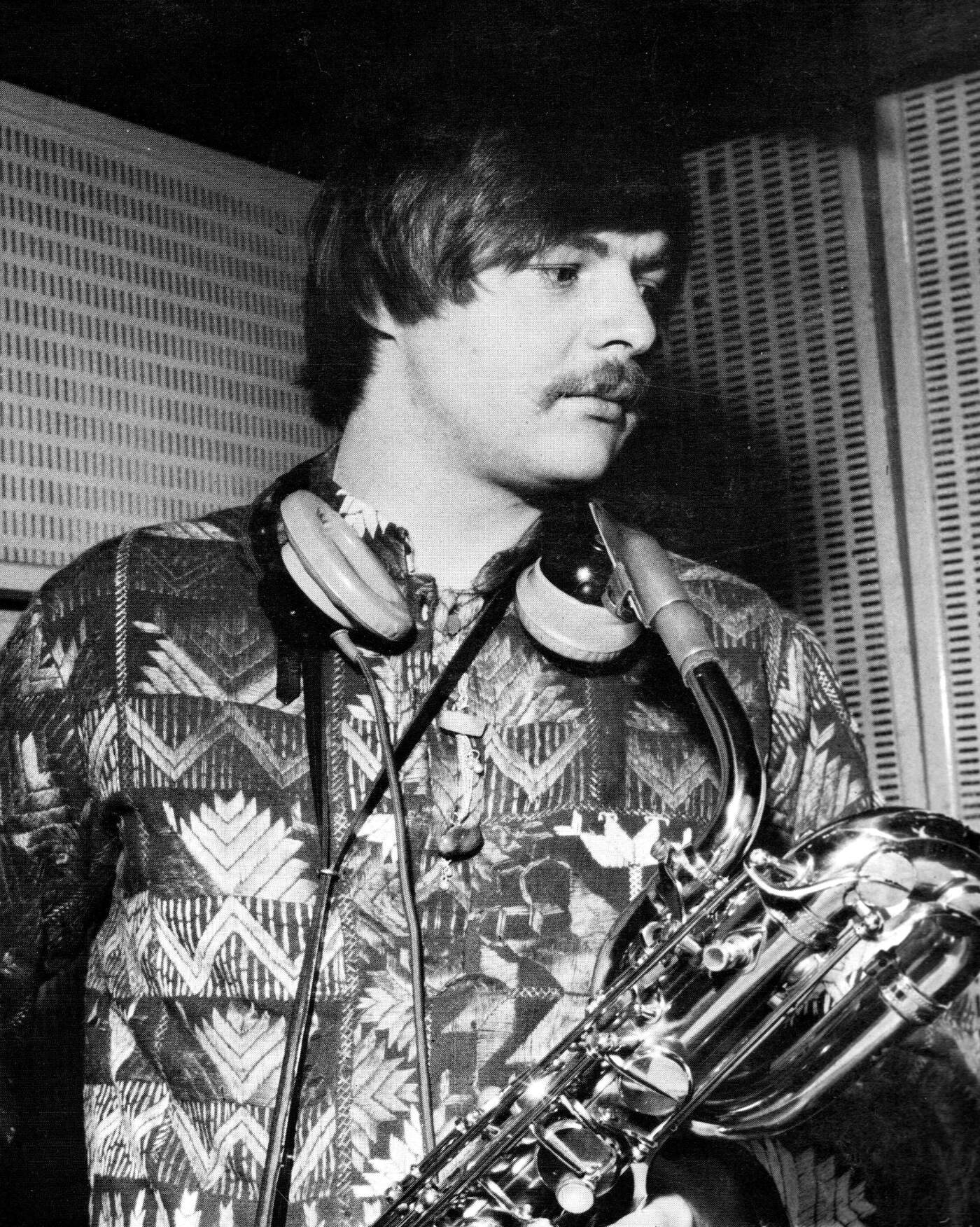
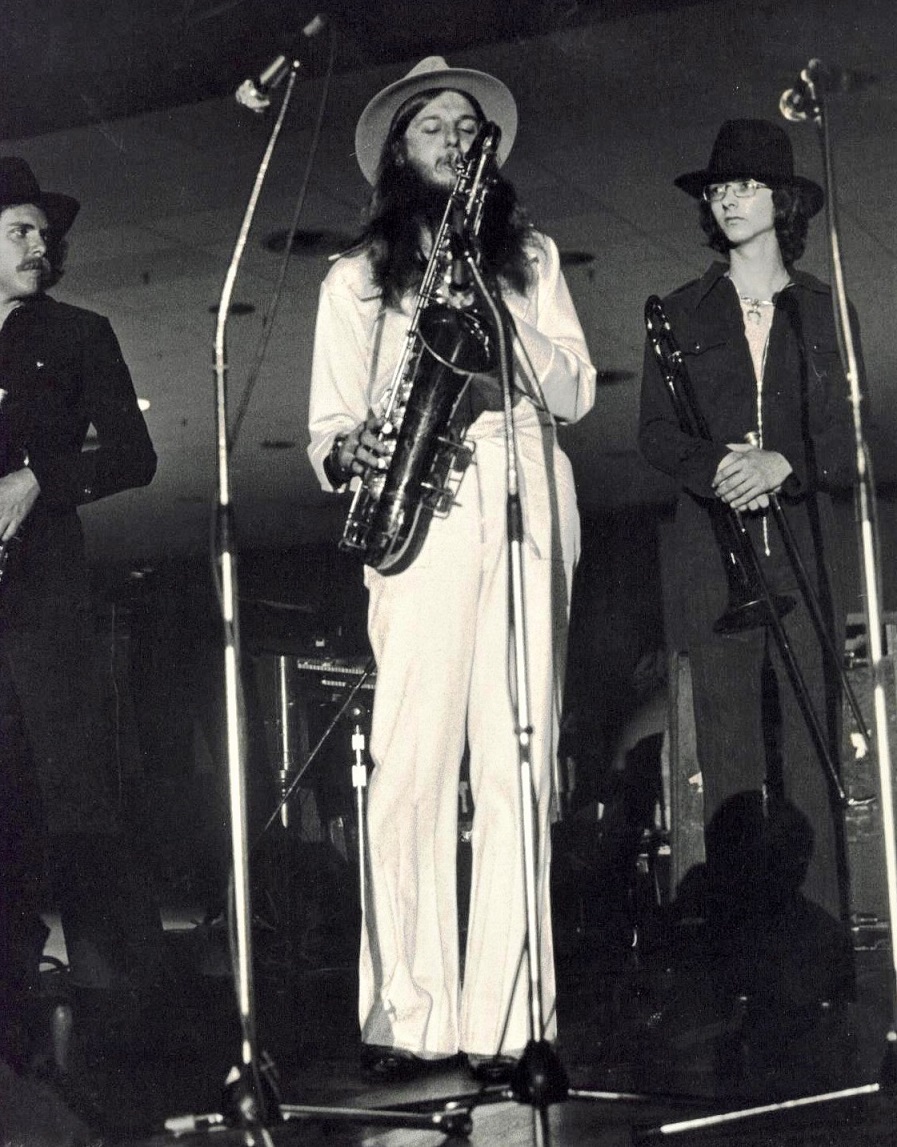
As a teenager he passed through Marsupilami, the progressive rock group he toured with in his youth. Then came America, three years that would leave a mark. He played with Alice Coltrane, toured for a year with Johnny “Guitar” Watson, and absorbed two very different kinds of charge: the physical snap of blues, funk and rock ’n’ roll, and the deeper inward pull of spiritual jazz. Both stayed with him.
Back in Britain, Dunmall seemed to move everywhere at once. Folk music, jazz clubs, free improvisation, large ensembles, small groups. He helped form Spirit Level in 1979, joined Tenor Tonic in 1985, and became part of Barry Guy’s London Jazz Composers Orchestra in 1987. Then, in 1988, came Mujician: Dunmall with Keith Tippett, Paul Rogers and Tony Levin. Four strong voices, but no one getting in the way. Just listening, risk and trust.
That is what made Mujician special. Dunmall has said their shared language was there from the beginning, and that nobody knew, walking on stage, where the music would go. That could have been chaos. With this group, it became a way of working.
Dunmall’s own playing can be immense, but it is never simply about power. Even at full flight, there is someone inside the sound listening hard, waiting, shaping the next move. On tenor, soprano, clarinet, flute, saxello and pipes, he has always chased that point where breath, tone and instinct become one thing. From Coltrane he took the idea that jazz could reach higher. From Alice Coltrane came the quieter lesson: stay calm inside, even when the music is burning.
That is why his work never feels like dabbling, even when it touches folk, Indian drone, free jazz, composition, big bands, duos and bagpipes. It all belongs to the same search. Since 2000, through DUNS Limited Edition and later recordings for labels including Discus, Dunmall has kept following it across solo records, trios, duos and large ensembles.
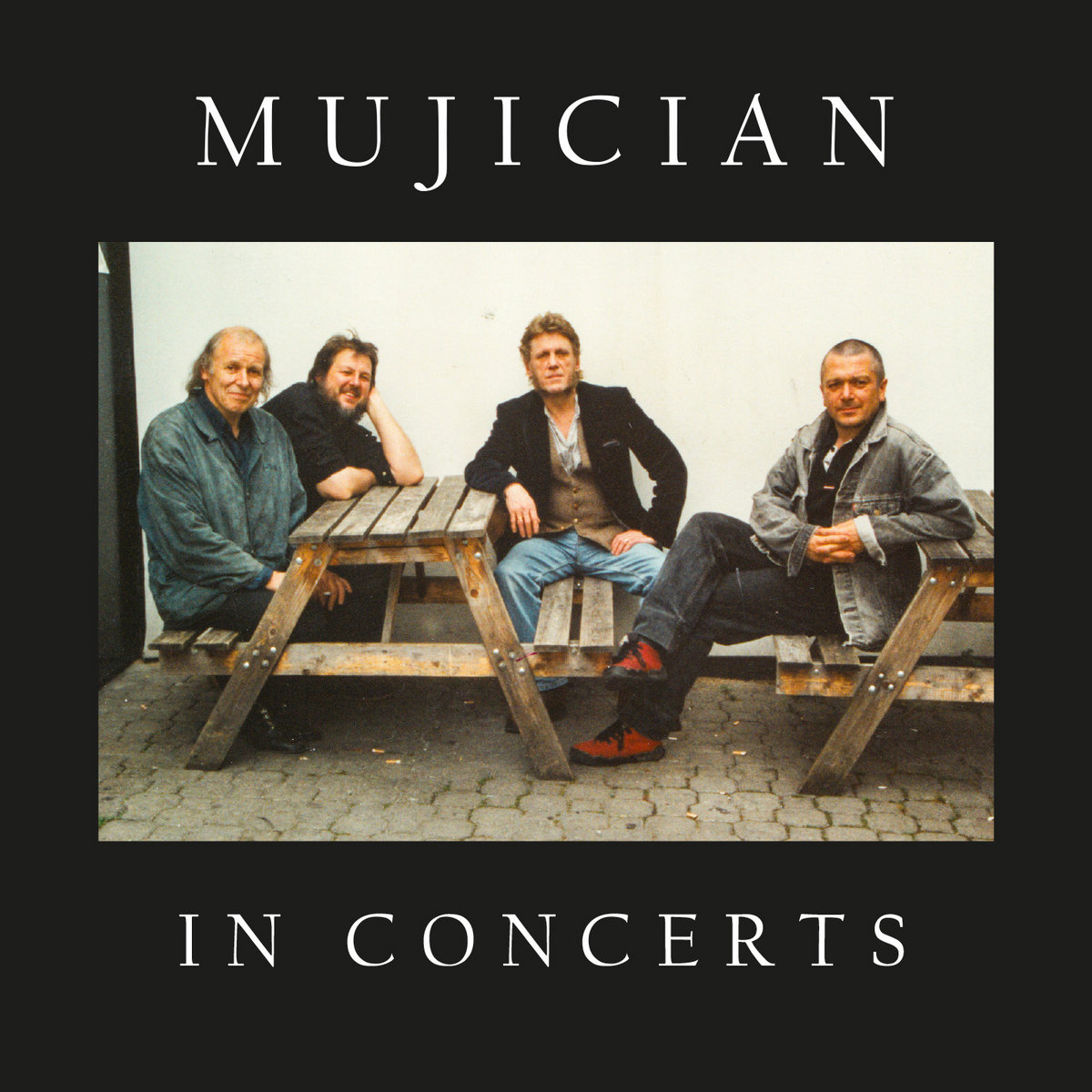
Mujician sits close to the centre of that story, but it does not close it down. It opens the door to the rest. Jazz In Britain’s ‘In Concerts’ now brings that door wide open again: a three-CD Mujician set from Cheltenham in 1993, Vienna in 2003 and Birmingham in 2010. Four players. No map. Plenty of fire. And trust, always trust.
“All what you hear was created spontaneously.”
The release of ‘Mujician: In Concerts’ gathers three performances spanning seventeen years: Cheltenham in 1993, Vienna in 2003, and Birmingham in 2010. When you sat down to listen to these specific recordings again for the release, particularly the 2010 set, which was so close to Tony Levin’s passing, what was your emotional reaction to hearing that specific group energy again?
Paul Dunmall: Well, I hadn’t listened to those recordings for many, many years, and when I heard them again I just thought how fantastic the music was and was very happy to hear them again and remembered what a wonderful group Mujician was.
You have described Mujician as “one of the greatest free improvising jazz groups in the history of this music,” noting that you never discussed the music beforehand. Over a twenty-two-year period, how did that unspoken language evolve? Did you find that the “search” for the music became shorter as the years went on, or was the struggle to find the spark always part of the process?
The unspoken language was with us from day one and never changed. We had no need to talk about the music; we always knew it would be fine. Of course, some moments were better than others, but that is the creative process, and when you trust each other and musicians of that ability, you will always find something amazing very quickly. So there was never any concern that the music wouldn’t be of a certain standard, and that high level was certainly kept up throughout the band’s existence.
Keith Tippett often spoke of music as a social act, and the name “Mujician” itself, coined by his daughter, implies a kind of magic. In these live recordings, there is a sense of four distinct voices merging into a single organism. How did you navigate the space between your individual voice as a saxophonist and the collective “mind” of the quartet, specifically when working with such strong personalities as Paul Rogers and Keith?
So, when I was on stage, my whole being was listening to the music, and only when I felt I could add something to the music would I play. That doesn’t mean, “Oh, I can play a solo here.” Sometimes I would enter with something to support maybe the bass or piano, who were the leading voice at that moment. That was why Mujician was so great. Okay, it was a traditional quartet line-up, but we didn’t play in a traditional style. Anyone could take the lead voice and make something happen. Of course, there were times when we got into swinging jazz, with the saxophone or piano being dominant, but that could change very quickly into some abstract sounds. That is what made the band exciting: you never knew what was going to happen.
The Vienna concert from 2003 captures the group in the middle of its lifespan. By that point, the quartet had established a significant discography on Cuneiform. Do you recall if the group’s dynamic on stage in Europe differed from your concerts in the UK? There is often a perception that European audiences are more receptive to the “long-form” improvisation that Mujician specialized in.
Well, the only difference I found was mainland Europe had many more free music festivals than the UK. The UK seemed to concentrate on straight-ahead jazz more, but in the clubs I didn’t really seem to notice any difference between countries. However, most of our concerts were in the UK and were mostly well received with good turnouts.
With both Keith and Tony now gone, this box set serves as a significant historical document. You mention in the liner notes that the music felt “spiritual” and “out of body.” Looking back, do you view Mujician as the apex of that specific kind of spiritual free jazz in your career, or do you find that same intensity manifests differently in your current groups?
Well, I always look for that spiritual feeling of losing oneself in the music. Mujician was probably supreme in that. However, I have had many concerts since Mujician that really have been outstanding, with that magical feeling. Once you have experienced that high, you want it every time you play, and mostly these days I do find it.
“Playing with deep concentration brings me to the same place as meditation.”
You have spoken before about your time with the Divine Light Mission and how it gave you a spiritual understanding through meditation. How directly does that practice of “forgetting the body” translate to the physical act of improvisation? Is the goal on stage to reach a state where “Paul Dunmall” disappears entirely?
I learnt meditation in Divine Light Mission and practiced it every day with the same intensity as music. So with practice you get better at it and have a better understanding of how it works, and I found that playing with deep concentration brings me to the same place as meditation. It’s not really losing yourself; you’re just more aware of your higher self, and the higher self is really who you are and where you are happiest, so it’s great to feel that. Of course, the trick would be to get to that place without music, and that’s where the true saints abide, but you can’t force it or trick it; it will come in its own time. I believe there is a spiritual evolution with souls.
There is a paradox in your playing: you have an incredibly muscular, stamina-heavy technique, yet you speak of effortless flow. Does the physical exertion ever become a barrier to that meditative state, or is the exhaustion actually a necessary vehicle to shut down the conscious mind?
When I started to really get involved in music, it was the energy it created that drew me most. I loved Jimi Hendrix and still do; his energy and power were amazing, and I was delighted when hearing Coltrane, Albert Ayler, and Pharoah Sanders create that same powerful energy. I thought, wow, if you can do that with a saxophone, that’s what I want to do, and it seemed that it had to be very physical to achieve it, blowing hard, etc. So that is what I went for. It was only years later I started to listen to more straight-ahead jazz and decided I needed to improve as a player, so I studied it. I had listened to Charlie Parker when I was young, but it sounded like music from Mars. I had no idea what was going on, but I did know it was really great and special; I just didn’t know why. I knew the saxophone playing was astounding, but I couldn’t even dream about getting anywhere near that standard. It was Alice Coltrane who said to me, “Be calm inside and peaceful when you play with such physicality,” and of course I totally understand that now. If you’re calm inside, the music has even greater power. Again, it’s achieved by deep concentration and focus and a peaceful mind, not just blowing hard and getting out of control.
Early in your development, you spent time in the US and even toured with Johnny “Guitar” Watson. That world of funk, soul, and R&B is very different from the European free improv tradition. Do you think that experience with the “groove” and the physical connection to the audience in a funk setting informed the rhythmic drive you later brought to free jazz?
I loved Otis Redding and soul music, and that was the first music I played on saxophone when I was 14 or 15 years old. So that has fantastic grooves, and that is part of my musical journey. Playing blues and funk with JGW was also part of my development, so that will certainly come out in my playing. I have always thought free improv shouldn’t shun groove playing. I think it would make free music more complete as a listening experience; nothing should be excluded in free playing. That is why it’s called free music as far as I’m concerned; otherwise it just falls into a category box.
Many players cite John Coltrane as a spiritual influence, but your connection seems to go beyond just musical vocabulary to the actual intent behind the sound. When you are improvising now, in 2025, do you still feel that specific Coltrane-esque pursuit of a “higher power” through sound, or has your personal philosophy moved into a different space?
John Coltrane was the guiding light. In his music and playing it said you can achieve a higher consciousness through jazz-based music. It doesn’t need to be entertainment anymore. It can be a spiritual thing, and his influence went far and wide, not only affecting saxophone players but all players, even influencing rock musicians and others. So the message is still the same: I’m still always looking for higher ground because it is infinite. You can never reach the top, which is the joy of creating music; you can always go further.
You are one of the few improvisers who has successfully integrated the border pipes and bagpipes into a free jazz context without it sounding like a novelty. What drew you to the pipes initially? Was it the connection to the Indian drone and the shehnai, or was it something specific about the British folk tradition?
It was hearing the famous Northumberland piper Billy Pigg on record that I realized there’s some great music to be made on bagpipes. It doesn’t just have to be the Scottish pipes, so I researched every type of bagpipe I could find. It was the Bulgarian pipes and the Irish pipes that really grabbed me. Then in 1987, when I joined Danny Thompson’s Whatever group, I met Tony Roberts, who was a fantastic saxophone player who also played Northumberland pipes, and basically he encouraged me to get some pipes. So I bought a set of Bulgarian pipes and a few days later I had a gig with Evan Parker in London, so I brought the pipes along and played them on the gig just for a couple of minutes, and I thought, wow, this works fantastic. So I decided then and there I would study the pipes properly. Gradually, over many years, I became a reasonably good piper, well, good enough for me to explore the pipes in a free way rather than in the traditional music way. So I explored the different sounds that could be made and did record them on various solo and group CDs. I had many different types of pipes from around the world, including Bulgaria, Northumberland, and Iraq, but my main sets were called Border pipes, so called as they bordered Scotland from North England, but they’re not Scottish pipes. I stopped playing pipes a few years ago as my workload of practicing got too much. To my surprise, I’ve been told that some pipers considered me a leading pioneer of pipes, opening up what music can be played on them.
The breathing technique for bagpipes, managing the bag, the bellows, and the constant pressure, is radically different from the saxophone. Has playing the pipes altered your phrasing or breath control when you switch back to the tenor or soprano saxophone?
Well, most of the pipes I played were bellow-blown types, not mouth-blown, but I always considered the pipes completely separate from saxophone playing, and neither of them affected the other, so my breathing isn’t affected at all.
In recent years, you have been incredibly prolific, particularly on the Discus Music label, releasing everything from big band works to intimate duos. How do you maintain the physical stamina required for the saxophone at this stage in your career? Do you still practice with the same rigorous routine you had in your younger years?
Well, I feel very lucky that I can still physically play as strong as I have ever done over the years. However, I can’t play as long as I did, so it’s shorter bursts of playing, but at 72 that’s some achievement, I think. I do try to practice saxophone, clarinet, and flute every day, but not as long as I used to do. I still love playing and practicing in my room, and as I’m playing I hear things come out and I write them down: interesting phrases, melodies, etc. For the last few years, I have been doing more composing than I used to, which I do enjoy, although I do find composing hard as I keep wanting to change it to make it sound fresh and like it was improvised. To me, improvising is the highest form of playing.
You have explored the sopranino and other high-register reeds extensively. What is it about that upper frequency range that attracts you?
I think I like the higher-sounding instruments because, as you suggest, it can cut through. There’s a great clarity to them. Although my heart is with the tenor saxophone.
Your tenure in the London Jazz Composers Orchestra (LJCO) placed you alongside the who’s who of European improvisation: Barry Guy, Evan Parker, Trevor Watts. How did the discipline of navigating Barry Guy’s complex graphic scores compare to the total freedom of Mujician? Did you enjoy the friction of having structure imposed on you?
I loved my time in the LJCO. I have a lot of respect for Barry Guy. He worked really hard for the band and wrote some amazing music, so I always wanted to play my best for him and the group. The band was full of great soloists, so keeping them in check sometimes was hard, but generally we had great concerts. Also, I didn’t think about the differences between the various groups I was in. I just concentrated fully on the situation I was in. If I had to read difficult music, then so be it; I would do my best to get it right, and who knows, the next day I might be playing in Mujician freely improvising and putting my heart and soul into that. It was never a problem.
You have a long-standing musical partnership with Paul Rogers, who developed his own unique 7-string bass language. In the trio formats or duos with him, the low-end frequencies are often incredibly dense. How do you adjust your playing when working with a bassist who occupies so much sonic space?
Well, I love Paul’s 7-string. I think it sounds amazing. Paul and I have a very long history together. We have played in duos to big bands, but we always had a strong musical connection from the very first time we played together. Obviously Mujician, but we also played in several trios, quartets, large ensembles, etc. I think our duo was the pinnacle of our playing together. We never got in each other’s way, ever. We did say to each other at the start of our duo, you can play whatever you want and it will be fine, so we never worried that we would be getting in each other’s way. The soprano seemed to have worked best in the duo, probably because of the higher frequencies the soprano made, so you got clarity between bass and sax. We made some unbelievable music together.
Recently, you have worked with a younger generation of musicians, such as Percy Pursglove and Olie Brice. Do you notice a difference in how this younger generation approaches free improvisation compared to your peers who came up in the ’70s and ’80s? Is the “fight” for the music different now?
When I started to play jazz/improvised music, like all my peers, we learnt on the bandstand by playing together. There were no jazz colleges then, and by learning that way we all found our own unique voices and creativity within the music. What I notice more now, because of colleges, is that the standard of playing of all the students is at a very high level, but to me jazz has become like classical music. You learn how to play, what is the right and wrong way to play jazz, and because of that I think it has lost something. Those great individual voices, those great characters of the past were pioneers. Now everyone sounds very similar in a way, but always with very fine technical playing. Of course, it’s not all like that: take Percy Pursglove, what an outstanding musician he is, James Owston on bass, Xhosa Cole on saxophone, plus many more. But as I have said before in an interview, each generation finds their own way of expressing themselves and makes music of their times. I had my time and it was different, that’s all.
Your work with the large ensembles, like the ones featured on ‘Red Hot Ice’ or ‘Away With Troubles And Anxieties’, shows a strong composer’s hand. How do you approach writing for these large groups? Are you trying to recreate the spontaneous energy of a small group on a larger canvas, or is it a completely different discipline for you?
It’s tricky. I’m trying to use improvisation as the main thing, but by adding compositions it changes the way you improvise. I like the combination. It creates a different music, and sometimes the composition is dominant, then sometimes it’s the improvisation. Obviously, the larger the group, the harder it is to make free improvisation work successfully, so I feel like I have to control things a little bit and I have to choose the players carefully. I have enjoyed these sessions immensely and really enjoyed the company of these fairly large groups. It’s a nice social atmosphere. I also have to thank Martin Archer of Discus Records and Corey Mwamba; they do a terrific job in editing and mixing these sessions.
With a discography that is now vast and spans hundreds of releases, do you ever look back at your own catalogue to find ideas you want to revisit, or are you strictly focused on the next project?
I’m always looking forward and don’t use my back catalogue for new ideas. I do, however, listen from time to time to my past recordings, which I find interesting, how my playing is different. Obviously, I had more energy 30 years ago, but I believe my playing has matured, and I do like the way I play these days. Perhaps, strangely enough, it can be more jazzy and then more abstract at times. There is so much more to explore with my own playing.
The title of your recent release ‘Afraid To Speak’ suggests a certain vulnerability or perhaps a commentary on the current climate. Can you elaborate on the choice of that title and how it reflects your current mindset as an artist?
Well, that’s interesting, how did you know about my forthcoming release on Discus? It won’t be out until June, I’m told. Anyway, yes, there are two sides to this title. The four individual titles used are what the great Christ-like saint Shri Ramakrishna said to his disciple Swami Vivekananda when the swami had decided to become a wandering monk. Basically, Ramakrishna asked him to stay with him until his death, and the swami agreed. That is such a deep spiritual love that it is really hard for us to understand or grasp. The other part of this title does indeed reflect on our current times, with such oppression of the people from many countries, such as Russia, China, Afghanistan, Iran, and many more, but also somewhat surprisingly the USA. It’s worrying times indeed, and those who do speak up usually are treated very harshly, sometimes with their lives. Very brave people. I feel all I can do is bring some positive music into the world that may bring a little relief for a short time. As John Coltrane said, I want to be a force for good. My sentiments exactly.
You have lived through several eras of the British music industry, from the prog-rock days with Marsupilami to the jazz boom of the ’80s and the current independent label landscape. Do you feel that the “underground” creative music scene in the UK is healthier now than it was when Mujician started?
I don’t get out as much as I used to, so I’m probably not in touch with what the underground goings-on are these days, as it is usually young people who get together and work on it. When I was young, I felt like I was part of this musical underground, with many fellow musicians thinking in the same way. We always thought the musical establishment didn’t understand us, and I presume young musicians probably feel the same these days, but I don’t know. In Mujician, we always thought our music was radical and pushing boundaries, and actually, even going back to Marsupilami days, we had the same attitude. Marsupilami, in its way, was just as radical as Mujician. There wasn’t any band quite like it at the time. The word prog rock came later.
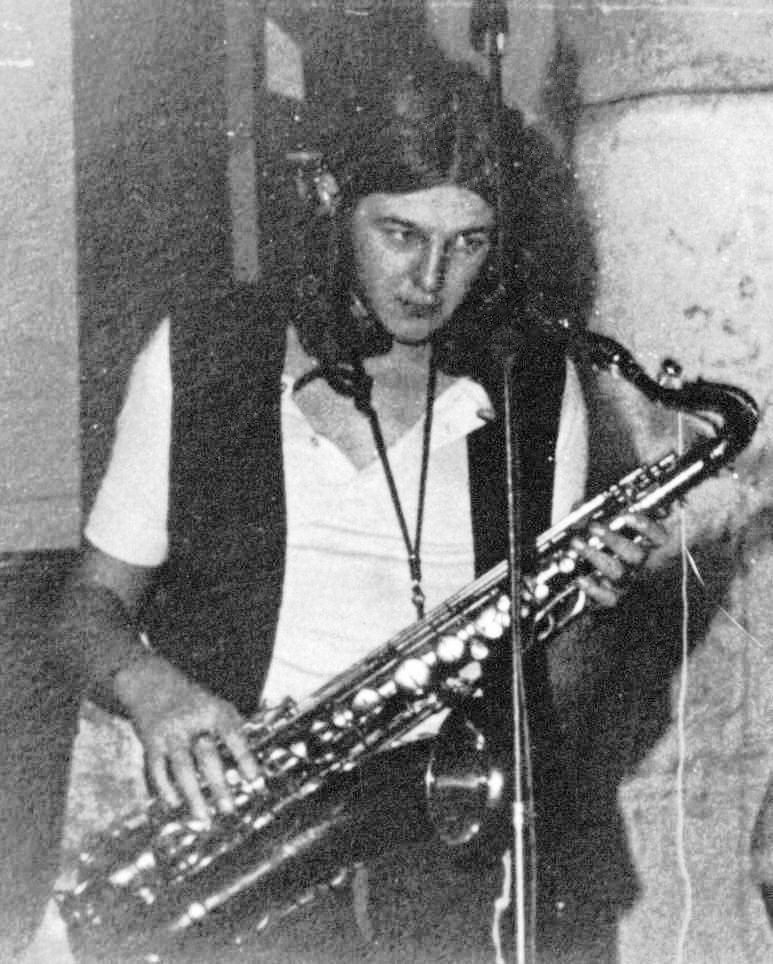
Speaking of Marsupilami, could you share some further details about the making of ‘Arena’ and the concept behind this interesting band?
I met Marsupilami for the first time in the recording studio in London, and they had just finished recording ‘Arena’, so I didn’t get to record with them, which is a shame. However, when I joined the band, we used to play ‘Arena’ live and it was a great and very interesting suite to play on. I’m not sure I knew much about what it was trying to say; I was just making sure I played the music properly. I was only 17. Thinking about it now, 56 years later, it was probably referring to the corruption of the Roman Empire and how it related to our modern civilization. Nothing lasts forever.
Having played with Alice Coltrane during your time in the US, did that interaction demystify the “spiritual jazz” mythology for you, or did it deepen your respect for that lineage?
Playing with Alice Coltrane was an absolute pleasure and honor, and it certainly didn’t demystify spiritual jazz. If anything, it increased it and deepened my need to play that way more and more. She was really great and was a lovely, quiet-spoken, gentle person. She played organ with us in a studio in LA, and it sounded amazing. Something I will never forget.
Is there a specific musical territory or instrument you still feel you haven’t fully explored? You’ve touched on folk, jazz, classical, and Indian music. Is there a “final frontier” for Paul Dunmall?
Well, it is a bit of a dilemma. I have explored so many different areas and combinations, and I’m still looking, but I keep coming up with ideas and then I go, oh yes, I already explored that. But I will find new things for sure. There is no final frontier for me unless my body and mind give up. I will keep trying.
When you are on stage now, after fifty years of professional playing, what is the primary feeling you are chasing? Is it still that “out of body” experience you had with Mujician, or has it become something more grounded?
Every time I play, I want to reach that place that uplifts me and hopefully the other musicians and audience. Nothing has changed. I’m always looking to improve my playing. Always looking to improve my sound and technique. I practice these things at home nearly every day. Music is like oxygen for me; I can’t live without it. I don’t travel far these days, so I don’t do that many concerts anymore, but of an evening I will listen to three CDs a night of all different types of music, and I feel it’s food for my soul, and it will never end in the pleasure it gives me.
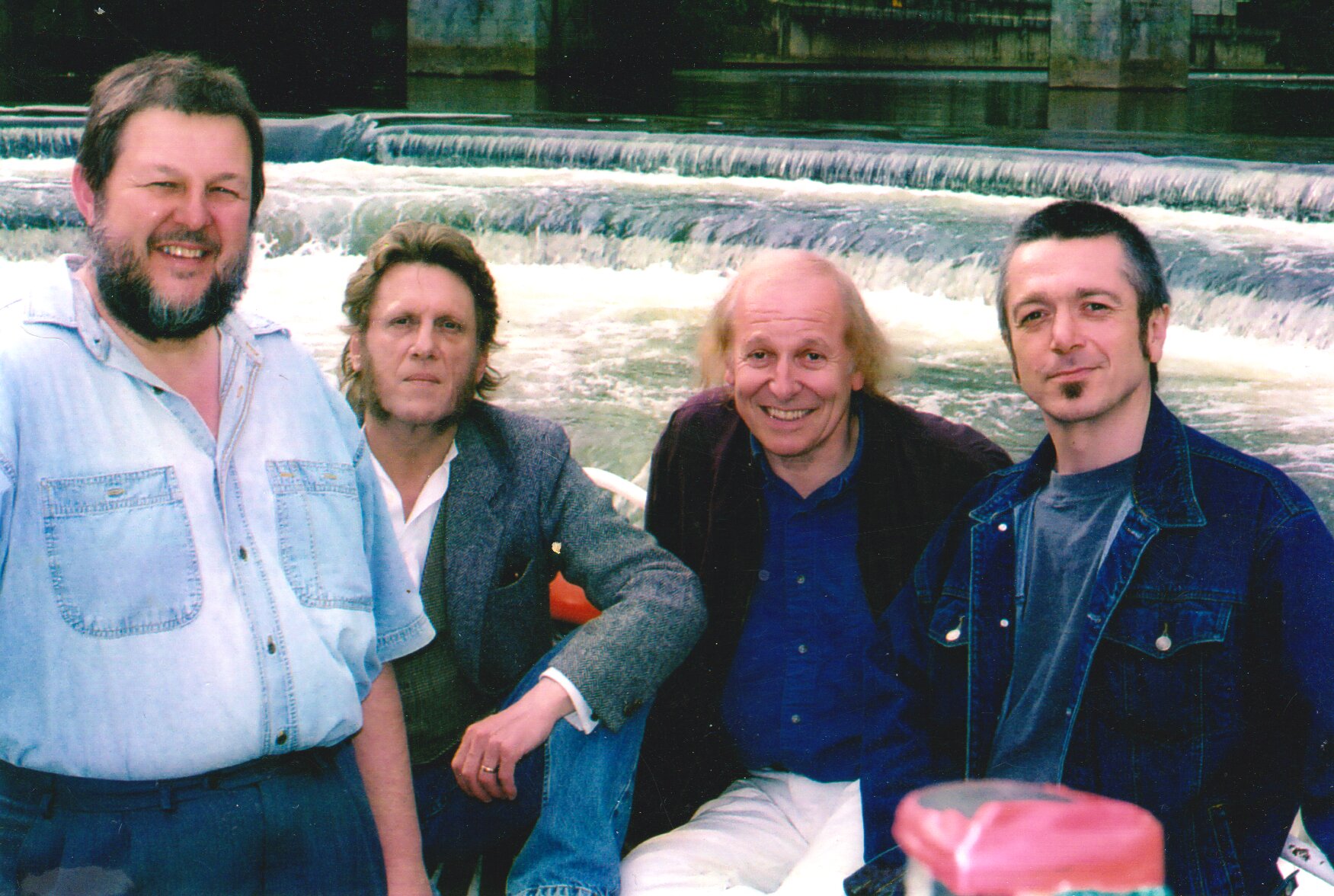
Finally, looking at ‘Mujician: In Concerts’, if you could say one thing to a listener hearing this quartet for the first time in 2025, someone who never got to see Keith or Tony live, what would you want them to listen for in these recordings?
The only thing I would say to a new listener to Mujician is remember all what you hear was created spontaneously. Nothing was rehearsed or even talked about. Nobody knew when we walked on stage how the music was going to unfold. Now, whether a new person enjoys what they hear, I can’t influence that. The first time I heard Coltrane I thought it was awful and made no musical sense to me. There was no rhythm and the saxophone lines seemed so strange. It was the ‘Meditations’ album, but just two weeks later I heard Coltrane again and got it, and from that point on his music changed my life. Perhaps, who knows, Mujician might have that effect on some listeners.
Klemen Breznikar
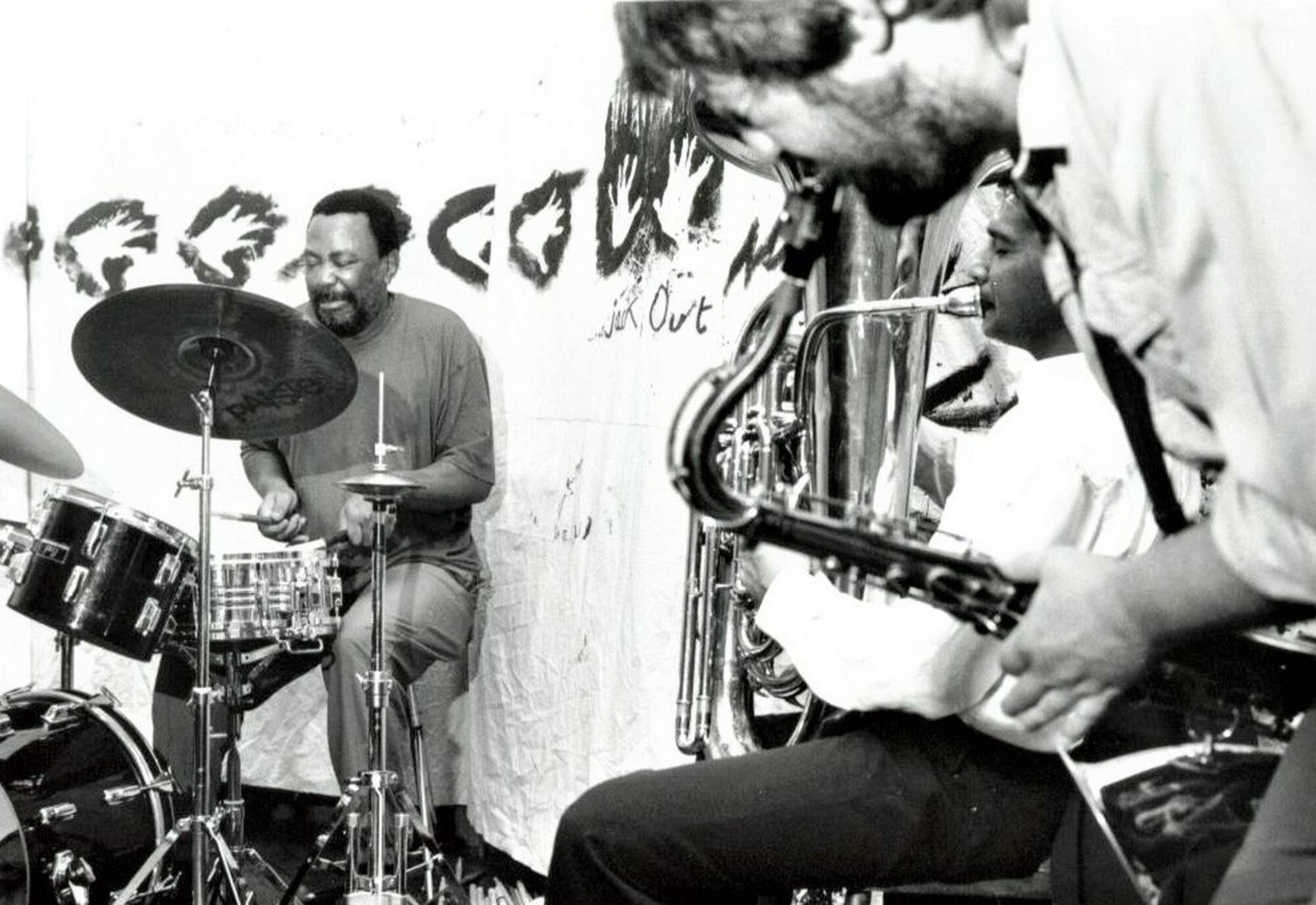
Headline photo: Paul Dunmall performs with Louis Moholo in London. Photograph: Paul Dunmall private archive
Jazz In Britain Official Website / Facebook / Instagram / Twitter / Bandcamp / YouTube