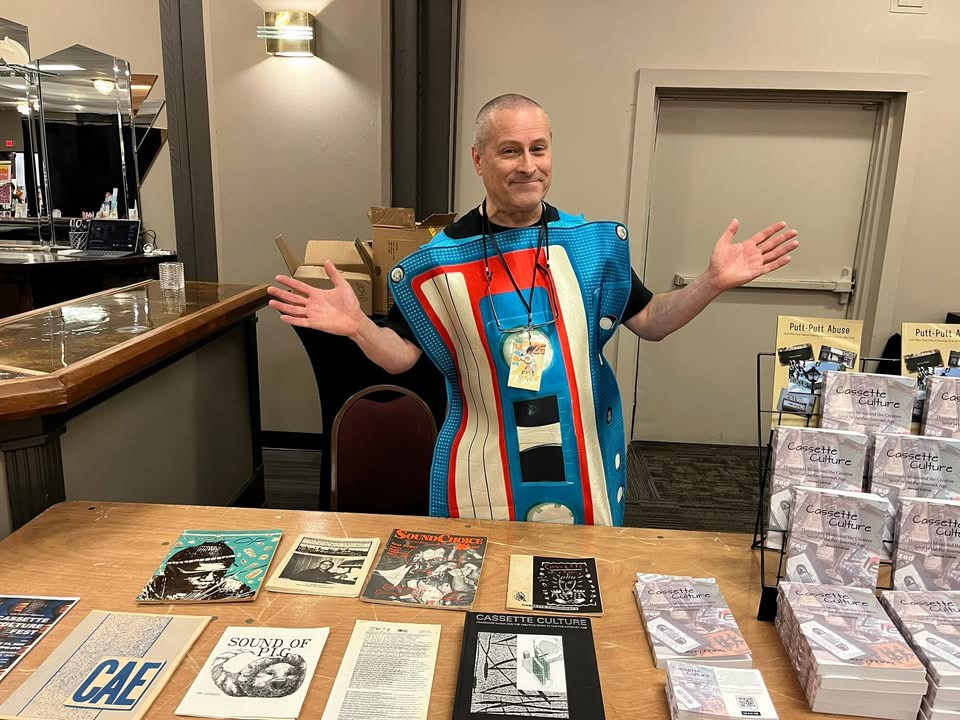

Jerry Kranitz Traces the Hidden Network Behind “Cassette Culture”
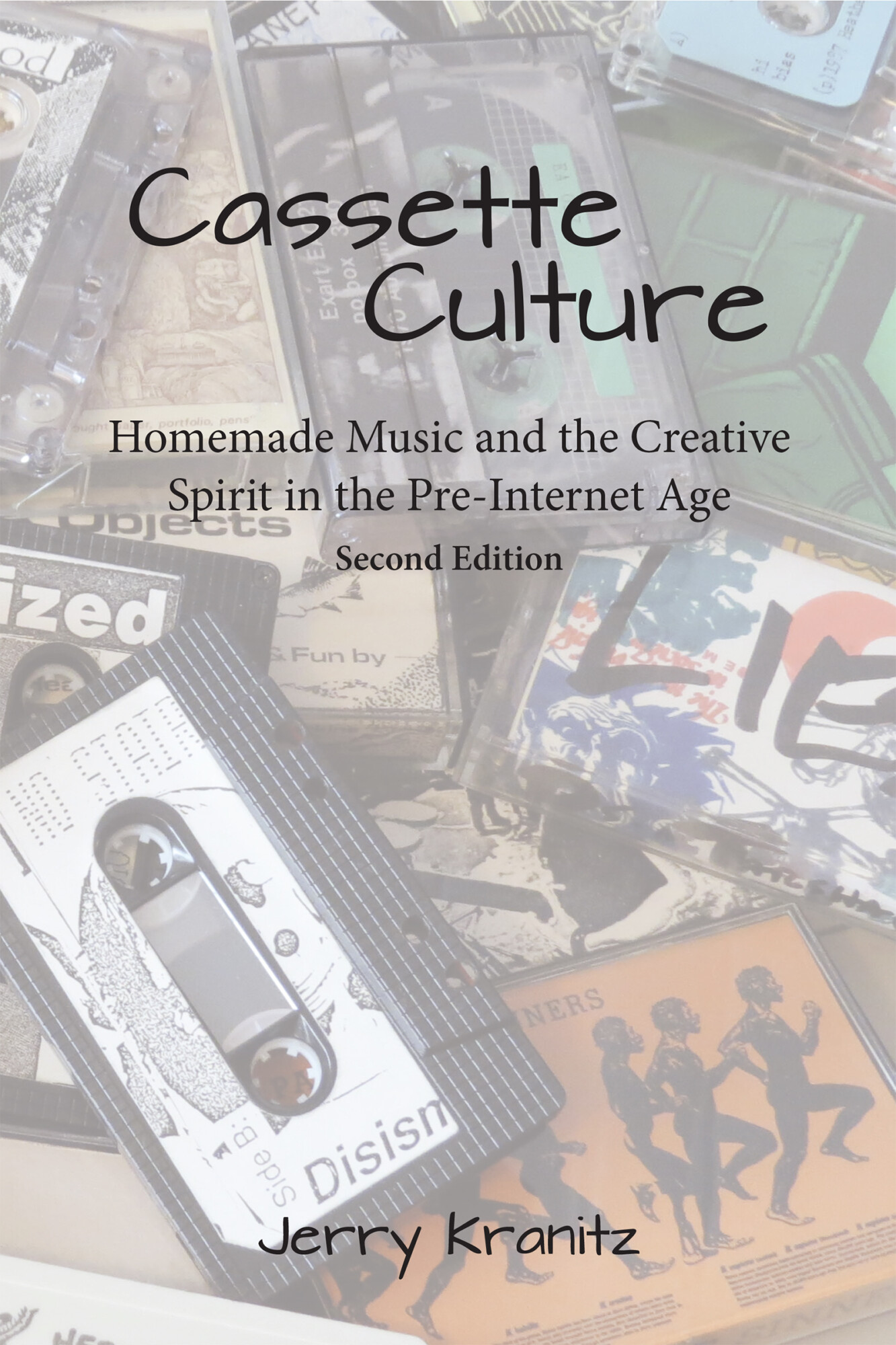
Jerry Kranitz’s book looks at the cassette through the things people actually did with it. They recorded at home, dubbed tapes one at a time, mailed them out, wrote letters, ran tiny labels, made zines, and built a loose network that didn’t need the music industry’s approval.
Kranitz understands that the cassette carried more than sound. It carried addresses, friendships, arguments, debts, obsessions, small economies, private stories and a sense of DIY freedom.
That is where the book becomes strongest. Cassette culture is often reduced to hiss, lo-fi sound, hand-drawn covers and homemade charm. Kranitz goes deeper. He looks at what the cassette made possible. Who recorded it? Who copied it? Who sent it out? Who wrote back? Who reviewed it, traded it, kept it, or passed it on? And how did music made in one room end up weeks later with someone in another country, who might answer with a letter, a tape, a review, or a friendship?
Kranitz gives that world its full shape. This was a dispersed international network of hometapers, small labels, zine editors, mail artists, experimental musicians, post-punk misfits, private obsessives and people who had discovered, often with some relief, that they were not alone. The infrastructure was modest: letters, stamps, lists, tape decks, small press publications, patient correspondence. The implications were anything but modest.
Kranitz writes from inside this history, with the patience of someone who has spent years listening, corresponding and following small trails. His long work with Aural Innovations runs through the book. He knows how much context has to be rebuilt from scattered interviews, old zines, letters, reviews and memories. He also understands the labour behind these networks: dubbing, packaging, reviewing, mailing, waiting, replying, trying again. That labour shaped the culture. In a world that moves so fast now, this book slows things down and pays attention to the work it took to stay connected.
Alternative cultures often comes with their own rules, exclusions, and pecking orders. Freedom is never pure simply because it happens outside the market. Yet the best of cassette culture carried a radical promise: that circulation could be personal, that authorship could be shared, that audience could mean correspondence. A tape could be a release, a message, an invitation, a provocation, a gift.
This book shows cassette culture as a historical moment, but also as an impulse that keeps returning whenever people grow tired of the mainstream and begin making their own routes. Somewhere, someone is still recording as an outsider, sending work into uncertain hands, hoping for a reply. Kranitz has written the history of that hope.
“The real story was the resulting network of creation, communication, collaboration and exchange.”
What grabbed me in your approach is that you don’t treat cassette culture as a dead format story. You treat it as a living social network with its own codes, rituals, and forms of exchange. At what point did you realise the real subject of the book wasn’t just tapes, but the system built around them?
Jerry Kranitz: The inspiration for this project was the realization that cassettes were a mechanism, a tool, a means to an end, and that the real story was the resulting network of creation, communication, collaboration and exchange. This dawned on me over some years of conducting interviews for my ‘Aural Innovations’ zine. I started detecting a pattern where several people I was interviewing would talk about recording tapes in the 1980s, trading with others, and starting little cottage industry labels. The realization that this was a story that needed to be told was the driving force for writing the book.
Before we dive into the book, I’m curious about your own starting point. Where did you grow up, and what were your early encounters with music like? And at what point did you slip into underground music?
I was born and raised in Kenmore, New York, which is part of the greater Buffalo area. I recall being very young (1960s) and babysitters playing rock radio stations and being fascinated by and completely absorbed in the music. By my teen years in the mid-1970s I was obsessed with rock music, spending most of my money on records. We had great record stores in Buffalo. I used to hang out at one little shop up the street from my parents’ house and chat with the owner. One day he gave me a 1976 JEM import catalog, which I still have. JEM was one of the primary American importers. I learned about British and European bands I’d never heard of from that catalog. I started buying Gong records and anything Daevid Allen was involved with. I was discovering progressive rock bands other than Genesis, Yes and ELP, like Camel and Van der Graaf Generator, but also the early German pioneers like Kraftwerk, Amon Düül II, Can, Ash Ra Tempel, Guru Guru. My world was expanding.
One day I was looking through a used record store and came across ‘Greasy Truckers Live at Dingwall’s Dancehall’. It’s a double album with four bands that I recognized from the JEM catalog. I bought it because it included Camel and Gong. One other band was Global Village Trucking Company, who I didn’t care for. And the fourth band was Henry Cow, who I was fascinated with. I credit them with my introduction to avant-prog, RIO, “difficult” rock music. By the early 1980s there were loads of records under different names with various Henry Cow members and I was gobbling them up. I was also enthralled with the Residents and anything on the Ralph Records label. That’s how I started discovering underground, independent, small-label and private-press music.
When I got internet access in 1993, I discovered Usenet newsgroups and interacting with fellow travelers (fans and musicians) around the world and then launched Aural Innovations in 1998. This was when I discovered the true meaning of ‘underground’.
One thing that comes through strongly is that this wasn’t a “scene” in the usual sense. It wasn’t one city, one sound… It was a loose, international web held together by letters, zines, tape trading, and trust. When you were piecing it together, what surprised you most about how that web actually functioned in practice?
Your description of it as a loose, international web is absolutely correct. I wouldn’t say I was surprised, but I learned how it functioned, and where/how those functions differed through my years of research and interviews. In practice, there were commonalities across what became an international network. But there were also characteristics specific to geographic locations, and specifics that depended on individual people and places.
A strange local connection on my end, Mario Marzidovšek lived only a few kilometers from here. He’s gone now, and from what I’ve heard, his later years were marked by a kind of isolation, living out in an old barn. The details of how it all ended remain unclear, but his presence still lingers in any serious conversation about tape trading.
I came across a number of similar stories of people who ended up in less than ideal circumstances. One prominent American who was a hometaper, zine publisher and ran a cassette label was living here in Columbus, Ohio and hit on difficult health and financial circumstances. He’s sadly back in the New York City area living in a nursing home. And we’re losing some of the veteran hometapers who have been passing away. Lord Litter, Mike Honeycutt and Dave Fuglewicz have died since my book was first published. Others have fallen completely off the radar and in some instances I worry about what became of them.
There’s a lazy way of writing about cassette culture where it all gets flattened into photocopied inserts, envelopes with strange stamps… Your book is much stronger because it also looks at structure. So where did the cracks show?
Any subculture or scene is going to have people who presume to establish territory and hierarchy, which are de facto attempts at throwing up barriers. They may not even realize they’re doing it. The cassette culture network was no different in that regard. The good news is that these were merely individuals or cliques and fortunately had negligible negative impact.
You’re very sharp on the difference between access and freedom. The cassette made recording and duplication more attainable, but access alone doesn’t automatically create a meaningful culture. What were the other ingredients that turned cheap tape into an actual movement rather than just a handy medium?
The small press publications and zines were the social media of the era, though there was far more substance to them than the social media of today. Writing a letter, addressing an envelope and mailing it is an active process that requires thought and effort. Which is in sharp contrast to banging out messages in texts and Facebook comments. People saw the addresses of fellow travelers in the post-punk era music publications and wrote letters to each other, resulting in trades, collaborations, and distribution efforts where mutual benefit was key. And from there a de facto ‘culture’ emerged. In a later part of the book I talk about efforts by some people in the late 1980s to establish an explicit Cassette Culture.
People wrote letters, waited weeks, sent parcels, copied tapes in real time, built relationships by increments. That tempo feels inseparable from the culture itself. Do you think the delay shaped not just the way people communicated, but the kind of music they made and the way they listened?
It absolutely shaped the way people communicated and the way people functioned within the community. Everything today is immediate. I read a book recently where the author talks about how before the internet and smart phones, ‘anticipation’ meant something to look forward to, something to be excited about, whereas now people experience such waiting as “delay”. That’s because we now live in such an instant gratification world.
People wrote letters and then they waited, and hoped for, a response. Much of this communication was global. People in different countries would collaborate. One would record something and then mail it to a collaborator. They had to wait for the collaborator to add their parts and send it back. I encountered numerous accounts of a finished cassette album being the result of several iterations of back-and-forth work. I want to be careful about sounding like I’m being dismissive of the ability to collaborate via the immediacy of uploads/downloads because they are an obvious benefit. The old postal service method required time and generated buckets of sweat. Nobody loves instant gratification more than I do. But what’s missing is a big topic. Anticipation is a form of excitement I remember well but doesn’t really exist anymore.
And you’re correct about the building of relationships by increments. Years of writing letters back and forth and multiple collaborations resulted in the forming of strong bonds. Many of these people are still friends three and four decades later.
A lot of today’s writing on underground culture slips into digital hindsight, as though the pre-internet world was simply waiting for better tools to arrive. Your book pushes against that. Do you feel cassette culture achieved forms of intimacy and commitment that digital circulation, for all its speed and reach, has actually weakened?
I’ll never stop emphasizing that the digital world is a benefit. But there was a form of genuine intimacy in the postal communication days that isn’t quite the same. Has it weakened? If it has, it’s because of the speed, the immediacy, click click DONE. We’re about two generations into the digital world and people take immediacy for granted. There’s a lack of time taken to think, to ponder, to consider. There is an inherent requirement to think while writing a letter, simply because it’s such an active and time-consuming process.
One of the strongest threads in the book is the idea that participants weren’t just distributing music, they were building alternative channels of meaning. They were making reviews, correspondence, collage, design, mail art, lists, recommendations, micro-economies. Did you come away feeling cassette culture was as much a publishing culture as a music culture?
Yes, but I’ll characterize it as being just as much a general art culture (which I’ll include publishing in) as a music culture. These people were (mostly) unconcerned with the “market” aspect of what they were doing. Consequently, they created whatever suited their fancy simply because they enjoyed doing it. Complete freedom to create, unbound by any expectations. And they had an entire network of others out there who shared their interests.
You connect this world to older traditions, not in a hand-waving “everything connects to everything” way, but quite concretely: sci-fi fan networks, mail art, DIY publishing, Sun Ra, Fluxus, Dada. When did those deeper roots first become visible to you, and did seeing them change the shape of the book?
This is a critical point. For example, you’ll commonly see claims that cassette culture grew out of mail art. Through my research I figured out that this was only true depending on the individual. Some mail artists were interested in audio and got into recording for that reason. Some hometapers were wildly creative in the way they packaged their cassettes, but had no clue about mail art. They were just artistic and were being creative with the packaging. So, while mail art preceded cassette culture, they were ultimately separate networks whose paths crossed and shared many common characteristics.
I slowly over time zeroed in on the sci-fi networks that started in the 1920s, and Dada, Fluxus and Sun Ra. And I realized that these were precedents, examples, rather than direct connections. When Amazing Stories publisher Hugo Gernsback started including the full addresses of readers in the ‘Discussions’ section of that sci-fi pulp magazine it was inevitable that readers would start reaching out to each other directly. Some of the most famous 20th century pioneering sci-fi authors began as fans who networked with other fans and published zines with information and original stories. Punk long before punk.
“Trading could be a very intimate form of exchange.”
A lot of this work was made in bedrooms, on home equipment, outside professional spaces. Yet it was also intended to travel, sometimes internationally, into the hands of strangers. How do you understand that mix of solitude and outreach now?
A subset of hometapers had no interest whatsoever in selling. They didn’t care about building an audience. They wanted to interact with other hometapers and that was the extent of their interest. I commonly saw reviews that instead of a price would say “Trade only”. Others were happy to sell if asked but weren’t publicizing it. I came across collaboration projects which were only publicized as calls for contributions. The results were only shared among the participants. The ultimate art for art’s sake. Trading could be a very intimate form of exchange. It wasn’t uncommon for genuine friendships to develop and for people to meet in person, in some cases traveling overseas to do so.
I’d love to hear you talk about sound itself. To what extent were artists adapting to cassette’s limitations, and to what extent were they discovering that those supposed limitations could become part of the language?
One aspect of it was the punk lo-fi ethic. Not the mythology, but this is what we do, it’s not “produced”, it’s not overdubbed a gazillion times, this is how it sounds and it’s beautiful. And that, by default, made it the language. But there were also people who figured out that if they really took care to learn the technology they could create impressively good sound. And there were those who figured out techniques they could use to master the technology to artistic benefit. There’s a chapter in the book titled “The Cassette Recorder as Compositional Tool”, which details how many hometapers recognized the cassette recorder’s possibilities, transcending its role as a device that merely duplicated the sounds fed into it. Cut-up and collage techniques and all kinds of tricks people figured out by experimenting with the recorder or reading about it in zines were a huge part of the language of the more experimentally minded hometapers.
Your book covers people who weren’t all operating from the same musical tradition at all. Some came from punk, some from industrial, some from experimental music, mail art, private electronics, improvisation, outsider practice. Did cassette culture end up dissolving genre boundaries, or did it simply give those boundaries a more porous border?
On the one hand, genre boundaries developed. Industrial is a good example, though a lot of what people called Industrial, much of it to my ears sounds very different. I’ve been writing about music for over 30 years now and have gotten increasingly economical in my use of ‘genre’ terms when describing music. I do not, for example, use the term “Krautrock” anymore as a descriptor of music. To me, it’s only valid if you’re referring to the late 1960s to early 1970s German progressive/electronic/psychedelic pioneers and not as a musical style.
Having said that, the beauty of cassette culture for me was the incredible genre-defying music that was created. Much of it was difficult to describe because it fit into more than one seemingly unrelated genre. I like the way you phrase it as “dissolving” genre boundaries. The key is… there were no ‘boundaries’. Consequently, a lot of innovative and difficult to describe music was created. Some of the most exciting music challenges my ability to adequately describe it.
The term “homemade music” can sound disarmingly simple. But in the context of your book it feels much stranger and more radical than that. It implies music made outside outside normal logic. Did the phrase itself shift in meaning for you as your research deepened?
It’s a term I landed on and stuck with to describe the participants in the network I was writing about. In the same way, I decided to refer to the participants as “hometapers” (one word). I still use those terms. I’ll commonly refer to someone these days as a “veteran of the homemade music cassette culture network”. The recordings were, quite literally, made at home. But these terms also function as labels that place them in that network.
Every culture creates its own gatekeepers, even the ones that pride themselves on having none. In this world it might be distros, zines, scene-adjacent tastemakers, prolific traders, tiny labels with strong identities. Did you find moments where the anti-industry underground started quietly reproducing some of the same power dynamics it claimed to reject?
I did find some of that. It was mostly innocent, where people felt aligned with certain publications, or just emotionally part of the community they felt grew out of those publications. We touched on this earlier, but there was an element of self-appointed gatekeepers, who really had minimal impact in whatever boundaries they may have been trying to create, either intentionally or subconsciously.
All of this took time, money, patience, and a ridiculous amount of unpaid effort. Copying, dubbing, collating, writing, stuffing envelopes, going to the post office, keeping lists, answering letters. Do you think participants saw that labour as sacrifice, pleasure, duty, or simply the cost of being part of a world they believed in?
It was a means to an end. Pure labor of love. And yes, simply the cost of being part of a world they were passionate about. One of my favorite examples in the book is of Al Margolis, who in the mid-1980s worked as a shipping clerk. He had four dubbing decks in his office. While doing his job he had all four of those decks running all day long dubbing cassettes one at a time. It may not have been efficient, but it sure was effective.
Another example is Hal McGee and Debbie Jaffe who started the Cause And Effect cassette label in the mid-1980s and attempted to make it a self-sustaining business. What they accomplished was impressive. But the cost was a lot of sweat, stress and, ultimately, the end of their relationship. Hal recovered from it and continues to be a creative force of nature today.
The farther one gets from that era, the easier it is for myth to harden around it. Your job as a historian of sorts is awkward in the best way, because you’re preserving something that often thrived through impermanence and semi-obscurity. Did you ever worry that documenting cassette culture too neatly would betray something essential about its messy life?
I tried to be comprehensive, but it’s ultimately a bit messy. There are different angles this story could be told from. I labored in the first several years over the outline and firming up exactly what I would cover. The essential story is the network of creation, communication, collaboration and exchange. Because of the inherent messiness, I tried to interview a reasonably wide sampling of participants, and dive deeply and broadly into articles, interviews, editorials and letters sections in the publications, so that readers would get a feel for common characteristics but also what inevitably boiled down to individual personalities and circumstances.
I was struck by the emotional undercurrent in many recollections of the period. Beneath the aesthetics and the networking, there’s loneliness in there, and hunger, and relief at finding fellow obsessives in other towns, other countries, other margins. Did your research leave you feeling that cassette culture was not only an art network but also a survival structure?
Absolutely. There is real joy, and relief, at connecting with people who share your passions, even if they are far from where you live. Reading the editorial and letters columns of the small press publications and zines was enlightening in this regard. Throughout the 1980s and early 1990s the sense of connection is palpable in these letters. People commonly poured their hearts out.
I’ve figured out over 30+ years of interacting with musicians/artists/creators that various challenges and even struggles have and always will be too commonly the case in artistic endeavors. For myriad reasons, the artist’s life can be lonely, financially challenging, they certainly can be obsessive, and too often have to balance survival with practicing their art.
The second edition gave you the chance to revisit people from that time with decades more hindsight. What changed in the way they talked about it? Were they more sentimental, more critical, more clear-eyed about what mattered and what didn’t?
Most of the people I talked to for the second edition were people I hadn’t talked to the first time. The people I revisited I did so with very specific questions. Having said that, the general sense I get from people still around from that era is one of great memories, celebration, and, in many cases, continuing to thrive in their art. Reissues and documenting one’s history on Bandcamp, archive.org, etc. has exploded over the years.
Every serious book has a shadow book inside it, the one that couldn’t quite be written because the materials were lost, the witnesses disappeared, the evidence thinned out. What parts of cassette culture still feel frustratingly out of reach to you?
One thing that comes to mind is most of the publications from that era that were available to me for research were American. I have some English-language publications from overseas, and found some digitized online, but the research materials were mostly published in the U.S. These publications were global in their coverage, but the interviews were important. Thankfully, even more of these old publications have been digitized. And people like Frans de Waard and his Korm Publishing are compiling zines from that era into book form. So much more is available now than when I was first researching from 2007 to 2017.
When you look at the present, with algorithms, frictionless uploads, and endless digital availability, what do you think we’ve genuinely lost that can’t be recovered by simply “reviving” cassettes as objects?
There is a LOT being released on cassette these days. It’s a sensitive topic, but they are to an extent ‘objects’ as you say. One thing I’ve observed is that most cassettes I obtain are manufactured. The label or artist has a “run” of “X” number of cassettes made. That is, they are not individually dubbed/handmade like they used to be. That is not a bad thing! It makes life easier. But it’s different.
A related point is that cassettes today will commonly come with download codes (as they do with vinyl) and the purchaser will often listen to the digital download rather than the cassette. Interesting studies have been done on this topic. People interviewed reveal that they purchase the cassettes because they want to support the artist or label. Or maybe they saw the artist at a show and purchasing the tape directly from them creates a connection and provides them with a memento they can take home with them. This is great! But if they’re listening to the download and not the tapes, it’s different. To be clear, none of this is bad, but it’s different. Books that treat this topic in detail are Rob Drew’s Unspooled: How the Cassette Made Music Shareable (2024) and Benjamin Duester’s Tomorrow on Cassette: Tape Jams in the New Media Age (2025).
After living with this material for so long, where do you finally land on the big question: was cassette culture a one-off historical convergence of medium, moment, and mindset, or is it an impulse that keeps resurfacing whenever people get fed up with official channels and start building their own informal worlds again?
It is absolutely that impulse that leads from the official to the informal. My dual thesis in the book is that cassette culture was a component of the larger post-punk story, but also part of the lineage of independence in the arts that included such iconoclasts as the Dada, Fluxus and mail artists. Eschewing the record companies, the gallery system, and creating an alternative. So, on a certain level there was nothing new about what the hometapers did, in the sense that they created an alternative that suited their circumstances.
You spent nearly two decades running Aural Innovations, first as a webzine and then as a podcast. That’s a serious stretch of time spent listening, filtering, and contextualising music… I feel the same. How did that long editorial experience shape the way you approached Cassette Culture? Did you find yourself writing as a historian, or still thinking like a fanzine editor trying to connect threads?
I learned that this topic existed and needed to be addressed through the many interviews I was conducting for Aural Innovations. But once I dug into my research I comfortably shifted into historian mode. I had a lot of experience with in-depth research projects during my undergraduate and graduate years at university so I was no stranger to academic research. But my fanzine editor experience definitely helped in my interactions with people I was interviewing, seeking information from, etc.
Aural Innovations had a very particular focus, space rock, experimental, underground scenes that often sat just outside more visible narratives. Do you see that project now as a kind of continuation of cassette culture values, just translated into an early internet context?
Aural Innovations existed at an interesting time. In my book, I established the early 1990s as my cut-off period. The reason is that this represented a time of technological and cultural change, when people started to more broadly adopt online services. This is the period when the small press publications and zines that were such crucial networking tools started to drop away. People never stopped publishing zines, but their importance as networking tools absolutely declined as the internet took over that role, albeit in a very different way. Aural Innovations started life in 1998 as a printed zine. I published nine printed issues over two years before recognizing what a costly venture it was and I took the whole thing online. I didn’t realize it until years later when I was deep into my research that I was just like some of the people I was writing about. I was getting so much personal satisfaction from what I was doing that it took me a while to realize how financially non-viable it was. In that sense, ‘Aural Innovations’ was a continuation of cassette culture values.
Running a zine, even an online one, involves a lot of invisible labour, chasing contributors, listening to submissions, building trust with artists. Did that hands-on experience give you a different sensitivity when writing about cassette culture, especially around the effort and commitment behind those networks?
It sure did! It was that sensitivity, admiration and respect for artists that (in part anyway) inspired me to tackle the project.
Your other book, Putt-Putt Abuse, comes from a completely different angle, personal, local, rooted in memory and place. Did writing that memoir change how you think about documenting culture more broadly? I’m wondering if moving between personal memory and wider cultural history shifted your sense of what counts as “evidence.”
I’m thrilled you noticed that book! The full title is Putt-Putt Abuse: And Other Zany Tales of Growing Up in 1970s Kenmore, New York. Kenmore is part of the greater Buffalo area. I’m on several Buffalo-themed Facebook groups and I was struck over time by how steeped in nostalgia people are. I’m still close friends with all the guys I met when my parents bought their house in 1969. Some years ago, somebody posted about having published a Kenmore memoir. I read it and thought… this is so disjointed and half the book takes place after the author’s family left New York state. I can do better than this. So, I engaged all my friends by interviewing them and wrote this short book. It’s targeted toward people who lived the same time and place but would be of interest to anyone who grew up anywhere in 1970s America.
Circling back to your question, I think the answer lies in my opinion about cultural history in general – Everyone has a story to tell. No matter how small or trivial their life may seem on the surface, there’s a story. And larger historical pictures are more fully painted by considering as many of these smaller stories as possible. My cassette culture history would not have been possible without reading about and talking to a lot of people. There are individual experiences on the one hand and common threads on the other. Similarly, while my memoir could not be more different from my cassette culture history, it is an example of my own and my lifelong friends’ experiences of growing up in a certain place and time. It paints a picture. Lots of Kenmore people read the book and could relate to our experiences. But others who lived in that era, though not in our geographic area, could potentially relate too.
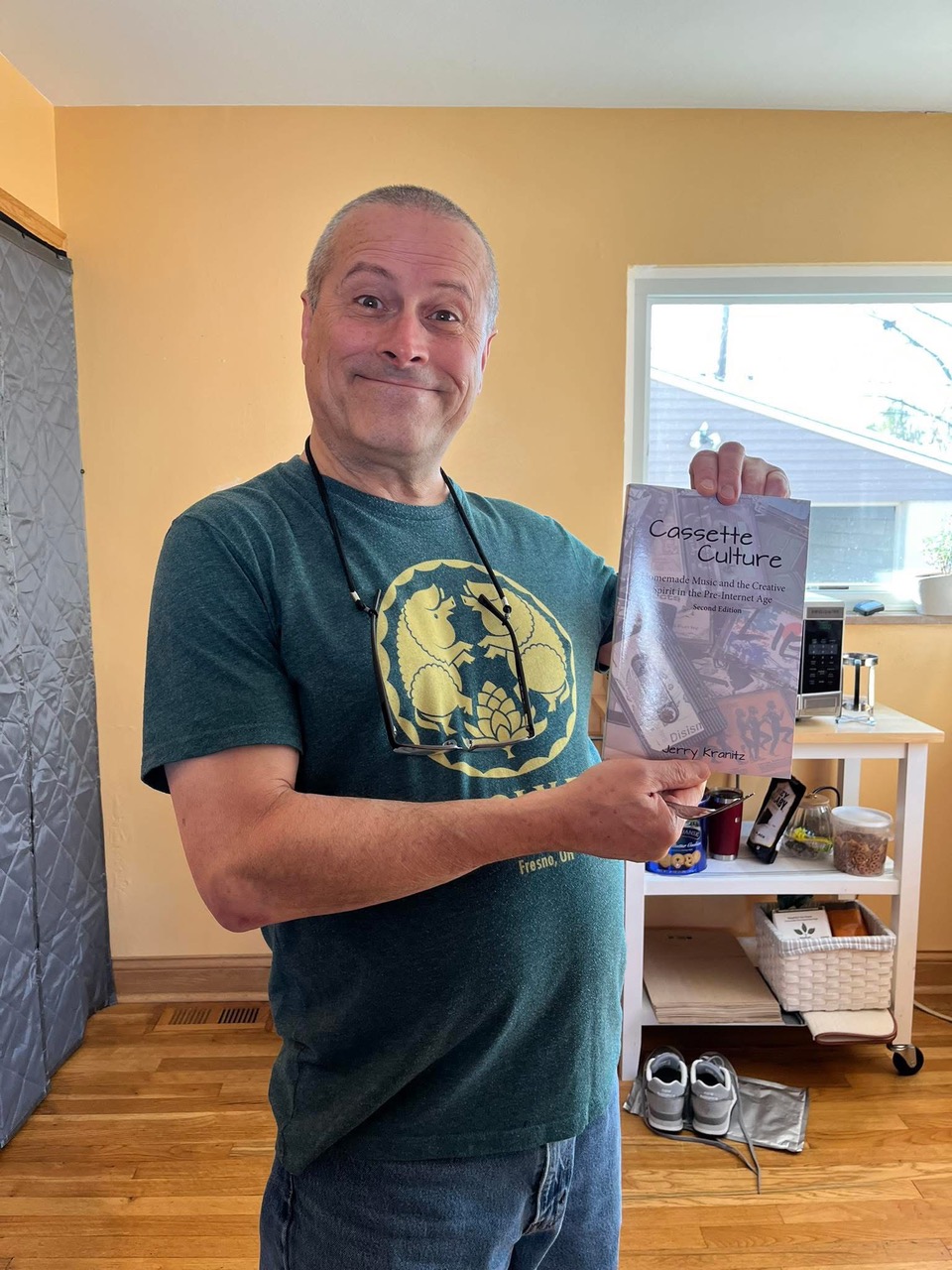
Looking back across all of it, Aural Innovations, the cassette culture research, the memoir, do you feel like you’ve been circling the same core idea from different directions? That mix of community, independence, and people building their own worlds slightly outside the mainstream?
I think so, yes. Just as many of the cassette culture hometaper veterans are still as active today as they were three and four decades ago, I’m still deep into my own writing/documenting activities. I write reviews for the Copy This Cassette! zine. I recently wrote the Introduction to a beautiful hardback that compiled all six issues of Hal McGee’s Electronic Cottage zine (1989-91). I just finished an article for the upcoming 2026 Korm Publishing Annual. I write articles on topics other than music on my website blog. This all occurs far outside the mainstream. It’s a good place to be and where I feel most at home.
Klemen Breznikar
Jerry Kranitz Website / Facebook /