
Ugly Stick: An Interview on the Return of 1993’s ‘Absinthe’ and the Midwestern Underground
In the late eighties, the town of Delaware, Ohio, was a collision of family farms, blue-collar industry, and liberal arts academia. It was the perfect incubator for the twangy racket of Ugly Stick.
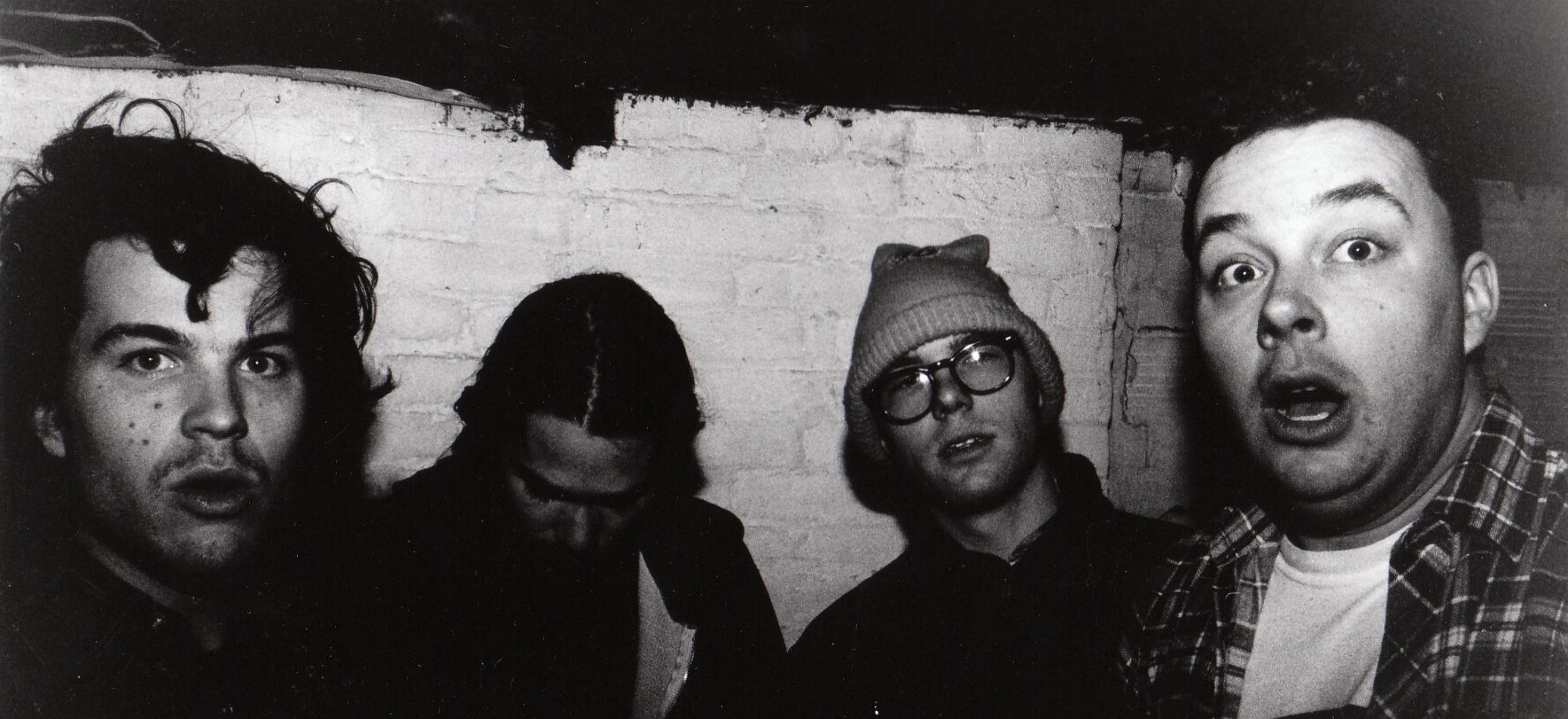
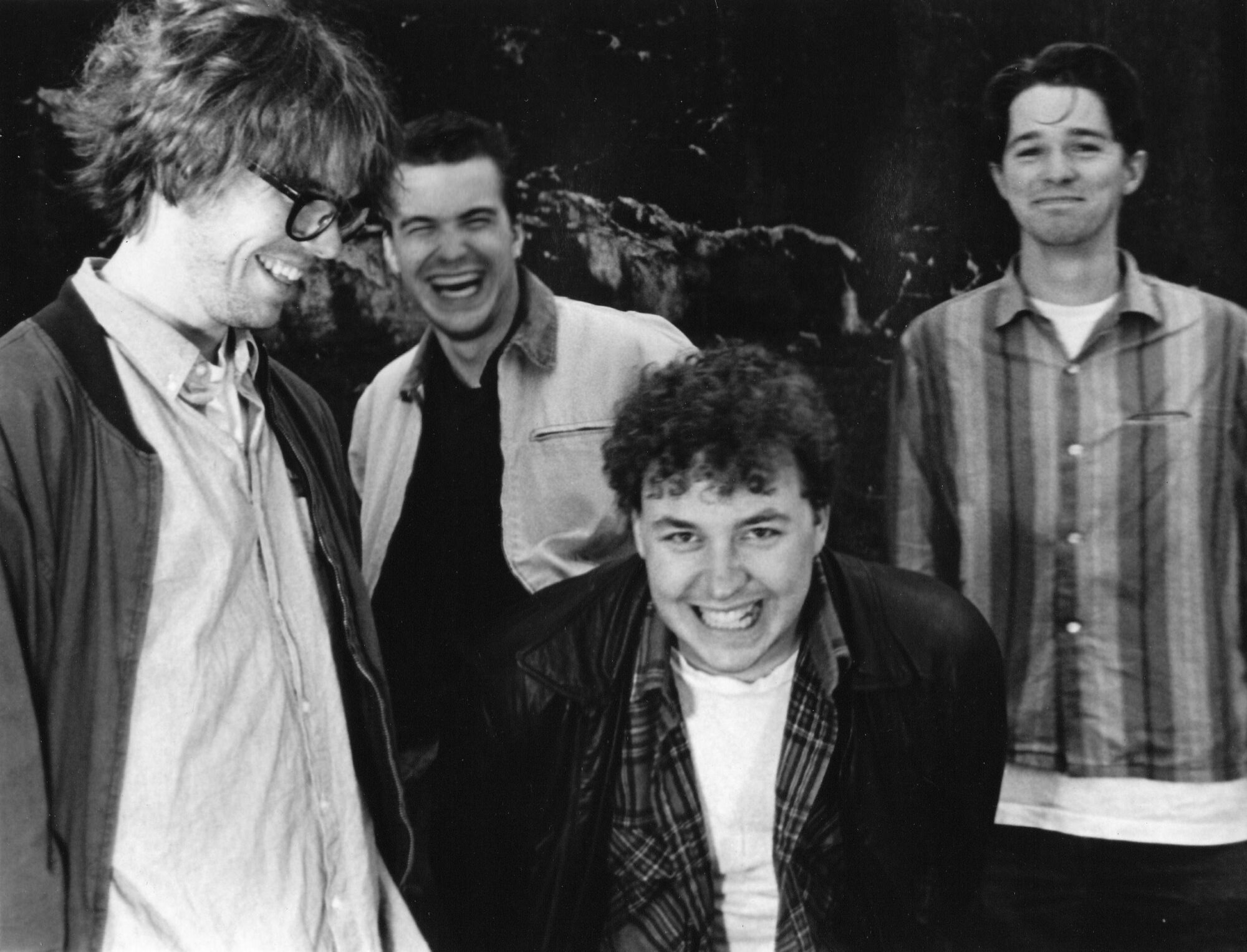
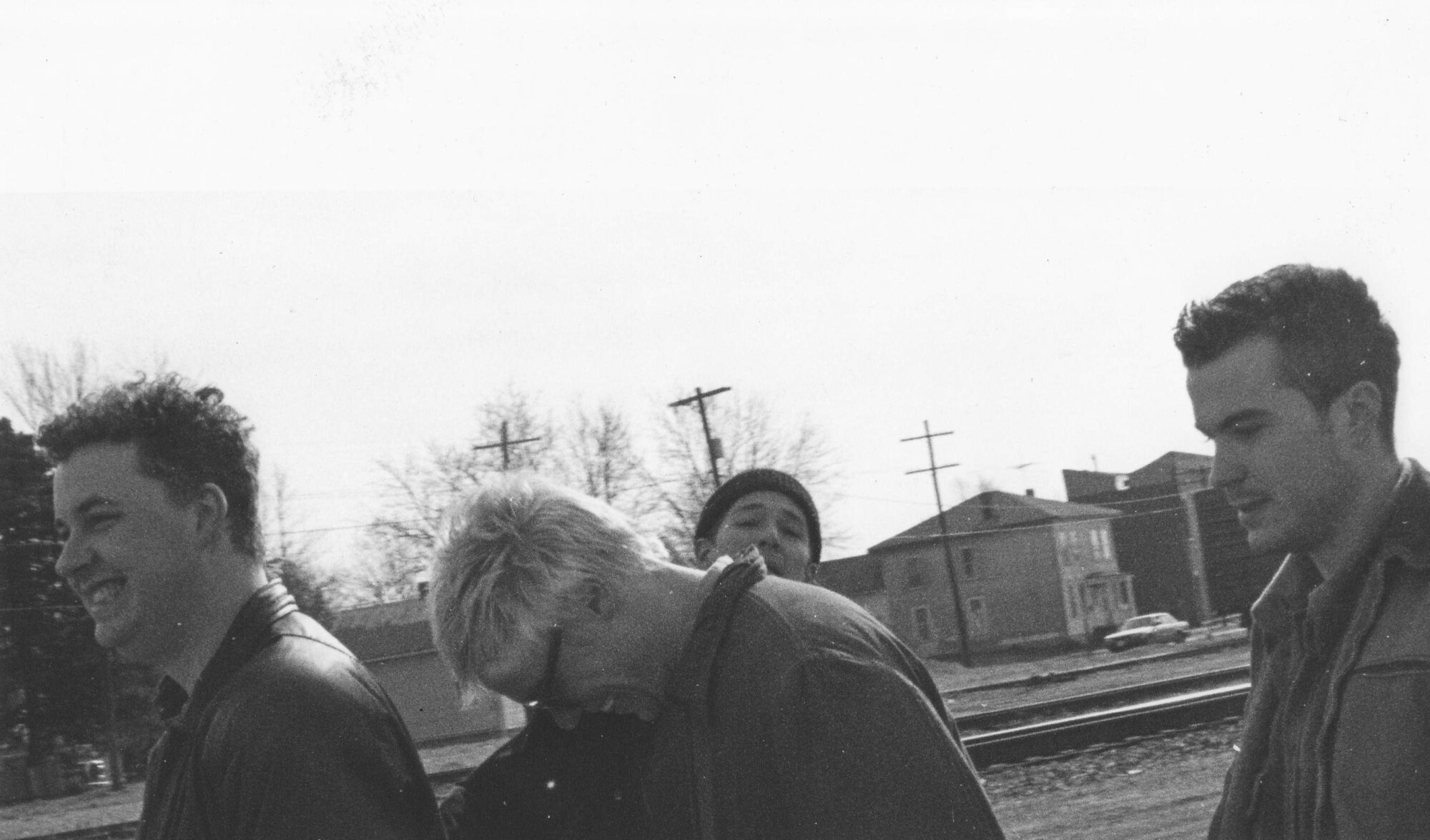
Formed in 1989 by four high school friends fueled by late-adolescent boredom and a shared love for the Cramps and Bo Diddley, the band stumbled into becoming pioneers of a distinct Midwestern cow-punk movement. Their 1993 debut album, ‘Absinthe,’ has just seen a vinyl reissue via Hovercraft Records. Listening to it today feels like stepping straight into the beer-soaked living room where it was tracked on a borrowed eight-track machine. You can even hear a television flickering in the background of the original takes.
Ugly Stick never set out to define the Columbus sound or wave a flag for the post-industrial Midwest. They were four guys trying to crack each other up while pushing their amps to the limit. Guitarist Al Huckabee points out that their songwriting was an honest attempt to navigate their immediate world. As Huckabee recalls, singer Dave Holm believed their goal was “to make sacred the normal things all around us.” They found their muse in grain elevators, railroad tracks, and dates at the local Pizza Villa.
The music on ‘Absinthe’ balances garage nihilism with undeniable melodic craft. It documents young men seeking broader horizons, treating the titular drink as a metaphor for the perfect poison that helps people escape a small town. With this new vinyl pressing featuring forgotten session outtakes, a new crowd gets to hear the unpolished friction of Huckabee and Holm’s dueling guitars. It remains an unpretentious, vital slice of American underground history that still kicks like a mule.
“We were bothering the neighbors with our loud music and going on dates to the Pizza Villa. That’s where we’re from, that’s what we’re made of, and we’re just trying to find the beauty in that.”
Time really flies. It still feels like the 1990s were just around the corner, yet so much time has passed. You formed in 1989 in Delaware, Ohio. Could you share what the music scene was like back then and what life was like in your town at that time?
Al Huckabee: I agree that time moves strangely these days! Thanks for asking about our hometown of Delaware, OH, as it is one of the main forces that shaped Ugly Stick’s music. The town was pretty small, maybe 20,000 people, and an interesting mix of agricultural (family farms still existed back then), light industrial (pronounced: blue collar), and academia (a sizable liberal arts college). These different stripes made for some interesting cultural tensions and certainly informed our outlook and our worldviews.
We were inspired by bands like the Cramps, X from Los Angeles, and of course all the great Chess Records artists like Chuck Berry and Bo Diddley, but when we started writing our own music it was twangy. It was raucous in the way you’d expect from four young guys in a small town agitated by Middle American late adolescent ennui, but it was also rural. We were making our own music so it was a dive into the things we shared. The members of the band had overlapping tastes in music to be sure, but we also had this common upbringing; had the same teachers in school, swam in the same town swimming pool in the summer, went to the same school dances, etc. So it was effortless for us to celebrate and skewer this particular place and that cultural moment.
Were you involved in other bands before forming Ugly Stick?
Yes, we all went to the same high school and were learning how to play music at the same time. David Holm (vocals and guitar) was the first one to buy an electric guitar, and Eddie Mann (bass), Jeff Clowdus (drums) and I quickly followed suit. At first, we were largely in different high school bands. I see now, in hindsight, that we were pretty lucky to be from a town where there were bands forming, playing, breaking up and reforming in different configurations.
After high school, Dave and I went off to Antioch College in Yellow Springs, OH for a year and that was a blast in terms of playing in bands. The way that school is set up, the students are constantly moving from the college to work-study experiences all over the country every three months and then moving back to the campus. It created this very vibrant scene where we would constantly be forming new bands which could only last for three months. It was a pretty inspired time because every band you formed was born to die. The idea was just to get something cool going with this group of people, write some good songs, put on some shows, and then three months later the deck gets reshuffled and you can start over with a new group of people. A fun exercise and lots of good times, but eventually Dave and I got enough of a foothold with our songwriting that we wanted to form a band that would stick together.
Whose idea was it to bring the band together, and what is the story behind the name?
Dave was living for a time in Albuquerque, NM, and I got a postcard from him saying he had an extra bedroom and did I want to come out there for the summer. I took a Greyhound bus and brought my guitar and we spent a lot of time writing songs. We had a four-track but we didn’t have any amps out there. When the summer ended, we had a handful of songs we liked and we headed back home to Delaware, OH. We lived in a large, rather empty blue house and set up our amps in the living room and started playing our new songs loud. It felt good to try them out with the throttle open. We had known Jeff and Ed for years and years, and so it was pretty natural that it all clicked when the four of us started playing together. We already had the friendships in place, Ed and I had always been in high school bands together, and Jeff was so talented on drums and vocal harmonies that it was pretty easy to see we had something going on that we wanted to keep.
The band name comes from a Bo Diddley song called ‘Say Man’. The song is pretty great, it’s Bo and his maraca player Jerome Green trading insults over a musical track. “You’re so ugly your Mom had to put a sheet over your head so sleep could slip up on you”, that kind of thing. Insult comedy. In one of these exchanges, Jerome says “You’re so ugly you look like you got whupped with an ugly stick”. I had never heard the expression before, but it’s like a mythical stick you can beat someone with to make them ugly. At least that was our interpretation.
I would love to hear about how those first songs came together. What was it like writing and performing music in a small town back then?
The playing part was pretty easy. When we were in high school there was this cool old auditorium with a proper red velvet curtain and lighting equipment that seemed like it was from the 1940s. Backstage was really sort of Jules Verne. There were always talent shows so as kids you could play a song there. When Dave and I were a little older and starting to write our own songs, I remember we played at an open mic night at the college. High school bands would play on the sidewalk in front of the record store when there was an arts fair, that kind of thing. The band Ed and I had in high school played our first show in a barn. It was a sixteenth birthday party. There was no “scene” per se but there were these outlets.
To me, the writing was the more mysterious thing. Dave is really good at harmonizing, so he and I would sit down with a little idea and try to turn it into something catchy. On the early songs it’s funny because we are constantly switching off who is singing the melody and who is singing the harmony. This has something to do with total ignorance and something to do with playing to our strengths. That is the beauty of the whole exercise. We’re really just trying to crack each other up, just being ourselves and getting some idea, some emotion, or some strangeness across to the crowd. The entire goal of our songwriting is to make something we like, that sounds cool, that might be memorable, and that expresses something that matters to us regardless of how minute or profound.
Could you tell us about Bluehouse Records and what led to the recording of ‘Absinthe’?
Bluehouse Records was born of necessity. Since our small town did not have an underground scene and we were not connected to any semblance of the music industry, we got inspired by our friend Noah Phipps who lived a few doors down. Noah was the first person I knew who made cassettes of his own music and sold them or gave them to friends. This seemed to me like a revelation. I grew up thinking real music was something that came out of the radio, something you bought on a record at a store. Noah understood that he had written some cool songs and recorded them and he was not waiting for a middle man. So we did the same thing. We had the songs, we had the recordings, we found a tape duplication place and made the “covers” on a photocopy machine. Liberation.
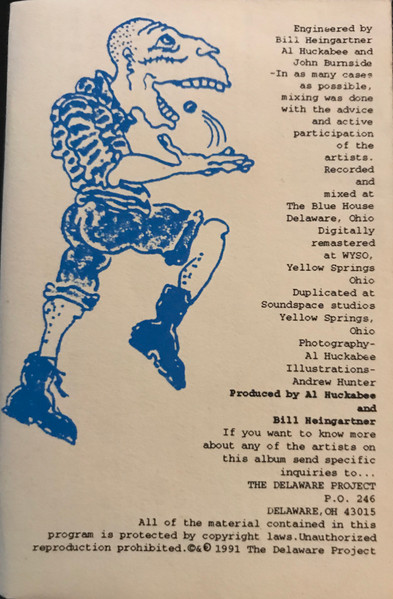
By the time we recorded ‘Absinthe’ in the basement of our blue house, we had borrowed some 8-track open-reel gear and we had a couple of compressors and a Lexicon reverb. The recording process was a blast. Since we lived and recorded in the same house, the whole thing was kind of a carnival. Our friend and Producer/Engineer Billy Heingartner did most of the hard work of recording and we were free to mess around and experiment. There were no limits on time and we were all pretty focused. When the album was finished, I had the idea that we should take the futuristic step of releasing it on CD. So the imprint of Bluehouse Records was, at its inception, largely Ugly Stick pretending we had a label while also trying to get on a label. But since that original release, it actually turned into something! Billy and I recorded and released a sort of comp album of local bands called ‘Delaware…Where Humble People Come to Pray’ on the Bluehouse label, and Dave did the same for a number of Columbus, OH bands that were in our orbit like Bigfoot, Heifer, The Townsmen, and others.
“Somewhere therein is a thread that connects the absinthe drinkers of late 19th-century Parisian cafe society and tipsy, lovesick Midwestern alt-country punks.”
I imagine there must be a story behind the consumption of this beloved drink. The drink itself suggests something mysterious, bohemian, and mind-altering, yet the music feels so grounded in Midwestern grit. What connection were you trying to make between that mythic, sometimes dangerous spirit and the sound you created?
I totally agree! To me, absinthe does indeed suggest “something mysterious, bohemian and mind-altering” and I think I found that really intriguing. When I was young, the iridescent liquid in the glasses of the Degas paintings was pointed out to me and I found the whole thing mysterious. The people in the paintings look so dejected and dissipated, but the absinthe is the object of desire. They want it but it hurts them. I had this notion at the time that people sometimes sought what I call the “perfect poison”. For me, the word “absinthe” stands in for the idea of anything anyone does to take them elsewhere.
I think the desire I was feeling at the time had to do with getting out of a small town, a desire for broader horizons. That seems generally healthy, but there is also a flip side which is more of the eddy that the “Absinthe Drinkers” appear to be caught in in the painting. I worked in a metal shop once with a welder whose eyesight was failing because of his prolonged exposure to the extremely bright arc that the welding process produces. Since he couldn’t see well, he had to weld without wearing the needed light filters in his mask. By forgoing the filter, he was exposing himself to even more light. Perfect poison. It’s really disturbing and really human. I (almost) hate to jump from Degas to the Simpsons, but in one early episode, Homer Simpson says “Ah, beer: the cause of and solution to all my problems”. That says it better than I could. Eddie Mann tells the story that I showed up at his house one day with my guitar and a six-pack and I told him we were going to write a Johnny Cash song. We did not. But we did write the song ‘Absinthe’ which wrestles with some of these same ideas. The song lyrics mention pulque which is a nod to the idea that in every known human culture, there is a socially acceptable way to change one’s consciousness. Somewhere therein is a thread that connects the absinthe drinkers of late 19th-century Parisian cafe society and tipsy, lovesick Midwestern alt-country punks.
Do you have any memorable stories from recording your debut album?
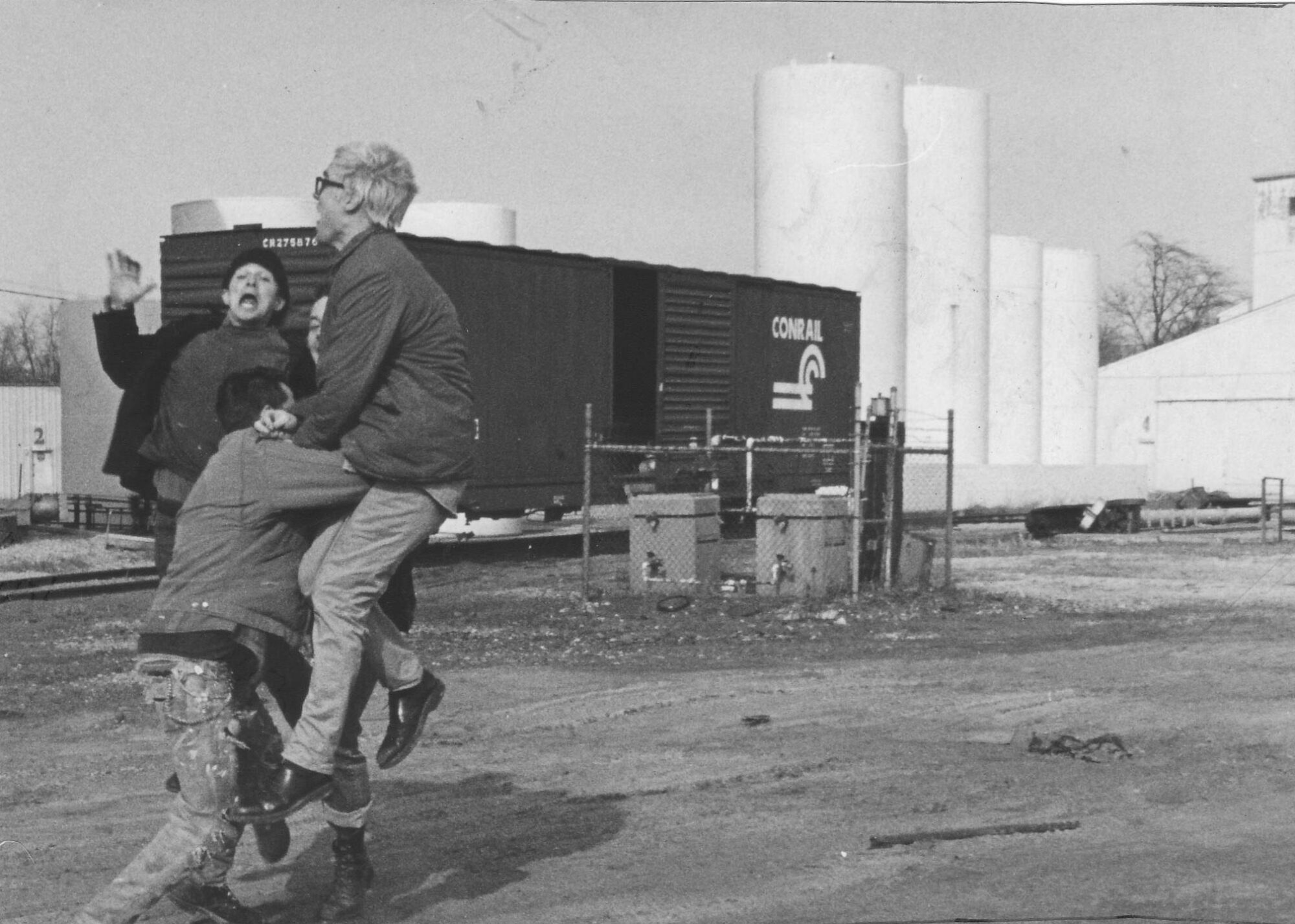
Yes, and I’m happy to mention that Ugly Stick’s debut album will soon be reissued on LP as well. That album, while a scrappier affair, is full of songs that are all based on real-life adventure and misadventure. The first song, “Hardly Believe”, recounts a night when Eddie and I were walking home from a party and got jumped by some guys we went to high school with because they thought we were college students as opposed to ‘townies’. No one lost any teeth but it was depressing.
Another song on that album is about a family-run funeral home in our town called Robinson Funeral Home. The song is titled ‘Stiff Family Robinson’ and plays on the idea that if that’s your line of work then “business never could go bad”. The coda to that story is: we recorded the song in about 1990 and when my Dad died 30 years later, I went with my newly widowed Mom to Robinson Funeral Home to make the needed arrangements for my Father’s remains. When we all sat down to speak with the funeral director, Mr. Robinson, he looked at me and said, “Oh, Al Huckabee, the famous songwriter” in reference to this little ditty. The funniest part to me was that I don’t think I wrote one note of that song. I think Dave wrote it with our friend Tom Hallenback, but I was happy to take the heat for it from Mr. Robinson. Life in a small town. The album was recorded in our living room and you can tell. There are moments on it when you can hear some odd things in the background. Someone turns on the TV at one point, I guess unaware of the recording in progress.
How does it feel to hear the remastered version of the album now available? ‘Absinthe’ is being released on vinyl for the first time and includes unreleased bonus material. What was it like revisiting those forgotten session tracks or live recordings after thirty years? Did you discover anything in the outtakes that shifted your memory of what the band was trying to achieve back then?
Getting the album ready for remastering and sifting through the “forgotten” tracks was a pure joy. The remastering of the original songs went very well and happily the band was all in the same place when we got reference tracks, so we got to sit down and listen to it together. That was really satisfying and brought back a lot of good memories. Earlier, Dave was visiting me in Brooklyn, NY when we started looking for the orphan tracks; some live, some previously overlooked, some that had been released only as a 7″ so had never made the jump to digital, and that was a fun process. Lots of hilarious moments. Some “oh man, we have GOT to put that on the album” and some “oh man, I hope no one EVER hears that”.
Hovercraft Records from Portland, OR really, really went out of their way to make this LP version be everything we could have hoped for. They used all the original artwork and in doing so put us back in touch with the photographer, our friend Amy Rathbone, who had done the original photos. Some of the original photos were lost to time, so Hovercraft amazingly came through with a photographer who works in a similar style whose photos meshed seamlessly with this stuff from previous decades, so that was a hoot.
Was there ever a playful or ongoing tension within the band about balancing the raw edge with the more polished, catchy side of your music? Which song on ‘Absinthe’ do you feel captures that balance perfectly?
Yes, embarrassingly so. While I never detected a tension between the balance of raw vs polished (we are all pretty easygoing on those topics), when I listen to ‘Absinthe’ I can hear myself being a prick in the mixes. It is my abiding hope that this is not discernible to the average listener, but way back when I used to try to make my guitar louder than Dave’s guitar for self-serving, jerky adolescent reasons. I am proud to say that in the intervening decades my friendship with Dave has evolved commensurate with our age and, dare I say, maturity? I have also grown up as a songwriter so now I’m able to make decisions based on what will make the song better. But back then I was more than happy to make decisions based on what would make me louder than Dave! Complete idiocy. When I hear it now, I hear Dave’s guitar doing something complex, nuanced, melodic, and here comes my guitar like Frankenstein’s monster stomping through.
To the last part of your question, there are examples of when we get the balance right. ‘Crib Death Reel’ is perhaps my favorite example of that. Dave pretty much wrote that song which I think is really, really good and I got to knit some slide guitar into it and I think the whole thing stands on its own. “Boss” is another one that feels to me like we got all the proportions right. It feels like Ugly Stick being Ugly Stick, which is the goal. Oh, and I must add one more anecdote. One of the orphan songs on the ‘Absinthe’ re-release is called ‘El Beso Del Rey,’ and when listening closely to the remastering job I was really taken with how well the two guitar parts worked together. I texted Dave to tell him I thought we must have been really vibing with each other on that recording because the guitars meshed so well. Dave texted me back to tell me that I had played both guitar parts on that recording. Embarrassing.
Looking back, did you ever feel in 1993 that the album was landing on deaf ears, or that critics were struggling to define your sound?
Well, if the critics were struggling to define our sound, they would be in good company because we were never able to quite define it either. At the time, we were really happy to be getting press at all.
Your lyrics often evoke images of rural, slightly crumbling America, from collapsing barns to carnival posters. Was there an intentional effort to capture this often-overlooked side of the country? What aspects of American life were you hoping to preserve in the music of ‘Absinthe’?
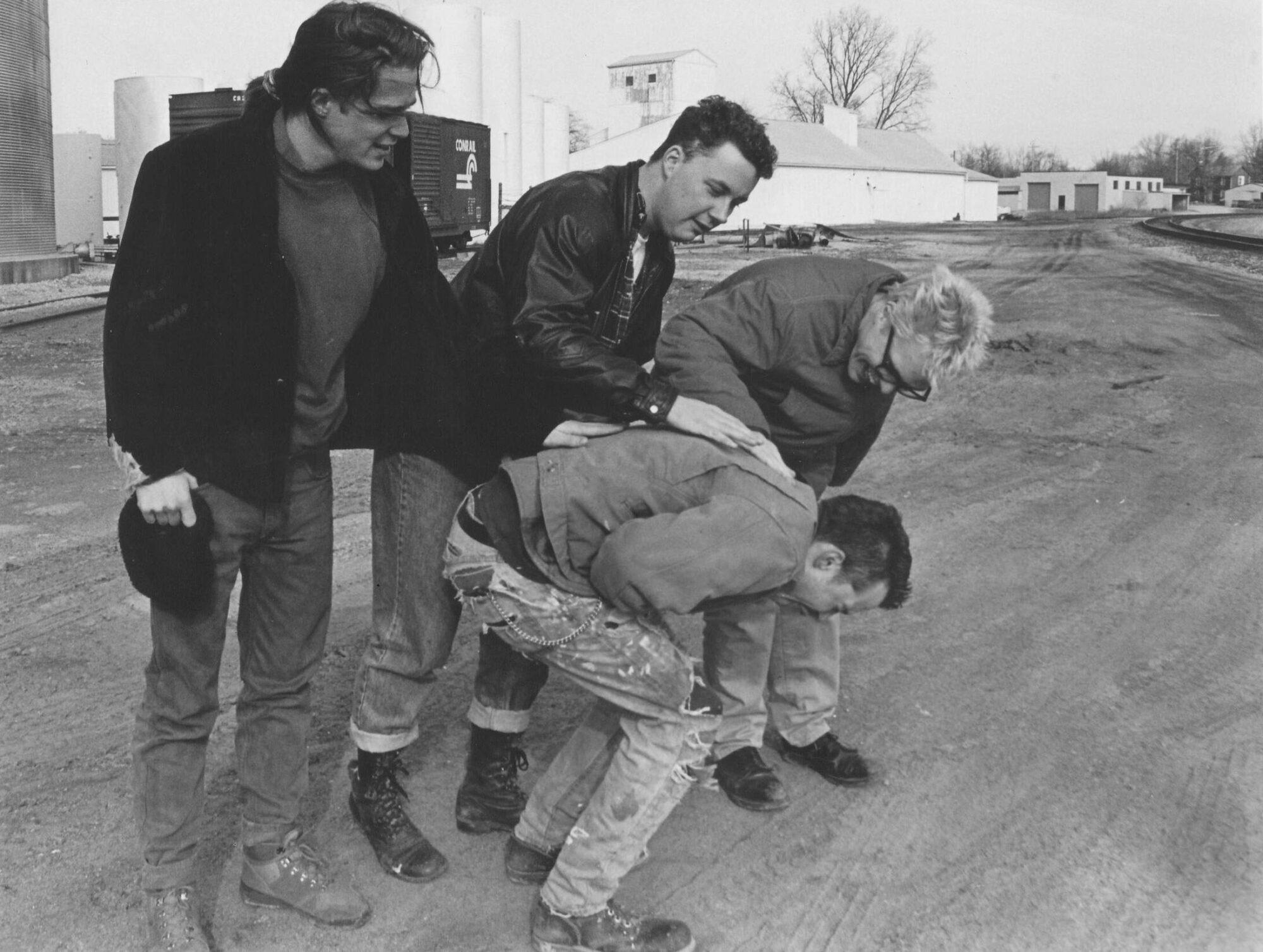
We were not intentional about that. That’s half the fun of the band, we’re not that intentional about anything. We love to get together and make music and we don’t feel super responsible for making it sound this way or that way. It’s a bit of a game to see what comes out. We were not trying to wave some flag about the postindustrialized Midwest, that’s just all we had to work with! We were doing what all artists do; living in the world and trying to make some sense of it. Dave Holm said once to me that what we do is try to make sacred the normal things all around us. We were surrounded by grain elevators, railroad tracks, and farm fields. We were bothering the neighbors with our loud music and going on dates to the Pizza Villa. That’s where we’re from, that’s what we’re made of, and we’re just trying to find the beauty in that.
And finally, what currently occupies your life?
I moved to NYC about 30 years ago and my wife and I have been here ever since. The rest of the fellows live in central Ohio and our friendships remain strong and important to us. My joke is that Ugly Stick puts out a new record every 15 years. Fifteen years after ‘Absinthe,’ Hovercraft released ‘Still Glistening,’ so it’s just about time for us to make a new one. We’ve already got a handful of demos we’re excited about.
Klemen Breznikar
Ugly Stick Facebook / Instagram / Bandcamp
Hovercraft Records Website / Instagram / YouTube