
AVA Trio Interview: Mapping the Lunar Cycles of ‘Lunae’
AVA Trio bypasses the standard recording studio for their fifth album, Lunae. They drag their acoustic gear deep into southern Italy to record inside a centuries-old Apulian trullo.
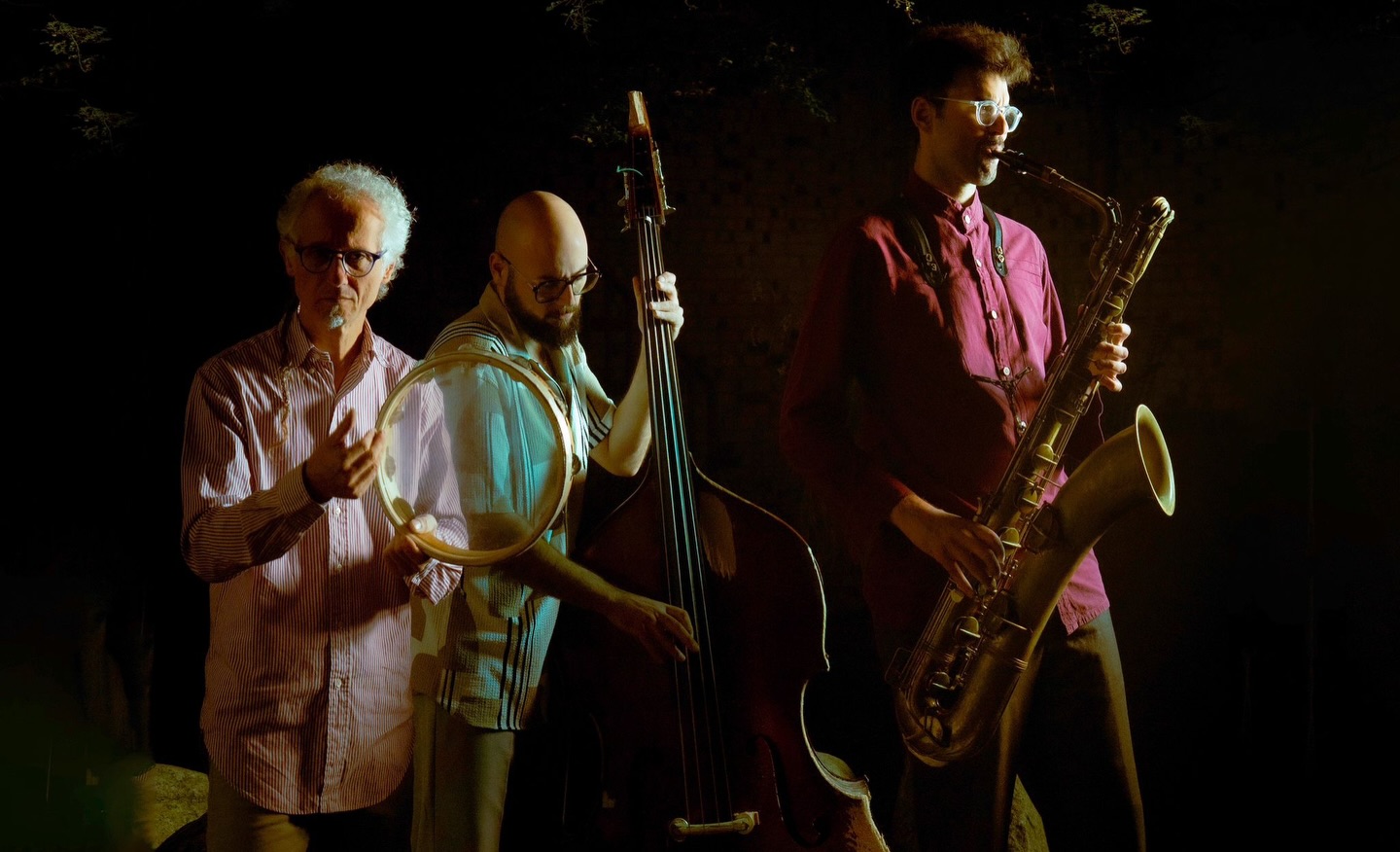
This conical limestone chamber acts as a massive fourth instrument for the group. Baritone saxophonist Giuseppe Doronzo, bassist Esat Ekincioglu, and percussionist Pino Basile use the bizarre natural resonance of the room to map a sonic dig. The music tracks forgotten moon rituals across six distinct lunar phases.
The trio’s “Mediterranean Avantgarde” sound takes a dark, site-specific turn here. You hear the raw acoustic weight of the stone walls absorbing and reflecting every scrape and breath. Doronzo coaxes microtonal groans from a prepared baritone saxophone. Basile abandons standard time to manipulate the friction-based cupaphon, while Ekincioglu grounds the ancient ritual with thick, concrete pedal points on the double bass. The tracks breathe in cycles of sound and heavy silence. AVA Trio digs right into the dirt to pull up something primitive, resonant, and strange.
“The music takes a moment to enter our world”
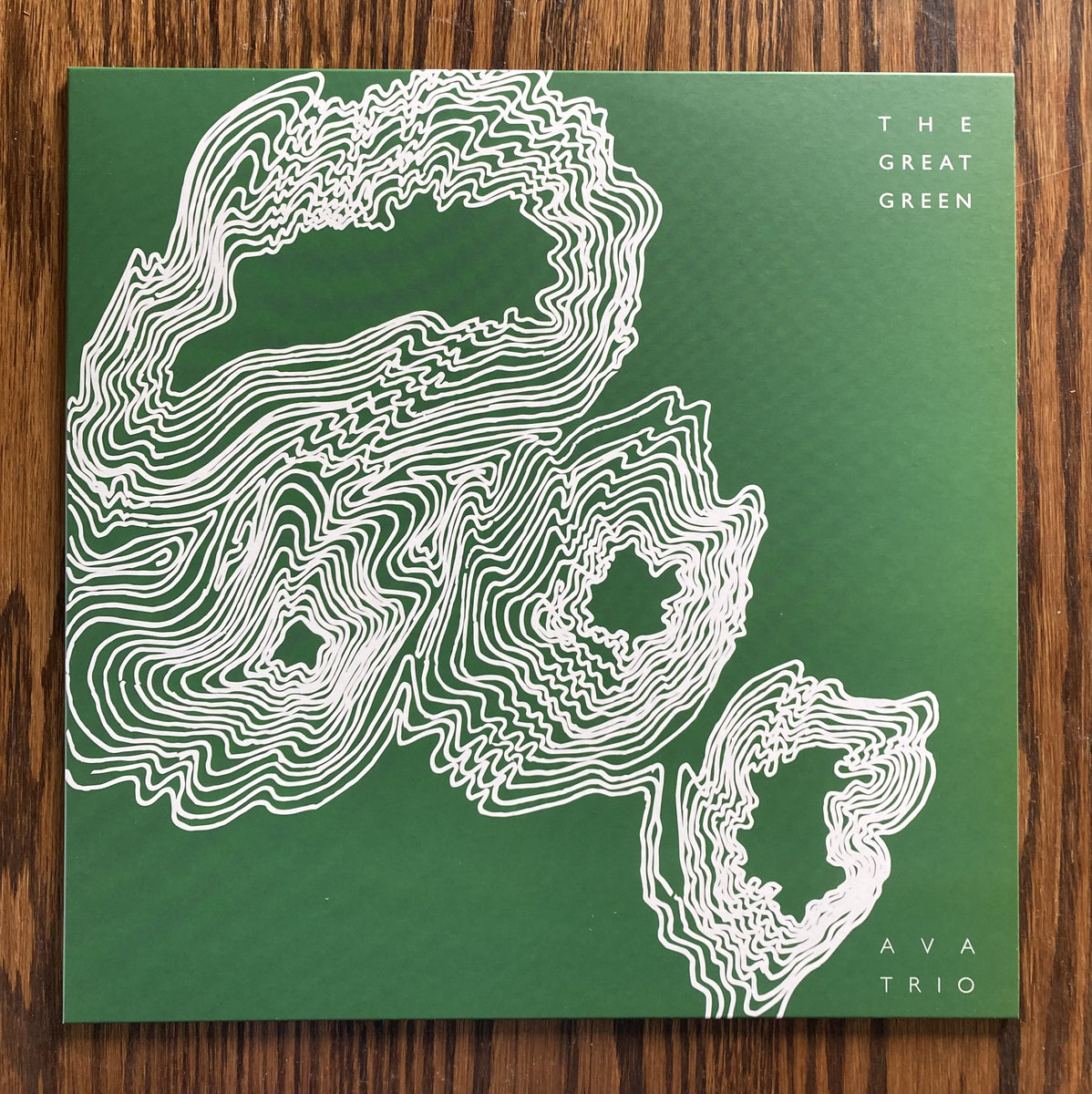
The entire premise of ‘The Great Green’ hinges on the ancient Greek linguistic trick where the sea wasn’t called ‘blue.’ That’s a deep dive into philosophy. When you started composing, how did you actually translate that lack of a color… that concept of perceptual blindness into a sonic event, and where in the album’s structure does the music finally earn the right to reveal the color blue?
Giuseppe Doronzo: The music I wrote for this album was inspired by different islands in the Mediterranean Sea that I visited. My relationship to the color blue and its many hues came from direct visual and multisensory experience; the music was a consequence of that. I often draft music while traveling, and I feel as if these compositions have been waiting to be picked up.
I tried to convey a feeling of perceptual blindness starting with ‘Timanfaya,’ a composition in the form of a saz semai found in Turkish classical music. It’s characterized by verses that return to a chorus. The structure is fairly straightforward, but in the middle of the piece I shift the melodic frame of the verse into a progressively intense percussion solo. That solo moves into a freer, more open musical space—a disorienting field—while still drawing on its accumulated kinetic energy.
The form also extends in duration, breaking the balance established up to that point. In a way, it closes the traditional structure while leaving you with a sense of disorientation—yet still within a sonically familiar space. The music finally unfolds the infinite hues of blue in ‘Tsamikos.’
You’ve laid out a clear, almost mythological, narrative arc for this album: escaping the Maze, landing on Timanfaya, the rescue. Considering maqam music often feels more cyclical and atmospheric than linear, how did you manage to impose such a distinct, forward-moving, “psych journey” structure on those traditional modal frameworks without breaking their essence?
Giuseppe: I think it came from giving the right amount of weight and respect to this musical tradition, while also staying within the improvised music realm—interplay and sonic exploration. It’s almost a back-and-forth, crossing between these worlds and constantly finding balance, like a funambulist walking a rope: focused, in trance.
The notes mention a moment where the hero is “stripped of all the senses besides ‘touch’.” That’s an incredible sensory concept to translate into sound. For the ‘Maze’ section, what precise sonic or instrumental technique did you use to make the listener feel a lack of sight, smell, and hearing, leaving them with only a sense of tactile exploration?
Giuseppe: While composing ‘Maze,’ I had in mind a traditional rhythm called düyek and elements of makam Segah, while also using the conduction technique inspired by Butch Morris, among others. I assigned specific timbral characteristics to each section I cue with hand-given numerical signs and related symbolic gestures. This can create more dramatic shifts—emptiness, chaos, brightness, or darkness—while remaining within a hybrid textural and timbral environment. Every time we approach it, it takes on a different dramaturgy.
Giuseppe, you’re bouncing between the jazz weight of the baritone saxophone and the microtonal, drone quality of the ney anbān bagpipe. They seem like instruments at war with each other. How do you reconcile the distinct temperaments and techniques of these two worlds within a single track? Does their conflict define your “Mediterranean Avantgarde” sound?
Giuseppe: Coming from jazz and contemporary music, I developed a microtonal language on the baritone saxophone, also incorporating the makam system with a focus on Turkish music. My aim, therefore, was to create a neutral territory where both the ney anbān and the baritone sax could coexist, bringing their timbral characteristics into a wider realm.
My approach to the Iranian ney anbān is also not strictly idiomatic. Beyond its folk context in Bandari music, I like to draw from the Turkish tulum or the Greek tsampouna, and even from analog synth–based music. So more than a conflict, I’d say Mediterranean Avantgarde is a bridge—an open, exciting environment for mutual learning.
Pino, your percussion work with frame drums and tamburello is foundational. We’re not talking about a standard jazz drum kit. How do you intentionally use the specific non-metric phrasing and rhythmic complexity of Mediterranean folk percussion to establish a language that either subverts the time or operates completely outside of a traditional pulse?
Pino Basile: As you can hear, the percussion setup I use is far from a standard jazz drum kit. When I play with the trio, what happens is an alchemy—a blend of techniques, styles, and languages inspired by the Mediterranean area, sometimes touching on African influences and sometimes Indian ones.
That said, it doesn’t always emerge in a rational or pre-planned way. I let my taste and musical influences flow, together with my technical and creative abilities, and I put them at the service of the trio.
The instruments I use aren’t the result of a fixed, preconceived choice. On the one hand, there are percussion instruments from the Southern Italian tradition—and the Mediterranean tradition more broadly—which I try to approach with a creative attitude rather than simply reproducing rigid, traditional patterns. On the other hand, there’s an ongoing search for unconventional materials and timbres, added over time, that continue to enrich the setup as part of a slow but continuous work in progress.
In a trio that’s so focused on modal texture and distinct melodic lines, you’re naturally running light on traditional harmony. Esat, how do you approach your role on the double bass to create harmonic tension or implication… to give the ear the feeling of harmony without relying on the conventional scaffolding of chord changes?
Esat Ekincioglu: Indeed, our music is modal by nature. My first goal is to provide thick, concrete pedal points and drones. That contrast between a static drone and the livelier melodic lines and percussion above it creates harmonic intensity.
I also love playing counterpoint lines with Giuseppe—landing on new intervals and creating new harmonies and colors. I tend to think of harmony as “things working together” rather than in purely theoretical terms. For example, I like complementing whatever is happening in the improvisation with a texture, a gesture, or a soundscape, either in parallel or in contrast with my two friends. We also like switching these contrasting roles within the trio.
“Mediterranean Avantgarde.” If you had to define it for a skeptical musicologist, what are the two or three non-negotiable, technical characteristics that make it different from, say, European Free Improv with some ethnic influences, or basic ethno-jazz fusion? What’s the ‘Avantgarde’ part doing?
AVA Trio: We think the difference lies in three things: the focus of the compositional material, our improvisational approach, and our specific instrumentation. More broadly, it’s the cultural context we build—and the relatively concentrated geography we draw from. Our individual backgrounds, and the places we live, shape the concept and the sound. In a sense, the axis of Southern Italy, Turkey, and the Netherlands sums up where this music comes from.
Even the term “avant-garde,” if we want to be precise, doesn’t fully describe the AVA experience. Every label is, in the end, only an approximation of reality. What we do is interpret—through a creative lens rooted in the present—signs that come to us from the past: traces that sometimes surface in the music, and other times in the culture of Mediterranean peoples.
You’re weaving together improvised music and the highly structured world of maqam. When you perform, where exactly is the line drawn between the spontaneous and the scored? Do you have specific cues or signals that let the players know when they are transitioning from the written map back into pure free exploration?
Giuseppe: We perform our music by heart. We spend time with the written material—and with the textural and timbral concepts behind it—in both rehearsal and live settings, until the structure and the improvised parts begin to blur. We know that learning music by heart is demanding nowadays, but we believe it’s necessary to reach a certain level of focus, freedom, and trance during performance. Depending on the piece, we use sonic or visual cues to move forward. I also like the space between cues.
What aspects of your methodology—in composition, your choice of non-traditional instruments, or the philosophical conceptualization of this album—do you feel are your most significant challenges to mainstream musical convention?
Giuseppe: Conceptually, we decided to keep AVA Trio an acoustic project. The bigger challenge to mainstream convention is the language we’ve built: we work with usul/odd meters, modal (makam) melodic development, improvisation and experimentation that requires deep listening, exploration of the instrument, and real-time decision-making.
It’s always fun and interesting to perform for heterogeneous audiences—for world music audiences as well as free improv or jazz audiences. These scenes find something familiar in our performance, but they’re also challenged by it, and there are always opportunities to connect and deepen that connection during a concert. We often hear from listeners that the music takes a moment to enter our world, but it gives a lot in return.
Having used this project to push so deeply into the intersection of language, perception, and music, what’s the next logical (or illogical) step for “Mediterranean Avantgarde”? Where do you see the AVA Trio sound heading after this epic journey to find the color blue?
Giuseppe: After ten years of friendship and musical collaboration with Esat and Pino—five albums and almost 200 concerts across 20 countries worldwide—we’ve decided to open our world to new colors and special guests. Up to now, we’ve had opportunities to invite, for longer collaborations or one-off projects, an array of fantastic musicians, including Kudsi Erguner, Ezgi Elkermis, Pourya Jaberi, Bart Maris, Aron Horvat, Sjahin During, and Simon Leleux.
Inviting musicians who have been exploring their own paths between traditional and improvised music is a precious addition to our sound. Right now, we’re working closely with the amazing Belgian trumpet and tuba player Bart Maris, as well as the cimbalom wizard Aron Horvat from Hungary, on two new albums.
Do reveal things about your upcoming album ‘Lunae’…
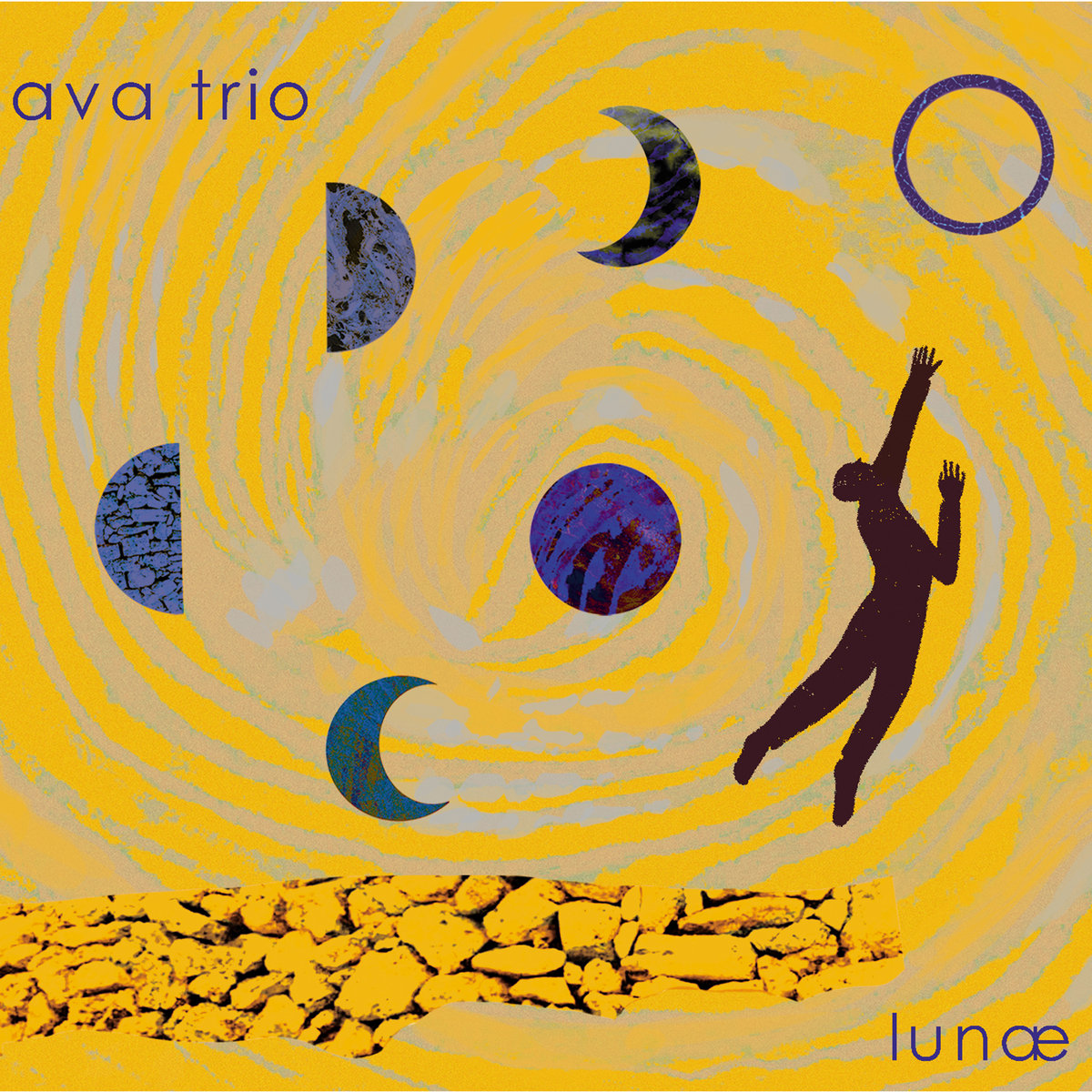
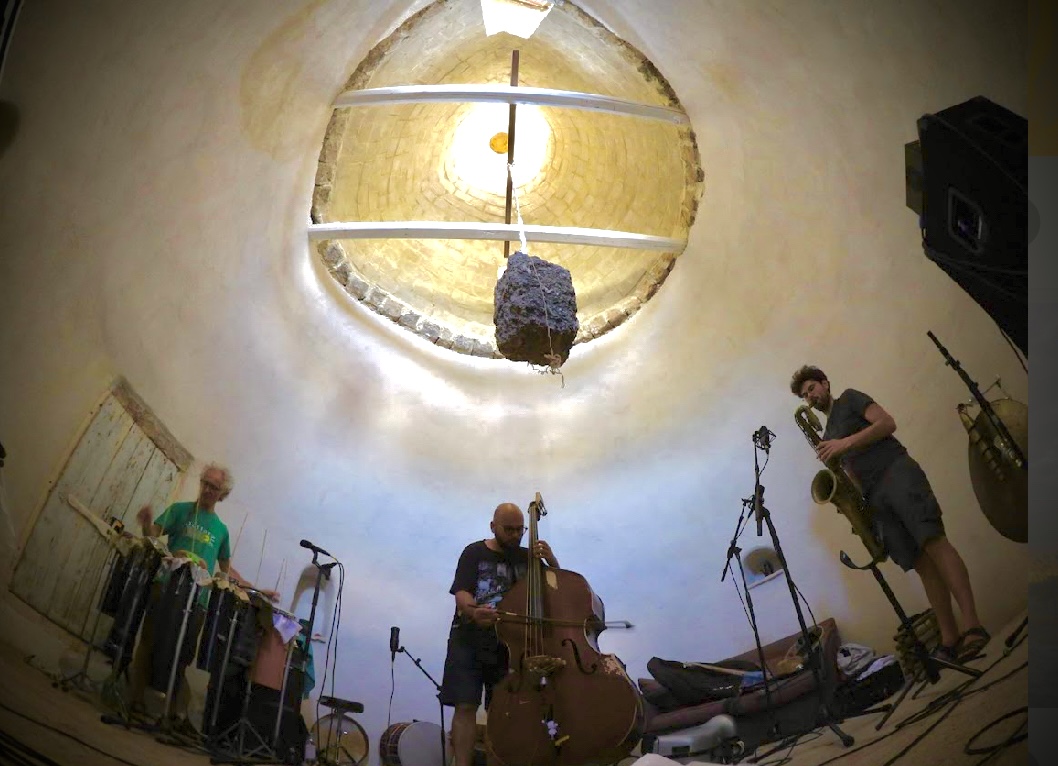
Giuseppe: Our fifth album, ‘Lunae’ (TORA Records), was recorded in Apulia, southern Italy, inside a centuries-old trullo—a conical limestone chamber that, with its special resonances, became the band’s fourth instrument. Lunae (Latin: “of the moon”) is a site-specific, archeo-musicological exploration of sound and space. Distilled from my composition ‘Sabbatical,’ the album traces forgotten moon rituals in which sound and silence return in cycles, across six lunar phases.
It was a unique experience to spend a couple of days and nights in this gigantic trullo. We prepared the baritone sax and the cupaphon in a way we had never done in our previous recordings. You’ll hear new sounds in our palette—new possibilities and new paths to explore.
Klemen Breznikar
Headline photo: AVA Trio | Photo by Roman Ermolaev
AVA Trio Facebook / Instagram
Tora Records Bandcamp