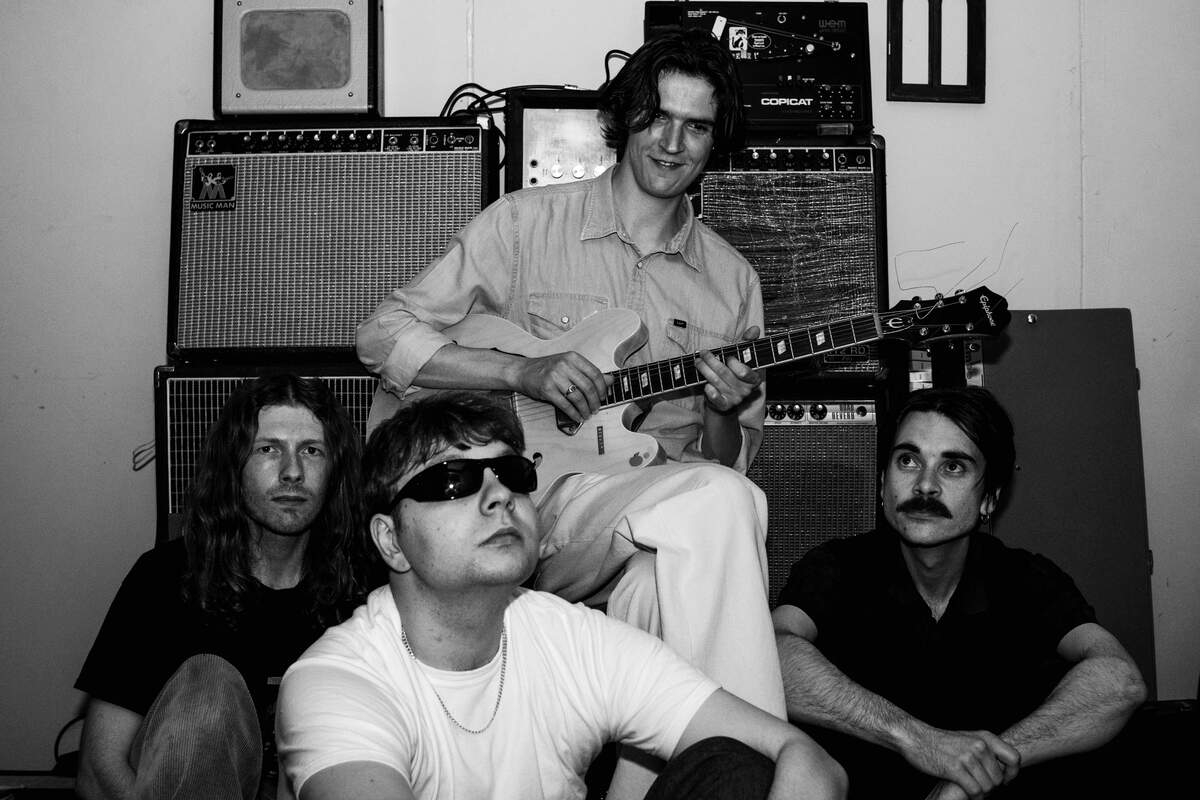

School Disco Share ‘What You Do, What You Say’ and Break Down New Album ‘SDIV’
Brighton quartet School Disco blends repetitive rhythms with psych improvisation to create an organic sound. As they prepare to release their new album, ‘SDIV,’ on February 20th via Krautpop!, the band shares their final single, ‘What You Do, What You Say.’
While the track boasts a complex structure, arguably the album’s most intricate arrangement featuring Fender Rhodes and a euphoric closing jam, its lyrical birth was surprisingly spontaneous. “I just decided to take the approach of setting up a microphone and singing what came to me,” explains frontman Rory, noting that the recording captures a raw, first-take energy. This improvisational approach mirrors the song’s existential questioning: does it really matter what is said versus what is felt?
It was the hardest song for the band to write, yet the most rewarding to play, perfectly capturing their evolution toward a darker, more introspective, yet undeniably “live” sound. Before diving into our interview below—where they discuss shedding their sci-fi skin for personal reflection and the magic of analogue synthesis—turn up the volume on this slice of authentic, fuzz-drenched magic.
“I think good heaviness comes from the absence of heaviness”
‘SDIV’ feels like you’ve let the shadows in a bit more, you know… not in a moody-for-the-sake-of-it way, but in a “we’ve actually lived a bit since the last record” way. Was there a specific moment in the last couple of years where you realised the new material was naturally drifting into darker territory?
Rory: I don’t think it was intentional at all for it to be dark; however, I do think it was intentional for us to make a more introspective record for sure. Then I think it just came out like dark. I think it’s maybe just been a part of us all growing up a little bit and going through various things in our lives. That’s not to say our lives are bad in any way — we all live in a massive way, no more than anyone else living in these awful political times. I think my lyrics on our other records have been about bad politicians and the terrible political times we live in; however, I had always dressed them up in this sci-fi vibe as a way of reflecting the absurdity of how bad these politicians are. Maybe we’ve just shed that a little, although there are still aspects of that. There is also more of the other guys on the record than there was on the last one from a songwriting perspective, and I think that adds a push and pull to the record that’s really nice while still being cohesive and having everyone’s mark on the songs respectively.
Harry: I’m not sure I feel the darkness as such, but when compared to the other SD records, I think we definitely allowed this one the chance to be more languid in its overall sound. Personally speaking, I really wanted to emphasise the ride in dynamics more. I love playing all the heavy, fast stuff, but it was a lot of fun to dial it back and have some more space in the arrangements for some of the songs.
You tracked most of the album live, which gives it this lovely human wobble. Do you remember a particular take where you all looked at each other afterwards and thought, “Yeah… don’t touch that, that’s the one”?
Rory: Yeah, there were a couple of moments like that for me, I think. When we all lock in and are together, some magic really happens. For me — and this may be because I’ve been watching back and editing some of the footage from the sessions — I think we were just locked in for ‘Simulation III.’ I think we have most of the actual take that is on the record on video, so those stick out. I guess the reverse of this is ‘What You Do, What You Say.’ I remember that being really hard to record and definitely took us the longest. I’m glad you’ve said it has a human wobble to it because it’s my goal for our performances to come across as real and authentic to us.
Harry: Yeah, ‘What You Do, What You Say’ was a fucker! We spent a while on it the first day of recording and had to come back to it the next to get the final take down, but I’m happy with it now. ‘No One’s His God’ felt pretty certain when we did it. It’s got a fair amount of movement throughout, and it felt like we captured what that song needed. Rory and I dubbed the solos together the same evening, and they were also a breeze; we were naturally pretty dialled into it.
The push between “krautrock” (damn, I hate that word, although it’s easier to describe what I mean) repetition and psych looseness feels really instinctive on this record. When you’re jamming, how do you know when to keep circling an idea and when to let it explode into something bigger?
Rory: I think it comes from the writing process. I think a big part of the writing process is us just jamming, so when we spend longer noodling and exploring some ideas, it’s obvious to us which ones we are going to jam and play around with live and in the studio. We’ve also played so many shows together, and improvising and extending things is a big part of what we do. I love the “no two performances ever being the same” kind of vibe, and I think we’ve developed a musical language where we know where we are all going without having to speak about it.
Harry: We’re very comfortable playing with each other and kinda live on doing things on the fly (we rarely, if ever, write setlists, for example). As well as musical cues, I think we have an unspoken way of knowing when things should come to a close. You just feel it when it’s right.
Laurence mentioned that ‘Simulation III’ just presented itself out of nowhere. Do you get many of those lightning-bolt moments as a band, or was this one a bit of magic?
Rory: I can’t speak for Laurence on this one, but it feels all over the place for us, to be honest. ‘No One’s His God,’ or the basic bones of it, for me felt easy to write. On the other hand, we really laboured over the complex chords and harmony in the middle of ‘What You Do, What You Say.’ However, the end jam was easy. I think when you know, you just know, but also you gotta know when something’s worth a bit of time too.
Harry: For ‘Messiah of Evil’ it came pretty easy, and I had a pretty clear vision of how I wanted the song to be arranged, so we got it down pretty quick. Some of the other songs were a bit more laborious to finalise, but if you kick the idea around long enough, you’ll get there. We don’t stress too much about when things should be done — it’s either done now or we’ll chip away at it.
There’s a tenderness on this album that peeks through the fuzz and the drones, almost like someone letting their guard down mid-trip. Was it nerve-wracking to bring more personal ideas into a band?
Rory: I think good heaviness comes from the absence of heaviness. I think, intentionally, the heavier bits on the record make the more tender moments seem lighter, and the darker and heavier bits seem heavier. I think balance is good and a part of life, and yeah, it all has to exist together while complimenting each other well. I want people’s guard to be down so then we can build up to something heavier or smack them in the face with a wall of fuzz.
Harry: I agree with what Rory has said; as I mentioned earlier, the play with dynamics on this record was definitely something we were aware of. In spite of the heaviness of our music, we’re all softies really! We’re big fans of the usual fare of 60s/70s pop, and are involved in other projects that manage with less intensity than School Disco, so I think allowing some mellower moments on the record wasn’t too hard of a transition for us.
You’ve shared stages with a really eclectic list of bands. Was there a particular night on tour — be it good, bad, or gloriously crazy — that shifted how you thought about yourselves as a band?
Rory: I think playing alongside Population II in January of this year was a pretty incredible experience for me. Their use of equipment in unconventional ways and the way they all approach and write with their instruments is extremely inspiring and really helped me approach things differently. It actually gave me the inspiration to finish mixing the record, to be honest. The use of keyboards in particular was very inspiring. I really, really hope we get to play more shows with them, as every time I’ve seen them, they just get better and better.
Harry: Yeah, playing with Pop II was pretty great. We supported Dr. Feelgood at Chalk a while ago, which was a lot of fun. Although it was a disaster of a show, really… my drum kit and stool basically fell apart halfway through, but we had a giggle.
Rory: Yeah, and you went through your bottom snare head — that’s what I remember most about that gig!
The synths and textural bits on SDIV feel really lived-in, like they’re part of the band now rather than add-ons. Did any of those sounds come from happy accidents in the studio, or were they things you’d been carrying around in voice notes and half-ideas for ages?
Rory: Getting into analogue synthesis during COVID was a big ah-ha moment for me. I love a lot of electronic music or bands that have a lot of electronic and analog synth elements to them, whether it be Wendy Carlos and Mort Garson or bands like Stereolab and Air. I just really, really locked in and now have the ability to draw out these sounds from my synths easily and get them to fit in a mix properly with some nice processing. Synths are really, really fun and I didn’t really have to labour over them — it felt easy to translate them from the back of my brain as an idea into the thing you hear on the record, with a healthy amount of experimentation because, where’s the fun without that?
Harry: The synths are pretty much all Rory, but we all love a wobbly wobble.
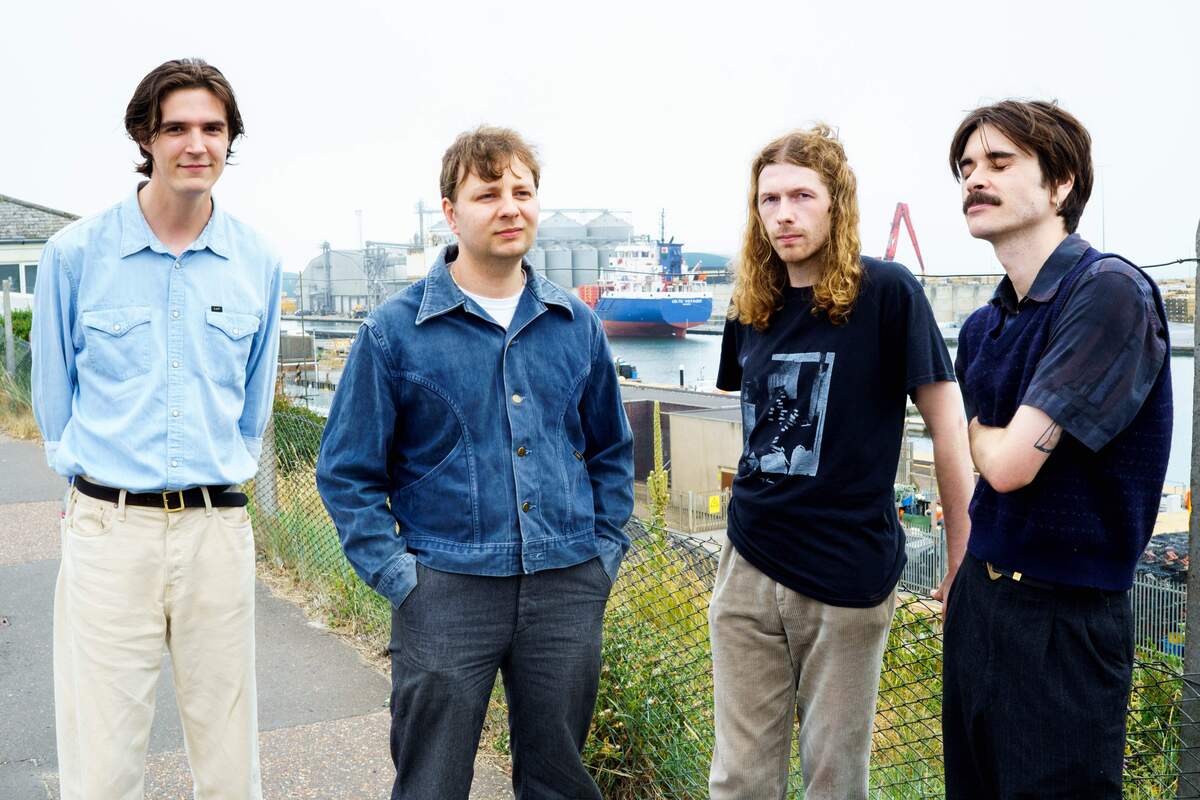
Every album marks a little turning of the page. When you think about where School Disco started, what part of the original spark still drives you, and what have you gladly left in the past?
Rory: I think the roots of why the band started are still very much there. We still jam a lot live, play loud, have lots of fun. The band is still made up of close friends too. I think we approach things differently now and enjoy different sounds and music. My goal is to always be pushing forward, getting better, and making music that I enjoy more and more, which I think we achieve. I think the net is wider now for influences also — the band had quite a particular aesthetic when we started, and now we’re trying to include but at the same time reject as much stuff as possible.
Harry: I joined the band past the halfway point, there have been a few lineup changes, but (I believe) this is the longest consistent lineup the group has had. It’s as simple as we have a gas when we play together.
Rory: The main objective of the band is to have fun, and I try not to think about things too much beyond that!
Rory: I’d just like to send out a massive thanks to Jake, Paul, Deb, Akos, Sinners, and the guys at Shycat, plus anyone else who helped us make this record. A massive thanks to you for your support too! Making this record took us longer than the others but was a lot of fun!
Klemen Breznikar
Headline photo: Akos Szoro
School Disco Website / Facebook / Instagram / Bandcamp