
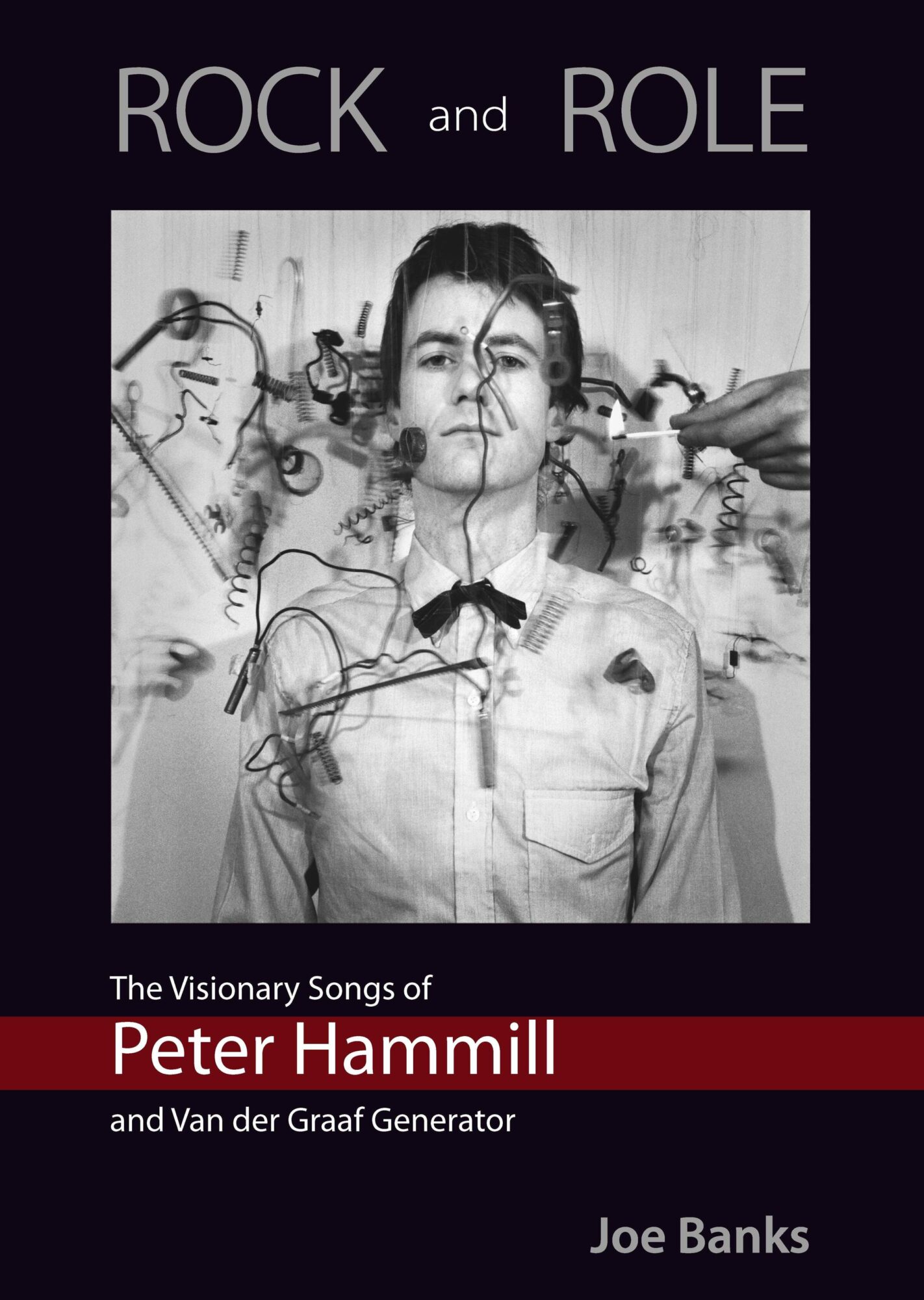
Rock and Role Book: Joe Banks on Peter Hammill, Van der Graaf Generator and the Art of Endless Questions
Joe Banks portrays Peter Hammill as an artist driven above all by questioning, someone for whom songwriting is a way of thinking aloud.
Even at his most ambitious, Hammill emerges as a figure constantly probing free will, faith, love and identity, returning again and again to the idea of life as performance and the self as something fluid and unstable. Banks describes his work as a kind of private theatre, where first-person confession is never straightforward; his songs are meant to examine feelings, not just state them.
This restlessness extends to Hammill’s attitude toward religion and authority. Early rejection of organised belief gives way to broader doubts about whether meaning is inherited or constructed, and whether science can replace faith as a moral guide. What remains consistent is Hammill’s insistence on personal responsibility: the need to think independently, without recourse to fixed creeds.
Musically, Banks argues that Hammill’s complexity grows from narrative instinct rather than technical display. Multi-part compositions function as storytelling devices, shaped by literary ambition and populated by characters and alter egos, closer to short fiction than to instrumental showmanship. Emotional exposure is equally central. Hammill’s willingness to confront discomfort, especially in songs about love and collapse, gives his work an incredible intensity.
Banks is careful, however, not to reduce Van der Graaf Generator to an extension of a single psyche. The band thrives on collective volatility, and its near-chaotic energy becomes part of the drama. What ultimately defines Hammill, in this account, is persistence: an artist compelled to keep working, convinced there is still something vital left to say.
“He’s essentially a man asking questions.”
Your portrait of Hammill evokes an artist simultaneously self-immolating and self-renewing. An extremely creative artist. After spending so long inside his world, do you think that constant questioning is what keeps him going, or what keeps him on edge?
Joe Banks: The short answer to this is emphatically yes! As he’s said himself on many occasions, even in his most complex and ambitious pieces, he’s essentially a man asking questions – whether that’s about the nature of free will and humanity’s place in the universe, or on a more personal level, about how people relate to each other as lovers, as parents, as followers of religions, as members of society, and ultimately as role players in their lives. That’s why he’s such a fascinating artist to write about, because his range of curiosity is vast, and it’s what continues to drive him, I think. He still feels he has something important to express. But while he’s certainly been critical of certain institutions and attitudes, he’s never claimed to have the answers to life’s big questions. He may be an extraordinary writer and performer, but he describes himself as “a stumbler in the dark” just like the rest of us.
Early in the book, you draw a fascinating line from Hammill’s Jesuit education at Beaumont to the moral tension that runs through his lyrics. When you traced that thread, did you find that his religious formation ever truly left him, or does it still echo beneath his work in a kind of secular spirituality?
This is a very interesting observation. Many of his earlier songs in particular are animated by what’s often quite a vehement rejection of organised religion, Catholicism specifically, but at the same time, he’s still struck by the spiritual urge inside us, and how to fill that void if not with religion. This quickly leads to the biggest question of all: if you remove traditional notions of God or an afterlife from life’s equation, what then is our purpose here? Does life have any innate meaning, or is it something we have to create ourselves? In parallel with this, Hammill is highly dubious of the idea that we can just replace religion with science as a higher authority, because it tends to lack a moral dimension. Ultimately, he wants us to think for ourselves – something that ironically he got from the Jesuits – without the need to justify everything in terms of an inflexible credo. There’s also an acknowledgement in songs such as ‘Faculty X’ of our potential to evolve as ‘spiritual beings’ without recourse to religious instruction.
The Manchester years are portrayed almost novelistically, full of ambition and actually a bit of strange luck… from Judge Smith’s theatrical experiments to that improbable meeting with Lou Reizner. When you pieced that era together, how much of it felt like myth-making, and how much simply the momentum of youth?
It is a terrific story how the original Van der Graaf Generator came together and got their first big break, and as with lots of bands’ origin stories, it’s full of happenstance and the unthinking confidence of being young. But the overriding factor is that both Hammill and Smith really wanted it – they were absolutely prepared to go the extra mile to get to where (they thought) they wanted to go. Obviously the fact that Hammill was already a prodigious talent was also pretty important! Still, it does seem faintly extraordinary that two teenagers could just turn up at a record company’s office and wangle themselves a deal, however awful it turned out to be…
You write vividly about Hammill’s partnership with Judge Smith and the early Van der Graaf Generator line-ups, showing how performance art and philosophy (concept) collided. Do you think that early ideas became the model for what Hammill did afterwards?
I think that, even from the Judge Smith days, a sense quickly developed that it was possible to do something within the group format that went far beyond the standard pop world. Of course, this was the period when the idea of being ‘progressive’ was very much in the air anyway, but Smith helped Hammill to think about songwriting and performance in more dramatic terms. And while Hammill has always resisted being seen as any great philosopher, it’s clear that from early on he saw songs as a means of interrogating the human condition and communicating his passions – certainly at the time – for mythology and sci-fi. The fact that he wasn’t afraid to put his education and intelligence on display was also quite unusual. He certainly wasn’t going to be constrained by what other people thought was acceptable, and this uncompromising, pro-intellect approach would become the model for what he and VdGG did going forward.
Your treatment of ‘Pawn Hearts’ and ‘Godbluff’ feels especially vivid, depicting them as acts of self-examination disguised as progressive rock epics. What do you think distinguished Hammill’s approach to complexity from that of other artists in the same era?
I think that a piece like ‘A Plague of Lighthouse-Keepers’ actually came about as a natural development of his lyrical themes and method of songwriting, rather than a deliberate attempt to be self-analytical, or complex for the sake of it. It’s worth bearing in mind as well that, for the first few years of VdGG, Hammill still had quite a strong notion that his musical career was just a springboard for becoming a novel writer, which is how he had originally seen himself. As such, his approach to songwriting was/is quite literary, full of characters and cyphers, and often structured/plotted quite dramatically, like short stories – this of course is reflected in the music he writes as well. So while other progressive groups might have created non-linear, multi-part compositions as a way of showing off their chops, Hammill did it much more as a storytelling device.
Do you perceive Van der Graaf Generator as an extension of his psyche, or as a necessary dialectic that allowed him to externalise and test his own contradictions?
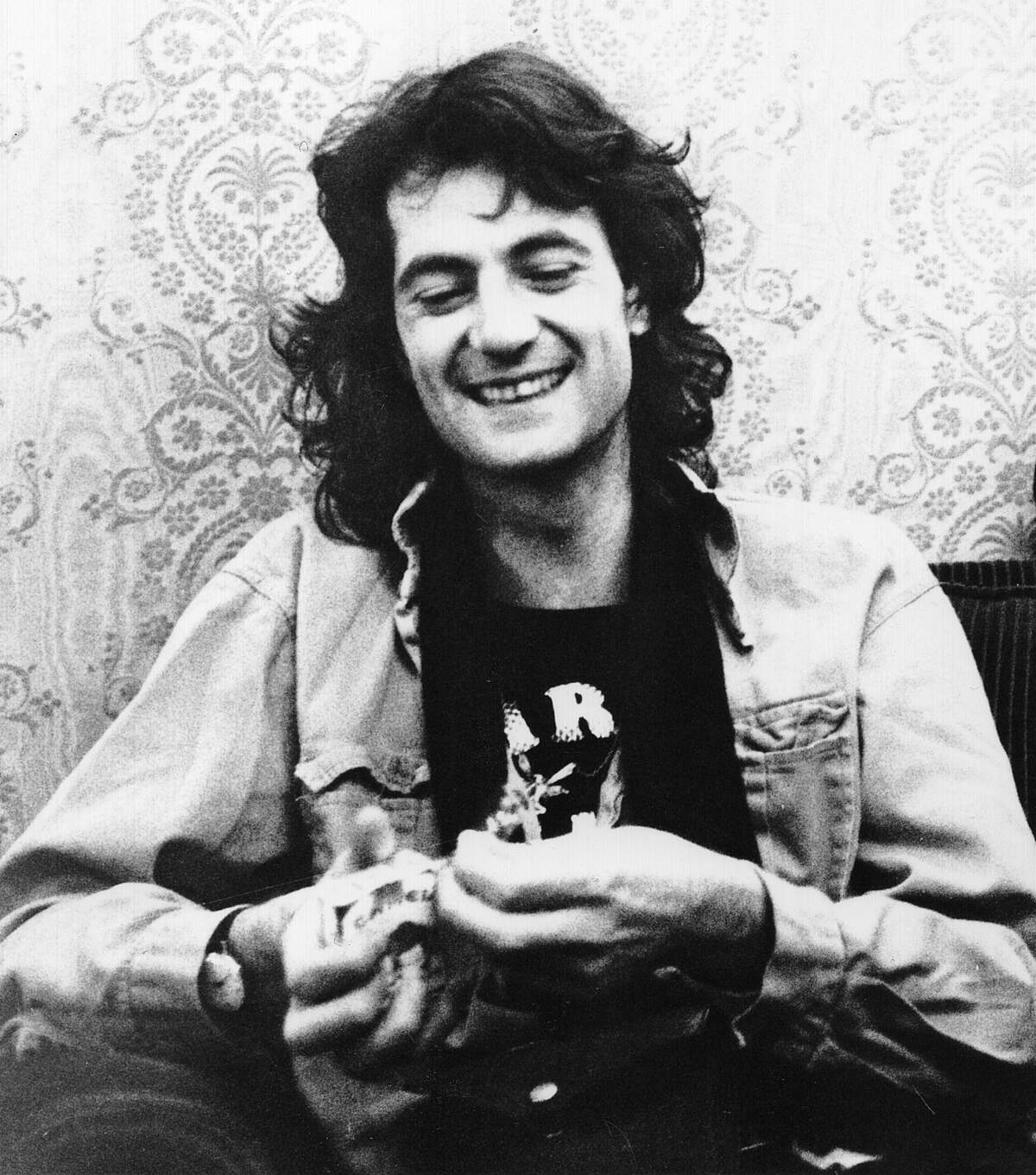
There were certainly times when he referred to VdGG as an entity in itself, something created by its members that is greater than its component parts. So even while he’s the frontman and main songwriter for the band, VdGG has never been just ‘the Peter Hammill group’. Having the other members to bounce his ideas off is an essential aspect of the VdGG experience for Hammill, but it’s what they then do with those ideas that’s more important. VdGG was/is a band that thrives on the collective chaos it generates, both in terms of the element of chance and the sonic signature that is uniquely its own. It’s not just Hammill’s psyche that’s being externalised, but everybody else’s as well. The sense that VdGG are often on the threshold of being out of control is what makes them so exciting, and differentiates them, for the most part, from Hammill’s solo output.
There is a recurring idea in your book that Hammill’s lyrics form an ongoing dialogue with himself, almost a private theatre of voices. As you studied his writing across decades, did you ever feel you were following the development of a single conversation that never quite resolves?
Yes, there’s definitely a strong sense of internal dialogue in some of Hammill’s songs – in fact, he’s said that he often writes songs as a way of working something out for himself. Being in a ‘private theatre’ is a very good way of describing it, as there are numerous references throughout his work of being onstage and performing a role, both figuratively and literally – it’s why the use of the first person can never be taken at face value in his songs, and why my book takes Rock and Role as its title. While it’s become a bit of an overused trope in prog lyrics, Hammill was/is clearly fascinated by the different ways we present ourselves in life, playing “parts” according to circumstance. He’s also at times strongly delineated his creative/performing self as a separate ‘alter ego’ to his everyday self.
On saying all of that, and despite Hammill once describing himself as a “singing actor,” it’s clear that there’s a lot of the “real” Hammill in these songs as well. And as mentioned earlier, the process of questioning that drives so much of what he does is ongoing and never completely resolves, because if it did, that would probably be the point at which he stops.
In one of the later chapters, you discuss Hammill’s home recording experiments and his early move toward total control. Was that a gesture of liberation, or a way of protecting himself from the compromises of the industry that had never quite understood him?
Hammill has explicitly stated that his reason for buying a Teac 4-track in 1972 was because he could imagine a time in the not-too-distant future where the record industry would no longer have any need for him, and this was a way for him to keep making music – how he imagined that music was going to be released in those days is a different matter, but maybe the process of creation was the most important part for him. As it was, Charisma – or certainly Tony Stratton-Smith – did continue to believe in him enough to keep releasing his albums – they might not have completely understood him, but they did stand by him, at least as a solo artist, throughout the ’70s. Part of this may have had something to do with how cheaply, relatively speaking, Hammill was able to produce his albums as a home recorder, while giving him the time and space to experiment and innovate – you don’t get unique albums like The Future Now or pH7 by going into a traditional recording studio.
“Vulnerability combined with intellectual curiosity is the reason why Hammill’s songs about love sound so different”
You write movingly about the emotional architecture of albums like ‘Over’ and ‘Still Life,’ where personal collapse becomes universal reflection. Did you sense, in writing about them, that Hammill’s vulnerability was part of his creative discipline rather than a by-product of it?
Vulnerability combined with intellectual curiosity is the reason why Hammill’s songs about love sound so different to just about anyone else at the time, particularly male artists. There’s plenty of woman-done-me-wrong and I-can’t-live-without-you songs released in the ’70s and beyond, but they rarely offer anything other than chest-beating pain and wounded pride – there’s no psychological depth. Hammill, on the other hand, is absolutely willing to plumb those depths and go to places that nobody else will go. It’s why his songs are so visceral and engaging, but also made/make a lot of people feel uncomfortable – one review of The Future Now even asked whether Hammill had the right to be so “excruciatingly honest” about his private life. But apart from the fact, as already mentioned, that you can’t always take his first-person narratives at face value, I think that writing songs was often a way for Hammill to express his emotions via an ‘acceptable’ medium at a time when men did find it difficult to articulate their feelings in real life – though arguably not much has changed on that front!
The essays near the end of Rock and Role, especially “Still Come the Questions” and “These Mirror Images”, seem to step beyond biography into something more philosophical. Were you conscious of writing a study of human expression itself, not only of one man’s career?
As I’ve said, one of the great attractions of writing about Hammill is the sheer range of subjects that he covers, from philosophical enquiry to social criticism, and ultimately what it means to be alive. Because he’s absolutely not your standard singer/songwriter, you have to properly engage with what he’s writing about if you’re to stand any chance of understanding what makes him tick. Essentially, he’s a renaissance man who’s interested in a lot of things, but there are certain themes around fate, role-playing, communication, human potential, etc., that he keeps returning to. So I thought it would be interesting with the essay “Still Come the Questions” in particular to try to analyse his lyrics thematically, and map how his words have evolved over time. At university (a long time ago), I majored in Philosophy, and also took Sociology and Study of Religion – this combination of subjects made me practically unemployable when I attempted to enter the world of work, but it gave me a pretty good background for interpreting the lyrics of Peter Hammill! But it is very much my interpretation, and many others are available.
You devote an appendix to Hammill’s vast discography, yet throughout the book you treat each work as part of a living continuum. Did you find any overlooked songs or albums that, for you, suddenly illuminated the whole of his output?
The book concentrates on the music he produced during the “Charisma years,” and to be honest, I wasn’t actually that familiar with his output post–the mid ’80s when I started writing it. So there was a real aspect of discovery involved in the process of writing, which helped me to clarify what I liked so much about Hammill’s music, and what I continued to like about it. Some of his later albums may not be as consistently strong as those classic ’70s records, but he’s produced some fantastic material in the post-Charisma/Virgin period which has been seriously underappreciated by both the media and music fans – and it has to be said, by many of his own fans too, who at some point may have stopped listening to his newer releases. Having been guilty of this myself, it was a fascinating journey going through his complete back catalogue, and in the latter part of the book, I highlight some of those later albums which I feel are worthy of particular attention, including ‘Roaring Forties’ (1994), ‘This’ (1998), ‘Clutch’ (2002) and ‘Thin Air’ (2009). If I was to pick out one song that I think is both excellent and illuminates his attitude to life as an artist and a human being, it would be ‘Undone’ from Thin Air, which for me is up there with ‘Refugees’ as one of his greatest ballads.
After living inside this story for years, what lingers with you most? Hammill’s curiosity, his solitude, or the quiet dignity with which he has accepted being both central and peripheral to rock history?
One of the facets of Hammill’s character that comes through time and time again is his sheer tenacity in the face of an often apathetic market, particularly in Britain. Many lesser mortals would have thrown in the towel a long time ago, but he has kept creating and releasing music because he still believes he has something to say. The pursuit of his art has often been obsessional, I’d say – like all true great artists, he is absolutely compelled to do what he does. And while he’s clearly been frustrated that his work hasn’t found a wider audience, he’s never been swayed to change his style just to court success – he’s certainly moved with the times, particularly in the ’80s, but even then, there’s a core of ‘Hammill-ness’ that’s implicit in everything he does. He is quite simply inimitable.

After years spent inhabiting another man’s creative consciousness, what remains of your own critical distance? Do you feel that writing about Hammill has altered your understanding of what it means to be an artist at all?
Being an artist – whether as an internationally renowned singer-songwriter or, in my own very modest way, as a writer – takes a lot of time, and writing about Hammill has really made me appreciate both the physical and mental sub-division of the self that requires. There’s a lot of hard work involved, and for Hammill to have been operating at that level of intensity for nearly six decades now is really quite an achievement. Yet I understand that urge to express yourself, in the hope of communicating something that either hasn’t been said before, or at least not with such energy and determination!
Klemen Breznikar
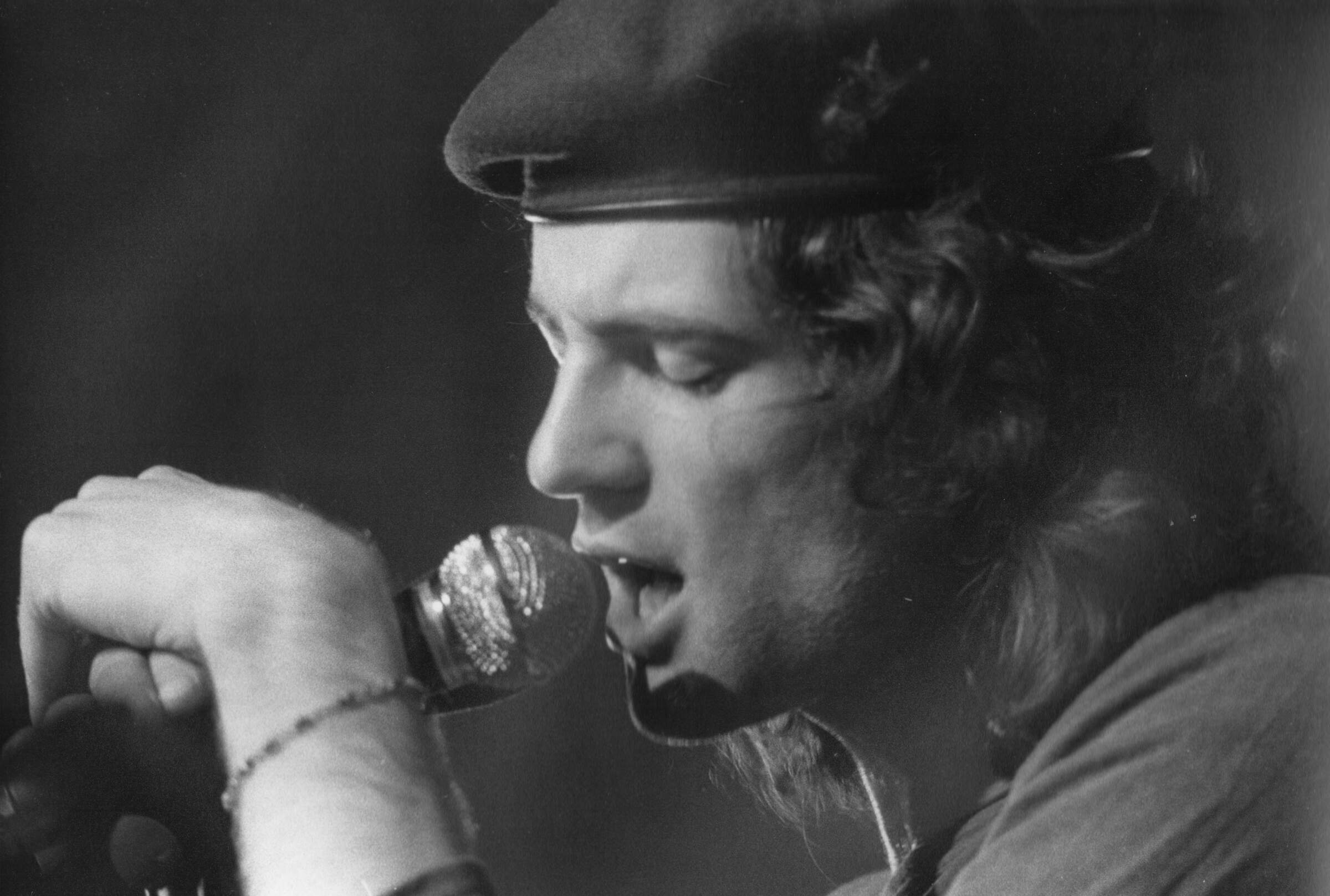
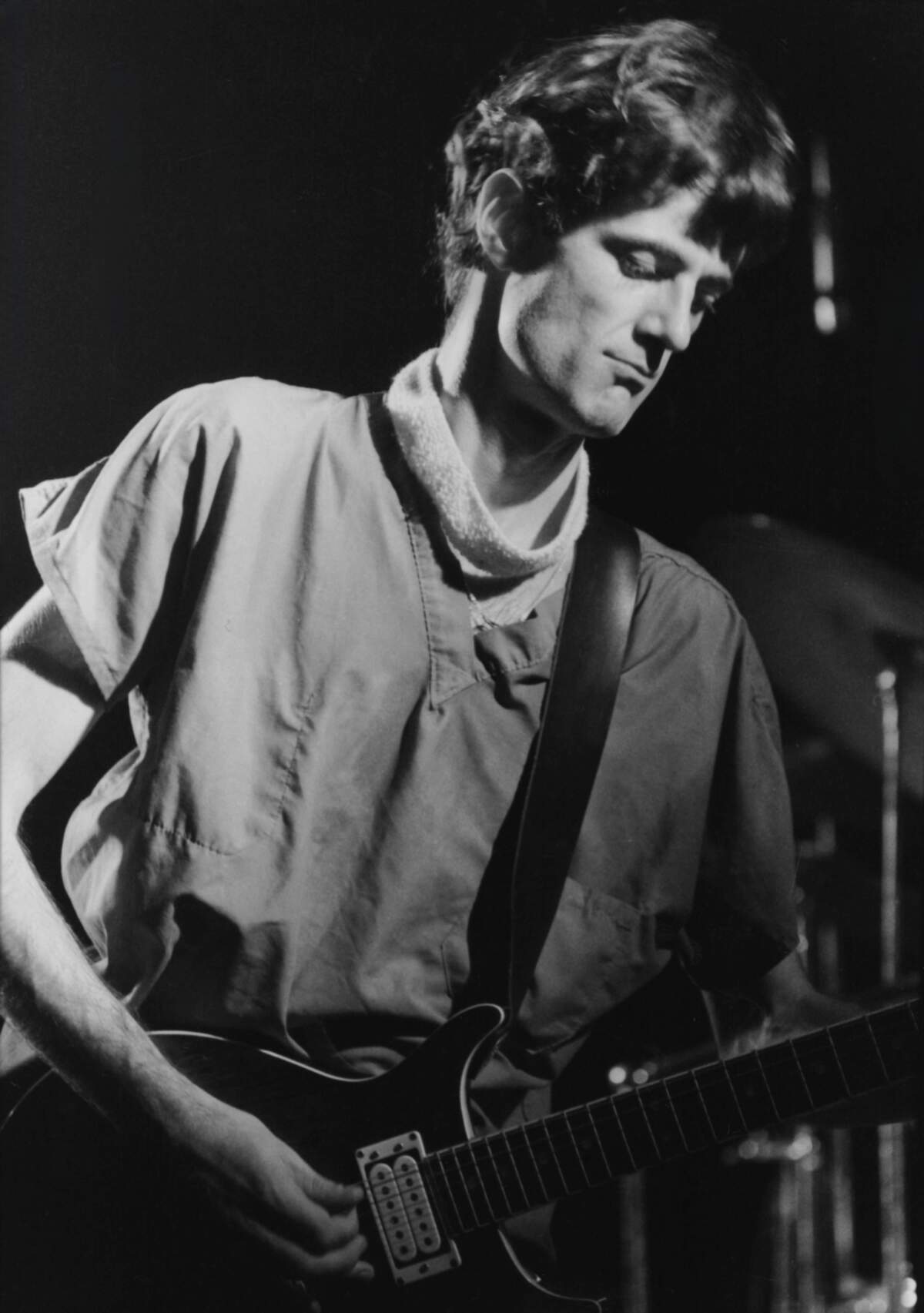
Headline photo: Peter Hammill performs live at the Bataclan in Paris, France, on March 18, 1972. (Credit: Daniel Mecurin Collection)
The Visionary Songs of Peter Hammill and Van der Graaf Generator Website / Facebook / Bluesky