
Green Milk From The Planet Orange Launch European Tour, Still Chasing Catharsis After 25 Years
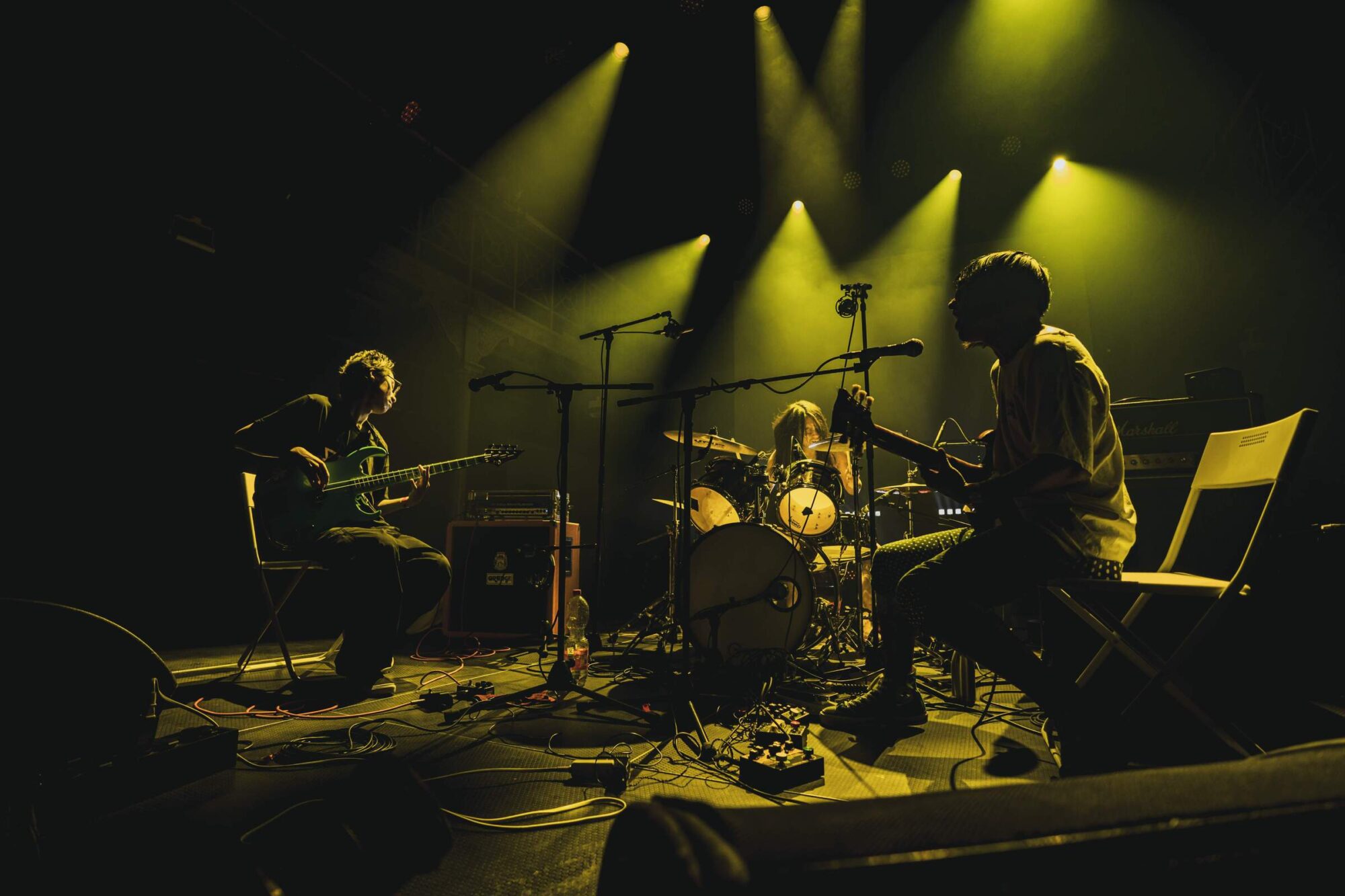
For 25 years, Tokyo trio Green Milk From The Planet Orange have pursued a vision of progressive rock rooted less in technical display and more in emotional impact and boundary-breaking spirit.
For guitarist and founder Dead K, the essence of prog lies in “breaking musical boundaries, embracing surprise, and above all, creating drama and musical catharsis,” rather than simply reproducing complex structures.
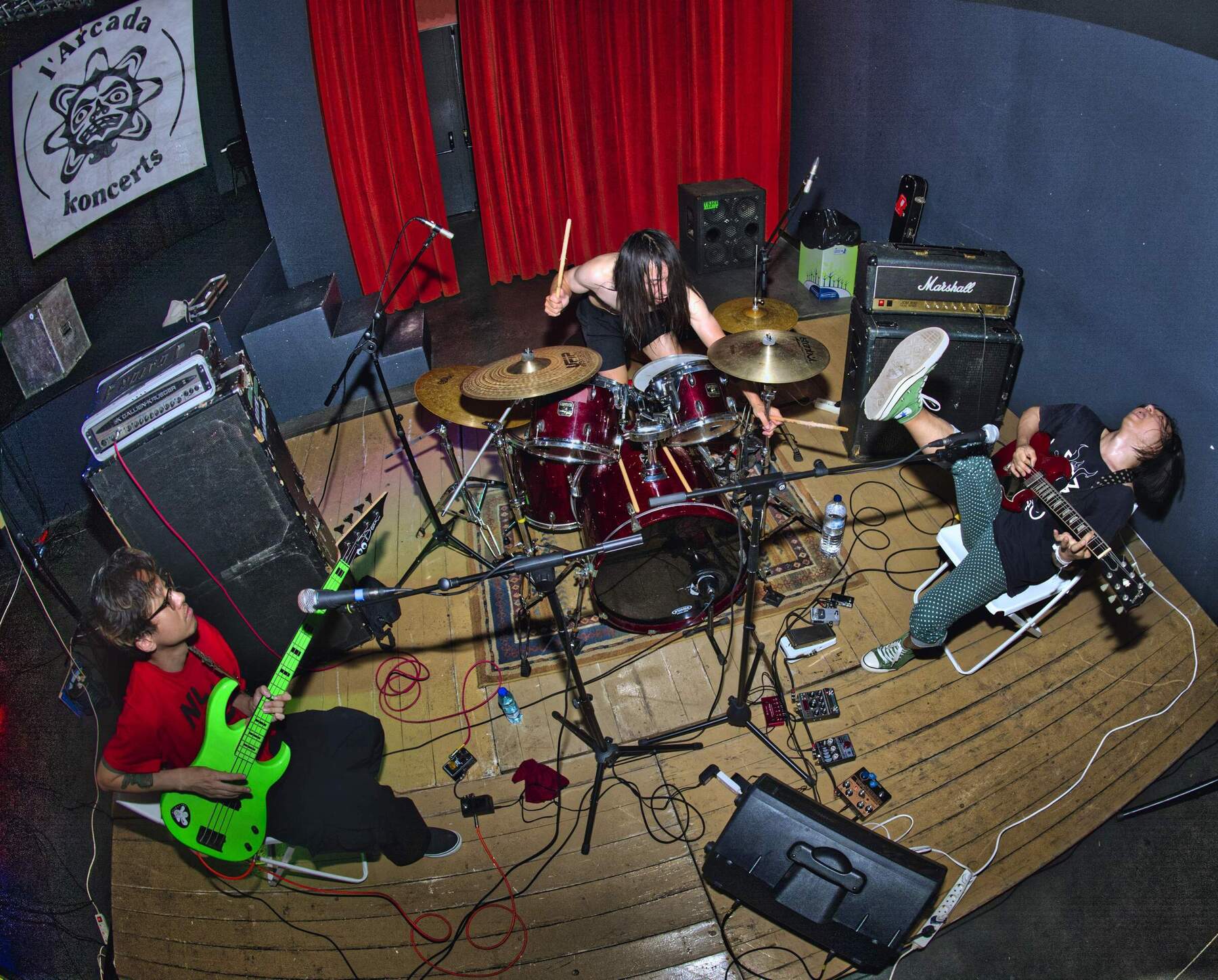
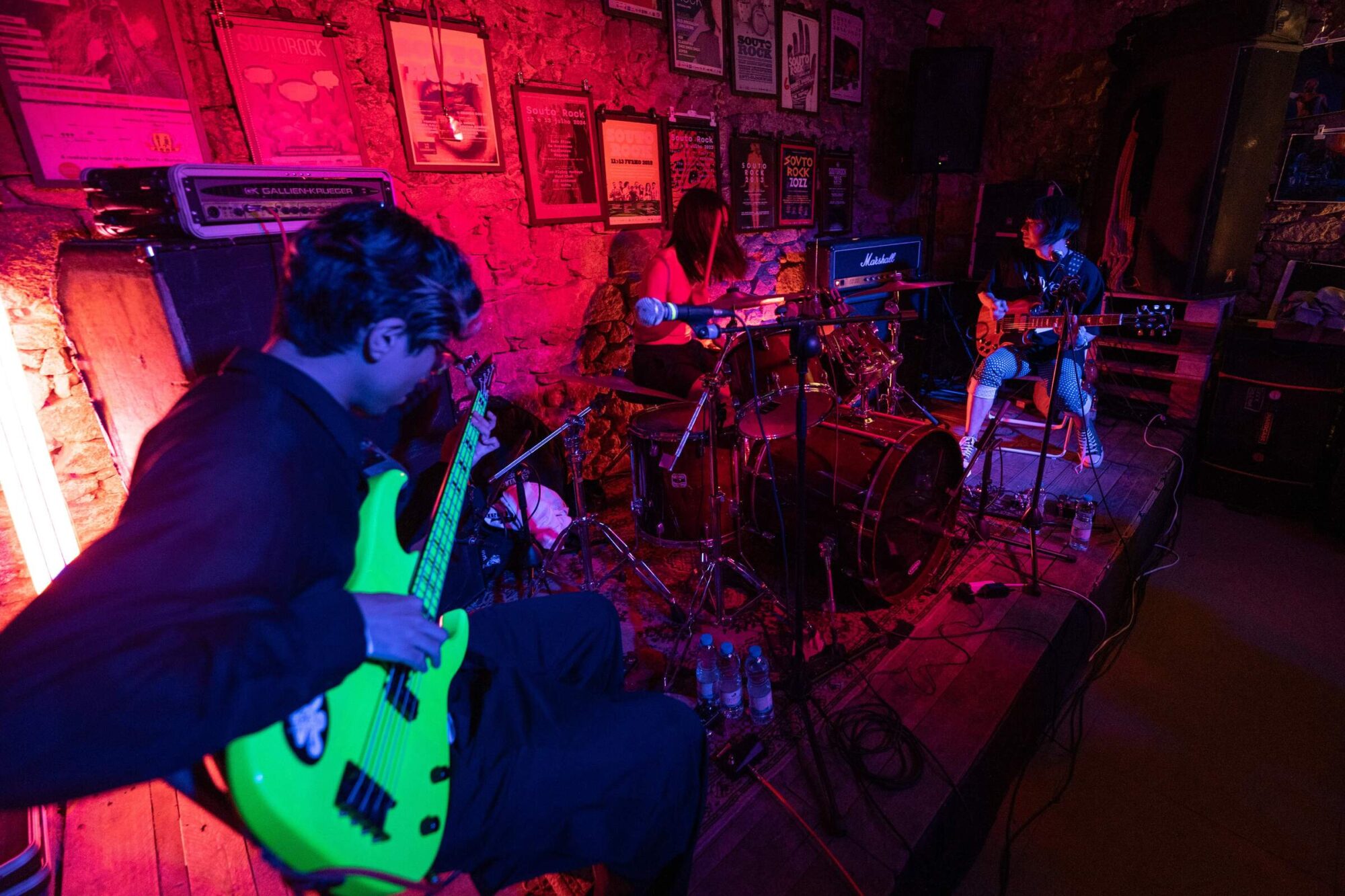
Since bassist Damo joined a decade ago, the band’s rhythmic core has tightened, with his steady, detailed phrasing anchoring the explosive interaction between Dead K’s impulsive guitar and A’s famously ferocious drumming. That intensity, A explains, is inseparable from expression itself: even emotions like gratitude are delivered through total physical commitment, turning performances into acts of collective release. “Embodying our expression as fully as possible leads directly to a cathartic experience,” he says.
Lyrically, the band has shifted from overt social commentary toward a more introspective focus, though Dead K still views their music as a way of confronting an emotionally cold world with passion and sound. Onstage, their goal is not perfection alone, but reaching a state where instinct takes over and “the sound of the three of us fully merges at a single center.”
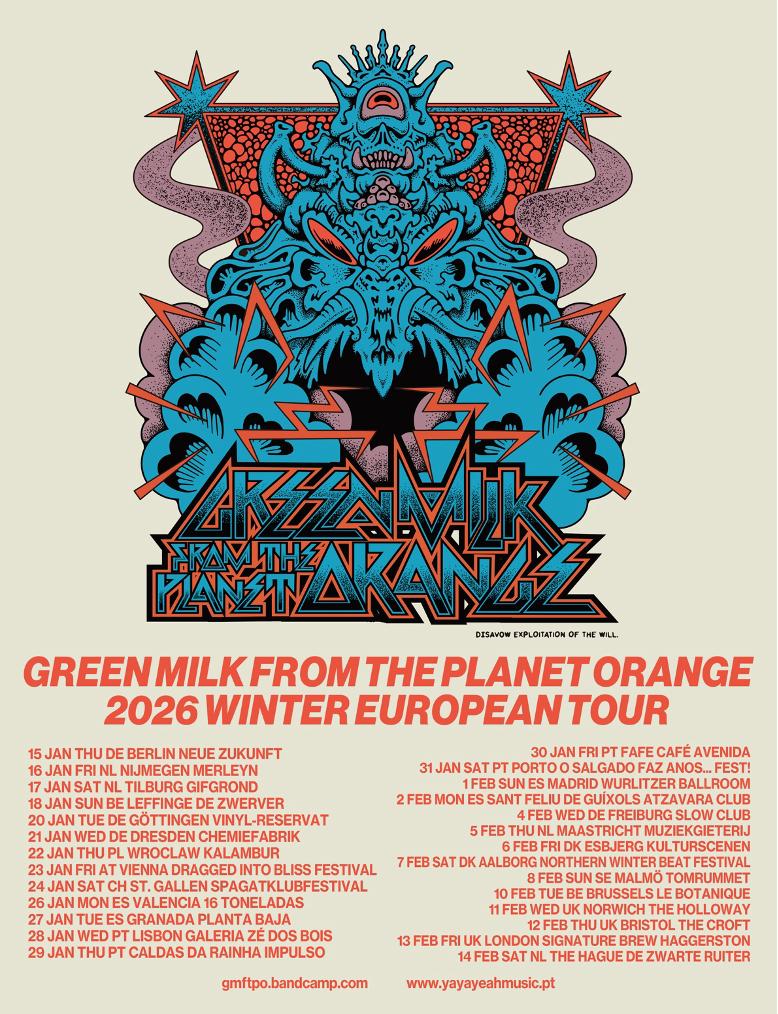
Their current European tour weaves together material from across their career, placing early, wild songs beside newer, more controlled compositions, as the band continues searching for new ways to fuse beautiful melody with violent noise—and to push both themselves and their audience to the limit.
“What matters most is how to maximize and fully embody the expression of particular moment.”
Dead K, you recently mentioned piercing the “frozen continent with uniquely cathartic progressive rock.” I love that imagery. Is that a metaphor for waking up a world that feels emotionally cold right now, or is it just a cheeky comment on the physical challenge of touring Europe in the winter?
Dead K: It carries both meanings. On a very literal level, it’s actually cold right now, so we want to bring heated, intense live shows to frozen places and seasons. At the same time, we also feel that the current social climate and the way people look at the world have become emotionally cold. We want to confront that with our passionate music and live performances.
You aren’t just celebrating 25 years of the band; you’re also marking a decade with Damo on bass. How has the band’s chemistry evolved since he joined? Specifically, how has his playing style changed the conversation between the guitar and A’s drumming compared to the early days?
Dead K: Compared to T, who played bass in the 2000s, Damo’s bass phrasing is much more detailed and steady, and he never loses the pulse. Because of that, the overall sense of rhythm in the band has become much tighter, with his bass at the core. I tend to play guitar quite roughly and impulsively, but with A’s drums and Damo’s bass creating such a solid foundational groove, I feel that I’m now required to play more tightly than in the past so as not to disrupt that core.
A, you said a beautiful thing about wanting to “turn gratitude into sound.” But your drumming is famously intense. It’s chaotic, a high-speed barrage. Is there a paradox in expressing a soft emotion like “gratitude” through such ferocious playing, or is that intensity the only way you can truly get that joy out?
A: It’s true that “gratitude” and the sounds I make might feel very far apart in terms of nuance. But in Green Milk’s expression, this level of intensity is something we simply can’t remove—it’s essential to how we express ourselves. I believe that embodying our expression as fully as possible leads directly to a cathartic experience for everyone who comes to listen.
If we create quieter songs or different types of music in the future, I think my approach to sound will naturally change to match that. What matters most is how to maximize and fully embody the expression of that particular moment.
Personally, I always imagine piercing through this chaotic world with music and then reconstructing it again. That said, the roots of my heart are pretty punk, so that destructive impulse probably has a big influence on my drumming as well.
The press release mentions capturing the “essence of 70s progressive rock.” A lot of modern bands nail the math—the odd time signatures and long songs—but miss the soul of it. For you, is that “essence” about technical complexity, or is it more about the punk attitude of breaking boundaries that bands like King Crimson originally had?
Dead K: I think it’s much closer to the latter—the punk attitude of breaking boundaries. Of course, technical complexity is interesting, and I enjoy those kinds of parts too. But I believe the essence of progressive rock lies in breaking musical boundaries, embracing surprise, and above all, creating drama and musical catharsis.
If you simply recreate complex odd-time sections and think that alone defines prog, it ends up becoming a kind of traditional performance within a fixed genre called “Progressive Rock.” We want to create music that truly feels like “progressive rock” in the sense of evolved rock music—something new for this era, with its own drama and emotional impact.
Dead K, you promised a setlist weaving together “new and old songs.” When you put a track from ‘City’ right next to something from ‘Third’ or newer stuff, do they feel like they belong together? How has the “protagonist” or voice in your lyrics grown over the last 25 years?
Dead K: Several songs from ‘City Calls Revolution’ can sit naturally in the same setlist alongside our current material. Those older songs have a wildness that our newer songs don’t necessarily have, and when they’re placed next to tracks from Third or newer material, they create a really good punch.
Lyrically, our older songs contained a lot of social and political messages. Now, the lyrics are much more introspective. Both are about the world as seen from my perspective, but these days I focus more on the “sound” itself that we are creating.
It’s been nearly two decades since ‘City Calls Revolution,’ which is such a masterpiece of urban atmosphere. Looking back, was that album a reaction to the specific vibe of mid-2000s Tokyo? And looking around in 2026, do those themes of urban decay feel just as relevant today?
Dead K: That album was born during a period when we were touring back and forth between Tokyo and the United States. Musically, I think it strongly reflects the influence of the bands we were playing with in Tokyo and the US at the time. And as you said, the city of Tokyo itself had a huge impact on it.
Living in Tokyo, surrounded by endless concrete cityscapes, we constantly felt that we might be losing our humanity—and that feeling hasn’t really changed even now. That said, this is just my personal view, but at the same time, I’ve come to find a certain fascination in the chaos of the city and in old urban areas that have somehow survived without being destroyed.
The band has had its share of hiatuses and resurrections. When you guys were inactive, what was the spark that made you realize this specific trio had unfinished business? Does the energy on stage now come from a fear of losing it again, or a confidence that the band can survive anything?
Dead K: A and Damo each have their own feelings about this, so this is purely my perspective. When the band first broke up, I was honestly very disappointed, and I always hoped that we could play as Green Milk from the Planet Orange again someday.
In the early 2010s, I was playing in a band called LOA with Damo. In 2015, I asked A to play drums with us once. When the three of us played live together, I heard the sound of gears clicking back into place inside me. There was a soul-shaking sound there that I hadn’t felt since Green Milk from the Planet Orange disbanded. After that, I asked A to officially join LOA, and from the following year, 2016, we decided to revive Green Milk from the Planet Orange with this trio.
As for the energy on stage, our joy—and what we seek—is to completely burn ourselves out in every single show. As you said, whether the band were to disappear again or survive far into the future, we want to keep playing with everything we have, so that we never feel any regret.
Going back to ‘He’s Crying “Look”,’ the sound was incredibly raw and lo-fi. Now that you’re revisiting those tracks on this 25th-anniversary tour with your current skills, do you try to polish them up, or do you deliberately try to keep that jagged, youthful imperfection?
Dead K: We personally love ‘He’s Crying “Look”,’ but the music and playing style are simply too different from who we are now. Since reuniting with Damo, we haven’t played any songs from that album live at all. Occasionally we try playing them in the studio, but so far we haven’t been able to make them feel convincing in our current form.
For that reason, we won’t be playing those songs on this winter tour. However, we haven’t given up on reinterpreting them as the band we are now. We’ll keep trying, and hopefully someday we’ll be able to perform them live again.
Your name obviously references Kubrick’s A Clockwork Orange, a film that explores the clash between high art and ultra-violence. Do you view your music as a soundtrack to that same duality? Just trying to find the sweet spot between beautiful, psychedelic melody and violent noise?
Dead K: I feel a bit sorry to say this, but our band name is not an homage to A Clockwork Orange. We’re asked about the name quite often, but before the band was formed, when I was making demo recordings on my own around 2000, the name suddenly came into my head. I think it was a mix of psychedelic color imagery and a kind of cosmic worldview, similar to Kubrick’s 2001: A Space Odyssey.
That said, when it comes to our music afterward, we have indeed been constantly searching for a fusion between beautiful melodies and violent noise or the solid heaviness of metal, just as you described.
You talk about pushing the “mind and body to the extreme” during shows. Prog is usually seen as “thinking man’s music,” but you play with the physicality of a hardcore punk band. Is the goal technical perfection, or is it to reach a state of exhaustion where the mind shuts off and instinct takes over?
Dead K: I think it’s completely both. Reaching instinct at the far end of extreme performance, and having the sound of the three of us fully merge at a single center—that’s the ideal state for us.
Being a trio is arguably the most unforgiving format in rock. There is nowhere to hide. When you’re deep in an improv jam, how much of that is telepathy between the three of you, and how much is a battle for sonic space?
Dead K: Most of our music is composed, so live performances generally follow a structured path. In the improvisational sections, what matters is how deeply the three of us can enter the “zone,” truly catch each other’s sounds, and respond in real time.
When all three of us enter that zone, there are moments when everything works perfectly. It’s both a battle over sonic space and a complete fusion of the three sounds.
“Melody is the core of our music”
You’re often grouped with the legends of the Japanese underground, acts like Ruins or Acid Mothers Temple, yet you have a much stronger focus on melody. Do you feel a kinship with that scene, or have you always felt like melodic outsiders even within the underground?
Dead K: We deeply respect both Ruins and Acid Mothers Temple, but honestly, we don’t know any other bands that play music close to ours. Because of that, we’ve always seen ourselves as outsiders. Ruins and AMT also carved their own paths with very original music and are recognized as outsiders in Japan as well.
Melody is the core of our music. It’s always at the center of our songs, and it’s something we want to continue to value and protect.
Damo mentioned being excited about the “new merch.” GMFTPO has always had such a distinct, surreal visual aesthetic. How important is that art in translating the “Green Milk” concept to the audience? Does the visual side ever influence the music, or is it always the other way around?
Damo: Speaking only for myself, I don’t think in terms of leading with art or visuals and then communicating that to the audience. Music is always the main thing, and merchandise design is something that accompanies it. Sound comes first above all else.
That said, we’re very happy that our artwork is highly appreciated both in Japan and overseas. Please also check out our designer, Sohale Kevin Darouian, who is responsible for most of our designs.
After 25 years, 27 cities, and piercing the “frozen continent,” what is the end goal? Is the band trying to reach a specific musical destination, or is the “Green Milk” simply the fuel that keeps you moving forward indefinitely?
Dead K: We’re extremely excited to see how far we can move the audience on this winter tour, and how much musical catharsis—something people may have never experienced before—we can share together in the cold of Europe.
The band’s goal has always been to keep creating new, great music and to keep delivering powerful live shows. And our dream is to share this unknown music with as many people around the world as possible—people we’ve never met before.
Klemen Breznikar
Headline photo: Toon Baele
Green Milk From The Planet Orange Facebook / Instagram / X / Bandcamp